RenoHouse

Ceiling Texture Options: Beyond Popcorn — Modern Alternatives
Removing popcorn ceiling is one of the most popular renovation projects in the GTA. But once it's gone, what finish do you choose? Here are the most popular ceiling texture options for Toronto homeowners.
Option 1: Smooth Finish ⭐ Most Popular
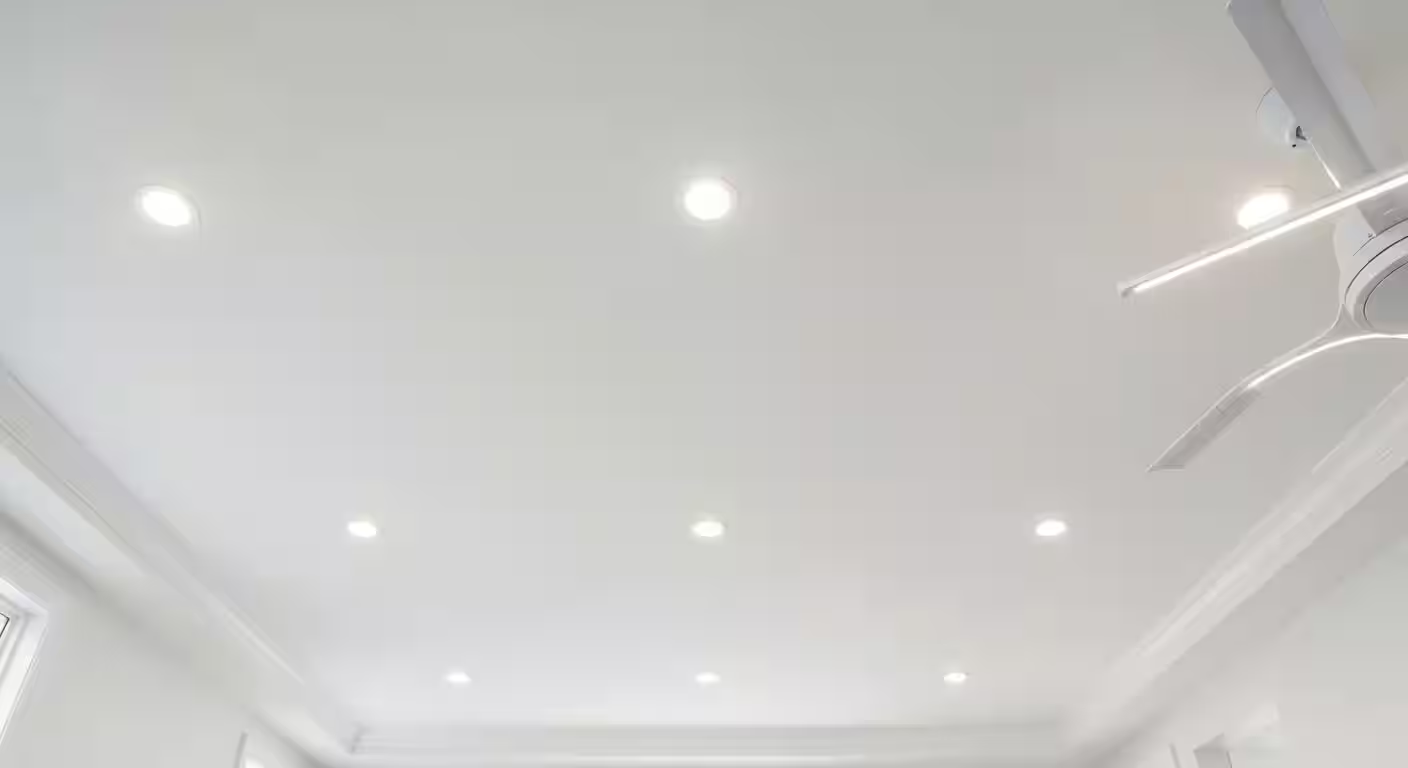
A perfectly smooth ceiling is the modern standard and the most requested finish in GTA renovations.
Pros:- Clean, contemporary look
- Makes rooms feel taller and brighter
- Reflects light evenly
- Easy to paint and repaint
- Requires the most skill to achieve — every imperfection shows
- The drywall underneath must be in good condition or extensively repaired
- Multiple coats of joint compound and careful sanding
Option 2: Knockdown Texture
A popular middle ground between smooth and heavy texture. Joint compound is sprayed or rolled on, then partially flattened ("knocked down") with a wide drywall knife.
Pros:- Hides minor imperfections in the drywall
- Adds subtle visual interest
- Easier to achieve than a perfectly smooth finish
- Still looks modern
- Slightly harder to clean than smooth
- Can look dated if applied too heavily
Option 3: Skip Trowel
Similar to knockdown but applied by hand with a curved trowel, creating a more organic, Mediterranean-style texture.
Pros:- Elegant, artisan look
- Excellent at hiding imperfections
- Unique — no two ceilings look exactly alike
- Labour-intensive (applied by hand)
- Can look busy on large ceilings
- Not ideal for ultra-modern aesthetics
Option 4: Orange Peel
A fine, subtle texture that resembles — you guessed it — the skin of an orange. Applied with a spray gun.
Need professional ceiling renovation?
Call RenoHouse at 1-289-212-2345 or get a free estimate today.
Get Free Estimate →- Very subtle — almost smooth from a distance
- Hides minor imperfections
- Quick to apply over large areas
- Can look outdated in some contexts
- Hard to patch seamlessly if damaged later
Option 5: Tongue and Groove / Planks
Not a drywall texture — this involves installing wood or MDF planks directly over the existing ceiling.
Pros:- Dramatic visual transformation
- Completely hides damaged ceilings
- No sanding or mudding dust
- Adds warmth and character
- Most expensive option
- Slightly lowers the ceiling height
- Heavier than drywall texture
Asbestos Warning for GTA Homes
Before removing any ceiling texture in homes built before 1990, have it tested for asbestos. Popcorn ceilings installed before the mid-1980s in Ontario commonly contain chrysotile asbestos. Professional removal with proper containment is required if asbestos is present.What RenoHouse Recommends
For most GTA homeowners removing popcorn, we recommend a smooth finish for main living areas and knockdown for areas where imperfections are harder to eliminate completely. The right choice depends on your home's condition, your style, and your budget.
Get a Ceiling Consultation
RenoHouse specializes in popcorn ceiling removal and ceiling refinishing throughout Toronto and the GTA. We'll assess your ceilings and recommend the best finish for your space.
Contact us for a free estimate — transform your ceilings and modernize your home.Ontario Building Code Requirements
Any renovation project in the GTA must comply with the Ontario Building Code (OBC). This applies whether you're in Toronto, Mississauga, Brampton, or any other municipality. Key requirements include:
- Building permits are required for structural changes, plumbing modifications, electrical work, and HVAC alterations
- ESA permits are mandatory for any electrical work — your contractor must be a Licensed Electrical Contractor (LEC) in Ontario
- Plumbing permits through your local municipality for any new plumbing rough-ins or relocations
- Inspections at various stages — rough-in, insulation, and final inspection before closing walls
- Fire safety — smoke detectors on every level, carbon monoxide detectors near sleeping areas (Ontario law since 2015)
Failing to pull permits can result in fines, insurance issues, and problems when selling your home. Always verify your contractor handles permits as part of the project scope.
GTA Regional Considerations
The Greater Toronto Area spans dozens of municipalities, each with unique housing stock and renovation considerations:
- Toronto (Old Toronto, Midtown) — Many homes built pre-1950 with knob-and-tube wiring, galvanized plumbing, and plaster walls. Renovations often uncover issues requiring additional remediation
- Scarborough & Etobicoke — Primarily 1950s–1970s bungalows and split-levels. Common issues include outdated electrical panels (60-amp service), original windows, and aging drainage systems
- North York — Mix of post-war homes and newer builds. Many homeowners are upgrading original finishes from the 1980s–1990s
- Mississauga & Brampton — Rapid growth areas with homes from the 1980s–2000s. Common projects include basement finishing, kitchen updates, and exterior refreshes
- Vaughan & Richmond Hill — Newer subdivisions often need cosmetic updates rather than structural work. Builder-grade finishes are frequently upgraded within 5–10 years
- Markham — Similar to Vaughan with many newer communities. Heritage areas in old Markham Village may have specific design requirements
- Oakville — Higher-end homes with premium finish expectations. Many lakefront properties have specific moisture and drainage considerations
Understanding your neighbourhood's typical home age and construction type helps set realistic expectations for scope and budget.
What a Typical Project Looks Like: Before & After
Before: A homeowner in Toronto contacts us about their outdated space. Common issues include worn finishes, inefficient layouts, aging fixtures, and cosmetic damage from years of use. Many homes across Mississauga, Brampton, and Vaughan face similar challenges — especially homes built in the 1980s and 1990s that are now showing their age. During the project: Our team provides a detailed scope of work, handles all permit applications (where required), coordinates trades, and keeps homeowners updated throughout the process. Most projects follow a predictable sequence: demolition → rough-ins (plumbing, electrical) → framing → insulation → drywall → finishing → fixtures → final touches. After: The completed project transforms the space with modern finishes, improved functionality, and increased home value. Many of our clients in Markham, Oakville, and Richmond Hill report that their renovation was the best investment they've made in their home.Sources & References
Authoritative sources cited in this guide:
- Ontario Building Code 9.10 (Fire) — Fire safety provisions
- Health Canada — Asbestos — Pre-1985 popcorn ceiling info
Continue Reading
- Ceiling Texture Options: Popcorn, Knockdown, Smooth & More
- Popcorn Ceiling Removal in Toronto
- California Ceiling: What It Is & Why Toronto Homeowners Love It
Related Services