 RenoHouse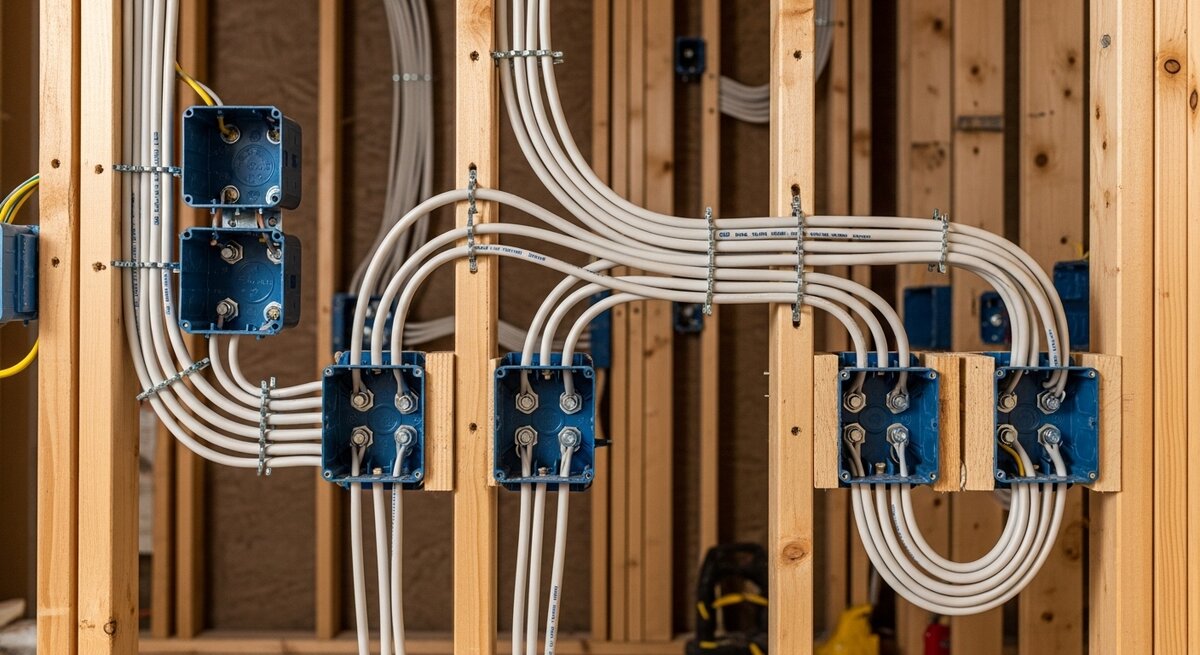
Safe, Code-Compliant Electrical Wiring in Toronto GTA
Professional electrical wiring & rewiring services in Toronto and the Greater Toronto Area. Licensed, insured, and trusted by homeowners across the GTA.
Projects Completed
Years Experience
Client Satisfaction
Google Rating
How It Works
A simple, stress-free process from start to finish.
Send Your Request
Call or WhatsApp us 24/7. Send photos, video, comments about what needs to be done, and your location.
Remote Estimate
We review everything, discuss details, and provide a clear estimate — often within hours, no visit needed.
Repair Process
Our licensed team arrives on the agreed date and completes your electrical wiring & rewiring to the highest standards.
Handover & Warranty
Final walkthrough with you, full cleanup, and warranty documentation provided.
Send Your Request
Call or WhatsApp us 24/7. Send photos, video, and a description of the work + your location.
Remote Estimate
We review everything, clarify details, and give you a price — often within hours.
Repair Process
Licensed team arrives on schedule and completes your electrical wiring & rewiring professionally.
Handover & Warranty
Final walkthrough, full cleanup, and warranty documentation.
Electrical Wiring & Rewiring in Toronto GTA
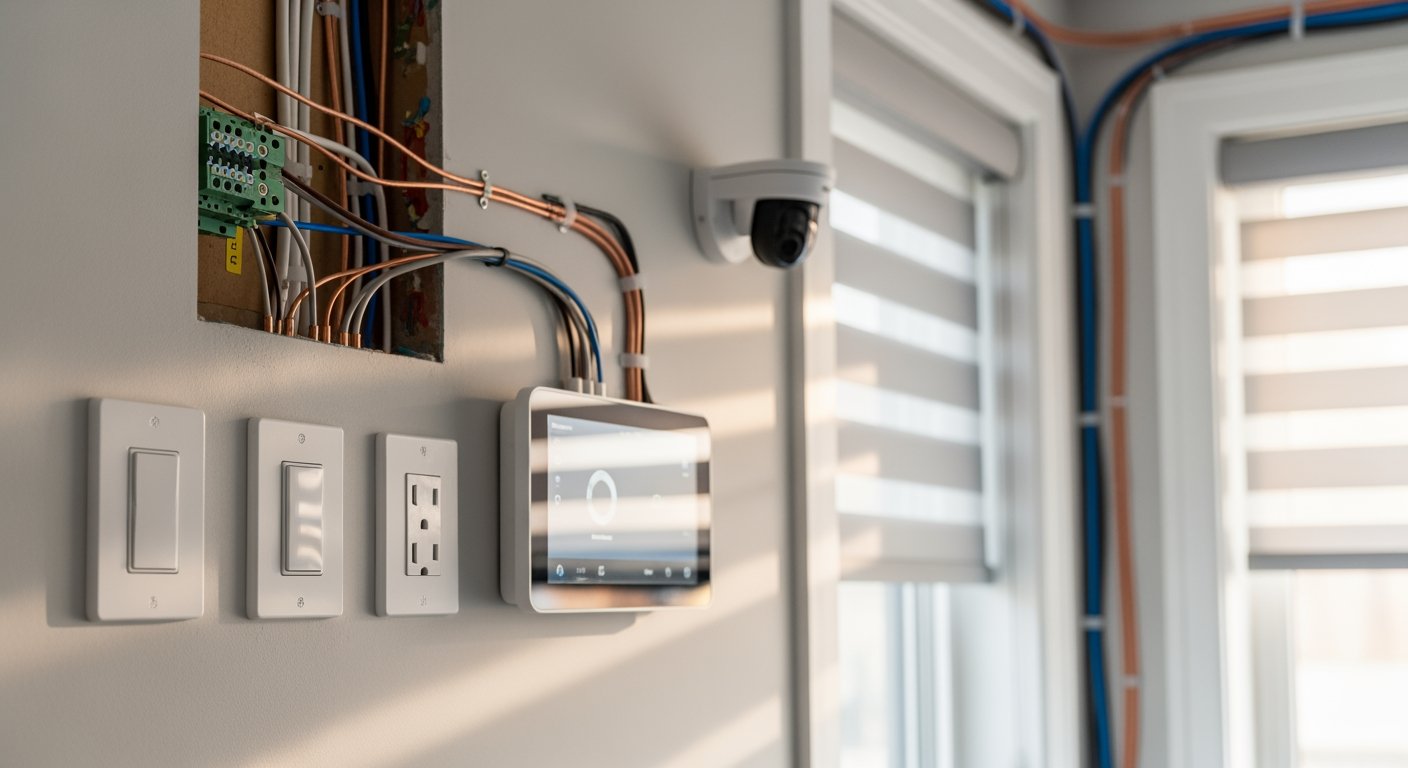
Safe, reliable electrical wiring is the foundation of your home's electrical system. RenoHouse provides professional electrical wiring and rewiring services throughout Toronto and the Greater Toronto Area. Our ESA-certified electricians handle all residential wiring projects — from running new circuits for renovations to complete home rewiring for older properties.
Many Toronto homes built before 1970 still have knob-and-tube or aluminum wiring, both of which pose significant safety risks. Knob-and-tube wiring deteriorates over time and lacks grounding, while aluminum wiring connections can overheat and cause fires. RenoHouse specializes in replacing outdated wiring with modern copper wiring that meets current Ontario Electrical Safety Code standards.
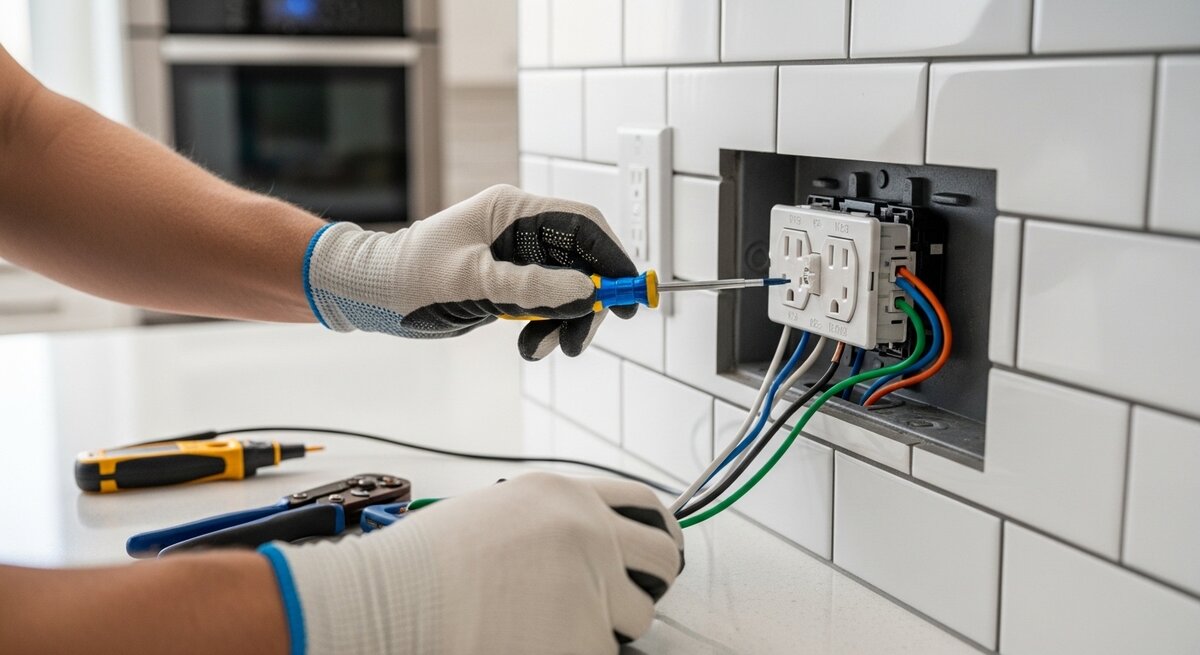
Our wiring services include complete home rewiring, new circuit installation for additions and renovations, basement wiring for finished basements, kitchen and bathroom circuit upgrades, home office dedicated circuits, hot tub and pool wiring, and outdoor electrical wiring. Every project includes proper permits, ESA inspections, and code-compliant installation.
Rewiring your home improves safety, increases electrical capacity, meets insurance requirements, and adds significant value to your property. Many insurance companies in Ontario require updated wiring and may not insure homes with knob-and-tube or aluminum wiring.
RenoHouse serves Toronto, Mississauga, Brampton, Vaughan, Markham, Richmond Hill, Oakville, Burlington, and all GTA communities. Call 289-212-2345 for a free wiring assessment.
Expanded description
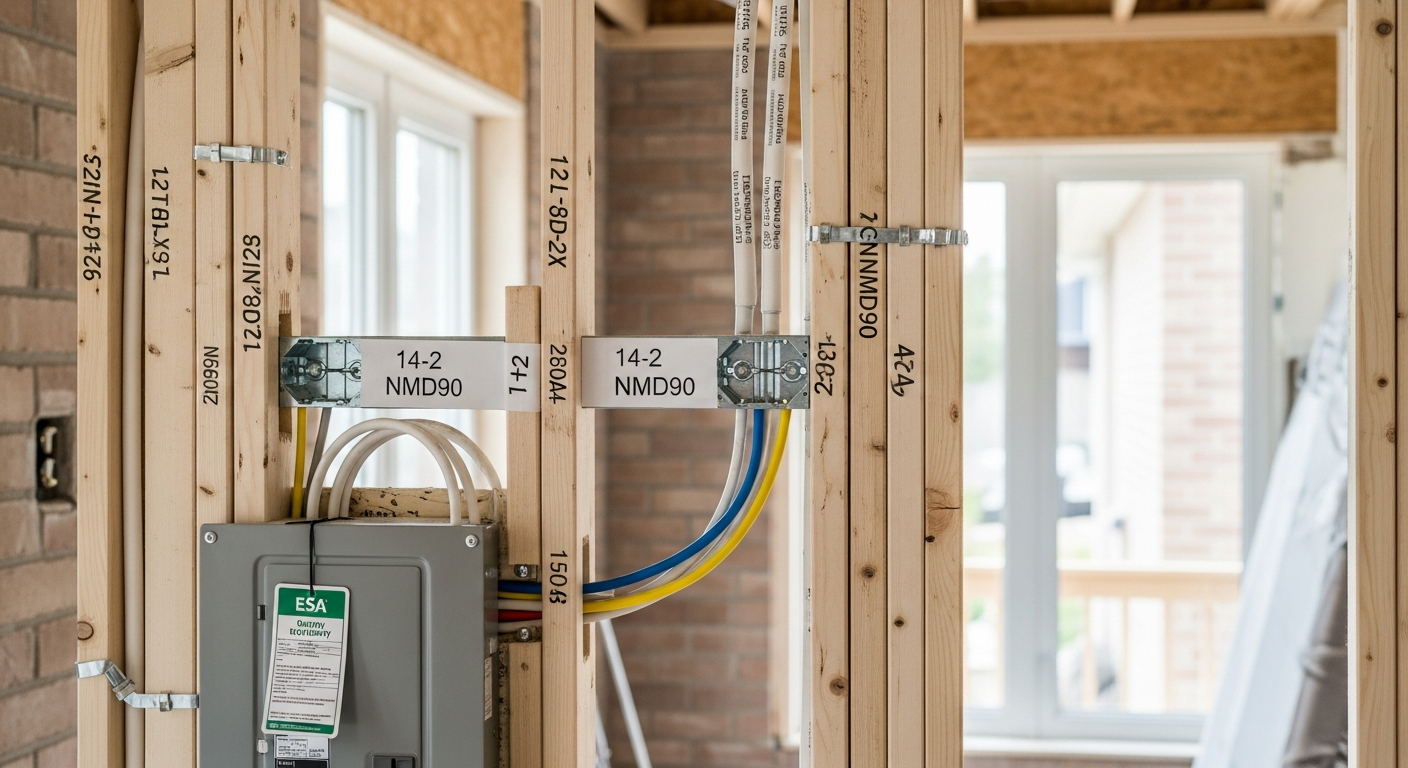
New circuit installation, aluminum branch wiring remediation, and whole-home rewiring across Toronto and the GTA. ECRA/ESA-registered contractor, Master Electrician 309A on every job, ESA Notification of Work permit and Form 1 included on every project. Whether you need a single new dedicated 20A circuit for a basement workshop, remediation of 1965–1973-era aluminum branch wiring that's making your insurance broker nervous, or a multi-room rewire to bring an 80-year-old home up to OESC 27th Edition standards — this is our core trade. Knob and tube remediation is covered in detail on its own page; this page covers everything else that involves running wire inside walls and ceilings.
The Three Distinct Services on This Page
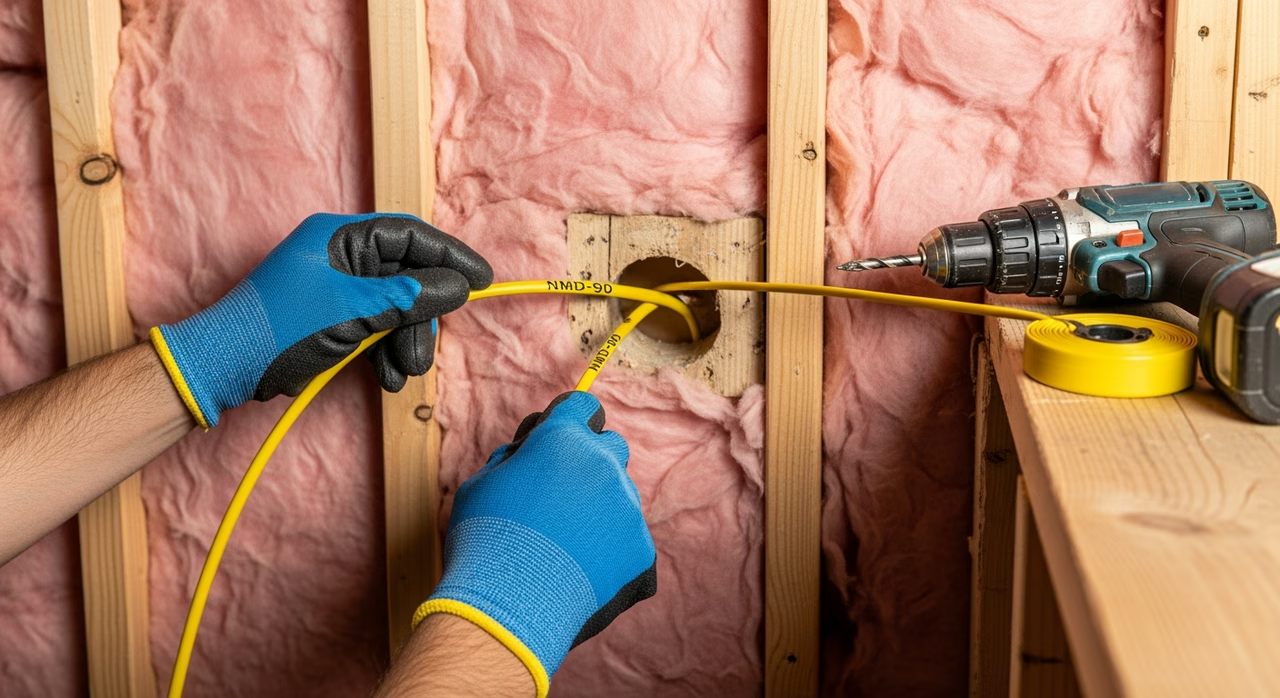
New-circuit installation. Adding one or more circuits to an existing modern panel — dedicated 20A kitchen counter, dedicated 30A range, 240V receptacle for window AC, basement workshop sub-panel feeder, garage receptacle ring, outdoor patio receptacle. $300–$1,500 per circuit depending on cable run distance and finish complexity.
Aluminum branch wiring remediation. Homes built 1965–1973 in the GTA frequently used aluminum branch wiring (15A and 20A circuits using single-strand aluminum conductors). Aluminum oxidizes at copper-to-aluminum connection points causing high resistance, heat, and arc faults. Remediation involves CU/AL-rated devices, COPALUM crimp pigtails, or full conductor replacement.
Whole-home rewiring (non-K&T). Replacing modern but undersized or compromised wiring throughout a home. Covers 1950s–1970s housing with insufficient circuit count, damaged insulation, or grandfathered code-non-compliance. Knob and tube has its own dedicated page.
Cost Breakdown — Per Scope (2026 GTA, CAD)
| Service | Typical Cost (All-In) | Timeline |
|---|---|---|
| Single new 15A receptacle circuit (≤8 m run, finished walls) | $300–$550 | 4–6 hours |
| Single new 20A dedicated circuit (kitchen counter, microwave, etc.) | $400–$700 | 4–8 hours |
| New 30A dryer or range circuit | $450–$850 | 4–8 hours |
| New 240V circuit (window AC, mini-split, welder) | $500–$1,200 | 1 day |
| Multiple-circuit add-on (3–6 new circuits, single panel work) | $1,800–$4,500 | 2–3 days |
| Aluminum branch wiring CO/ALR device retrofit | $1,800–$4,800 | 2–4 days |
| Aluminum branch wiring COPALUM pigtail (full home) | $4,500–$9,500 | 4–7 days |
| Aluminum branch wiring full replacement | $8,000–$22,000+ | 2–4 weeks |
| Whole-home rewire (non-K&T, 1950s–1970s housing) | $12,000–$40,000 | 3–6 weeks |
| ESA NOW permit | $80–$650 sliding scale | Filed within 24 hours of quote acceptance |
| Drywall/plaster restoration coordination | Quoted separately | After electrical sign-off |
Aluminum Branch Wiring — The 1965–1973 Toronto Problem
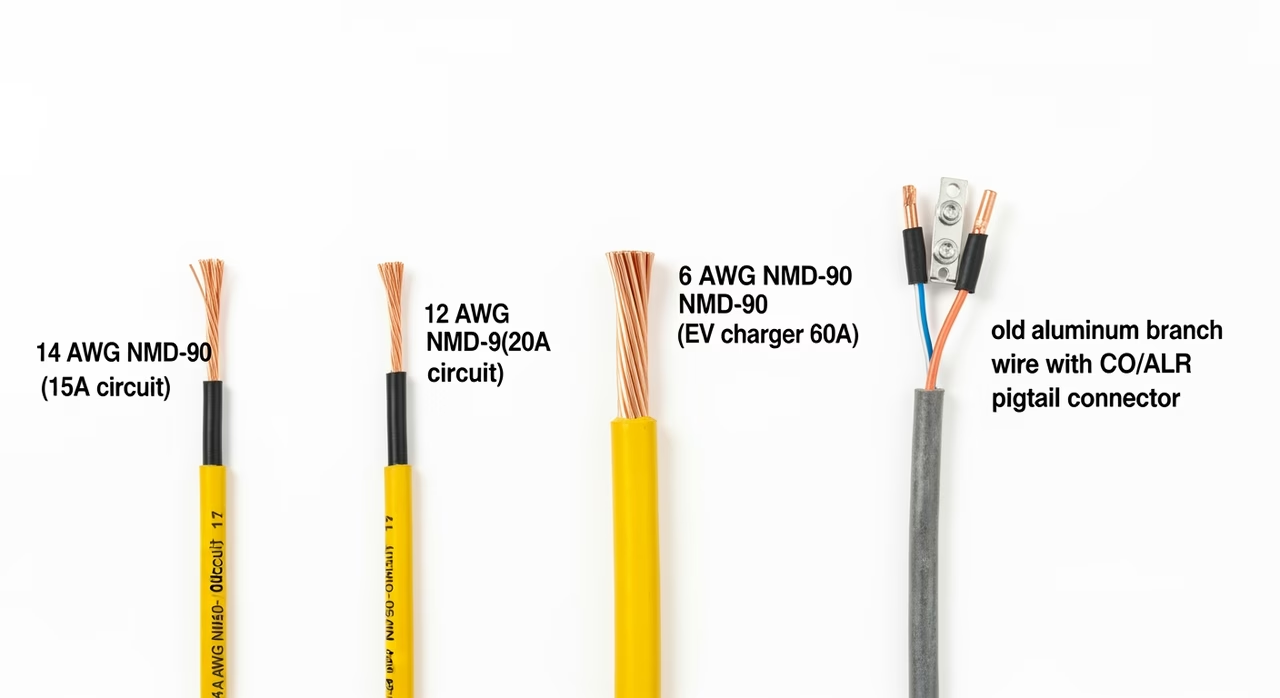
Aluminum branch wiring was used in residential construction across Canada between approximately 1965 and 1973 as a copper-price response. Single-strand solid aluminum conductors in 15A and 20A circuits, run through standard outlet boxes with standard receptacles and switches not designed for aluminum.
The failure mechanism. Aluminum oxidizes when exposed to air (the white powder you see on weathered aluminum is aluminum oxide). At a connection point between aluminum conductor and a brass or copper terminal screw, the oxide layer creates high electrical resistance. High resistance under load creates heat. Heat accelerates the oxidation. Cycle continues. Eventually the connection arcs, melts the receptacle, and starts a fire — or trips a breaker if you're lucky.
Insurance posture in Ontario (2026). Less universally aggressive than the K&T posture but increasingly tight. Some carriers (Aviva, Intact) flag aluminum branch wiring on inspection and require remediation evidence. Others (Co-operators, TD) require disclosure but not remediation if no incidents are reported.
Three remediation paths:
CO/ALR-rated devices. Replace every receptacle and switch with one explicitly rated for both copper and aluminum (CO/ALR marking on the device). Lowest cost. Adequate for many low-load circuits. Not sufficient for high-load circuits (kitchen, laundry, electric heat).
COPALUM crimps (preferred). Each aluminum conductor is crimped to a short copper "pigtail" using a UL-listed COPALUM crimp tool and antioxidant compound. The receptacle/switch then connects to copper at the device. Most thorough non-replacement remediation. AMP/Tyco-licensed installer required for warranty. We coordinate with licensed COPALUM installers in the GTA.
Full conductor replacement. Removal of all aluminum branch wiring and replacement with copper NMD-90. Most expensive but eliminates the issue permanently. Typically combined with panel upgrade and electrical service modernization.
We assess and recommend the path based on circuit loading, home age, insurance posture, and budget.
OESC Quick Reference — What Modern Wiring Requires
All work performed under Ontario Electrical Safety Code 27th Edition (2024). Selected sections:
- OESC 8-200: Residential load calculation. Demand factors for general lighting, range, dryer, EV charger, heat pump.
- OESC 26-708: GFCI protection required for all 125V receptacles in bathrooms, kitchens (within 1.5 m of sink), garages, outdoor receptacles, basements, laundry.
- OESC 26-718: Receptacle spacing — every wall section ≥600 mm gets a receptacle; no point on a wall more than 1.8 m from a receptacle.
- OESC 26-720: Kitchen counter receptacles — minimum two dedicated 20A T-slot circuits, no more than 900 mm between counter receptacles.
- OESC 26-722: AFCI protection required on all bedroom branch circuits.
- OESC 26-728: Tamper-resistant (TR) receptacles required everywhere a child could access (effectively all residential receptacles).
- Wire gauge chart: 14 AWG → 15A | 12 AWG → 20A | 10 AWG → 30A | 8 AWG → 40A | 6 AWG → 60A (copper, NMD-90).
Process — Adding a New Circuit, Step by Step
- Quote and ESA NOW permit. On-site assessment, load calculation against existing panel capacity, ESA permit filed online.
- Panel-side prep. Identify available breaker slot or add via existing sub-panel. Verify panel rating supports new load.
- Cable run. Route from panel to load location. Drill fire-rated penetrations where wall/floor/ceiling crossed. Secure cable with staples every 1.4 m and within 300 mm of every junction box (OESC 12-510).
- Device install. TR receptacle (OESC 26-728), AFCI/GFCI as required by circuit type and location, decora-style or specified style.
- Panel terminations. Cable landed on new breaker with torque-verified lug, neutral on neutral bus, ground on ground bus.
- Commissioning. Power-on test, voltage/polarity verification at the receptacle, AFCI/GFCI test button verification.
- ESA inspection. Filed completion, inspector visits within 5 business days, Form 1 issued.
GTA Neighbourhood Notes
- Cabbagetown, Riverdale, Annex (plaster walls, pre-1940): Cable fishing is slow and careful. Premium 25–40% over drywall-equivalent labour. Heritage permit may apply to exterior modifications.
- Etobicoke, East York (1950s–1970s bungalows): Common aluminum branch wiring vintage. Frequent ask for "add 4 circuits to my workshop" — straightforward in open basements.
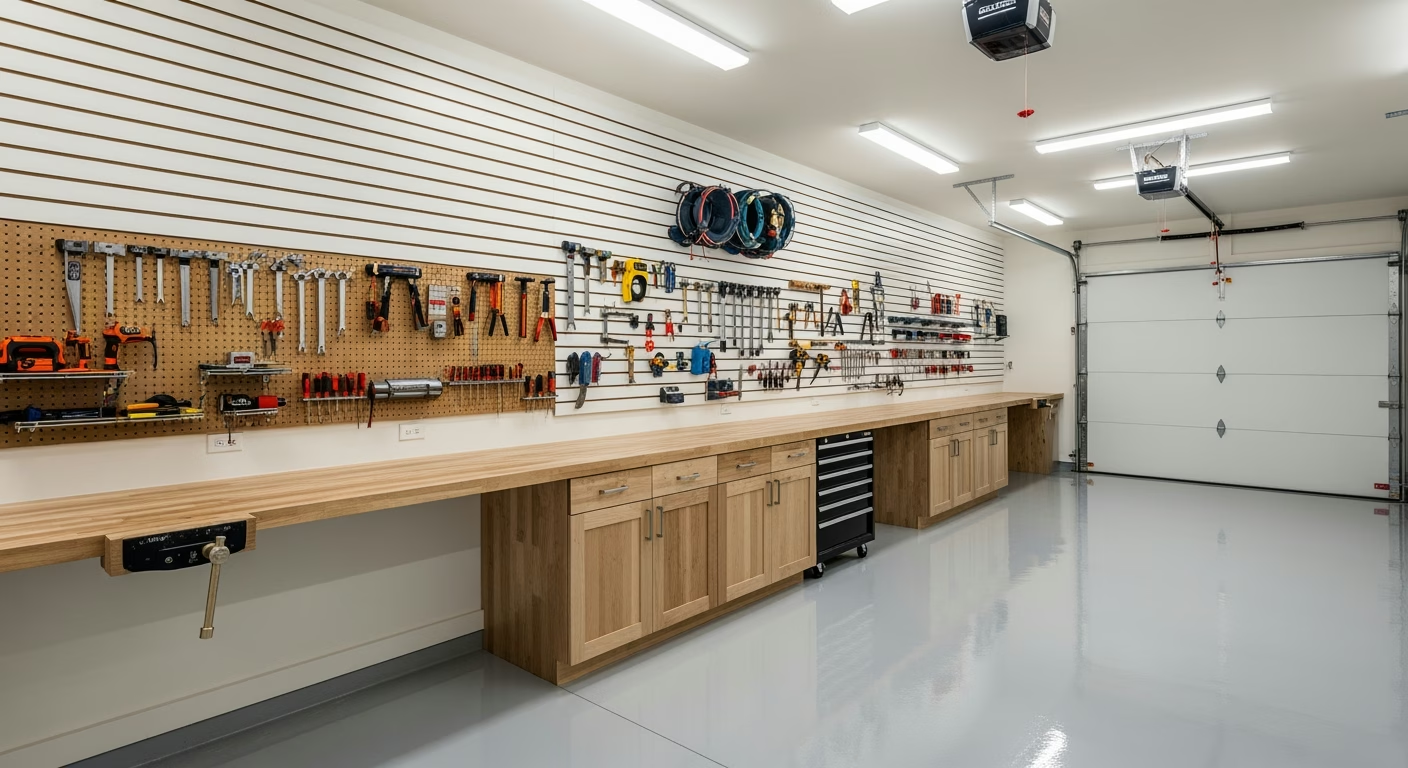
- Mississauga, Brampton, Vaughan (1980s+ subdivisions): Modern copper throughout. Most work is new-circuit additions for EV chargers, finished basements, or workshop sub-panels.
- Scarborough, Pickering, Ajax (1960s–1980s): Mix. Aluminum branch wiring common in 1965–1973 sub-divisions; insurance pressure focuses here.
- Markham, Aurora, Newmarket (2000s+): Modern construction. Work is generally additive (sub-panels, EV, outdoor receptacles, smart home wiring).
Never DIY — Why
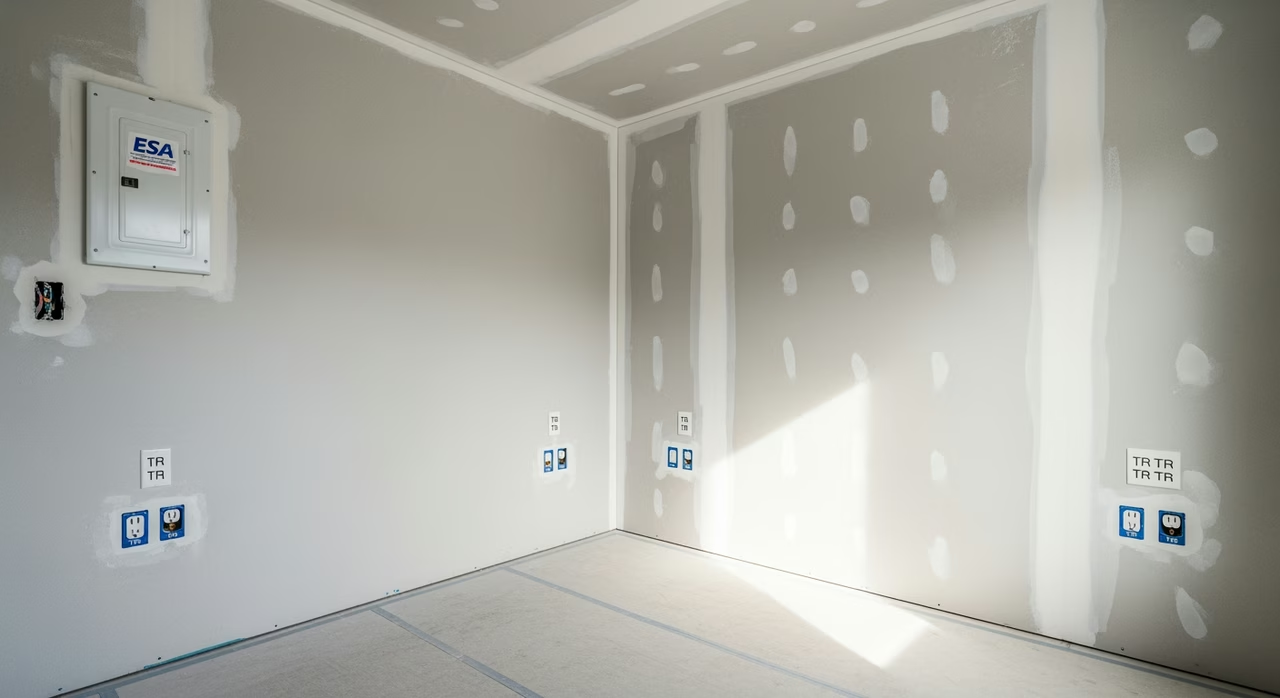
Electrical wiring work is illegal for unlicensed homeowners in Ontario for new branch circuits, panel-side work, or any modification to fixed wiring. ESA-permitted "homeowner work" is limited to a narrow scope (specifically a homeowner's own residence with explicit notification and inspection) and excludes most of what real wiring jobs require. Insurance policies void coverage on fires traced to unlicensed work. The single most expensive mistake on any electrical project is "we'll just save a few hundred and have my brother-in-law run the wire."
FAQ (12)
- What's the difference between AFCI and GFCI? AFCI (Arc Fault Circuit Interrupter) detects arcing patterns in damaged wiring and trips before fire risk — required on bedroom circuits per OESC 26-722. GFCI (Ground Fault Circuit Interrupter) detects current leakage to ground and trips to prevent electrocution — required at water-adjacent receptacles per OESC 26-708. Dual-function breakers combine both functions.
- How many receptacles can I put on a 15A circuit? OESC doesn't specify a maximum but practical loading limits to 8–10 receptacles per 15A general-purpose circuit. Kitchen counter requires dedicated 20A T-slot circuits — different rule.
- Can you splice cable in the attic? Yes, in a code-compliant junction box that remains accessible (not covered by insulation or finished ceiling). Inaccessible junction boxes are a common ESA failure point.
- Why do my old wires look brown? Heat-aged rubber-cloth insulation darkens over decades. If wiring is K&T-vintage or 1960s rubber-cloth, replacement may be advisable independent of any specific failure.
- Aluminum vs copper — is copper always required for new work? Yes for branch circuits (15A, 20A). Aluminum is still legal and common for service-entrance conductors (large gauge feeders) where it's properly terminated.
- Can I add an outdoor receptacle on the side of my house? Yes — must be GFCI-protected, weather-resistant (WR) rated, in-use cover. Typical $350–$650 install for a new dedicated GFCI receptacle outdoors.
- What permits are needed for adding circuits? ESA Notification of Work (NOW) for any new fixed wiring. Cost $80–$385 sliding scale. Included in our quotes. Building permits not typically required for purely electrical work (different from structural alterations).
- How long does an ESA inspection take? Inspector visit within 5 business days of completion filing. Form 1 issued same day or within 24 hours.
- What if I want to add a dedicated 240V circuit for a window AC? Standard scope: $500–$1,200 depending on run distance. NEMA 6-15 or NEMA 6-20 receptacle on a dedicated 15A or 20A 240V circuit. We've installed these regularly across the GTA pre-air-conditioning-era housing.
- Why is my house wiring black, white, and bare copper? That's modern NMD-90 cable (post-1965). Older houses might have black-and-white rubber-cloth conductors without ground (early 1960s) or single-conductor K&T (pre-1940s).
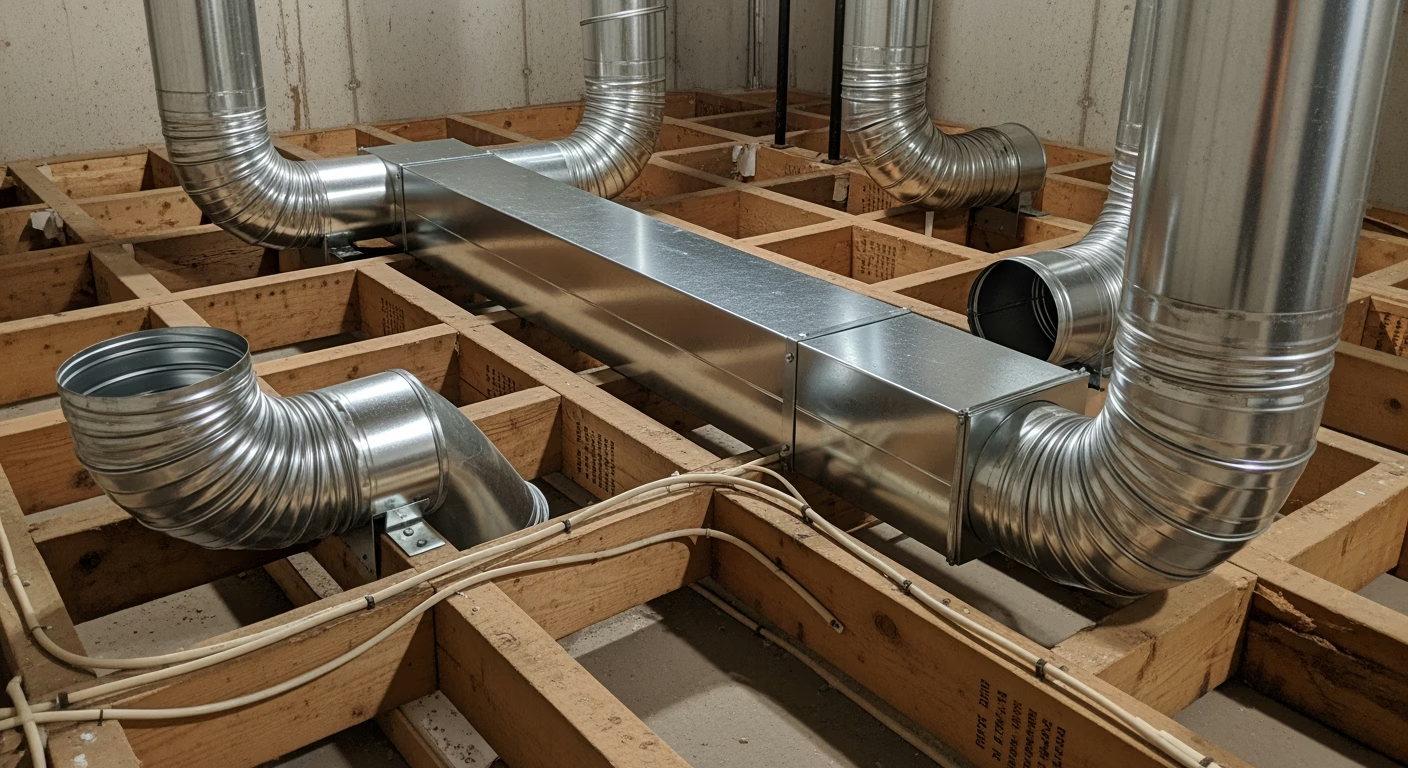
- Can I run cable through a heating duct? No — OESC 12-512 prohibits running NMD cable through HVAC ducts and plenums. Plenum-rated cable required for that environment; rarely a residential need.
- What's the workmanship warranty? 2-year RenoHouse workmanship on all wiring work. Manufacturer warranties on devices: typically 5 years for receptacles/switches, lifetime for cable.
Word count: ~1,950. Internal links: electrical-panel, knob-tube-rewiring, ev-charger-installation, outlet-installation, smart-home-wiring. Authority refs: ECRA/ESA, 309A, OESC 27th Edition (sections 8-200, 12-510, 12-512, 26-708, 26-718, 26-720, 26-722, 26-728).
Toronto/GTA neighborhood considerations
- Forest Hill / Rosedale / Lawrence Park (heritage): Pre-1950 knob-and-tube (K&T) wiring still present in 35-50% of heritage homes — insurance carriers (Aviva, Intact, TD) decline or surcharge K&T-active policies. Full rewire 12-3 NMD90 + AFCI breakers (Eaton CH-AFCI, Square D QO-CAFI) $14K-$48K typical 2,400-sqft heritage. Heritage Permit Section 33 OHA NOT triggered (interior wiring). ESA Form 1 + Section 6/12/86 inspection mandatory.
- North York / Scarborough / Etobicoke (60s-70s): 1960s-70s aluminum branch-circuit wiring (Reynolds Metal, Alcan) — fire-hazard at outlet/switch terminations. Remediation: COPALUM crimp + CO/ALR-rated devices (Hubbell HBL5252IA) $80-$140 per device, OR full rewire to copper 12-3 NMD90 $9K-$22K. FPE Stab-Lok panel concurrent replacement (recall) $2.4K-$3.8K.
- Mississauga / Brampton / Vaughan (90s+): Standard 12-2 NMD90 copper + 200A panel + AFCI/GFCI required at code since 2015 OEC. Branch-circuit additions $180-$340 per circuit (new outlet/switch). Smart-home wiring overlay (Lutron Caséta, Leviton Decora Smart) $480-$980 per zone.
- Caledon / King City / Aurora (rural large-lot): 200-400A service common + rural sub-panels (detached garage, workshop, barn, in-law suite) + Generac/Kohler standby generator $14K-$48K. Underground feeder (Sub-Mersible Ericson, Marmon-Brokk URD) 2/0 AWG to detached structures $640-$1,400 per 50 ft trench.
- Downtown condos: Concrete-slab wiring — flexible conduit (Liquid-Tite FlexCon, Carlon Resi-Gard) + steel-framed wall stud bays. ESA Section 86 inspection + Condo Act Section 98 alteration agreement for any branch-circuit addition or panel change. Smart-home overlay easier in floor-poured wireways.
Permits + standards: Ontario Electrical Safety Code (OESC) 27th Edition (2021). ESA (Electrical Safety Authority) Form 1 + Section 6/12/86 inspection mandatory for any branch-circuit work. ECRA (Electrical Contractor Registration Agency) license + master-electrician 309A required for permitted work. CSA C22.2 No.130 NMD90 wire (90°C insulation), CSA C22.2 No.42 AFCI device. Insurance: Aviva/Intact/TD K&T decline or surcharge 30-80% premium until full rewire + ESA certificate.
What Makes Us Different
Flexible Scheduling
Book electrical wiring & rewiring appointments that fit your life. Evening and weekend slots available.
Quality Guaranteed
We don't cut corners. Every project follows industry best practices with premium materials and meticulous attention to detail.
No Hidden Fees
Straightforward pricing for electrical wiring & rewiring. What we quote is what you pay — guaranteed.
Sound Familiar?
These are the most common problems our clients face.
Old knob-and-tube wiring in the house?
Lights flickering or dimming randomly?
Not enough outlets in key rooms?
Aluminum wiring causing safety concerns?
Planning a basement or attic finish?
Wiring not up to current code?
Ready to get started?
Free estimate, no obligation. We respond within 1 hour.
What Our Clients Say
“RenoHouse replaced all our windows in just two days. The new windows are beautiful, energy-efficient, and the team left everything spotless. Highly recommend!”

Michael R.
Oakville
“New windows transformed our home. Quieter, warmer, and our energy bill dropped noticeably. Excellent installation crew.”

David K.
Vaughan
“Professional from start to finish. They replaced 8 windows in one day and cleaned up perfectly. Highly recommend RenoHouse!”

Sandra W.
Burlington
Our Electrical Wiring & Rewiring Work
Professional electrical wiring & rewiring results from RenoHouse projects across the Toronto GTA.
Electrical Wiring & Rewiring
Toronto GTA
Quality Workmanship
Licensed & Insured
Like what you see? Let's talk about your project.
🧮 Electrical Wiring & Rewiring — Cost Estimator
GTA / Ontario — 2026 market pricing
⚙️ Add-ons & Options
📊 Where the cost goes (typical breakdown)
📋 What affects your price:
💡 Estimates use 2026 GTA/Ontario market data. Actual cost depends on site conditions, material selections, and project scope. Book a free in-home quote for a precise number.
Frequently Asked Questions About Electrical Wiring & Rewiring
Complete home rewiring in the Toronto GTA typically costs $8,000 to $20,000+ depending on the home's size, number of circuits, and accessibility of walls and ceilings. RenoHouse provides detailed free estimates for all rewiring projects.
Yes, knob-and-tube wiring is considered a fire hazard. The insulation deteriorates over time, connections become loose, and it lacks grounding. Many Toronto-area insurance companies won't insure homes with knob-and-tube wiring or charge higher premiums.
A complete home rewiring typically takes 3-7 days depending on the home's size and complexity. RenoHouse works efficiently to minimize disruption, and power is restored as quickly as possible during the process.
While not legally required, many buyers and home inspectors flag outdated wiring. Homes with knob-and-tube or aluminum wiring may be difficult to insure, which affects the sale. Rewiring before selling can significantly increase your home's value and marketability.
Aluminum wiring itself isn't inherently dangerous, but aluminum connections expand and contract more than copper, creating loose connections that overheat. RenoHouse can either rewire with copper or install approved aluminum-to-copper connectors (pigtailing) as a code-compliant solution.
Our electricians use fish tape and flexible drill bits to route wiring through existing walls with minimal damage. Some access holes may be needed, which we patch and prepare for painting. For complete rewires, some drywall work is typically required.
Yes, all electrical wiring work in Ontario requires an ESA permit and inspection. RenoHouse handles the complete permit process, including pulling the permit, performing code-compliant work, and scheduling the ESA inspection.
Yes, we wire finished basements including lighting circuits, outlet circuits, dedicated circuits for appliances, and connections for bathroom fans and kitchenettes. RenoHouse handles the complete electrical scope for basement renovations across the GTA.

You Might Also Need
Customers who looked at electrical wiring & rewiring also asked us about these complementary services.



We Serve All GTA
Professional electrical wiring & rewiring services available across the Greater Toronto Area.
“Upgraded our panel from 100 to 200 amps and installed 12 pot lights throughout the main floor. Everything passed ESA inspection first time.”
— Sarah K., Vaughan
Get a Free Electrical Wiring & Rewiring Estimate
Contact us today for a free, no-obligation quote for your electrical wiring & rewiring project in Toronto GTA. We'll get back to you within 1 hour.