RenoHouse

Eavestrough cleaning might be the least glamorous home maintenance task, but in Toronto — a city blanketed by mature maples, oaks, and elms — it's one of the most important. Clogged eavestroughs lead to foundation damage, basement flooding, ice dams, and fascia rot, all of which cost thousands to repair. For a comprehensive look at eavestrough and roofing services, visit our Eavestrough & Roof Repair Guide for Toronto Homeowners.
In 2026, professional eavestrough cleaning in Toronto costs $150–$400 for a typical detached home. It's a small price compared to the $3,000–$15,000 in damage that neglected gutters can cause.
This guide covers what cleaning costs, how often Toronto homes need it, the DIY vs. professional decision, leaf guard options, and the specific challenges Toronto's trees and weather create.
What Does Eavestrough Cleaning Cost in Toronto?
| Home Type | Typical Cost (CAD) | Time Required |
|---|---|---|
| Townhouse / semi-detached | $100–$200 | 30–60 min |
| Standard 2-storey detached | $150–$300 | 1–2 hours |
| Large detached (3+ storey) | $250–$400 | 2–3 hours |
| Commercial / multi-unit | $400–$800+ | 3+ hours |
What Affects the Price
- Home height — Multi-storey homes require longer ladders and more safety equipment, increasing labour cost
- Linear footage — More eavestrough = more time. A typical Toronto detached home has 40–60 metres of eavestrough
- Degree of clogging — Heavy buildup or compacted decomposed leaves takes significantly longer than a light cleaning
- Access difficulty — Sections over additions, dormers, or valleys are harder to reach
- Downspout flushing — Most companies include it; some charge extra ($20–$50 per downspout)
- Minor repairs — Reattaching loose hangers, resealing joints, or redirecting downspouts may add $50–$150
What's Included in Professional Cleaning
A quality eavestrough cleaning should include:
- 1. Debris removal — All leaves, twigs, shingle grit, and decomposed matter removed by hand or blower
- 2. Downspout flushing — Water flushed through each downspout to confirm flow
- 3. Inspection — Check for loose hangers, sagging sections, leaking joints, and fascia damage
- 4. Ground cleanup — Debris removed from the ground (not just tossed off the roof)
- 5. Report — Photo documentation of any damage found (not all companies do this, but the best ones do)
How Often Should You Clean Eavestroughs in Toronto?
The standard recommendation is twice per year: once in late spring (after seeds, blossoms, and pollen) and once in late fall (after leaf drop is complete — typically mid-to-late November in Toronto).
However, your cleaning frequency depends heavily on your tree exposure:
| Tree Situation | Recommended Frequency |
|---|---|
| No trees nearby | Once per year (fall) |
| Few deciduous trees | Twice per year (spring + fall) |
| Many maples, oaks within 10m | 2–3 times per year |
| Large overhanging trees (pine, willow) | 3–4 times per year |
| Heavy tree canopy + pine needles | Consider leaf guards + annual cleaning |
Toronto's Tree Challenge
Toronto's urban forest is magnificent — the city has an estimated 11.5 million trees — but for eavestroughs, it creates a relentless barrage of debris throughout the year:
| Season | Debris Type | Tree Source |
|---|---|---|
| Spring (Apr–May) | Seeds, helicopters (samaras), catkins, pollen | Maple, birch, oak, elm |
| Summer (Jun–Aug) | Small branches, cotton, bird nesting material | Cottonwood, willow, all species |
| Fall (Sep–Nov) | Leaves — the big one | Maple, oak, elm, beech |
| Winter (Dec–Mar) | Ice, shingle grit, remaining leaves | N/A — ice dam risk period |
DIY Eavestrough Cleaning: A Safety-First Guide
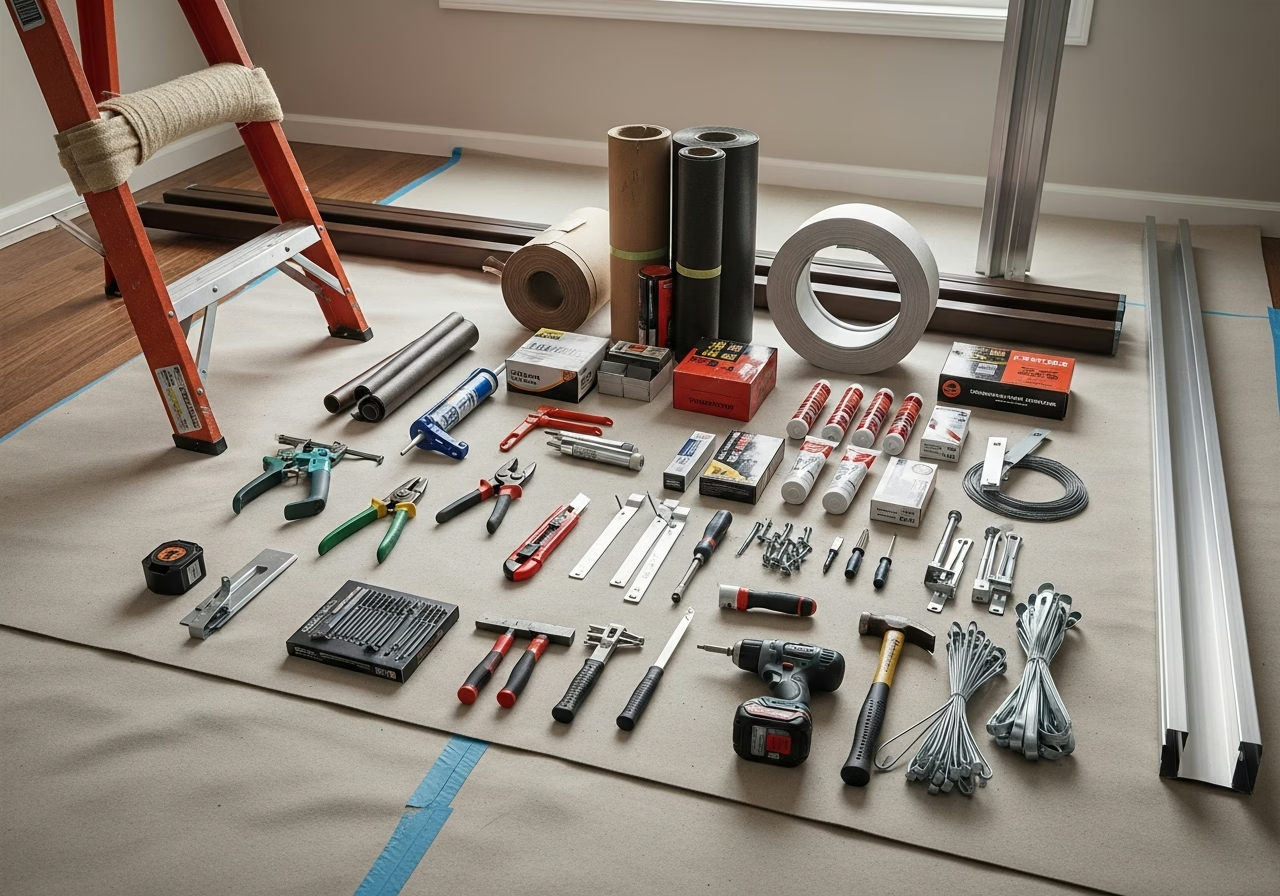
Required Equipment
| Equipment | Cost | Notes |
|---|---|---|
| Extension ladder (Class 1A) | $200–$400 | Must reach 1m above eavestrough |
| Ladder stabilizer / standoff | $40–$80 | Essential — prevents eavestrough damage |
| Garden trowel or gutter scoop | $5–$15 | For scooping debris |
| Work gloves (heavy duty) | $10–$20 | Protect against sharp debris and screws |
| Safety glasses | $5–$15 | Decomposed leaves harbour mould spores |
| Garden hose with spray nozzle | Already own | For flushing after cleaning |
| Bucket with hook | $10–$20 | Hangs on ladder for debris collection |
| N95 mask | $3–$5 | Recommended — decomposed leaf mould |
Safety Rules — Non-Negotiable
Ladder falls are a leading cause of home injury and death in Canada. If you choose to clean eavestroughs yourself:
Need professional exterior renovation?
Call RenoHouse at 1-289-212-2345 or get a free estimate today.
Get Free Estimate →- 1. Never work alone — Someone should be present and ideally spotting the ladder
- 2. Set the ladder on level ground — Use leg levellers on uneven terrain, never stack bricks
- 3. Follow the 4:1 rule — For every 4 feet of height, the base should be 1 foot from the wall
- 4. Never lean beyond your reach — Move the ladder instead. The "belt buckle" rule: if your belt buckle goes past the side rail, you're over-reaching
- 5. Three points of contact — Two hands + one foot, or two feet + one hand, at all times
- 6. Don't clean eavestroughs on a wet, windy, or icy day
- 7. Use a ladder stabilizer — It distributes weight, prevents eavestrough crushing, and increases stability
- 8. For anything above single-storey: hire a professional. The risk isn't worth the $150 savings.
When to Skip DIY and Call a Pro
- Your home is 2+ storeys
- Steep roof pitch (6:12 or greater)
- Sections over additions, dormers, or garages with difficult access
- You have any balance, mobility, or strength concerns
- Ice or wet conditions
Leaf Guard Options
Tired of cleaning eavestroughs twice a year? Leaf guards (gutter guards) reduce the frequency but come with their own trade-offs:
| Guard Type | Cost (per linear foot) | Effectiveness | Maintenance |
|---|---|---|---|
| Mesh screen | $3–$6 | Good | Needs periodic brush-off |
| Micro-mesh | $8–$15 | Very good | Occasional rinse |
| Reverse curve (helmet) | $10–$20 | Good for leaves | Pine needles get past |
| Foam insert | $2–$4 | Fair | Degrades in 3–5 years |
| Brush insert | $2–$5 | Fair | Collects debris internally |
Do Leaf Guards Eliminate Cleaning?
No. No leaf guard system is 100% maintenance-free, despite what some salespeople claim. What they do:- Reduce cleaning frequency from 2× per year to 1× per year or every 2 years
- Prevent large debris (leaves, twigs) from entering the eavestrough
- Reduce ice dam severity by keeping eavestroughs flowing
- Shingle grit accumulation (inevitable)
- Pine needles (pass through most guards)
- Decomposed organic matter (fine particles wash in)
- Ice buildup in winter
What Happens When You Don't Clean Eavestroughs
Neglecting eavestrough cleaning is a false economy. Here's what clogged gutters lead to — and what each consequence costs to fix:
1. Foundation Damage ($3,000–$15,000+)
Overflowing water pools around the foundation instead of being directed away by downspouts. This causes:
- Basement water infiltration
- Foundation erosion
- Increased hydrostatic pressure on foundation walls
- Accelerated foundation crack formation
2. Ice Dams ($500–$3,000 per incident)
Clogged eavestroughs trap water that freezes in winter, creating ice dams. Ice backs up under shingles, melts, and leaks into the attic, walls, and ceilings. Toronto's freeze-thaw cycles make this a recurring problem from December through March.
3. Fascia and Soffit Rot ($1,000–$5,000)
Standing water in clogged eavestroughs rots the wooden fascia board behind them. Once the fascia rots, eavestroughs sag and detach, and water penetrates the roof edge structure.
4. Landscape Erosion ($500–$2,000)
Overflowing water washes away mulch, topsoil, and plants directly below the overflow points. Over time, it can erode pathways and damage hardscaping.
5. Pest Nesting ($200–$500)
Standing water in eavestroughs attracts mosquitoes (Toronto's summer reality). Decomposing leaves attract carpenter ants. Birds and squirrels use the accumulated organic matter for nesting.
The math is simple: $300/year for professional cleaning vs. $3,000–$15,000+ for the damage caused by neglect. It's arguably the highest-ROI maintenance task for any Toronto homeowner.How to Choose a Cleaning Company in Toronto
- 1. Insurance — Verify they carry liability insurance and WSIB coverage. Ladder work without WSIB coverage exposes you to liability if a worker is injured on your property.
- 2. Reviews — Check Google Reviews and HomeStars. Look for consistent 4+ star ratings with specific mentions of thorough work.
- 3. Before/after photos — Good companies document their work with photos.
- 4. Downspout flushing included — This should be standard, not an add-on.
- 5. No pressure upselling — Be cautious of companies that use cleaning as a loss-leader to push expensive leaf guard installations.
- 6. Seasonal booking — Book fall cleaning in September or early October. Waiting until November means higher prices and limited availability.
Frequently Asked Questions
How much does eavestrough cleaning cost in Toronto?
Professional eavestrough cleaning in Toronto costs $150–$400 for a typical detached home in 2026. Townhouses and semis run $100–$200. The price depends on home height, linear footage of eavestrough, degree of clogging, and access difficulty. Most companies include downspout flushing in the price.
How often should I clean my eavestroughs in Toronto?
At minimum, twice per year — once in late spring (May/June) after seeds and blossoms fall, and once in late fall (November) after leaf drop is complete. Homes with many overhanging trees may need 3–4 cleanings per year. Homes with leaf guards can reduce this to once per year.
Can I clean my own eavestroughs?
For single-storey homes with safe ground-level access, DIY cleaning is feasible with proper equipment (extension ladder with stabilizer, gloves, safety glasses). For 2+ storey homes, steep roofs, or difficult access, hire a professional — ladder falls are a leading cause of serious injury in Canada. The $150–$300 cost of professional cleaning is not worth the risk.
Are leaf guards worth the investment in Toronto?
Leaf guards are worth considering if you have heavy tree coverage and are paying for 3+ cleanings per year. Micro-mesh guards ($1,000–$2,500 installed) can reduce cleaning frequency to once per year. However, no guard eliminates cleaning entirely — shingle grit and fine debris still accumulate. The investment typically pays for itself within 4–6 years through reduced cleaning costs.
What's the best time of year to clean eavestroughs in Toronto?
The most important cleaning is in late November, after Toronto's leaf drop is complete (most maples and oaks finish by mid-November). The second cleaning should be in late May or early June, after maple samaras (helicopters) and spring seeds have fallen. If you only clean once a year, make it the fall cleaning — going into winter with clogged gutters leads to ice dams and foundation damage.
Sources & References
Authoritative sources cited in this guide:
- Ontario Building Code — OBC official text
- Toronto Building Permits — City permit portal
- Tarion New Home Warranty — Ontario warranty regulator
- HCRA — Home Construction Regulatory Authority — Ontario builder/vendor licensing
Continue Reading
- How Often to Clean Gutters in Toronto — Seasonal Schedule & Costs
- Eavestrough & Roof Repair Guide Toronto
- Eavestrough Repair & Installation in GTA
Related Services