RenoHouse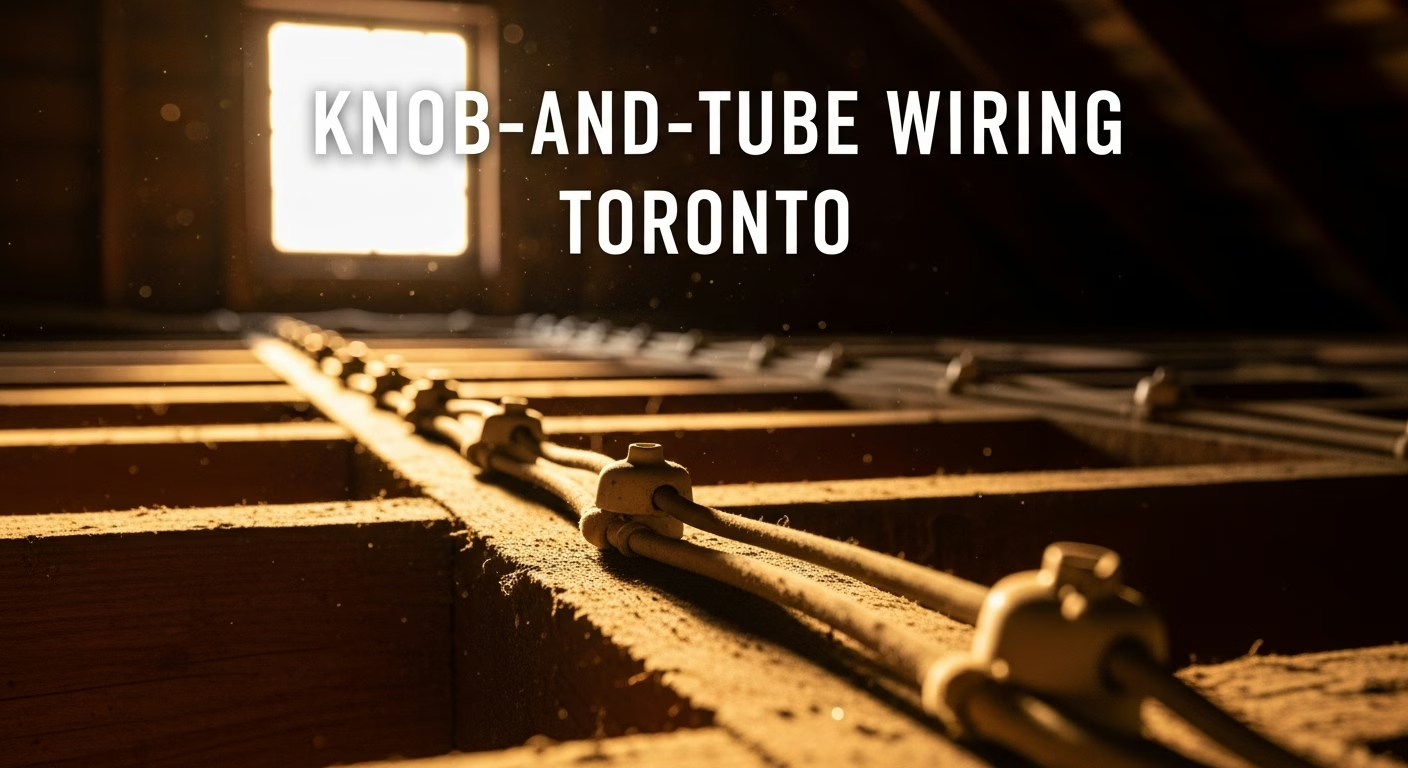

If you own or are buying a home in one of Toronto's older neighbourhoods — The Annex, Cabbagetown, Roncesvalles, High Park, Riverdale, or Leslieville — there's a real chance the house has knob-and-tube (K&T) wiring. This electrical system, standard from the 1880s through the 1940s, is still present in tens of thousands of Toronto homes and creates serious safety, insurance, and renovation challenges. For a comprehensive look at all electrical services, visit our Electrical Guide for Toronto Homeowners.
In 2026, full rewiring of a Toronto home to replace knob-and-tube costs $8,000–$15,000 for a typical 2-storey house, with large or complex homes reaching $20,000–$30,000. Partial rewiring runs $3,000–$8,000 depending on scope.
This guide explains what knob-and-tube wiring is, why it's dangerous, the insurance nightmare it creates, what rewiring costs, and how to navigate the process with the Electrical Safety Authority (ESA).
What Is Knob-and-Tube Wiring?
Knob-and-tube (K&T) wiring was the standard residential electrical installation method in North America from approximately 1880 to 1950. It gets its name from the two components that support the wiring:
- Knobs: White porcelain cylinders nailed to joists and studs, around which the wire is routed
- Tubes: Porcelain tubes that protect the wire where it passes through joists and studs
How K&T Differs from Modern Wiring
| Feature | Knob-and-Tube | Modern (NMD90 / Romex) |
|---|---|---|
| Conductors | 2 separate wires (hot + neutral) | 2 or 3 wires in one sheathed cable |
| Ground wire | ❌ No ground | ✅ Equipment ground included |
| Insulation | Rubber & cloth (deteriorates) | PVC (lasts 40+ years) |
| Capacity | 60-amp service typical | 100–200 amp standard |
| Arc fault protection | ❌ None | ✅ AFCI breakers available |
| Junction boxes | Often absent | Required at every connection |
| Splices | Soldered + taped (often exposed) | Wire nuts in covered boxes |
How to Identify K&T in Your Home
Look for these signs:
- White porcelain knobs on joists in the basement or attic
- Two separate wires running parallel (not bundled in a cable)
- Round, push-button light switches (though many have been replaced)
- Two-prong outlets (no ground pin) — though this alone doesn't confirm K&T
- Fuse box instead of a circuit breaker panel (common but not universal)
- Cloth or rubber-insulated wiring visible in the basement ceiling or attic
Why Knob-and-Tube Wiring Is Dangerous
K&T wiring was perfectly safe when installed according to the standards of its era. The problem is that it was designed for a world with far fewer electrical demands, and over 80–140 years, multiple factors have combined to make it a serious fire hazard:
1. No Ground Wire — Shock and Fire Risk
Modern wiring includes a ground wire that provides a safe path for electricity if something goes wrong. K&T has no ground, meaning:
- Electric shock risk is higher — especially in kitchens and bathrooms
- No path for fault current — increasing the risk of electrical fires
- Three-prong outlets on K&T circuits are misleading — even if someone added 3-prong receptacles, there's no actual ground
2. Deteriorating Insulation
The rubber and cloth insulation on K&T wiring degrades over decades, cracking and crumbling to expose bare copper conductors. This creates:
- Short circuit risk where wires cross or touch surfaces
- Arc fault risk where degraded insulation allows current to jump
- Fire risk especially in hot, dry attic spaces
3. Overloaded Circuits
K&T wiring was designed for an era of basic lighting and a few small appliances. A typical K&T circuit is rated for 15 amps. Modern homes routinely draw 100–200 amps for:
- Air conditioning
- Multiple computers and screens
- Kitchen appliances (microwave, dishwasher, instant pot)
- Electric vehicle chargers
- Space heaters
When K&T circuits are overloaded, the wires heat up beyond their rating. With deteriorated insulation and no arc-fault protection, this is a recipe for fire.
4. Insulation Conflicts
K&T wiring was designed to dissipate heat through open air circulation — the two wires run separately with air space around them. When blown-in insulation (cellulose, fibreglass) is added to walls or attics — a common Toronto energy retrofit — it buries the K&T wires, trapping heat and dramatically increasing fire risk.
Need professional electrical services?
Call RenoHouse at 1-289-212-2345 or get a free estimate today.
Get Free Estimate →Ontario Building Code prohibits insulation from being in contact with K&T wiring unless the circuit is de-energized (disconnected from power).
5. Handyman Modifications
Over decades, K&T wiring accumulates amateur modifications — improper splices, overloaded circuits, connected to modern panels incorrectly. These modifications are often the most dangerous aspect of a K&T system, more than the original wiring itself.
The Insurance Problem
This is often the issue that forces homeowners to act: many insurance companies in Ontario will not insure homes with active knob-and-tube wiring, or they charge significantly higher premiums.
Current Insurance Landscape (2026)
| Insurer Stance | What It Means | Approximate % |
|---|---|---|
| Will not insure | No policy available for homes with active K&T | ~40% of insurers |
| Insure with surcharge | Policy available but 15–30% premium increase | ~30% of insurers |
| Insure with conditions | Policy available if certified electrician inspects and approves | ~20% of insurers |
| Insure without restriction | Increasingly rare | ~10% of insurers |
What This Means for Homebuyers
If you're buying a Toronto home with K&T wiring:
- Get an electrical inspection before finalizing the purchase
- Contact your insurance broker before closing — confirm you can get insurance
- Budget for rewiring in your purchase price negotiation
- Ask the seller for disclosure on any known K&T wiring
What This Means for Current Homeowners
If you currently have K&T and your insurer finds out (claim, renewal questionnaire, home inspection):
- You may be given 60–90 days to remediate or face policy cancellation
- Your renewal premium may increase 15–30% immediately
- Shopping for a new insurer with known K&T is very difficult
Rewiring Costs in Toronto
Full Rewiring
| Home Size | Cost Range (CAD) | Timeline |
|---|---|---|
| Small (800–1,200 sqft) | $8,000–$12,000 | 3–5 days |
| Medium (1,200–2,000 sqft) | $10,000–$18,000 | 5–8 days |
| Large (2,000–3,000 sqft) | $15,000–$25,000 | 1–2 weeks |
| Very large / complex | $20,000–$30,000+ | 2–3 weeks |
What Full Rewiring Includes
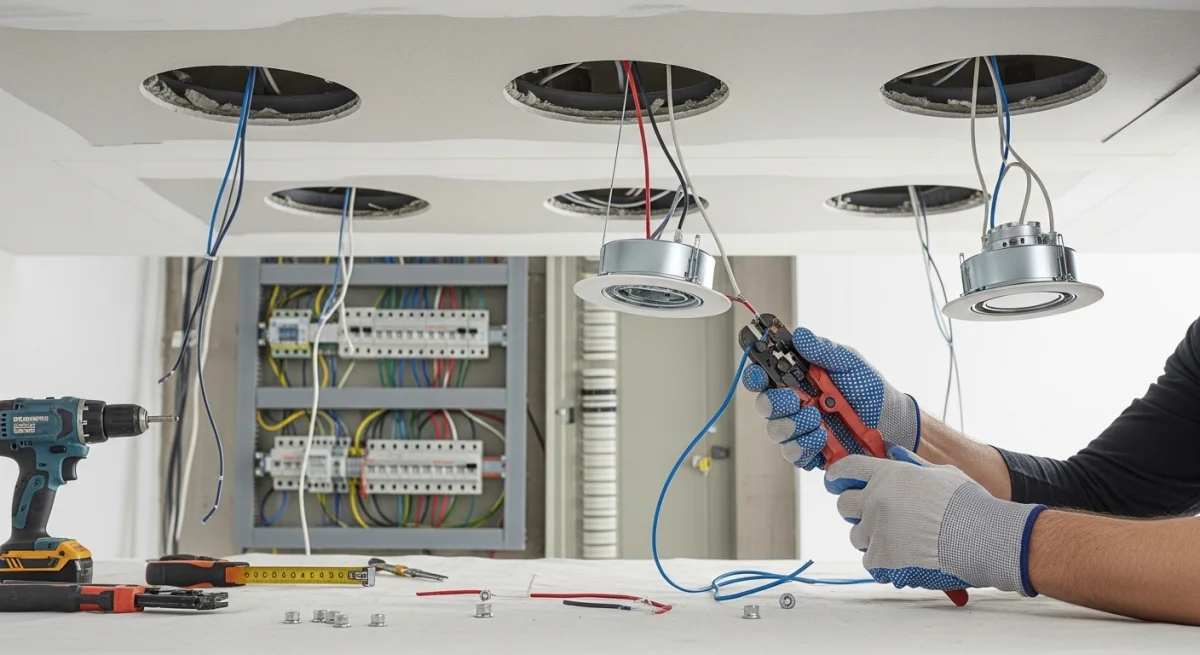
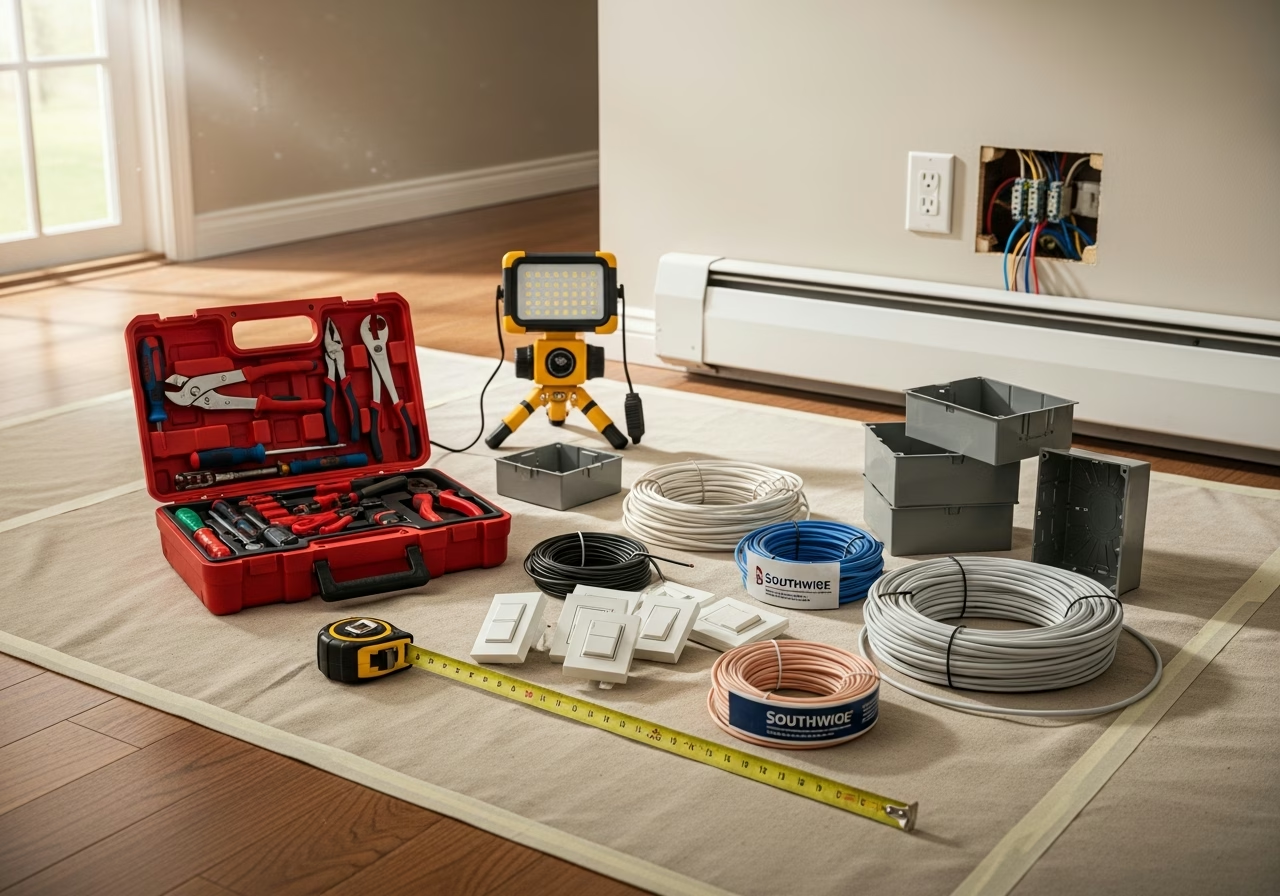
- 1. New electrical panel — Upgrade from fuse box to 100-amp or 200-amp breaker panel ($1,500–$3,000)
- 2. New NMD90 copper wiring throughout the home (14/2 for 15A circuits, 14/3 or 12/2 for 20A)
- 3. Grounded three-prong outlets replacing all two-prong receptacles
- 4. AFCI breakers on bedroom circuits (Ontario Electrical Safety Code requirement)
- 5. GFCI protection in kitchens, bathrooms, outdoors, and unfinished basements
- 6. Dedicated circuits for major appliances (fridge, microwave, dishwasher, laundry, A/C)
- 7. ESA inspection and approval
- 8. Removal of old K&T wiring where accessible (some may be left in place if de-energized)
Partial Rewiring ($3,000–$8,000)
Not every situation requires full rewiring. Partial rewiring addresses the most critical areas:
- Priority circuits: Kitchen, bathrooms, and laundry (GFCI-protected)
- High-use circuits: Living areas with heavy electrical loads
- Insulation conflict areas: Anywhere insulation contacts K&T wiring
- Panel upgrade: Replace fuse box with breaker panel even if some original circuits remain
- Insurance company accepts it (with electrician's certificate)
- Remaining K&T circuits are in good condition and lightly loaded
- Budget constraints require phased approach
- Home isn't being fully renovated
- Insurance company requires complete K&T removal
- Planning a major renovation (opening walls anyway — perfect time)
- Insulation retrofit planned (K&T must be removed from insulated areas)
- K&T insulation is severely deteriorated throughout
- Selling the home and want to maximize value
Cost Factors
- Home age and construction — Balloon-frame homes (common in Toronto pre-1930) are easier to fish wire through. Plaster and lath walls require more access holes.
- Accessibility — Basements with exposed joists are easy. Finished walls and ceilings require access holes that need patching ($500–$2,000 in plaster/drywall repair).
- Number of circuits — More circuits = more wire, more breakers, more time.
- Panel upgrade — If the existing panel is undersized or a fuse box, budget for upgrade ($1,500–$3,000).
- Permit and inspection fees — ESA permit costs vary but typically $200–$500.
ESA (Electrical Safety Authority) Requirements
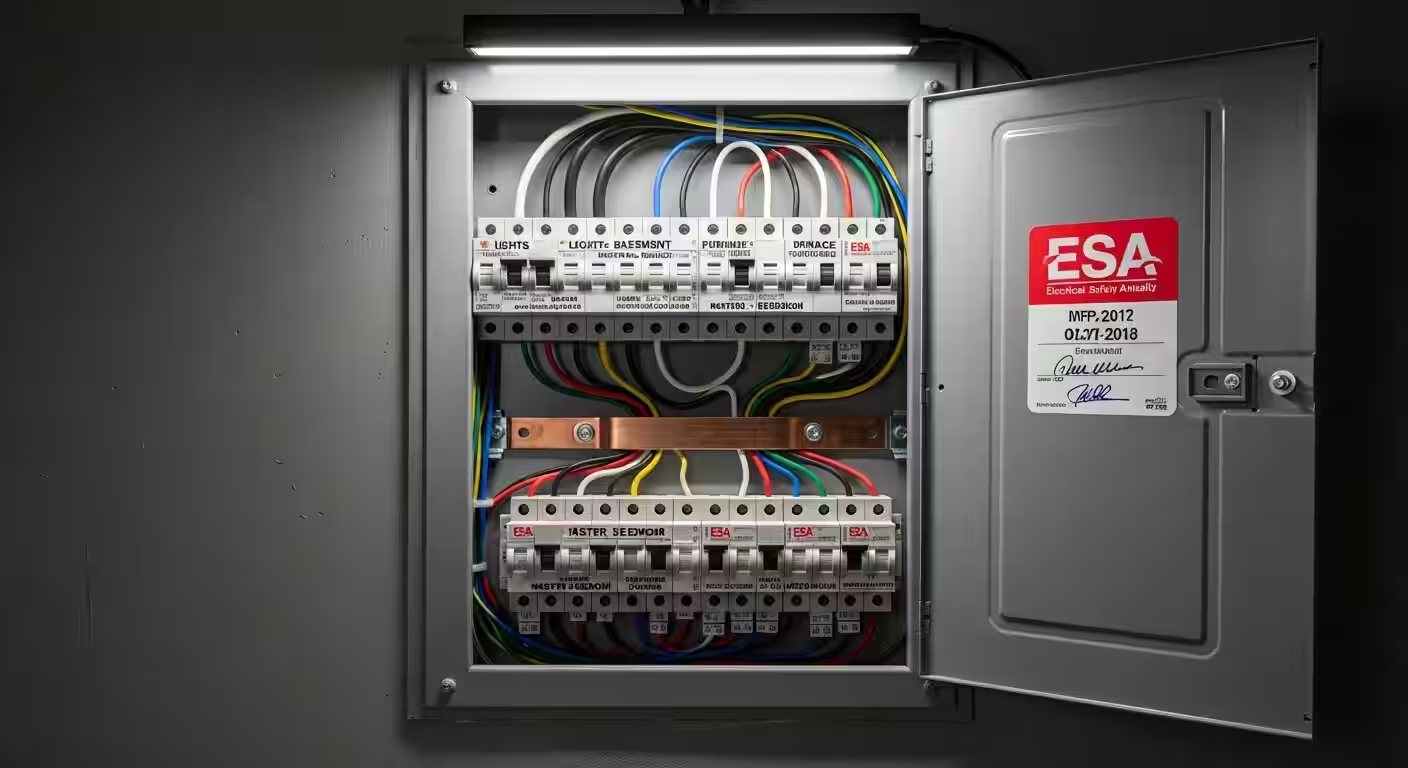
All electrical work in Ontario must be performed by a Licensed Electrical Contractor (LEC) and inspected by the Electrical Safety Authority (ESA). This is non-negotiable for rewiring projects.
The Process
- 1. Licensed electrician assesses the home — Determines scope of rewiring needed ($200–$400 for assessment)
- 2. Electrician obtains ESA permit — Before any work begins
- 3. Work completed — Following the Ontario Electrical Safety Code (OESC)
- 4. ESA inspection — An ESA inspector visits the property to verify all work meets code
- 5. Certificate of Inspection — Issued upon passing. This document is critical for:
- Home sale documentation
- Building permit compliance (if part of a renovation)
ESA Red Tags
If an ESA inspector identifies dangerous conditions (exposed wiring, improper connections, fire hazards), they can issue a defect notice or in severe cases a red tag requiring the utility to disconnect power until repairs are made. This is rare but happens with severely deteriorated or improperly modified K&T systems.
Toronto Neighbourhoods Most Affected
K&T wiring is concentrated in homes built before 1950. These Toronto neighbourhoods have the highest density of K&T-wired homes:

| Neighbourhood | Typical Home Era | K&T Likelihood |
|---|---|---|
| The Annex | 1880–1920 | Very high |
| Cabbagetown | 1860–1900 | Very high |
| Roncesvalles | 1900–1930 | High |
| High Park | 1900–1940 | High |
| Riverdale | 1880–1920 | Very high |
| Leslieville | 1890–1930 | High |
| The Junction | 1890–1930 | High |
| Trinity-Bellwoods | 1880–1920 | Very high |
| Danforth Village | 1910–1940 | High |
| Bloor West Village | 1920–1940 | Moderate–High |
| Long Branch | 1920–1950 | Moderate |
| Mimico | 1910–1940 | High |
| East York bungalows | 1940–1955 | Moderate |
Rewiring During Renovation — The Smart Move
If you're planning a kitchen renovation, bathroom remodel, or any project that opens walls, that is the ideal time to rewire. Why?
- Walls are already open — no additional drywall damage or repair costs
- Reduced labour — electrician can run wire freely without fishing through closed cavities
- Permit efficiency — one building permit can cover both renovation and electrical upgrade
- Cost savings — rewiring during a gut renovation adds only $5,000–$10,000 to the project vs. $10,000–$20,000+ as a standalone project
- Insurance and resale value — completed rewiring documented with ESA certificate adds measurable value
Frequently Asked Questions
How much does it cost to rewire a house in Toronto?
Full rewiring of a typical Toronto 2-storey home costs $8,000–$15,000 in 2026, including a panel upgrade, new wiring throughout, grounded outlets, AFCI/GFCI protection, and ESA inspection. Larger or more complex homes can run $20,000–$30,000. Partial rewiring (priority circuits only) costs $3,000–$8,000.
Will my insurance cover a home with knob-and-tube wiring?
Approximately 40% of Ontario insurers will not insure homes with active K&T wiring, and another 30% charge a 15–30% premium surcharge. Contact your insurance broker before purchasing a home with K&T. Some insurers will accept K&T if a licensed electrician inspects and certifies the wiring is in safe condition, but this is becoming increasingly rare.
Is knob-and-tube wiring legal in Toronto?
Existing K&T wiring is not illegal — you're not required to remove it simply because it exists. However, Ontario Building Code prohibits insulation from contacting active K&T wiring, and any new electrical work must meet current code standards. You cannot extend or add to K&T circuits — all new work must be modern NMD90 wiring with ESA-inspected connections.
Can I remove knob-and-tube wiring myself?
No. In Ontario, all electrical work (including K&T removal and rewiring) must be performed by a Licensed Electrical Contractor (LEC) and inspected by the ESA. DIY electrical work is illegal and extremely dangerous, especially with deteriorated wiring. Violations can result in fines, insurance claim denials, and liability in case of fire or injury.
How long does rewiring a house take?
A full rewiring of a typical Toronto home takes 3–10 working days depending on the home's size, construction type, and accessibility. Plaster and lath homes with limited access take longer than homes with open basements and accessible attics. Budget an additional 1–3 days for drywall patching and painting of access holes after the electrical work is complete.
Sources & References
Authoritative sources cited in this guide:
- Electrical Safety Authority (ESA) — Ontario electrical regulator
- Ontario Electrical Safety Code — OESC Section 26 / latest amendments
- Canadian Electrical Code Part I (CSA C22.1) — CEC standard
Continue Reading
- Knob & Tube Rewiring Toronto: Complete 2026 Guide
- Knob & Tube vs Modern Wiring: Toronto Homeowner Comparison (2026)
- Signs You Have Knob & Tube Wiring in Your Toronto Home
Related Services