RenoHouse

Toronto's housing stock is one of the oldest in Canada. Neighbourhoods like The Annex, Cabbagetown, Riverdale, and Leslieville are filled with charming century homes — but behind the character walls, the electrical systems often tell a different story. Outdated 60-amp panels, deteriorating knob-and-tube wiring, ungrounded outlets, and overloaded circuits are everyday realities for Toronto homeowners.
Whether you're planning a kitchen renovation in a Lawrence Park colonial, installing pot lights in a Leslieville semi, or upgrading an electrical panel in a Cabbagetown Victorian, understanding your home's electrical work is critical for safety, insurance compliance, and property value.
This guide covers every major residential electrical service Toronto homeowners need in 2026 — from panel upgrades and pot lights to EV charger installation and knob-and-tube rewiring. You'll find real costs, permit requirements, ESA inspection details, and practical advice to help you make informed decisions about your home's electrical system.
> Why this matters now: Ontario's Electrical Safety Code was updated for 2025–2026, insurance companies are cracking down on knob-and-tube policies, and the push toward electric vehicles and heat pumps means your panel needs more capacity than ever before.
---
Electrical Panel Upgrade: Why Toronto Homes Need More Power
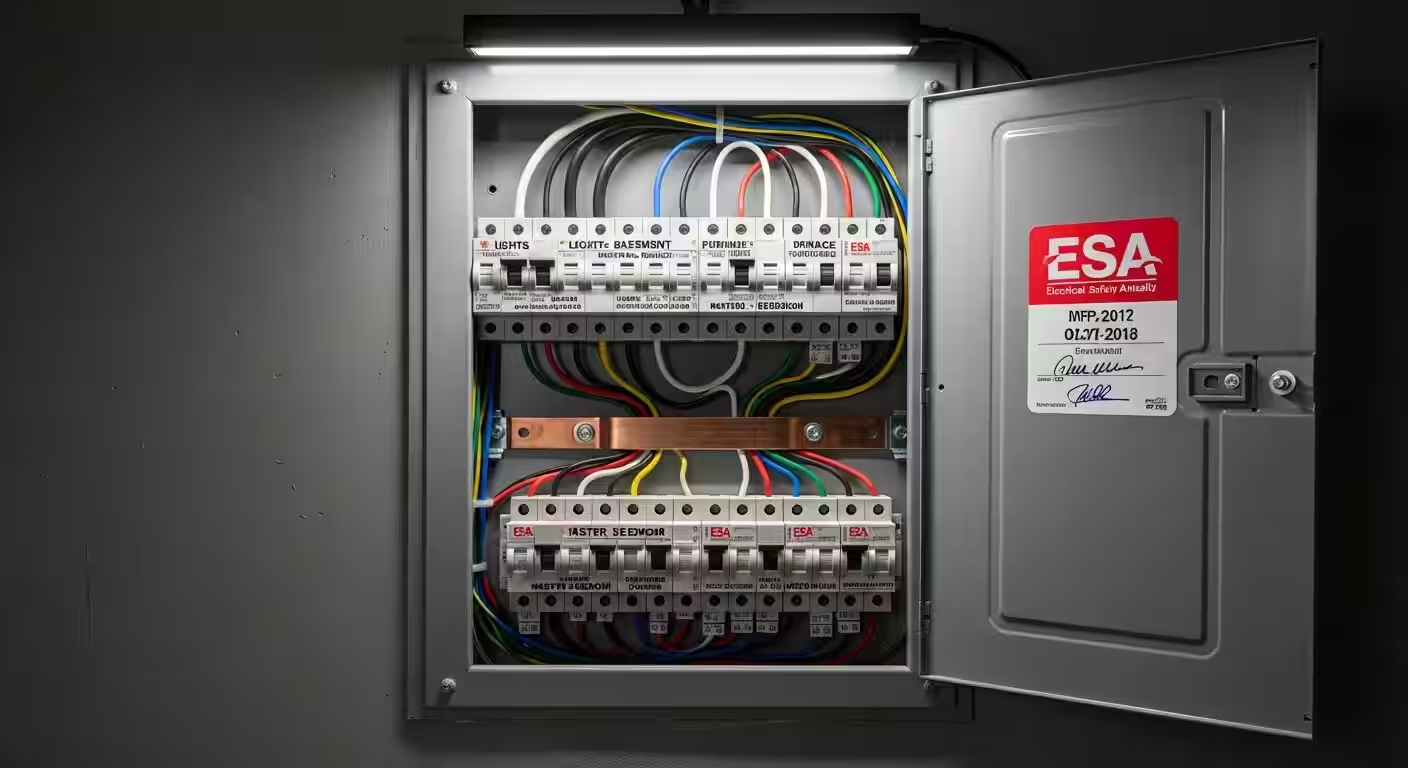
Your electrical panel (also called a breaker panel or load centre) is the heart of your home's electrical system. It receives power from the utility and distributes it to every circuit in your house. If your panel can't keep up with modern electrical demands, you'll experience tripping breakers, flickering lights, and potentially dangerous overloads.
Why Upgrade Your Electrical Panel?
Most Toronto homes built before 1980 have 60-amp or 100-amp panels — fine for the era when households had a fridge, a few lamps, and a television. Today's homes demand far more:
- Central air conditioning draws 30–50 amps
- Electric vehicle chargers (Level 2) need a dedicated 40-amp circuit
- Heat pumps require 30–60 amps
- Kitchen renovations with modern appliances need multiple 20-amp circuits
- Home offices with multiple monitors, servers, and equipment
- Hot tubs and saunas require dedicated 40–50 amp circuits
A 200-amp panel upgrade is now the gold standard for Toronto homes. It provides enough capacity for all modern needs, including future EV charging and electrification.
When Is an Electrical Panel Upgrade Required?
You must upgrade your panel when:
- 1. Your current panel is 60 amps — insurance companies may refuse coverage, and it's a fire risk
- 2. You're adding an EV charger — Level 2 chargers need 40 amps; most older panels can't accommodate this
- 3. You're doing a major renovation — adding a kitchen, basement apartment, or addition triggers code requirements
- 4. You have a Federal Pacific or Zinsco panel — known fire hazards; replace immediately
- 5. You're installing central AC or a heat pump — high-draw appliances need panel capacity
- 6. Your breakers trip frequently — a sign your panel is overloaded
Electrical Panel Upgrade Costs in Toronto (2026)
| Upgrade Type | Cost Range | Timeline |
|---|---|---|
| 60A → 100A panel upgrade | $1,500 – $2,500 | 1 day |
| 100A → 200A panel upgrade | $2,500 – $4,000 | 1–2 days |
| 200A panel with meter base | $3,500 – $5,000 | 1–2 days |
| Sub-panel installation | $1,000 – $2,000 | Half day |
| Panel relocation (basement to garage) | $3,000 – $5,500 | 1–2 days |
*Costs include labour, materials, ESA permit, and inspection.*
The ESA Permit and Inspection Process
In Ontario, all electrical panel work requires a permit from the Electrical Safety Authority (ESA). Here's how the process works:
- 1. Your electrician pulls an ESA permit before starting work (licensed electricians can do this online)
- 2. Work is completed according to the Ontario Electrical Safety Code
- 3. ESA inspector visits your home (typically within 5–10 business days)
- 4. Certificate of inspection is issued upon approval
- 5. You keep the certificate for your records and insurance
What Happens During a Panel Upgrade?
A typical 100A-to-200A upgrade involves:
- Toronto Hydro temporarily disconnects power (your electrician coordinates this)
- Old panel and meter base are removed
- New 200A panel, meter base, and main breaker are installed
- All existing circuits are reconnected and labeled
- New grounding system is verified or upgraded
- ESA inspection is scheduled
- Toronto Hydro reconnects and installs a new meter
The entire process takes 1–2 days, with a power outage of 4–8 hours on the first day.
---
Pot Lights Installation: Toronto's Most Popular Lighting Upgrade
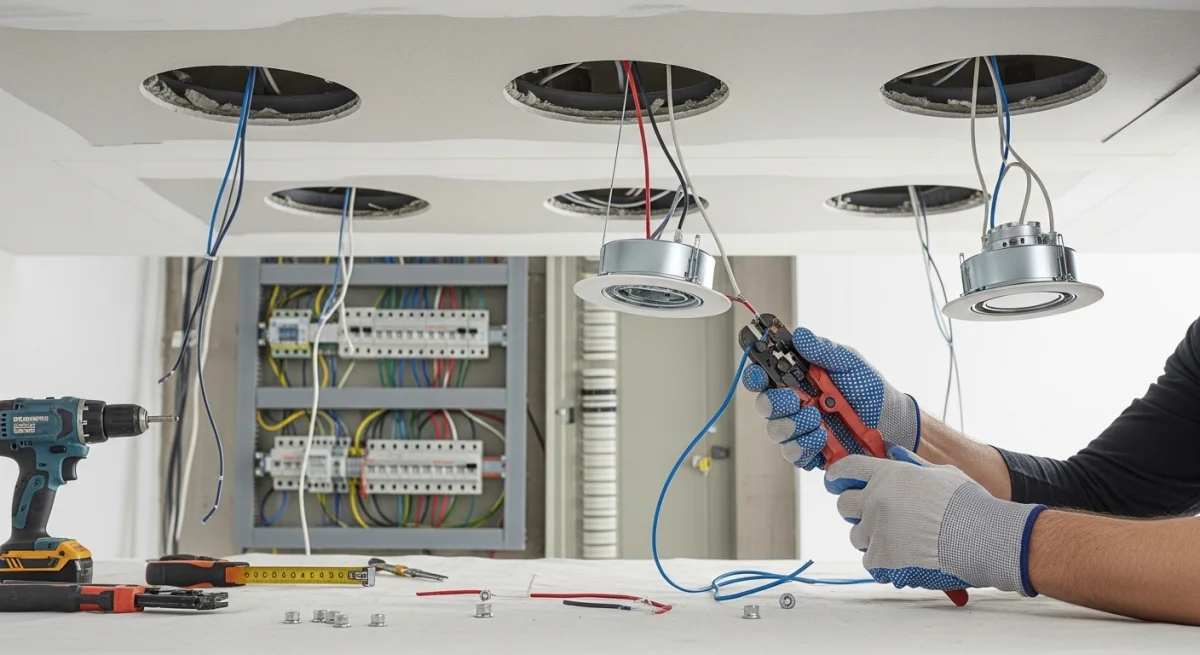
Pot lights — also spelled potlights and known as recessed lights or can lights — have become the single most requested electrical upgrade in Toronto home renovations. Walk into any recently renovated home in Forest Hill, The Annex, or Leslieville, and you'll see pot lights in every room — kitchens, living rooms, hallways, and bathrooms.
Why Pot Lights Are So Popular in Toronto
- Clean, modern aesthetic — no hanging fixtures to collect dust
- Low profile — perfect for Toronto homes with standard 8-foot ceilings
- Versatile lighting — combine with dimmers for any mood or task
- Increase home value — buyers expect modern lighting in renovated homes
- Energy efficient — LED pot lights use 75% less energy than halogen
Pot Lights Installation Costs in Toronto
| Service | Cost Per Light | Notes |
|---|---|---|
| New construction / open ceiling | $100 – $150 | Easiest install |
| Retrofit in existing ceiling (no attic access) | $150 – $250 | Most common in Toronto |
| Retrofit with insulation displacement | $200 – $300 | Older homes with blown insulation |
| Dimmer switch installation | $150 – $250 | Per switch, includes wiring |
| Smart dimmer (Lutron Caseta, etc.) | $200 – $350 | Per switch, includes setup |
LED and IC-Rated: What You Need to Know
All pot lights installed in Toronto in 2026 should be:
- LED — halogen pot lights are outdated, waste energy, and generate excessive heat
- IC-rated (Insulation Contact) — required by code when insulation touches the housing. In older Toronto homes with blown-in cellulose or fibreglass batts in the attic, IC-rated fixtures are mandatory
- Airtight — reduces heat loss through the ceiling, important for energy efficiency in our cold winters
- Dimmable — pair with a compatible LED dimmer (not all dimmers work with LED; cheap dimmers cause flickering)
Pot Light Layout Planning
Good pot light placement makes or breaks a room. Here are general guidelines:
- Spacing: Place lights 4–6 feet apart, and half that distance from walls
- Kitchen: Centre pot lights over counters and islands; 4-inch lights for task areas, 6-inch for general
- Living room: Use a grid pattern or perimeter layout; always install a dimmer
- Hallway: Space 4-inch pot lights 4–5 feet apart, centred in the corridor
- Bathroom: Place above vanity and in the shower area (must be wet-rated for shower locations)
A licensed electrician can help you plan the layout by marking positions on your ceiling before cutting — measuring twice and cutting once is essential when dealing with joists.
---
Light Fixture Installation: From Chandeliers to Under-Cabinet Lighting
Beyond pot lights, light fixture installation remains one of the most common electrical services Toronto homeowners request. The right fixture transforms a space — a statement chandelier in a Forest Hill dining room, pendant lights over a Leslieville kitchen island, or sleek under-cabinet LEDs in a modern condo kitchen.
Types of Light Fixture Installation
Chandeliers and large pendant lights ($150 – $300 per fixture installed)- Require a ceiling electrical box rated for the weight (standard boxes hold up to 50 lbs)
- Heavy chandeliers (over 50 lbs) need a fan-rated box or structural support
- Electrician ensures proper wire connections, mounting, and switch wiring
- Consider a dimmer — chandeliers on full blast are rarely flattering
- Popular over kitchen islands and dining tables
- Often require new electrical boxes if replacing a single fixture with multiple pendants
- Track or rail systems are an alternative that uses a single box
- Hardwired LED strips are the professional choice (vs. battery-powered stick-ons)
- Puck lights offer focused task lighting
- Requires running wire inside walls and cabinets — best done during a kitchen renovation
- Must meet code requirements for proximity to water (GFCI-protected circuits)
- Wet-rated fixtures required within shower enclosures
- LED fixtures with built-in drivers are increasingly popular
- Must be rated for outdoor use (wet or damp location)
- Motion sensors, photocells, and timers add functionality
- Low-voltage landscape lighting is a separate category (typically 12V systems)
When to DIY vs. Hire an Electrician for Light Fixtures
You can usually DIY (if you're comfortable with basic electrical):- Swapping an existing fixture for a new one of similar weight (one-for-one replacement)
- Installing a fixture where an electrical box and wiring already exist
- Replacing a standard switch with a dimmer (if the circuit is straightforward)
- There's no existing electrical box where you want the fixture
- You need to run new wire through walls or ceilings
- The fixture weighs more than 35 lbs (requires reinforced box)
- You're adding a fixture in a bathroom, outdoor, or wet location
- You're working in a home with knob-and-tube or aluminum wiring
- You're not 100% confident — electricity kills, and it's never worth the risk
---
Ceiling Fan Installation: Comfort and Efficiency Year-Round
Ceiling fan installation is a popular project in Toronto, especially in older homes without central air conditioning. A ceiling fan can make a room feel 4–6°C cooler in summer and, when reversed, push warm air down in winter to reduce heating costs.Ceiling Fan Installation Costs
| Service | Cost Range |
|---|---|
| Replace existing fan (box already rated) | $150 – $250 |
| Install fan where a light fixture exists (new fan-rated box) | $200 – $400 |
| Install fan in new location (no existing wiring) | $350 – $500 |
| Add a wall switch or remote control | $100 – $200 |
Key Requirements for Ceiling Fan Installation
- 1. Fan-rated electrical box — standard light fixture boxes are NOT rated for the weight and vibration of a ceiling fan. A fan-rated box is anchored to the ceiling joist or uses an expandable brace between joists. This is non-negotiable — a fan falling from the ceiling is a serious hazard.
- 2. Proper wiring — if you want independent control of the fan and light, you need a 3-conductor wire (14/3 or 12/3) from the switch to the fan location. Many older Toronto homes only have 2-conductor wire, which limits you to a single switch or requires a remote control.
- 3. Ceiling height — fans need at least 7 feet of clearance from floor to blade. For standard 8-foot ceilings, use a flush-mount or hugger fan. For 9–10 foot ceilings, use a downrod.
- 4. Remote vs. wall switch — remotes are convenient and eliminate the need for additional wiring. Modern smart fans (with WiFi) can be controlled via phone apps and voice assistants.
---
Electrical Repairs: Fixing Common Problems in Toronto Homes
Electrical repairs are the bread and butter of residential electrical services. Whether it's a flickering kitchen light, a dead outlet in the bedroom, or a breaker that keeps tripping, these issues shouldn't be ignored — they're often symptoms of deeper problems, especially in older Toronto homes.Common Electrical Repairs and Costs
| Problem | Likely Cause | Repair Cost |
|---|---|---|
| Flickering lights | Loose connection, overloaded circuit, or failing breaker | $100 – $250 |
| Dead outlet | Tripped GFCI, loose wire, or damaged outlet | $100 – $200 |
| Tripping breaker | Overloaded circuit, short circuit, or ground fault | $150 – $350 |
| Buzzing or humming from panel | Loose breaker, overloaded circuit | $150 – $300 |
| Warm or discoloured outlet | Overloaded outlet, poor connection — fire risk | $100 – $250 |
| Two-prong (ungrounded) outlets | No ground wire (common in pre-1960 Toronto homes) | $150 – $300/outlet |
| GFCI outlet not resetting | Faulty GFCI or downstream wiring issue | $100 – $200 |
| Light switch not working | Worn switch, loose connection | $100 – $150 |
| Burnt smell from outlet/switch | Arcing, melting wire — immediate fire risk | $150 – $400 |
When Electrical Repairs Become Urgent
Call an electrician immediately if you notice:- A burning or melting plastic smell near any outlet, switch, or panel
- Sparking when you plug in or unplug a device
- A warm or hot outlet or switch plate
- Frequent breaker trips that won't reset
- Any signs of scorching or discolouration on outlets or walls
These are signs of potential arc faults or overloaded connections — both are leading causes of residential electrical fires.
GFCI Outlets: A Simple Upgrade That Saves Lives
Ground Fault Circuit Interrupter (GFCI) outlets are required by code in all wet locations: kitchens, bathrooms, laundry rooms, garages, and outdoor areas. They detect ground faults (current leaking to ground through water or a person) and cut power in milliseconds.Many older Toronto homes lack GFCI protection in these areas. Upgrading is quick ($100–$200 per outlet installed) and dramatically improves safety. If your bathroom or kitchen outlets don't have the "Test" and "Reset" buttons, they need to be replaced.
---
Knob-and-Tube Wiring: Toronto's Biggest Electrical Challenge
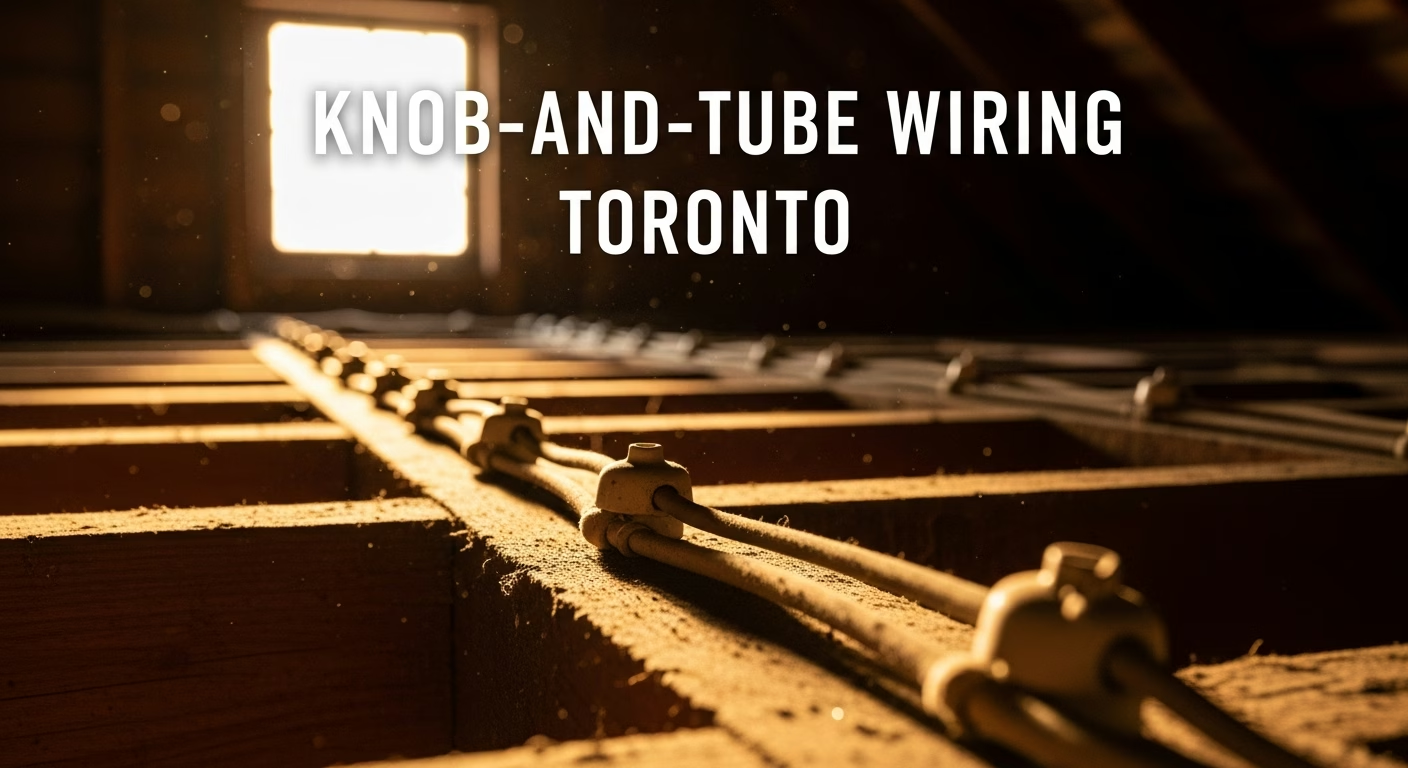
Knob-and-tube (K&T) wiring is one of the defining electrical issues in Toronto. Homes built before 1950 — particularly in The Annex, Cabbagetown, Riverdale, Leslieville, and Roncesvalles — were originally wired with this early system, and thousands of Toronto homes still have it hidden behind walls and in attics.What Is Knob-and-Tube Wiring?
K&T wiring uses individual hot and neutral wires (no ground wire) strung through ceramic knobs and tubes in the wall and ceiling cavities. When it was installed, it was state of the art. The problem is age and context:
- No ground wire — no protection against ground faults
- Rubber and cloth insulation — degrades and crumbles over decades, exposing bare copper
- Not designed for modern loads — circuits are typically 15 amps with no capacity for modern appliances
- Insulation contact is dangerous — K&T wiring is designed to dissipate heat through air; when blown-in insulation covers it, the wires overheat
Insurance and Knob-and-Tube Wiring
This is where K&T becomes a financial issue, not just a safety one:
- Many insurance companies in Ontario will not insure homes with active K&T wiring — or they charge significantly higher premiums
- If you're buying a pre-1950 home, your mortgage lender may require a certificate from a licensed electrician confirming K&T is removed or decommissioned
- Some insurers accept a partial decommissioning — where K&T is verified as inactive and all active circuits are modern wiring
- Getting a clear answer from your insurer before you buy is essential
Knob-and-Tube Rewiring Costs in Toronto
| Service | Cost Range | Notes |
|---|---|---|
| Full home rewire (small 2-bedroom) | $8,000 – $12,000 | Includes new panel |
| Full home rewire (3-bedroom semi) | $12,000 – $18,000 | Most common in Toronto |
| Full home rewire (large detached) | $15,000 – $25,000 | Forest Hill, Lawrence Park homes |
| Partial decommission (K&T abandoned in place) | $3,000 – $6,000 | May satisfy insurance |
| K&T inspection and report | $200 – $400 | Required for insurance/mortgage |
---
EV Charger Installation: Preparing Your Toronto Home for Electric Vehicles
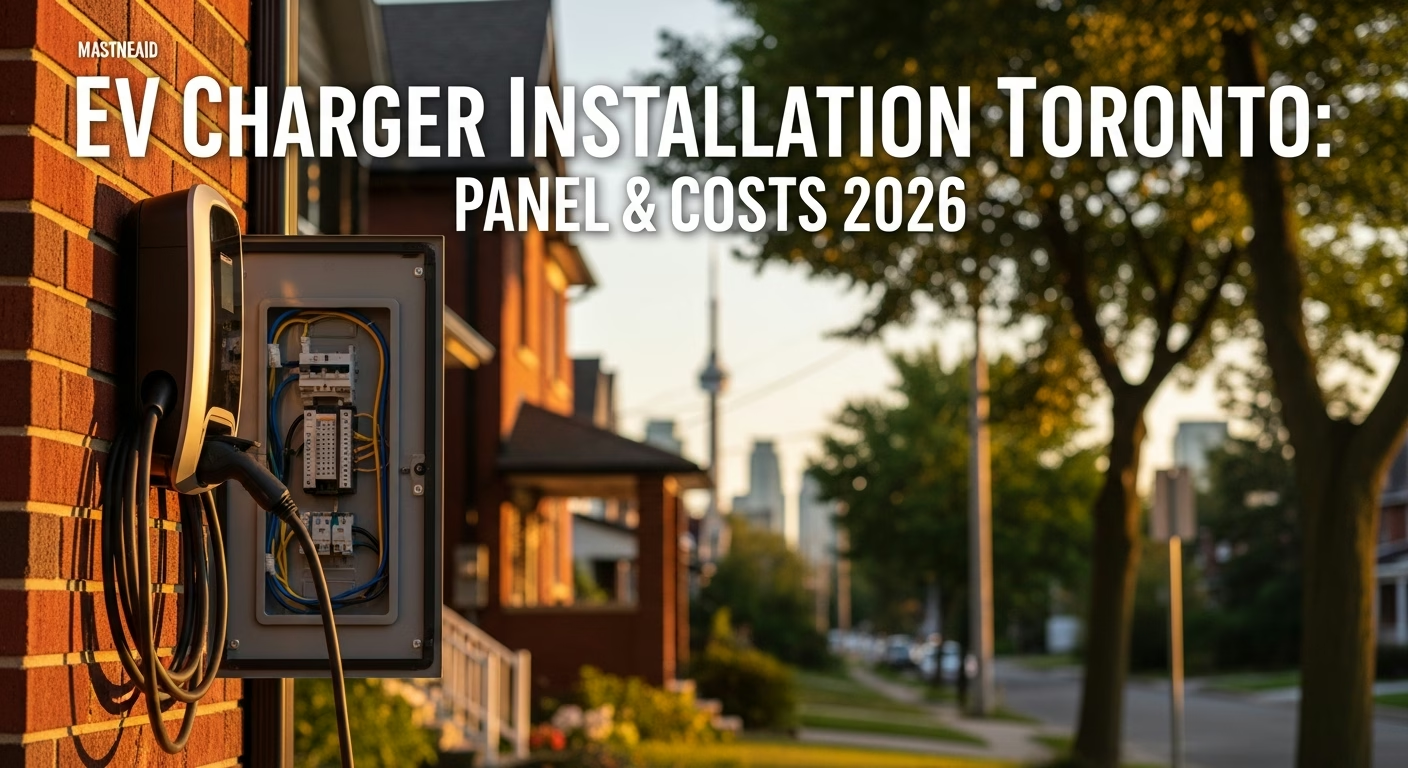
With EV adoption accelerating across Ontario, EV charger installation has become one of the fastest-growing residential electrical services in Toronto. A Level 2 home charger is vastly faster than a standard wall outlet and is essential for any EV owner.
Level 1 vs. Level 2 Charging
| Feature | Level 1 (Standard Outlet) | Level 2 (Dedicated Charger) |
|---|---|---|
| Voltage | 120V | 240V |
| Charging speed | 5–8 km of range per hour | 30–50 km of range per hour |
| Overnight charge (10 hours) | 50–80 km | 300–500 km |
| Dedicated circuit required? | No (but recommended) | Yes — 40A or 50A |
| Installation cost | $0 (existing outlet) | $1,500 – $3,000 |
EV Charger Installation Costs in Toronto
| Component | Cost Range |
|---|---|
| Level 2 charger unit (ChargePoint, Grizzl-E, Tesla Wall Connector) | $500 – $1,200 |
| Electrical installation (new circuit from panel to garage) | $800 – $1,500 |
| Panel upgrade if needed (100A → 200A) | $2,500 – $4,000 |
| ESA permit and inspection | Included with licensed install |
| Total typical cost | $1,500 – $3,000 |
Panel Capacity: The Hidden EV Charger Cost
Here's what catches many Toronto homeowners off guard: your panel needs spare capacity for a 40A EV charger circuit. If you have a 100A panel that's already near capacity (central AC, electric stove, dryer), you'll need a panel upgrade to 200A before the charger can be installed. This can add $2,500–$4,000 to the project.
An electrician can perform a load calculation to determine if your current panel has enough room. This is a quick, inexpensive assessment that should happen before you buy your charger.
Need professional electrical services?
Call RenoHouse at 1-289-212-2345 or get a free estimate today.
Get Free Estimate →EV Charger Rebates and Incentives (Ontario 2026)
- Canada Greener Homes Grant — check current availability at nrcan.gc.ca for potential rebates on EV charging infrastructure
- Ontario-specific programs — provincial incentives change frequently; verify current offerings before purchasing
- Utility programs — Toronto Hydro and other utilities occasionally offer time-of-use incentives for off-peak EV charging
- Employer programs — some companies offer EV charger subsidies as employee benefits
---
Electrical Renovation: Room-by-Room Requirements
Electrical renovation work is often the most complex part of a home renovation because it touches every other trade. Whether you're gutting a kitchen, finishing a basement, or adding a bathroom, the electrical requirements are governed by the Ontario Electrical Safety Code — and getting them right the first time saves enormous headaches.Kitchen Electrical Requirements
The kitchen is the most electrically demanding room in a modern home:
- Minimum two 20A small appliance circuits (split receptacles above counters)
- Dedicated circuit for the dishwasher (20A)
- Dedicated circuit for the refrigerator (15A or 20A)
- Dedicated circuit for the microwave (20A) — if it's a built-in or over-the-range model
- 240V circuit for electric range/oven (40A or 50A)
- GFCI protection on all countertop receptacles
- Under-cabinet lighting on a separate switch
- Island outlets — code requires outlets on kitchen islands; floor outlets or pop-up outlets are common solutions
A kitchen electrical renovation typically adds 6–8 new circuits. Budget $2,000–$4,000 for kitchen electrical work during a full renovation.
Bathroom Electrical Requirements
- GFCI protection on all outlets (mandatory)
- Exhaust fan — code requires mechanical ventilation; fan must be vented to the exterior (not the attic)
- Dedicated circuit for heated floors if installing radiant heat
- Wet-rated lighting in the shower/tub area
- Proper switch placement — switches must be outside the shower zone
Basement Electrical Requirements
Finishing a basement in Toronto triggers specific code requirements:
- Separate circuits for the basement (can't piggyback on main floor)
- Smoke detectors — hardwired, interconnected with the rest of the house
- AFCI protection — Arc Fault Circuit Interrupters are now required on all bedroom circuits and many general-use circuits in new installations
- Egress requirements — if creating a bedroom, you need proper egress windows (not electrical, but often coordinated)
- Bathroom rough-in — plan electrical for a future bathroom even if not finishing it immediately
Hot Tub / Spa Wiring
Hot tubs are popular in Toronto backyards, and the electrical requirements are strict:
- Dedicated 240V circuit — typically 40A or 50A depending on the tub
- GFCI protection — a GFCI breaker in the panel is required
- Disconnect switch — a visible, lockable disconnect must be installed within sight of the hot tub, at least 1.5 metres away
- Buried conduit — underground wiring from house to hot tub location
- Cost: $1,500–$3,000 depending on distance from panel
---
Electrical Safety and Code Compliance in Ontario
All electrical work in Ontario is governed by the Ontario Electrical Safety Code (OESC), which is based on the Canadian Electrical Code with Ontario-specific amendments. The Electrical Safety Authority (ESA) is the regulator that enforces the code through permits and inspections.
When Do You Need an ESA Permit?
Permits are required for:- Any new wiring or circuit installation
- Electrical panel upgrades or replacements
- Adding or moving outlets, switches, or light fixtures to new locations
- EV charger installation
- Hot tub wiring
- Any work that modifies the electrical system
- Replacing an existing outlet or switch (one-for-one, same type)
- Replacing an existing light fixture (same location, standard fixture)
- Replacing a circuit breaker (same rating)
ESA Inspections: What to Expect
When an ESA inspector visits your home:
- 1. They'll verify the work matches the notification (permit)
- 2. All connections, materials, and methods are checked against code
- 3. Panel labelling and circuit identification are reviewed
- 4. Grounding and bonding are verified
- 5. A Certificate of Inspection is issued (or deficiencies noted for correction)
Hiring Licensed vs. Unlicensed Electricians
In Ontario, electricians must hold a Certificate of Qualification (C of Q) — specifically a 309A Construction and Maintenance Electrician licence. Master Electricians have additional qualifications and can pull permits.
Why this matters to you:- Only licensed electricians (or their supervised apprentices) can legally perform electrical work in Ontario
- Unlicensed work voids your home insurance
- If there's a fire caused by unlicensed electrical work, your insurance claim will be denied
- Unlicensed work won't pass ESA inspection, and you'll pay to have it redone properly
---
Toronto Electrical Services: Complete Cost Guide (2026)
Here's a comprehensive breakdown of what you can expect to pay for common electrical work in Toronto. All costs include labour, standard materials, and ESA permits where applicable.
| Service | Cost Range | Time |
|---|---|---|
| Electrical panel upgrade (100A → 200A) | $2,500 – $4,000 | 1–2 days |
| Sub-panel installation | $1,000 – $2,000 | Half day |
| Pot light installation (per light) | $150 – $300 | 30–60 min each |
| Pot light package (6 lights + dimmer) | $1,200 – $2,000 | Half day |
| Light fixture installation (per fixture) | $100 – $300 | 30–90 min |
| Ceiling fan installation | $200 – $500 | 1–3 hours |
| Chandelier installation | $200 – $400 | 1–2 hours |
| Outlet installation (new location) | $150 – $300 | 1–2 hours |
| Outlet replacement (existing) | $80 – $150 | 30 min |
| GFCI outlet installation | $100 – $200 | 30–60 min |
| USB outlet installation | $100 – $180 | 30 min |
| Switch replacement | $80 – $150 | 30 min |
| Dimmer switch installation | $100 – $200 | 30–60 min |
| Smart switch installation | $150 – $250 | 30–60 min |
| Knob-and-tube rewiring (full home) | $8,000 – $18,000 | 3–7 days |
| Knob-and-tube inspection report | $200 – $400 | 2 hours |
| EV charger installation (Level 2) | $1,500 – $3,000 | Half day |
| Hot tub / spa wiring | $1,500 – $3,000 | 1 day |
| Whole-home surge protector | $300 – $600 | 1–2 hours |
| Smoke detector installation (hardwired) | $100 – $200 each | 30–60 min |
| Generator hookup (transfer switch) | $1,500 – $3,000 | Half day |
| Kitchen electrical (full renovation) | $2,000 – $4,000 | 1–2 days |
| Bathroom electrical (full renovation) | $800 – $1,500 | Half day |
| Basement electrical (finishing) | $3,000 – $6,000 | 2–4 days |
| Service call / troubleshooting (first hour) | $100 – $200 | 1 hour |
*Costs are estimates for the Greater Toronto Area. Actual prices vary based on home age, accessibility, and scope of work.*
---
How to Choose an Electrician in Toronto
Not all electricians are equal. Here's how to find a qualified, reliable professional for your electrical services:
1. Verify Their Licence
Ask for their 309A Construction and Maintenance Electrician licence number. You can verify it through the Ontario College of Trades. Don't accept excuses — if they can't show a licence, they're not legal.
2. Confirm ESA Registration
Licensed electricians in Ontario are registered with the ESA and can pull permits electronically. Ask: "Will you be pulling an ESA permit for this work?" If the answer is no (for work that requires a permit), walk away.
3. Check Insurance
Your electrician should carry:
- $2 million general liability insurance (minimum)
- WSIB (Workplace Safety and Insurance Board) coverage — protects you if a worker is injured on your property
Ask for certificates. A professional will provide them without hesitation.
4. Get Multiple Quotes
For any project over $500, get three written quotes. Compare:
- Scope of work (are they quoting the same thing?)
- Materials specified (brand and type of panel, fixtures, wire)
- Timeline
- ESA permit inclusion
- Warranty on labour
5. Read Reviews — But Read Them Carefully
Google Reviews, HomeStars, and Homestars are useful, but look for:
- Specific project descriptions (not just "great job!")
- Photos of completed work (clean, organized panels are a sign of quality)
- Responses to negative reviews (how does the company handle complaints?)
6. Ask About Warranty
Reputable electricians offer a 1–2 year warranty on labour in addition to manufacturer warranties on materials. ESA-approved work provides an additional layer of accountability.
---
10 Electrical Mistakes Toronto Homeowners Should Avoid
1. Ignoring Knob-and-Tube Wiring
"It's been working for 80 years" is not a safety strategy. K&T with degraded insulation is a fire waiting to happen — especially when covered by blown-in insulation.
2. Hiring Unlicensed Electricians to Save Money
You'll save 20–30% upfront and risk your insurance coverage, your home's resale value, and your family's safety. The math doesn't work.
3. Overloading Circuits with Power Bars
Plugging a power bar into a power bar (daisy chaining) and running a space heater, hair dryer, and microwave on the same circuit is a recipe for a fire. Each high-draw appliance needs a dedicated circuit.
4. DIY Electrical in Wet Locations
Bathrooms, kitchens, outdoor areas, and basements have specific code requirements (GFCI, wet-rated fixtures, circuit ratings). DIY mistakes in these areas are the most dangerous.
5. Skipping the ESA Permit
Unpermitted electrical work is technically illegal, voids insurance, and creates problems when you sell. The permit typically costs $100–$250 — it's a fraction of the project cost.
6. Using the Wrong Wire Gauge
Using 14-gauge wire on a 20-amp circuit (it should be 12-gauge) is a fire hazard. Wire gauge must match the circuit breaker rating. This is non-negotiable.
7. Burying Junction Boxes Behind Drywall
Every junction box must remain accessible — no exceptions. If a drywaller covers a junction box, it must be uncovered. This is one of the most common code violations in renovations.
8. Not Upgrading the Panel Before a Major Renovation
Adding a kitchen, finishing a basement, and installing an EV charger on a 100A panel is a recipe for constant breaker trips. Upgrade the panel first.
9. Ignoring Aluminum Wiring Connections
Homes built in the late 1960s and early 1970s may have aluminum wiring — not as dangerous as K&T, but connections require special anti-oxidant compound and approved connectors (like AlumiConn). Standard connections cause overheating.
10. Choosing the Cheapest Quote Without Asking Why It's Cheap
If one quote is 40% lower than the others, they're either cutting corners (wrong materials, no permit, uninsured) or they don't understand the scope. Always ask what's included — and what's not.
---
Related Guides
Dive deeper into specific topics:
Explore related renovation topics:
Explore related renovation topics:
Frequently Asked Questions: Electrical Services in Toronto
How much does it cost to upgrade an electrical panel in Toronto?
A typical electrical panel upgrade from 100A to 200A costs $2,500–$4,000 in Toronto, including the panel, breakers, meter base (if needed), labour, and ESA permit. A 60A to 100A upgrade is slightly less at $1,500–$2,500. Costs vary based on your home's age and the complexity of the existing wiring.
Do I need a permit for pot light installation in Toronto?
Yes. Installing pot lights involves adding new wiring and fixtures, which requires an ESA notification (permit). Your licensed electrician handles this — it's a standard part of the process. The permit cost is typically $100–$200 and is usually included in the installation quote.
How much do pot lights cost in Toronto?
Expect to pay $150–$300 per pot light installed in an existing ceiling. A typical kitchen project with 6 pot lights and a dimmer switch runs $1,200–$2,000. New construction with open ceilings is cheaper at $100–$150 per light.
Can I get insurance on a home with knob-and-tube wiring?
It depends on the insurer. Some Ontario insurance companies will not insure homes with active K&T wiring, while others will insure with conditions (higher premiums, decommissioning plan, or inspection report). Always disclose K&T wiring to your insurer — non-disclosure can void your entire policy.
How long does a full home rewire take in Toronto?
A full rewire of a typical Toronto semi-detached home takes 3–5 days of electrical work, plus ESA inspection. If walls are open (during a renovation), it's faster. If the electrician is fishing wires through finished walls, it takes longer. Expect minor drywall patching afterward.
Is it worth upgrading from 100A to 200A?
Yes — almost always. A 200A panel provides headroom for EV chargers, heat pumps, central AC, kitchen renovations, and future needs. If you're spending $2,500–$4,000 on a panel upgrade, going to 200A ensures you won't need to upgrade again. The incremental cost from 100A to 200A (vs. staying at 100A) is minimal.How do I know if my home has knob-and-tube wiring?
Check your basement and attic — these are the easiest places to spot K&T. Look for white ceramic knobs nailed to joists (holding individual wires) and ceramic tubes passing through structural members. If your home was built before 1950, assume K&T until proven otherwise. A licensed electrician can do a thorough inspection for $200–$400.
What's the difference between GFCI and AFCI protection?
GFCI (Ground Fault Circuit Interrupter) protects against electric shock by detecting current flowing to ground (through water or a person). Required in wet locations. AFCI (Arc Fault Circuit Interrupter) protects against fires by detecting dangerous electrical arcs in damaged wiring. Required on bedroom circuits and increasingly on other circuits in new installations.Can I install an EV charger myself in Toronto?
Legally, no — unless you are a licensed electrician. EV charger installation requires a new 240V circuit, often 40A or 50A, and an ESA permit. The wiring, circuit breaker, and connections must be done by a licensed 309A electrician. You can mount the charger unit on the wall yourself, but the electrical connection must be done by a pro.How often should I have my home's electrical system inspected?
There's no legal requirement for periodic inspections, but it's wise to have an electrical safety inspection every 5–10 years, especially if your home is over 30 years old. An inspection costs $200–$400 and can identify loose connections, overloaded circuits, degraded wiring, and code violations before they become dangerous. If you're buying a home, always include an electrical inspection in your due diligence.
---
Get a Free Estimate for Your Electrical Project
Whether you need a panel upgrade, pot lights, or a full rewire, choosing the right electrician makes all the difference. Toronto's older homes deserve professionals who understand the unique challenges of century-old wiring, plaster walls, and outdated panels.
Ready to get started? Contact us for a free, no-obligation estimate on any residential electrical service in the Greater Toronto Area. We're licensed, ESA-registered, insured, and backed by hundreds of 5-star reviews from Toronto homeowners.📞 Call or text for a same-day quote — we serve Toronto, East York, North York, Scarborough, Etobicoke, and the GTA.
Sources & References
Authoritative sources cited in this guide:
- Electrical Safety Authority (ESA) — Ontario electrical regulator
- Ontario Electrical Safety Code — OESC Section 26 / latest amendments
- Canadian Electrical Code Part I (CSA C22.1) — CEC standard
Continue Reading