RenoHouse

# Basement Sauna Installation Toronto: Complete 2026 Cost & Permit Guide
Quick answer. Roughly 90% of residential saunas in the GTA are installed in basements — and for good reason. Cooler ambient temperatures, available square footage, proximity to electrical panels and floor drains, and concrete slabs that simplify waterproofing make the basement the most cost-effective location for a year-round wellness amenity.Roughly 90% of residential saunas in the GTA are installed in basements — and for good reason. Cooler ambient temperatures, available square footage, proximity to electrical panels and floor drains, and concrete slabs that simplify waterproofing make the basement the most cost-effective location for a year-round wellness amenity. This pillar guide consolidates everything Toronto homeowners need to know in 2026 — from realistic CAD pricing to City of Toronto permits, ESA compliance, heater sizing, ventilation, and resale-value impact.
Realistic 2026 all-in costs in the GTA: prefab infrared from $6,000–$12,000, prefab Finnish kits $10,000–$20,000, semi-custom Finnish builds $18,000–$32,000, and luxury hybrid wellness suites with cold plunge $32,000–$60,000+. Permitting runs $300–$800, ESA filing starts at $88, and a typical project closes in 2–8 weeks depending on scope.
Why Basements Dominate Toronto Sauna Installs
Toronto's housing stock skews to detached and semi-detached homes built between 1950 and 1990, with 1,000–1,800 sq ft unfinished basements. Ceiling heights of 7'6"–8'6" comfortably allow finished sauna ceilings at the OBC-required 7'0" minimum. Concrete slabs simplify drainage and waterproofing relative to wood subfloors above grade. The mechanical room — with its electrical panel, water lines, and drain stack — is usually only a few feet away.
Toronto's six-month heating season (November–April) also means a basement sauna gets four-season utilization, unlike outdoor barrel saunas that see 3-season use. Demand concentrates in Forest Hill, Rosedale, Lawrence Park, Yorkville, Leaside, The Beaches, and across the GTA in Oakville, Mississauga (Lorne Park), Vaughan/Woodbridge, Markham (Cachet, Unionville), and Bayview Hill in Richmond Hill.
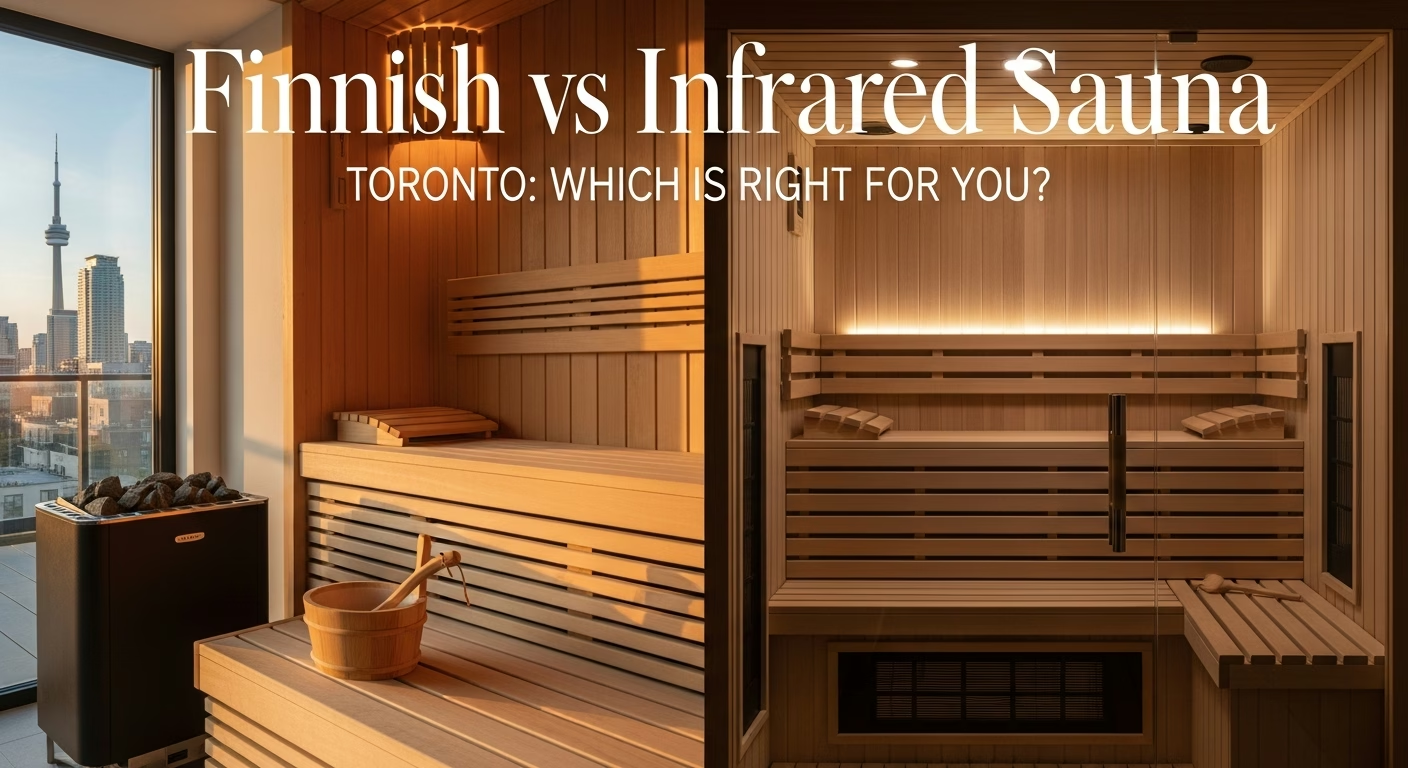
For homeowners weighing different sauna technologies for their basement, see our detailed comparison: Finnish vs Infrared Sauna Toronto.
Sauna Types & 2026 GTA Pricing
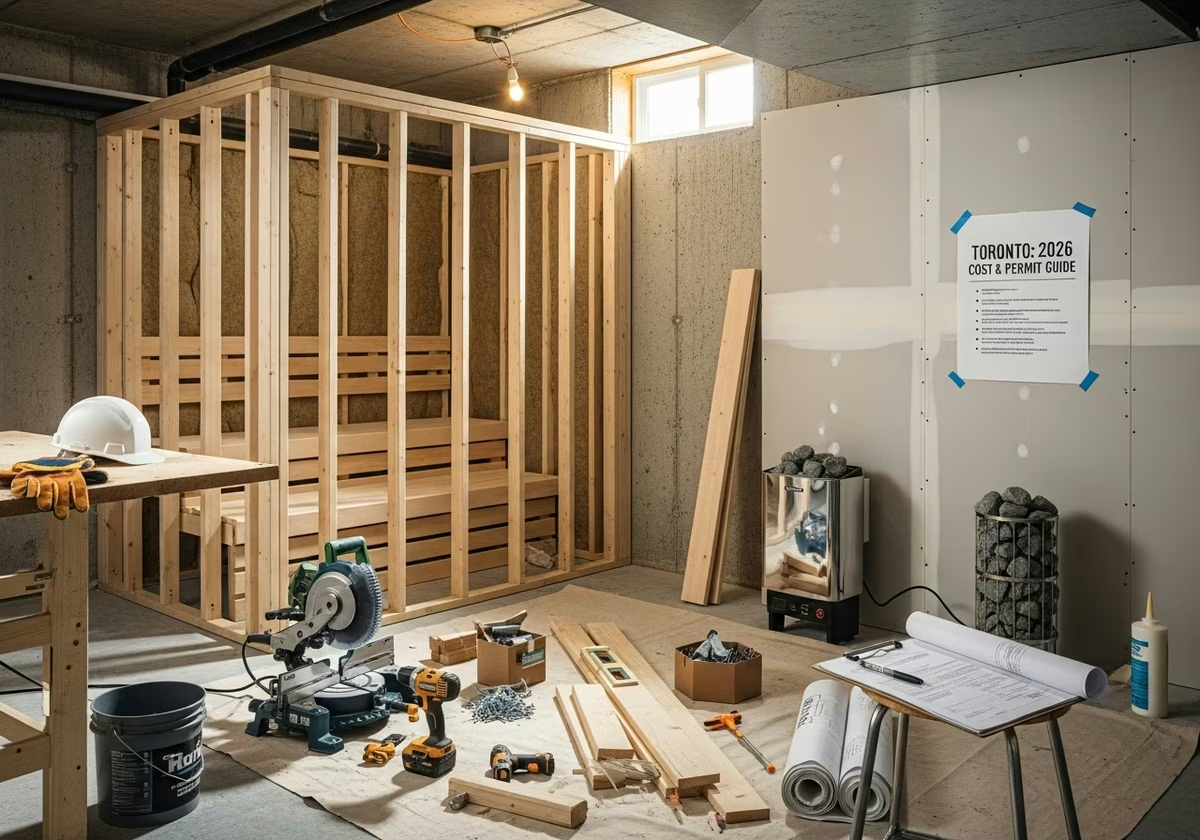
| Type | Heat Source | Temp Range | Electrical | Installed Cost (CAD) |
|---|---|---|---|---|
| Traditional Finnish (Electric) | Electric heater + stones | 70–95°C | 240V, 30–60A dedicated | $12,000–$28,000 |
| Infrared (Far/Full-spectrum) | Carbon/ceramic IR panels | 45–60°C | 120V or 240V | $3,500–$14,000 |
| Hybrid Finnish + Infrared | Both systems in one cabin | 45–95°C | 240V + 120V | $18,000–$40,000+ |
| Steam Room | Steam generator | 43–46°C @ 100% RH | 240V + plumbing | $8,000–$18,000 |
| Wood-Burning Finnish | Wood stove + chimney | 80–100°C | None (or 120V fan) | $8,000–$20,000 + chimney (rare in basements) |
For most Toronto basement projects, traditional Finnish electric remains the gold standard — backed by 40+ years of cardiovascular research, authentic löyly experience, and the strongest resale signal. Infrared is the right pick for low-ceiling basements, plug-and-play installs, and homeowners sensitive to high heat. Hybrid is the fastest-growing segment in custom builds because one room serves two preferences. We unpack the design decision in Hybrid Sauna Builds: Why Toronto Homeowners Choose Finnish + Infrared.
Detailed 2026 Cost Breakdown (CAD)
Sauna shell / cabin
| Option | Range |
|---|---|
| Prefab infrared cabin (1–2 person) | $3,000–$6,500 |
| Prefab infrared cabin (3–4 person) | $5,500–$10,000 |
| Prefab Finnish kit (4'×5' to 5'×7') | $5,000–$12,000 |
| Prefab Finnish kit (6'×8' to 8'×8') | $8,000–$18,000 |
| Custom-built Finnish (cedar, semi-custom) | $12,000–$25,000 |
| Custom luxury (glass front, Wi-Fi controls) | $25,000–$50,000+ |
Installation labour
| Scope | Range |
|---|---|
| Prefab infrared assembly only | $300–$800 |
| Prefab Finnish kit assembly | $1,500–$3,500 |
| Custom site-built (framing, T&G, finishing) | $4,000–$8,000 |
| Full basement integration (demo, drywall, tile, plumbing) | $6,000–$15,000+ |
Electrical (ESA-permitted, by Licensed Electrical Contractor)
| Scope | Range |
|---|---|
| Plug-in infrared (existing 120V circuit) | $0–$300 |
| Hardwired 240V/30–40A (≤6 kW heater) | $800–$1,800 |
| Hardwired 240V/40–60A (8–9 kW heater) | $1,500–$2,800 |
| Panel upgrade (older Toronto homes with full 100A) | $1,800–$4,500+ |
| ESA Notification of Work fee | $88+ |
Ventilation, waterproofing, finishing
A proper Finnish basement sauna needs an inline exhaust fan ducted to exterior with a timer ($500–$1,500), optional HRV/ERV integration ($1,500–$3,500), crystalline waterproofing on the slab ($300–$900), foil-faced insulation R-13 walls / R-19 ceiling ($400–$1,200), sauna-grade aluminum foil vapor barrier ($200–$500), porcelain tile floor ($800–$2,500), and a 10mm tempered glass door ($600–$1,800). We break down the airflow design in Basement Sauna Ventilation: The High-Low Method Explained.
Total project ranges (all-in, basement install, GTA, 2026)
| Build Type | Realistic Total |
|---|---|
| Plug-in infrared (DIY assembly) | $3,500–$7,000 |
| Prefab infrared, professional install | $6,000–$12,000 |
| Prefab Finnish kit, professional install | $10,000–$20,000 |
| Semi-custom Finnish, full basement integration | $18,000–$32,000 |
| Luxury custom hybrid + cold plunge | $32,000–$60,000+ |
Permits & Code Requirements
City of Toronto Building Permit
A building permit is required when you frame new walls, modify mechanical ventilation, install new electrical circuits, or partition a basement room. Per Toronto Building, even just partitioning a basement room and adding an electrical circuit counts as a "material alteration" that triggers permitting.
2026 fees: minimum $214.79, plus an hourly rate of $92.79 for additional examination. Most sauna projects close at $300–$800 in permit fees. Processing time is generally 2–6 weeks for residential basement work, with inspections required at framing, insulation/vapor barrier, electrical rough-in, and final.Ontario Building Code (OBC) Highlights
- Ceiling height: 2.13 m (7'0") is the standard design target for habitable basement rooms; 2.03 m (6'8") is the absolute floor in some legacy spaces.
- Mechanical ventilation: general spaces need ½ air change per hour; saunas need 6–8 ACH during use.
- HRV/ERV required in new construction per OBC 2020+ for whole-house ventilation.
- Smoke/CO alarms wired with battery backup, interconnected per OBC 9.10.19.
Ontario Electrical Safety Code (OESC) — Sauna-Specific
- 240V dedicated circuit for any heater >1500W (essentially every Finnish electric heater).
- Breaker sized at 150% of heater amperage: a 6 kW heater = 25A → 40A breaker, 8 AWG wire; a 9 kW heater = 37.5A → 60A breaker, 6 AWG wire.
- Mandatory 1-hour timer cut-off with no override — verified at ESA inspection.
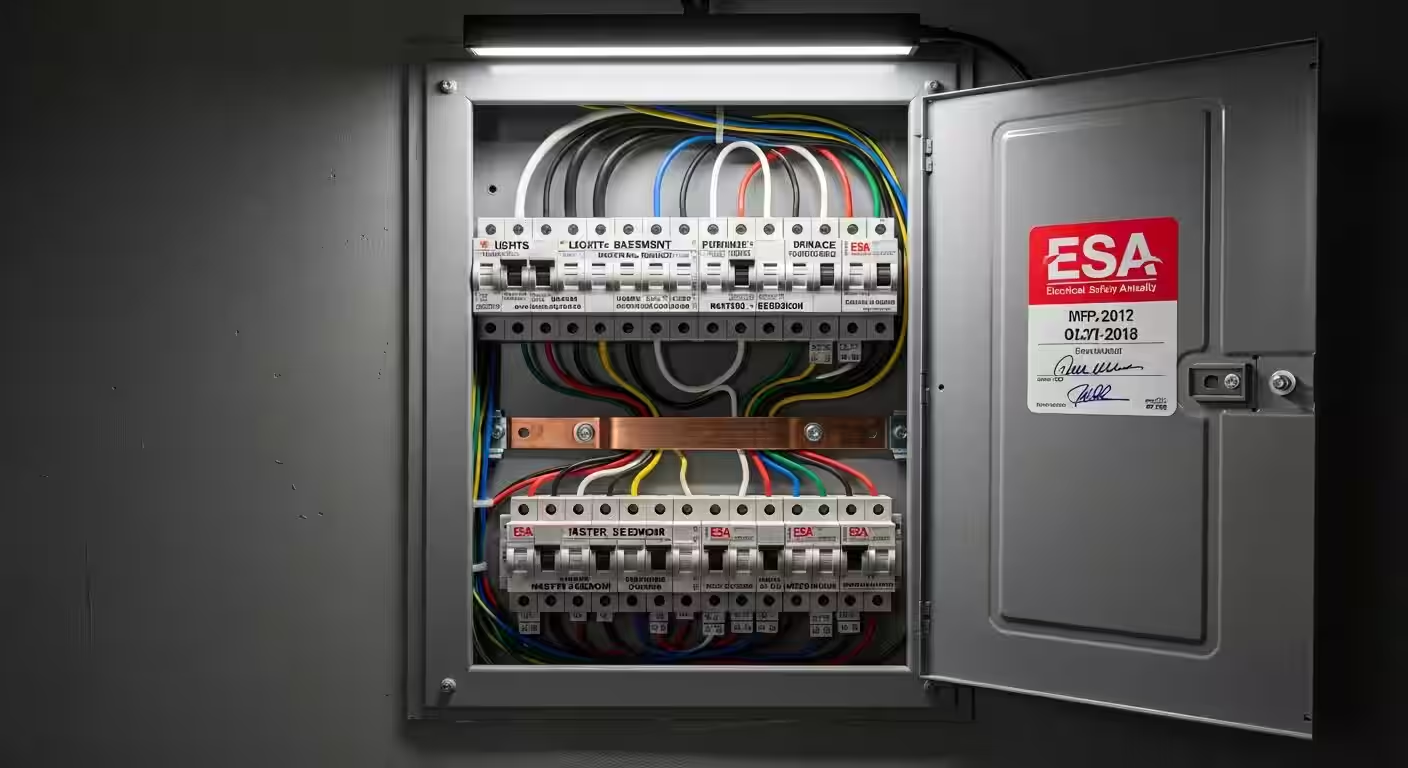
- ESA Notification of Work must be filed by a Licensed Electrical Contractor *before* energizing any new circuit; minimum residential fee ~$88.
- No outlets, switches, or junction boxes inside the heated cabin envelope.
For a deep dive into permit paperwork specific to saunas, see Permit Requirements for Home Sauna in Toronto.
Heater Selection & Sizing
The industry rule is 1 kW per 45–50 cubic feet of cabin volume. Add 1 kW per 10 sq ft of glass surface, and ~0.5 kW per foot of ceiling height above 7'. Concrete or brick mass surfaces inside the cabin add ~10–15%.
Worked example: a 6'×7'×7' cabin = 294 cu ft → 294/45 = 6.5 kW → round up to 8 kW with a standard glass door, or 9 kW with a full glass front.The heaters most commonly specified in GTA premium builds in 2026 are Harvia Cilindro and Virta (Finnish, best value, 5-year warranty), HUUM HIVE and DROP (Estonian premium minimalist with massive stone capacity and the UKU Wi-Fi controller with geofencing), Tylö Sense and Combi (Swedish luxury, refined controls), and Saunum (air-circulation tech that solves stratification — useful in tall basements). Canadian-made Saunacore is a solid domestic alternative with strong local support.
We walk through the full sizing math and brand decision in How to Size Your Sauna Heater: kW Calculator for GTA.
Wood Selection for Toronto Builds
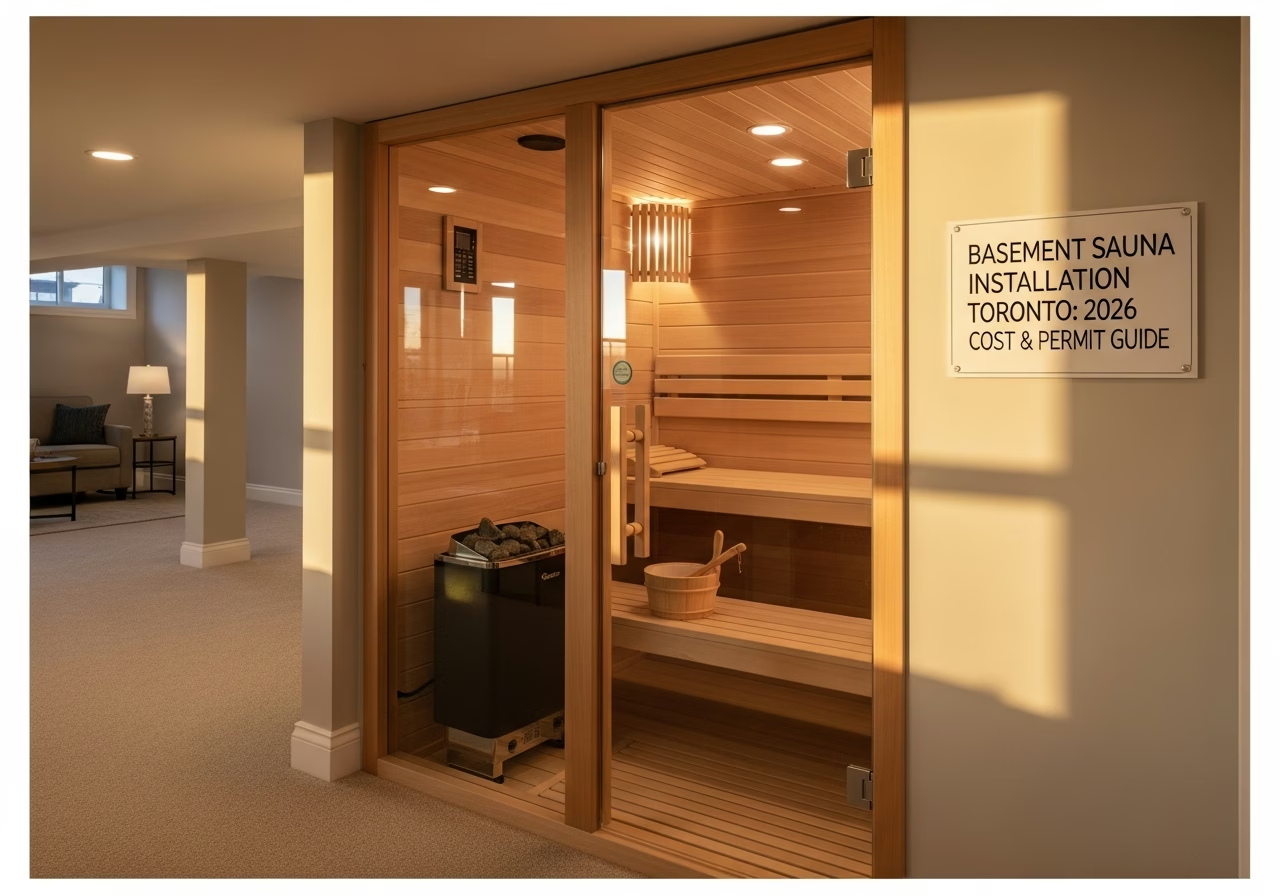
The default premium choice is Western Red Cedar ($9–$16/bd ft T&G) — natural rot resistance, antimicrobial oils, beautiful red-brown colour. Canadian Hemlock ($5–$9) is the value pick: clear, knot-free, almost no aroma (good for scent-sensitive users), low resin, even heat radiation. Aspen / Nordic White ($7–$11) is hypoallergenic with near-zero resin — the modern minimalist Scandinavian aesthetic. Thermo-Aspen / Thermo-Spruce ($10–$16) gives a darker rich colour and superior dimensional stability for premium designer builds.
For most Toronto basement saunas in 2026, Western Red Cedar T&G interior with hemlock benches is the optimal balance of premium feel, heat behaviour, and resale appeal. Avoid pressure-treated lumber, plywood/OSB/MDF, oak/maple, and high-resin pine inside the heated zone. We compare every option in Sauna Wood Comparison: Cedar vs Hemlock vs Aspen for Toronto.
Need professional home renovation?
Call RenoHouse at 289-212-2345 or get a free estimate today.
Get Free Estimate →Vapor Barrier, Insulation & Ventilation — The Three Things That Kill Bad Saunas
These three details separate a 20-year sauna from a 5-year mould problem:
- 1. Sauna-grade aluminum foil vapor barrier only (perm rating ~0). Do not use 6-mil poly — it off-gasses at sauna temperatures and degrades. Foil also reflects 95–97% of radiant heat back into the room, adding ~R-1 of effective insulation.
- 2. 20mm air gap behind the cedar T&G using furring strips — provides circulation and prevents moisture trapping behind the panelling.
- 3. High-low ventilation: intake low (6–12" above floor) on the heater wall, exhaust high on the opposite wall ducted to exterior (never into the basement), with an inline exhaust fan on a 30–60 min post-session timer.
We catalogue the complete failure modes in 10 Common Basement Sauna Installation Mistakes.
Health Benefits — Research-Backed
The cardiovascular evidence base is the strongest. The Finnish KIHD study (Laukkanen et al., *JAMA Internal Medicine*, 2015) followed 2,315 men for 20 years and showed users with 4–7 sessions/week had 63% lower sudden cardiac death risk and 50% lower CVD mortality vs. once-weekly users. A 2018 follow-up in *BMC Medicine* confirmed the dose-response in both men and women. The 2018 *Mayo Clinic Proceedings* review by Hussain & Cohen consolidated the evidence into a clinical recommendation.
The mechanism is straightforward: heart rate during sauna reaches 100–150 bpm (similar to moderate exercise), endothelial function improves, arterial stiffness drops, and heat-shock protein expression increases. Additional benefits documented in peer-reviewed literature include improved sleep, reduced cortisol, fibromyalgia and chronic pain relief, and athletic recovery via plasma volume expansion. We walk through the 2026 research in Sauna Health Benefits: 2026 Research Roundup.
ROI & Toronto Property Value
National Association of Realtors data shows 42% of homebuyers consider a sauna a desirable feature. Industry sources cite 60–80% cost recovery at resale for well-executed permanent installations — meaning a $20,000 GTA basement sauna adds $12,000–$16,000 to appraised value. ROI is highest in luxury markets ($1.5M+ Toronto homes) where buyers expect premium amenities; it's marginal in starter-home markets.
Toronto-specific factors that boost ROI: permitted, ESA-inspected installation (appraisers flag unpermitted work), integration into a "wellness suite" with shower and cold plunge, premium materials (Western Red Cedar over basic hemlock in luxury homes), branded heater (Harvia, HUUM, Tylo carry resale weight), smart controls, and a glass front. Full numbers in Basement Sauna ROI: Does It Increase Toronto Home Value 2026?.
The 7-Phase Installation Process
A typical custom GTA basement sauna build follows this timeline:
- 1. Planning & permits (1–3 weeks): site assessment, design, ESA Notification, City of Toronto permit application.
- 2. Demolition & rough work (2–5 days): demo, optional floor drain saw-cut, crystalline waterproofing.
- 3. Framing & MEP rough-in (3–7 days): 2×4 walls 16" OC on PT bottom plates with sill gasket, 240V/40–60A circuit, intake/exhaust ducts, framing/electrical inspections.
- 4. Insulation & vapor barrier (2–3 days): R-13 walls, R-19 ceiling, foil-faced; aluminum foil with foil tape; ¾" furring strips for 20mm air gap.
- 5. Interior finishing (3–7 days): cedar T&G ceiling-down with hidden stainless fasteners, 2-tier benching, 10mm tempered glass door, tile/sealed concrete floor.
- 6. Mechanical install & commissioning (1–2 days): heater install per spec, sauna-rated lighting, controller and timer outside the cabin, ESA final inspection, first heat-up cure cycle.
- 7. Handover (1 day): owner training, warranty registration, insurance disclosure.
The full step-by-step is in How to Add a Sauna to Your Basement: 7-Step Guide for GTA.
Project Timeline Summary
| Build Type | Calendar Time | Construction Days |
|---|---|---|
| Plug-in infrared (DIY) | 1–3 days | 1–2 days |
| Plug-in infrared (professional) | 1 week | 1 day |
| Prefab Finnish kit (professional) | 2–4 weeks | 3–6 days |
| Semi-custom Finnish, full integration | 4–8 weeks | 10–18 days |
| Luxury custom hybrid + cold plunge | 8–14 weeks | 18–30 days |
Permit and ESA processing add 2–6 weeks at the front end. Cedar T&G lead time (1–3 weeks) is the most common material delay.
Maintenance & Lifespan
A properly built basement sauna lasts 20+ years with minimal effort. Daily: open the door, run the inline exhaust fan 30–60 min, towel-wipe benches. Weekly: mild-soap wipe of walls, benches, floor; vacuum corners; clean glass with vinegar+water. Monthly: inspect ventilation grilles, run a 30-minute high-temp sterilization cycle. Annually: light bench sanding, replace heater stones, tighten hardware, re-seal any concrete. Total time commitment: 20–30 minutes per week for a regularly used sauna. Detailed schedule in Sauna Maintenance Schedule: Keep Your Investment 20+ Years.
Designing a Wellness Suite
The 2026 premium tier in Toronto basements isn't just a sauna — it's a wellness suite combining sauna, cold plunge, rainfall shower, and rec/lounge area. This format reads as a designed amenity to appraisers and buyers, which directly improves ROI. Layout, plumbing, drainage, and electrical coordination are all covered in Sauna + Cold Plunge: Designing a Wellness Suite in Toronto Basement.
DIY vs Professional — The Honest Middle Path
A plug-in infrared cabin in a finished basement room is genuinely a 1-day DIY weekend project. A prefab Finnish kit is feasible if you have construction experience, hire a Licensed Electrical Contractor for the 240V/ESA work, and understand vapor barrier and ventilation principles. Custom builds, anything requiring concrete cutting, panel upgrades, and luxury-market homes need a professional.
The most common GTA path: buy a prefab kit from SaunaFin, hire a Licensed Electrical Contractor for the 240V/ESA work ($1,200–$2,000), hire a handyman/carpenter for cabin assembly ($1,500–$3,000), and DIY the finishing details. Total: $11K–$17K for a real Finnish basement sauna.
FAQ
How much does a basement sauna cost in Toronto in 2026?Realistic all-in pricing: prefab infrared $6,000–$12,000, prefab Finnish $10,000–$20,000, semi-custom Finnish $18,000–$32,000, luxury hybrid wellness suite $32,000–$60,000+.
Do I need a permit for a basement sauna in Toronto?Yes — partitioning a basement room and adding a new electrical circuit is a "material alteration" requiring a City of Toronto building permit ($214.79+ minimum) and an ESA Notification of Work for the 240V circuit ($88+).
Finnish or infrared for a Toronto basement?Traditional Finnish has the strongest research base, authentic löyly, and best resale signal — but needs 240V/40–60A and proper ventilation. Infrared is plug-and-play, lower-cost, and basement-friendly for low-ceiling spaces or smaller projects.
How long does installation take?Plug-in infrared: 1 day. Prefab Finnish kit: 3–6 construction days over 2–4 weeks total. Semi-custom: 4–8 weeks total. Luxury custom: 8–14 weeks.
What ceiling height do I need?Interior finished height: minimum 6'10" for small saunas, 7'0" for standard. Raw basement ceiling should be at least 7'4"–7'6" to allow for floor build-up, vapor barrier, and finished ceiling.
Will a basement sauna cause moisture problems?Not if built correctly. Sauna-grade foil vapor barrier, 20mm air gap behind cedar, and high-low ventilation ducted to exterior eliminate moisture issues. Skipping any of those three creates problems.
Does a sauna increase Toronto home resale value?60–80% cost recovery is typical for permitted, well-executed installations. ROI is highest in $1.5M+ luxury markets (Forest Hill, Rosedale, Oakville's Old Oakville, Bridle Path).
What's the operating cost?A 9 kW Finnish heater used 4×/week at Toronto's ~$0.13/kWh: roughly $5/week or $260/year. Infrared is about one-third of that.
---
Ready to plan your basement sauna? RenoHouse handles permitted, ESA-compliant Finnish, infrared, and hybrid installations across Toronto and the GTA. Get a free in-home assessment via our basement sauna installation service page.
Sources & References
Authoritative sources cited in this guide:
- Ontario Building Code — OBC official text
- Toronto Building Permits — City permit portal
- Tarion Warranty — Ontario warranty regulator
- CSA Group Standards — Canadian standards
Continue Reading
- Hybrid Sauna Builds: Why Toronto Homeowners Choose Finnish + IR
- DIY vs Professional Sauna Installation: Toronto Cost Comparison
- Finnish vs Infrared Sauna Toronto: Which Is Right for You?