RenoHouse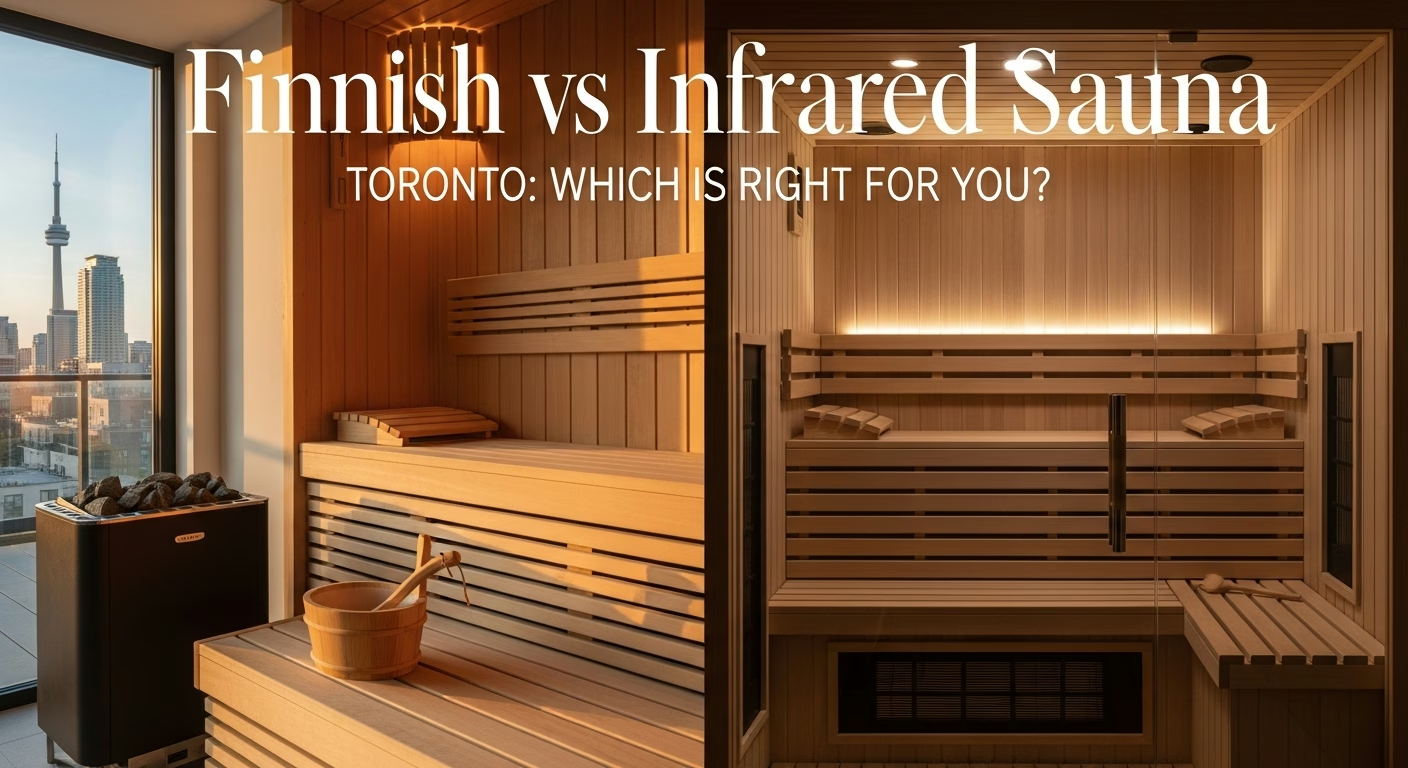

# Finnish vs Infrared Sauna Toronto: Which Is Right for Your Basement?
Quick answer. The first decision every Toronto homeowner makes when planning a basement sauna is the heat technology — traditional Finnish (electric heater on stones, with löyly) or infrared (radiant panels heating your body directly). The two deliver fundamentally different experiences, cost profiles, electrical loads, and research backing.The first decision every Toronto homeowner makes when planning a basement sauna is the heat technology — traditional Finnish (electric heater on stones, with löyly) or infrared (radiant panels heating your body directly). The two deliver fundamentally different experiences, cost profiles, electrical loads, and research backing. This guide compares them across every dimension that matters for a 2026 GTA basement install.
For a complete overview of cost, permits, and process for both technologies, start with our Basement Sauna Installation Toronto 2026 Guide.
The Core Difference
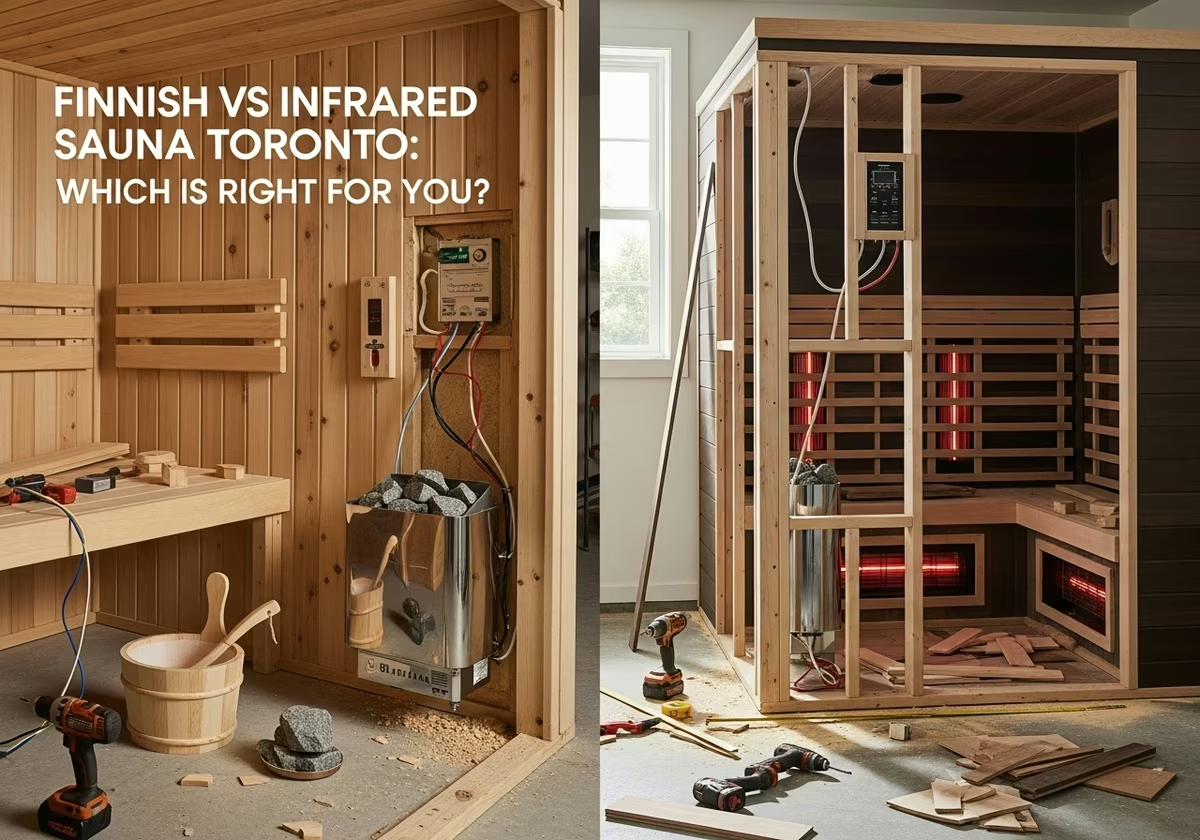
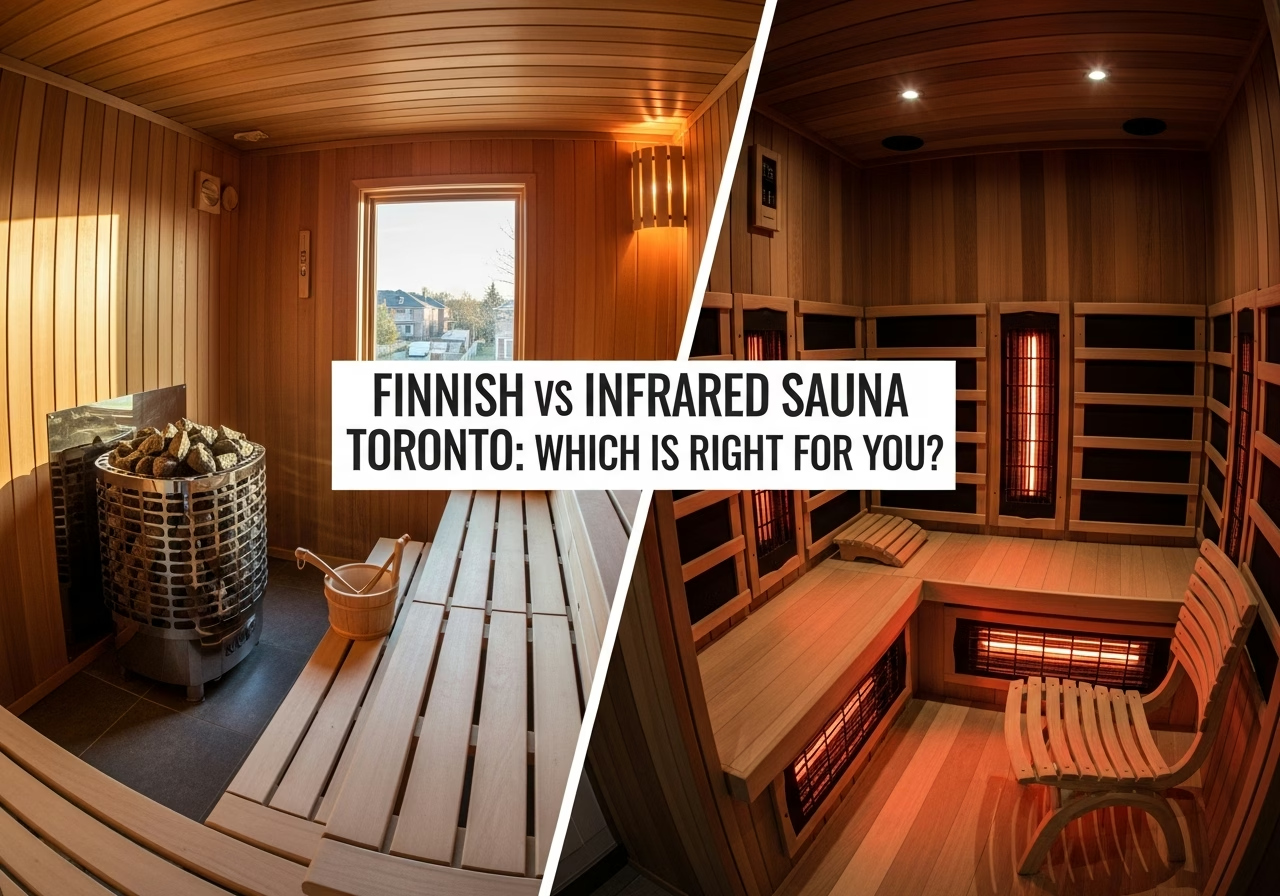
A Finnish sauna uses an electric (or wood-burning) heater filled with mineral stones. Air temperature rises to 70–95°C (160–195°F+), and you control humidity by ladling water onto the stones — the resulting steam burst is called *löyly* and is the defining sensory experience.
An infrared sauna uses carbon-fibre or ceramic panels that emit infrared radiation. The panels heat your body directly through radiant wavelengths rather than heating the air. Cabin air temperature stays at 45–60°C (115–140°F) — much lower than Finnish — but you still sweat substantially because the heat penetrates skin and tissue.
This difference cascades into every other design choice.
Side-by-Side Comparison
| Dimension | Traditional Finnish | Infrared |
|---|---|---|
| Air temperature | 70–95°C (160–195°F+) | 45–60°C (115–140°F) |
| Humidity | 5–30% (you control via löyly) | Ambient only |
| Heat-up time | 30–45 min | 10–20 min |
| Session length | 10–20 min/round | 30–45 min total |
| Electrical | 240V dedicated, 30–60A | Plug-in 120V (small) or 240V (large) |
| Ventilation | High-low, ducted to exterior | Minimal — basement-friendly |
| Operating cost | ~$260/year (9 kW, 4×/wk) | ~$85/year (equivalent use) |
| Installed cost (GTA, 2026) | $10,000–$28,000 | $3,500–$14,000 |
| Research base | Strong (KIHD, Mayo, JAMA) | Smaller, growing |
| Permitting | Building permit + ESA Notification | Often plug-in only — minimal permits |
| Resale signal | Premium | Mid-range |
| Best for | Purists, families, long-term wellness | Compact spaces, budget builds, longer comfortable sessions |
Cost: Realistic 2026 GTA Numbers
A prefab infrared cabin in a basement, professionally installed, lands at $6,000–$12,000 all-in — and a small 1-2 person plug-in unit can be a $3,500–$5,000 weekend DIY project. A prefab Finnish kit professionally installed runs $10,000–$20,000, and a semi-custom Finnish build with cedar T&G, 10mm glass front, and Wi-Fi controls runs $18,000–$32,000.
The cost gap is mostly driven by:
- Heater & stones — Finnish heaters (Harvia, HUUM, Tylo) are $1,500–$4,500 vs. infrared panels included with the cabin.
- Electrical — Finnish needs a $1,500–$2,800 240V/40–60A circuit + ESA filing; infrared often uses an existing 120V outlet.
- Ventilation — Finnish requires ducted exhaust to exterior ($500–$1,500); infrared usually doesn't.
- Materials — Finnish typically uses cedar T&G; infrared cabins are often hemlock or basswood.
For the full breakdown, see DIY vs Professional Sauna Installation: Real Cost Comparison Toronto.
Electrical Reality Check for Toronto Homes
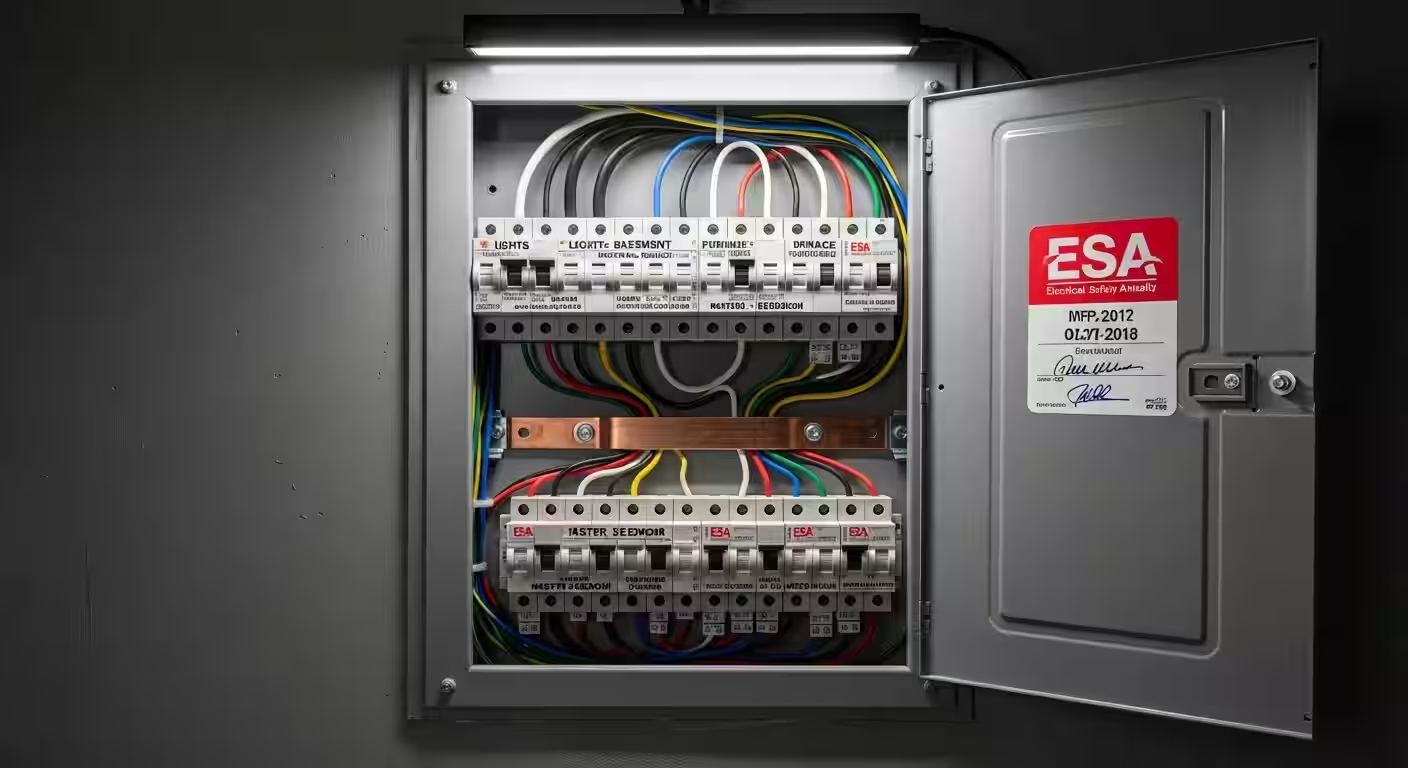
Many older Toronto homes (pre-1970, Forest Hill bungalows, Beaches semis) still have 100A panels that are at or near capacity. A 9 kW Finnish heater needs a 60A breaker on 6 AWG wire — and if the panel is full, you're looking at a panel upgrade ($1,800–$4,500+) before the heater ever gets installed. A small 1-person infrared cabin runs on a 120V/15A circuit and may not require any panel work.
This is the single most common reason GTA homeowners pivot from Finnish to infrared mid-design — the panel upgrade cost can flip the project economics. We size heater electrical loads in detail in How to Size Your Sauna Heater: kW Calculator for GTA.
The Research Question
This is where the two technologies genuinely diverge. The Finnish KIHD study (Laukkanen et al., *JAMA Internal Medicine*, 2015 — 2,315 men, 20-year follow-up) found 4–7 sauna sessions/week reduced cardiovascular mortality by 50% and sudden cardiac death risk by 63%. The 2018 *Mayo Clinic Proceedings* review and 2018 *BMC Medicine* follow-up confirmed the dose-response in both men and women. None of this research used infrared saunas — it was traditional Finnish at 80°C+.
Infrared has a smaller (but growing) research base. Mayo Clinic's position is that infrared shows promise but lacks the long-term cohort data of traditional sauna. Cleveland Clinic notes potential benefits for circulation and recovery but flags the same evidence gap.
If your primary motivation is research-backed cardiovascular benefit, traditional Finnish is the safer choice. We dive into the studies in Sauna Health Benefits: 2026 Research Roundup.
Need professional home renovation?
Call RenoHouse at 289-212-2345 or get a free estimate today.
Get Free Estimate →The Sensory Question
Finnish saunas at 80°C with löyly produce a humid, intense heat that hits you in waves. You sit for 10–20 minutes, then cool down and re-enter. The total session is 45–90 minutes including rest periods. Many users describe it as meditative and physically demanding — closer to a workout in its cardiovascular load.
Infrared saunas at 50°C are much more comfortable for longer continuous sessions (30–45 minutes uninterrupted). Many users prefer infrared for reading, meditation, or watching content on a tablet. There's no löyly steam burst — the heat is dry and steady. People sensitive to high temperature, with claustrophobia, or with certain cardiovascular conditions often find infrared more tolerable.
Basement Compatibility
For Toronto basements, infrared has three structural advantages:
- 1. Lower ceilings: A small infrared cabin (1-2 person) needs 6'6" interior height — useful in post-2000 condo townhomes with 6'10" basement ceilings that fail OBC for traditional Finnish saunas.
- 2. No exhaust ducting required — eliminates the $500–$1,500 ventilation run and the need to penetrate the foundation/exterior wall.
- 3. Lower humidity — basements already fight moisture; an infrared sauna doesn't add to the load.
Finnish saunas can absolutely work in basements — 90% of GTA Finnish installs are basement-located — but only with proper ventilation. We walk through the airflow design in Basement Sauna Ventilation: The High-Low Method Explained.
The Hybrid Compromise
Increasingly, GTA homeowners with the budget for it choose hybrid — both Finnish and infrared in one cabin, controlled separately. One spouse prefers traditional 85°C löyly sessions; the other prefers a 50°C infrared read-and-relax session. The cabin serves both. Hybrid builds run $18,000–$40,000+ but the resale signal is the strongest of any sauna category in 2026 luxury Toronto markets.
We unpack the design in Hybrid Sauna Builds: Why Toronto Homeowners Choose Finnish + Infrared.
Wood Selection Differs Slightly
Both technologies use the same wood families, but with different priorities:
- Finnish: Western Red Cedar interior is the gold standard — the higher temperatures benefit from cedar's antimicrobial oils, dimensional stability, and rot resistance. Hemlock benches.
- Infrared: Basswood, hemlock, and aspen dominate — at lower temperatures the antimicrobial advantage matters less, and these woods have lower resin and minimal aroma (better for users sensitive to cedar scent).
Full comparison in Sauna Wood Comparison: Cedar vs Hemlock vs Aspen for Toronto.
Permits: Where the Paperwork Diverges
A plug-in infrared cabin in an existing finished basement room may not require a building permit at all (no framing, no new circuit) — though always confirm with City of Toronto Building. ESA Notification of Work isn't triggered if you're using an existing 120V outlet.
A Finnish sauna essentially always needs:
- City of Toronto building permit ($214.79+ minimum)
- ESA Notification of Work for the 240V circuit ($88+)
- Mandatory 1-hour timer cut-off per Ontario Electrical Safety Code
- Final ESA inspection of the circuit, timer, and GFCI
Full compliance walk-through in Permit Requirements for Home Sauna in Toronto.
Decision Framework: Quick Filter
Pick Traditional Finnish if:
- You want the strongest research-backed cardiovascular benefit
- You value löyly and the authentic experience
- You're in a $1.5M+ Toronto home where resale ROI matters
- Your basement has 7'4"+ raw ceiling height
- Your panel can support 60A or you're comfortable with a panel upgrade
- Your household includes purists or athletes
Pick Infrared if:
- You're working with a tight budget ($4K–$12K range)
- Your basement ceiling is 7'4" or less
- You don't want to add humidity to the basement
- You want plug-and-play with minimal permitting
- You prefer longer, lower-temperature sessions
- You're sensitive to high heat or have certain medical conditions
Pick Hybrid if:
- Budget is $18K+
- Multiple users with different preferences
- You're optimizing for resale in luxury market
- You want the most flexible long-term install
FAQ
Is infrared a "real" sauna?Mechanically and culturally — no, it's a different technology. Functionally for sweat induction, heat shock response, and many wellness benefits — yes, it works. Just understand the research base and löyly experience are different.
Can I retrofit Finnish stones into an infrared cabin?No. The cabin construction (insulation, vapor barrier, electrical, ventilation) is fundamentally different. Hybrid cabins are designed from day one to support both.
Which is better for arthritis or chronic pain?Both have evidence of benefit. Infrared tends to be more tolerable for longer sessions, which some pain patients prefer.
Do infrared saunas have EMF concerns?Quality manufacturers (Sun Home, Clearlight, Sunlighten) publish low-EMF specs. Cheaper imports often skip this — buy from established brands.
Will my insurance cover both equally?Yes, as long as installation is permitted and ESA-compliant. Unpermitted work voids coverage in either case.
---
Ready to choose? RenoHouse builds Finnish, infrared, and hybrid basement saunas across Toronto and the GTA — all permitted, all ESA-compliant. Book a free assessment on our basement sauna installation page.
Sources & References
Authoritative sources cited in this guide:
- Ontario Building Code — OBC official text
- Toronto Building Permits — City permit portal
- Tarion Warranty — Ontario warranty regulator
- CSA Group Standards — Canadian standards
Continue Reading
- Basement Sauna Installation Toronto: 2026 Cost & Permit Guide
- Hybrid Sauna Builds: Why Toronto Homeowners Choose Finnish + IR
- DIY vs Professional Sauna Installation: Toronto Cost Comparison