RenoHouse

*Part of our Home Renovation Guide Toronto 2026.*
Renovating a condo is fundamentally different from renovating a house. You share walls, floors, ceilings, and mechanical systems with neighbours. The condo corporation controls what you can change, when you can work, and who can do the work.
*Part of our Home Renovation Guide Toronto 2026.*
Renovating a condo is fundamentally different from renovating a house. You share walls, floors, ceilings, and mechanical systems with neighbours. The condo corporation controls what you can change, when you can work, and who can do the work. This guide walks you through the entire process.
Need professional renovation?
Call RenoHouse at 1-289-212-2345 or get a free estimate today.
Get Free Estimate →What You Can and Cannot Change
You Own (and Can Renovate):
- Kitchen cabinets, countertops, backsplash
- Bathroom fixtures, tile, vanity
- Interior paint and wallpaper
- Flooring (with restrictions — see below)
- Interior doors
- Light fixtures and switches
- Closet systems
You Do NOT Own (Common Elements):
- Exterior walls, windows, balcony structure
- Plumbing stacks (main risers)
- HVAC system (if building-wide)
- Electrical panels (in some buildings)
- Concrete floors and ceilings (structural)
- Hallway doors (in some buildings)
- Balcony railings
Grey Area (Exclusive-Use Common Elements):
- Balconies and terraces — you use them exclusively but the corporation owns them
- Parking spots — same principle
- Storage lockers — same principle
- Front door — often common element with specific replacement rules
The Condo Board Approval Process
Step 1: Review Your Declaration and Rules
Before planning anything, read your condo's:
- Declaration — defines boundaries of your unit vs common elements
- By-laws — governance rules including renovation procedures
- Rules — specific restrictions (noise, working hours, materials)
Step 2: Submit a Renovation Request
Most condo corporations require:
- Detailed scope of work — drawings or plans showing what you intend to do
- Contractor information — company name, contact, license numbers
- Insurance certificates — contractor's liability insurance naming the condo corporation as additional insured
- WSIB clearance — proof the contractor has workplace insurance
- Security deposit — typically $500–$5,000 (refundable after inspection)
- Timeline — start date, expected completion
Step 3: Wait for Approval
- Simple cosmetic work (paint, cabinets): 1–2 weeks
- Work involving plumbing or electrical: 2–4 weeks
- Structural modifications: 4–8 weeks (may require engineer's report)
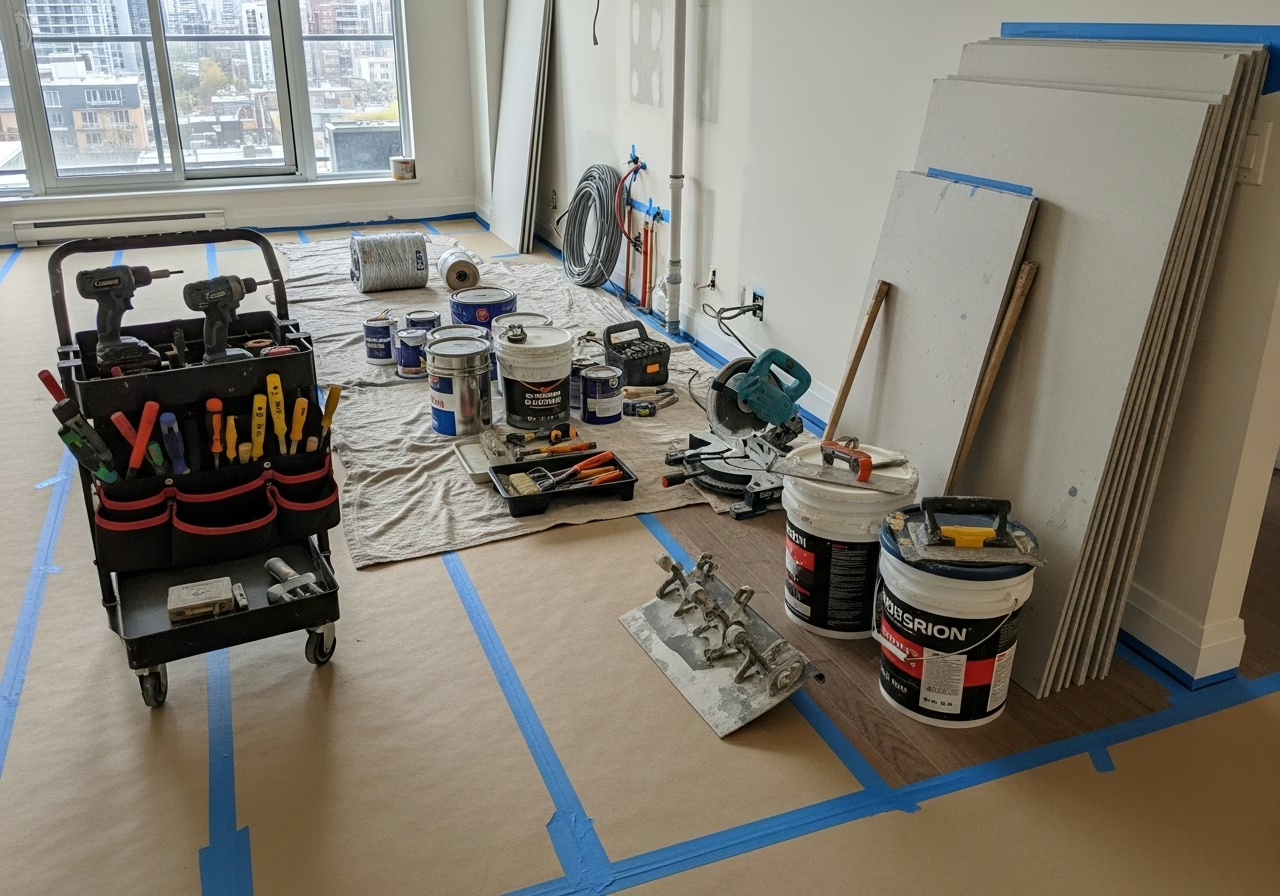
Step 4: Pre-Construction Requirements
- Elevator booking for material delivery (often specific days/times)
- Floor protection in hallways from unit to elevator
- Neighbour notification (some buildings handle this; others expect you to)
- Pre-renovation inspection of common areas (to document pre-existing damage)
Working Hour Restrictions
| Day | Typical Hours | Notes |
|---|---|---|
| Monday–Friday | 9:00 AM – 5:00 PM | Most buildings |
| Saturday | 9:00 AM – 4:00 PM | Some buildings allow, some do not |
| Sunday | Not permitted | Almost universal |
| Holidays | Not permitted | Universal |
Flooring Rules
Most condos have sound transmission requirements for hard flooring:
- STC (Sound Transmission Class): Minimum 50–55
- IIC (Impact Insulation Class): Minimum 50–55
- Underlayment required: Acoustic underlay is mandatory for hardwood, laminate, and engineered flooring
- Pre-approval: Many buildings require you to submit flooring specifications and acoustic test results before installation
Condo Renovation Costs
Expect to pay 10–20% more for the same renovation in a condo vs a house, due to:
| Extra Cost | Amount | Reason |
|---|---|---|
| Security deposit | $500–$5,000 | Refundable but ties up cash |
| Elevator booking fees | $100–$500 | Some buildings charge |
| Extended timeline | +20–30% labour | Restricted hours |
| Floor protection materials | $200–$500 | Required for common areas |
| Acoustic underlay | $2–$5/sq ft | Required for hard flooring |
| Engineer's report (if structural) | $500–$2,000 | Required for wall removal |
| Insurance surcharge | $100–$300 | Contractor's additional insured endorsement |
Typical Condo Renovation Budgets
| Project | House Cost | Condo Cost (Adjusted) |
|---|---|---|
| Kitchen renovation | $25,000–$50,000 | $28,000–$60,000 |
| Bathroom renovation | $15,000–$25,000 | $17,000–$30,000 |
| Flooring (whole unit) | $8,000–$15,000 | $10,000–$20,000 |
| Paint (whole unit) | $2,000–$5,000 | $2,500–$6,000 |
Plumbing in Condos
Plumbing is the trickiest part of condo renovations:
- You can replace fixtures (faucets, toilets, sinks) freely
- You can modify supply lines within your unit with approval
- You CANNOT touch the main stack (shared waste/water riser)
- Water shutoffs affect your neighbours — coordinate with management
- Waterproofing for bathroom floor must meet building standards
- Bathtub-to-shower conversions require structural assessment (concrete floor penetration for new drain)
Tips for a Smooth Condo Renovation
- 1. Start the approval process early — submit 4–6 weeks before your target start date
- 2. Communicate with neighbours — a friendly heads-up reduces complaints
- 3. Choose a condo-experienced contractor — they know the rules, the elevator booking process, and how to work within restricted hours
- 4. Build in timeline buffer — expect delays from elevator scheduling, inspection waits, and restricted hours
- 5. Document everything — photograph common areas before and after to protect your deposit
- 6. Keep the board informed — if scope changes, notify them immediately
RenoHouse Condo Renovations
RenoHouse has extensive experience with condo renovations in Toronto's major buildings. We handle:
- Condo board paperwork and approval submissions
- Insurance certificates and WSIB clearance
- Elevator booking and floor protection
- Acoustic compliance for flooring installations
Related Guides
- Home Renovation Guide Toronto 2026
- Renovation Permits Toronto 2026
- Renovation Budget Breakdown Toronto
- Kitchen Renovation Guide Toronto
- Bathroom Renovation Guide Toronto
Sources & References
Authoritative sources cited in this guide:
- Ontario Building Code — OBC official text
- Toronto Building Permits — City permit portal
- Tarion Warranty — Ontario warranty regulator
Continue Reading
- Aging-in-Place Condo Toronto: 2026 Renovation Guide for Downsizers
- Soundproofing Condo Strata Rules Toronto: What Is and Is Not Allowed 2026
- Pre-Sale Condo Renovation Toronto (2026)
Related Services