RenoHouse

A kitchen renovation in Toronto is one of the smartest investments you can make in your home. Whether you live in a century-old semi in The Annex, a modern condo near the waterfront, or a detached house in North York, upgrading your kitchen has a direct impact on daily life and long-term property value.
In the Greater Toronto Area, the average kitchen renovation costs between $15,000 and $70,000 CAD depending on scope, materials, and layout changes. The return on investment typically ranges from 60% to 85%, and in competitive Toronto neighbourhoods, a well-renovated kitchen can push that even higher — sometimes approaching 100% in sought-after areas like Leslieville, Roncesvalles, and midtown Toronto.
This guide covers everything you need to plan a successful kitchen renovation in Toronto in 2026: real pricing in Canadian dollars, realistic timelines, popular design ideas, permit requirements, material comparisons, and how to find a trustworthy contractor. We have renovated hundreds of kitchens across the GTA and built this guide to share what actually matters — so you can make confident decisions and avoid costly mistakes.
---
Kitchen Renovation Costs in Toronto 2026
Cost is typically the first question homeowners ask, and it is the one with the widest range of answers. Kitchen renovation pricing in Toronto depends on three main variables: the scope of work, the quality of materials, and whether the layout changes.
Average Costs by Scope
Here is what Toronto homeowners can realistically expect to spend in 2026:
| Renovation Scope | Typical Cost (CAD) | What's Included |
|---|---|---|
| Cosmetic refresh | $5,000 – $15,000 | Cabinet refacing or painting, new hardware, updated backsplash, fresh paint, minor fixture swaps |
| Mid-range renovation | $15,000 – $40,000 | New cabinets (stock or semi-custom), quartz or granite countertops, new flooring, updated lighting, appliance upgrades |
| High-end remodel | $40,000 – $100,000+ | Custom cabinetry, premium stone countertops, layout changes, new plumbing/electrical, high-end appliances, structural work |
A cosmetic refresh is ideal if your kitchen layout works well but the finishes look dated. This is common in 1990s and 2000s-era homes across Scarborough, Mississauga, and Etobicoke where oak cabinets and laminate countertops are still functional but no longer appealing.
A mid-range renovation is the sweet spot for most Toronto homeowners. You get a genuinely transformed kitchen — new cabinets, modern countertops, proper lighting — without the complexity of moving walls or rerouting plumbing.
High-end remodels are typical in areas like Forest Hill, Rosedale, and Lawrence Park where home values support the investment, or in older Toronto homes where the kitchen needs a complete gut-and-rebuild to meet modern standards.
Cost Breakdown by Category
Understanding where your money goes helps you make smarter trade-offs. Here is how a typical mid-range to high-end kitchen renovation budget breaks down in Toronto:
| Category | % of Budget | Typical Cost Range (CAD) |
|---|---|---|
| Cabinetry & hardware | 30–35% | $6,000 – $35,000 |
| Labour & installation | 18–22% | $4,000 – $20,000 |
| Appliances | 12–15% | $3,000 – $15,000 |
| Countertops | 8–12% | $2,000 – $12,000 |
| Flooring | 7–10% | $1,500 – $6,000 |
| Plumbing | 4–6% | $1,000 – $5,000 |
| Electrical & lighting | 4–6% | $1,000 – $5,000 |
| Backsplash | 3–5% | $800 – $3,500 |
| Design & permits | 2–4% | $500 – $3,000 |
Cabinetry consistently takes the largest share. In Toronto, semi-custom hardwood cabinets typically cost $120 to $500 per linear foot installed, while fully custom cabinetry ranges from $300 to $1,000+ per linear foot. Stock cabinets from IKEA or Home Depot can bring this down to $75–$150 per linear foot, offering significant savings if the standard sizes work for your space.
Real Toronto Material Pricing
Here are current 2026 prices for the most common kitchen materials in the GTA:
Countertops (per square foot, installed):- Laminate: $20 – $50
- Butcher block: $40 – $80
- Quartz: $45 – $150
- Granite: $60 – $120
- Marble: $80 – $150+
- Porcelain slab: $60 – $130
- Luxury vinyl plank (LVP): $4 – $9
- Porcelain tile: $8 – $16
- Engineered hardwood: $8 – $14
- Natural stone tile: $15 – $30
- General contractor: $50 – $85/hour
- Licensed electrician: $80 – $150/hour
- Licensed plumber: $70 – $130/hour
- Tile installer: $8 – $18 per sq. ft.
GTA vs. Downtown Toronto Cost Comparison
Renovation costs are not uniform across the GTA. Downtown Toronto projects typically cost 10–20% more than equivalent projects in the surrounding suburbs due to:
- Higher labour costs — skilled trades charge premium rates in the city core
- Parking and logistics — permit parking, loading zone fees, and limited site access add up
- Condo-specific costs — elevator booking fees, insurance certificates, and longer delivery timelines
- Older building challenges — pre-war plumbing, knob-and-tube wiring, and asbestos remediation
A mid-range kitchen renovation that costs $30,000 in Markham or Oakville might run $35,000–$38,000 for a comparable scope in a downtown Toronto rowhouse, and $38,000–$42,000 in a high-rise condo due to access restrictions and condo board requirements.
---
Kitchen Renovation Timeline
A realistic timeline prevents frustration and helps you plan around the disruption. Here is what to expect for each phase of a Toronto kitchen renovation:
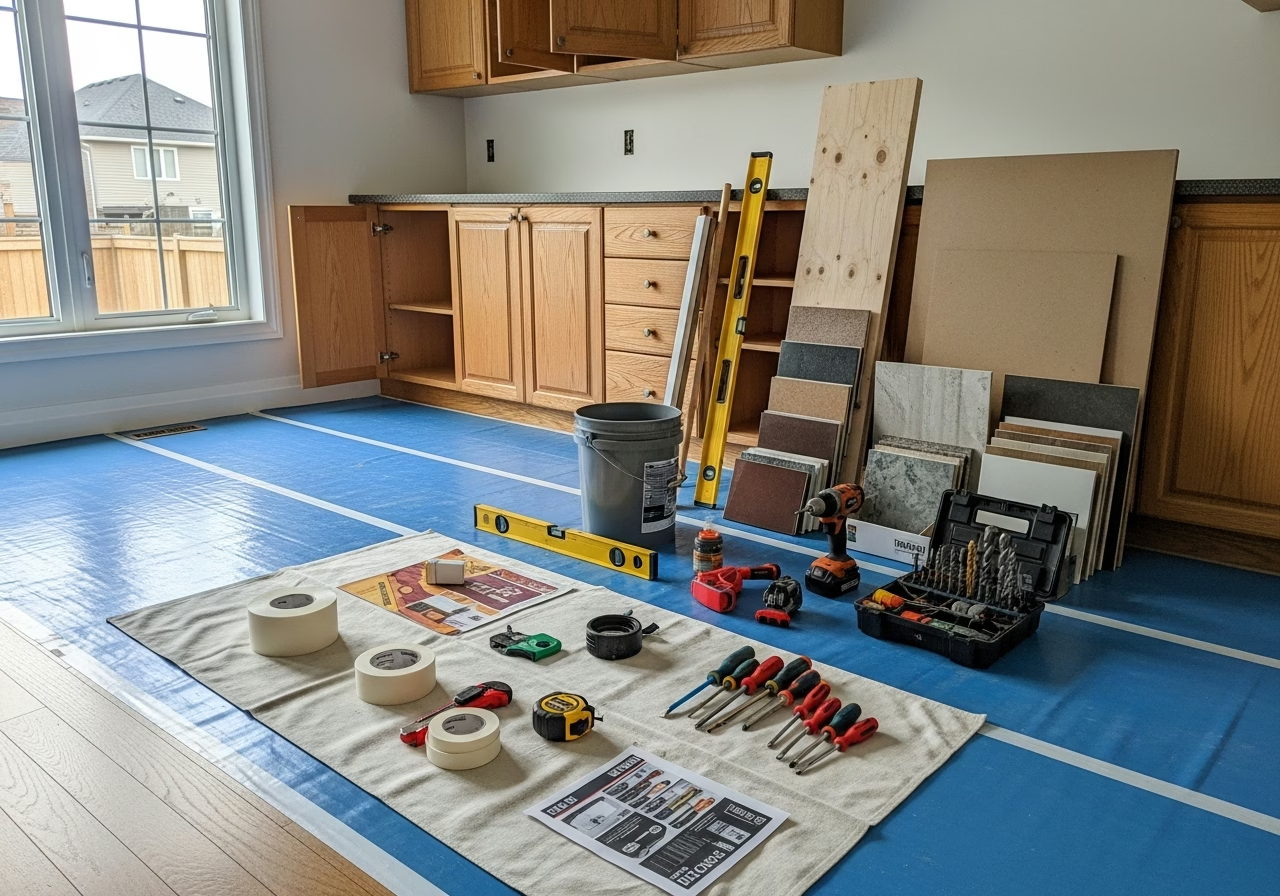
Phase 1: Planning & Design (2–4 Weeks)
This is the most important phase. Rushing through planning is the number one cause of budget overruns and project delays.
During planning, you will:
- Define your budget and priorities
- Research materials and finishes
- Get at least three contractor quotes
- Finalize the design and layout
- Order materials with long lead times (custom cabinets can take 4–8 weeks)
If you are doing a major renovation that changes the layout, consider hiring a kitchen designer. Professional design fees in Toronto typically range from $1,500 to $5,000, but a good designer saves you money by avoiding costly mistakes and optimizing the use of space.
Phase 2: Permits (2–8 Weeks)
Not every kitchen renovation needs a building permit in Toronto. Here is the general rule:
You DO need a permit if:- Removing or modifying walls (especially load-bearing)
- Moving or adding plumbing fixtures
- Adding electrical circuits or relocating the panel
- Changing door or window openings
- Altering HVAC systems or ductwork
- Replacing cabinets in the same configuration
- Swapping countertops
- Updating backsplash or flooring
- Replacing appliances in existing locations
- Painting and cosmetic updates
Permit applications go through the City of Toronto's online portal at toronto.ca/building-permits. Processing time for residential kitchen renovations is typically 2 to 8 weeks, depending on the complexity and the city's current backlog. Budget $500–$2,000 for permit fees.
Pro tip: Your contractor should handle the permit process, but always confirm that permits are pulled before work begins. Unpermitted work can create serious problems when you sell your home.Phase 3: Demolition & Rough-In (1–2 Weeks)
This is the messy part. Old cabinets, flooring, and fixtures come out. If you are relocating plumbing or electrical, the rough-in work happens during this phase — new pipes are run, electrical boxes are moved, and any structural changes (like removing a wall) are completed.
Set up a temporary kitchen before demolition starts. A folding table, microwave, electric kettle, and a utility sink are enough to get through the disruption. Many Toronto homeowners use the basement or a spare bedroom as a makeshift kitchen during the renovation.
Phase 4: Installation (3–6 Weeks)
Installation typically follows this sequence:
- 1. Drywall patching and painting
- 2. Flooring installation
- 3. Cabinet installation
- 4. Countertop templating and installation (usually a 1–2 week gap for fabrication)
- 5. Backsplash installation
- 6. Plumbing and electrical trim (sinks, faucets, outlets, fixtures)
- 7. Appliance delivery and hookup
Countertop fabrication is often the bottleneck. After cabinets are installed, a template is made, and the stone fabricator needs 5–10 business days to cut and polish the slab. Plan for this gap.
Phase 5: Finishing & Punch List (1–2 Weeks)
Final touches: hardware installation, caulking, trim work, touch-up painting, final plumbing connections, and appliance testing. A thorough walkthrough with your contractor at this stage catches any deficiencies before final payment.
Total Timeline Summary
| Renovation Scope | Estimated Duration |
|---|---|
| Cosmetic refresh | 2 – 4 weeks |
| Mid-range renovation | 6 – 10 weeks |
| High-end / full remodel | 10 – 16 weeks |
- Custom cabinet lead times: 4–8 weeks from order
- City permit processing: 2–8 weeks
- Condo board approval: 2–4 weeks (on top of city permits)
- Material supply chain issues: quartz and imported tile can have variable lead times
---
Kitchen Layout & Design Ideas for Toronto Homes
Your kitchen layout affects everything — workflow, storage, socializing, and how the space feels. The right layout depends on your kitchen's footprint, whether it is in a condo or a house, and how you actually use the room.
Common Kitchen Layouts
L-Shaped KitchenThe most versatile layout, fitting everything from compact condos to spacious family homes. Two adjacent walls hold the cabinetry and appliances, leaving the rest of the room open. Ideal for adding a dining table or island. Very common in Toronto's post-war bungalows and backsplit homes across North York, Etobicoke, and Scarborough.
U-Shaped KitchenThree walls of cabinetry, providing maximum storage and counter space. Works best in larger kitchens (at least 10 feet wide) to avoid feeling closed in. Popular in detached homes in Leaside, Don Mills, and Thornhill.
Galley KitchenTwo parallel runs of cabinetry with a walkway in between. Extremely efficient for cooking and common in older Toronto row houses and smaller condos. The challenge is limited space for more than one person. Consider widening the galley to at least 42 inches if possible.
Island KitchenAn L-shaped or U-shaped layout with a freestanding island. The island adds prep space, storage, and seating. You need a minimum of 36 inches of clearance around the island — 42 inches is better if the kitchen is a high-traffic area. This layout is a top request in Toronto renovations and works well in open-concept homes.
One-Wall KitchenAll cabinets and appliances along a single wall. Most common in Toronto studio and one-bedroom condos where space is limited. A well-designed one-wall kitchen can be surprisingly functional with proper storage solutions and a compact appliance set.
Open Concept: Pros and Cons for Toronto Homes
Open-concept kitchens remain popular, but they are not ideal for every situation.
Pros:- Creates a sense of space, especially in smaller Toronto homes
- Better for entertaining and family interaction
- More natural light throughout the main floor
- Modern aesthetic that appeals to buyers
- Cooking smells and noise carry throughout the living space
- Less wall space for storage (upper cabinets may be reduced)
- Requires a tidier kitchen since it is always visible
- Structural wall removal can cost $3,000–$10,000+ and requires engineering and permits
In Toronto condos, open-concept renovations are often limited by the building's structural design. Concrete shear walls cannot be removed. Always have a structural engineer assess any wall you want to remove before committing to an open-concept plan.
For older Toronto houses — Victorian semis in Cabbagetown, Edwardian homes in the Danforth area, or wartime bungalows — opening up the kitchen often involves removing a load-bearing wall. This is doable but requires a proper beam, engineered supports, and a building permit.
Popular Kitchen Design Trends in 2026
Based on what we are seeing in Toronto renovations and industry forecasts:
Two-Tone CabinetryMixing darker base cabinets with lighter uppers (or vice versa) adds depth and visual interest. Navy or dark green base cabinets paired with white or natural wood uppers is a popular Toronto combination. This trend moves away from the all-white kitchen that dominated the last decade.
Waterfall CountertopsThe countertop material extends down the sides of an island or peninsula, creating a sleek, continuous look. Particularly striking with veined quartz or marble. Common in modern kitchens across Toronto's new-build homes and high-end condo renovations.
Warm, Natural TonesThe era of the stark white kitchen is fading. Toronto homeowners are embracing warmer palettes — warm whites, creamy beiges, soft greens, and natural wood tones. This aligns with the broader Japandi and warm minimalism movements in interior design.
Smart Kitchen FeaturesTouchless faucets, built-in charging stations, under-cabinet LED lighting with app control, and smart appliances (ovens with cameras, fridges with screens) are increasingly standard in mid-to-high-end Toronto renovations.
Decorative Cabinet FrontsFluted, reeded, and glass-insert cabinet doors add texture and character. This trend references earlier kitchen design eras and creates a more collected, less cookie-cutter feel.
Mixed Metal FinishesRather than matching every handle, fixture, and faucet in the same finish, homeowners are intentionally mixing — brushed brass hardware with a matte black faucet, for example. This adds depth and personality when done thoughtfully.
---
Kitchen Materials Guide
Choosing the right materials is a balancing act between aesthetics, durability, maintenance, and budget. Here is a practical comparison of the most common options for Toronto kitchens.
Cabinets
Cabinets are the single biggest expense in most kitchen renovations. Your choice comes down to three tiers:
Stock Cabinets ($75–$150/linear foot installed)Pre-manufactured in standard sizes. Available from IKEA, Home Depot, and Lowes. Limited customization but significantly cheaper. IKEA cabinets with custom fronts from companies like Semihandmade orDERA are a popular Toronto hack — you get the affordability of IKEA's box system with a higher-end look.
Need professional kitchen & bathroom renovation?
Call RenoHouse at 1-289-212-2345 or get a free estimate today.
Get Free Estimate →Best for: Budget-conscious renovations, standard-sized kitchens, rental properties.
Semi-Custom Cabinets ($120–$500/linear foot installed)Built to order with more size options, finish choices, and interior accessories (pull-out shelves, spice racks, lazy Susans). Available through kitchen showrooms and dealers across the GTA.
Best for: Most homeowner renovations where you want quality and some flexibility without a fully custom price tag.
Custom Cabinets ($300–$1,000+/linear foot installed)Built from scratch to your exact specifications. Any wood species, any finish, any configuration. Lead times of 6–12 weeks are common.
Best for: Unusual kitchen layouts, heritage homes with non-standard dimensions, and homeowners who want a specific design vision realized.
Countertops
Quartz ($45–$150/sq. ft. installed)Engineered stone — durable, non-porous, low maintenance. Does not need sealing. Available in a huge range of colours and patterns, including convincing marble lookalikes. The most popular countertop choice in Toronto renovations by a wide margin.
Granite ($60–$120/sq. ft. installed)Natural stone with unique veining. Extremely durable but requires periodic sealing (once a year). Each slab is one of a kind. Still popular but has lost market share to quartz over the past five years.
Laminate ($20–$50/sq. ft. installed)The most budget-friendly option. Modern laminates can look surprisingly good, and brands like Formica and Wilsonart offer realistic stone and wood patterns. Not as durable as stone — susceptible to scratching and heat damage.
Butcher Block ($40–$80/sq. ft. installed)Warm, natural, and great for prep areas. Requires regular oiling and is susceptible to water damage around sinks. Often used as an accent (island top) rather than for the entire kitchen.
Porcelain Slab ($60–$130/sq. ft. installed)A newer option gaining popularity. Ultra-thin, resistant to heat, stains, and UV. Available in large-format slabs that mimic marble or concrete. Growing in Toronto's design-forward renovations.
Flooring
Luxury Vinyl Plank (LVP) ($4–$9/sq. ft. installed)Waterproof, durable, comfortable underfoot, and available in convincing wood and stone patterns. The most popular kitchen flooring choice in Toronto for good reason — it handles the moisture and traffic of a kitchen without the maintenance concerns of real wood.
Porcelain Tile ($8–$16/sq. ft. installed)Extremely durable and water-resistant. Available in any pattern, including wood-look and large-format options. Harder underfoot and colder in winter (consider in-floor heating for Toronto's climate).
Engineered Hardwood ($8–$14/sq. ft. installed)A real wood veneer over a plywood core. More moisture-stable than solid hardwood but still susceptible to water damage around sinks and dishwashers. Beautiful but requires more care in a kitchen environment.
Backsplash
Popular backsplash options in Toronto kitchens:
- Subway tile (ceramic or porcelain): $3–$10/sq. ft. — timeless, affordable, easy to clean
- Large-format porcelain: $8–$15/sq. ft. — fewer grout lines, modern look
- Natural stone mosaic: $15–$30/sq. ft. — adds texture, more premium
- Glass tile: $10–$25/sq. ft. — reflective, adds depth
- Full-slab quartz or porcelain: $40–$80/sq. ft. — seamless, dramatic, no grout to maintain
Where to Buy in Toronto
- IKEA North York / IKEA Etobicoke — Budget cabinets with good quality frames
- Home Depot / Lowes — Stock cabinets, flooring, fixtures, appliances
- Improve Canada (Vaughan) — Showroom complex with dozens of kitchen and bathroom vendors
- DERA Design / Miralis — Semi-custom and custom Canadian-made cabinets
- Caesarstone / Silestone dealers — Premium quartz countertops
- Ciot Toronto — Premium tile, natural stone, porcelain slabs
- Midland Appliance / Tasco Distributors — Appliance specialists
---
Toronto-Specific Considerations
Renovating a kitchen in Toronto comes with unique considerations that don't apply in every market. Here is what you need to know.
Building Permits
The City of Toronto requires a building permit for any kitchen renovation that involves:
- Structural changes (removing or modifying walls)
- New plumbing rough-in or relocation of existing fixtures
- New electrical circuits or panel upgrades
- Changes to window or door openings
- HVAC modifications
You do not need a permit for cosmetic updates: new cabinets in the same footprint, countertop replacement, backsplash, flooring, painting, or appliance swaps.
Apply through the City of Toronto's online portal. Expect 2–8 weeks for residential permit processing. Your contractor should manage the application, but you as the homeowner are ultimately responsible for ensuring permits are in place.
Important: Unpermitted structural or plumbing work can void your home insurance, create legal liability, and cause problems at the time of sale. A buyer's home inspector will flag unpermitted work, and it can kill a deal or force a price reduction. Always pull the required permits.Condo Renovations
Kitchen renovations in Toronto condos require additional steps:
- 1. Condo board approval — Submit your renovation plan to the property management company or board. Most condos require architectural drawings, contractor insurance certificates, and a detailed scope of work. Approval typically takes 2–4 weeks.
- 2. Renovation agreements — Your condo corporation will require a signed agreement outlining work hours, insurance requirements, and deposit (often $500–$2,000 for common element protection).
- 3. Noise bylaws — The City of Toronto prohibits construction noise from 7:00 PM to 7:00 AM on weekdays, before 9:00 AM on Saturdays, and all day on Sundays and statutory holidays. Most condo boards are stricter, typically limiting noisy work to weekdays from 9:00 AM to 5:00 PM.
- 4. Elevator booking — Material deliveries and debris removal require elevator reservations, often with additional fees.
- 5. Scope limitations — You can only renovate within your unit's boundaries. Common elements (exterior walls, windows, risers, and in many cases the concrete subfloor) cannot be modified without special approval.
If you live in a condo in the CityPlace area, Liberty Village, or any of Toronto's downtown high-rises, factor an extra 2–4 weeks into your timeline for condo-specific approvals and logistics.
Heritage Homes
Toronto has thousands of designated heritage properties, particularly in neighbourhoods like The Annex, Cabbagetown, Rosedale, and Old Town. If your home is heritage-designated or located in a Heritage Conservation District (HCD), you may need a Heritage Permit in addition to standard building permits for exterior changes.
Interior kitchen renovations generally do not require heritage permits, but if the kitchen renovation affects the exterior (adding a window, expanding into an addition), you will need to work within heritage guidelines. Consult the City of Toronto's Heritage Preservation Services before starting.
Plumbing in Older Toronto Homes
Many Toronto homes built before the 1960s have plumbing that needs attention during a kitchen renovation:
- Galvanized steel pipes — Common in homes from the 1920s–1950s. These corrode internally over time, reducing water pressure and eventually leaking. If your home still has galvanized supply pipes, a kitchen renovation is a good opportunity to replace them with copper or PEX.
- Lead service lines — Some pre-1955 Toronto homes still have lead service connections from the city water main. The City of Toronto offers a Lead Pipe Replacement Program that covers the city-owned portion. During a kitchen renovation, consider testing your water and replacing the homeowner-owned portion of any lead pipe.
- Cast iron drain pipes — Durable but can develop cracks and blockages after 60+ years. Inspect during demolition and replace any compromised sections.
- Knob-and-tube wiring — Not plumbing, but equally important. If your older Toronto home has knob-and-tube electrical, a kitchen renovation is the ideal time to upgrade. Most insurance companies will not insure homes with active knob-and-tube wiring, and modern kitchen circuits require much higher amperage than old systems provide.
WSIB Requirements for Contractors
In Ontario, the Workplace Safety and Insurance Board (WSIB) provides workplace injury insurance. For kitchen renovations:
- Contractors who work for multiple clients (not exclusively direct-to-homeowner) are required to carry WSIB coverage under Ontario's expanded compulsory coverage rules in construction.
- Home renovators who contract directly with homeowners and work exclusively in residential renovation may be exempt from mandatory WSIB registration, but many reputable contractors carry it voluntarily.
- As a homeowner, hiring a contractor without WSIB coverage means you could be held liable if a worker is injured on your property.
---
How to Choose a Kitchen Contractor in Toronto
The contractor you choose has more impact on your renovation's success than any material or design decision. Here is how to find the right one.
What to Look For
- 1. Proper insurance — At minimum, your contractor should carry $2 million in Commercial General Liability (CGL) insurance. Ask for a certificate of insurance naming you as an additional insured.
- 2. WSIB coverage — Request a current Clearance Certificate (see above).
- 3. Relevant experience — Ask to see 5–10 completed kitchen projects, ideally in your area. A contractor who primarily builds decks is not the right fit for a kitchen gut-renovation.
- 4. Detailed written quotes — A professional quote breaks down costs by category (demolition, cabinets, countertops, plumbing, electrical, labour, etc.) rather than providing a single lump sum.
- 5. Realistic timeline — Be wary of contractors who promise unrealistically fast completion. A quality mid-range kitchen renovation takes 6–10 weeks — anyone promising 3 weeks is either cutting corners or underestimating the scope.
- 6. References — Call at least two past clients. Ask about communication, quality, timeline adherence, and how issues were handled.
- 7. Permit awareness — A professional contractor will proactively discuss permit requirements and include them in the project plan.
Red Flags
Watch out for these warning signs:
- Demands full payment upfront — A standard payment schedule is 10–15% deposit, then progress payments tied to milestones, with 10% holdback until completion.
- No written contract — Never proceed without a detailed written contract.
- Cannot provide insurance or WSIB certificates — Walk away.
- No physical business address — Difficult to pursue if problems arise.
- Significantly lower quote than competitors — If one quote is 30–40% below others, they are likely cutting corners, using inferior materials, or planning to hit you with change orders.
- Pressure to start immediately — Good contractors are typically booked 2–6 weeks out. Availability for an immediate start can indicate a lack of work (and a reason for it).
- Poor communication — If they are hard to reach during the quoting process, it will only get worse during the project.
Questions to Ask Every Contractor
- 1. How many kitchen renovations have you completed in the past 12 months?
- 2. Will you pull all necessary permits?
- 3. Who will be the on-site project manager?
- 4. What is your payment schedule?
- 5. What is your process for handling change orders?
- 6. What warranty do you offer on workmanship?
- 7. Can you provide three references from recent kitchen projects?
- 8. What is your estimated start date and completion date?
- 9. Do you use subcontractors? If so, who handles the plumbing and electrical?
- 10. What happens if the project goes over budget or past the completion date?
Getting Quotes
Get a minimum of three quotes from different contractors. To make quotes comparable:
- Provide the same scope of work to each contractor
- Specify the same materials (or equivalent quality)
- Ask for itemized breakdowns, not lump sums
- Compare not just price but scope — the cheapest quote may exclude items the others include
In Toronto, expect to wait 1–2 weeks for a detailed quote after the initial site visit.
Contract Essentials
Your renovation contract should include:
- Full scope of work with detailed specifications
- Total price and itemized cost breakdown
- Payment schedule tied to project milestones
- Start date and expected completion date
- Penalty clause for significant delays (optional but recommended)
- Change order process and pricing
- Warranty terms (minimum 1 year on workmanship)
- Permit responsibilities
- Insurance and WSIB information
- Dispute resolution process
- 10% holdback — Ontario law requires a 10% holdback on construction contracts for 60 days to protect against lien claims under the *Construction Act*
---
10 Kitchen Renovation Mistakes to Avoid
Based on years of experience renovating kitchens in Toronto, these are the mistakes we see most often:
1. Not Setting a Realistic Budget
Many homeowners set a budget based on wishful thinking rather than actual Toronto pricing. Use the cost ranges in this guide as a starting point, then add a 15–20% contingency for unexpected issues — especially in older homes where surprises behind walls are common.
2. Ignoring the Work Triangle
The relationship between your sink, stove, and refrigerator determines how efficiently you can cook. Each leg of the triangle should be between 4 and 9 feet, with a total perimeter of 13 to 26 feet. A poor triangle means frustrating daily cooking.
3. Skimping on Storage
You can never have too much kitchen storage. Plan for more cabinets and drawers than you think you need. Deep drawers for pots, pull-out shelves for lower cabinets, and a proper pantry (even a tall cabinet) make daily life easier.
4. Choosing Style Over Function
That trendy open shelving looks great on Instagram but collects dust and grease in a working kitchen. That ultra-thin countertop edge is elegant but chips easily. Always prioritize how you will actually use the kitchen day-to-day.
5. Inadequate Lighting
A single ceiling fixture is not enough. Plan for three types of lighting: ambient (recessed or flush mount), task (under-cabinet lights over work areas), and accent (pendant lights over an island). Budget $1,500–$4,000 for proper kitchen lighting in Toronto.
6. Wrong Countertop Height or Depth
Standard countertop height is 36 inches, but this is not ideal for everyone. If you are taller or shorter, consider adjusting the height. Standard depth is 25 inches; an island can be deeper (up to 30 inches) for extra prep space.
7. Forgetting About Ventilation
A proper range hood is essential, not optional. In open-concept kitchens, ventilation is even more critical to prevent cooking odours from permeating the living space. Budget for a quality range hood (600–900 CFM for most Toronto kitchens) and ensure proper ducting to the exterior.
8. Not Planning for Appliance Dimensions
Measure your appliance openings precisely before ordering. A 30-inch range opening needs exactly 30 inches (not 29.5). Counter-depth refrigerators do not fit in all standard openings. A 24-inch dishwasher needs a 24-inch opening. Sounds obvious, but dimensional mismatches are a leading cause of kitchen renovation headaches.
9. Skipping the Contract
Even if you trust your contractor, get everything in writing. Verbal agreements about scope, timeline, and cost are unenforceable and lead to disputes. A detailed contract protects both you and the contractor.
10. Trying to Do Everything Yourself
DIY can save money on demolition and painting, but leave plumbing, electrical, gas, and structural work to licensed professionals. In Toronto, electrical and plumbing work must be done by licensed trades, and DIY work on these systems can void insurance, fail inspection, and create safety hazards.
---
ROI & Home Value Impact
Kitchen renovations consistently rank among the top home improvements for return on investment, and this is especially true in Toronto's competitive real estate market.
Kitchen Renovation ROI in Toronto
Based on industry data and Toronto market conditions:
| Renovation Type | Typical ROI |
|---|---|
| Minor kitchen update (cosmetic) | 75 – 100% |
| Mid-range kitchen renovation | 65 – 85% |
| Major high-end renovation | 55 – 75% |
The pattern is consistent: smaller, well-targeted updates deliver the highest percentage return, while larger renovations add more absolute dollar value but at a lower ROI percentage. A $12,000 cosmetic refresh might return $10,000–$12,000 in added value (80–100% ROI), while a $75,000 high-end remodel might add $45,000–$55,000 (60–73% ROI).
However, ROI is only one factor. A full kitchen renovation makes the home sell faster, which has its own financial value — reduced carrying costs, less stress, and stronger negotiating position.
What Toronto Buyers Want in 2026
Based on current market trends, here is what drives home value in Toronto kitchen renovations:
- Quartz countertops — The expected standard in mid-range and above homes. Buyers see laminate countertops as a renovation they'll need to do.
- Functional island with seating — The most requested kitchen feature among Toronto buyers.
- Updated, soft-close cabinetry — Buyers notice cabinet quality immediately.
- Stainless steel appliances — Still the default preference. Integrated panel-ready appliances are gaining in higher-end homes.
- Good lighting — Recessed lights plus under-cabinet task lighting signal a well-thought-out renovation.
- Durable, waterproof flooring — LVP or tile. Buyers are cautious about hardwood in kitchens.
- Neutral, timeless finishes — If resale is a factor, avoid overly trendy choices. White or light grey cabinets, quartz countertops in neutral tones, and classic subway or large-format tile backsplash have broad appeal.
The Neighbourhood Rule
One critical principle: renovate to the level your neighbourhood supports. A $80,000 kitchen renovation makes sense in a $1.5 million home in Leaside. The same spend in a $600,000 home in a transitional neighbourhood may not be fully recouped.
Before setting your budget, look at comparable recently sold homes in your area. If the nicest kitchens in your neighbourhood have quartz counters and semi-custom cabinets, that is your ceiling. Going significantly above that standard means renovating for yourself — which is fine — but do not expect to recover 100% of the additional investment at resale.
---
Related Guides
Dive deeper into specific topics:
- Kitchen Cabinet Painting: Cost & Process
- Quartz vs Granite Countertops
- Small Kitchen Ideas for Toronto Condos
- Kitchen Renovation Permits Toronto
Explore related renovation topics:
Frequently Asked Questions
How much does a kitchen renovation cost in Toronto?
A kitchen renovation in Toronto typically costs between $15,000 and $70,000 CAD for most projects. Cosmetic refreshes (painting cabinets, new backsplash, hardware) can be done for $5,000–$15,000. Mid-range renovations with new cabinets, countertops, and flooring run $15,000–$40,000. Full high-end remodels with custom cabinetry, premium materials, and layout changes start at $40,000 and can exceed $100,000. The final cost depends on kitchen size, material quality, scope of work, and whether plumbing or electrical needs to be relocated.
How long does a kitchen renovation take in Toronto?
Most mid-range kitchen renovations in Toronto take 6 to 10 weeks from demolition to completion. Cosmetic updates can be done in 2–4 weeks. Full gut renovations with layout changes, permit requirements, and custom cabinetry can stretch to 12–16 weeks. Add 2–8 weeks for City of Toronto permit processing and 2–4 weeks for condo board approval if applicable. Custom cabinet orders add another 4–8 weeks of lead time before installation can begin.
Do I need a permit to renovate my kitchen in Toronto?
You need a building permit if your renovation involves structural changes (removing walls), plumbing relocation, new electrical circuits, or changes to window/door openings. Cosmetic updates like replacing cabinets, countertops, flooring, backsplash, or appliances in their existing locations do not require a permit. Apply through the City of Toronto building permit portal. Your contractor should manage the permit process as part of the project.
Can I renovate my kitchen in a Toronto condo?
Yes, but you need condo board approval before starting any work. Submit your renovation plan, contractor insurance certificates, and a detailed scope of work to your property management company. Most condos require a signed renovation agreement and a deposit ($500–$2,000). Construction noise is restricted to weekday daytime hours in most Toronto condos, and you will need to book elevators for material deliveries. You can only modify elements within your unit — common elements like concrete walls, windows, and riser pipes require special approval.
What is the best countertop material for a Toronto kitchen?
Quartz is the most popular choice for Toronto kitchen renovations in 2026. It is durable, non-porous (no sealing required), resistant to stains, and available in a wide range of colours and patterns. Quartz costs $45–$150 per square foot installed, depending on the brand and pattern. Granite remains a solid choice at $60–$120 per square foot. For budget-friendly options, modern laminate ($20–$50/sq. ft.) has improved dramatically and is worth considering for rental properties or starter homes.What kitchen renovations add the most value to a Toronto home?
The highest-ROI kitchen updates in Toronto include: new countertops (replacing laminate with quartz), cabinet refacing or replacement, updated lighting (recessed + under-cabinet), modern backsplash, and new flooring. A well-executed cosmetic refresh ($8,000–$15,000) often returns 75–100% of the investment. Adding an island with seating, improving the layout, and installing energy-efficient appliances also add significant value in Toronto's market.
Should I renovate my kitchen before selling in Toronto?
It depends on the kitchen's current condition and your neighbourhood. If your kitchen has visibly dated finishes (oak cabinets, laminate counters, old appliances), even a cosmetic refresh can significantly improve buyer interest and sale price. In competitive Toronto neighbourhoods, an updated kitchen is often the difference between getting multiple offers and sitting on the market. However, a major renovation right before selling rarely recoups its full cost. Focus on high-impact, cost-effective updates rather than a full remodel.
How do I save money on a kitchen renovation in Toronto?
Proven cost-saving strategies include: keeping the existing layout (avoiding plumbing and electrical relocation saves thousands), using stock or semi-custom cabinets instead of fully custom, choosing quartz over marble for countertops (similar look, lower price, less maintenance), installing luxury vinyl plank instead of hardwood or stone tile, doing your own demolition (carefully), and ordering appliances during holiday sales (Black Friday, Boxing Day). Also, get multiple quotes — pricing varies significantly between contractors in the GTA.
What should I look for in a kitchen contractor in Toronto?
Look for a contractor with: adequate insurance ($2M+ liability), WSIB coverage (or clear exemption documentation), a portfolio of completed kitchen projects in Toronto, detailed written quotes with itemized pricing, positive references from recent clients, and realistic timeline estimates. Verify they will pull all necessary permits and provide a comprehensive written contract with a clear payment schedule, warranty terms, and change order process.
How much disruption should I expect during a kitchen renovation?
Plan for 6–10 weeks without a fully functional kitchen for a mid-range renovation. Set up a temporary kitchen (microwave, electric kettle, small fridge, paper plates) in another room before demolition starts. Dust and noise are unavoidable during demolition and installation. If you live in a Toronto condo, your neighbours will be affected — most condo boards require you to notify adjacent units. Consider staying with family or friends during the noisiest phases (demolition and tile work), especially if you have young children.
---
Ready to Renovate Your Toronto Kitchen?
Planning a kitchen renovation is exciting, but it involves a lot of decisions. Having an experienced contractor who understands Toronto's unique requirements — from heritage home plumbing to condo board approvals — makes the process smoother and the result better.
At RenoHouse, we specialize in kitchen renovations across the Greater Toronto Area. Our team handles everything from design and permits to installation and final walkthrough. We provide detailed, transparent quotes with no hidden fees, and every project is backed by our workmanship warranty.
Get a free, no-obligation estimate for your kitchen renovation:→ Request Your Free Kitchen Renovation Quote
Or call us to discuss your project. We are happy to answer questions, review your kitchen's potential, and help you understand what is realistic for your budget and timeline.
---
*This guide is updated regularly to reflect current Toronto pricing and market conditions. Last updated: March 2026.*
*Related reading:*
- Kitchen Renovation Services in Toronto
- Our Kitchen Renovation Portfolio
- Bathroom Renovation Guide Toronto
- How to Plan a Home Renovation in Toronto
Sources & References
Authoritative sources cited in this guide:
- Ontario Building Code — OBC official text
- Toronto Building Permits — City permit portal
- Tarion New Home Warranty — Ontario warranty regulator
- HCRA — Home Construction Regulatory Authority — Ontario builder/vendor licensing
Continue Reading