RenoHouse

# Permit Requirements for a Home Sauna in Toronto: Building Permit + ESA + OBC Explained
Quick answer. Installing a sauna in Toronto requires navigating three separate compliance regimes — the City of Toronto Building Permit (mechanical alteration approval), the Ontario Electrical Safety Code via ESA (electrical compliance), and the Ontario Building Code (technical standards).Installing a sauna in Toronto requires navigating three separate compliance regimes — the City of Toronto Building Permit (mechanical alteration approval), the Ontario Electrical Safety Code via ESA (electrical compliance), and the Ontario Building Code (technical standards). This guide walks through each, with 2026 fees, processing times, and the inspection touchpoints you need to plan for.
For the broader build framework that this permit work fits into, see our Basement Sauna Installation Toronto 2026 Guide.
Why Permits Matter (Beyond Compliance)
Three reasons:
- 1. Insurance. Ontario home policies exclude unpermitted, ESA-non-compliant work from fire and water damage coverage. A sauna fire on an unpermitted install isn't covered — that's typically a $50K–$300K claim denied.
- 2. Resale. Buyers' inspectors flag unpermitted finished basement work. Realtors discount homes with unverifiable renovations. ROI drops 20–40% on the sauna alone, and the friction can scuttle deals.
- 3. Safety. The mandatory 1-hour timer cut-off in OESC exists because saunas left running indefinitely cause fires. Permitted installs verify this.
City of Toronto Building Permit
When you need one
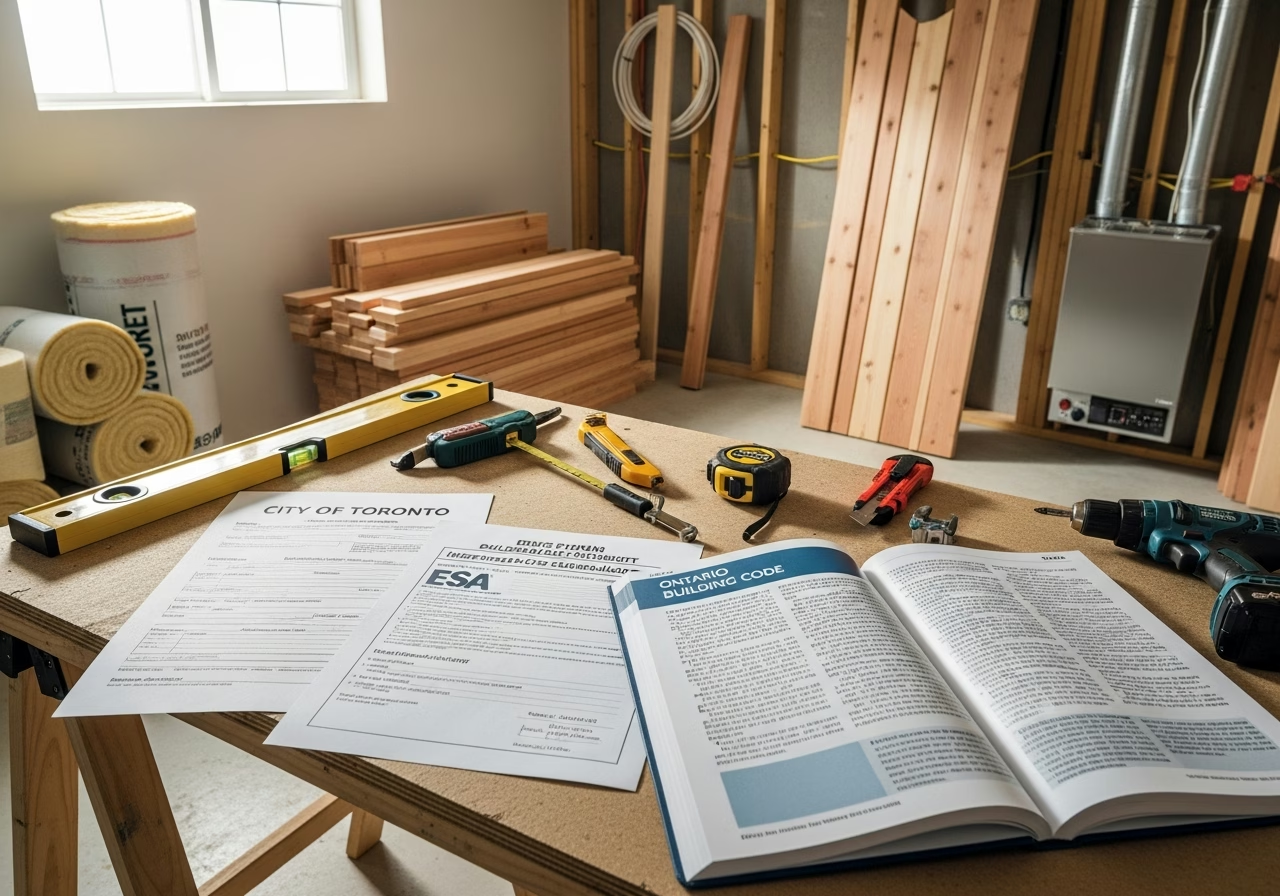
Per Toronto Building's "When Do I Need a Building Permit" page, a permit is required when you:
- Frame new walls (partition a basement room).
- Install new electrical circuits.
- Modify mechanical ventilation.
- Make any "material alteration" to the structure or systems.
A basement sauna install touches all four. Toronto Building specifically calls out that "even just partitioning a room in the basement and adding an electrical circuit counts as a material alteration." There's no DIY workaround — even prefab Finnish kits trigger a permit because of the framing and 240V circuit.
The narrow exception: a plug-in infrared cabin in a finished basement room, using an existing 120V outlet, may not require a permit. Always confirm with Toronto Building before committing — if you're partitioning a wall to dedicate the space, the permit is back on the table.
What's required in the application
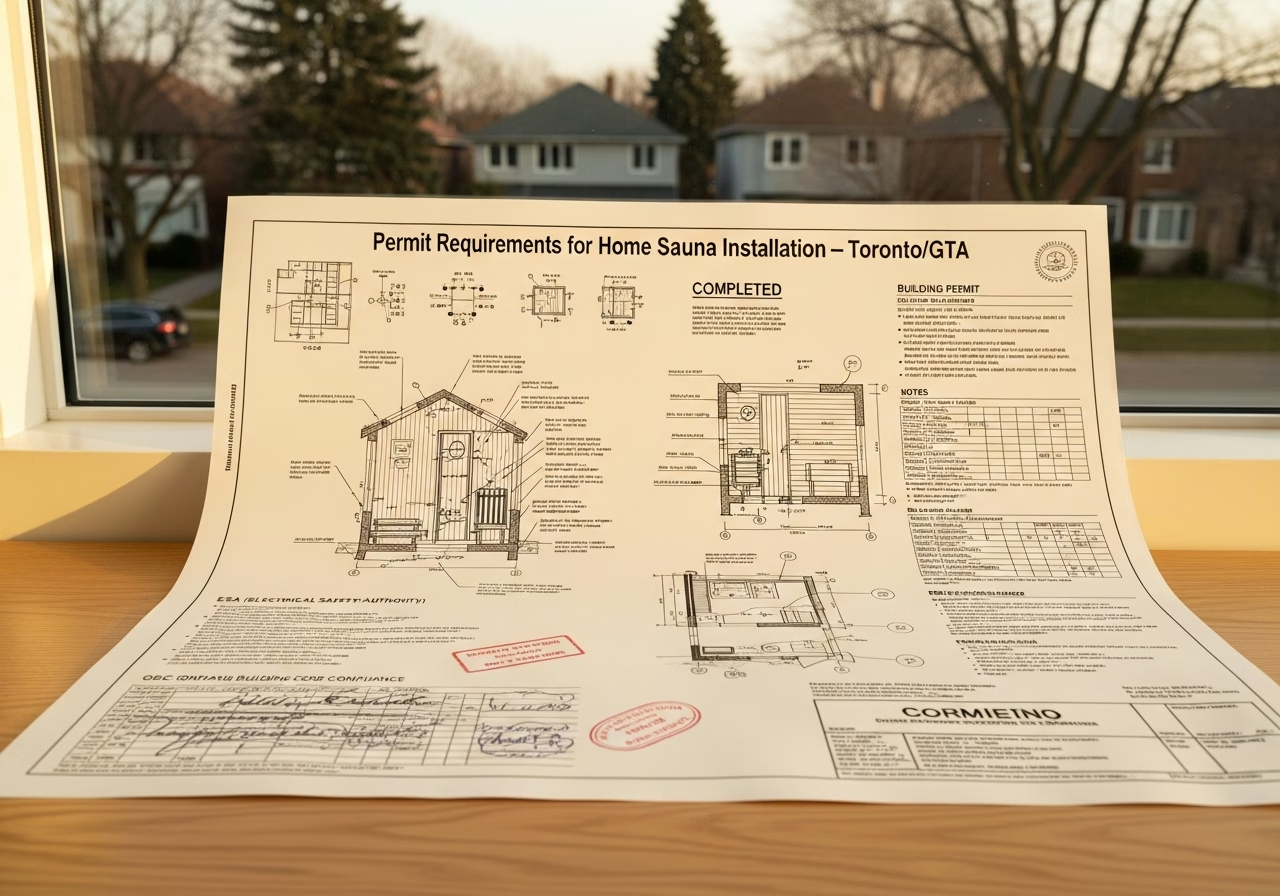
- Floor plan showing sauna location, dimensions, surrounding rooms.
- Section drawings showing wall assembly (insulation, vapor barrier, finish materials, ceiling height).
- Electrical plan showing the 240V circuit run, breaker, controller location, lighting circuit.
- Ventilation plan showing intake/exhaust locations, duct runs, exterior termination, fan specs.
- Specifications for heater (model, kW, manufacturer), insulation R-values, vapor barrier type.
A good designer or contractor produces these in 3–5 days. Submission goes through the Toronto Building portal.
Fees (2026)
- Minimum fee: $214.79
- Hourly review rate: $92.79/hr for additional examination time.
- Typical residential basement sauna permit total: $300–$800.
Fees scale with project complexity and drawing detail. Larger luxury wellness suite projects can land at $800–$1,500.
Processing time
- Standard residential basement work: 2–6 weeks.
- Heritage-designated home or complex luxury build: 4–10 weeks (additional Heritage Preservation Services or design review may be triggered).
Inspections
Required during the build:
- 1. Framing inspection — after wall framing and electrical/ventilation rough-in, before insulation.
- 2. Insulation / vapor barrier inspection — after insulation and foil are installed, before cedar T&G goes up. Critical — once the cedar is on, the inspector can't verify the foil work.
- 3. Electrical rough-in (sometimes combined with framing).
- 4. Final inspection — after commissioning.
Schedule inspections through the Toronto Building portal. Each inspection typically requires 2–5 business days lead time.
Electrical Safety Authority (ESA) — The Electrical Side
ESA is the regulatory body responsible for electrical safety in Ontario, separate from the City of Toronto. The two compliance regimes run in parallel — you need both.
When you need an ESA Notification of Work
Any new electrical circuit triggers an ESA Notification. For saunas this means:- 240V dedicated circuit for a Finnish heater (essentially always).
- New lighting circuit for sauna-rated fixtures.
- Dedicated exhaust fan circuit.
- Any new outlet or panel modification in the sauna's vicinity.
A plug-in infrared on an *existing* 120V outlet is the only common exception — and even there, if you add a dedicated outlet, the Notification kicks in.
Who files it
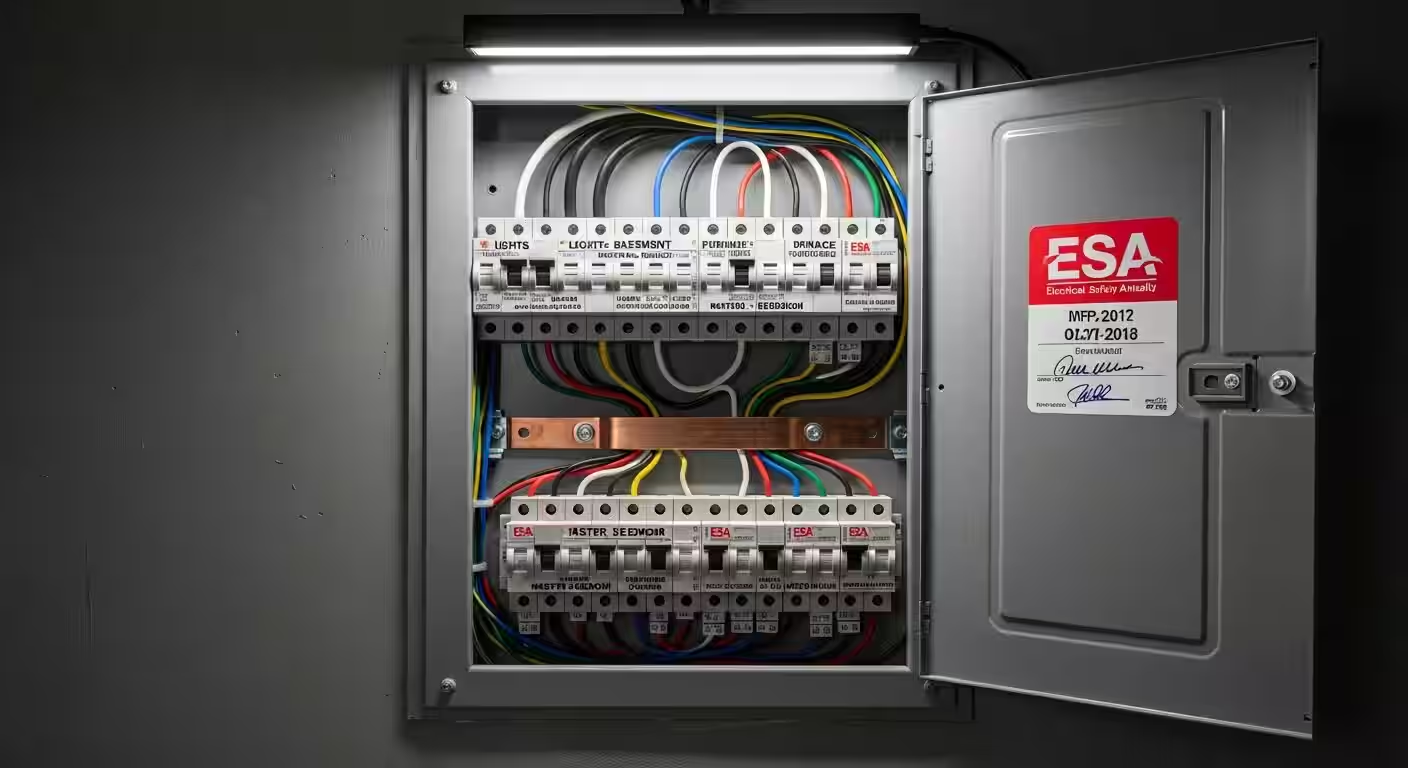
A Licensed Electrical Contractor (LEC) files the Notification of Work with ESA *before* energizing any new circuit. You as the homeowner do not file directly. This is non-negotiable per the Ontario Electrical Safety Code.The LEC pulls the Notification from esasafe.com/notifications-and-inspections, schedules the work, and books the final inspection. They're financially responsible for the work passing inspection.
Need professional home renovation?
Call RenoHouse at 289-212-2345 or get a free estimate today.
Get Free Estimate →Fees
- Minimum residential Notification of Work: ~$88 (2026).
- Larger or more complex jobs: $150–$250+.
- Re-inspection (if first attempt fails): Additional fee.
What the ESA inspector verifies
For a sauna 240V circuit:
- 1. Breaker sized at 150% of heater amperage. Example: 6 kW heater @ 240V = 25A → 40A breaker. 9 kW heater = 37.5A → 60A breaker.
- 2. Wire gauge correct. 8 AWG for 40A, 6 AWG for 60A.
- 3. Mandatory 1-hour timer cut-off. "The Ontario Electrical Safety Code requires a timed cut-off switch on sauna heaters, set to a maximum of one hour with no override." Verified at inspection. Non-compliant installs fail.
- 4. GFCI on damp/wet location outlets and any 120V outlets near the sauna footprint.
- 5. No outlets, switches, or junction boxes inside the heated cabin envelope. Controls must be outside the sauna door.
- 6. Heater connection per manufacturer specs and CSA/UL listing.
- 7. Lighting sauna-rated only.
Processing time
- Notification of Work submission: Same-day (online).
- Inspection scheduling: Typically 3–7 business days.
- Inspection itself: 30–60 minutes onsite.
Ontario Building Code (OBC) — Technical Standards
The OBC sets the underlying technical standards that the City of Toronto enforces via permit. Sauna-relevant provisions:
| Requirement | OBC Reference |
|---|---|
| Minimum ceiling height (habitable basement room) | 2.03 m (6'8") legacy minimum; 2.13 m (7'0") standard target — see OBC online |
| Mechanical ventilation when natural inadequate | Min. ½ ACH general; 6–8 ACH during sauna use |
| HRV/ERV in new construction | OBC 2020+ requires whole-house ventilation |
| Smoke/CO alarms | OBC 9.10.19 — interconnected, battery backup |
| Fire separation (if secondary suite or different occupancy) | OBC 9.10 |
| GFCI/AFCI protection | Ontario Electrical Safety Code 2024 |
Ceiling height in practice
The most common OBC issue for Toronto basement saunas is ceiling height. Per buildingcode.online, habitable basement rooms have minimum ceiling heights — and many post-2000 condo townhomes have raw basement ceilings of 6'10" that fail when you add floor build-up and ceiling assembly.
Practical rule: need at least 7'4" raw basement ceiling to comfortably build a 7'0" finished sauna interior.
Ventilation in practice
OBC requires general ventilation, but saunas need much more during use. The high-low method (intake low, exhaust high, ducted to exterior, 6–8 ACH during use) satisfies both OBC and good sauna practice. Full design walkthrough in Basement Sauna Ventilation: The High-Low Method Explained.
City of Toronto Zoning / Bylaws
Indoor basement saunas generally don't trigger zoning issues — there's no exterior change visible from the street. The two situations that matter:
- 1. Exhaust vent through the foundation/exterior wall — must respect setback distances (typically 0.6 m minimum from property line) and not violate any condo bylaws if applicable.
- 2. Heritage-designated homes — additional Heritage Preservation Services review may be required for any visible exterior penetration. Adds 4–8 weeks to timeline. Always check before committing.
Plumbing Permit (if applicable)
Only required if you're adding a floor drain, shower, or cold plunge as part of the sauna build:
- Toronto Plumbing & Drains division permit: $150–$400.
- Submitted in parallel with the building permit.
- Inspection at rough-in and final.
If you're going the full wellness-suite route, plumbing is part of the package — see Sauna + Cold Plunge: Designing a Wellness Suite in Toronto Basement.
Insurance Disclosure
Not technically a permit, but legally relevant. Notify your home insurance carrier when the sauna is commissioned. Some carriers require disclosure as a policy condition; most apply minor (or no) surcharges.
Unpermitted or ESA-non-compliant work voids fire and water damage coverage — the standard exclusion in Ontario home policies. Keep your seller package together: building permit, ESA Notification and inspection certificate, contractor invoices, heater warranty.Total Permitting Cost Summary
For a typical permitted basement Finnish sauna:
| Item | Cost |
|---|---|
| City of Toronto building permit | $300–$800 |
| ESA Notification of Work | $88–$250 |
| Plumbing permit (if applicable) | $150–$400 |
| Heritage review (if applicable) | $200–$600+ |
| Typical total | $400–$1,000 |
Permit costs are typically 2–4% of total project cost — meaningful but trivial relative to the insurance exposure of skipping them.
Timeline Impact
Plan for 3–6 weeks of permit and ESA processing at the front of the project. Material lead times (cedar T&G especially) often run in parallel, so the calendar impact is usually 2–4 weeks of net delay rather than the full 6.
| Step | Lead Time |
|---|---|
| Drawings prepared | 3–5 days |
| Building permit submitted to issued | 2–6 weeks |
| ESA Notification of Work | Same-day to start |
| ESA inspection scheduled | 3–7 business days |
| Final inspection scheduling | 2–5 business days |
Common Permit Pitfalls
- 1. Submitting incomplete drawings — sections without wall assembly detail, electrical plan without circuit specifications, ventilation without exterior termination. Causes 1–3 weeks of back-and-forth.
- 2. Skipping the pre-cover inspection — covering the foil vapor barrier with cedar before the inspector verifies it. Result: order to expose, delay, possible re-inspection fee.
- 3. Using an unlicensed electrician — the homeowner cannot file the ESA Notification themselves. Licensed Electrical Contractor only.
- 4. Ignoring heritage status — assuming an exterior vent doesn't need Heritage review on a designated home. Adds enforcement risk and can require remediation.
- 5. Trying to retrofit permits after the fact — possible but expensive. Inspectors may require partial demo to verify hidden work like vapor barrier and electrical.
Hiring a Contractor Who Handles This
A reputable Toronto sauna contractor manages the entire permit process — drawings, submission, inspections, ESA coordination — as part of the project price. This is one of the strongest arguments for professional installation over DIY: the permit experience matters as much as the construction skill. We compare in DIY vs Professional Sauna Installation: Real Cost Comparison Toronto.
FAQ
Can I get a retroactive permit if I already built without one?Sometimes — but it's expensive and risky. The City may require partial demo to verify hidden assemblies (vapor barrier, electrical, framing). Plan on $2,000–$8,000+ in remediation costs and 3–6 months of regulatory back-and-forth.
My contractor says "saunas don't need permits." Is that true?No, except for plug-in infrared on existing outlets. Any new framing or 240V circuit triggers permits. A contractor saying otherwise is either inexperienced or planning to shortcut — neither is good for your project.
Does the heater itself need to be CSA/UL listed?Yes. ESA requires sauna heaters to be CSA-certified or UL-listed for the Canadian market. Harvia, HUUM, Tylo, Saunum, and Saunacore all meet this. Avoid grey-market imports without certification.
What if I'm in Mississauga, Vaughan, or Markham instead of Toronto?Each municipality has its own building department with similar but not identical fees and processes. ESA is province-wide and identical. OBC is province-wide and identical. Always check your specific municipality's permit office.
Can I do the work myself if I get the permit?Building work yes (framing, vapor barrier, finishing). Electrical no — Ontario requires a Licensed Electrical Contractor for the 240V circuit and ESA Notification.
---
RenoHouse handles every permit and ESA filing as part of our basement sauna installation packages across the GTA. Book a free assessment on our basement sauna installation service page.
Sources & References
Authoritative sources cited in this guide:
- Ontario Building Code — OBC official text
- Toronto Building Permits — City permit portal
- Tarion Warranty — Ontario warranty regulator
- CSA Group Standards — Canadian standards
Continue Reading
- How to Add a Sauna to Your Basement: 7-Step Guide for GTA
- Basement Sauna Installation Toronto: 2026 Cost & Permit Guide
- DIY vs Professional Sauna Installation: Toronto Cost Comparison