RenoHouse

# Sauna Maintenance Schedule: Keep Your Investment Lasting 20+ Years
Quick answer. A properly built basement sauna lasts 20+ years with minimal effort — typically 20–30 minutes of maintenance per week on a regularly used cabin. The trick is doing the right things on the right cadence: a small daily protocol after each use, weekly cleaning, monthly inspections, and annual deeper service.A properly built basement sauna lasts 20+ years with minimal effort — typically 20–30 minutes of maintenance per week on a regularly used cabin. The trick is doing the right things on the right cadence: a small daily protocol after each use, weekly cleaning, monthly inspections, and annual deeper service. This guide is the schedule we hand to every RenoHouse client at handover.
For the broader build context, see our Basement Sauna Installation Toronto 2026 Guide.
Daily — After Every Use
The daily protocol takes 5–10 minutes and is the single most important maintenance habit. Skipping it is the leading cause of mould issues.
- 1. Open the cabin door fully as soon as you exit the sauna. Most of the humid air evacuates within 15–20 minutes via natural convection.
- 2. Run the inline exhaust fan on a 30–60 minute timer. Pulls remaining moisture out via the exterior duct. Most smart controllers (Harvia Xenio, HUUM UKU) automate this — verify yours is set correctly.
- 3. Quick wipe of benches and headrests with a clean dry towel. Removes sweat, water droplets, and surface moisture before it soaks into the wood.
- 4. Visual check — any standing water, debris, hairs, towel lint? Pick up immediately.
- 5. Door open, fan running — leave for 30+ minutes after the session.
That's it. The structural maintenance is taken care of for the day.
Weekly — Light Cleaning (Heavy Users 4×+/Week)
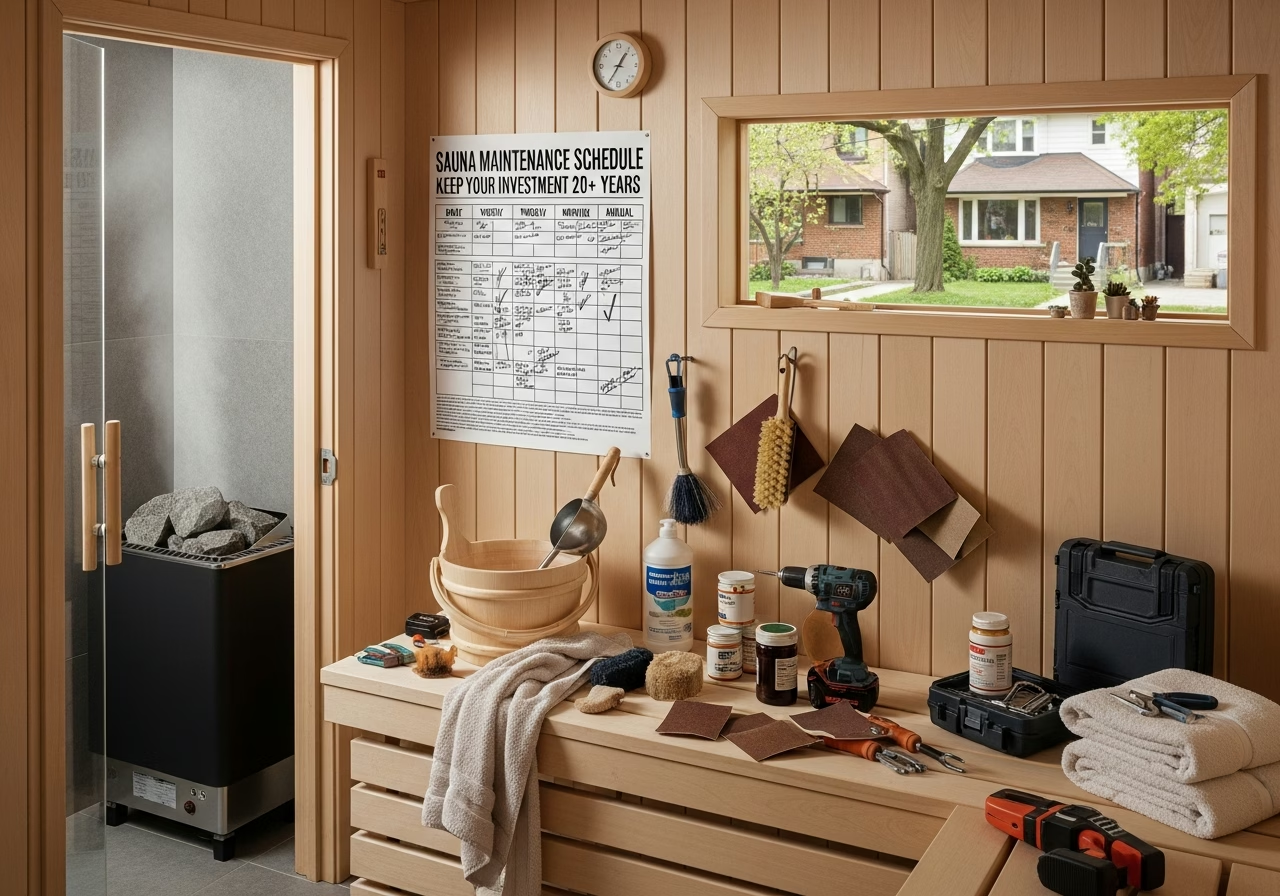
If you're using the sauna multiple times per week (which is what the research supports for cardiovascular benefit), do this weekly cleaning:
- 1. Wipe walls, benches, and floor with mild soap and warm water. Use a clean cloth — never a scrub pad or abrasive sponge that can scratch the wood. A drop of dish soap in a litre of water is the right concentration. Dedicated sauna cleaners (from Saunafin, Finnmark) are also fine.
- 2. Vacuum corners, under benches, and around the heater base. Hairs, lint, and dust collect here.
- 3. Check the heater stones for cracks. Cracked stones impede airflow through the heater and reduce löyly quality. Remove cracked stones and add replacements as needed.
- 4. Clean glass door with vinegar + water (50/50) and a microfibre cloth. Avoid harsh chemicals like ammonia-based glass cleaners — they can damage the door's frame seal.
- 5. Quick dust of the heater body with a dry cloth (heater off and cool).
Total weekly time: 15–20 minutes.
Monthly — Deeper Inspection
Once a month, set aside 30 minutes for a more thorough check:
Ventilation system
- Inspect intake and exhaust grilles for dust accumulation. Vacuum or wipe.
- Inspect the inline exhaust fan — listen for unusual noises, check for visible dust on the fan blade. Most residential fans benefit from a damp wipe of the blade once a month.
- Verify the damper opens and closes smoothly.
Heater
- Inspect heating elements for any debris, scale, or discolouration. The heater should be cool when you do this.
- Check the heater stone arrangement — stones should be loosely stacked allowing airflow, not packed tight. Rearrange if necessary.
- Run a sterilization cycle — heater empty (no occupants), 30 minutes at full temperature. Burns off any organic residue and kills microbes. Vent fully after.
Controls and timer
- Verify the controller works correctly — pre-heat function, temperature display, timer cut-off (mandatory 1-hour OESC limit).
- Check Wi-Fi connectivity if using a smart controller.
Floor and walls
- Look for any signs of moisture issues — discolouration, soft spots, white efflorescence on tile grout, swelling of wood at floor level. Catch issues early.
Quarterly — Bench Maintenance
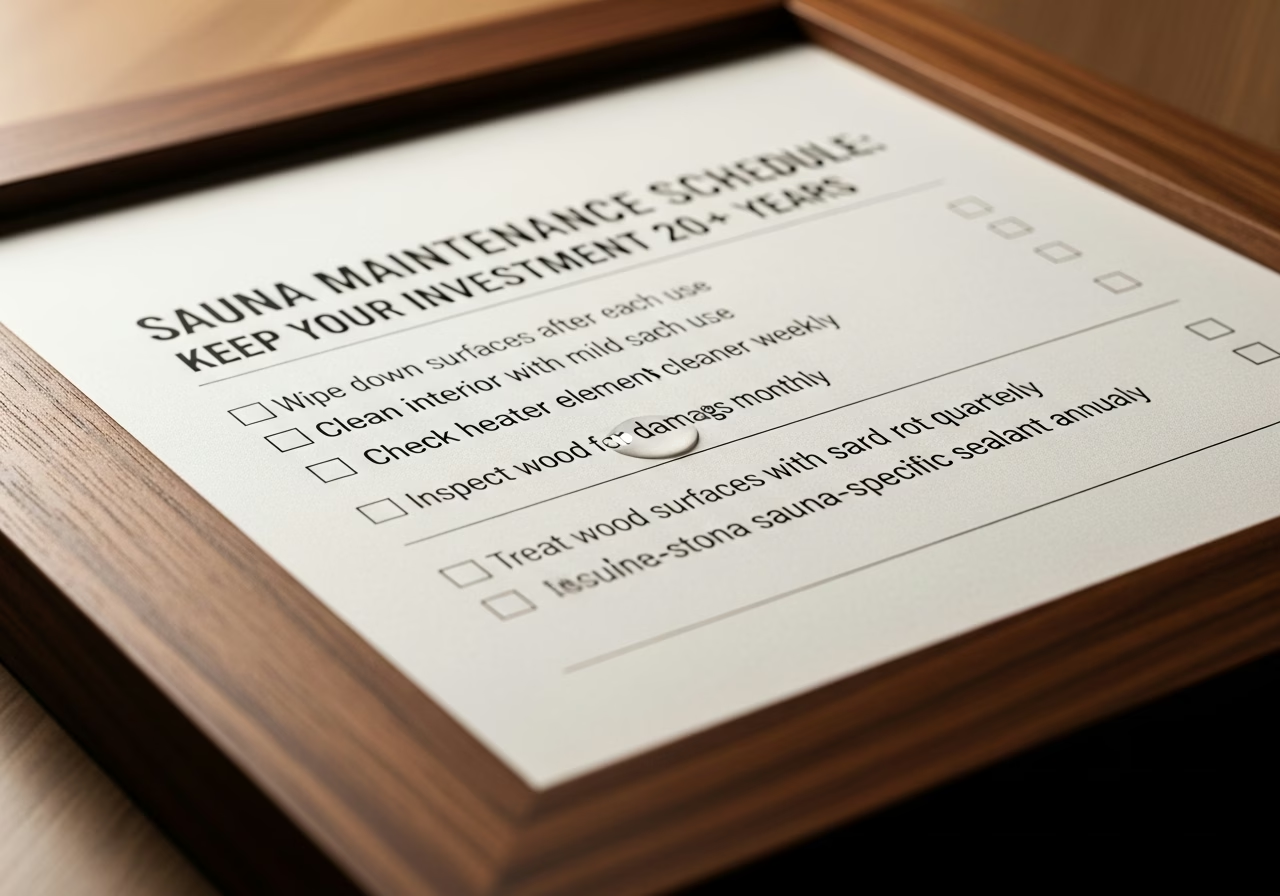
Every 3–4 months, give the benches a closer look:
- Light sand with 220-grit sandpaper if benches show staining, surface roughness, or sticky spots. Sand with the grain. Vacuum thoroughly after.
- Optional: paraffin oil treatment for cedar or hemlock benches. Apply a thin coat, wipe off excess. Some manufacturers recommend this; others (HUUM, Tylo) prefer untreated wood. Check your specific manufacturer's recommendation.
- Tighten any loose hardware — bench supports, headrests, backrests.
Annually — Deep Service
Once a year — typically scheduled with seasonal home maintenance — do the deeper service:
Need professional home renovation?
Call RenoHouse at 289-212-2345 or get a free estimate today.
Get Free Estimate →Bench restoration
- Sand benches with 220-grit, then 320-grit for a smooth finish. Vacuum thoroughly.
- Apply paraffin oil to all bench surfaces if recommended for your wood. Light coat, wipe excess after 15 minutes.
- Inspect bench supports and frames for any cracks or movement. Tighten or replace fasteners as needed.
Heater stones
Replace heater stones every 1–3 years depending on use frequency:- Heavy use (4–7×/week): every 1–2 years.
- Moderate use (2–3×/week): every 2–3 years.
- Light use (1×/week or less): every 3+ years.
Cracked, fractured, or crumbling stones impede airflow and reduce löyly quality. Replacement stones (peridotite, olivine, or specific blends from Harvia/HUUM/Tylo) cost $80–$200 for a full heater load.
When replacing:
- 1. Heater off, cool.
- 2. Remove old stones into a bucket.
- 3. Vacuum out any stone dust from the heater pan.
- 4. Inspect heating elements for any damage; replace if cracked.
- 5. Reload with new stones, loosely stacked, leaving airflow channels.
Hardware inspection
- Door hinges — tighten, lubricate with food-grade lubricant if needed.
- Door handle and latch — verify smooth operation.
- Bench mounts and frames — torque all fasteners.
- Heater guard rail — verify firmly mounted, clean.
- Lighting fixtures — verify sauna-rated (vapor-tight LED), test all bulbs.
Vapor barrier check
If accessible (typically through a removable backing panel or bench area), spot-check the foil vapor barrier:
- Look for tears, sagging, or detachment.
- Look for any moisture staining behind the barrier.
- If issues found, address immediately — minor repairs are easy; widespread failure means rebuild.
Concrete floor
- Re-seal the concrete if you used sealed concrete instead of tile. Penetrating concrete sealer every 2–3 years.
- Inspect any tile grout for cracks. Re-grout as needed.
- Inspect the duckboard for splinters or damage. Sand or replace as needed.
Electrical / ESA
- Verify the 1-hour timer cut-off still functions.
- Test GFCI outlets in the surrounding area (monthly for residential GFCI per OESC; annual is the minimum).
- Visual inspection of the controller and wiring — any signs of overheating, discolouration, or damage. Call a Licensed Electrical Contractor immediately if anything looks off.
HVAC and ventilation
- Replace any inline filter if your fan has one.
- Inspect exterior vent termination — ensure the screen isn't blocked by debris, leaves, or pest activity.
- Verify the damper still operates correctly.
Cleaning Products: What to Use and Avoid
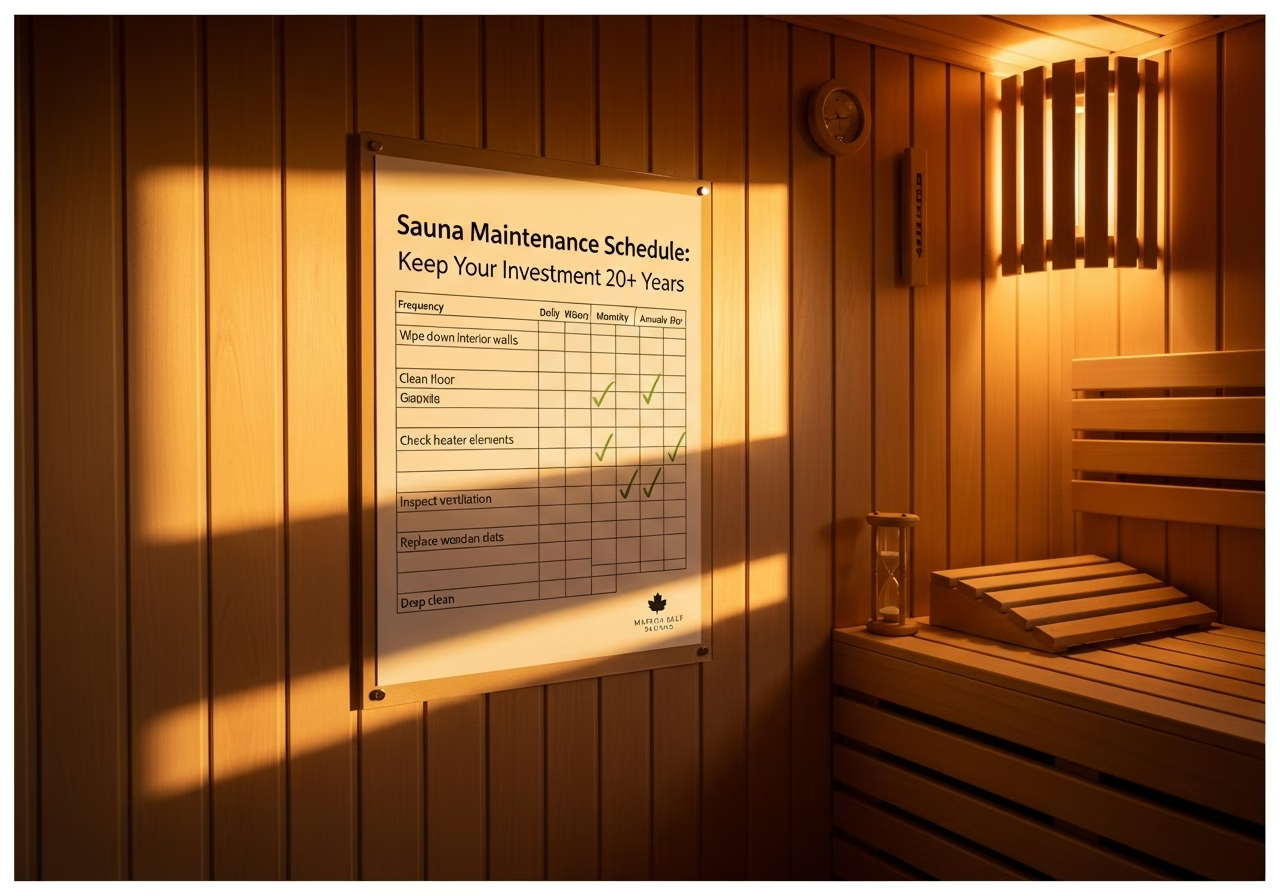
Use
- Mild dish soap + warm water — primary cleaner.
- Dedicated sauna cleaners (Finnmark, SaunaFin private label, etc.).
- Vinegar + water (50/50) — for glass and tile.
- Hydrogen peroxide (3%) — for spot mould treatment if discovered.
- Paraffin oil — for bench treatment per manufacturer.
Avoid
- Bleach — degrades wood, off-gases at temperature.
- Ammonia-based cleaners — damage door seals.
- Abrasive scrub pads — scratch wood.
- Aerosol disinfectants — leave residue that off-gases.
- Wood stains, varnishes, polyurethane — never inside a sauna.
Warning Signs to Address Immediately
- Musty or mouldy smell during heat-up. Indicates moisture trapped behind wood. Investigate immediately.
- Visible dark spots on wood that don't sand out. Mould has likely developed.
- Soft, spongy bench surfaces. Wood rot.
- Discolouration on the foil vapor barrier if visible. Moisture failure.
- Tripped breaker repeatedly. Electrical issue — call Licensed Electrical Contractor.
- Unusual heater noise — popping, hissing, electrical buzzing. Could indicate failing element.
- Slow heat-up taking 60+ minutes when it used to take 30. Indicates insulation failure, vapor barrier failure, or heater element degradation.
If any of these appear, schedule a professional inspection. Many of these issues are recoverable if caught early; ignored, they become full rebuilds. Common failure modes are catalogued in 10 Common Basement Sauna Installation Mistakes.
Annual Maintenance Cost
Realistic 2026 GTA annual maintenance budget for a regularly used Finnish sauna:
| Item | Annual Cost |
|---|---|
| Cleaning supplies | $30–$60 |
| Heater stones (every 2 years averaged) | $40–$100 |
| Paraffin oil + sandpaper | $20–$40 |
| Replacement consumables (filters, bulbs) | $20–$60 |
| Professional inspection (every 3–5 years) | $50–$100/year averaged |
| Total annual cost | $160–$360 |
Plus operating cost (electricity): $160–$260/year for a 9 kW heater used 4×/week. Total annual cost of ownership: $320–$620 — trivial in context of the $20K+ install cost and the wellness benefit.
Time Commitment Summary
| Cadence | Time |
|---|---|
| Daily (after each use) | 5–10 min |
| Weekly | 15–20 min |
| Monthly | 30 min |
| Quarterly | 30 min |
| Annual deep service | 2–3 hours |
For a sauna used 4×/week, total weekly maintenance: 20–30 minutes averaged.
When to Call a Professional
Most maintenance is DIY. Call a professional for:
- Annual electrical inspection if you're unsure about timer or GFCI function (Licensed Electrical Contractor only).
- Heater service or replacement — most warranty terms require licensed install/service.
- Vapor barrier or insulation failures.
- Concrete or tile damage at the slab.
- Any structural issue with framing.
- Mould remediation if the affected area is more than a few square inches.
RenoHouse offers annual maintenance check-ups and repair across the GTA for any sauna, regardless of who built it.
FAQ
My sauna smells like cedar still after 5 years — am I cleaning it wrong?That's normal — cedar oils outgas slowly over years. The smell will gradually fade as the surface oils oxidize. Light annual sanding partially restores the aroma.
Should I use a dehumidifier in the basement to help the sauna?Yes — a basement-wide dehumidifier targeting 45–55% RH supports both the sauna and the broader basement environment. Not strictly required if ventilation is correct, but helpful in humid Toronto summers.
What if I'm going on vacation for 3 months?Run the heater dry once before leaving (30-min sterilization). Leave the door open. If possible, schedule a friend or service to vent the cabin once during the absence to refresh the air.
Should I cover the heater when not in use?No — covers can trap moisture against the heater. Just keep the cabin clean and dry between uses.
Can I refinish the wood after years of use?Yes — sand with 220-grit, optionally apply paraffin oil. Major refinishing (deep sanding to remove staining) is rare but possible.
---
Need a maintenance check or repair? RenoHouse services basement saunas across the GTA — including saunas we didn't build. Book on our basement sauna installation service page.
Sources & References
Authoritative sources cited in this guide:
- Ontario Building Code — OBC official text
- Toronto Building Permits — City permit portal
- Tarion Warranty — Ontario warranty regulator
- CSA Group Standards — Canadian standards
Continue Reading
- How to Add a Sauna to Your Basement: 7-Step Guide for GTA
- Cold Plunge Maintenance Schedule: Water Care, Filtration
- Basement Sauna Ventilation: The High-Low Method Explained