RenoHouse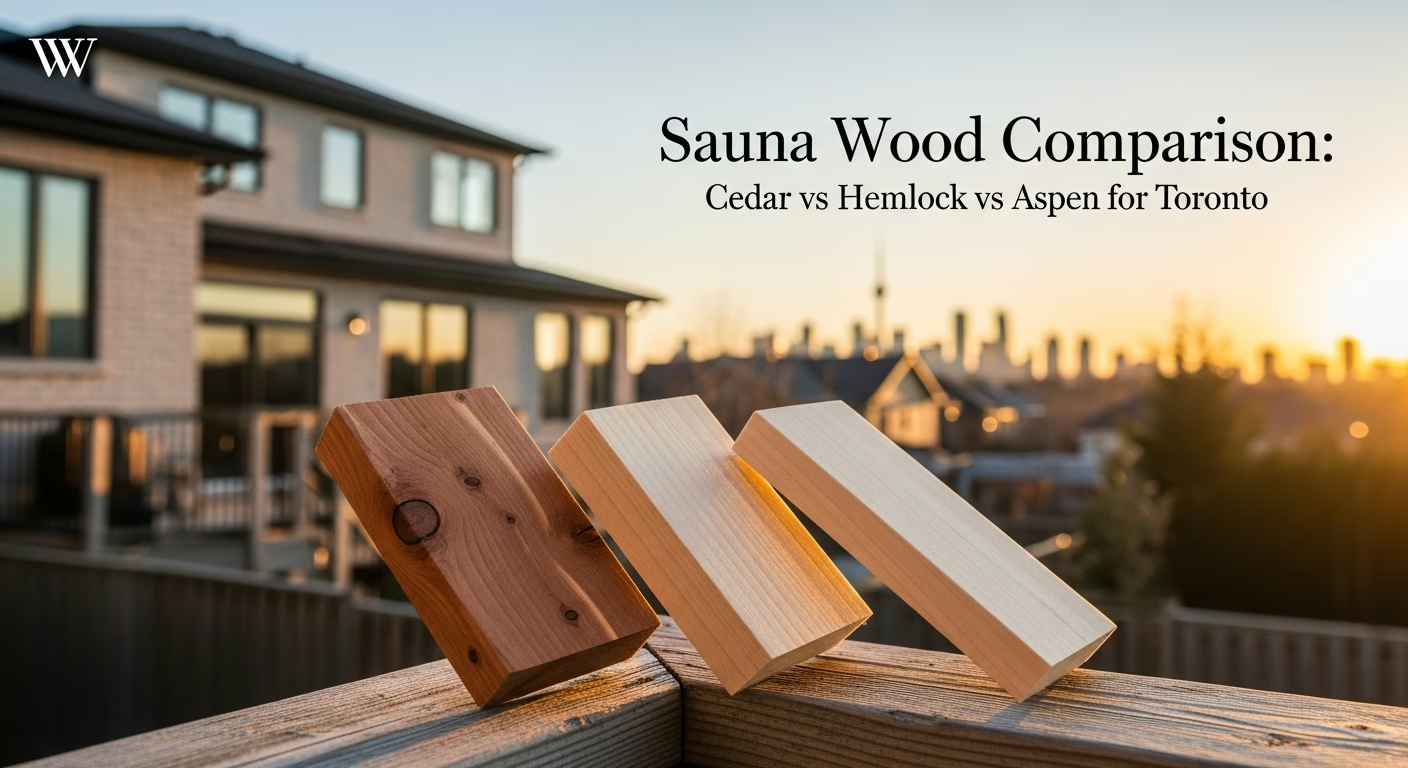

# Sauna Wood Comparison: Western Red Cedar vs Hemlock vs Aspen for Toronto Builds
Quick answer. The wood choice is one of three decisions that define a sauna build (alongside heater and glass front). It drives your aesthetic, the aroma profile, the heat behaviour, the long-term durability, and a meaningful slice of the budget.The wood choice is one of three decisions that define a sauna build (alongside heater and glass front). It drives your aesthetic, the aroma profile, the heat behaviour, the long-term durability, and a meaningful slice of the budget. This guide compares the four woods that dominate the 2026 GTA market — Western Red Cedar, Eastern White Cedar, Canadian Hemlock, and Aspen — plus the premium thermo-treated options.
For the broader build framework, see our Basement Sauna Installation Toronto 2026 Guide.
At-a-Glance Comparison
| Wood | Origin | Cost (CAD/bd ft, T&G) | Aroma | Heat Behaviour | Visual | Best For |
|---|---|---|---|---|---|---|
| Western Red Cedar (Clear) | BC, Canada | $9–$16 | Strong, premium | Excellent stability | Red-brown, dramatic | Premium custom Finnish |
| Eastern White Cedar | Ontario/Quebec | $6–$10 | Soft cedar | Good | Light tan | Budget cedar lovers |
| Canadian Hemlock (clear) | BC/Eastern Canada | $5–$9 | Almost none | Even, low resin | Light, even | Mid-range, scent-sensitive |
| Aspen / Nordic White | N. Ontario, Quebec, Scandinavia | $7–$11 | Hypoallergenic, near-zero | Cool to touch | Pale, Scandinavian | Allergies, modern minimalism |
| Thermo-Aspen / Thermo-Spruce | Heat-treated Scandinavian | $10–$16 | Very subtle | Super-stable | Dark, rich | Premium designer builds |
| Nordic Spruce (Pine) | Scandinavia/E. Canada | $5–$8 | Authentic Finnish | Higher resin risk | Warm | Traditional Finnish-style |
Western Red Cedar — The GTA Premium Default
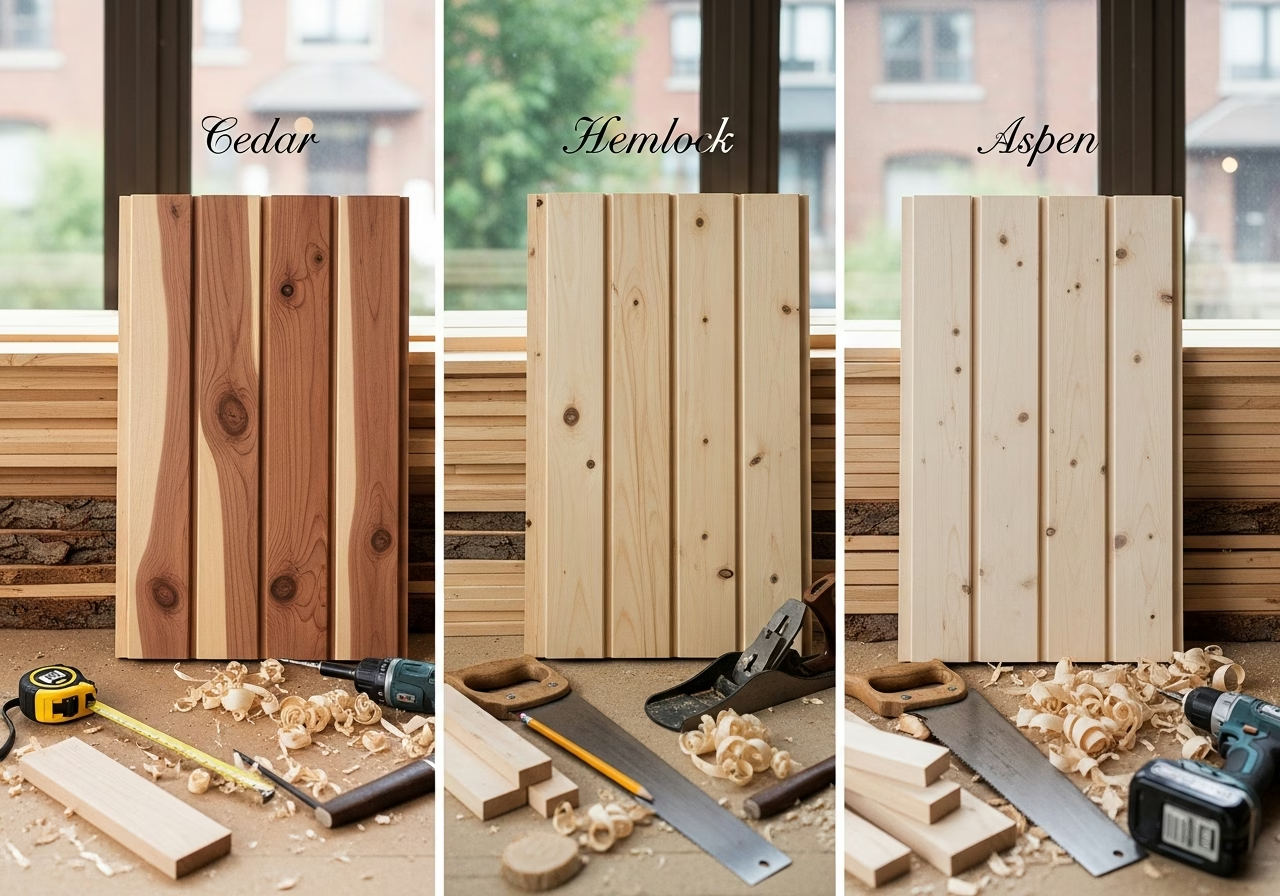
- Premium aroma — the warm, sweet cedar scent that defines the "spa sauna" experience. Some users find it the single most enjoyable sensory feature.
- Natural rot and insect resistance from thujaplicins (natural antimicrobial oils).
- Beautiful red-brown colour with prominent grain — a strong visual signal at home showings.
- Dimensional stability at high heat — minimal cupping, twisting, or shrinkage.
- Antimicrobial properties that help suppress mould in humid environments — particularly relevant for basement saunas.
- Most expensive of the common sauna woods ($9–$16/bd ft for clear T&G in 2026 Ontario pricing).
- Some users are mildly sensitive to the cedar scent or oils — rare but real.
- Slightly softer than hemlock, can dent if abused.
Eastern White Cedar — Ontario's Local Cedar
Origin: Ontario and Quebec forests. Pros:- Locally sourced — lower carbon footprint, often shorter lead times.
- Softer aroma than Western Red Cedar — better if you want cedar character without intensity.
- Lower cost than Western Red ($6–$10/bd ft).
- Takes finish well if you choose to seal benches.
- Less dramatic colour — lighter tan vs. WRC's red-brown.
- Slightly less rot resistance than WRC.
- Less consistent grade — more knots in budget grades.
Canadian Hemlock — The Mid-Range Workhorse
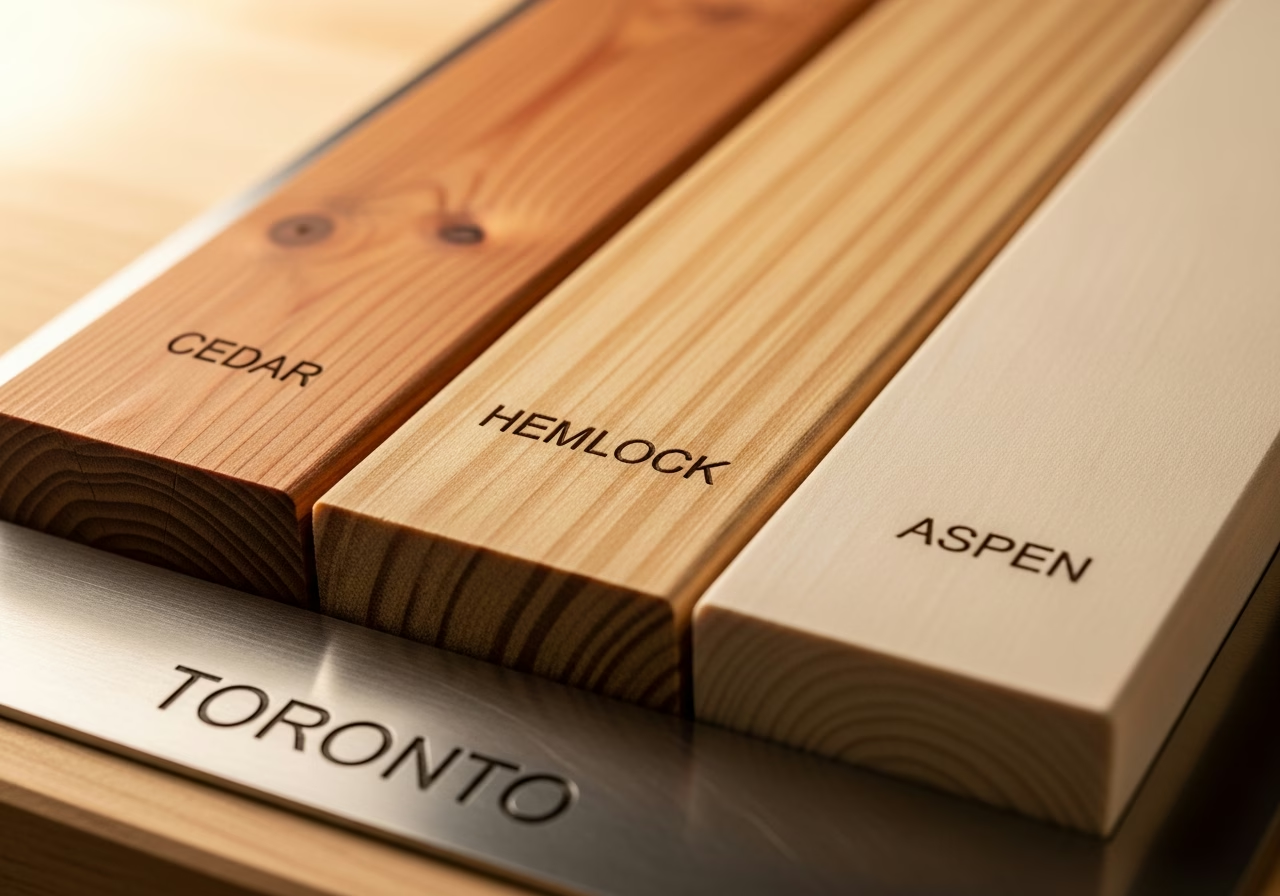
- Excellent value — clear knot-free hemlock is $5–$9/bd ft in 2026 GTA pricing, materially cheaper than cedar.
- Almost no aroma — ideal for users sensitive to cedar scent or who want a neutral wellness space.
- Low resin content — no pitch oozing, clean over time.
- Even heat radiation — heats predictably.
- Dimensional stability rivals cedar.
- Light, even visual — works with minimalist or transitional design schemes.
- Less visual character — flat appearance can read as generic in luxury homes.
- No antimicrobial benefit — relies entirely on proper vapor barrier and ventilation.
- Lighter colour that some find less spa-like.
Aspen / Nordic White — The Scandinavian Modern Choice
Origin: Northern Ontario, Quebec, and Scandinavia. Pros:- Hypoallergenic — true near-zero aroma, no resin, no oils. The safest wood for users with allergies, asthma, or chemical sensitivity.
- Cool to the touch — low heat conductivity means benches are more comfortable.
- Pale, clean Scandinavian aesthetic — the modern minimalist look.
- Bright interior — good for small basements where you want to feel less enclosed.
- Softer wood — dents and scratches more easily than cedar or hemlock.
- Less long-term durability — typically rated for 10–15 years of regular use vs. 20+ for cedar.
- Higher cost than hemlock despite being a softer wood.
Thermo-Treated Premium Options
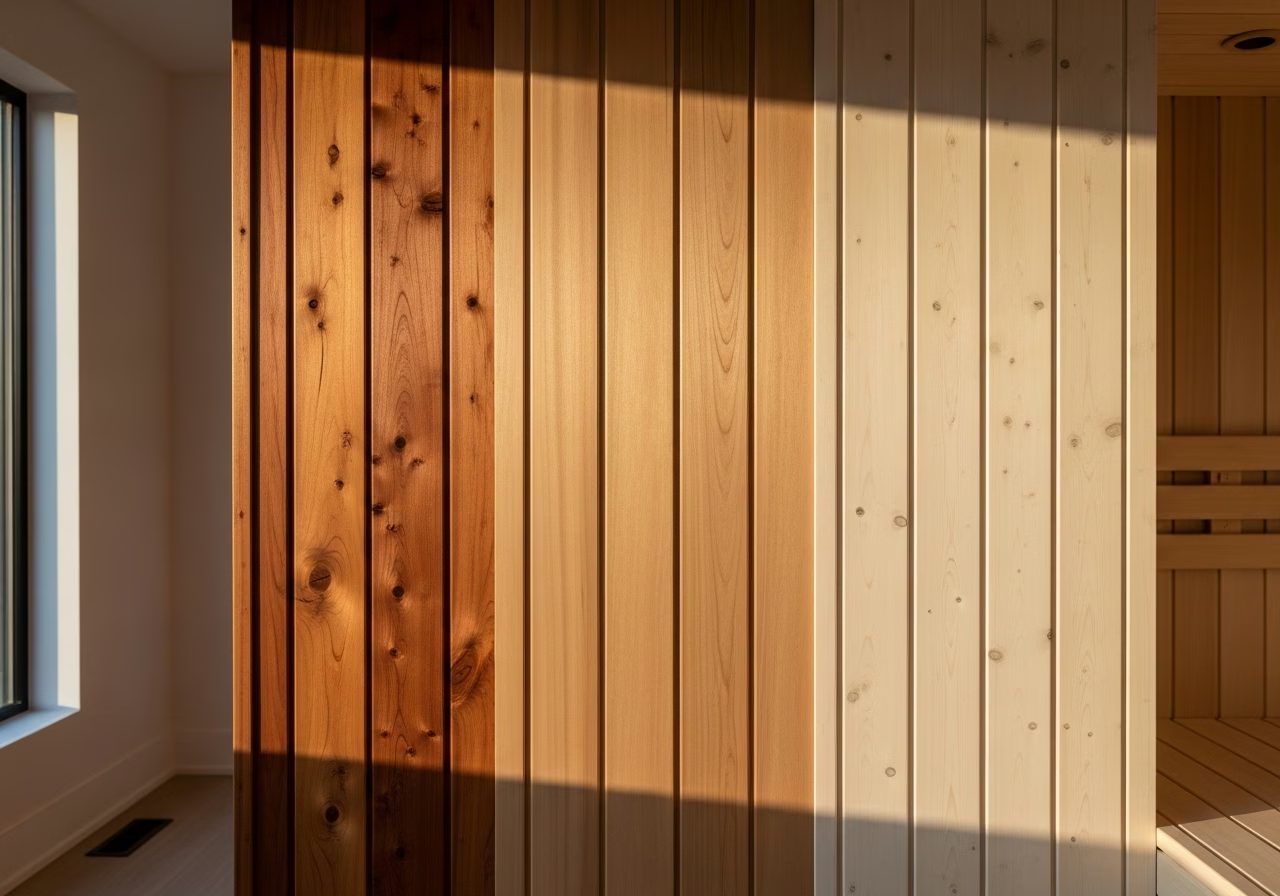
- Darker rich colour — premium designer aesthetic.
- Dimensionally super-stable — virtually no movement at sauna temperatures.
- No resin, no off-gassing — cleanest profile of any sauna wood.
- Long lifespan in heated environments.
- Premium price ($10–$16/bd ft).
- Not universally available — typically special-order through SaunaFin or Toronto Sauna Co.
- Less aromatic — if you want cedar scent, this isn't the wood.
Nordic Spruce / Pine — Traditional Finnish Authenticity
Origin: Scandinavia and Eastern Canada. Pros:- Authentic Finnish look — what saunas actually look like in Finland.
- Good aroma — pine character.
- Mid-range price ($5–$8/bd ft).
- Higher resin content — risk of "pitch" oozing onto benches in extreme heat.
- Less dimensional stability than cedar or hemlock — more cupping and shrinkage over time.
- Knot bleed-through in less-than-clear grades.
Woods to AVOID Inside a Sauna
Don't compromise here — these create real problems:
- Pressure-treated lumber — toxic chemicals at high heat. Exception: bottom plates only, which sit on the slab and aren't in the heated airspace.
- Plywood / OSB / MDF — formaldehyde off-gassing at 80°C+ is real and unhealthy. Never inside the heated cabin.
- Pine with high resin or knots — sap weeps onto benches; sticky, hot, and stains skin.
- Hardwoods like oak, maple, cherry — get too hot to touch, can splinter, poor heat behaviour.
- Redwood — sustainability concerns; alternatives are better.
- Painted or finished wood — paint and most finishes degrade and off-gas at sauna temperatures.
Recommendation Matrix for Toronto/GTA
Based on hundreds of GTA basement sauna builds, the practical recommendations:
| Build Type | Walls | Benches | Door Frame |
|---|---|---|---|
| Luxury custom Finnish ($20K+) | Western Red Cedar T&G | Hemlock or Aspen | Cedar |
| Mid-range Finnish ($10K–$20K) | Cedar or Hemlock | Hemlock | Cedar or Hemlock |
| Budget Finnish (<$10K) | Hemlock or Eastern Cedar | Hemlock | Hemlock |
| Hypoallergenic build | Aspen | Aspen | Aspen |
| Modern minimalist | Thermo-Aspen or Aspen | Thermo-Aspen | Thermo-Aspen |
| Hybrid Finnish + IR | Thermo-Aspen or Cedar | Hemlock | Cedar |
| Infrared cabin | Hemlock or Basswood | Hemlock | Hemlock |
For most Toronto basement saunas in 2026, Western Red Cedar T&G interior with hemlock benches delivers the optimal balance of premium feel, heat behaviour, and resale appeal. Aspen is the right choice for clients with allergies or those wanting a bright Scandinavian aesthetic. Hemlock-only is a strong mid-range pick.
This wood pairing also works well with the standard Finnish heater brands — see How to Size Your Sauna Heater: kW Calculator for GTA for matching heater specs.
Cost Impact in a Real Build
For a standard 5'×7' basement sauna with ~250 sq ft of T&G coverage (walls + ceiling), the wood cost difference:
Need professional home renovation?
Call RenoHouse at 289-212-2345 or get a free estimate today.
Get Free Estimate →| Wood | Material Cost | Delta vs Hemlock |
|---|---|---|
| Hemlock | $1,500–$2,500 | Baseline |
| Eastern White Cedar | $1,800–$3,000 | +$300–$500 |
| Aspen | $2,000–$3,200 | +$500–$700 |
| Western Red Cedar (Clear) | $2,500–$4,500 | +$1,000–$2,000 |
| Thermo-Aspen | $3,000–$4,500 | +$1,500–$2,000 |
The premium wood difference on a $20K project is 5–10% of total cost — and in luxury markets it's the highest-leverage cosmetic upgrade you can make.
Sourcing in the GTA
The strongest local supply ecosystem is at:
- SaunaFin (Concord, ON) — largest sauna retailer in Canada, since 1962. Stocks all common woods and most heater brands.
- Toronto Sauna Co. — premium custom focus, cedar specialty.
- Norden Sauna (Brampton) — custom builds, Brampton/Mississauga focus.
For sourcing details and the rest of the supplier landscape, see our Basement Sauna Installation Toronto 2026 Guide.
Acclimation & Installation Notes
Whatever wood you choose:
- 1. Acclimate the cedar in the basement for 48–72 hours before installation. This minimizes shrinkage cracks after the first heat cycles.
- 2. Use hidden fasteners (stainless steel or galvanized brad nails through the tongue). Never face-nail — exposed metal heats and burns skin.
- 3. Maintain the 20mm air gap behind the panelling using furring strips. This is non-negotiable for wood longevity.
- 4. Don't seal or finish the wood — sauna wood breathes. Light annual sanding with 220-grit and optional paraffin oil on benches is the maintenance protocol.
The full installation sequence is in How to Add a Sauna to Your Basement: 7-Step Guide for GTA. Common errors related to wood selection are covered in 10 Common Basement Sauna Installation Mistakes.
FAQ
Will cedar's aroma fade over time?Yes, gradually. After 3–5 years of regular use, the scent intensity drops noticeably. Light sanding with 220-grit annually reactivates the surface oils and partially restores the aroma.
Can I mix woods?Absolutely — and it's common. Cedar walls + hemlock benches is the GTA default. Aspen ceiling with cedar walls is another popular combo for visual interest.
What's the warranty on sauna wood?Most kit suppliers warranty the wood for 1–2 years against manufacturing defect. Long-term durability depends on installation (vapor barrier, air gap, ventilation) more than wood selection.
Is reclaimed wood okay?Generally no — old paint, sealant residue, and unknown chemical history make reclaimed wood risky inside a heated sauna.
---
Designing your build? RenoHouse helps you pick the right wood for your space and budget — from premium Western Red Cedar custom builds to hypoallergenic aspen designs. Book a free assessment on our basement sauna installation service page.
Sources & References
Authoritative sources cited in this guide:
- Ontario Building Code — OBC official text
- Toronto Building Permits — City permit portal
- Tarion Warranty — Ontario warranty regulator
- CSA Group Standards — Canadian standards
Continue Reading
- Finnish vs Infrared Sauna Toronto: Which Is Right for You?
- Basement Sauna Installation Toronto: 2026 Cost & Permit Guide
- How to Add a Sauna to Your Basement: 7-Step Guide for GTA