 RenoHouse
Custom Basement Home Gym Buildouts — Toronto GTA
Professional basement home gym buildout services in Toronto and the Greater Toronto Area. Licensed, insured, and trusted by homeowners across the GTA.
Projects Completed
Years Experience
Client Satisfaction
Google Rating
How It Works
A simple, stress-free process from start to finish.
Send Your Request
Call or WhatsApp us 24/7. Send photos, video, comments about what needs to be done, and your location.
Remote Estimate
We review everything, discuss details, and provide a clear estimate — often within hours, no visit needed.
Repair Process
Our licensed team arrives on the agreed date and completes your basement home gym buildout to the highest standards.
Handover & Warranty
Final walkthrough with you, full cleanup, and warranty documentation provided.
Send Your Request
Call or WhatsApp us 24/7. Send photos, video, and a description of the work + your location.
Remote Estimate
We review everything, clarify details, and give you a price — often within hours.
Repair Process
Licensed team arrives on schedule and completes your basement home gym buildout professionally.
Handover & Warranty
Final walkthrough, full cleanup, and warranty documentation.
Basement Home Gym Buildout in Toronto GTA
Build a permanent, professional-grade home gym in your Toronto basement with RenoHouse. The pandemic shifted fitness home — and across the GTA, homeowners are now investing in basement home gym buildouts as a serious, year-round wellness amenity. Unlike a couple of dumbbells in the corner, a real home gym is engineered: a poured concrete slab assessed for deadlift load, 8mm to 25mm rubber flooring for impact and sound dampening, dedicated 240V circuits for cardio and connected fitness equipment (Tonal, Peloton, Mirror, Tempo, treadmills, ellipticals), supplementary HVAC to manage the 600W+ of body heat that gets generated during a workout, full-wall mirrors, acoustic dampening so the upstairs household isn't disturbed, and high-CRI LED lighting that makes form coaching and video recording actually viable.
RenoHouse handles the entire scope as a single coordinated project, with all trades in-house: framing, electrical, HVAC, flooring, mirror installation, drywall, paint, and AV/lighting. We work to Ontario Building Code (OBC), Electrical Safety Authority (ESA) standards, and we pull City of Toronto building permits when partition walls or new circuits are added. Our basement specialists assess your slab, ceiling height, and existing electrical panel before any work begins — because a $40,000 gym buildout in a basement with 7'2" ceilings and a 100A panel is not the project you actually want.
Build tiers we install:
Basic ($12K–$20K)
— existing finished basement, 200–300 sq ft. Includes 8mm interlocking rubber tile flooring, one full mirror wall (8 ft × 5 ft), supplementary 120V outlets for fans and small electronics, simple LED upgrade, and minor partition or paint refresh. Right for free-weight, kettlebell, and bodyweight setups.
Standard ($20K–$40K)
— partial framing, 300–500 sq ft. Includes 12–15mm rubber roll flooring, deadlift platform island (3/4-inch plywood + 25mm rubber), one or two 240V/20A circuits for treadmill and Tonal/Mirror/Peloton hardwiring, supplementary HVAC return or mini-split, full-wall mirrors (10–14 ft), acoustic dampening on shared walls, dedicated lighting layout (4000K, CRI 90+), Bluetooth ceiling speakers. This is the most commonly built tier in the GTA.
Premium ($40K–$60K+)
— full transformation, 400–700+ sq ft, with sauna or cold plunge integration as part of a wellness suite. Includes 25mm rubber tiles or commercial roll, full deadlift platform with sound-isolated structural pad, two to four 240V circuits, mini-split for dedicated zone cooling, acoustic dampening engineered to STC 50+, smart-glass partition or full glass wall, AV system with wall-mounted training screen, premium gym mirrors (low-iron), hardwood accent walls, dimmable scene lighting, smart home integration (Lutron, Sonos, Tonal hardwire). This tier directly overlaps with our basement sauna installation work — many premium clients build all three (gym + sauna + plunge) in a single coordinated project.
What's actually different about a gym buildout vs. a basic basement reno?
Eight things: (1) the slab — verified for deadlift load, with a separate platform if Olympic lifts are planned; (2) the flooring — rubber, not carpet or vinyl, in three thickness tiers depending on equipment; (3) electrical — multiple 240V circuits for connected fitness, properly load-calculated; (4) HVAC — a single Peloton class can dump 600–900W of body heat into a sealed basement room, requiring supplementary cooling; (5) ceiling height — 8'0" is the practical minimum for jump rope, kettlebell swings, and overhead pressing (7'6" is unworkable for tall users); (6) mirrors — minimum 8 ft long, properly anchored to studs, low-iron preferred for color accuracy; (7) acoustic dampening — a treadmill or dropped 405 lb deadlift transmits significant impact energy upstairs without proper isolation; (8) lighting — 4000K with CRI 90+ matters for form awareness and video.
Serving Toronto, Mississauga, Vaughan, Markham, Richmond Hill, Oakville, Burlington, North York, Etobicoke, Scarborough, and all GTA communities. Call 289-212-2345 for a free basement home gym design consultation, or browse our companion services in basement renovation, basement sauna installation, and electrical panel upgrades for the wellness-suite path.

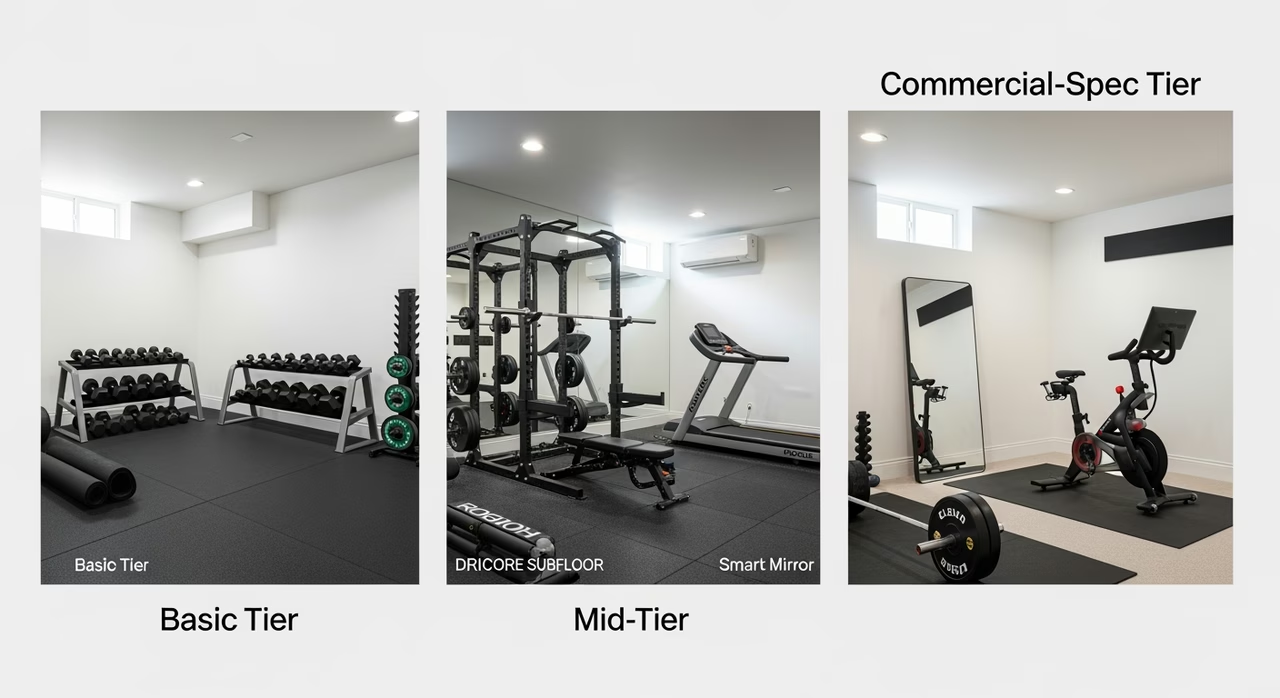
A basement home gym is one of the highest-utilisation scopes RenoHouse delivers — the buildout that gets used four to seven days a week for years, and the one homeowners regret least when they look back on a renovation budget. In 2026 we see three dominant tiers across the GTA: a basic buildout with rubber-roll flooring over the existing slab, two wall mirrors, one dedicated 20A circuit, one ceiling fan, and owner-supplied equipment at $15,000 to $20,000; a mid-range buildout with raised DRIcore engineered subfloor under interlocking rubber tile, full mirror wall, three dedicated 20A circuits, a ductless mini-split for climate, two ceiling fans, basic sound dampening, and a flat-screen wall mount at $35,000 to $45,000; and a commercial-spec gym with poured-rubber flooring over an engineered subfloor, Rogue rack reinforcement, four dedicated 20A circuits plus a 240V outlet for the treadmill, smart-mirror prewiring, sauna-adjacent rough-in, and Green Glue soundproofing with acoustic ceiling tiles at $50,000 to $60,000 and up.
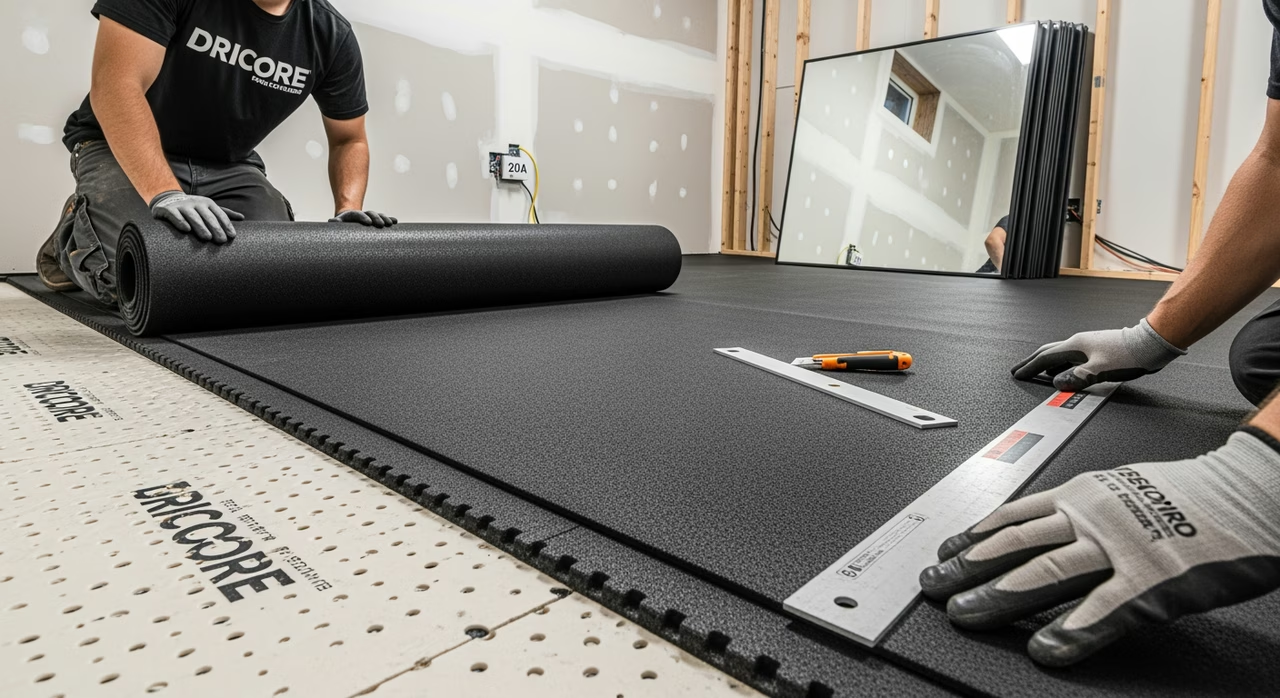
The single most common reason a Toronto basement home-gym scope underdelivers is the flooring sequence. Owners who roll cheap rubber directly onto a slab eventually find their dumbbells leaving permanent dimples, their cardio equipment vibrating at resonant frequencies that telegraph upstairs at four in the morning, and condensation accumulating beneath the rubber as vapour migrates through the concrete slab — leading to mould within 18 months. The correct sequence is moisture barrier (Schluter Ditra membrane or full DRIcore engineered subfloor with built-in vapour gap), then rubber-tile or poured-rubber on top. Skipping the subfloor saves $4,500 today and costs $12,000 in mould remediation in three years.
What is involved in a Toronto basement home-gym buildout
A basement home gym at RenoHouse starts with a workout-flow scope walk: what equipment will go where (rack, platform, cardio, smart mirror, accessory storage), how much floor space each piece needs in usable footprint including clearance for the bar path on a deadlift or overhead press, how many people will train simultaneously, what flooring rating is required (rubber compresses below a power rack to dissipate impact, but the platform under an Olympic lift bar needs a separate engineered Eleiko or Rogue platform on top of the rubber). We measure ceiling height (8-foot minimum for overhead press; 8'4" minimum for overhead squat with bumper plates), verify the slab condition and moisture exposure, audit the electrical-panel capacity for added circuits, and review the HVAC supply for the increased ventilation load of a heavy-use training space.
We then proceed to slab preparation (clean, level any high spots, address any cracks with concrete crack filler, vacuum and dust-extract), moisture barrier (Schluter Ditra or full DRIcore engineered subfloor over a 6-mil poly underlay), framing of any new partition walls for the gym envelope (steel-stud where required for fire separation, dimensional lumber elsewhere), R-22 wall insulation against exterior basement walls per OBC 9.36 with a continuous 6-mil polyethylene vapour barrier, ECRA/ESA 309A electrical rough-in for dedicated 20A circuits (one per major piece: rack zone, cardio zone, smart mirror, lighting), GFCI receptacles within 1.5m of any wet area per OBC 9.34, AFCI on bedroom-adjacent circuits, the 240V outlet if the treadmill or sauna-adjacent scope needs it, ductless mini-split installation for dedicated climate control (most basement HVAC runs cannot keep up with the heat load of a person doing kettlebell swings or sprints on an air bike), mirror wall installation (full-height frameless or framed in two-piece 5x8 sheets, J-channel top and bottom, silicone seam), rubber flooring (rolled-and-glued for permanent commercial-spec, or interlocking tile for residential), platform if Olympic lifting is in scope, audio and AV rough-in, and final hardware and accessories.
The mini-split is the underrated buildout detail. A 9,000-to-12,000 BTU Mitsubishi or Daikin ductless unit with a low-ambient compressor (-25°C operation, important for Toronto basements that can run cool in winter) installs on a dedicated circuit and provides cooling, heating, dehumidification, and continuous fresh-air circulation. Without it, a basement gym becomes a sauna in summer and a damp cold cellar in winter — and the equipment metallics begin to oxidise within two years. $4,500 to $6,500 installed including the line-set, condensate drain, ECRA/ESA permit, and TSSA-certified refrigeration handling.
Toronto permits, OBC compliance, and licensed trades
A Toronto basement home gym triggers a Toronto Chapter 363 building permit on any partition framing, new HVAC zone, or ECRA/ESA Notification of Work scope. Cosmetic-only buildouts (rubber-roll over existing slab, mirrors hung on existing finished walls, plug-in equipment only) do not trigger a building permit, but any new dedicated circuit triggers an ECRA/ESA permit.
The licensed-trade requirements are firm. A 309A Master Electrician with an active ECRA/ESA Contractor licence must file the Notification of Work for the dedicated circuits — three to four 20A circuits is typical for a mid-tier gym, and the 240V outlet for a commercial treadmill or sauna-adjacent scope requires its own dedicated 20A breaker. GFCI protection on every receptacle within 1.5m of a sink or floor drain (OBC 9.34); AFCI protection on bedroom-adjacent circuits. The mini-split installation requires both ECRA/ESA permit on the electrical side and TSSA-certified refrigeration handling on the line-set side — typically RenoHouse's HVAC partner handles the refrigeration commissioning.
Floor-load verification is the structural question on heavy-Olympic-lifting buildouts. A slab-on-grade Toronto basement (the standard 4-inch poured slab on compacted aggregate) is typically rated to comfortably handle 600 to 800 lb point load on an Olympic platform — fine for a deadlift platform with 40 lb plates plus a 45 lb bar plus a 250 lb lifter. For commercial-spec strongman scopes (atlas stones, log press, yoke walk) we sometimes recommend underpinning consideration; this comes up rarely on residential.
Cost factors, gym tiers, and the smart-mirror question
The biggest cost drivers in a Toronto basement home gym are: flooring scope (basic rubber roll vs full poured-rubber on DRIcore), dedicated electrical count, mini-split inclusion, mirror surface area, sound dampening scope, and smart-fitness equipment prewiring.
Smart-fitness equipment prewiring is the newer cost block. Peloton bikes and treadmills, Tonal cable-resistance units, Mirror reflective panels, and Tempo studio units all need a dedicated 20A circuit on AFCI protection, plus wired ethernet (we run Cat6 to each major equipment zone — much more reliable than basement Wi-Fi for streaming class content), plus low-voltage AV for the integrated sound and camera systems. Add $2,500 to $4,500 to the buildout for full smart-fitness prewiring.
Soundproofing is the next major variable. Heavy-cardio scopes (treadmill, air bike, jump rope) transmit through the concrete slab to upstairs living areas at frequencies that ceiling drywall does not damp. The fix is a layered approach: Green Glue between two layers of 5/8-inch Type X drywall on the ceiling, acoustic ceiling tile on a suspended grid below that, decoupled wall framing (resilient channel or staggered-stud), and the rubber floor itself as the first-line damper. Full soundproof scope adds $8,000 to $15,000 to the buildout — only worth it on premium scopes or where the upstairs occupant is sound-sensitive.
The Toronto rebate stack and ROI
Basement home-gym buildouts do not directly qualify for federal Greener Homes Rebates (the gym itself is not envelope or mechanical), but the surrounding scope (R-22 wall insulation, R-31 ceiling insulation, heat-pump mini-split for the gym zone, HRV for ventilation) does — the mini-split alone qualifies under the cold-climate heat-pump category at $5,000 federal rebate where it serves as primary heating for the gym zone.
The Home Accessibility Tax Credit (HATC) returns up to $3,000 non-refundable on $20,000 of accessibility upgrades for households with seniors 65+ — applicable to a barrier-free training space, grab bars on stretching benches, and lowered cable-machine pulley heights.
Resale ROI on a Toronto basement home gym runs 40 to 60 percent on basic scopes (most buyers will repurpose the space), 60 to 80 percent on mid-tier scopes with the full mirror wall and mini-split (the space functions as a flex room for the next buyer), and 70 to 90 percent on commercial-spec scopes in premium neighbourhoods (Forest Hill, Bayview, Hoggs Hollow, Lawrence Park, Kingsway) where wellness-focused buyers actively seek dedicated gym space.
Why RenoHouse builds basement home gyms across the GTA
We have built basement home gyms across Toronto (Leaside, Bayview, North York, Forest Hill, Yorkville, Hoggs Hollow, Lawrence Park, Kingsway, Etobicoke, Roncesvalles, Bloor West Village, Beaches, High Park), plus Mississauga, Vaughan, Markham, Richmond Hill, Oakville, Burlington, and Aurora. Every project carries a $5 million liability policy, full WSIB coverage, a fixed-price written scope, full ECRA/ESA and TSSA permit handling on our paperwork, manufacturer warranties on all flooring (Schluter Ditra 10-year, DRIcore 25-year limited, Rep Fitness lifetime frame, Rogue Fitness lifetime frame) and a two-year workmanship warranty on installation labour.
Our typical timeline runs four to six working days for a basic rubber-roll buildout (no framing, no electrical scope beyond a single circuit), three to four weeks for a mid-tier scope with raised DRIcore, full mirror wall, three dedicated circuits, and mini-split, and six to eight weeks for a commercial-spec scope with poured rubber, Rogue rack reinforcement, full soundproofing, smart-fitness prewiring, and sauna-adjacent rough-in. Call 289-212-2345 for a no-obligation site visit, equipment-flow scope walk, electrical-panel review, and fixed-price written quote.
Toronto/GTA neighborhood considerations
- Forest Hill / Rosedale / Lawrence Park (heritage): Pre-1940 stone-foundation basements — head-height only 6'4"-6'8" (OBC 9.5.3.1 requires 6'5" min for habitable). Underpinning to 7'6" achievable $1,800-$3,200/lin-ft perimeter. Concrete-slab pad needed for Olympic platform + power-rack ($4.4K-$8.4K added). Total premium gym $42K-$78K.
- North York / Scarborough / Etobicoke (60s-70s): 1960s-70s 7'6" basements ideal — 8mm Stronghold rubber-roll flooring + Rogue power rack + Concept2 RowErg. Sound-isolated dropped-ceiling RSIC-1 channel + Roxul Safe'n'Sound + 5/8" Type X (deadlift drop noise upstairs). Total $18K-$34K mid-tier.
- Mississauga / Brampton / Vaughan (90s+): 90s+ 8' basements with rough-in already — best value. Bumper-plate-rated 1/2" rubber tile (REP Fitness, Iron Bull) + Power Rack + 200A panel sub-feed for 5-zone HVAC mini-split (sweat humidity 65%+ RH problem). Total $14K-$26K standard.
- Caledon / King City / Aurora (rural large-lot): Estate gyms — Eleiko Olympic platform + reformer Pilates + infrared sauna (Sunlighten mPulse) + cold-plunge (Plunge All-In). Heat-recovery ventilator (Lifebreath 200 MAX) mandatory for sealed-envelope humidity control. Total $48K-$140K.
- Downtown condos: Slab-loading limit — Olympic deadlifts > 405 lb violate condo board engineer-stamped 100 psf live-load. Condo Act Section 98 typically restricts rubber-roll deadlift platforms. Pivot to: Tonal/Mirror smart-home, recumbent bike, kettlebell circuit. $4K-$12K.
Standards + comfort: OBC 9.5.3.1 habitable ceiling height 6'5" (basement 1' lower than main floor permitted). OBC 9.32 ventilation HRV for any sealed gym. ASHRAE 62.2-2022 air-change rate 0.35 ACH minimum. Floor-protection: 8-12mm rubber for free-weight, 4mm gym tile for cardio-only. Climate: target 64-68°F + 40-50% RH.
Why Trust RenoHouse
On-Time Completion
We respect deadlines for basement home gym buildout projects. 95% of jobs finish on or ahead of schedule.
Certified & Insured
Proper licensing, full insurance coverage, and WSIB protection. Your property and our team are completely protected.
Satisfaction Guarantee
We're not done until you're 100% happy with your basement home gym buildout. That's our promise.
Sound Familiar?
These are the most common problems our clients face.
Tired of paying $50–$80/month for a gym you barely visit?
Want a workout space that fits your schedule and lifestyle?
Worried your basement floor cant handle deadlifts or heavy equipment?
Need 240V circuits for Tonal, Peloton, or commercial treadmills?
Concerned about noise transmission to upstairs bedrooms?
Confused about ceiling height, flooring thickness, and HVAC sizing?
Ready to get started?
Free estimate, no obligation. We respond within 1 hour.
What Our Clients Say
“RenoHouse replaced all our windows in just two days. The new windows are beautiful, energy-efficient, and the team left everything spotless. Highly recommend!”

Michael R.
Oakville
“New windows transformed our home. Quieter, warmer, and our energy bill dropped noticeably. Excellent installation crew.”

David K.
Vaughan
“Professional from start to finish. They replaced 8 windows in one day and cleaned up perfectly. Highly recommend RenoHouse!”

Sandra W.
Burlington
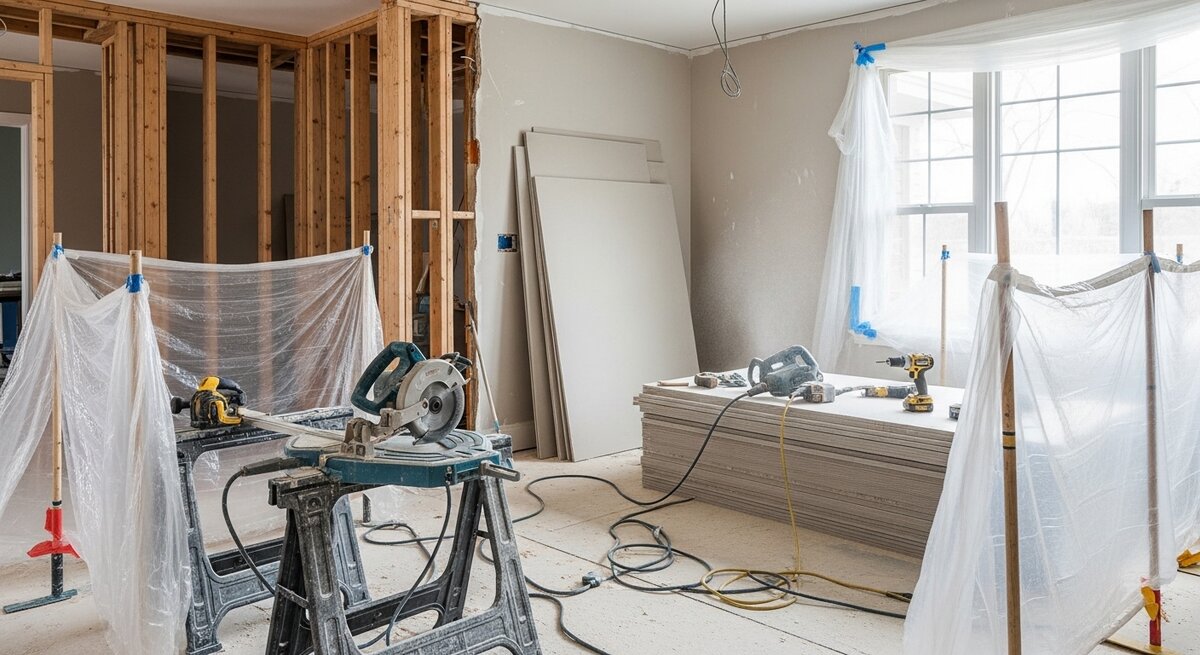
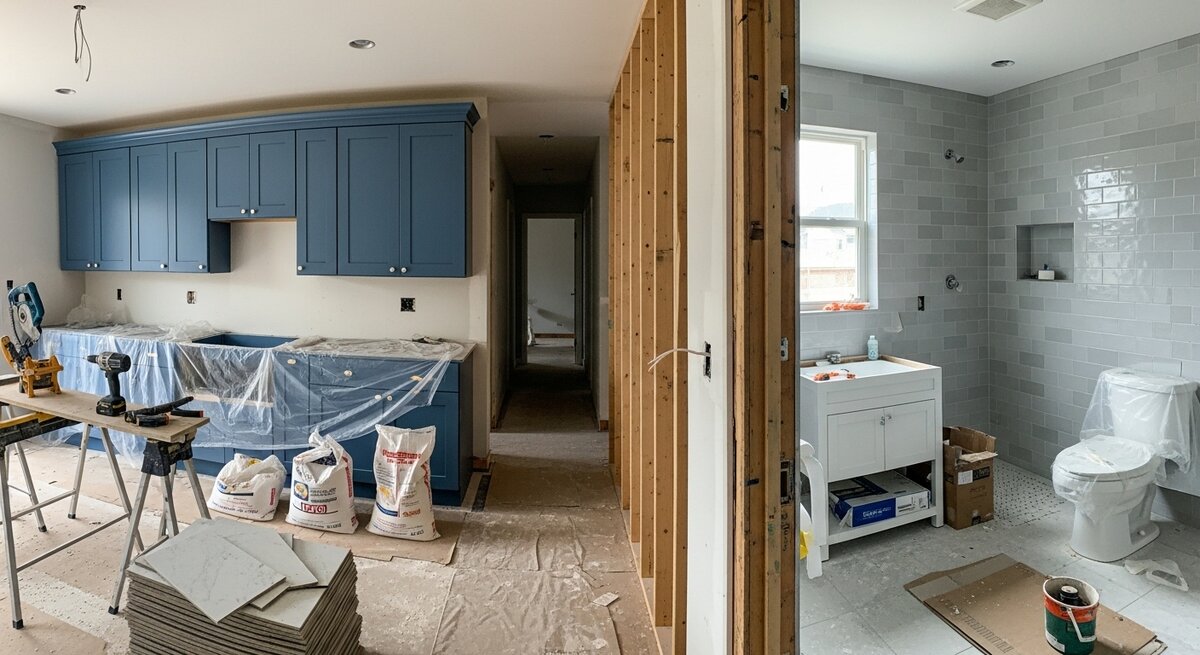
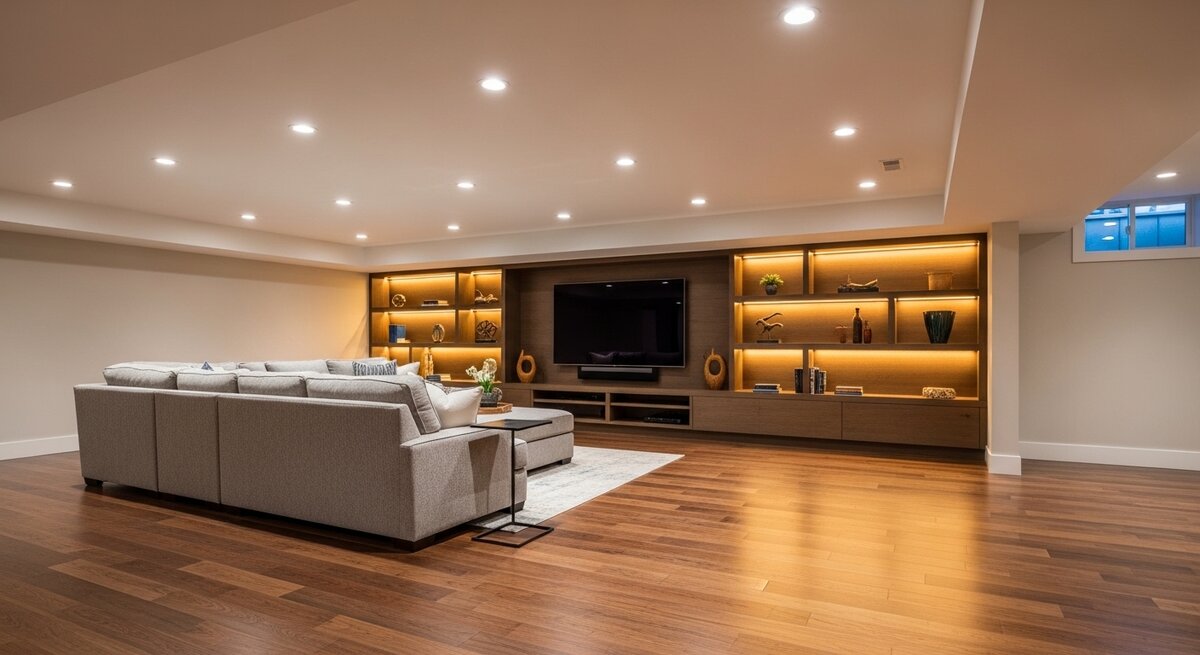
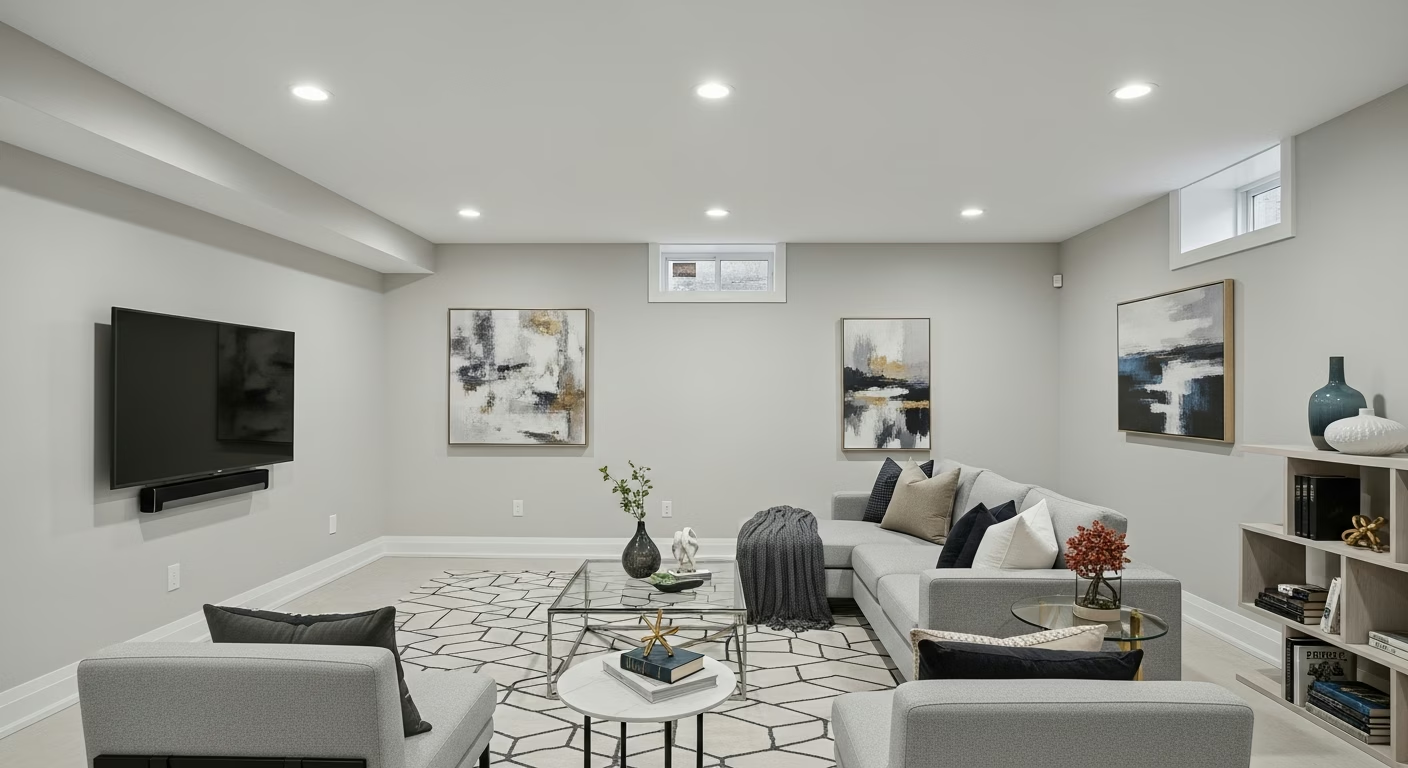
Our Basement Home Gym Buildout Work
Professional basement home gym buildout results from RenoHouse projects across the Toronto GTA.
Basement Home Gym Buildout
Toronto GTA
Quality Workmanship
Licensed & Insured
Like what you see? Let's talk about your project.
🧮 Basement Home Gym Buildout — Cost Estimator
GTA / Ontario — 2026 market pricing
⚙️ Add-ons & Options
📊 Where the cost goes (typical breakdown)
📋 What affects your price:
💡 Estimates use 2026 GTA/Ontario market data. Actual cost depends on site conditions, material selections, and project scope. Book a free in-home quote for a precise number.
Frequently Asked Questions About Basement Home Gym Buildout
Total installed cost in the GTA depends on size, scope, and equipment integration. A basic gym in an already-finished basement (rubber flooring, mirror wall, minor electrical) runs $12,000–$20,000. A standard mid-tier buildout (300–500 sq ft, partial framing, two 240V circuits, supplementary HVAC, acoustic dampening, Bluetooth audio) runs $20,000–$40,000. A premium buildout with full deadlift platform, multiple 240V circuits, mini-split cooling, acoustic engineering, smart-glass or full glass partition, and AV system runs $40,000–$60,000+. Premium wellness-suite builds combining gym, sauna, and cold plunge typically run $60,000–$120,000. RenoHouse provides itemized estimates covering flooring, electrical, HVAC, mirrors, framing, lighting, AV, permits, and labour.
Three options dominate: (1) interlocking rubber tiles (8–12mm) — easy DIY-style install, replaceable if damaged, $4–$8/sq ft installed, good for free weights and bodyweight; (2) rubber roll (1/4 inch / 6mm to 1/2 inch / 12mm) — seamless commercial-feel surface, $6–$12/sq ft installed, best all-rounder; (3) thick rubber tiles or rolls (15–25mm) — for serious lifters and deadlift platforms, $9–$16/sq ft installed. For Olympic-style deadlifts, we install a separate platform island (3/4-inch plywood substrate with 25mm rubber on top) inside an otherwise 12mm rubber-roll floor. Avoid foam puzzle mats (compress permanently under racks) and carpet (impossible to clean post-workout).
Yes for any commercial-grade cardio or connected fitness equipment. Treadmills 3HP+ (NordicTrack Commercial, Peloton Tread+, Sole TT8) require 240V/20A. Tonal hardwires to a 240V/20A circuit. Some Peloton Bike+ installations use 120V/15A but newer models can be specified 240V. Mirror, Tempo, and FightCamp run on 120V/15A. Saunas (if you're building a wellness suite) need 240V/30–40A. Plan for two to four 240V/20A circuits in any standard gym, plus four to six 120V/20A general-purpose outlets. Our licensed electricians load-calculate your existing panel — a 100A service often needs an upgrade to 200A before adding multiple 240V circuits, which adds $2,500–$4,500.
Minimum 8'0" finished is the practical answer. 7'6" is the absolute floor: workable for short users with a flat bench but kills overhead pressing, kettlebell swings, and jump rope. Tall users (6'2"+) need 8'2"–8'6" for full overhead lockouts on a 6" platform. Many older Toronto homes (pre-1980) have 7'2"–7'6" basement ceilings; underpinning to gain height runs $30,000–$80,000 and is a separate scope from the gym build itself. We measure during the consultation and tell you honestly if your ceiling supports your training plan, and we'll recommend a different exercise list (or underpinning) if it doesn't.
A single moderately intense workout puts out 600–900W of body heat — equivalent to running a portable space heater for an hour. In a sealed basement zone with one HVAC return, that heat builds fast: temperatures climb 5–8°F in 30 minutes, humidity spikes, and air feels stale. Solutions: add a dedicated supply and return to your existing HVAC, install a ductless mini-split (12,000–18,000 BTU) for zone-controlled cooling, install a HRV/ERV or simply a high-CFM exhaust fan ducted to exterior, or combine. For premium builds we usually spec a 12,000 BTU mini-split with smart thermostat — runs about $4,500–$7,500 installed and pays for itself in workout adherence. Standard builds get supplementary HVAC and an inline exhaust fan. Basic builds get a high-velocity floor fan plus the existing HVAC trunk.
Standard gym mirror walls run 8 ft × 5 ft to 14 ft × 6 ft, in 1/4-inch tempered or low-iron glass. Mounting: glued to studs with mirror mastic plus J-channel bottom rail and Z-clip safety brackets at top — code-required for any wall mirror over 4 sq ft in residential spaces. Low-iron glass costs 30–50% more than standard mirror but is dramatically clearer (no green tint), preferred in premium builds. We coordinate with a local glass supplier (Tisdale Glass, Glassopolis, or similar) for templated cuts. Don't use cheap big-box mirror — it'll bow and ghost within 2 years in basement humidity.
Three problem zones: (1) impact noise from dropped weights or treadmill foot strikes (the loudest); (2) vibration through framing into upstairs subfloor; (3) airborne noise from music, fans, or video calls. Solutions in order of cost: rubber gym flooring on top of an additional 1/2-inch rubber underlay or QuietWalk mat ($800–$2,500); resilient channel and double-layer 5/8" drywall on the ceiling ($2,500–$5,000); insulation in the joist bays (Roxul Safe'n'Sound, $400–$1,000); decoupled deadlift platform with isolation pad ($600–$1,200). For premium STC 50+ work we engineer the ceiling assembly fully — usually $4,000–$8,000 in dampening labour and materials.
Yes — all of them. Tonal hardwires to 240V/20A and mounts to studs (we frame backing in advance during rough-in). Peloton Bike+ runs on a standard 120V outlet but newer Tread+ needs 240V/20A. Mirror is 120V plug-in, mounted to studs (or freestanding). Tempo is 120V plug-in. FightCamp is 120V plug-in. We pre-rough the wall framing and electrical for whatever connected fitness platform you're planning, so the install is plug-and-play when the equipment arrives. We also coordinate Wi-Fi mesh extension if your basement has weak signal — most connected fitness needs solid 100+ Mbps for live classes.
Yes — a permitted, properly built basement home gym is a recognized wellness amenity in the GTA market, particularly in homes targeting professionals and families with active lifestyles. Real estate professionals report typical recovery of 40–65% of project cost on resale for a standalone gym, and 60–85% recovery when the gym is part of a wellness suite (gym + sauna + plunge). The strongest premium is in the $1.5M+ market in Forest Hill, Lawrence Park, Hoggs Hollow, Oakville Old, Mississauga Mineola, and Markham Cathedraltown. The non-monetary daily-use ROI — measured in workout adherence, gym membership savings ($2,000–$4,000/year), and time savings — is what most homeowners cite as the actual win.
A basic build (existing finished basement, rubber flooring, mirror wall, light electrical) takes 1–2 weeks. A standard mid-tier build (partial framing, two 240V circuits, supplementary HVAC, acoustic dampening, full mirror wall, AV) takes 3–5 weeks. A premium build (full transformation with mini-split, deadlift platform, smart-glass partition, AV system) takes 5–8 weeks. Wellness-suite builds combining gym + sauna + plunge run 10–16 weeks. RenoHouse provides a phased timeline at quote stage and coordinates trades so you're not living with an open construction zone any longer than necessary.


You Might Also Need
Customers who looked at basement home gym buildout also asked us about these complementary services.


We Serve All GTA
Professional basement home gym buildout services available across the Greater Toronto Area.
“Renovated our entire main floor — kitchen, living room, flooring, paint, lighting. They coordinated everything perfectly. One contractor for the whole project.”
— Anthony G., North York
Get a Free Basement Home Gym Buildout Estimate
Contact us today for a free, no-obligation quote for your basement home gym buildout project in Toronto GTA. We'll get back to you within 1 hour.