RenoHouse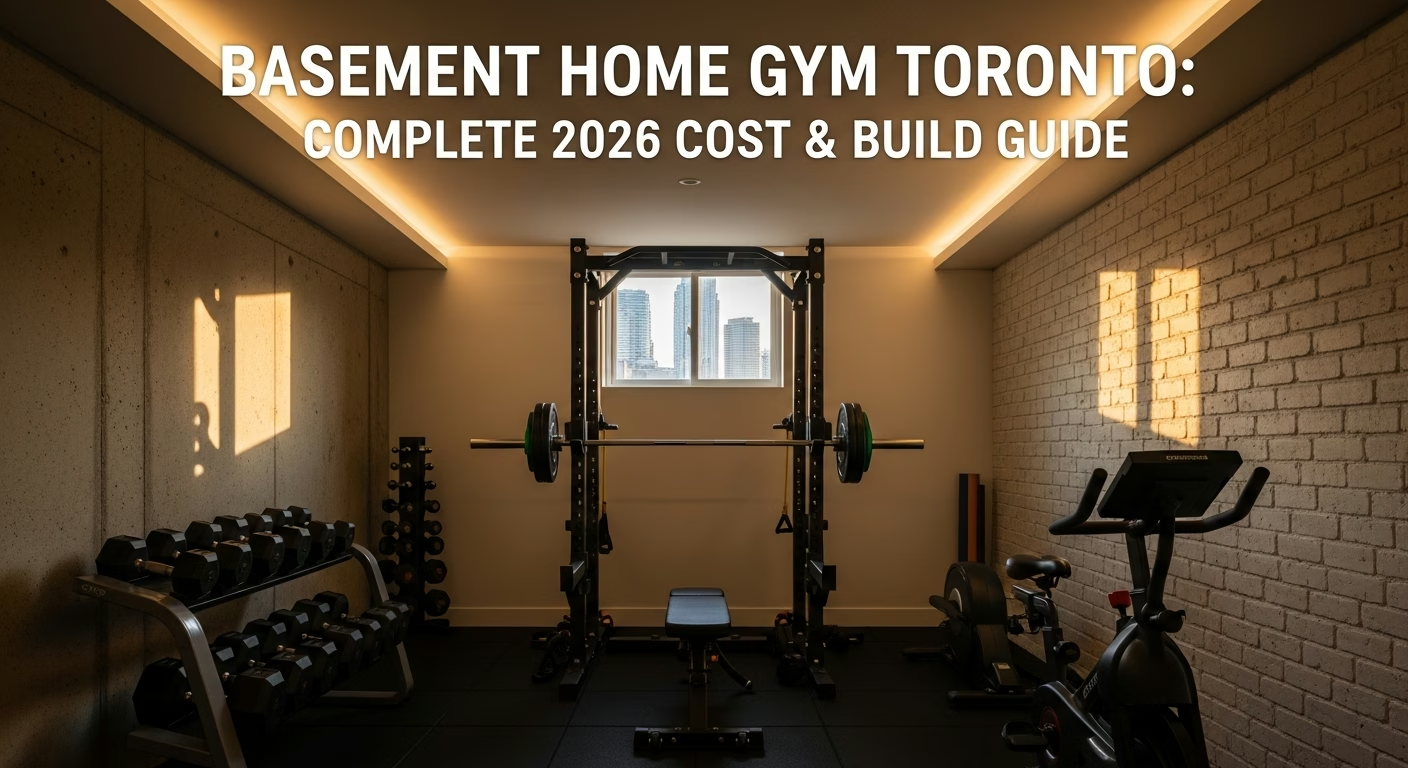

# Basement Home Gym Toronto: Complete 2026 Cost & Build Guide
Quick answer. A basement home gym is one of the most cost-effective home renovations a Toronto homeowner can take on right now — and one of the most poorly executed when handled by a generalist contractor. After five years of pandemic-era investment in home fitness, the GTA market has clearly stratified: cheap "two dumbbells in the corner" setups vs.A basement home gym is one of the most cost-effective home renovations a Toronto homeowner can take on right now — and one of the most poorly executed when handled by a generalist contractor. After five years of pandemic-era investment in home fitness, the GTA market has clearly stratified: cheap "two dumbbells in the corner" setups vs. real, engineered fitness rooms with rubber flooring, dedicated 240V circuits, supplementary HVAC, and acoustic dampening. This pillar guide explains everything 2026 Toronto homeowners need to know — what it actually costs, what trades are involved, what mistakes kill the project, and what the resale-value math looks like in the GTA.
Realistic 2026 all-in costs in Toronto: basic basement gym $12,000–$20,000, standard mid-tier $20,000–$40,000, premium $40,000–$60,000+, and wellness suite (gym + sauna + plunge) $60,000–$120,000+. Permits run $400–$900, ESA filing starts at $300, and a typical project closes in 1–8 weeks depending on scope.
Why Toronto Basements Are Ideal for Home Gyms
Roughly 80% of GTA home gyms are built in basements, and the reasons are mechanical:
- 1. Concrete slab — handles deadlift impact and rack loads better than any wood-framed floor on an upper level. A standard 4-inch residential slab handles ~3,000+ psf — well above any home-gym requirement, even with Olympic deadlifts.
- 2. Cool ambient temperature — basements run 5–10°F cooler than upper floors year-round, which is ideal for high-intensity training where you generate 600–900W of body heat per session.
- 3. Sound containment — drop a 405 lb deadlift on the second floor and the entire house knows. Drop it in a properly built basement and only the gym floor feels it.
- 4. Available square footage — most Toronto homes have 400–900 sq ft of unused or under-used basement floor area. A full-featured gym needs 250–500 sq ft.
- 5. Proximity to electrical panel — multiple new 240V circuits are easier and cheaper to run from a panel that's typically already in the basement.
- 6. Daylight irrelevance — gyms don't need windows. Basements (which struggle for natural light) are perfectly suited.
The same factors that make basements ideal for basement sauna installation — cool ambient, slab floor, electrical access — apply to gyms.
What's Different About a Gym Buildout vs. Generic Basement Reno
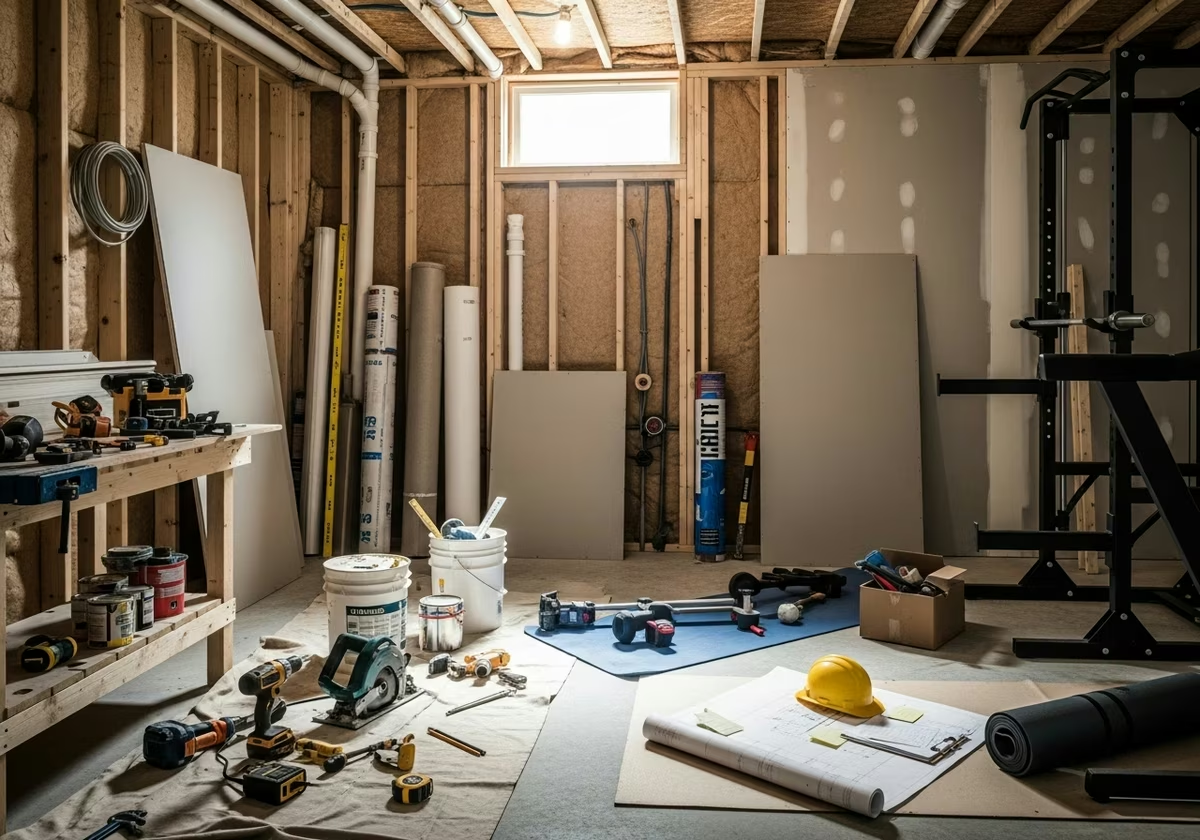
Eight things that separate a real gym buildout from a basement carpet-and-paint job:
1. The Slab and the Platform
Standard basement slabs handle most equipment fine. The exception: serious deadlifters dropping 315–500+ lbs from lockout. For these clients we install a deadlift platform island — typically 8 ft × 6 ft, built up from the slab with a 3/4-inch plywood substrate and 25mm rubber on top. This isolates the impact from the surrounding flooring and dramatically reduces sound transmission. Cost: $600–$1,400 in materials and labour for the platform alone.
2. The Flooring
Rubber, not carpet, vinyl, or foam puzzle mats. Three viable options, in three thickness tiers:- Interlocking rubber tiles 8–12mm — $4–$8/sq ft installed. Easy to replace if damaged. Good for free-weights and bodyweight.
- Rubber roll 1/4 inch (6mm) to 1/2 inch (12mm) — $6–$12/sq ft installed. Seamless commercial feel. Best all-rounder.
- Heavy rubber 15–25mm — $9–$16/sq ft installed. For platforms and serious lifting.
Avoid foam puzzle mats (compress permanently under racks) and carpet (impossible to clean).
Full deep-dive in our Home Gym Flooring Comparison Toronto guide.
3. Electrical
The biggest hidden cost in DIY-spec gym buildouts. Connected fitness and commercial cardio require multiple 240V circuits:
- Tonal: 240V/20A hardwired
- Treadmills 3HP+ (Peloton Tread+, NordicTrack Commercial, Sole TT8): 240V/20A
- Future sauna or plunge integration: 240V/30–40A
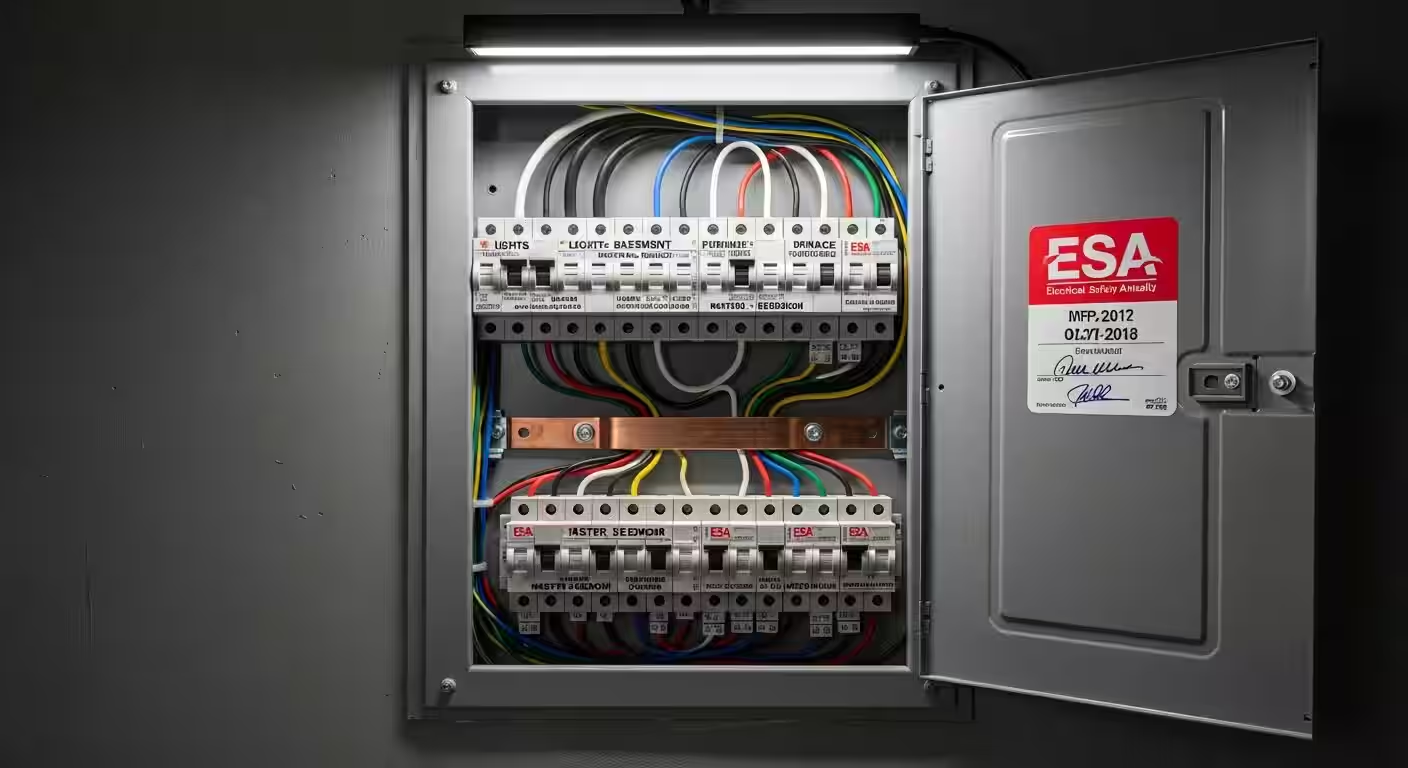
Plus four to six 120V/20A outlets for general use. Many older Toronto homes have 100A panels — load-calc usually requires upgrading to 200A before adding multiple 240V circuits ($2,500–$4,500). All circuits require ESA permit and inspection.
Detail in Home Gym Electrical Requirements: 240V for Treadmill, Tonal, Peloton.
4. HVAC
A single moderately intense workout puts out 600–900W of body heat — equivalent to running a portable space heater. In a sealed basement zone with one HVAC return, that heat builds fast: temperatures climb 5–8°F in 30 minutes, humidity spikes, air feels stale.
Solutions:
- Standard tier: extend supplementary supply and return from existing HVAC + inline exhaust fan ($1,500–$3,500)
- Premium tier: ductless mini-split 12,000–18,000 BTU ($4,500–$7,500)
Detail in Home Gym Ventilation: HVAC for 600W+ Heat Output.
5. Ceiling Height
8'0" finished is the practical minimum. 7'6" is the floor — workable for short users but kills overhead pressing, kettlebell swings, and jump rope. Tall users (6'2"+) need 8'2"–8'6" for full overhead lockouts on a 6" platform.Many older Toronto homes (pre-1980) have 7'2"–7'6" basement ceilings. Underpinning to gain height runs $30,000–$80,000 — separate scope from the gym build itself.
Need professional home renovation?
Call RenoHouse at 289-212-2345 or get a free estimate today.
Get Free Estimate →6. Mirrors
Standard gym mirror walls run 8 ft × 5 ft to 14 ft × 6 ft, 1/4-inch tempered or low-iron glass.
Mounting is code-required for safety:
- Mirror mastic glue to studs
- J-channel at the bottom
- Z-clip safety brackets at the top (required for any wall mirror over 4 sq ft in residential)
Low-iron glass is 30–50% more expensive than standard but dramatically clearer (no green tint). Standard cost: $20–$35/sq ft installed. Low-iron: $30–$50/sq ft.
7. Acoustic Dampening
Three problem zones to manage:
- Impact from dropped weights / treadmill foot strikes (loudest)
- Vibration through framing into upstairs subfloor
- Airborne from music and fans
Treatment ($800–$8,000 depending on STC target):
- Rubber gym flooring + 1/2" rubber underlay
- Resilient channel + double 5/8" drywall on ceiling
- Roxul Safe'n'Sound in joist bays
- Decoupled deadlift platform with isolation pad
Detail in Home Gym Lighting & Acoustics: Toronto Buildout Guide.
8. Lighting
4000K, CRI 90+, dimmable. This isn't aesthetic — high-CRI lighting matters for form awareness, color accuracy in video, and just feeling alert during morning workouts. Specify recessed LED downlights or LED panel troffers, not warm 2700K lights left over from the basement reno.2026 Toronto Pricing — Three Realistic Tiers
Basic ($12,000–$20,000)
For: existing finished basement, mostly bodyweight + free-weight setup, 200–300 sq ft. Includes:- 8mm interlocking rubber tile floor: $1,500–$3,500
- Mirror wall (8 ft × 5 ft, standard glass): $1,800–$3,200
- Two new 120V outlets and LED upgrade: $700–$1,400
- Wall paint/refresh: $500–$1,200
- Bluetooth ceiling speakers: $500–$900
- Labour: $4,000–$7,500
- Permit/ESA: $300–$500
Standard ($20,000–$40,000)
For: serious lifter or connected-fitness household, 300–500 sq ft, partial framing. Includes:- 12mm rubber roll floor: $4,500–$8,500
- Deadlift platform island: $800–$1,400
- Two 240V/20A circuits + four 120V/20A: $2,500–$4,500
- Supplementary HVAC + exhaust fan: $1,500–$3,500
- 14 ft mirror wall: $4,000–$7,500
- Acoustic dampening (resilient channel + insulation): $2,500–$5,000
- LED 4000K + dimmer: $900–$1,800
- AV system (Sonos / Bluetooth ceiling speakers): $1,200–$2,500
- Labour: $6,000–$10,000
- Permits/ESA: $500–$900
Premium ($40,000–$60,000+)
For: luxury home, full transformation, 400–700+ sq ft, often integrated with sauna. Includes:- 25mm rubber roll + decoupled deadlift platform: $7,500–$14,000
- Three to four 240V circuits + 200A panel upgrade: $5,500–$10,500
- Ductless mini-split 18,000 BTU: $5,500–$8,500
- Engineered acoustic ceiling (STC 50+): $4,500–$8,500
- Low-iron mirror wall + smart-glass partition: $8,500–$16,000
- AV with wall-mounted training screen: $3,500–$6,500
- Lutron lighting + scene control: $2,500–$4,500
- Premium framing + finishes: $5,000–$10,000
- Labour + project management: $8,000–$14,000
- Permits/ESA: $700–$1,200
Wellness Suite Buildout (Gym + Sauna + Plunge)
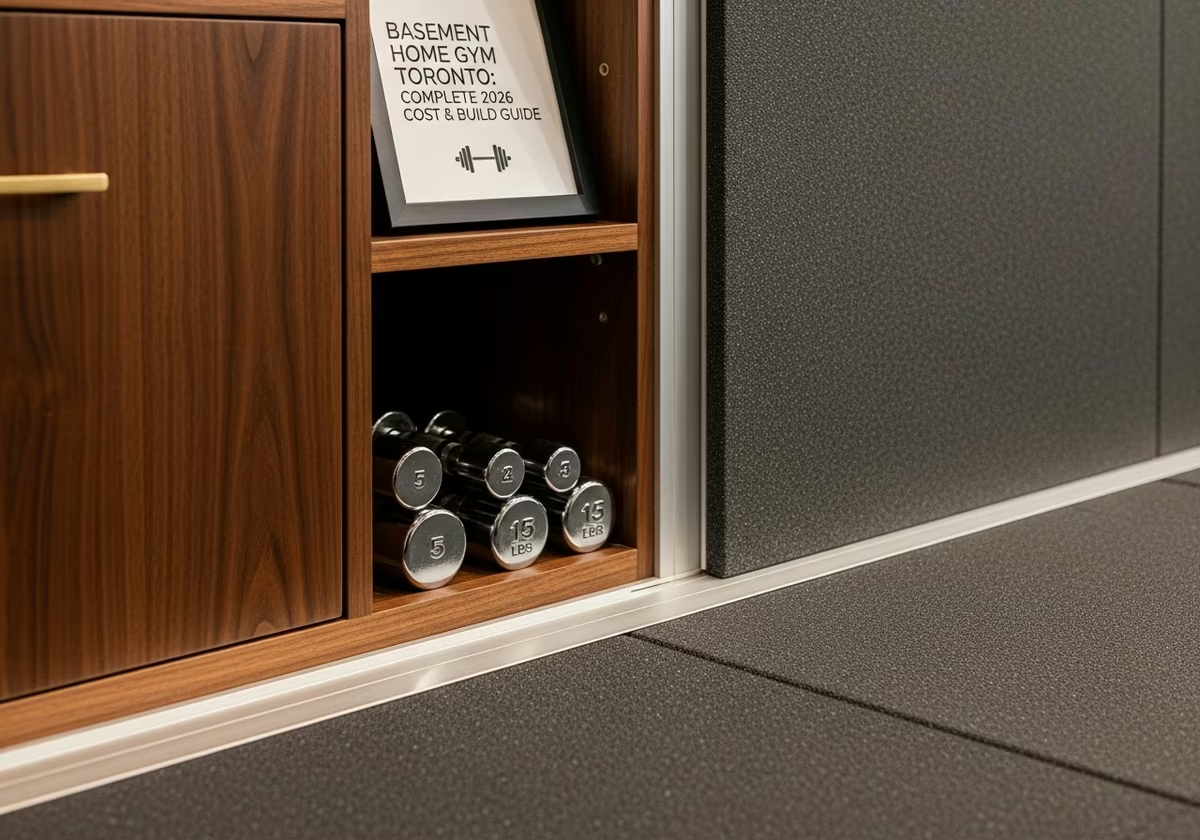
The 2026 premium tier in Toronto basements is increasingly the wellness suite: gym + sauna + cold plunge as a single coordinated project. Total range $60K–$120K+. Layout, plumbing, drainage, and electrical coordination are covered in Home Gym + Sauna + Cold Plunge: Ultimate Wellness Suite.
Permits and Code Requirements
Building permit triggered by:
- New partition walls
- New circuits (240V or 20A+ general)
- New HVAC equipment (mini-split)
- Bathroom/wet zone integration
ESA permit always required for new circuits — $88–$300 depending on scope.
City of Toronto building permit: $400–$900.
Permits handled by RenoHouse as part of every gym project.
Resale Value and ROI
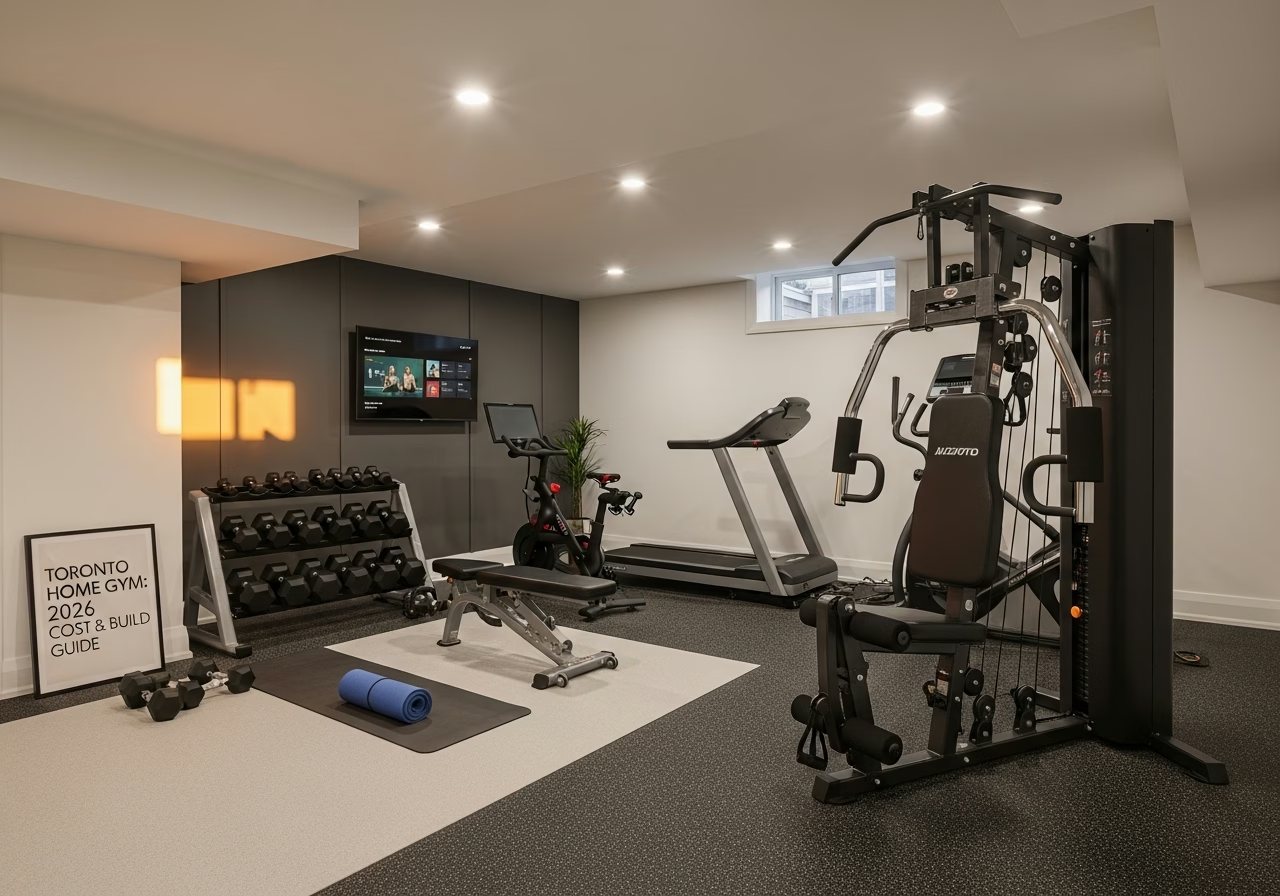
A permitted, properly built basement home gym recovers 40–65% of project cost on resale in the GTA, depending on neighbourhood and how the gym is integrated.
When the gym is part of a wellness suite (gym + sauna + plunge), recovery improves to 60–85% because appraisers and buyers read the space as a designed amenity rather than a one-off.
Strongest premium markets: Forest Hill, Lawrence Park, Hoggs Hollow, Bridle Path, Oakville Old, Mississauga Mineola, Markham Cathedraltown.
The non-monetary daily-use ROI is what most homeowners actually cite as the win: gym membership savings ($2,000–$4,000/year), commute time savings (~150 hours/year for a 3x/week regular), better workout adherence, and 24/7 access for shift workers.
Full ROI math in Home Gym ROI: Does It Add Toronto Home Value?.
Project Timeline
| Tier | Calendar Time |
|---|---|
| Basic | 1–2 weeks |
| Standard | 3–5 weeks |
| Premium | 5–8 weeks |
| Wellness suite (with sauna + plunge) | 10–16 weeks |
Permit waits add 2–6 weeks at the front of any tier requiring them.
Common Mistakes That Kill the Project
We catalogue all 10 in Home Gym Mistakes: 10 Common Buildout Failures, but the headline failures:
- 1. Cheap foam flooring — compresses under racks within months.
- 2. Underspec'd electrical — single 120V outlet shared by treadmill + Tonal trips constantly.
- 3. Mirror mounted with adhesive only — fails Ontario building code, falls within 1–2 years in basement humidity.
- 4. No HVAC plan — room becomes unusable in summer.
- 5. Wrong ceiling height — overhead pressing impossible.
- 6. No acoustic dampening — fights with upstairs household.
- 7. No moisture management — humidity ruins equipment.
Garage vs Basement
In Toronto's climate, basement wins for most clients. Garages are unconditioned, attract pests, and require expensive insulation + heating + cooling to be year-round usable. Detail in Garage vs Basement Home Gym Toronto: Which Is Better.
Small Space Considerations
Don't have 300+ sq ft? You can still build a real gym in 120–200 sq ft. Detail in Small Space Home Gym Toronto: Maximize Tiny Basement.
DIY vs Professional
A basic basement gym (rubber tile + simple electrical) is plausibly DIY for the right homeowner. A standard or premium build with multiple 240V circuits, framing, mini-split, and acoustic engineering needs licensed trades and permit management. Real cost comparison in DIY vs Professional Home Gym Toronto: Real Cost Comparison.
What RenoHouse Includes in Every Gym Project
- Free in-home assessment of slab, ceiling height, electrical capacity, HVAC route
- Detailed itemized quote (no "allowance" line items)
- All permits (City + ESA) handled
- Single project manager — no juggling subs
- All trades in-house: framing, electrical, HVAC, drywall, flooring, mirrors, AV
- 1-year workmanship warranty + full manufacturer warranties on equipment we install
---
Ready to plan your basement gym? RenoHouse builds permitted, ESA-compliant home gym buildouts across Toronto and the GTA — engineered for daily use and long-term ownership. Book a free in-home assessment via our basement home gym buildout service page.
Sources & References
Authoritative sources cited in this guide:
- Ontario Building Code — OBC official text
- Toronto Building Permits — City permit portal
- Tarion Warranty — Ontario warranty regulator
- CSA Group Standards — Canadian standards
Continue Reading
- How to Build a Basement Home Gym: 7-Step Toronto Guide
- Home Gym Cost Toronto: $5K Basic vs $50K Premium
- Home Gym Mistakes: 10 Common Buildout Failures