RenoHouse

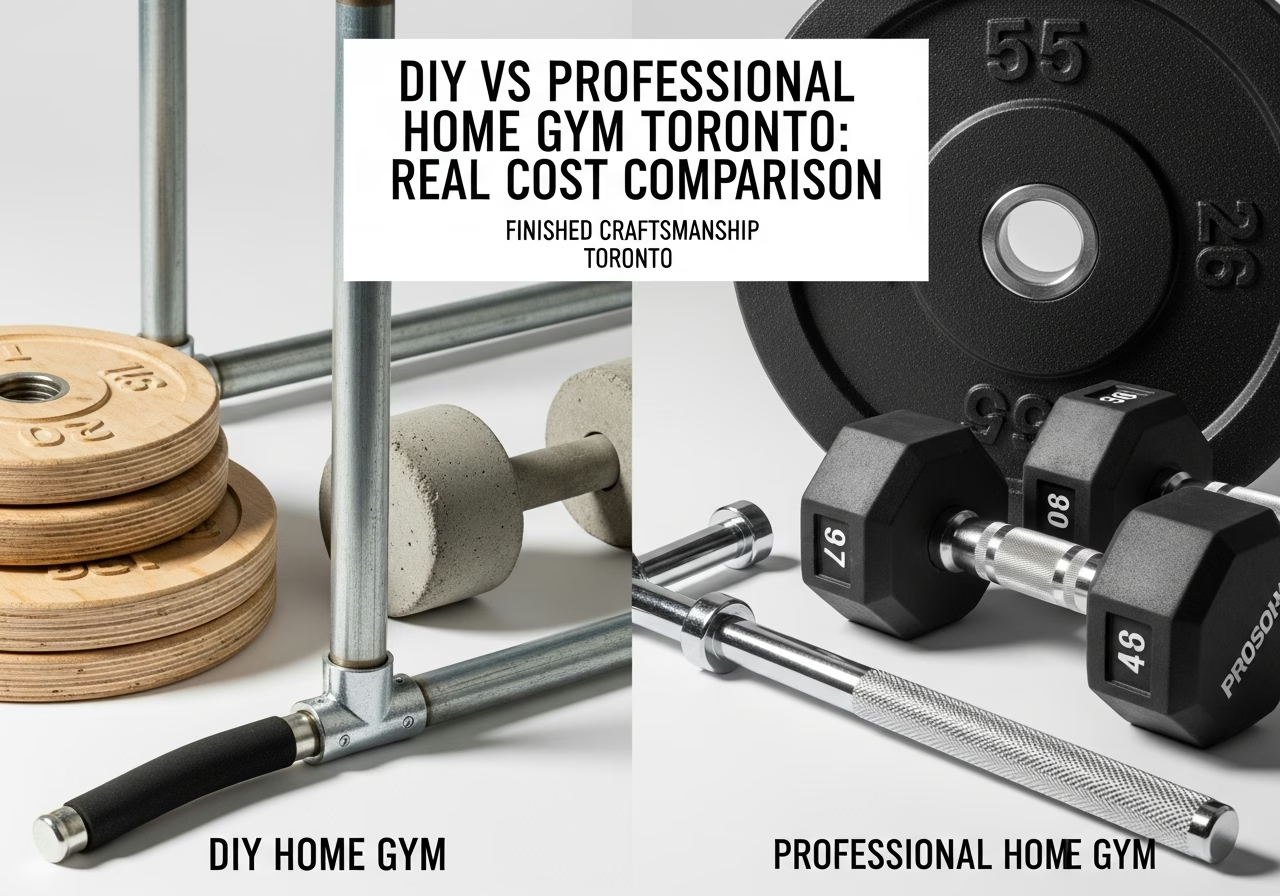
# DIY vs Professional Home Gym Toronto: Real Cost Comparison
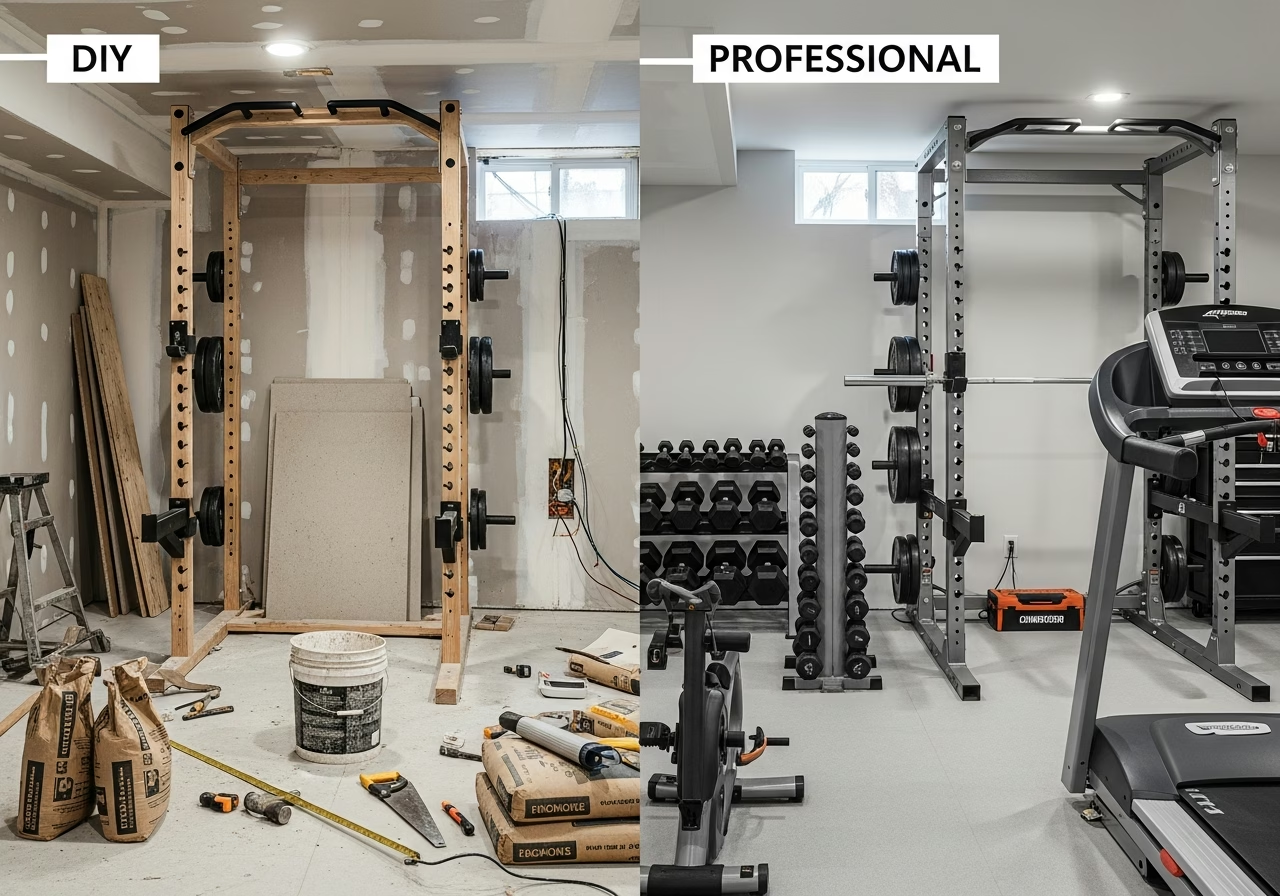
Quick answer. The DIY-vs-professional question for home gym buildouts is real, and the honest answer is "it depends on the scope." A basic basement gym (rubber flooring + mirror + simple lighting) is plausibly DIY for a handy homeowner.The DIY-vs-professional question for home gym buildouts is real, and the honest answer is "it depends on the scope." A basic basement gym (rubber flooring + mirror + simple lighting) is plausibly DIY for a handy homeowner. A standard or premium build with multiple 240V circuits, framing, mini-split, and acoustic engineering needs licensed trades. This guide breaks down the real cost comparison at each tier with realistic timelines, hidden costs, and the regulatory reality of Ontario electrical work. For the broader buildout context, see our Basement Home Gym Toronto 2026 Guide.
What "DIY" Actually Means in Ontario
Important clarification: "DIY" in Ontario doesn't mean "do everything yourself." It means "manage the project yourself, with hired licensed trades for regulated work." Specifically:
- Electrical work (any new circuit, panel work, 240V wiring): must be done by licensed electrician with ESA permit, OR by homeowner under "homeowner electrical permit" with ESA inspection.
- Plumbing (new drains, supply lines): must be done by licensed plumber with City of Toronto plumbing permit (homeowner self-do also possible but rarely worth it).
- HVAC (gas line, mini-split refrigerant work): refrigerant work requires HRAI certification.
- Structural (load-bearing walls, footings): engineer required.
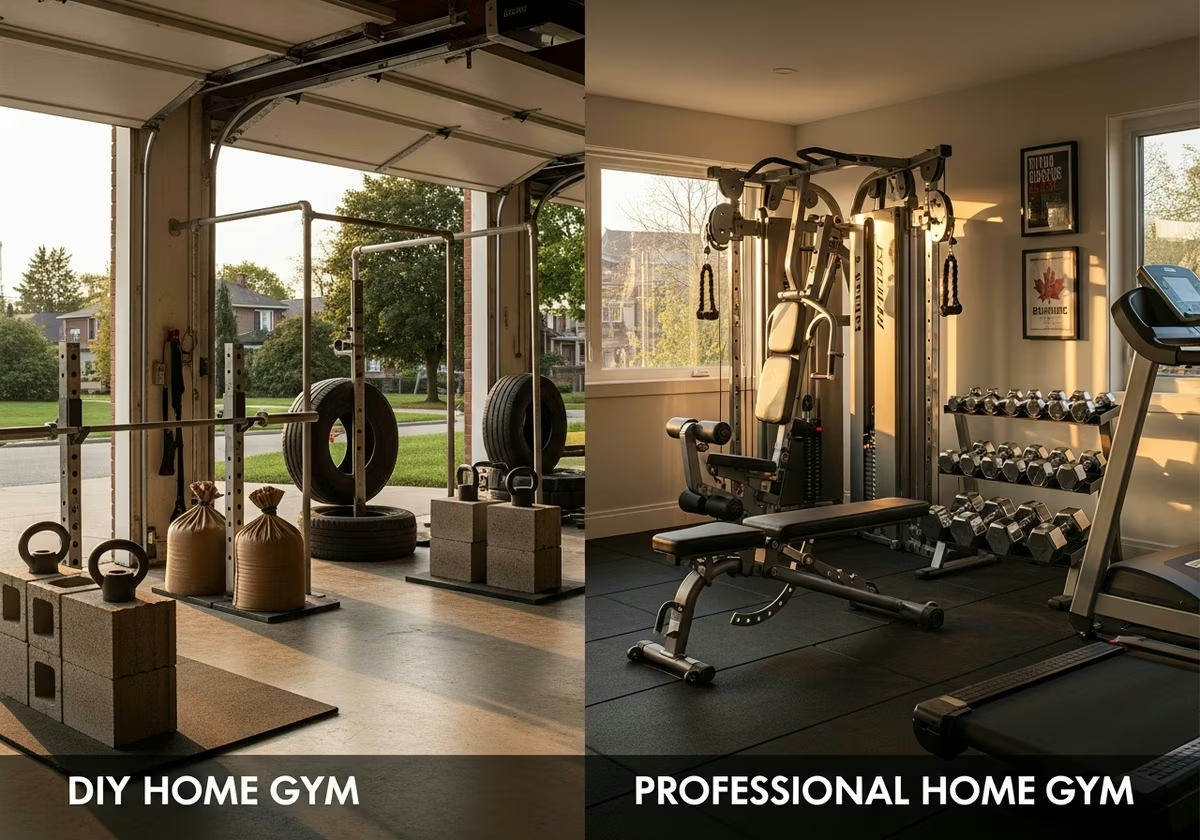
So when we say "DIY home gym," we mean the homeowner sourced materials, hired electricians and HVAC techs as needed, and did the framing/flooring/finishing themselves.
Tier-by-Tier Comparison
Tier 1: Basic ($12K–$20K Pro / $5K–$10K DIY)
Pro buildout: $14,000 (350 sq ft, basic finish)- Materials: $5,500
- Labour: $7,500
- Permits + management: $1,000
- Materials: $4,500 (no contractor markup)
- Hired electrician for outlets: $700–$1,200
- Permit fees: $300–$500
- Tools rental/purchase: $400–$800
- Mistakes/rework: $400–$1,000
Tier 2: Standard ($20K–$40K Pro / $14K–$25K DIY)
Pro buildout: $28,000 (350 sq ft, full standard scope)- Materials: $11,000
- Labour: $15,000
- Permits + management: $2,000
- Materials: $10,000
- Hired electrician (2 × 240V + 4 × 120V): $4,500
- Hired HVAC (supplementary trunk + exhaust): $2,500
- Hired drywaller (for ceiling): $1,500
- Mirror install: $300
- Permit fees: $700
- Tools/rental: $500
Tier 3: Premium ($40K–$60K+ Pro / $30K–$45K DIY)
Pro buildout: $50,000 (premium 400 sq ft scope)- Materials: $20,000
- Labour: $25,000
- Permits + management + design: $5,000
- Materials: $19,000
- Hired electrician (3+ × 240V + general circuits + likely panel upgrade): $7,500–$10,000
- Hired HVAC (mini-split install, full ductwork): $5,000–$7,500
- Hired drywaller (premium ceiling assembly): $2,500–$4,000
- Hired tile setter (if any wet zone): $1,500–$3,000
- Hired AV installer: $1,000–$2,500
- Permit fees + design fees: $1,500
- Tools/rental: $800–$1,500
Tier 4: Wellness Suite ($60K–$120K+ Pro / Don't DIY)
Pro buildout: $90,000 (mid-tier wellness suite) DIY buildout: not realistic.This scope involves:
- Multiple 240V circuits including sauna 30–40A
- Plumbing with floor drain (city permit)
- Wet zone tile and waterproofing (specialized)
- Sauna assembly (specialized)
- Cold plunge install (specialized)
- HRV/ERV (specialized HVAC)
- Smart home integration
The coordination required is essentially a full-time project management role for 4–6 months. The skills required span 8+ trades. Permitting is complex (building + plumbing + ESA + potentially heritage).
DIY savings: Theoretical ~$15,000–$25,000. Real outcome: 80–90% of DIY wellness suite attempts go over budget by more than the theoretical savings, and run 3–6 months over schedule. Worse: quality issues become apparent within 1–2 years, requiring expensive remediation.For wellness suite detail, see Home Gym + Sauna + Cold Plunge: Ultimate Wellness Suite.
Where DIY Makes the Most Sense
Specific scopes where DIY consistently saves real money without quality compromise:
- 1. Flooring install (rubber tile or roll on prepared slab) — saves $1,500–$4,500. Time: 1–2 weekends.
- 2. Paint and finish work — saves $1,000–$3,000. Time: 1 weekend.
- 3. Equipment assembly (rack, bench, etc.) — saves $300–$800.
- 4. Wall mounting of TVs, AV, accessories (after backing is in place) — saves $200–$500.
- 5. Final cleaning and minor punch-list — saves $200–$500.
Total DIY-able scope on a standard buildout: ~$3,000–$8,000 in savings without much risk.
This is what we recommend to budget-conscious clients: hire RenoHouse for the structural, electrical, HVAC, framing, and acoustic engineering. DIY the flooring, paint, and equipment assembly.
Where DIY Almost Always Fails
- 1. Multi-circuit electrical — even with hired electrician, coordinating outlet locations, circuit routing, and ESA timing is complex
- 2. Acoustic dampening engineering — getting STC 50+ requires understanding decoupling, mass, and damping; homeowners routinely build assemblies that "should work" but don't
- 3. HVAC sizing and route — under-sized mini-split is the most common DIY HVAC mistake
- 4. Mirror wall installation — code-required Z-clip mounting plus glass cutting requires specialized skill
- 5. Mini-split refrigerant work — requires HRAI certification (illegal for homeowner)
- 6. Permit management — homeowners routinely miss inspection windows, leading to project delays
Hidden Costs of DIY
Real costs DIY homeowners forget:
Need professional home renovation?
Call RenoHouse at 289-212-2345 or get a free estimate today.
Get Free Estimate →- Tools — $500–$2,000 in tools you'll use once or twice
- Time — 100–500 hours of your time, which has opportunity cost
- Mistakes — average DIY home reno has $1,500–$5,000 in rework
- Permit delays — homeowner-pulled permits often take longer than contractor-pulled (city processes contractor applications first)
- Insurance gaps — your home insurance may not cover DIY-induced damage
- Sale-time discount — DIY-finished spaces appraise lower than professionally finished
A homeowner who values their time at $50/hr "saves" $8,000 on a $28K standard build but spends 200 hours doing it. Net: $8,000 - 200 × $50 = -$2,000. Actually negative ROI on time-equivalent basis.
Most DIYers don't run this calculation. The ones who do typically conclude that hiring out the standard tier and DIY-ing the flooring/paint is the optimal strategy.
Time-to-Use Comparison
| Tier | Pro Time | DIY Time |
|---|---|---|
| Basic | 2–4 weeks | 4–8 weeks |
| Standard | 4–6 weeks | 8–12 weeks |
| Premium | 6–10 weeks | 16–26 weeks |
| Wellness suite | 4–7 months | 6–12+ months |
DIY adds 50–100% to elapsed time. The cost of not having the gym available during this period is typically not factored into DIY savings calculations.
Quality Comparison
Pro work generally results in:
- Higher resale recovery (40–65% vs 25–45% for DIY-visible quality)
- Fewer defects discovered in years 1–3 of ownership
- Better warranty coverage (manufacturer warranties typically require pro install)
- Code-compliant permitted work (no sale-time issues)
DIY work generally results in:
- More personal satisfaction and project attachment
- Lower upfront cash outlay
- Higher rework risk
- Lower resale recovery
For ROI comparison, see Home Gym ROI: Does It Add Toronto Home Value?.
When DIY Genuinely Makes Sense
We tell clients to DIY when:
- 1. Basic-tier scope (under $15K) and homeowner is genuinely handy
- 2. Specific DIY-able sub-scopes within a larger pro-managed project (flooring, paint, equipment assembly)
- 3. Homeowner has trade background (electrician building own gym, etc.)
- 4. No timeline pressure (no tight equipment delivery dates, no resale plans)
We tell clients to hire a pro when:
- 1. Standard or premium scope ($20K+) — coordination cost outweighs savings
- 2. Wellness suite ambitions — multi-trade coordination is essentially impossible to DIY
- 3. Older home electrical (knob-and-tube, aluminum, 100A panel) — the upgrade work alone justifies pro
- 4. Tight timeline — pro completes 50–100% faster
- 5. Resale plans within 5 years — pro work appraises better
Hybrid Approach: The Right Answer for Most
For most standard-tier buildouts, the optimal approach is:
- Hire RenoHouse for: structural assessment, framing, electrical, HVAC, drywall, mirror installation, permit management
- DIY: flooring (8–12mm rubber tile is straightforward), paint, equipment assembly, AV setup, final touches
Net savings: $3,000–$6,000 vs. fully pro buildout, with no quality compromise on the critical structural and mechanical work.
This is what we offer as a "managed-DIY" option for budget-conscious clients.
Don't Confuse Cheap with Affordable
The cheapest gym buildout is the one you only build once. Skipping HVAC, electrical capacity, or acoustic dampening upfront usually costs more in the long run when retrofit becomes necessary. See Home Gym Mistakes: 10 Common Buildout Failures for the typical false-economy patterns.
For broader cost framework, see Home Gym Cost Toronto: $5K Basic vs $50K Premium.
Closing Recommendation
- $5K–$15K project: DIY plausibly works, especially with hired electrician for outlets.
- $15K–$25K project: managed-DIY (you DIY flooring/paint/finish, RenoHouse handles structural/electrical/HVAC) — best of both worlds.
- $25K–$50K project: hire it out. Coordination cost exceeds DIY savings.
- $50K+ project: full professional. Don't even consider DIY.
For the broader buildout framework, see our Basement Home Gym Toronto 2026 Guide.
---
Deciding which path? RenoHouse offers full-service buildouts AND managed-DIY consulting for clients who want to save on finishing scope. Book a free assessment on our basement home gym buildout service page.
Sources & References
Authoritative sources cited in this guide:
- Ontario Building Code — OBC official text
- Toronto Building Permits — City permit portal
- Tarion Warranty — Ontario warranty regulator
- CSA Group Standards — Canadian standards
Continue Reading
- Home Gym Cost Toronto: $5K Basic vs $50K Premium
- DIY vs Professional Sauna Installation: Toronto Cost Comparison
- Basement Home Gym Toronto: Complete 2026 Cost & Build Guide