RenoHouse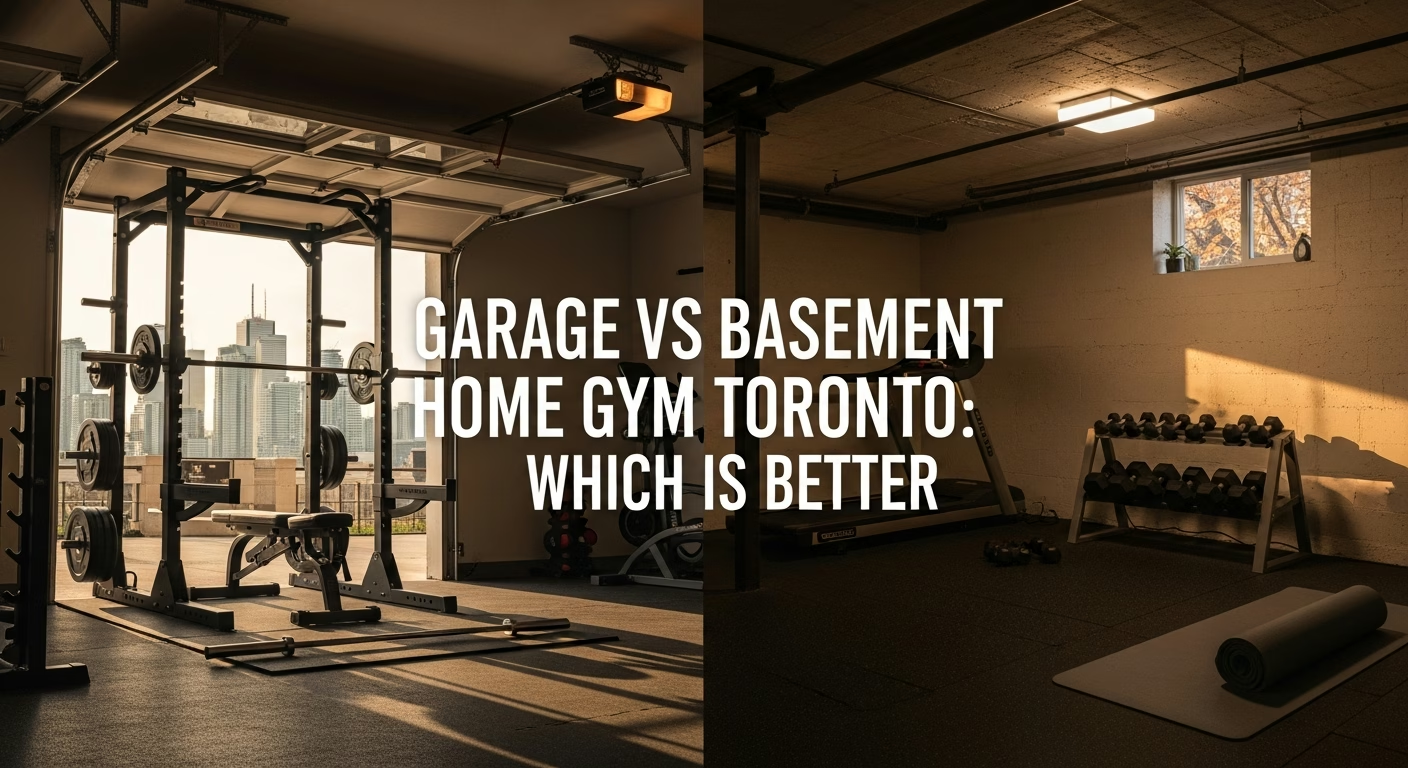

# Garage vs Basement Home Gym Toronto: Which Is Better
Quick answer. The garage-vs-basement question comes up at almost every home gym consultation. The honest answer for 2026 Toronto: basement wins for ~80% of clients, but garage gyms are the right call in specific situations.The garage-vs-basement question comes up at almost every home gym consultation. The honest answer for 2026 Toronto: basement wins for ~80% of clients, but garage gyms are the right call in specific situations. This guide breaks down the real tradeoffs — climate, cost, electrical, code, daily-use experience — and helps you decide which is right for your home and lifestyle. For the broader buildout context, see our Basement Home Gym Toronto 2026 Guide.
The Big Picture
| Factor | Basement | Garage |
|---|---|---|
| Climate (Toronto) | Wins | Loses |
| Year-round usability | Wins | Loses |
| Floor (slab thickness) | Same | Same |
| Ceiling height | Often loses | Often wins |
| Square footage | Often less | Often more |
| Electrical access | Wins | Mixed |
| Cost to build | Lower | Higher (insulation, HVAC) |
| Resale value | Wins | Losses (loses parking) |
| Equipment delivery | Worse | Better |
Why Basement Wins (in Toronto's Climate)
1. Year-Round Usability
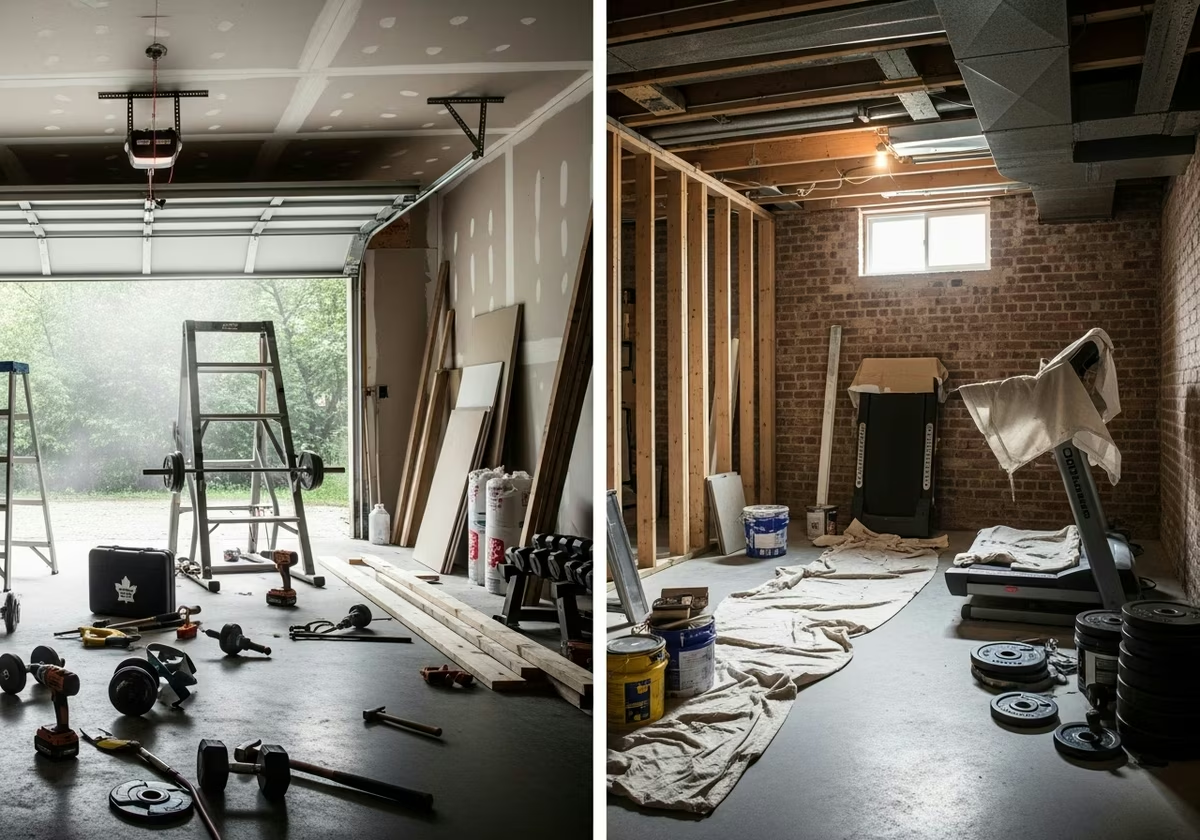
This is the single biggest factor. A garage in Toronto in January is -15°C inside if uninsulated, +5°C with basic heating, +15°C with serious heating. None of those are pleasant for a workout.
A basement is naturally 15–20°C year-round with minimal HVAC effort.
To make a garage gym usable year-round in Toronto, you need:
- Insulation (R-20+ walls, R-40+ ceiling, insulated garage door): $4,000–$10,000
- Heating (either electric or extension of home HVAC): $3,000–$8,000
- Cooling (mini-split for summer): $4,500–$7,500
- Vapor management: $1,500–$3,000
That's $13,000–$28,500 *before* you start the gym buildout itself. A basement skips most of this.
2. Sound Containment
Basements transmit sound primarily upward (where you can engineer dampening) and somewhat through walls. Garages transmit sound to neighbours, especially in attached/townhouse configurations and in dense Toronto neighbourhoods.
A 6 AM deadlift in a garage attached to your neighbour's bedroom wall is a friendship-ending event.
3. Slab Quality
Both basement and garage typically have 4-inch concrete slabs that handle home gym loading. Garages sometimes have stronger slabs (designed for vehicle loading) — minor advantage.
4. Electrical Access
Most home electrical panels are in the basement, making 240V circuit additions easier and cheaper. Garage electrical typically requires longer runs and conduit through the garage envelope.
5. Aesthetic Continuity
A basement gym integrates into the home's living space. A garage gym always reads as "garage with workout stuff in it."
When Garage Actually Wins
1. Detached Garage with Existing Heat/Cool
If you already have an insulated, conditioned detached garage (the "man cave" or "workshop" pattern), converting it to a gym is plausible and the climate problem is solved.
2. Attached Garage with Adjacent HVAC
Some 2010+ Toronto builds have HVAC zoning that includes the attached garage. If yours does, the conditioning problem is solved.
3. Two-Car Garage Where You Don't Need Both Bays
Plenty of Toronto homes have two-car garages where one bay is used for storage. Converting the unused bay to a gym is workable IF you address insulation and heating.
4. Home with Inadequate Basement
If your basement is:
- Sub-7'2" ceiling height (no overhead pressing)
- Wet (active moisture issues, $5K–$15K to fix first)
- Already finished as living space (rec room, bedroom)
- Awkward layout (low ducts, support posts blocking workout space)
Then the garage may be the more cost-effective option after all.
5. Equipment Delivery Constraints
Some equipment (commercial-grade treadmills, large racks, Tonal package) is large and heavy. Garage delivery is often easier than basement (no stairs).
Need professional home renovation?
Call RenoHouse at 289-212-2345 or get a free estimate today.
Get Free Estimate →When Garage Definitely Loses
1. Attached Garage Sharing Wall with Bedroom
Sound and vibration transmission are too problematic, even with engineering.
2. Detached Garage in Cold/Hot Toronto Weather
Without serious conditioning investment, simply unusable 4–6 months of the year.
3. Premium / Wellness Suite Goals
Sauna and cold plunge are basement-only realistic — you can't run them comfortably in a garage.
4. Resale Considerations
A garage converted to a gym loses parking value, which Toronto buyers heavily weight (especially in dense neighbourhoods). This often offsets the gym premium entirely.
Cost Comparison: Real Numbers
For a 350 sq ft mid-tier home gym buildout, 2026 GTA:
| Cost Category | Basement | Garage |
|---|---|---|
| Slab/foundation | $0 | $0 |
| Insulation | $0–$1,500 | $4,000–$10,000 |
| Heating/cooling | $1,500–$3,500 | $7,500–$15,000 |
| Vapor management | $400–$1,200 | $1,500–$3,000 |
| Electrical (240V additions) | $4,000–$6,000 | $5,000–$8,000 |
| Flooring | $4,500–$8,500 | $4,500–$8,500 |
| Mirror, lighting, AV | $6,000–$10,000 | $6,000–$10,000 |
| Acoustic dampening | $2,500–$5,000 | $1,500–$3,500 (for neighbours) |
| Permit/ESA | $500–$900 | $500–$900 |
| Labour + management | $6,000–$10,000 | $7,500–$13,000 |
| Total | $25,400–$46,600 | $38,000–$71,900 |
A basement build costs roughly $12,000–$25,000 less than the equivalent garage build, primarily because the climate envelope already exists.
Lifestyle / Daily-Use Differences
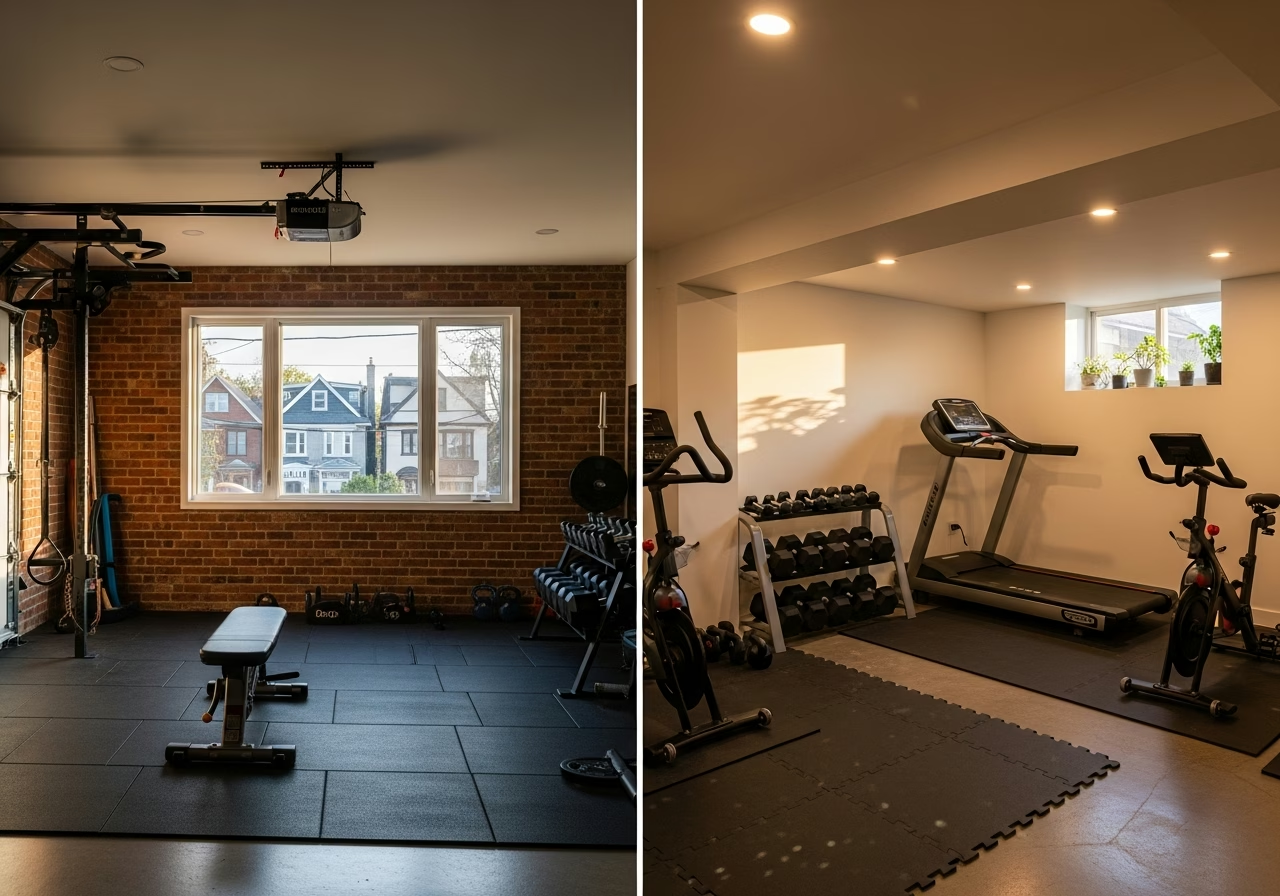
Basement
- Walk down stairs in slippers — workout in 60 seconds
- Year-round consistent comfort
- Quiet (well-engineered) so morning workouts don't wake the household
- Awkward for delivery of large equipment
- Sometimes claustrophobic feel
Garage
- 30-second walk through the house, key in hand
- Climate variable unless heavily invested in conditioning
- Better for early-morning (separated from sleeping family)
- Easier delivery
- More airy/spacious feel
- Smell carries (sweat lingers)
- Pest exposure (especially in detached)
For most 9-to-5 professional households, the basement wins on consistency. For shift workers or 5 AM lifters, garage can win on household-quiet.
Code Considerations
Basement Gym
- Building permit typically required (new circuits, framing)
- ESA permit always required for new circuits
- OBC compliance for moisture, vapor, fire ratings
- City of Toronto inspections
Garage Gym
- Building permit often required (new heating, insulation, possibly change of use)
- ESA always required
- Change of use consideration — if the garage is no longer used for vehicle parking, this can affect zoning and insurance
- Fire separation between attached garage and house must be maintained (no removing the firewall to create gym opening)
- Loss of parking — in dense neighbourhoods, parking minimums in zoning bylaws may make the conversion technically non-compliant
This last point matters more than people realize. Some Toronto neighbourhoods require off-street parking; converting a garage to a gym can trigger zoning issues.
For permit detail, see our Basement Home Gym Toronto 2026 Guide.
Insurance Considerations
Tell your home insurance carrier when you build either type of gym:
- Basement gym: typically no premium increase for moderate equipment; sauna or plunge may add small surcharge
- Garage gym: may trigger higher liability or change-of-use surcharge; loss of parking can affect coverage
We always advise clients to call their insurer at design stage.
What About a Hybrid Approach?
Some clients with both basement and garage capacity use:
- Basement for connected fitness (Tonal, Peloton, Mirror) where year-round climate matters
- Garage for free weights and dropping noise (deadlifts, heavy lifts)
Cost-effective if the garage already has basic conditioning. Less efficient than a single-location gym, but supports specific use cases.
Decision Framework
Answer these honestly:
- 1. Do you have 250+ sq ft of basement with 7'6"+ ceiling?
Yes → Continue.
- 2. Is the basement dry, accessible, and not already finished as something you'd lose?
Yes → Continue.
- 3. Will you use the gym year-round?
No (only seasonal) → Garage plausible without full conditioning.
- 4. Do you need to deadlift 405 lb+?
No → Either works.
- 5. Will you eventually add a sauna or cold plunge?
No → Either works.
- 6. Is parking critical in your neighbourhood?
No → Garage plausible.
Recommendation
For most 2026 Toronto homeowners with a usable basement (250+ sq ft, 7'6"+ ceiling, dry, not already living space), the basement is the clear choice. It's cheaper, more comfortable, more versatile, and better for resale.
For homeowners with inadequate basements but available garage space, garage conversion works — budget at least 30–50% more than the basement equivalent for climate envelope, and accept seasonal considerations.
For premium / wellness-suite ambitions, basement is the only realistic path.
For the broader buildout framework, see our Basement Home Gym Toronto 2026 Guide.
---
Trying to decide? RenoHouse assesses both spaces during consultation and gives an honest recommendation. Book a free assessment on our basement home gym buildout service page.
Sources & References
Authoritative sources cited in this guide:
- Ontario Building Code — OBC official text
- Toronto Building Permits — City permit portal
- Tarion Warranty — Ontario warranty regulator
- CSA Group Standards — Canadian standards