RenoHouse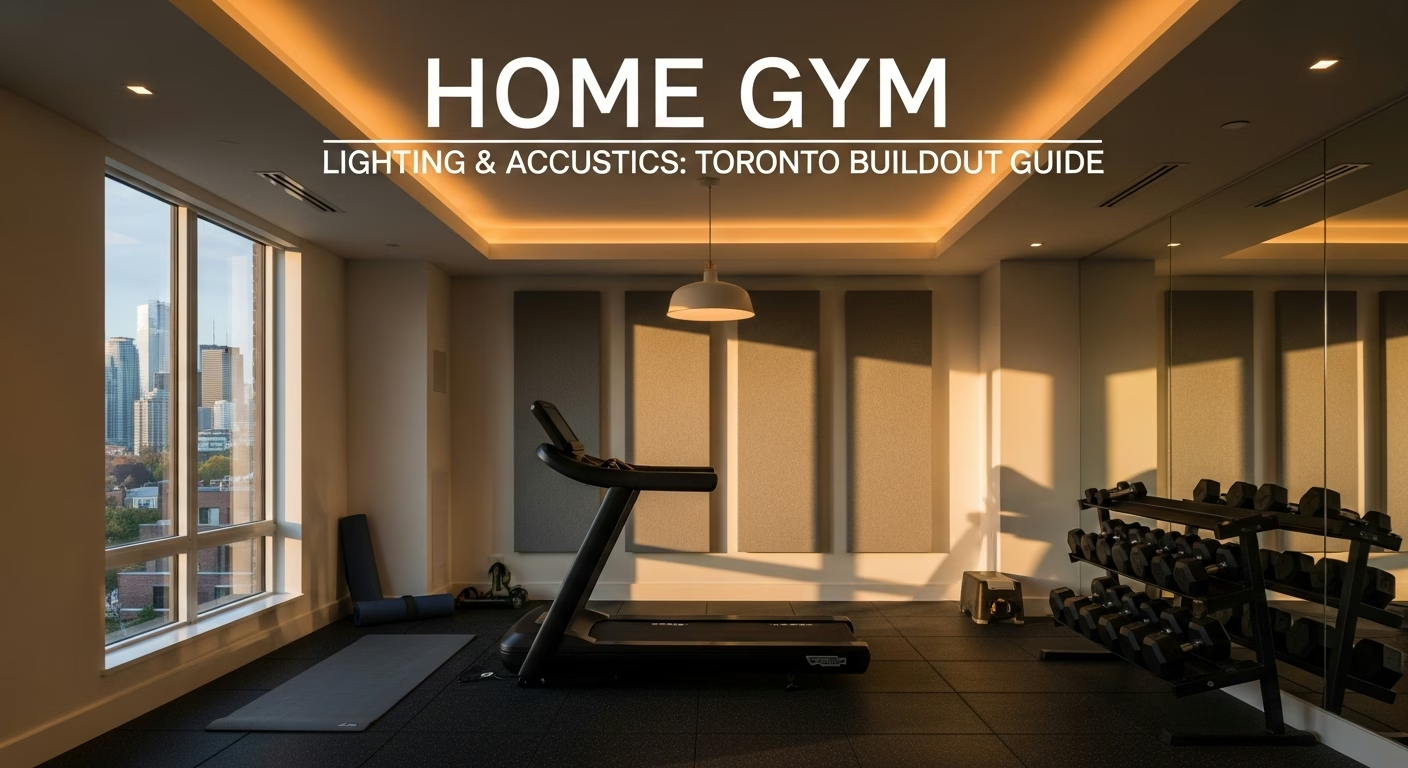

# Home Gym Lighting & Acoustics: Toronto Buildout Guide
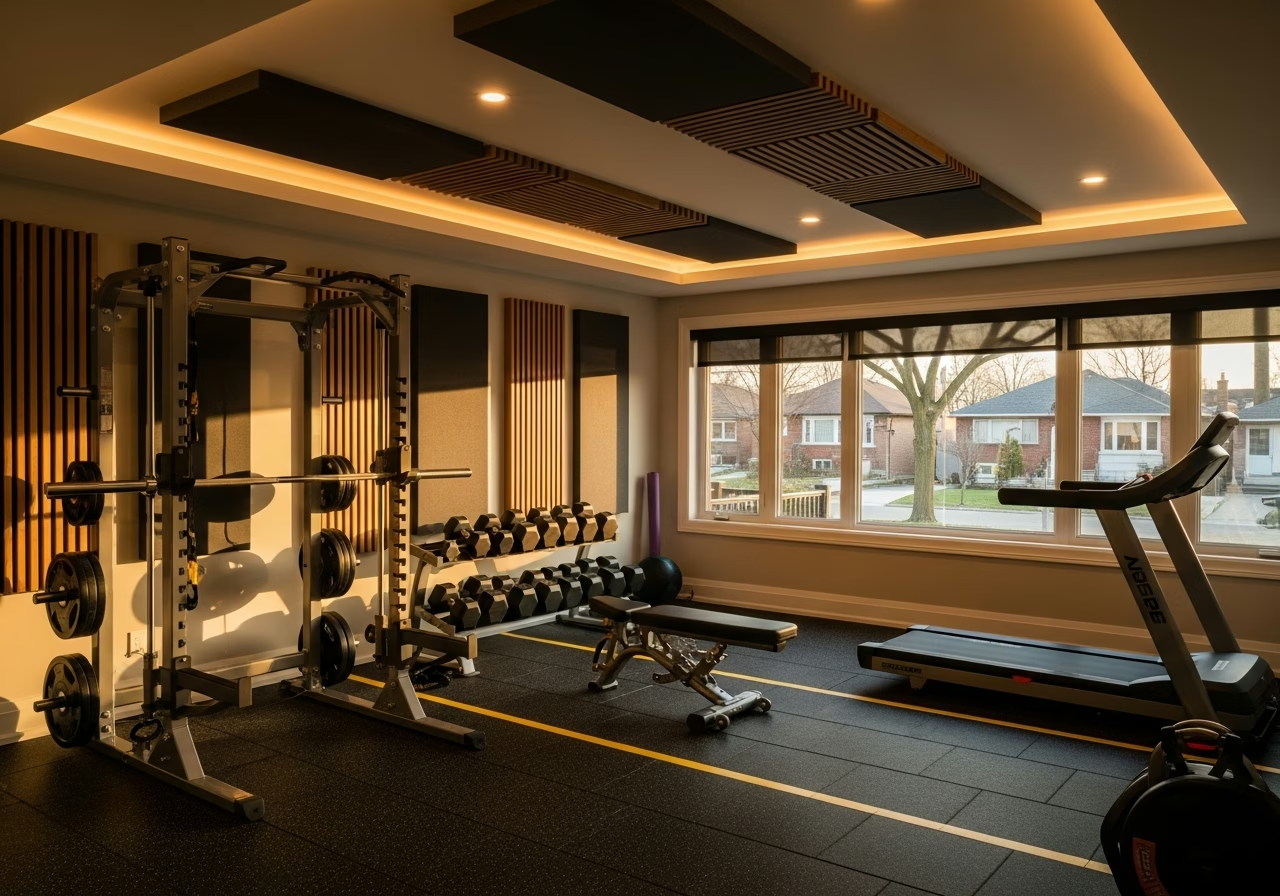
Quick answer. Lighting and acoustics are the two specs that most often get under-budgeted in home gym buildouts — and they directly determine whether the space is actually pleasant to use. Bad lighting (warm 2700K downlights left over from a basement reno, low CRI bulbs that flatten color, no dimmer) makes form coaching impossible and morning workouts ...Lighting and acoustics are the two specs that most often get under-budgeted in home gym buildouts — and they directly determine whether the space is actually pleasant to use. Bad lighting (warm 2700K downlights left over from a basement reno, low CRI bulbs that flatten color, no dimmer) makes form coaching impossible and morning workouts depressing. Bad acoustics (no dampening, ringing room) means dropped weights echo through the house and your spouse hates the gym. This guide explains the engineering behind both and what to spec for a 2026 Toronto buildout. For the broader buildout context, see our Basement Home Gym Toronto 2026 Guide.
Part 1: Lighting
What Color Temperature?
4000K cool white is the standard for gym lighting. NOT the warm 2700K–3000K used in living rooms.Why 4000K?
- Better alertness during morning workouts
- More accurate color rendering for video calls and class participation
- Matches commercial gym aesthetic
- Better contrast for form awareness
5000K–6500K (daylight) is sometimes spec'd in pure-performance gyms but reads "cold and clinical" in most home settings. Stick with 4000K.
What CRI?
CRI 90+ minimum. Better: CRI 95+.CRI (Color Rendering Index) measures how accurately a light source renders colors compared to natural sunlight. A bulb with CRI 70 (typical cheap LED) makes everything look slightly yellowed and flat. CRI 90+ produces accurate color — important for:
- Filming workouts (skin tones look correct)
- Class participation on video (you don't look sickly)
- Form awareness (muscle definition visible)
Cost difference: CRI 90+ LED is 20–40% more expensive than basic builder-grade. For a 12-fixture gym, the upgrade adds $200–$500. Worth it.
How Many Lumens?
Target: 40–60 lumens per square foot at gym surface.
For a 350 sq ft room:
- Total lumens needed: 14,000–21,000
- 12 × 1,200 lumen recessed downlights = 14,400 lumens (lower end)
- 16 × 1,200 lumen recessed downlights = 19,200 lumens (better)
For comparison, a typical living room targets 10–20 lumens/sq ft. A gym is 2–3× brighter.
Recessed vs Panel vs Track?
Recessed LED downlights (most common)- 4-inch or 6-inch
- 1,000–1,500 lumens each
- Dimmable (specify dimmable models with compatible dimmer)
- Cost: $50–$120 each installed
- 2 ft × 2 ft or 2 ft × 4 ft
- 4,000–6,000 lumens each
- Highly efficient, even light distribution
- Most "commercial gym" looking
- Cost: $200–$400 each installed
- Adjustable beams
- Easier to retrofit
- Less aesthetic in basements
- Cost: $300–$600 per track + $40–$80 per head
For most 2026 GTA home gyms we install 12–16 recessed LED downlights with 4000K CRI 90+ Philips, Soraa, or Halco lamps. Premium builds get LED panel troffers + accent lighting.
Dimming
Yes, always. Even if you think you'll always run full-bright, dim capability matters for:- Cool-down stretches at the end of session
- Yoga / mobility work
- Morning vs evening light preference
- Setting a mood for music-driven cardio (cycling, strike training)
Standard solution: 0–10V dimmable LED + Lutron Maestro or Caseta dimmer. Cost: ~$80–$200 for the dimmer + slight LED premium for dimmable models. Worth every penny.
Smart Lighting (Premium)
Lutron Caseta scene control:
- "Workout" preset — full bright
- "Cool down" preset — 50%, slight color shift to warmer
- "Yoga" preset — 30%, dimmable accent
- "Cleaning" preset — 100% with full task lighting
Cost: $1,500–$3,500 added for full smart-lighting integration.
For premium-tier gym buildouts this is standard. Detail in Home Gym Cost Toronto: $5K Basic vs $50K Premium.
Need professional home renovation?
Call RenoHouse at 289-212-2345 or get a free estimate today.
Get Free Estimate →Common Lighting Mistakes
- 1. Reusing 2700K basement-reno lighting — too warm, sleepy, flatters nothing
- 2. Single ceiling fixture — uneven distribution, harsh shadows
- 3. Cheap 70 CRI LED — washes out colors, makes everyone look ill
- 4. No dimmer — full bright is wrong for half the workouts
- 5. Mixing color temperatures — some 3000K + some 4000K = inconsistent
- 6. No accent light over mirror wall — face shadowed when looking at mirror
- 7. Forgetting task light at the rack or platform
Part 2: Acoustics
Three Problem Zones
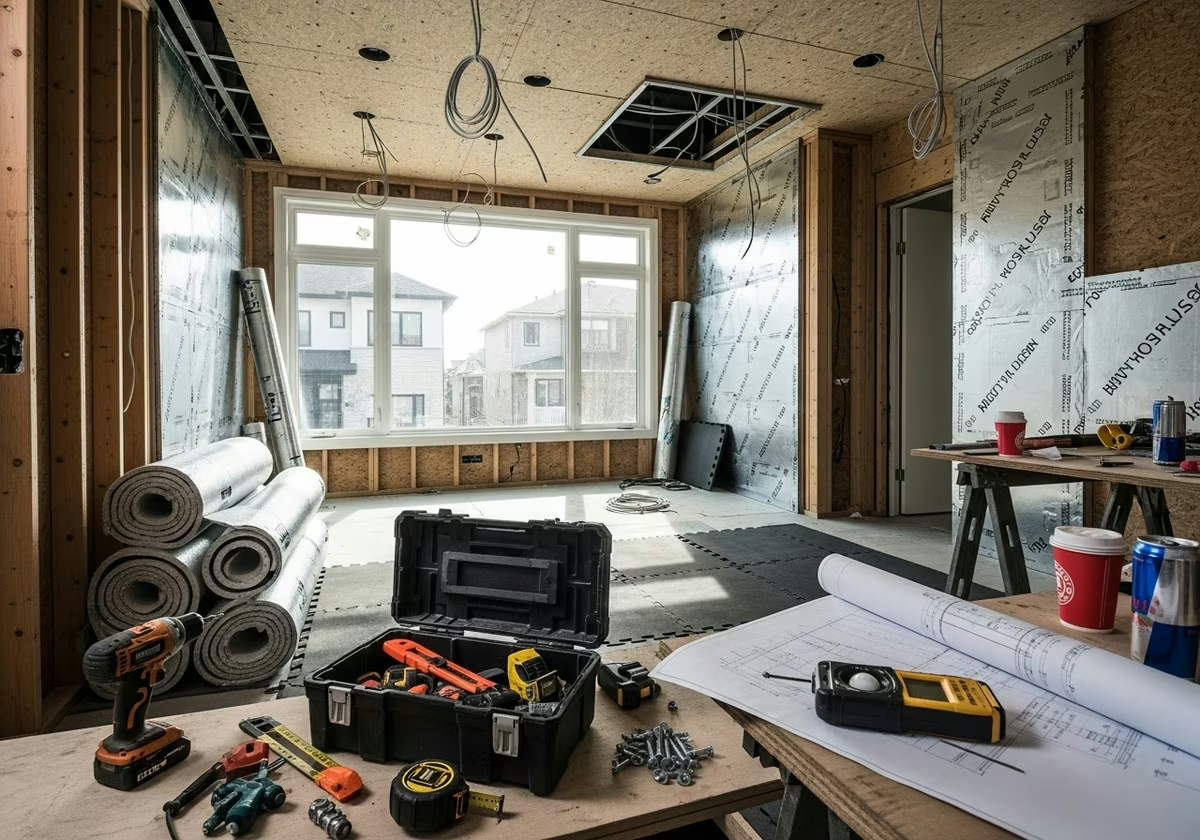
1. Impact noise — dropped weights, treadmill foot strikes, dropped barbells. The loudest type. Transmits through floor structure to upstairs. 2. Vibration — even non-impact equipment (treadmill at speed, rower) creates low-frequency vibration through framing. 3. Airborne noise — music, fans, your own grunting, video calls. Transmits through wall assemblies.STC Ratings
STC (Sound Transmission Class) rates how well an assembly blocks airborne sound. Higher = quieter.- STC 35: standard interior wall — speech audible, music intelligible
- STC 45: improved residential — speech faint, music audible
- STC 50: code minimum for multifamily separating walls — speech inaudible, music faint
- STC 55+: hotel-grade — most music inaudible
For a basement gym below a bedroom, target STC 50–55 in the ceiling assembly.
Ceiling Assembly Strategy
Standard residential basement ceiling (no treatment):
- Drywall on joists
- ~STC 35
- Roxul Safe'n'Sound in joist bays
- Resilient channel
- Single layer 5/8" drywall
- Cost: ~$3.50–$5.50 per sq ft
- Roxul Safe'n'Sound in joist bays
- Double resilient channel (clip-and-channel system like RSIC-1)
- Double layer 5/8" drywall with Green Glue between
- Cost: ~$8–$12 per sq ft
The biggest jump in performance comes from the resilient channel — decoupling the drywall from the joists. Without it, double-layer drywall barely improves performance because the assembly still vibrates as one.
Floor Assembly Strategy
Floor (the gym side, isolating impact going down/sideways through the slab and into walls):
- 12mm rubber roll over slab — minimal impact dampening (slab is mass, but vibration travels)
- 12mm rubber roll + 1/2" rubber underlay — significant improvement
- Decoupled deadlift platform with isolation pads — best for high-impact lifts
For Olympic-style deadlifts, we install:
- 8 ft × 6 ft × 3/4" plywood platform
- On 4 isolation pads (Auralex SubDude or similar) at corners
- 25mm rubber on top
- Cost: $1,200–$2,500
This decouples the deadlift impact from the slab and is dramatically quieter than dropping straight onto the floor.
Wall Assembly Strategy
For walls shared with another room (bedroom, living room):
- Roxul Safe'n'Sound in stud cavities
- Single layer 5/8" drywall
- ~STC 45
For higher isolation (premium builds):
- Roxul Safe'n'Sound
- Resilient channel
- Double 5/8" drywall with Green Glue
- ~STC 55
Treatment Within the Room (Ringing Reduction)
Even after isolation, gym rooms can have a "ringing" or "echoing" quality due to hard surfaces. Treatment options:
- Acoustic panels on 1–2 walls (1 inch thick fabric-wrapped fiberglass): $20–$50/sq ft
- Bass traps in corners (for music systems): $200–$400 each
- Carpet/area rug in non-workout zones: dampens reflections
- Acoustic ceiling tile in suspended grid: $4–$8/sq ft installed
For most home gyms we recommend modest panel treatment on 1 wall — enough to take the edge off the ring. Full studio-grade treatment is overkill for residential.
Common Acoustic Mistakes
- 1. No dampening at all — house argument city
- 2. Drywall direct to joists (no resilient channel) — sound transmits readily
- 3. Single layer drywall — barely improves over standard
- 4. No floor isolation under deadlift platform — slab vibrates through walls
- 5. Treadmill on naked rubber tile — vibration into framing
- 6. Loud HVAC — own gym noise adds to upstairs noise
- 7. No door seal — under-door gap leaks airborne sound
- 8. Hollow-core door — STC 18 (essentially zero); upgrade to solid-core or acoustic door (STC 30+)
Specific Quiet Targets by Adjacency
For a basement gym:
- Below a bedroom: target STC 55 ceiling assembly + isolation pad under deadlift platform
- Below a living room: STC 50 ceiling + standard floor
- Adjacent to bedroom (shared wall): STC 50 wall
- Adjacent to garage or unconditioned space: STC 35 minimum
We measure existing conditions at consultation and engineer the assembly to actual targets, not just "more drywall."
Door Selection
The weakest link in any room's acoustic isolation is usually the door.
- Standard hollow-core: STC 18 (essentially nothing)
- Solid-core wood: STC 27
- Acoustic door (specially built with seals): STC 35–45
- Glass partition / sliding glass: depends on glass spec
For a real acoustic seal on a basement gym we install solid-core door with full perimeter seal + automatic door bottom. ~$800–$1,400 installed (vs $300 for standard hollow-core).
Cost Summary
| Treatment Level | Floor | Walls | Ceiling | Total Cost (350 sqft) |
|---|---|---|---|---|
| None (just rubber floor) | basic | none | drywall | $2,500–$3,500 |
| Standard | rubber + underlay | Roxul + drywall | Roxul + RC + 5/8" | $5,500–$8,500 |
| Premium (STC 55+) | platform isolation | engineered wall | engineered ceiling | $9,500–$15,000 |
For the broader buildout cost framework, see Home Gym Cost Toronto: $5K Basic vs $50K Premium.
Closing: Test Before You Trust
Even with engineered specs, we always do a sound test before final handover:
- Drop a 45 lb plate from 1 ft on the deadlift platform
- Measure dB upstairs (typically 35–45 dB at the bedroom door)
- Run the treadmill at peak speed; measure
- Play music at gym levels; measure
If results aren't on target, we adjust before sign-off. Most home-gym contractors don't do this; the result is the homeowner discovering acoustic problems weeks after install.
For the full buildout framework, see our Basement Home Gym Toronto 2026 Guide.
---
Engineering your gym's lighting and acoustics? RenoHouse specs and installs both as part of every standard and premium buildout. Book a free assessment on our basement home gym buildout service page.
Sources & References
Authoritative sources cited in this guide:
- Ontario Building Code — OBC official text
- Toronto Building Permits — City permit portal
- Tarion Warranty — Ontario warranty regulator
- CSA Group Standards — Canadian standards
Continue Reading
- Basement Home Gym Toronto: Complete 2026 Cost & Build Guide
- Home Gym Stretch Ceiling in Toronto: Matte Anti-Glare and Acoustic Impact Reduction
- Home Gym Mistakes: 10 Common Buildout Failures
Related Services