RenoHouse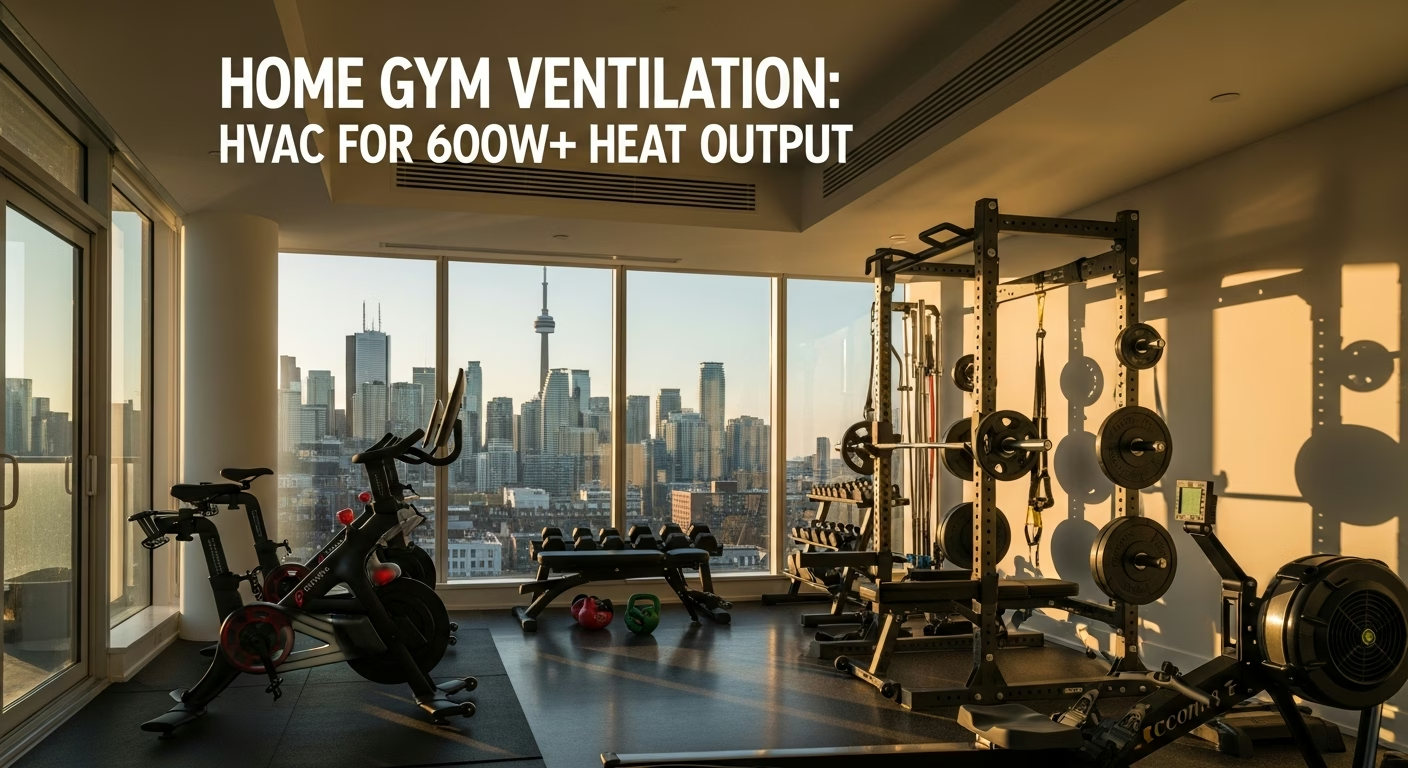

# Home Gym Ventilation: HVAC for 600W+ Heat Output
Quick answer. Ventilation is the single most under-budgeted aspect of home gym buildouts. A homeowner who saved $2,500 by skipping HVAC discovers a year later that the gym is unusable in summer (88°F + 70% humidity by 30 minutes into a workout) and spends $7,500 retrofitting a mini-split.Ventilation is the single most under-budgeted aspect of home gym buildouts. A homeowner who saved $2,500 by skipping HVAC discovers a year later that the gym is unusable in summer (88°F + 70% humidity by 30 minutes into a workout) and spends $7,500 retrofitting a mini-split. This guide explains the actual heat physics of home workouts, why basement gyms generate humidity quickly, and what HVAC strategies actually work for 2026 Toronto buildouts. For the broader buildout context, see our Basement Home Gym Toronto 2026 Guide.
The Physics: How Much Heat Does a Workout Generate?
Resting metabolic rate: ~100W per person (the heat from sitting on a couch).
Moderate cardio: ~600W per person.
Intense cardio (Peloton class, hard treadmill run): 800–900W per person.
Heavy strength training: 400–600W per person (intermittent, not continuous).
In a sealed 350 sq ft basement room with a single HVAC return:
- Standard residential HVAC delivers ~50 cfm to the basement zone
- Workout adds ~3,000 BTU/hour of heat
- Within 30 minutes: room temperature rises 5–8°F
- Humidity climbs from 45% to 65%+ (sweat evaporation)
- Air feels stale (CO2 climbs from ~400 ppm to 1,500–2,000 ppm)
After 60 minutes of consistent workout, the room is genuinely uncomfortable.
What "Unconditioned Basement Gym" Actually Feels Like
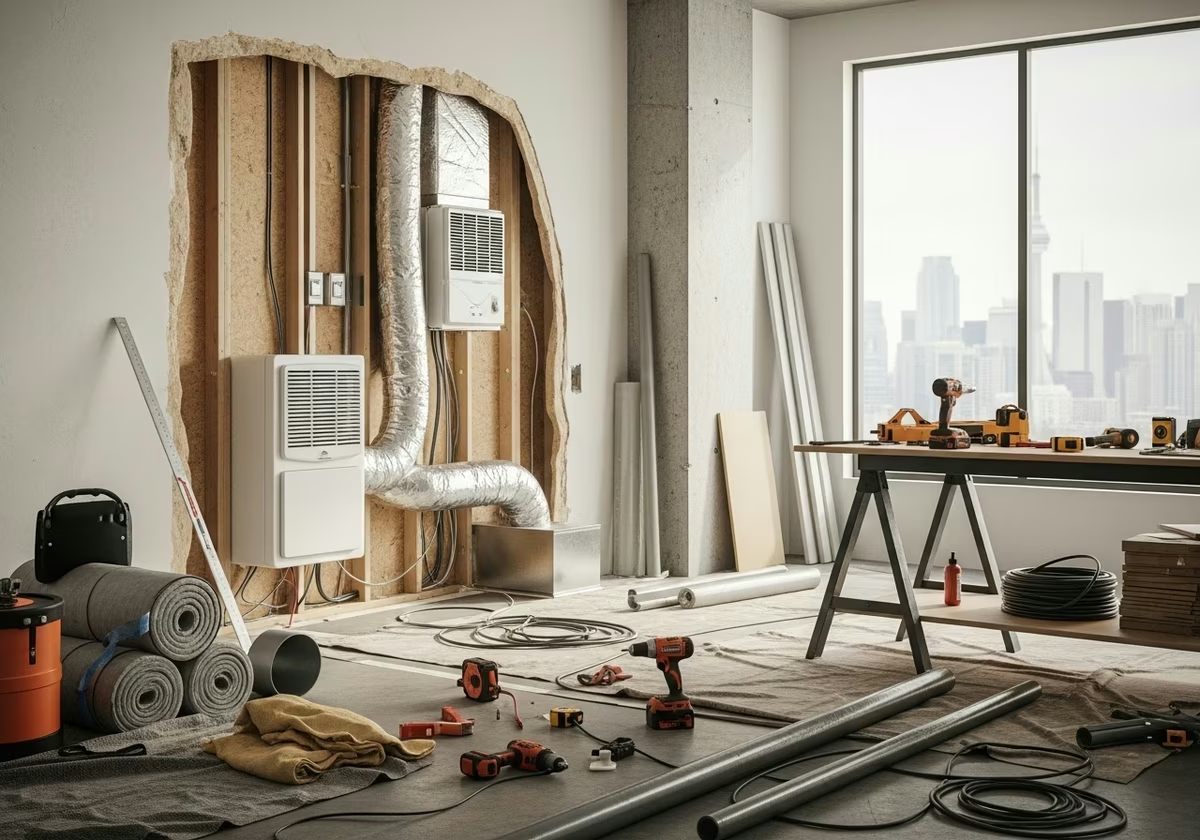
Real client report from 2024 (pre-RenoHouse retrofit): "I built a gym in my basement, just rubber flooring and a mirror. In summer it was so bad I'd walk out 20 minutes into a workout. In winter it was fine but I'd come upstairs and the kitchen smelled like a locker room because the moisture had nowhere to go."
This is the standard outcome of skipping HVAC in a basement gym buildout.
Three Tier Solutions
Tier 1: Standard ($1,500–$3,500) — Supplementary Trunk + Exhaust Fan
For most standard-tier buildouts, this is the right answer.
What it includes:- New supply duct from existing HVAC trunk into the gym (4–6 inch flex)
- New return into the gym (often through grille in adjacent corridor)
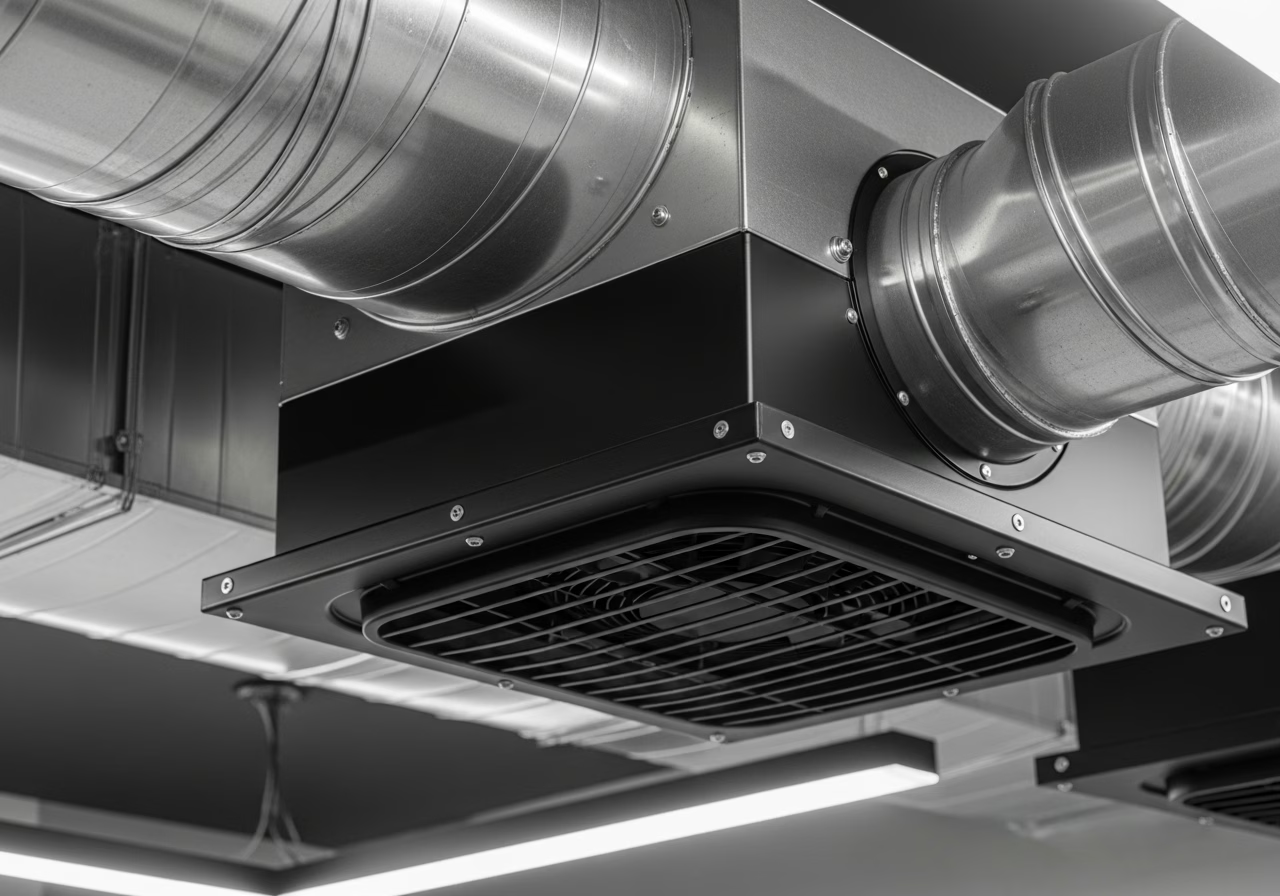
- Inline exhaust fan ducted to exterior (200–400 cfm)
- Manual or timer control for exhaust fan
- Adds 50–100 cfm of conditioned air during workouts
- Removes humid, stale air via exhaust
- Keeps temperature within ±2°F of rest of basement
- Manages humidity adequately for 30–60 minute sessions
- Provide zone-specific climate control
- Handle multi-hour or multi-user sessions in summer
- Solve cooling problems if basement HVAC delivery is already weak
Tier 2: Premium ($4,500–$8,500) — Ductless Mini-Split
For premium buildouts, especially in homes with weak basement HVAC.
What it includes:- 12,000–18,000 BTU ductless mini-split (e.g., Mitsubishi MSZ-FS, LG LSU)
- Refrigerant lines from outdoor condenser to indoor head unit
- 240V circuit for the unit
- Wi-Fi smart thermostat
- Provides dedicated heating AND cooling for the gym
- Handles 600W+ body heat without strain
- Quiet operation (most premium models <40 dB at full speed)
- Independent zone control (don't have to cool the whole basement to cool the gym)
- Year-round comfort regardless of how much you sweat
- Workout adherence dramatically improves (no "too hot" excuses)
- Smart-home integration (pre-cool the gym 15 min before workout starts)
- Fastest ROI in workout-frequency improvement
For premium-tier wellness suites we routinely combine mini-split + HRV/ERV + exhaust fan for full air quality control.
Tier 3: Wellness Suite ($6,500–$12,500) — HRV/ERV + Mini-Split + Exhaust
For wellness suites combining gym + sauna + plunge.
What it includes:- HRV (heat recovery ventilator) or ERV (energy recovery ventilator) for the suite
- Mini-split for cooling
- Exhaust fan for sauna routing
- Dehumidifier for plunge area
- Smart controls integrating all systems
- Continuous fresh air exchange (200–400 cfm) without thermal loss
- Removes humidity from sauna sessions
- Cools the gym independently
- Maintains air quality across the whole suite
- The combined sauna + workout + plunge generates more humidity than any single source
- Without proper HRV/ERV, the suite humidity loads the entire basement
- Simple supplementary HVAC isn't enough for a multi-zone wellness suite
Detail in Home Gym + Sauna + Cold Plunge: Ultimate Wellness Suite.
Mini-Split Sizing
For Toronto basements, rough sizing rule:
Need professional home renovation?
Call RenoHouse at 289-212-2345 or get a free estimate today.
Get Free Estimate →- 100 sq ft gym: 8,000 BTU minimum
- 200 sq ft gym: 12,000 BTU
- 300 sq ft gym: 12,000–15,000 BTU
- 400 sq ft gym: 15,000–18,000 BTU
- 500+ sq ft: 18,000+ BTU or multi-head system
Up-size by 25% if the gym has:
- High ceiling (9'+)
- Multiple users typical
- Significant cardio equipment use
- Above-grade exposure (uninsulated walls)
Brands we install in 2026:
- Mitsubishi MSZ-FS — premium, quietest, best efficiency. Most luxury builds.
- LG LSU — solid mid-tier.
- Daikin — reliable, slightly less efficient than Mitsubishi, often better lead times.
- Senville — budget option, fine for basic builds.
Exhaust Fan Specs
For a 200–400 sq ft gym, target 0.5–1.0 air changes per hour during use:
- 200 sq ft × 8 ft ceiling = 1,600 cu ft
- 0.5 ACH = 800 cu ft / hour = 13 cfm
- 1.0 ACH = 1,600 cu ft / hour = 27 cfm
In practice we install 150–300 cfm exhaust fans because:
- Provides margin for higher-intensity sessions
- Removes humidity faster
- Provides noticeable air movement (perceived freshness)
- Quieter at low speeds
Models we use: Panasonic WhisperGreen Select (variable speed), Broan AE110, Fantech FG series for premium installs.
Ducting Considerations
- Exhaust into a soffit (just relocates the moisture into joist bays)
- Exhaust into adjacent unfinished basement (loads moisture there)
- Exhaust into laundry room (compounds humidity)
- "Exhaust" that's actually just an open vent (no fan, doesn't move air)
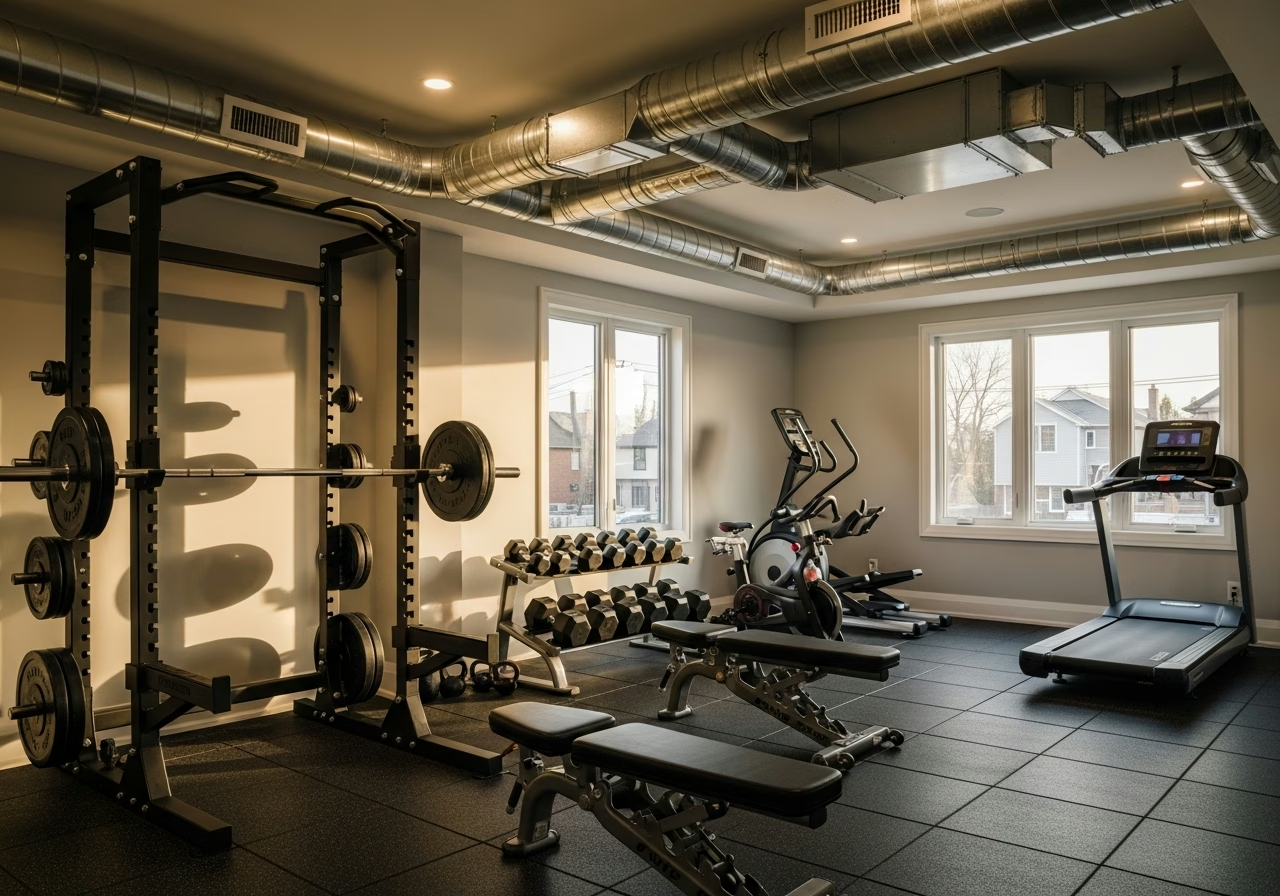
Proper exhaust:
- 4–6 inch insulated duct (insulated to prevent condensation in cold months)
- Routed through exterior wall or up through roof
- Backdraft damper at exterior
- Fan at duct termination or inline with timer
Humidity Management
In Toronto's humid summers, basement humidity is a constant battle. Workout adds significantly to it.
Strategies:
- Dehumidifier in the basement (not the gym specifically — covers the whole basement zone): $400–$1,200
- HRV/ERV for active fresh air exchange (premium tier): $3,500–$6,500
- Vapor barrier on basement walls (controls infiltration): part of standard buildout
- Floor moisture barrier (poly under flooring): standard
Target: 45–55% relative humidity in the gym, year-round. Below 40% feels dry; above 60% feels muggy and breeds mold.
Carbon Dioxide (CO2) Buildup
Less commonly considered, but real: a person at rest exhales ~12 liters of CO2 per hour. During hard cardio, this can climb to 80+ liters/hour.
In a sealed 200 sq ft gym, CO2 climbs from ambient (400 ppm) to 1,500+ ppm within an hour. At 1,500 ppm, alertness measurably decreases — you'll feel "off" without being able to explain why.
Solution: any of the ventilation tiers above moves enough air to keep CO2 below 1,000 ppm. Don't skip ventilation.
Heating Considerations
Toronto basements are typically 60–65°F in winter — borderline cold to start a workout. Solutions:
- Existing HVAC supply is usually adequate for moderate heating (you warm up fast during workout)
- Mini-split heat pump provides excellent supplementary heat down to -25°C
- Electric baseboard is cheap to add but expensive to operate ($200–$400 added per linear foot of room)
- Radiant floor heating is luxurious but rarely worth the install cost ($15–$25/sq ft)
For most builds, mini-split or supplementary HVAC handles heating adequately.
What About Ceiling Fans?
Ceiling fans in gym rooms: yes, useful, especially in tier 1 (no mini-split) builds.
Specs:
- 52" diameter for 100–200 sq ft
- 56–60" for 200–350 sq ft
- DC motor (more efficient, quieter)
- Reversible (summer down for cooling, winter up for circulation)
- Smart control (Lutron-compatible)
Cost: $300–$700 installed.
Place over the workout zone (not the equipment storage) so airflow hits you during workouts.
Real Test: How to Verify Adequate HVAC
After install, we test under workout simulation:
- Run treadmill at 6 mph for 20 minutes
- Measure temperature at start and end
- Measure humidity
- Listen to fan noise (should not interfere with conversation or content)
Pass criteria:
- Temperature rise <3°F
- Humidity rise <10%
- HVAC system quieter than ambient music
If we don't pass, we adjust before sign-off. Most contractors don't do this verification.
Common HVAC Mistakes
- 1. No HVAC plan at all — gym becomes seasonal
- 2. Single supply, no return — pressurizes the room, no air movement
- 3. Exhaust fan into another part of the basement — moves moisture, doesn't remove it
- 4. Under-sized mini-split — runs constantly, never reaches set point
- 5. Mini-split installed without insulating the basement first — fights the building envelope
- 6. No backdraft damper on exhaust — winter cold air infiltrates
- 7. No timer on exhaust fan — homeowner forgets to turn it off, or doesn't run it during workout
- 8. No dehumidifier in summer-humid basement — compounds workout humidity
For full mistake catalog, see Home Gym Mistakes: 10 Common Buildout Failures.
Cost Summary
| HVAC Tier | Description | Cost |
|---|---|---|
| Bare minimum | High-velocity floor fan only | $200–$400 |
| Standard | Supplementary supply/return + exhaust fan | $1,500–$3,500 |
| Premium | Mini-split (12K BTU) + exhaust fan | $4,500–$7,500 |
| Wellness suite | Mini-split + HRV/ERV + exhaust + dehumidifier | $7,500–$13,000 |
Recommendation by Buildout Tier
- Basic ($12–20K): Standard HVAC (supplementary supply + exhaust fan)
- Standard ($20–40K): Standard HVAC; consider mini-split if budget allows
- Premium ($40–60K): Mini-split with smart thermostat
- Wellness suite ($60–120K): Full HRV/ERV + mini-split
For the broader buildout framework, see our Basement Home Gym Toronto 2026 Guide.
---
Engineering your gym's HVAC? RenoHouse coordinates HVAC, mini-split install, and ventilation as a single integrated scope. Book a free assessment on our basement home gym buildout service page.
Sources & References
Authoritative sources cited in this guide:
- Ontario Building Code — OBC official text
- Toronto Building Permits — City permit portal
- Tarion Warranty — Ontario warranty regulator
- CSA Group Standards — Canadian standards
Continue Reading
- Basement Home Gym Toronto: Complete 2026 Cost & Build Guide
- Home Gym Cost Toronto: $5K Basic vs $50K Premium
- How to Build a Basement Home Gym: 7-Step Toronto Guide