RenoHouse

# Aging-in-Place Renovation Toronto: Complete 2026 Guide
Quick answer. More than 90% of Canadians over 65 say they want to remain in their own home as they age, and a growing share of Toronto homeowners are renovating with that goal in mind well before retirement. In 2026, a thoughtful aging-in-place renovation in the GTA ranges from **$3,500 for a single barrier-free bathroom upgrade with grab bars and a cu...More than 90% of Canadians over 65 say they want to remain in their own home as they age, and a growing share of Toronto homeowners are renovating with that goal in mind well before retirement. In 2026, a thoughtful aging-in-place renovation in the GTA ranges from $3,500 for a single barrier-free bathroom upgrade with grab bars and a curbless shower threshold to $95,000+ for a whole-home accessibility retrofit including a stair lift, widened doorways, accessible kitchen, and main-floor bedroom conversion. The work is technical, but it is also deeply personal — done well, it preserves independence, dignity, and the daily routines that make a house feel like home.
This is the RenoHouse pillar guide for aging-in-place and accessibility renovations in Toronto for 2026. We cover realistic CAD pricing for every common project, Ontario Building Code 3.8 barrier-free standards, ANSI A117.1 reference dimensions, grants and tax credits available to Ontario homeowners, design priorities by room, brand recommendations, and the mistakes that turn a well-intentioned project into a costly redo. If you are starting with a single room, see Barrier-Free Bathroom Renovation Toronto. For costs only, see Accessibility Renovation Cost Toronto.
Who This Guide Is For
Aging-in-place renovations in Toronto are commissioned by three audiences, and the design priorities differ for each:
- Homeowners aged 55-70 planning ahead. Often empty-nesters in Forest Hill, Lawrence Park, or Don Mills who want to stay in their family home for the next 20-30 years. Priorities: discrete design, premium finishes, single-level living, futureproofed bathroom and kitchen.
- Adult children renovating for an aging parent. Often a multigenerational household or a parent moving into a basement suite or main-floor addition. Priorities: rapid timeline, safety, dignity, often grant-funded.
- Recent diagnosis or post-hospital discharge. Someone returning home after a stroke, hip replacement, or new mobility device. Priorities: speed (often 2-4 weeks), code-compliant safety, occupational therapist coordination.
Each scenario routes through the same Ontario Building Code (OBC) standards and the same product catalogue, but the order of operations and budget allocation looks different. This guide covers all three.
Ontario Building Code 3.8 and ANSI A117.1: The Standards That Matter
Toronto accessibility renovations reference two documents:
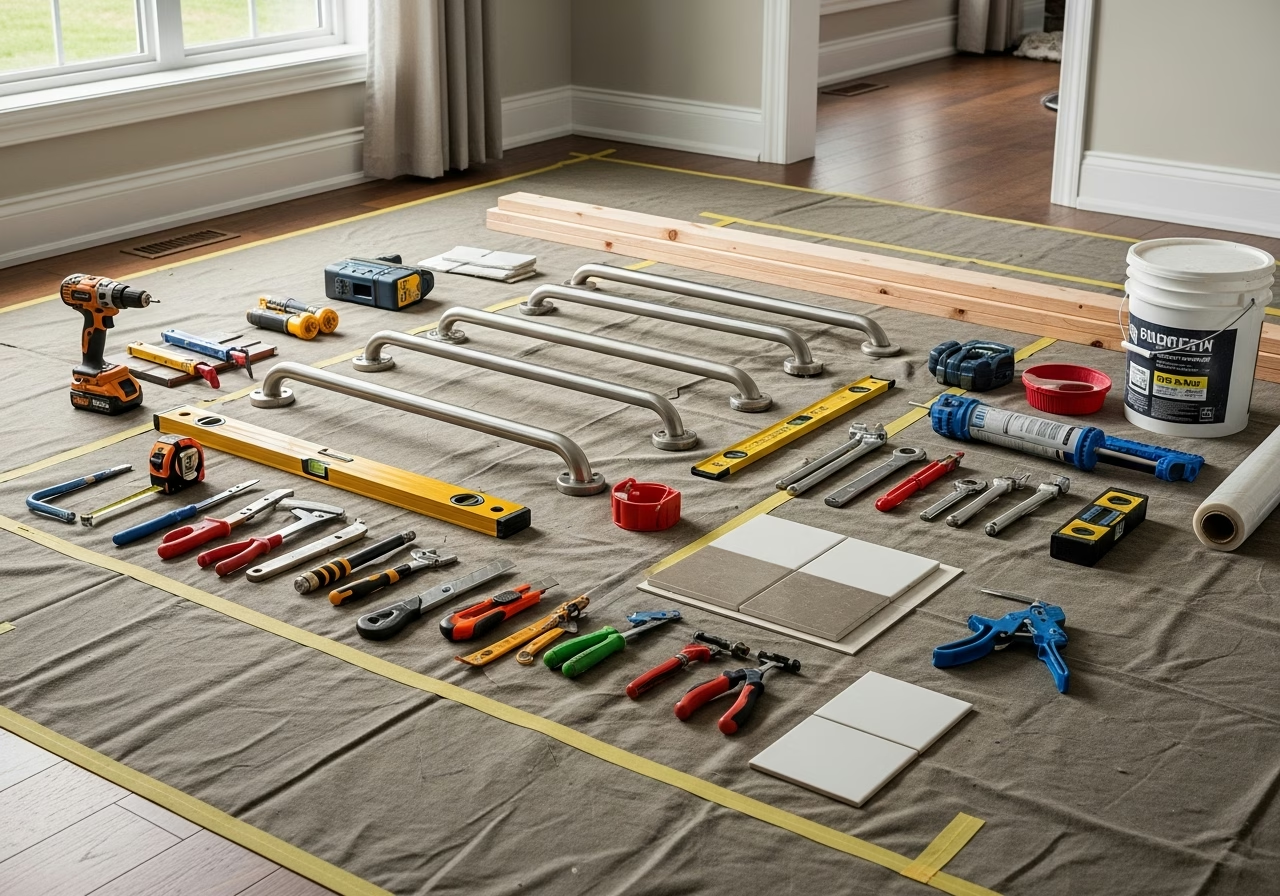
- OBC Section 3.8 (Barrier-Free Design) governs new construction and major renovations of public and multi-unit buildings. It is not strictly required for single-family homes, but Toronto contractors use it as the design baseline because it is well-tested and enforceable.
- ANSI A117.1 (Accessible and Usable Buildings and Facilities) is the U.S. standard widely referenced in Canada for residential accessibility. It provides specific dimensions for clearances, reach ranges, and grab-bar placement that OBC 3.8 does not always specify.
Key dimensions every Toronto homeowner should know:
- Clear doorway width: 32" minimum, 34"-36" preferred. Standard interior doors are 30" rough opening with 28" clear when open. A 32" door is the minimum for a wheelchair, and 34"-36" is comfortable.
- Hallway width: 36" minimum, 42"-48" preferred. Most Toronto hallways are 36"-40", which works for most mobility devices but is tight for a 90-degree turn.
- Bathroom clear floor space: 60" turning circle for full wheelchair access, or 30"x48" clear floor space at each fixture for ambulatory and walker users.
- Grab bar placement: 33"-36" above finished floor, anchored to studs or solid blocking with 250 lb pull-out capacity minimum.
- Threshold height: 1/2" maximum, with 1/4" preferred. Curbless shower thresholds are 0".
- Counter height: 32"-34" preferred for seated use, vs. standard 36". Adjustable-height counters are a premium option.
- Reach range: 15"-48" above finished floor for switches, outlets, and storage. Standard switches at 48" and outlets at 15"-18" are accessible.
For older Toronto homes (pre-1960 in the Annex, Cabbagetown, Riverdale, Leslieville, the Beaches), most existing dimensions fall short of these targets. A barrier-free retrofit in these homes typically requires structural work — wider door frames, removed walls, or a rear addition.
The Eight Most Common Aging-in-Place Projects in Toronto
The following projects make up about 90% of accessibility work RenoHouse sees in the GTA:
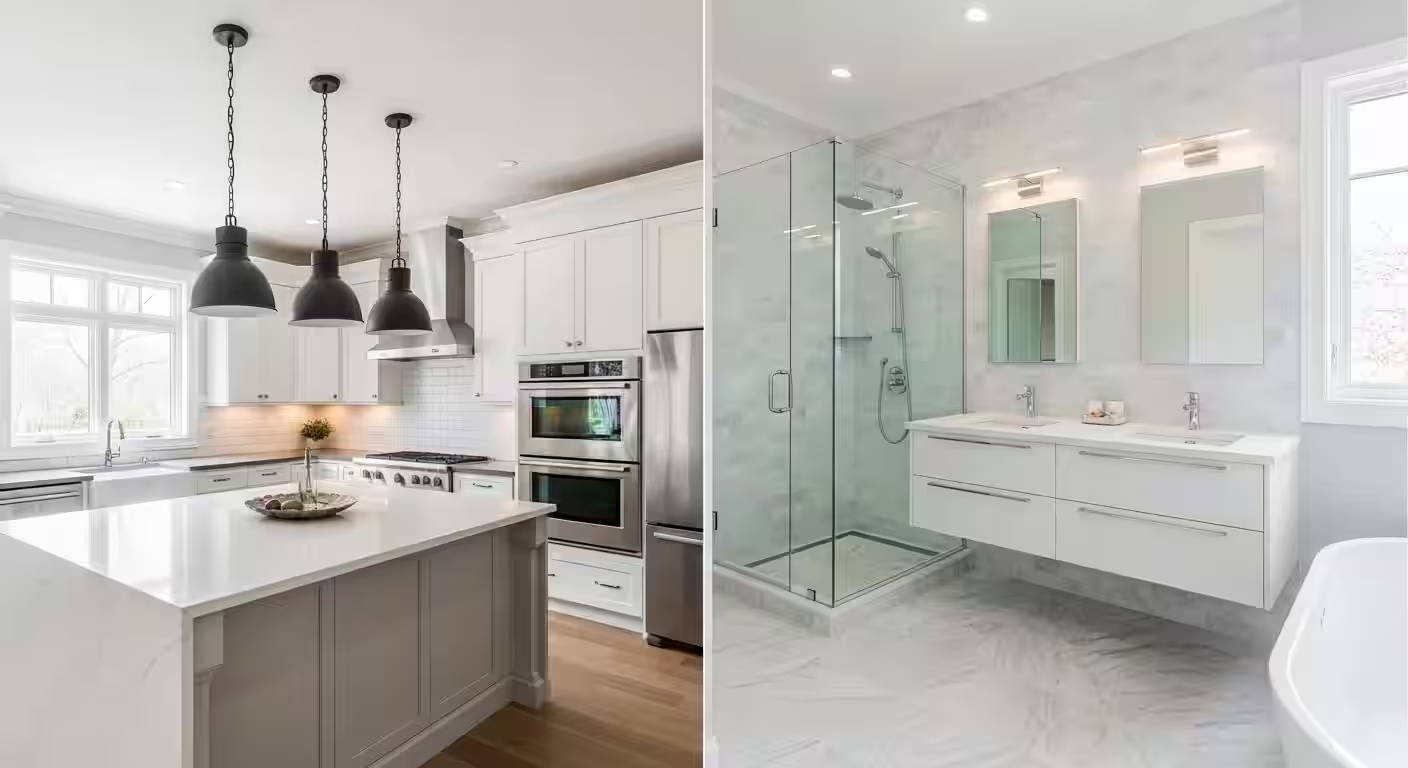
- 1. Barrier-free bathroom on main floor — $14,000-$32,000. Curbless shower, grab bars, comfort-height toilet, accessible vanity. See Barrier-Free Bathroom Renovation Toronto.
- 2. Stair lift installation — $3,500-$15,000. Straight or curved rail. See Stair Lift Installation Toronto Cost.
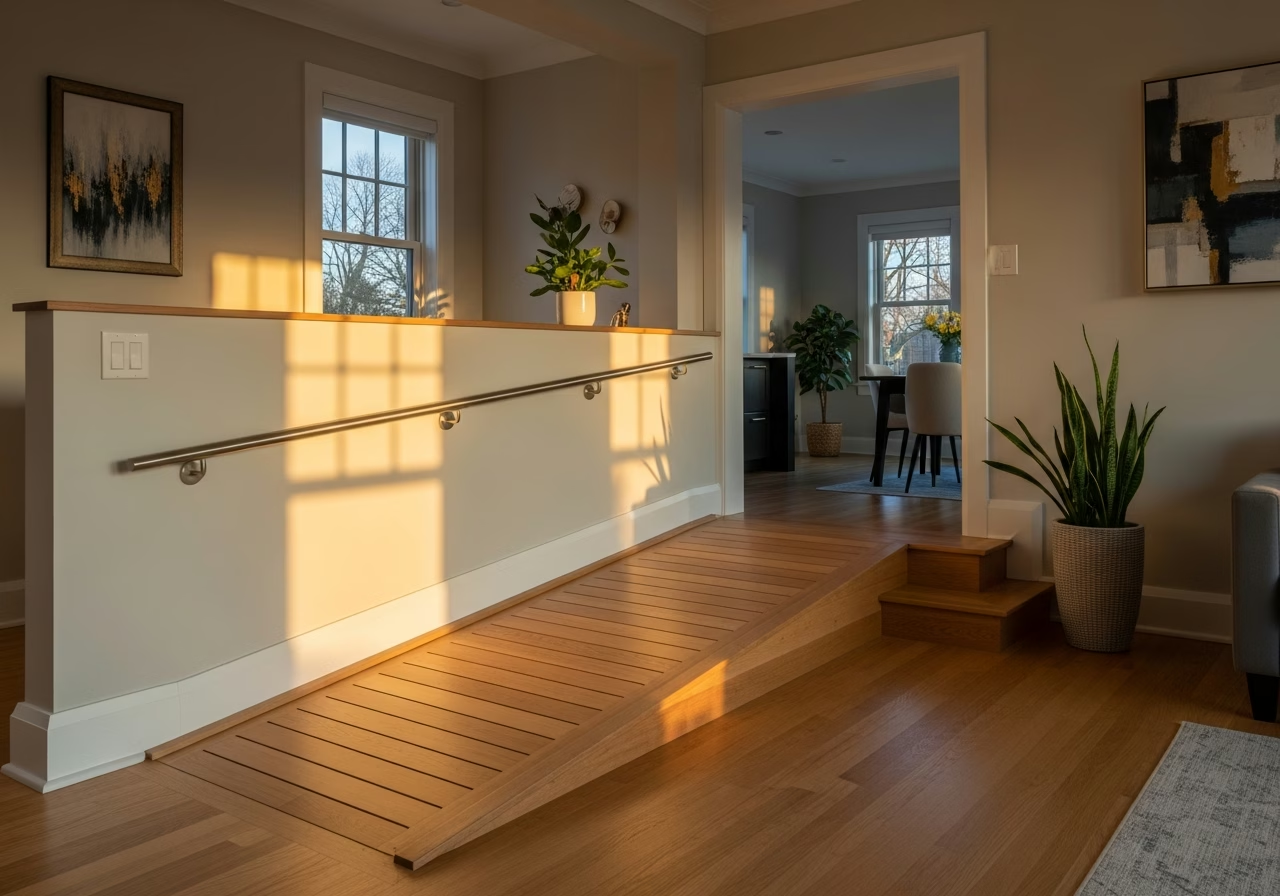
- 3. Wheelchair ramp at entry — $1,800-$12,000. Modular aluminum or built wood. See Wheelchair Ramp Installation Toronto.
- 4. Doorway widening (per door) — $850-$2,400. Per door, including reframing and trim. See Wider Doorways Renovation Toronto.
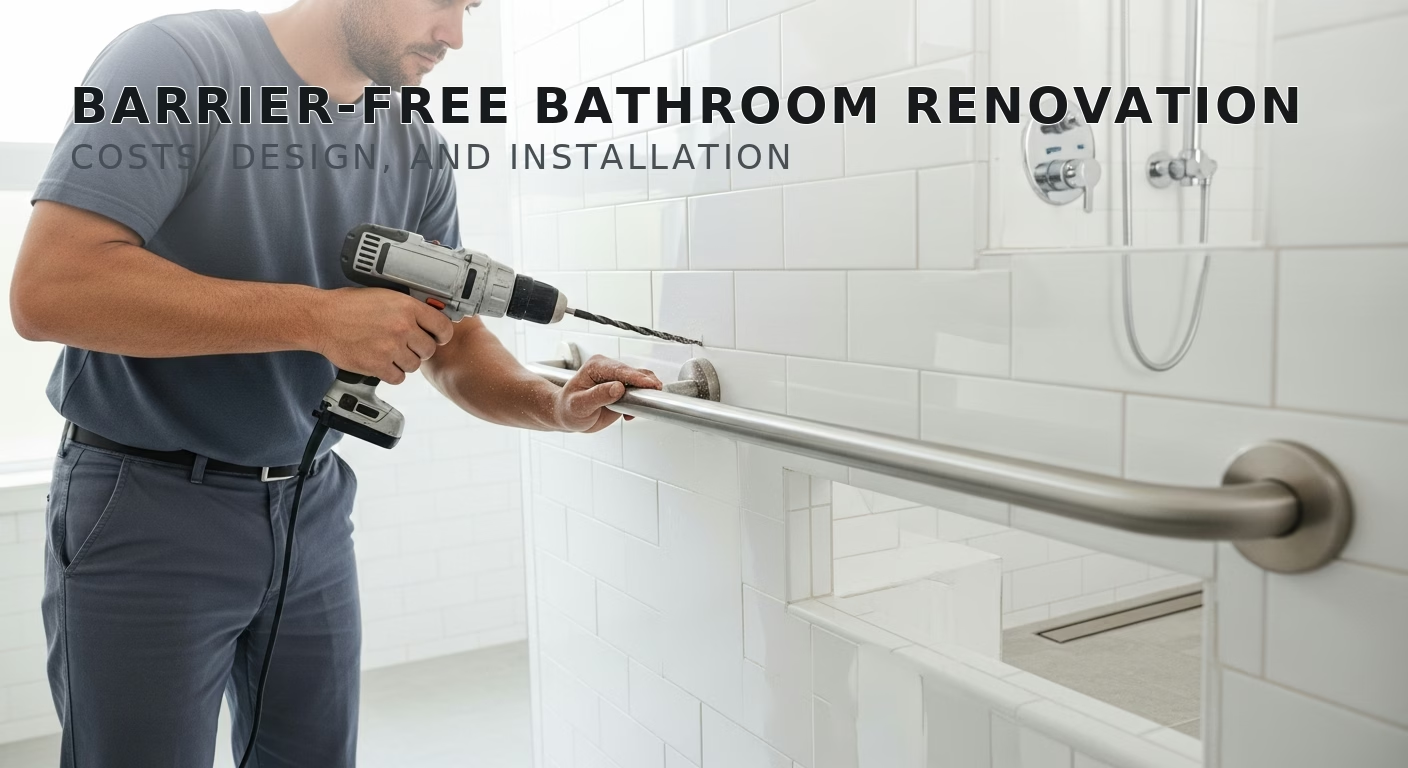
- 5. Grab bar installation — $180-$450 per bar installed. Bathroom grouping. See Grab Bar Installation Toronto Bathroom.
- 6. Slip-resistant flooring — $8-$22/sqft. Replace hardwood or tile in high-risk zones. See Slip-Resistant Flooring Seniors Toronto.
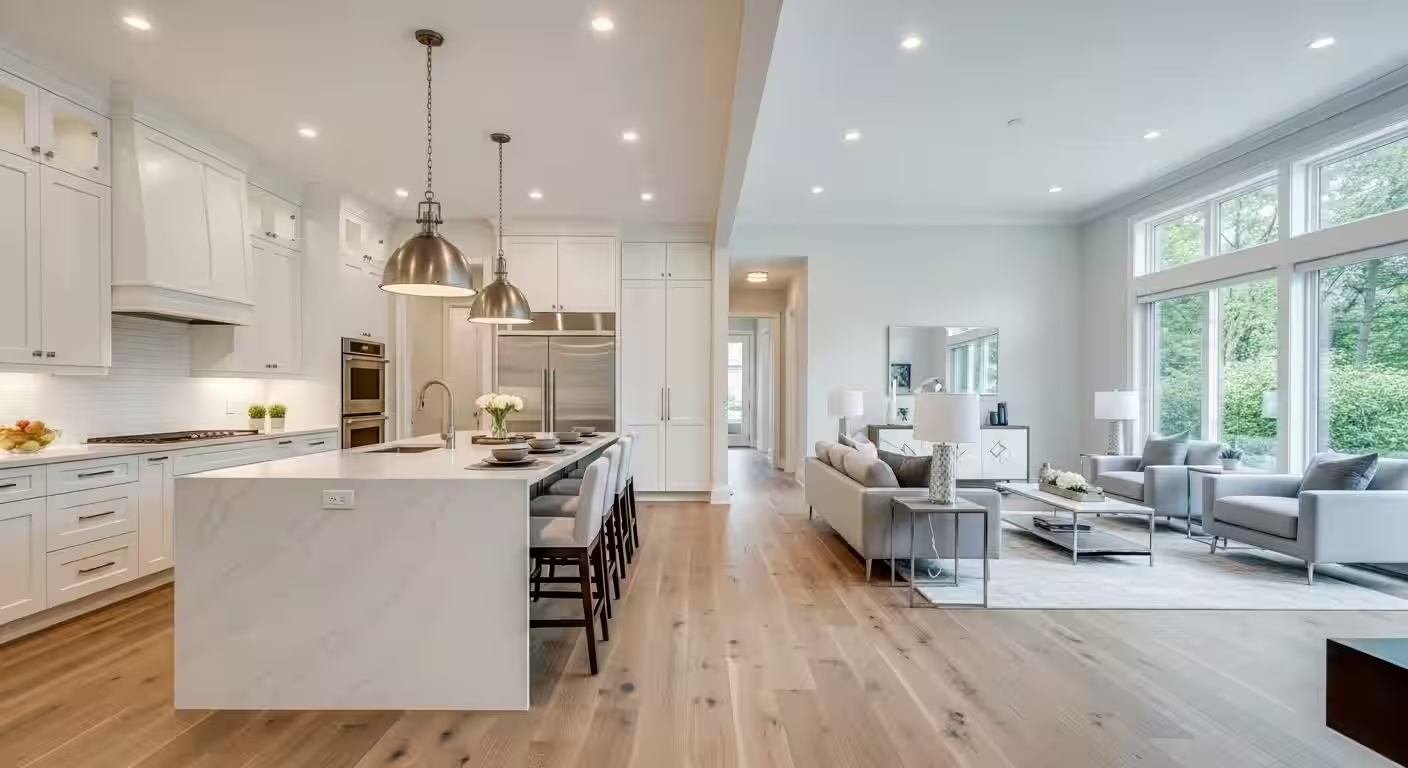
- 7. Accessible kitchen — $28,000-$75,000. Lower counters, pull-out drawers, knee space. See Aging-in-Place Kitchen Design Toronto.
- 8. Main-floor bedroom conversion — $12,000-$45,000. Convert dining or office to bedroom with ensuite.
We cover each in depth in dedicated guides. The numbers above are 2026 GTA averages including labour, materials, permits, and HST.
Curbless (Roll-In) Shower: The Single Most Important Bathroom Detail
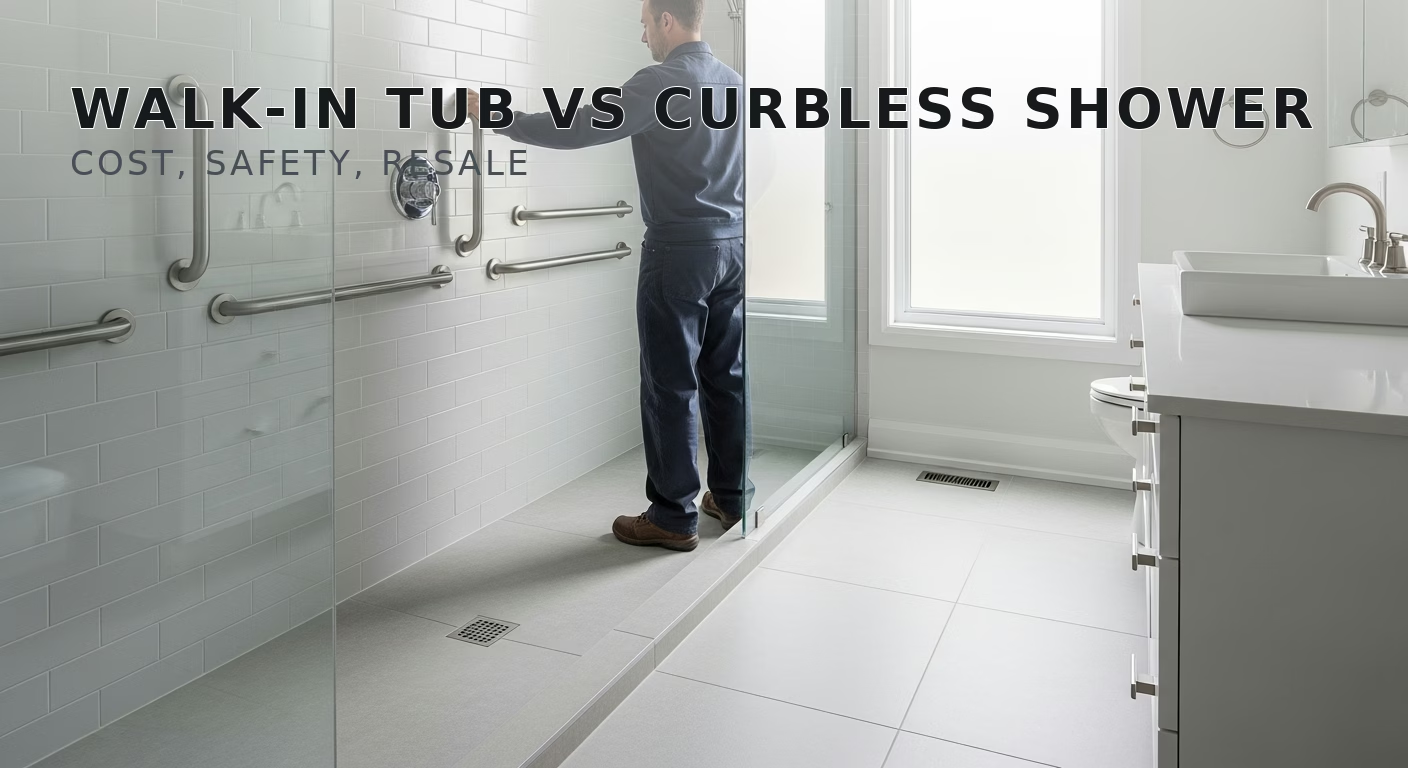
If a Toronto homeowner can only afford one accessibility upgrade, the curbless shower is the highest-value choice. Bathrooms are where most senior falls happen in Canadian homes — Statistics Canada and the Public Health Agency of Canada report that bathroom falls account for roughly 25% of all senior fall injuries. A curbless shower eliminates the lip-step that causes these falls and accommodates a shower seat or wheelchair.
Specifications for a Toronto curbless shower:
Need professional home renovation?
Call RenoHouse at 289-212-2345 or get a free estimate today.
Get Free Estimate →- Linear drain along one wall, typically 36"-60" wide. Brands: Schluter Kerdi-Line, Infinity Drain, Quick Drain.
- Slope: 1:48 (1/4" per foot) toward drain, reverse-slope where shower meets bathroom floor.
- Waterproofing: Schluter Kerdi or Wedi panels, fully sealed to subfloor.
- Floor: 1"x1" or 2"x2" mosaic tile for grip; large-format tile fails the slip-resistance standard.
- Shower seat: Bestbath or Kohler Belay folding seat, anchored to studs at 17"-19" AFF.
- Grab bars: One vertical at entry, one horizontal along long wall, 33"-36" AFF.
- Hand shower on slide bar, 24"-30" travel range.
- Curb: zero, with a 1/2" maximum lip optional for water containment.
Existing Toronto bathrooms (especially pre-war second-floor bathrooms) often have a 4"-6" subfloor drop in the shower area to accommodate the trap. Converting to curbless requires either dropping the entire bathroom subfloor (major work) or building up the bathroom floor outside the shower (cleaner). A skilled Toronto bathroom contractor budgets 3-4 days of additional labour for this transition.
Stair Lifts vs. Through-Floor Lifts vs. Bedroom Relocation
Toronto homes are typically 2-3 storeys with the primary bedroom on the second floor. When stairs become a barrier, three solutions exist:
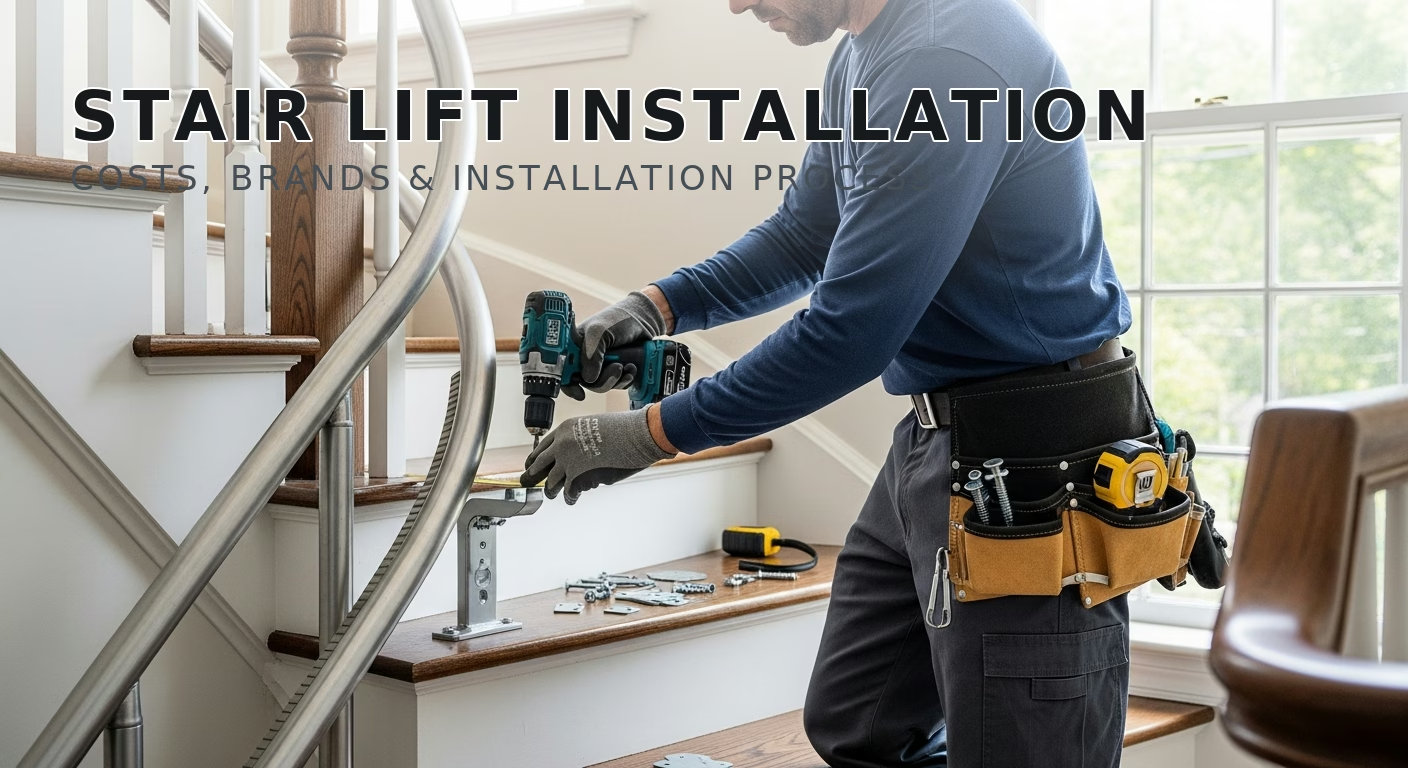
- Stair lift on existing staircase — $3,500-$15,000. Fastest, least invasive. Straight rails are 7-10 days lead time; curved rails are 3-6 weeks. Brands: Stannah, Bruno Elan, Acorn.
- Through-floor home elevator — $35,000-$85,000. Two-stop residential elevator (e.g., Savaria Vuelift, Stiltz). Requires a 5'x5' shaft footprint and 8'-10' overhead clearance. Best for premium homes in Forest Hill or Lawrence Park.
- Main-floor bedroom conversion — $12,000-$45,000. Convert dining room, office, or rear addition to bedroom. Often paired with a barrier-free ensuite. Best for bungalows in North York, Scarborough, Etobicoke.
Most Toronto aging-in-place renovations choose the stair lift path first (low cost, reversible, fast). Through-floor lifts are reserved for homes where the stair lift is not feasible (winding staircase, unusual layout) or where the homeowner wants a permanent elevator solution.
The Accessible Kitchen
Kitchens are the second-most-renovated room for aging-in-place. Key design moves:
- Variable-height counters or a 32"-34" prep section. A standard 36" counter is too high for seated use. A second prep zone at 32" works for both seated and standing use.
- Knee space at sink and cooktop. Open knee space (28"-30" deep) under the sink and cooktop allows a seated user to roll up. Insulated drain and supply lines protect against burns.
- Pull-out drawers, not lower cabinets. Drawers eliminate the bend-and-reach motion. Blum Tandembox or Salice Slimline runners handle 110 lb capacity each.
- Wall ovens and induction cooktops. Wall ovens at 30"-34" install height eliminate the bend over a range. Induction cooktops cool quickly and reduce burn risk.
- D-pull or touch-latch hardware. Knobs require pinch grip, which is hard with arthritis. D-pulls require only an open hand.
- Lever faucets. Single-lever or touchless faucets (Moen Home Care, Delta Touch2O) replace twist handles.
- Lighting at 70-100 footcandles task, vs. 30-50 standard. Aging eyes need 2-3x the light. Under-cabinet LED strips, recessed cans, and a bright pendant over the island are the baseline.
A full accessible kitchen renovation in Toronto runs $45,000-$95,000 in 2026. A targeted retrofit (lever faucet, D-pulls, pull-out drawers, additional task lighting) is $4,500-$12,000 and captures most of the daily-use benefit.
Doorways, Hallways, and Floor Transitions
The "invisible" barriers in Toronto homes:
- Doorway widening: $850-$2,400 per door. Includes reframing the rough opening, new jamb, new door (32"-36"), trim, and paint. Hardware (offset hinges) can add 1.5" of clear width without reframing — a $80 fix that buys time.
- Hallway widening: $4,500-$12,000. Removing a non-load-bearing wall to widen a hallway from 36" to 48". Often paired with a structural review for older Toronto homes.
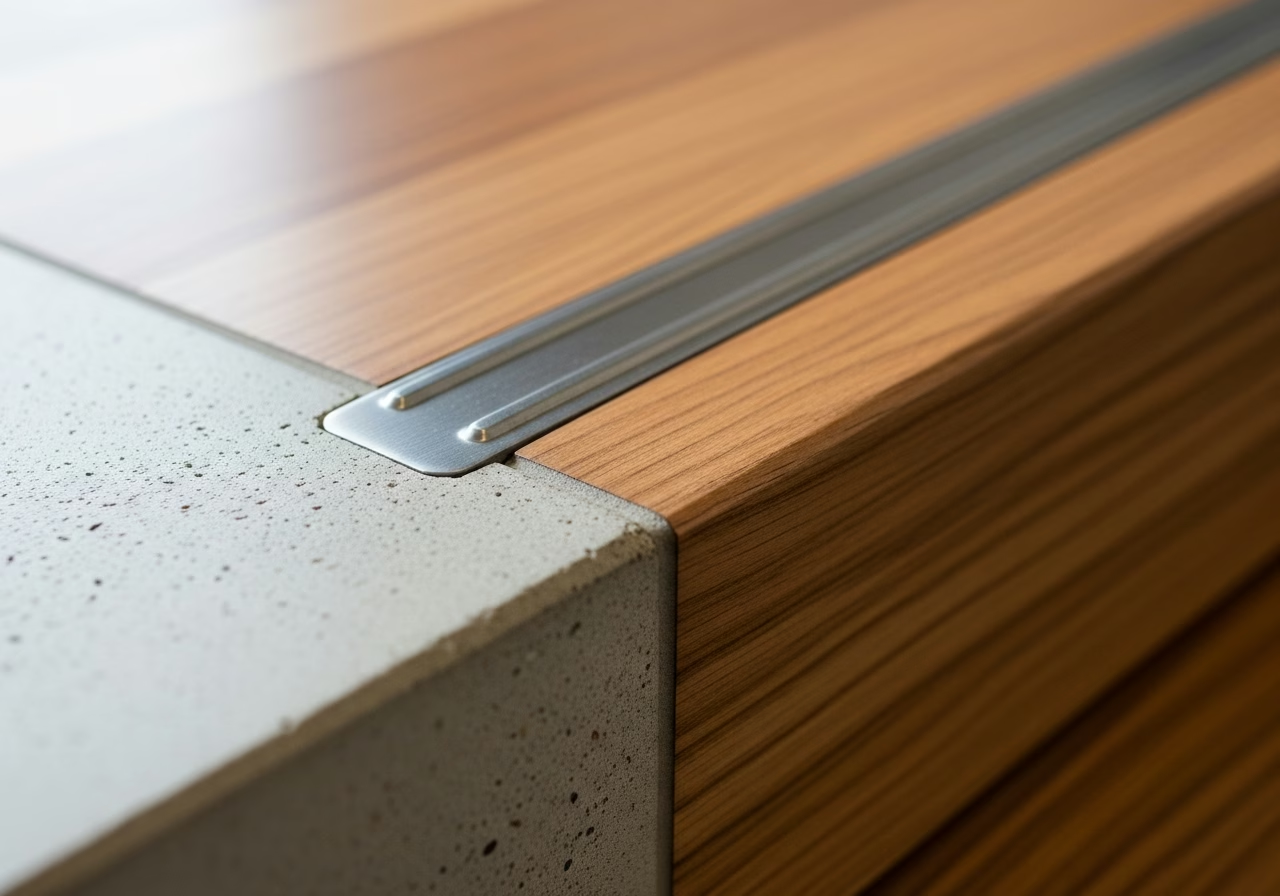
- Floor transitions: $200-$800 per transition. Replace 1/2"-3/4" thresholds with flush transitions. Common at bathroom doors, exterior doors, and between flooring types.
- Stair handrails: $300-$1,200. Add a second handrail (both sides), extend handrails 12" past top and bottom step. Code minimum is one rail; two is best practice.
Slip-Resistant Flooring
Falls are the #1 cause of injury for Canadian seniors. Flooring choice is a major factor:
- Cork or rubber: best slip resistance, soft impact, 0.7+ dynamic coefficient of friction. Brands: Forbo Marmoleum, Nora rubber.
- Luxury vinyl plank (LVP) with textured finish: 0.5-0.6 DCOF, water-resistant, mid-cost. Brands: Mannington Adura, Karndean.
- Porcelain tile with anti-slip glaze: 0.5-0.7 DCOF, durable, easy to clean. Specify R10 or R11 rating.
- Hardwood with low-sheen finish: 0.4-0.5 DCOF, good in living areas, avoid in bathroom.
Avoid: high-gloss polished tile, polished marble, polished concrete (DCOF 0.2-0.3 — very slippery when wet).
Grants, Rebates, and Tax Credits in Ontario (2026)
Toronto homeowners can offset accessibility renovation costs through several programs:
- Ontario Renovates Program — up to $25,000 grant for low-to-moderate income homeowners, repayable only if home sold within 15 years. Administered by City of Toronto.
- March of Dimes Home & Vehicle Modification Program — up to $15,000 lifetime for permanent home modifications. Income-tested.
- Veterans Affairs Canada Home Adaptations — up to $6,500 (plus other supports) for veterans with service-related disability.
- CMHC Residential Rehabilitation Assistance Program (RRAP) for Persons with Disabilities — up to $24,000 forgivable loan, income-tested.
- Canada Caregiver Tax Credit — federal non-refundable credit for supporting an infirm dependant.
- Ontario Healthy Homes Renovation Tax Credit (where active) — 15% of eligible expenses up to $10,000.
- Medical Expense Tax Credit (CRA) — accessibility renovations may qualify when prescribed by a medical practitioner.
We cover application timelines, eligibility, and stacking rules in Accessibility Renovation Grants Toronto Ontario.
Brands We Specify
The Toronto accessibility supply chain has matured. Brands we trust in 2026:
- Bestbath — barrier-free shower bases and seats (made in USA, Toronto distribution).
- Kohler Belay — folding shower seats, grab bars (residential-quality, design-forward).
- Moen Home Care — grab bars, hand showers, faucets (designed for aging-in-place, available at Lowe's and Home Depot Canada).
- Stannah — stair lifts (UK-made, strongest Toronto dealer network).
- Bruno Elan — stair lifts (USA-made, slim profile, Mennonite-style serviceability).
- Savaria — Quebec-made home elevators, vertical platform lifts.
- EZ-Access — modular aluminum ramps, threshold ramps, portable solutions.
- Schluter — Kerdi waterproofing and linear drains for curbless showers.
- Bemis — comfort-height toilet seats with armrests.
Working with an Occupational Therapist
For projects funded by March of Dimes, RRAP, or Veterans Affairs, an occupational therapist (OT) assessment is required. Even self-funded projects benefit. The OT visits the home, observes daily routines, and produces a written assessment with specific dimensions and product recommendations.
OT cost in Toronto: $150-$250/hour, typically 2-4 hours for an initial assessment plus a follow-up visit. Many home-care agencies and some physiotherapy clinics include OT services. An OT-prescribed renovation also strengthens the Medical Expense Tax Credit claim.
Neighbourhood Considerations
- Forest Hill, Lawrence Park, Rosedale. Older homes (1920s-1940s) with narrow halls, multiple half-flights of stairs, and tight bathrooms. Premium expectations on finish. Stair lifts often need curved rails.
- Don Mills, North York, Scarborough. Post-war bungalows with 8' ceilings and main-floor primary bedrooms. Best candidates for low-cost aging-in-place — most layouts already work.
- Etobicoke, Mississauga. 1960s-1990s sidesplit and backsplit homes. Multi-level layouts complicate accessibility; through-floor lifts or main-floor additions common.
- Markham, Richmond Hill. Newer detached homes (1990s-2010s). Good base layouts, often need only bathroom retrofit and grab bars.
- Downtown condos. Limited structural changes possible, but bathroom retrofits, lever hardware, and slip-resistant flooring all feasible. See Aging-in-Place Condo Toronto.
Common Mistakes
We see the same errors repeated across Toronto. The most expensive:
- Installing grab bars without studs or solid blocking (250 lb pull-out fail).
- Choosing a curb-edge shower because the contractor "doesn't do curbless".
- Using polished marble or high-gloss tile in a bathroom.
- Specifying knob hardware on cabinets and doors.
- Forgetting to widen the bathroom door (the most-used door for a mobility device).
- Skipping the OT assessment, then redoing work because dimensions are wrong.
We cover all 12 in Accessibility Renovation Mistakes Toronto.
Timeline and Sequencing
A typical Toronto whole-home aging-in-place renovation runs 8-14 weeks:
- Week 1-2: OT assessment, design, permit application.
- Week 3-4: Demo, structural changes (doorway widening, wall removal).
- Week 5-7: Bathroom waterproofing and tile, kitchen rough-in.
- Week 8-10: Cabinetry, fixtures, finish carpentry.
- Week 11-12: Stair lift install, ramp install, final inspection.
- Week 13-14: Punch list, OT walk-through, training.
For urgent post-discharge cases (someone coming home from hospital), we sequence the bathroom and main-floor bedroom first (3-4 weeks) and stage the rest.
Related Reading
- Barrier-Free Bathroom Renovation Toronto
- Walk-in Tub vs Curbless Shower Toronto
- Grab Bar Installation Toronto Bathroom
- Stair Lift Installation Toronto Cost
- Wheelchair Ramp Installation Toronto
- Accessibility Renovation Cost Toronto
- Aging-in-Place Kitchen Design Toronto
- Wider Doorways Renovation Toronto
- Accessibility Renovation Grants Toronto Ontario
- Aging-in-Place Condo Toronto
- Slip-Resistant Flooring Seniors Toronto
- Accessibility Renovation Mistakes Toronto
- Home Modifications After Stroke Toronto
Get Started
RenoHouse coordinates accessibility and aging-in-place renovations across Toronto and the GTA, working alongside occupational therapists and grant administrators when needed. Every project preserves dignity, independence, and the routines that matter. Learn more about our accessibility and aging-in-place service.
Sources & References
Authoritative sources cited in this guide:
- OBC 3.8 (Barrier-Free Design) — Accessibility code
- Ontario Renovates Program — Senior/accessibility renovation grant
- March of Dimes Home & Vehicle Modification — Accessibility funding
- CMHC Residential Rehabilitation — Federal accessibility program
Continue Reading