 RenoHouse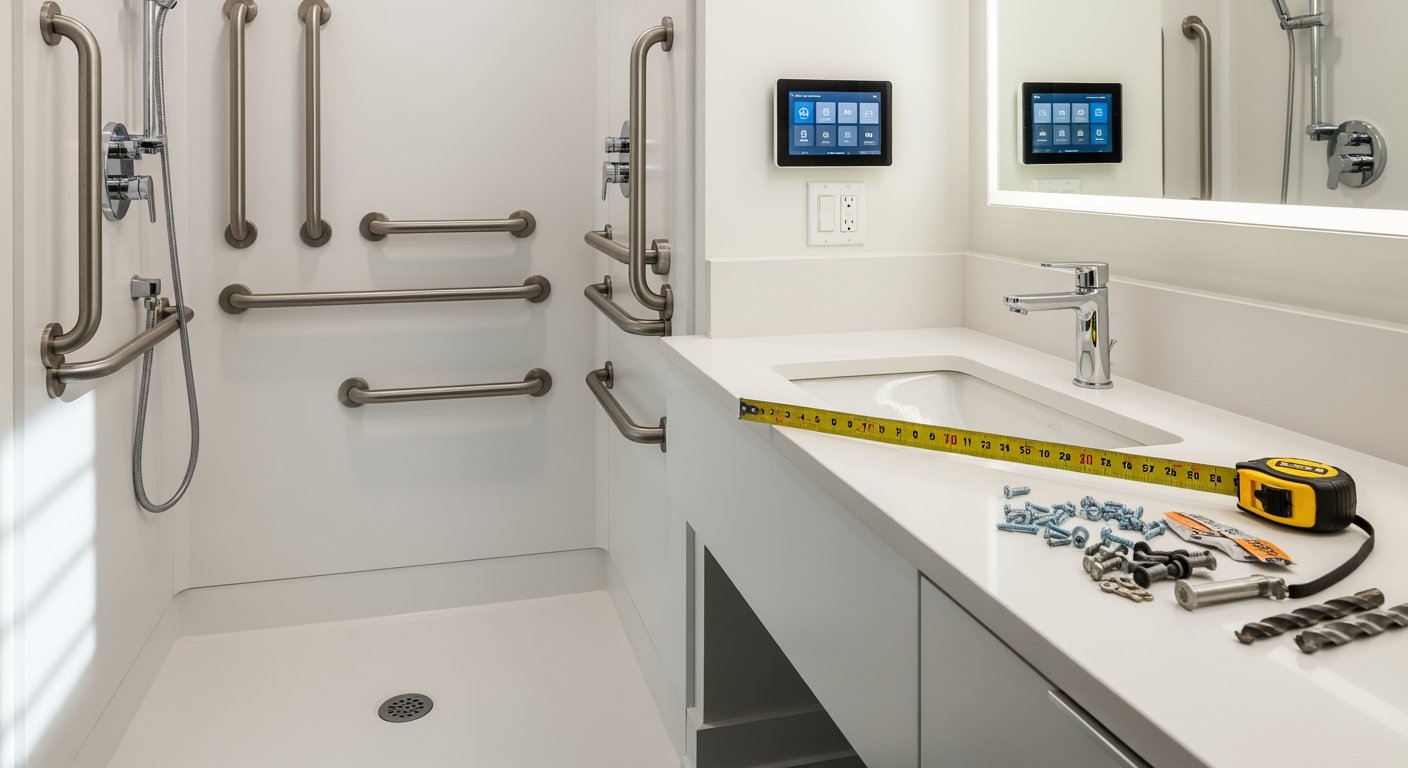
Accessibility Renovation & Aging-in-Place Renovations Toronto
Professional accessibility renovation (aging-in-place) services in Toronto and the Greater Toronto Area. Licensed, insured, and trusted by homeowners across the GTA.
Projects Completed
Years Experience
Client Satisfaction
Google Rating
How It Works
A simple, stress-free process from start to finish.
Send Your Request
Call or WhatsApp us 24/7. Send photos, video, comments about what needs to be done, and your location.
Remote Estimate
We review everything, discuss details, and provide a clear estimate — often within hours, no visit needed.
Repair Process
Our licensed team arrives on the agreed date and completes your accessibility renovation (aging-in-place) to the highest standards.
Handover & Warranty
Final walkthrough with you, full cleanup, and warranty documentation provided.
Send Your Request
Call or WhatsApp us 24/7. Send photos, video, and a description of the work + your location.
Remote Estimate
We review everything, clarify details, and give you a price — often within hours.
Repair Process
Licensed team arrives on schedule and completes your accessibility renovation (aging-in-place) professionally.
Handover & Warranty
Final walkthrough, full cleanup, and warranty documentation.
Accessibility Renovation (Aging-in-Place) in Toronto GTA
RenoHouse delivers comprehensive Accessibility Renovation services across Toronto and the Greater Toronto Area, helping seniors and people with mobility limitations stay independent and safe in their own homes for as long as possible. Going beyond simple grab-bar retrofits, our aging-in-place renovations bundle barrier-free showers, widened doorways, ramps, stair lifts, lowered counters, and smart-home accessibility into a single coordinated project — supported by federal and provincial tax credits that make these upgrades far more affordable than most homeowners expect.
The Toronto-area aging population is one of the fastest-growing demographics in Canada. There are roughly 1.4 million GTA residents aged 65 or older today, projected to reach 2.1 million by 2031. Long-term care wait lists run 3 to 4 years in most municipalities, and most seniors strongly prefer to stay in their existing homes if they can do so safely. Universal-design renovations are the answer — and RenoHouse has the multi-trade capability and CSA B651 (Accessible Design for the Built Environment) experience to deliver them.
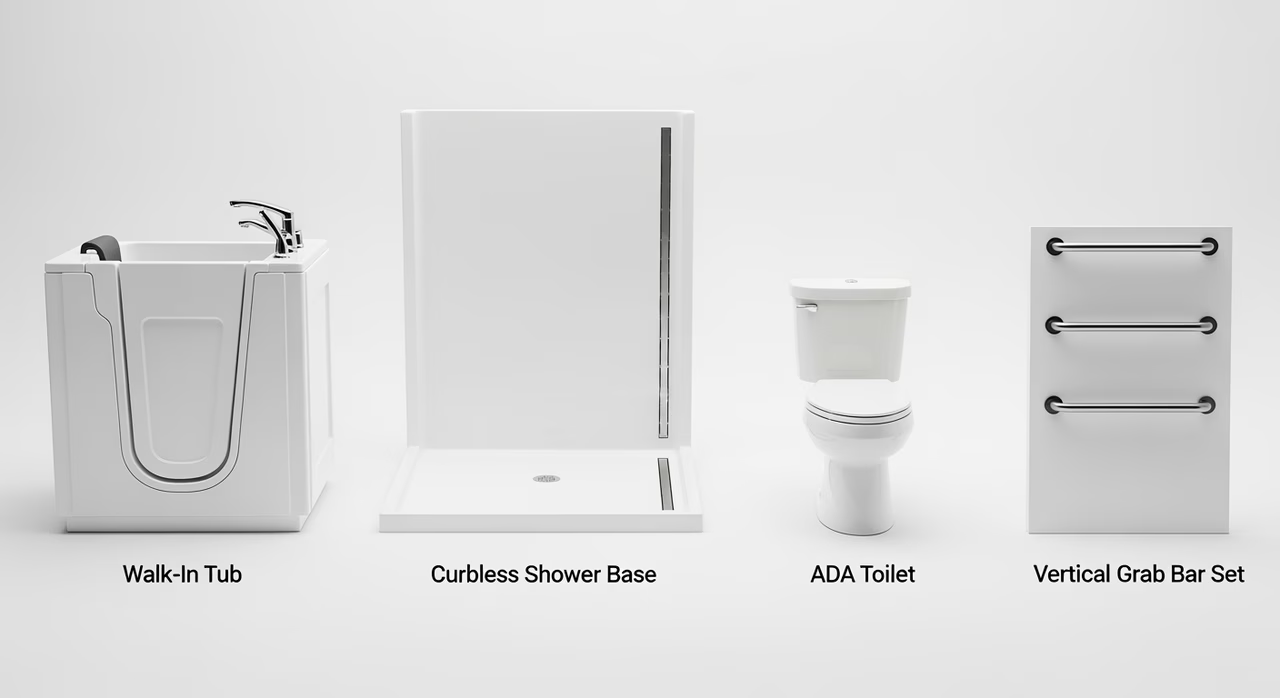
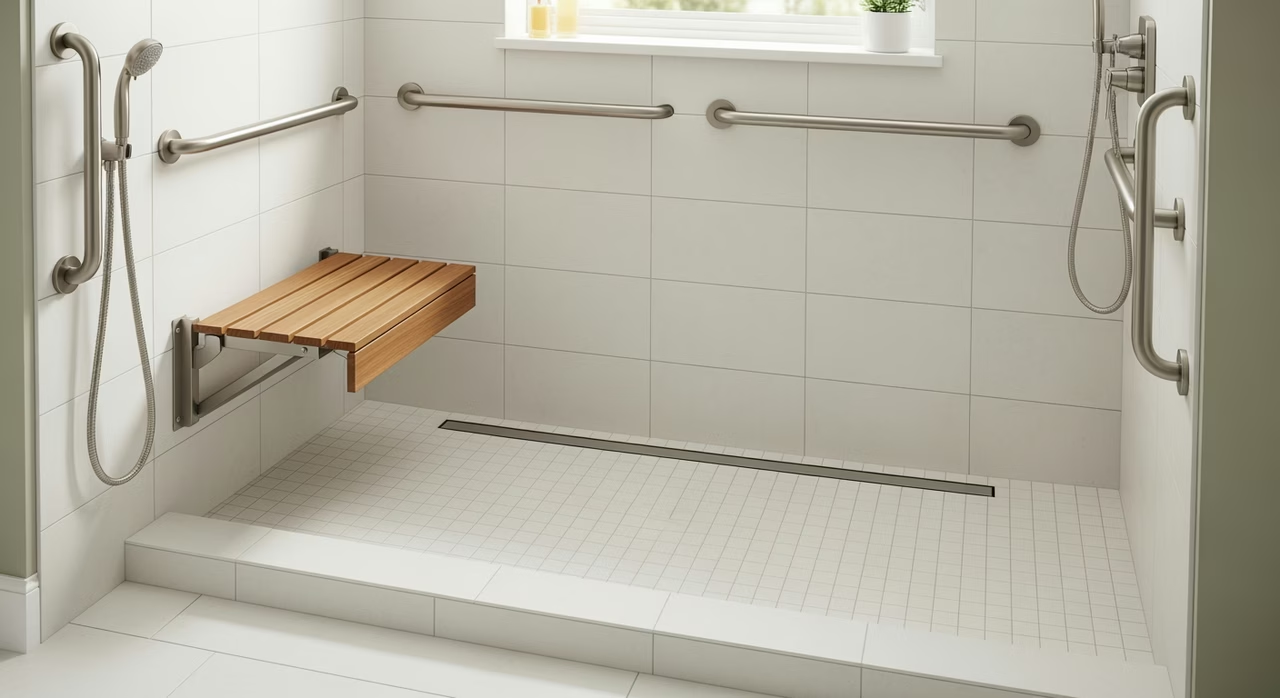
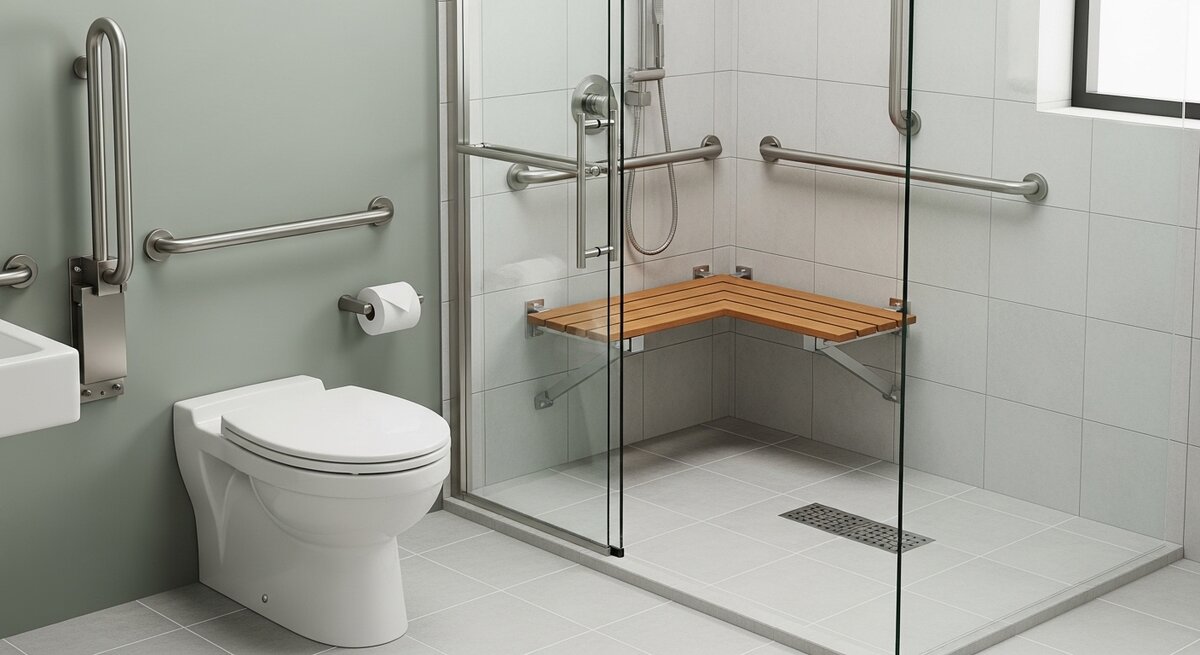
Our accessibility services include curbless walk-in showers with linear drains and folding teak benches, walk-in tubs from Safe Step, Premier Care, and Ella, comfort-height toilets with bidet seats, properly placed grab bars rated for 250-pound loads, widened doorways from the standard 32 inches to 36 inches with offset hinges that add a critical 2 inches of clear opening, exterior and interior ramps in wood, aluminum, or rubber threshold form, stair lifts from Bruno and Stannah (for straight and curved staircases), through-floor home elevators when stair lifts are insufficient, and full bathroom and kitchen universal design retrofits with varied counter heights, side-opening ovens, drawer-style dishwashers, and lever-handle hardware throughout.
Smart-home accessibility complements physical modifications with voice-controlled lighting, automatic door openers, motion-activated nightlights, lowered light switches, raised outlets, and medical-alert integration. Our electricians install Apple HomeKit and Amazon Alexa hubs that connect to door locks, thermostats, lights, and motorized shades — letting users control their environment from a single voice command or wheelchair-accessible tablet.
Funding is available. The federal Home Accessibility Tax Credit (HATC) provides a 15-percent non-refundable credit on up to $20,000 in eligible renovation expenses, returning up to $3,000. The Multigenerational Home Renovation Tax Credit returns up to $7,500 for adding a secondary suite for a senior or adult with disability. Veterans Affairs Canada has its own program for eligible veterans. The Canada Caregiver Tax Credit further supports families caring for an aging parent in their home. RenoHouse provides itemized invoices with the documentation required for these claims.
Project costs range from $3,000 for a basic grab-bar and threshold-ramp package to $25,000 for a single accessibility-focused bathroom retrofit, $50,000 for a combined kitchen-and-bathroom universal-design renovation, and $50,000 to $120,000 for whole-home retrofits or through-floor elevator installations. Most projects pay back in avoided long-term care costs within the first 1 to 2 years.
This service complements RenoHouse's existing senior home safety package — senior home safety covers the basic grab-bar and ramp retrofits, while Accessibility Renovation (Aging-in-Place) covers the larger bundled projects including barrier-free shower conversions, doorway widening, stair lifts, and full universal-design renovations.
The Canada Caregiver Tax Credit further supports families caring for an aging parent or spouse with a disability in their home, returning thousands of dollars per year for adult children supporting senior parents. Combined with the federal Home Accessibility Tax Credit and Multigenerational Home Renovation Tax Credit, a well-planned aging-in-place project can recover 25 to 35 percent of total cost in tax credits and grants — making the effective net cost dramatically lower than the sticker price suggests. Our team walks you through eligibility for every applicable program during the in-home consult and provides itemized documentation suitable for your accountant or tax preparer.
We also coordinate occupational therapist (OT) assessments when clients want a clinical recommendation on which modifications will deliver the most quality-of-life improvement. Many of our most successful projects are co-designed with an OT — they identify the specific mobility challenges, we deliver the construction that solves them.
Serving Toronto, Mississauga, Brampton, Vaughan, Markham, Richmond Hill, Oakville, Burlington, Scarborough, North York, Etobicoke, and all surrounding GTA communities. Call 289-212-2345 for a free accessibility consultation.
What Toronto Accessibility Renovation Covers in 2026
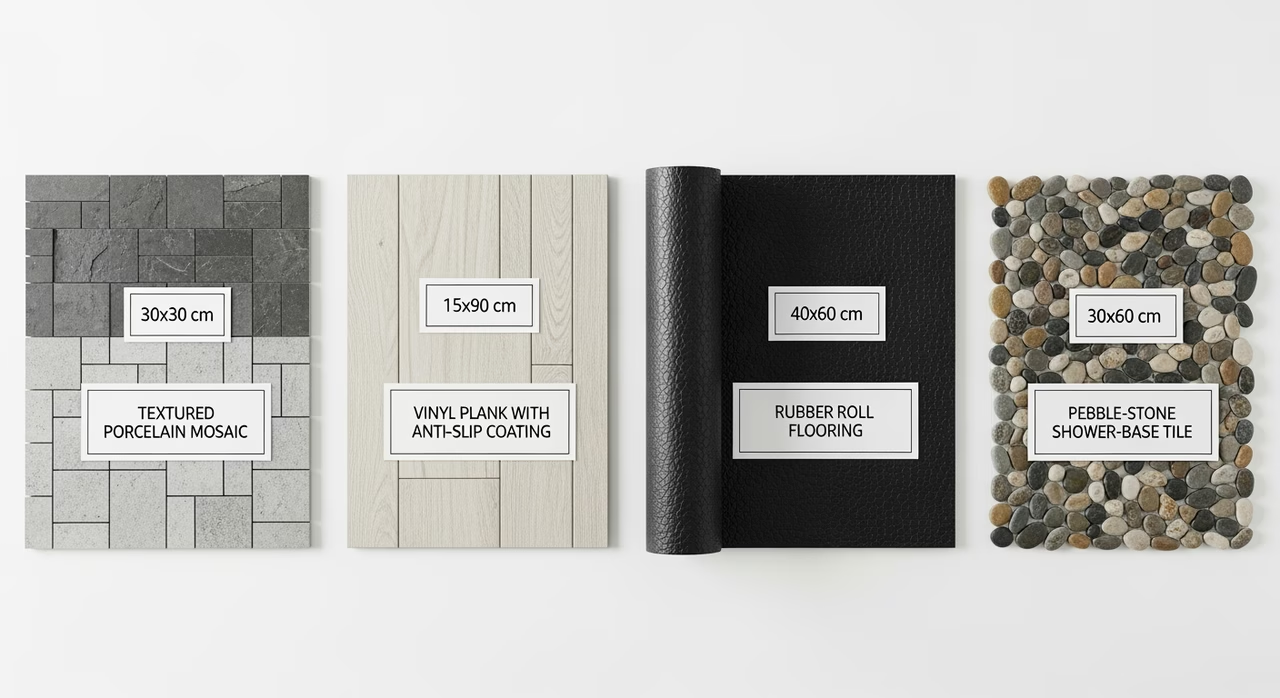
Toronto accessibility renovation in 2026 is the comprehensive design-and-build category covering all permanent home modifications that remove physical barriers for residents with mobility limitations — temporary or permanent, aging-related or disability-related. The scope ranges from single-bathroom barrier-free retrofits to whole-home conversions including widened door openings, zero-threshold entries, accessible kitchens, through-floor elevators, and vertical platform lifts. Unlike senior-home-safety (which focuses on fall prevention through grab bars and lever hardware), accessibility renovation is engineered for users who navigate by walker, rollator, manual wheelchair, or power wheelchair. The Ontario Building Code Part 3 Section 3.8 barrier-free path of travel applies to all permit-requiring scope; the design must accommodate 1.5-metre turning radius in barrier-free bathrooms, 36-inch minimum door clear width, lever hardware throughout, slip-resistant flooring at ANSI A137.1 DCOF 0.42 wet minimum, and threshold heights under 13mm at all barrier-free door transitions. CSA B651 provides accessibility design guidance for public-access portions of the home; CSA B355 governs elevators and stair lifts.
2026 Toronto Accessibility Renovation Pricing Tiers
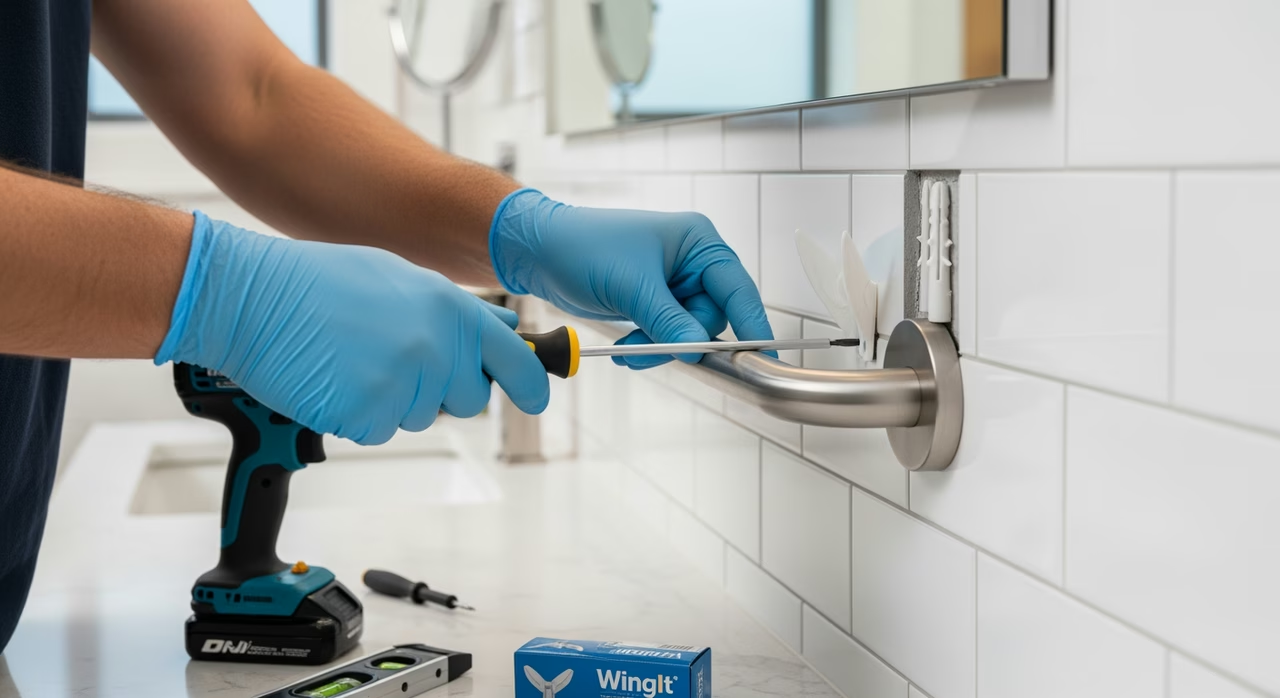
Entry-level accessibility package at $4,000 to $6,500 floor covers single-bathroom barrier-free retrofit (curbless or low-threshold shower with anti-scald hand-held wand, comfort-height toilet, ASI 0440 wall-mount folding shower bench, slip-resistant tile), 2-3 widened door openings to 36-inch minimum clear width, full lever hardware replacement throughout the home, and exterior threshold ramp transitions at front and back doors. This tier addresses the most common entry-level need: a senior or disabled household member who has transitioned to walker use and needs basic barrier-free access to bathroom and primary living areas.
Standard mid-scope at $22,000 to $30,000 covers full barrier-free bathroom retrofit (36x60-inch curbless roll-in shower clear floor area, wall blocking at 32-38-inch height for future grab bars, hand-held wand on slide-bar with Moen MultiChoice or Delta MultiChoice anti-scald valve, Toto Drake comfort-height toilet, ADA-compliant lavatory with knee-clearance for wheelchair access, Daltile Color Wheel Linear slip-resistant tile, Lutron Caseta motion lighting), plus exterior ramp with 1:12 slope per OBC 3.8 standard (12-inch run per 1-inch rise), plus 3-4 widened interior openings to 36-inch clear, plus full lever hardware throughout.
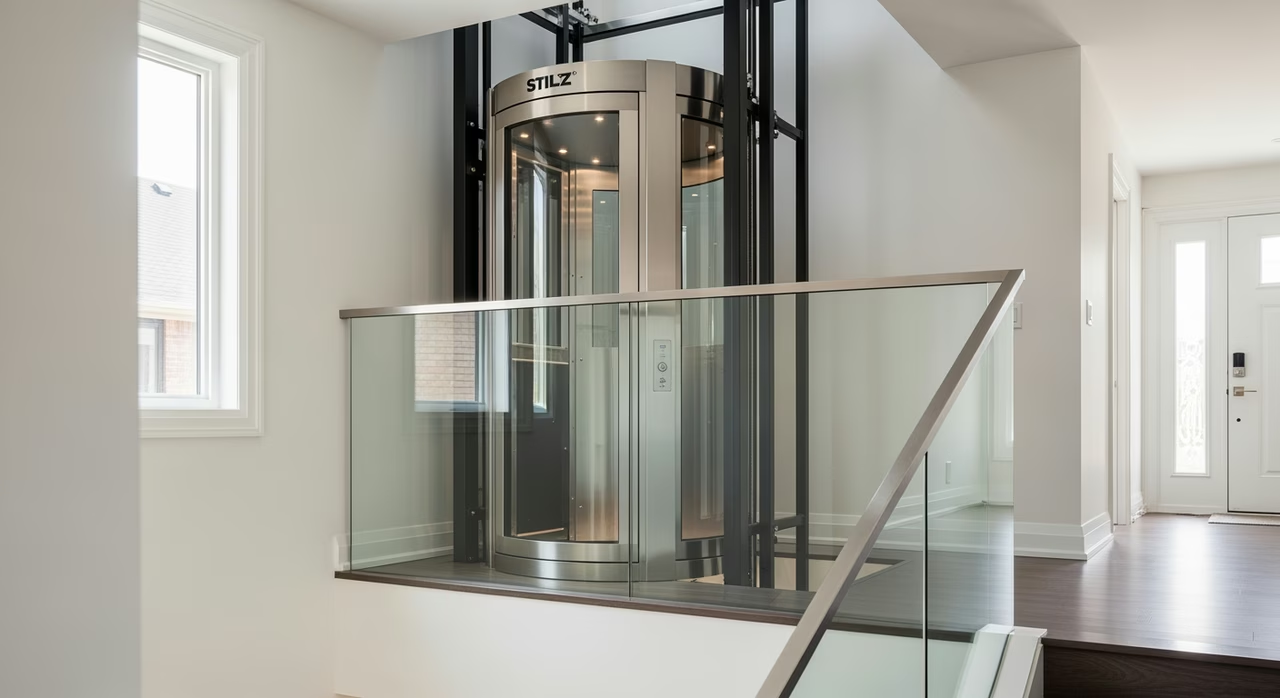
Premium scope at $90,000 to $130,000 covers full-home barrier-free retrofit with widened halls (single-leaf to 36-inch minimum clear, 42-inch preferred), zero-threshold main-level access, accessible kitchen (lowered island bar to 34-inch height, full pull-out shelving on lower cabinets, lever faucets, induction cooktop with shut-off timers, side-opening Frigidaire Wall Oven at wheelchair-accessible height), accessible main-level master en-suite, vertical platform lift (Bruno VPL-3100 indoor 750-lb capacity, Savaria Multilift unenclosed) at $18,000-$28,000 installed, or through-floor home elevator with cab (Stiltz Duo Plus, Symmetry Elite 6 cab, Cibes Air) at $48,000-$58,000 installed.
OBC 3.8 Barrier-Free Path of Travel: Code Requirements
Ontario Building Code Part 3 Section 3.8 mandates the following on any accessibility renovation requiring a Toronto Building Permit: minimum 1.5-metre turning radius (5-foot diameter clear floor area) in barrier-free bathrooms and dressing rooms; minimum 36-inch door clear width on all barrier-free path-of-travel doors (the actual rough opening is 38-40 inches to accommodate the lever-handle clearance); wall blocking at 32-38 inches above floor on all bathroom walls where future grab bars may be installed; lever-style hardware (no round knobs) on all interior doors in the barrier-free path; slip-resistant floor finish at ANSI A137.1 DCOF 0.42 minimum on wet floors; threshold height under 13mm at all barrier-free door transitions; minimum 1.0-metre clear hallway width on all barrier-free routes (1.2 metres preferred for power-wheelchair turning); accessible exterior ramp slope at maximum 1:12 (12-inch run per 1-inch rise) with handrails at 34-38 inches above ramp surface and 5-foot intermediate landings every 30 feet of run; accessible parking stall at minimum 3.4 metres wide if outdoor parking accommodations are included.
Rebate Stack: Maximum Government Funding
The 2026 accessibility renovation rebate stack in Ontario can offset substantial portions of retrofit cost for qualifying households. Federal Home Accessibility Tax Credit (HATC) returns 15% non-refundable on up to $20,000 of qualifying expenditures for $3,000 maximum credit per household per year; eligibility requires the resident to be 65+ or hold a Disability Tax Credit certificate. Federal Multigenerational Home Renovation Tax Credit (MHRTC) returns 15% on up to $50,000 of qualifying secondary-suite work for a senior or disabled qualifying resident moving into the home, for $7,500 maximum credit; eligibility requires creating a self-contained secondary suite for a senior (65+) or adult (18+) DTC-certified family member. Ontario Home Adaptations for Independence (HAFI) program returns up to $5,000 per household on accessibility retrofits including grab bars, ramps, lifts; eligibility is need-based for low-income seniors or DTC-certified residents. March of Dimes Home & Vehicle Modification Program (HVMP) returns up to $15,000 on substantial barrier-free renovation; eligibility is need-based for any age. The four programs stack — a single retrofit can claim HATC, MHRTC, HAFI, and HVMP simultaneously if eligibility conditions are met for each. Honest accessibility contractors in 2026 walk the homeowner through the rebate-application process and provide the documentation (itemized invoices, photo logs, certificate of warranty) required for each program.
Trade-License Boundary in Accessibility Work
The accessibility renovation contractor is typically a general-contractor or finish-trade specialist — not a licensed trade. Custom millwork, durable LVT flooring install, lever-hardware replacement, grab-bar through-blocking installation, slip-resistant tile install, and decorative finish work are within general-handyman or general-contractor scope. 306A plumber scope: barrier-free shower drain conversion (cutting concrete floor to reroute drain), walk-in tub installation (Kohler Walk-In Bath supply lines and drain), ADA-compliant lavatory rough-in. ECRA/ESA 309A electrician scope: any new circuit for stair-lift charger, vertical platform lift power, elevator power, motion-sensor lighting hardwiring, accessible kitchen induction-cooktop circuit. TSSA G2 gas fitter scope: relocating any gas appliance to accommodate accessibility geometry. PEng (Professional Engineer) stamp: any structural wall opening widening (load-bearing wall changes), floor cut for through-floor elevator shaft, ramp foundation engineering on grade-level ramp installations. ESA permit required on any line-voltage stair-lift, vertical platform lift, or elevator circuit; CSA B355 governs the lift equipment itself with manufacturer-provided field-inspection certificate of compliance.
Lift and Elevator Selection
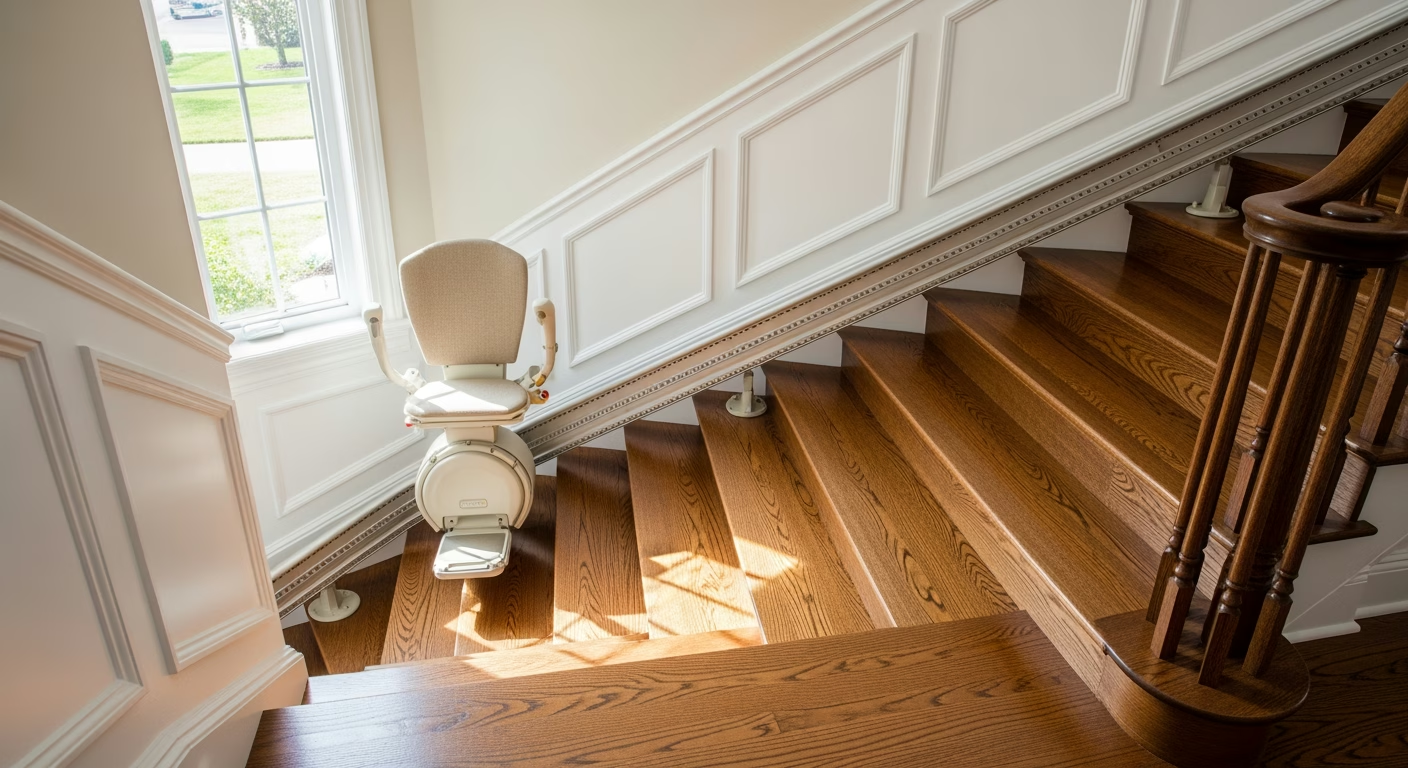
Stair lifts: Bruno Elite SRE-3000 straight rail at $4,500-$6,500 installed for typical straight staircase, Bruno Elan SRE-3050 curved at $9,500-$15,000 installed for L-shaped or U-shaped staircases, Stannah Solus 320 curved at $11,000-$16,500, Acorn Superglide 130 straight at $3,800-$5,200 (entry-level). Vertical platform lifts for outdoor or short-rise indoor: Bruno VPL-3100 indoor 750-lb capacity at $18,000-$24,000 installed, Savaria Multilift unenclosed at $19,000-$26,000, Garaventa Genesis enclosed at $24,000-$32,000. Through-floor home elevators: Stiltz Duo Plus 2-person 415-lb capacity at $42,000-$58,000 installed, Symmetry Elite 6 cab at $52,000-$72,000, Cibes Air at $48,000-$68,000, Savaria Vuelift at $58,000-$85,000. The through-floor elevator scope includes a floor cut (PEng stamp required), shaft framing, and the lift equipment itself — total project cost on a typical premium scope reaches $90,000-$130,000 when combined with full home retrofit.
Brand Whitelist for Accessibility Products
Grab bars: Moen Home Care peened stainless-steel 18/24/30-inch, Delta Decor Assist, Pressalit Care, Invisia (designer-grade), ASI 3700 commercial-grade. Accessible toilet: Toto Drake comfort-height, Kohler Cimarron Comfort Height, American Standard Champion 4 right-height. Shower fixtures: Moen Home Care anti-scald, Delta MultiChoice anti-scald, Kohler HydroRail-S. Shower bench: Moen Home Care folding teak, ASI 0440 wall-mount. Flooring slip-resistant: Mohawk RevWood Plus 0.42+ DCOF, Forbo Marmoleum, Daltile Color Wheel Linear. Door hardware lever: Schlage Camelot, Kwikset Halifax, Emtek Brass. Stair lifts: Bruno Elite SRE-3000 straight, Bruno Elan SRE-3050 curved, Stannah Solus 320, Acorn Superglide 130. Through-floor home elevators: Stiltz Duo Plus, Savaria Vuelift, Symmetry Elite 6, Cibes Air. Vertical platform lifts: Bruno VPL-3100 750-lb, Savaria Multilift, Garaventa Genesis. Modular and portable ramps: EZ-Access Pathway HD modular, Heeve Tri-Fold portable. Lever faucets: Moen Brantford Posi-Temp, Delta Lahara, Kohler Devonshire, Grohe Eurosmart.
Service Areas Across the GTA
Toronto, Mississauga, Vaughan, Markham, Richmond Hill, Oakville, Burlington, Brampton, Pickering, Ajax, Whitby, Oshawa, Etobicoke, Scarborough, North York, East York, York, Newmarket, Aurora, King City, Stouffville, Caledon, Halton Hills, Milton — accessibility renovation contractors serve the full GTA with WSIB clearance, $2M general liability insurance, $1M property damage coverage, EPA Lead-Safe-Certified Renovator certification for pre-1978 home work, and partnership relationships with 306A licensed plumbers, ECRA/ESA 309A licensed electricians, TSSA G2 gas fitters, and PEng-stamped structural engineers for all work that crosses trade-license or structural-engineering boundaries.
Frequently Asked Questions About Toronto Accessibility Renovations
Do I need to be 65+ to qualify for the rebates? No — the rebate eligibility varies by program. Federal HATC requires the resident to be 65+ OR hold a Disability Tax Credit (DTC) certificate. Ontario HAFI is income-tested for seniors but available to any age with DTC certification. March of Dimes HVMP is need-based for any age. Federal MHRTC requires a senior (65+) or adult (18+) DTC-certified family member moving into a secondary suite.
How long does a full barrier-free bathroom retrofit take? A standard barrier-free bathroom retrofit ($22,000-$30,000) takes 2-3 weeks of construction including 306A plumber subcontract for the curbless shower drain conversion, ECRA/ESA 309A electrician for any new motion-sensor lighting circuit, and finish-trade time for the slip-resistant tile install. Premium retrofits with structural wall changes or floor relocations take 4-6 weeks.
Can I install a through-floor elevator without major construction? Through-floor home elevators (Stiltz Duo Plus, Symmetry Elite 6, Cibes Air) require a floor cut to create the shaft passage. This is a PEng-stamped structural change and triggers a Toronto Building Permit. The total project including shaft framing, electrical, and lift installation typically takes 6-10 weeks. The Stiltz Duo Plus self-supporting design minimizes the shaft footprint to approximately 4 feet by 4 feet.
Do I need a Professional Engineer for door-widening? Only if the wall being modified is load-bearing. The accessibility contractor's initial scope walk includes load-bearing identification; the typical 1990s-2000s GTA detached home has 2-4 load-bearing interior walls. The PEng stamp is required only when one of these walls is modified — for non-load-bearing partition walls, the door-widening proceeds without a PEng.
What is the typical full-home retrofit timeline? Premium full-home barrier-free retrofits ($90,000-$130,000) typically take 8-16 weeks of construction depending on scope. The longest lead-time items are the through-floor home elevator (6-8 weeks from order to install) and the structural permit process for any wall opening (4-6 weeks from application to permit issue).
Toronto/GTA neighborhood considerations
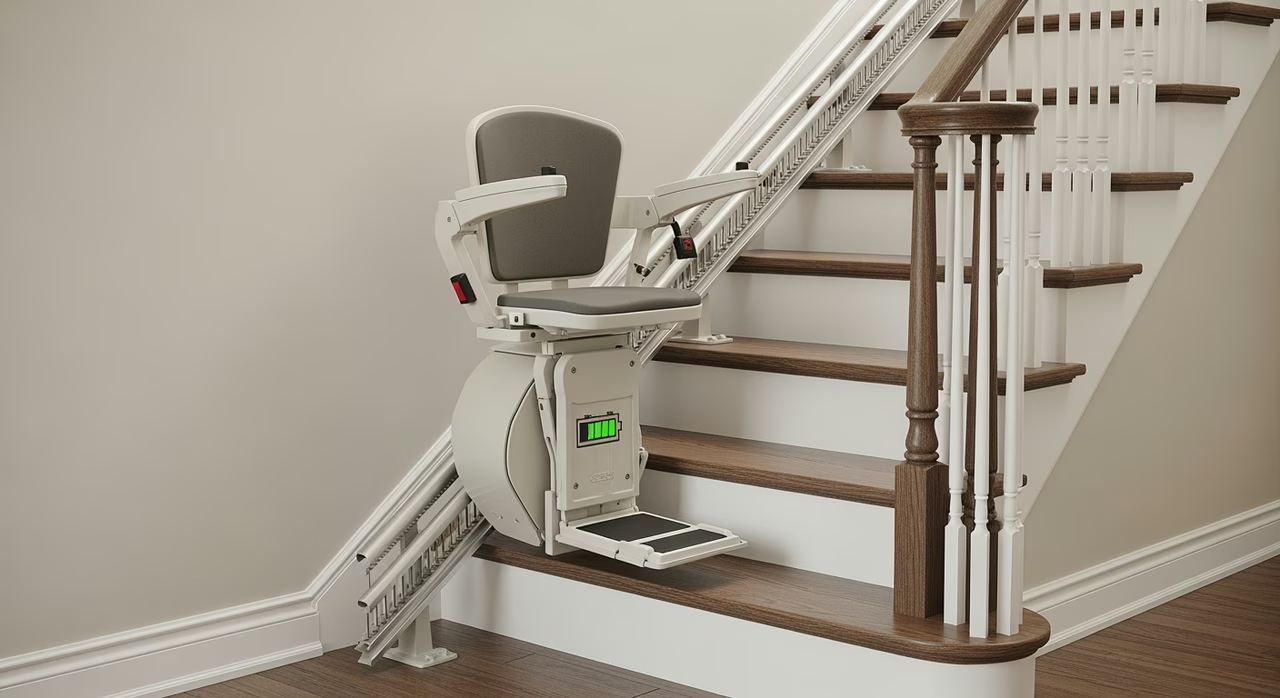
- Forest Hill / Rosedale / Lawrence Park (heritage): Heritage Conservation District approval required for exterior ramp + lift visibility — Toronto Heritage Permit Section 33 OHA. Curved-rail Stannah 600 stairlift fits original Edwardian 36-42" stair widths without rail trim. Through-floor home elevator (Savaria Multilift, $48-$72K) needs structural assessment for old joists. Typical full retrofit $90K-$160K.
- North York / Scarborough / Etobicoke (60s-70s): 32" interior door rough openings — widening to 36" CSA B651-23 barrier-free spec needs lintel re-frame ($380-$680 per opening). 1970s bungalows ideal for single-floor aging-in-place (no stair lift needed). Standard scope $40K-$90K.
- Mississauga / Brampton / Vaughan (90s+): Already 36" doors in most 90s+ stock — drop-in grab bars (Moen Home Care 16-24" SecureMount, ASTM F446) + comfort-height Toto Drake II 17.25" toilets clean swap. Curbless shower retrofit $9.4K-$18K.
- Caledon / King City / Aurora (rural large-lot): Long driveways + acreage — outdoor automation (Liftmaster MyQ gate, automated path lighting) integrated into retrofit. 30%+ Home Accessibility Tax Credit (HATC) + Multi-Generational Home Renovation TC (MGHRTC) stack for in-law suite conversion.
- Downtown condos: Condo Act Section 98 alteration agreement required for any common-element work. Through-floor lift impossible in concrete-slab — focus on widened doors (where partition non-load-bearing), barrier-free shower, lever hardware. Typical $24K-$48K.
Tax credits + standards: Home Accessibility Tax Credit (HATC) federal 15% up to $20K eligible ($3K back). Ontario Seniors' Home Safety TC 25% up to $10K ($2.5K back). CSA B651-23 Accessible Design for the Built Environment, OBC 3.8 Barrier-Free Design (residential variance). Healthcare-Reno Strategy (HRS) provincial rebate for medical-necessity scope with OT assessment letter.
The RenoHouse Difference
11+ Years Experience
Over a decade of expertise in accessibility renovation (aging-in-place). We've seen it all and know how to handle any challenge.
Warranty Protected
All work comes with comprehensive warranty coverage. We stand behind our craftsmanship and use quality materials that last.
Competitive Rates
Fair pricing on accessibility renovation (aging-in-place) without compromising quality. We match or beat competitor quotes.
Sound Familiar?
These are the most common problems our clients face.
Need professional help with this?
Not sure where to start?
Want quality results the first time?
Tired of putting it off?
Looking for a reliable contractor?
Want a free, no-obligation estimate?
Ready to get started?
Free estimate, no obligation. We respond within 1 hour.
What Our Clients Say
“RenoHouse replaced all our windows in just two days. The new windows are beautiful, energy-efficient, and the team left everything spotless. Highly recommend!”

Michael R.
Oakville
“New windows transformed our home. Quieter, warmer, and our energy bill dropped noticeably. Excellent installation crew.”

David K.
Vaughan
“Professional from start to finish. They replaced 8 windows in one day and cleaned up perfectly. Highly recommend RenoHouse!”

Sandra W.
Burlington
Our Accessibility Renovation (Aging-in-Place) Work
Professional accessibility renovation (aging-in-place) results from RenoHouse projects across the Toronto GTA.
Accessibility Renovation (Aging-in-Place)
Toronto GTA
Quality Workmanship
Licensed & Insured
Like what you see? Let's talk about your project.
🧮 Accessibility / Aging-in-Place Renovation — Cost Estimator
GTA / Ontario — 2026 market pricing
⚙️ Add-ons & Options
📊 Where the cost goes (typical breakdown)
📋 What affects your price:
💡 Estimates use 2026 GTA/Ontario market data. Actual cost depends on site conditions, material selections, and project scope. Book a free in-home quote for a precise number.
Frequently Asked Questions About Accessibility Renovation (Aging-in-Place)
Costs vary by scope. A basic grab-bar and threshold-ramp package starts around $3,000. A single accessibility-focused bathroom retrofit runs $8,000 to $25,000. A combined kitchen-and-bathroom universal-design renovation costs $25,000 to $70,000. Whole-home retrofits or through-floor elevator installations range from $40,000 to $120,000. RenoHouse provides itemized free quotes and helps prioritize within budget.
The federal Home Accessibility Tax Credit (HATC) is a 15-percent non-refundable tax credit on up to $20,000 in eligible renovation expenses, returning up to $3,000 to seniors aged 65-plus or qualifying persons with disabilities. Eligible expenses include grab bars, walk-in tubs, ramps, widened doorways, stair lifts, and elevators. RenoHouse provides itemized invoices documenting eligible work for your tax filing.
The Multigenerational Home Renovation Tax Credit (MHRTC) is a federal refundable credit returning up to $7,500 for adding a self-contained secondary suite for a senior or adult with a disability. It applies to renovations that create a separate dwelling unit with kitchen, bathroom, and sleeping area for a qualifying family member. RenoHouse can structure secondary-suite projects to maximize MHRTC eligibility.
Senior home safety is our basic retrofit package — grab bars, handrails, threshold ramps, lever handles, and motion lighting, typically $1,500 to $5,000. Accessibility Renovation (Aging-in-Place) is the larger bundled service for full barrier-free showers, doorway widening (32 inches to 36 inches), stair lifts, through-floor elevators, and universal-design kitchens and bathrooms — typically $8,000 to $120,000. Many clients start with senior home safety and return for full accessibility renovation later.
Standard residential doorways are 32 inches wide, providing roughly 30 inches of clear opening — too narrow for most wheelchairs and walkers. CSA B651 recommends 36-inch doorways with at least 32 inches of clear opening; 34 inches clear is preferred. We achieve this either by replacing the door and frame or by installing offset (swing-clear) hinges that add 1.5 to 2 inches of clear opening at far less cost.
A curbless shower (zero-threshold walk-in shower with a linear drain) is the better choice for most aging-in-place clients. It accommodates wheelchairs, transfer benches, and walkers; it is easier to enter and exit; it future-proofs for declining mobility; and it usually has a lower lifetime cost. Walk-in tubs are best for clients who specifically prefer baths and have stable balance for the seated entry process. RenoHouse helps you decide during the in-home consult.
Straight-staircase stair lifts from Bruno or Stannah typically cost $4,000 to $6,000 installed. Curved staircase lifts (custom-fabricated rails) range from $9,000 to $15,000. Outdoor stair lifts add roughly $1,000 in weatherproofing. RenoHouse installs both Bruno and Stannah lifts, handles all TSSA permits, and provides ongoing service contracts. Some models are eligible for the Home Accessibility Tax Credit.
Yes. Through-floor home elevators (Stiltz Duo, Savaria, Cibes) require a roughly 4.5-by-4-foot footprint, a structural opening cut between floors, and a dedicated 30-amp electrical circuit. Installation runs $35,000 to $75,000 depending on number of floors served and finishes. They are an excellent option when stair lifts are insufficient (multi-floor homes, wheelchair users) or when curved-rail lifts would exceed elevator cost anyway.
Yes, RenoHouse handles all required permits and inspections. TSSA Elevator branch permits cover stair lifts and home elevators. Toronto and GTA municipal building permits are required for any structural changes such as widened doorways, walk-in shower conversions, or secondary-suite additions. We also coordinate ESA permits for any electrical work and ensure CSA B651 best practices are followed throughout.
No — well-designed accessibility renovations typically improve resale value, especially in the Toronto market where the population is aging rapidly. Curbless showers and wider doorways are increasingly viewed as luxury and universal-design features rather than 'medical' modifications. Modern grab bars, lever handles, and lowered light switches blend with contemporary design. RenoHouse selects fixtures and finishes that age well and look at home in any 21st-century renovation.
You Might Also Need
Customers who looked at accessibility renovation (aging-in-place) also asked us about these complementary services.


We Serve All GTA
Professional accessibility renovation (aging-in-place) services available across the Greater Toronto Area.
“Had a list of 12 small jobs piling up. Their handyman knocked them all out in one visit — curtain rods, door adjustments, caulking, shelf mounting.”
— Patricia W., Oakville
Get a Free Accessibility Renovation (Aging-in-Place) Estimate
Contact us today for a free, no-obligation quote for your accessibility renovation (aging-in-place) project in Toronto GTA. We'll get back to you within 1 hour.