RenoHouse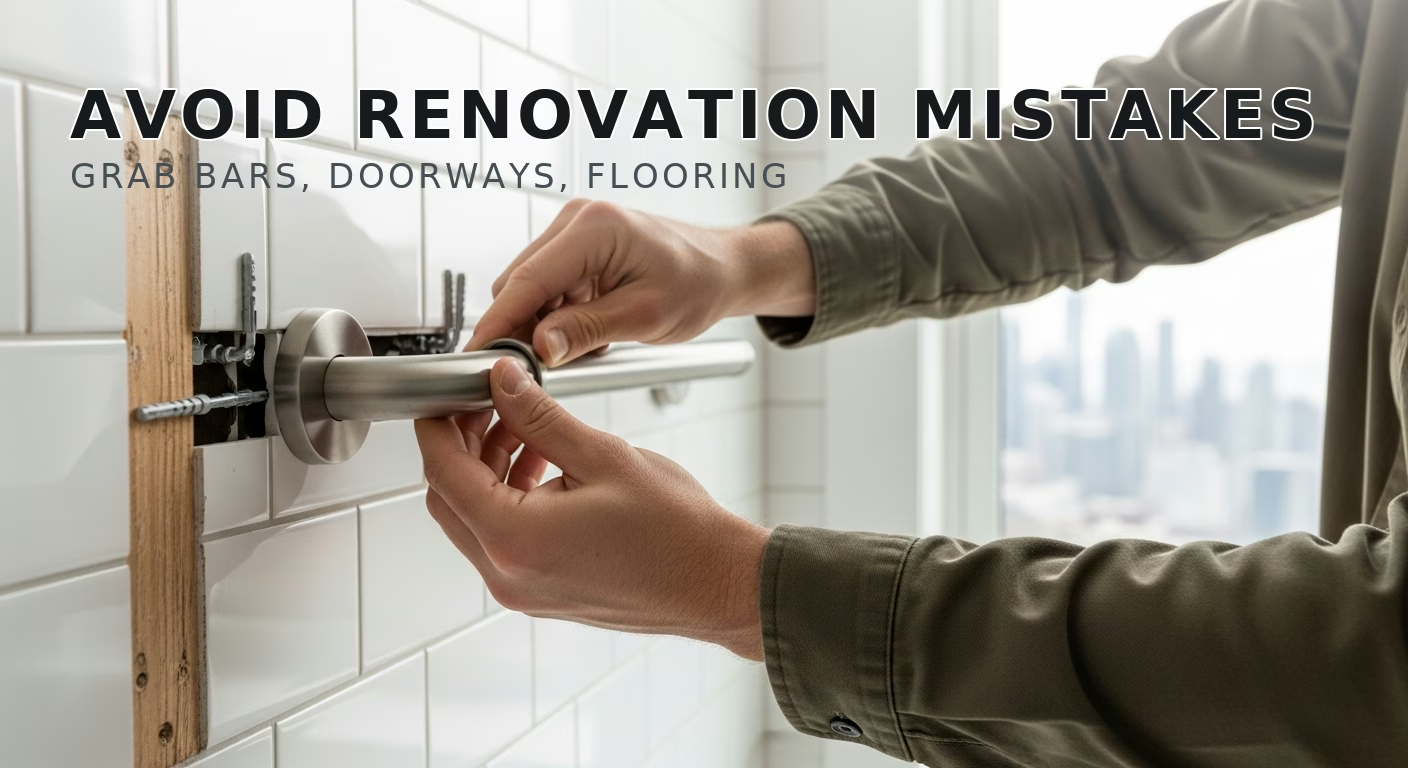

# Accessibility Renovation Mistakes Toronto: 12 Errors to Avoid in 2026
Quick answer. Most accessibility renovations in Toronto are well-intentioned but compromised by predictable design and execution errors. Each error below has a real cost — sometimes a $5,000-$15,000 redo, sometimes an injury. This guide collects the 12 most common mistakes RenoHouse sees on Toronto aging-in-place projects, with the fix for each.Most accessibility renovations in Toronto are well-intentioned but compromised by predictable design and execution errors. Each error below has a real cost — sometimes a $5,000-$15,000 redo, sometimes an injury. This guide collects the 12 most common mistakes RenoHouse sees on Toronto aging-in-place projects, with the fix for each.
For the broader project context, see Aging-in-Place Renovation Toronto. For room-specific guides, see Barrier-Free Bathroom Renovation Toronto and Aging-in-Place Kitchen Design Toronto.
Mistake 1: Anchoring Grab Bars Without Studs or Solid Blocking
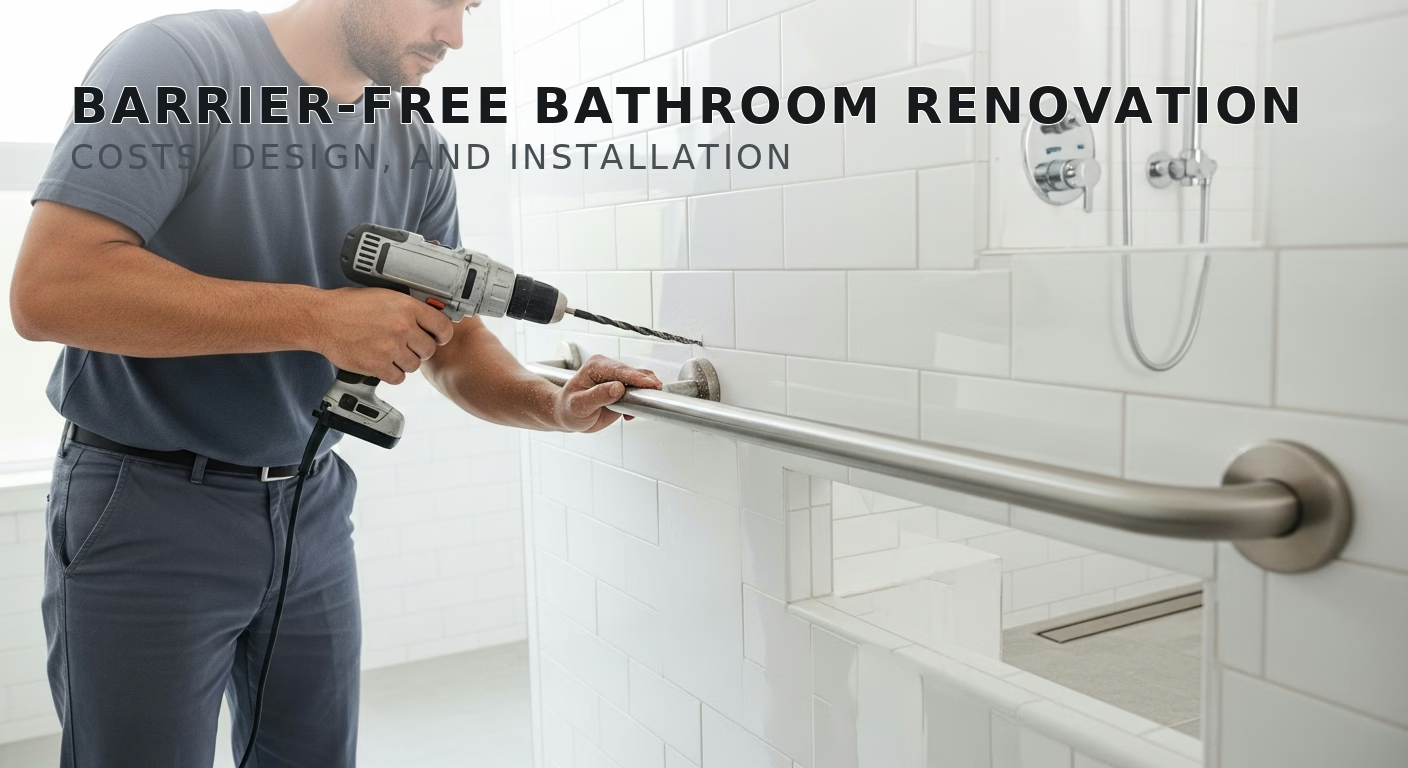
The single most dangerous mistake. Drywall anchors and toggle bolts may pass an initial pull test but fail under repeated load — often when the user is already in mid-fall.
Fix: anchor every grab bar into a wood stud (16" o.c.) or solid blocking installed during construction. ANSI A117.1 specifies 250 lb pull-out load. Use #12 lag screws, 2.5"+ length. In pre-war Toronto homes with lath-and-plaster walls, open the wall and add 2x8 blocking before tile.
Mistake 2: Choosing Polished Tile or Polished Stone
Polished marble, polished travertine, polished porcelain, and high-gloss laminate all have DCOF below 0.42 — well below the safe wet threshold. They are aesthetically beautiful and dangerously slippery when wet.
Fix: specify R10 or R11 porcelain (DCOF 0.5+ for kitchens, 0.6+ for bathrooms). For showers, use 1"x1" or 2"x2" mosaic with grout grip lines.
Mistake 3: Specifying a "32-Inch Door" Expecting 32" Clearance
A 32" door slab provides only 28"-30" clear opening because the door slab itself blocks 1.5"-2" when open at 90 degrees. ANSI A117.1 requires 32" clear minimum.
Fix: specify a 34" door for 32" clear opening, or 36" door for 34" clear opening. For marginal cases, offset hinges add 1.5"-2" to clear width without reframing.
Mistake 4: Installing the Curbless Shower Without Subfloor Work
In pre-war Toronto bathrooms, the existing tub or shower drain sits in a 4"-6" subfloor drop to accommodate the trap. Going curbless without addressing this drop means the shower floor is below the bathroom floor, water cannot drain properly, or the curb persists.
Fix: drop the bathroom subfloor (joist sistering), build up the bathroom floor outside the shower with self-leveler, or use an offset linear drain that accommodates a shallower trap. Each approach requires a contractor experienced with curbless retrofits.
Mistake 5: Specifying Knob Hardware Instead of Levers
Round knobs and pinch-grip pulls fail for users with arthritis or limited grip strength. They turn an "accessible" home into a not-accessible home.
Fix: lever handles on all interior doors, D-pulls or bar pulls on all cabinets, lever or touchless faucets, rocker switches.
Need professional home renovation?
Call RenoHouse at 289-212-2345 or get a free estimate today.
Get Free Estimate →Mistake 6: Forgetting the Bathroom Door
The bathroom is where mobility devices are most needed, and the bathroom door is the most-used door for users with mobility limitations. Many Toronto accessibility renovations widen bedroom doors and entry doors but skip the bathroom door because "it's tight in there".
Fix: prioritize bathroom doorway widening or pocket-door installation. Often the most impactful single change in a Toronto renovation.
Mistake 7: Skipping the Occupational Therapist Assessment
OT-prescribed dimensions are required for grant-funded projects (March of Dimes, RRAP, Veterans Affairs). For self-funded projects, an OT assessment ($300-$700) prevents most dimensional errors. Skipping the OT often leads to a $3,000-$8,000 rework when the user discovers the layout does not work for their specific needs.
Fix: schedule an OT assessment before design starts. The OT observes daily routines and produces a written report with specific dimensions.
Mistake 8: Treating the Kitchen as Cosmetic
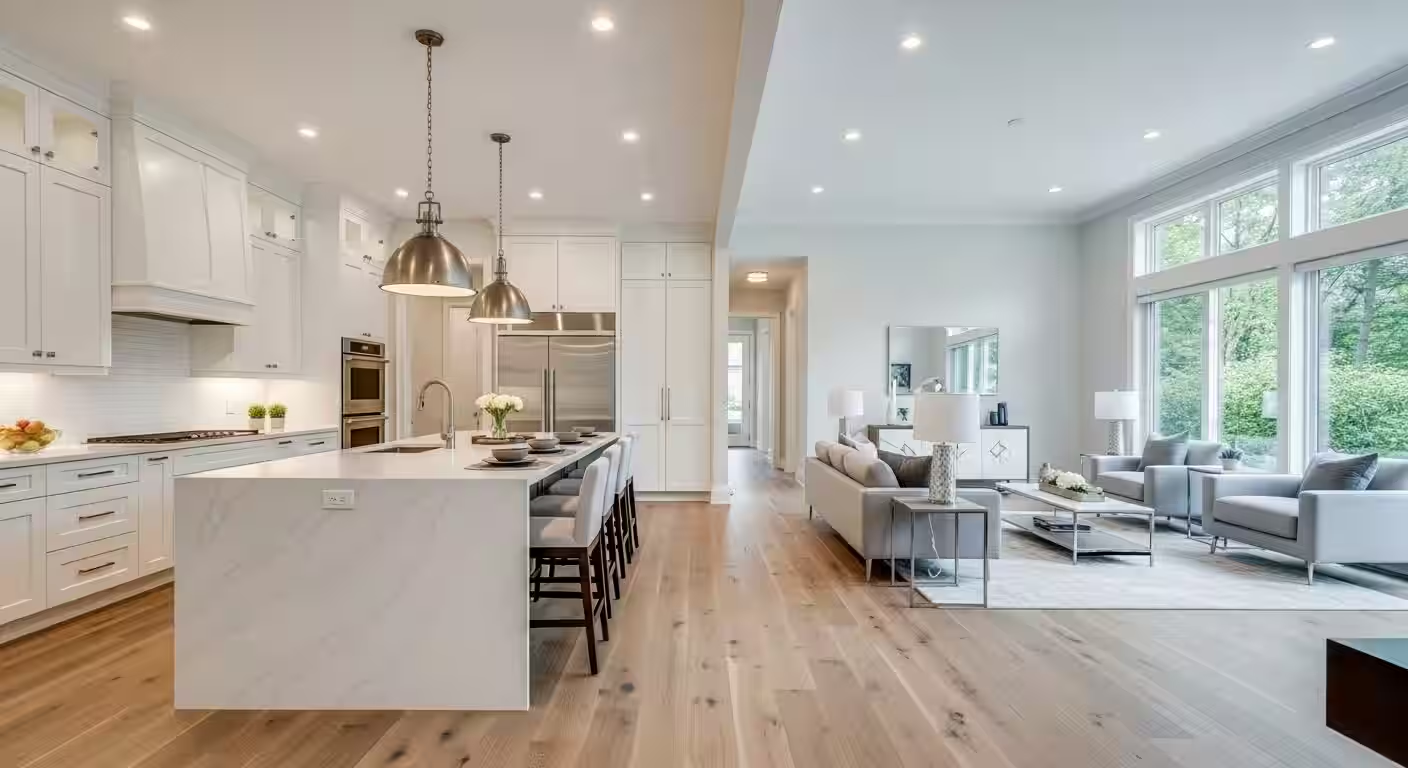
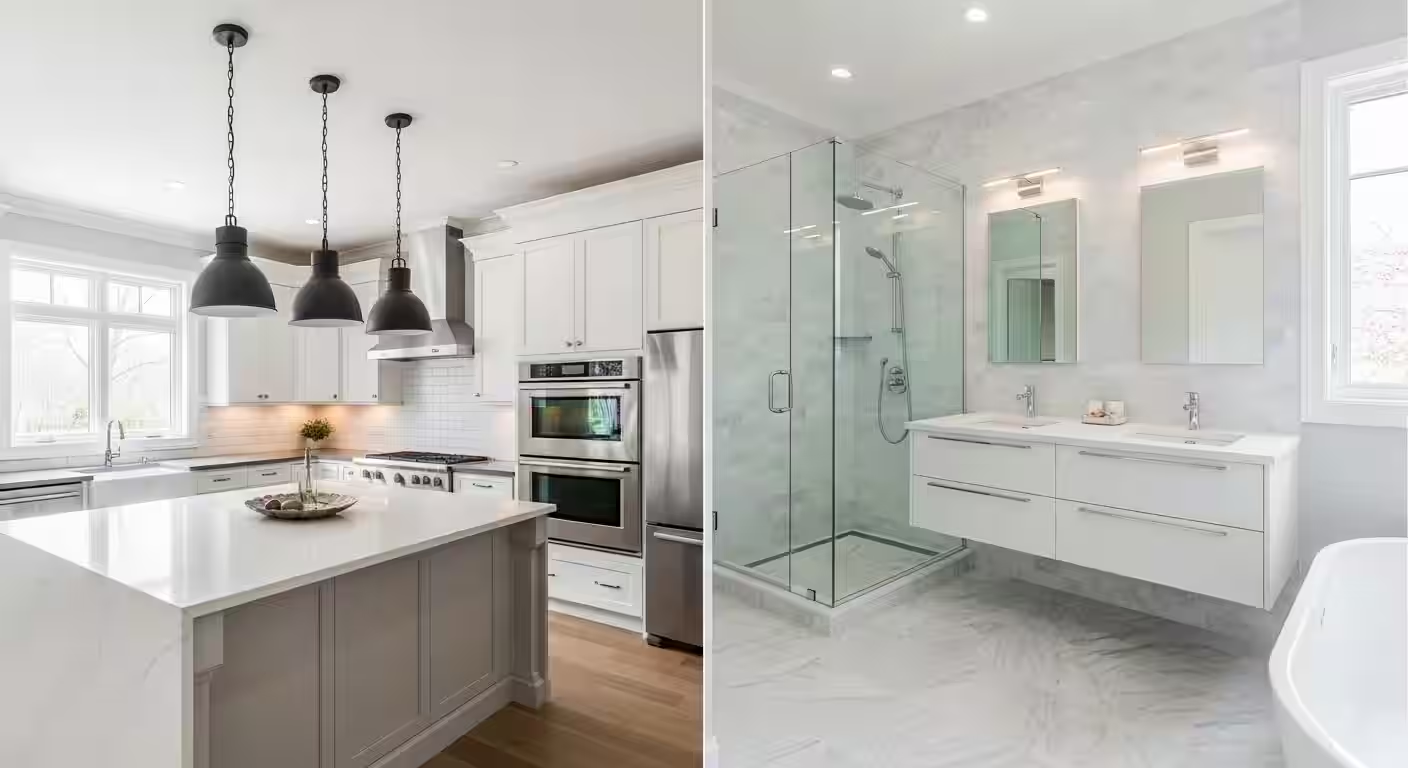
Kitchens are heavily used by aging-in-place homeowners. Specifying a "modern" kitchen with no accessibility features (knobs, standard counter heights, no knee space, doors-not-drawers in lower cabinets) misses the project entirely.
Fix: D-pulls, drawer base cabinets, knee space at sink and cooktop, lever or touchless faucet, induction cooktop with front controls, wall ovens at 30"-34" install height. See Aging-in-Place Kitchen Design Toronto.
Mistake 9: Underestimating Lighting Needs
Aging eyes need 2-3x the light of younger eyes. Standard kitchen lighting (30-50 footcandles) and standard bathroom vanity lighting are insufficient. Reading product labels, doing prep work, and navigating at night all require more light.
Fix: 70-100 footcandles task lighting in kitchen prep zones and bathroom vanity. Layered ambient + task + night lighting on three switches. High CRI (90+) bulbs for accurate colour rendering. Motion-activated night lights at toe-kick or floor level.
Mistake 10: Specifying a Walk-In Tub Without Verifying Standing Transfer Capability
Walk-in tubs require the user to stand briefly and transfer onto the seat. Users in wheelchairs cannot use a walk-in tub independently. Walk-in tubs are heavily marketed but often poorly matched to the user's mobility profile.
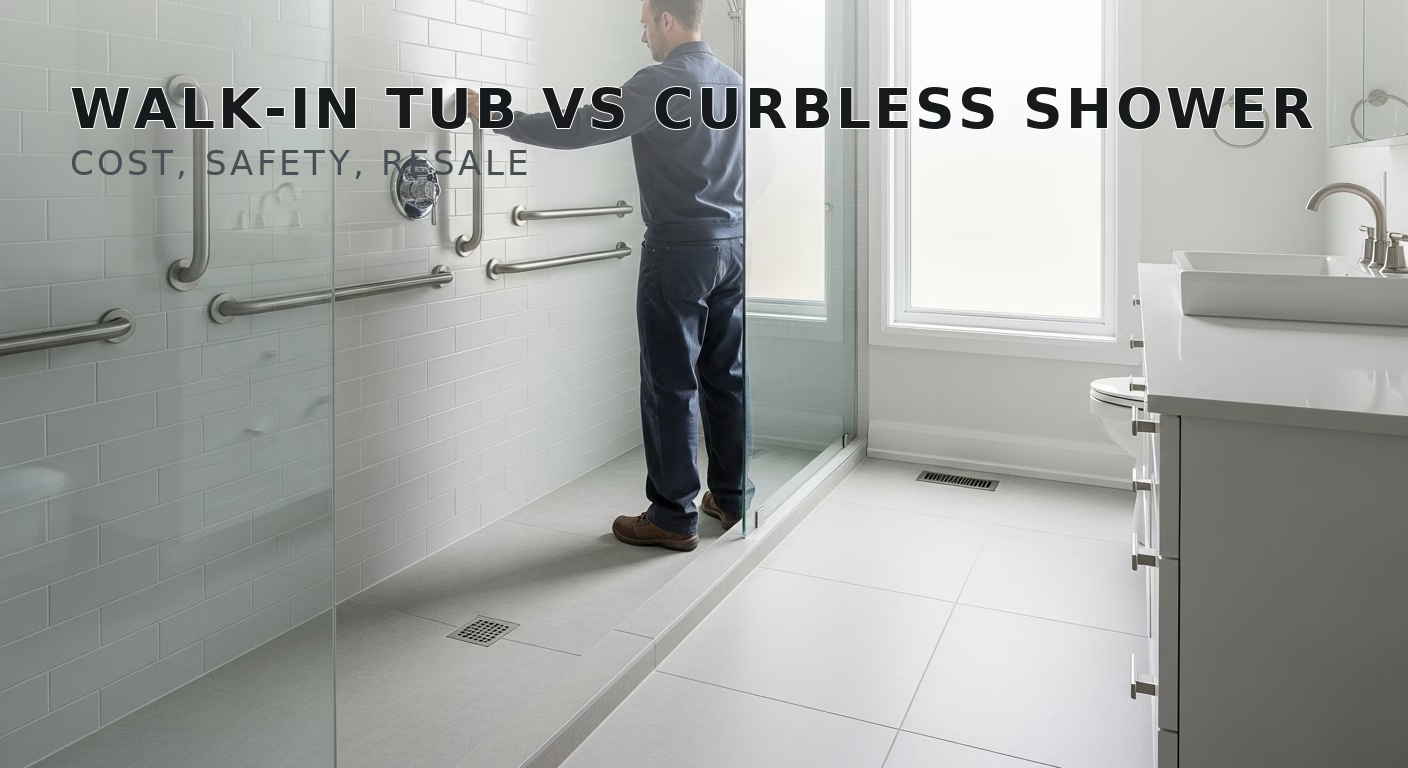
Fix: get an OT assessment before specifying a walk-in tub. For wheelchair users, specify a curbless shower with transfer bench instead. See Walk-in Tub vs Curbless Shower Toronto.
Mistake 11: Forgetting Threshold Transitions
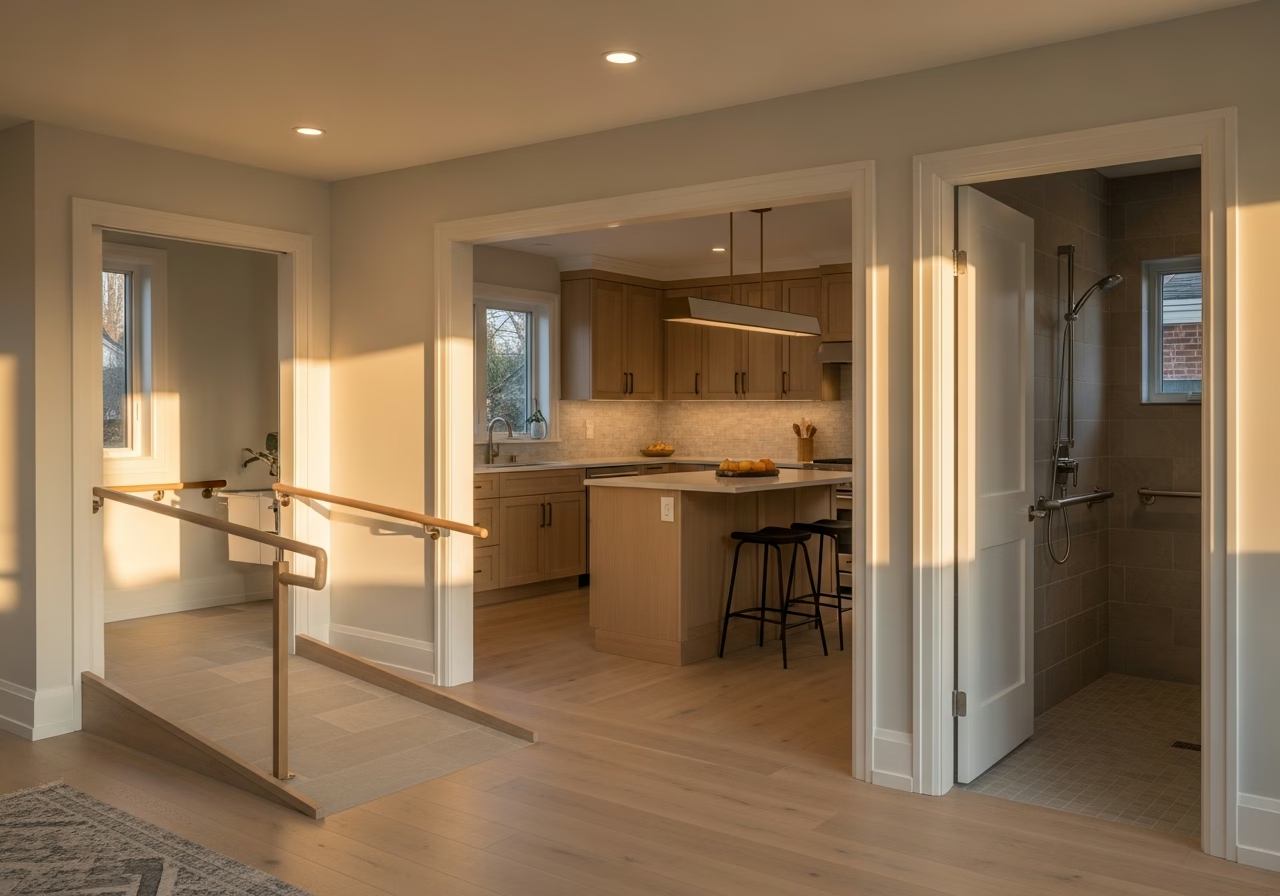
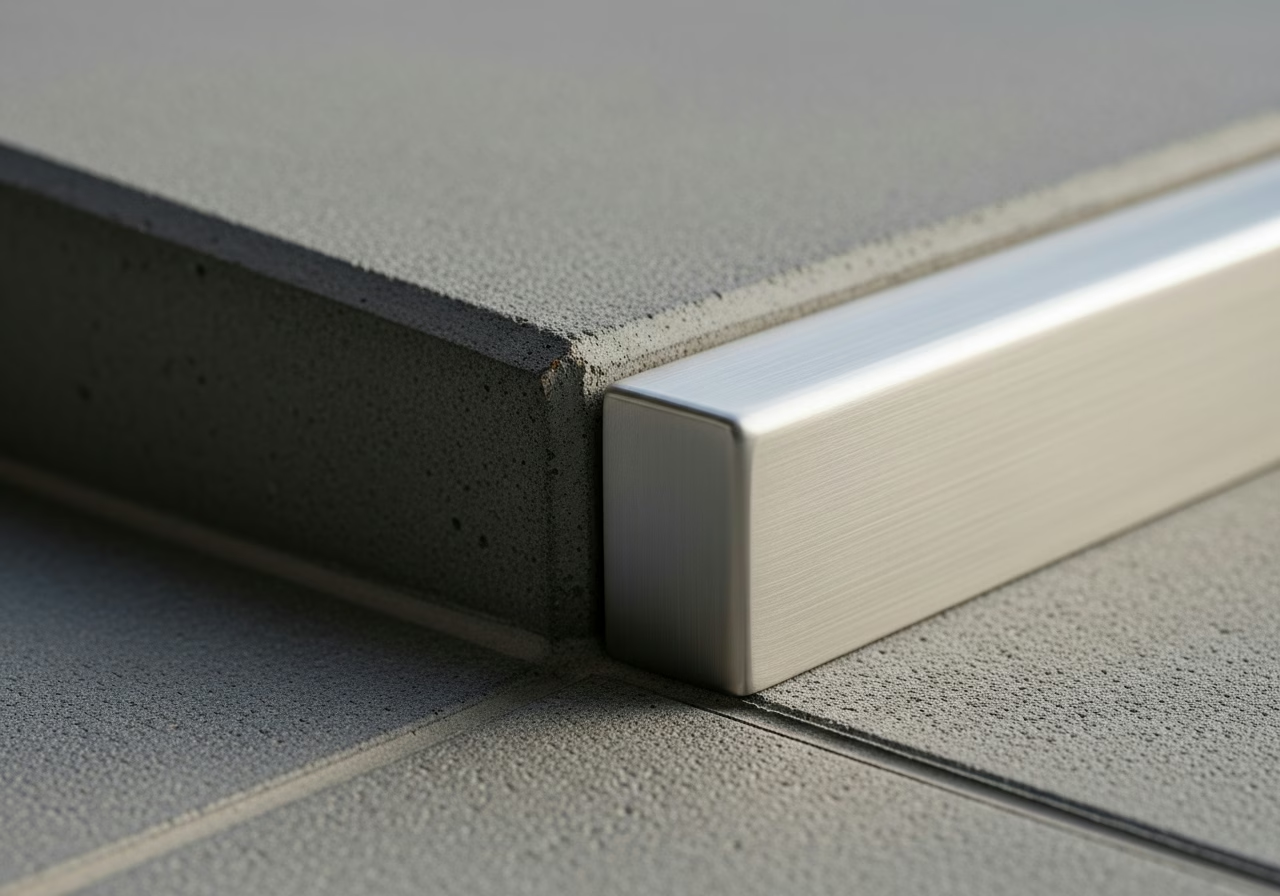
A 1/2" or 3/4" threshold at the bathroom door, a 1" rise at the front door, or a step-down to a sunken living room are all trip hazards for users with mobility devices and low foot lift.
Fix: replace all interior thresholds with flush or 1/4"-max-rise beveled transitions (Schluter Reno-Ramp, Reno-T). For exterior doors, use beveled threshold (1/2" max) or flush threshold with weatherseal. Add EZ-Access threshold ramps for retrofit on existing rises.
Mistake 12: Working with a Contractor Without Accessibility Experience
Most Toronto general contractors are competent at standard renovations but unfamiliar with accessibility-specific requirements: 250 lb grab-bar load, R10/R11 tile specification, OT-aligned dimensions, grant documentation, condo board approval for accessibility scope.
Fix: verify the contractor has completed accessibility-specific projects (ask for references), works with OTs, understands the grant programs, and follows OBC 3.8 / ANSI A117.1 dimensional guidance.
Bonus Mistake: Skipping the Annual Walk-Through
Aging is a process, not an event. The accessibility needs of a 65-year-old are different from those of an 80-year-old. A renovation that works today may need adjustments in 5-10 years.
Fix: schedule an annual walk-through with an OT or accessibility consultant. Add grab bars, change hardware, adjust counter heights as needs change.
How to Avoid All 12 Mistakes
The pattern is clear: treat accessibility as a discipline, not a feature add. The disciplines are:
- 1. OT assessment before design.
- 2. Code-aligned dimensions (OBC 3.8, ANSI A117.1).
- 3. Solid blocking for all grab bars.
- 4. Slip-resistant flooring with verified DCOF/R rating.
- 5. Lever and touchless hardware throughout.
- 6. Layered lighting at 70-100 footcandles task.
- 7. Coordinated trades and accessibility-experienced contractor.
When these disciplines are in place, the renovation works the first time and lasts decades.
Get Started
RenoHouse delivers accessibility renovations across Toronto with OT coordination, code-aligned dimensions, and accessibility-experienced trades. We avoid all 12 of the mistakes above. Learn more about our accessibility and aging-in-place service.
Related Reading
- Aging-in-Place Renovation Toronto: Complete 2026 Guide
- Barrier-Free Bathroom Renovation Toronto
- Aging-in-Place Kitchen Design Toronto
Sources & References
Authoritative sources cited in this guide:
- OBC 3.8 (Barrier-Free Design) — Accessibility code
- Ontario Renovates Program — Senior/accessibility renovation grant
- March of Dimes Home & Vehicle Modification — Accessibility funding
- CMHC Residential Rehabilitation — Federal accessibility program
Continue Reading