RenoHouse

# Aging-in-Place Condo Toronto: 2026 Renovation Guide for Downsizers
Quick answer. Many Toronto seniors and downsizers move from a multi-storey detached home to a condo specifically because the single-level layout is more accessible. But most Toronto condos are not actually accessibility-ready out of the box. Tight bathrooms, standard 30" doors, mid-height counters, and slippery polished tile are common.Many Toronto seniors and downsizers move from a multi-storey detached home to a condo specifically because the single-level layout is more accessible. But most Toronto condos are not actually accessibility-ready out of the box. Tight bathrooms, standard 30" doors, mid-height counters, and slippery polished tile are common. In 2026, an aging-in-place condo renovation in Toronto runs $8,500-$18,000 for a bathroom retrofit, $2,500-$6,500 for kitchen and door hardware upgrades, and $25,000-$55,000 for a coordinated multi-room retrofit in a 700-1,200 sqft unit.
This guide covers what is structurally and contractually allowed in Toronto condos, the design priorities for tight footprints, and realistic CAD pricing. For the broader project context, see Aging-in-Place Renovation Toronto.
What Condo Boards Will and Will Not Allow
Toronto condo corporations vary in renovation policy. Most allow interior cosmetic and fixture changes; many restrict structural and plumbing changes. Common rules:
- Allowed without board approval: Paint, flooring (with acoustic underlayment), cabinetry, fixtures (toilet, vanity, faucet, lighting), grab bars, hardware.
- Allowed with board approval: Plumbing relocations within the unit (sink, shower drain, toilet drain), tile waterproofing, electrical changes affecting the unit panel, removal of non-load-bearing walls.
- Generally not allowed: Removal of load-bearing walls, changes to building envelope (windows, exterior doors), major plumbing risers, gas line changes.
Most condo declarations require:
- Submission of renovation drawings before work starts.
- Proof of insurance from the contractor (typically $2M liability minimum).
- WSIB clearance certificate.
- Hours-of-work compliance (typically 9am-5pm Mon-Fri, no weekends).
- Use of designated freight elevator with deposit.
- Acoustic underlayment when changing flooring (Schluter Ditra Sound, IIC 60+).
- Plumbing changes by licensed plumber with permit and inspection.
RenoHouse pulls the condo declaration and bylaws before quoting to identify allowed scope.
The Bathroom: The Core Project
Most Toronto condo bathrooms are 35-50 sqft — tight even for a standard layout. An accessibility retrofit must work within this footprint.
Need professional home renovation?
Call RenoHouse at 289-212-2345 or get a free estimate today.
Get Free Estimate →
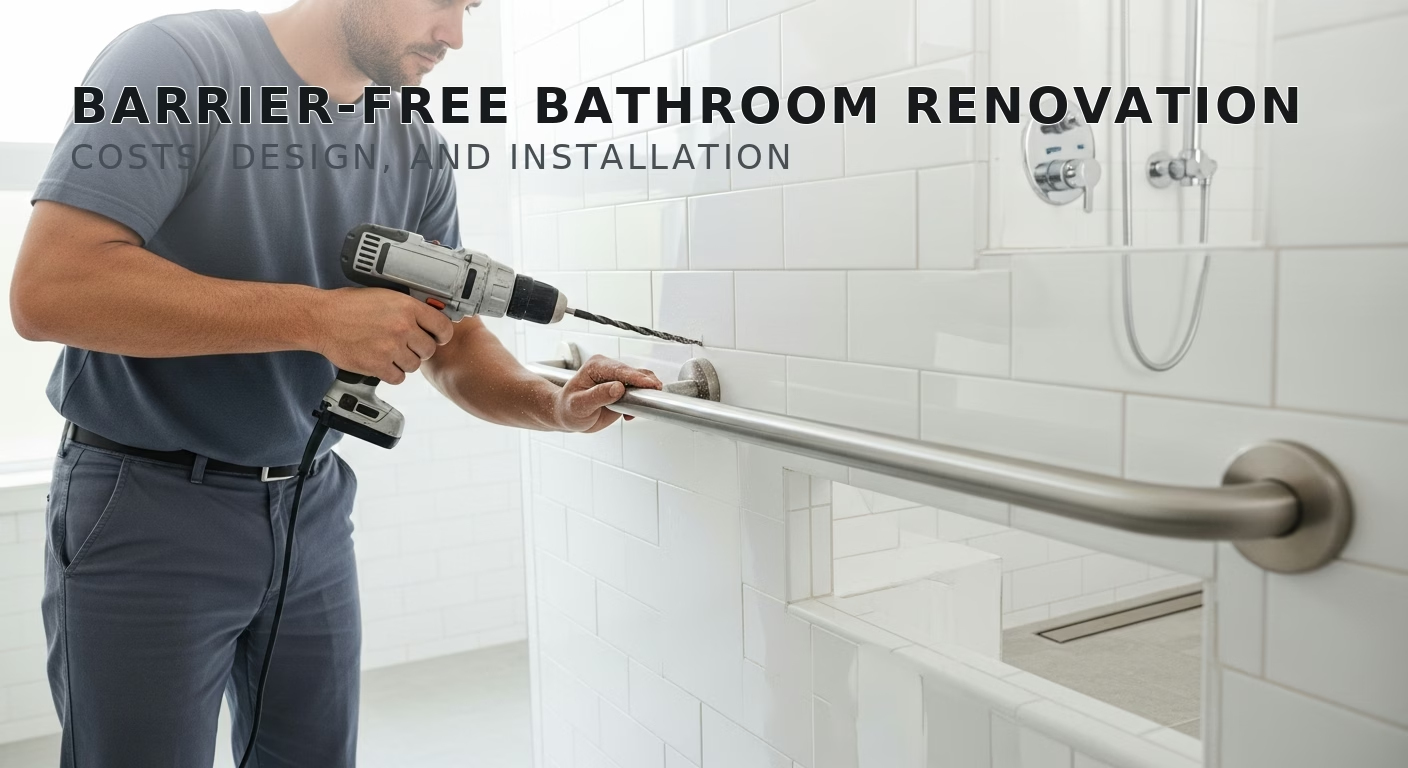
Curbless Shower in a Condo
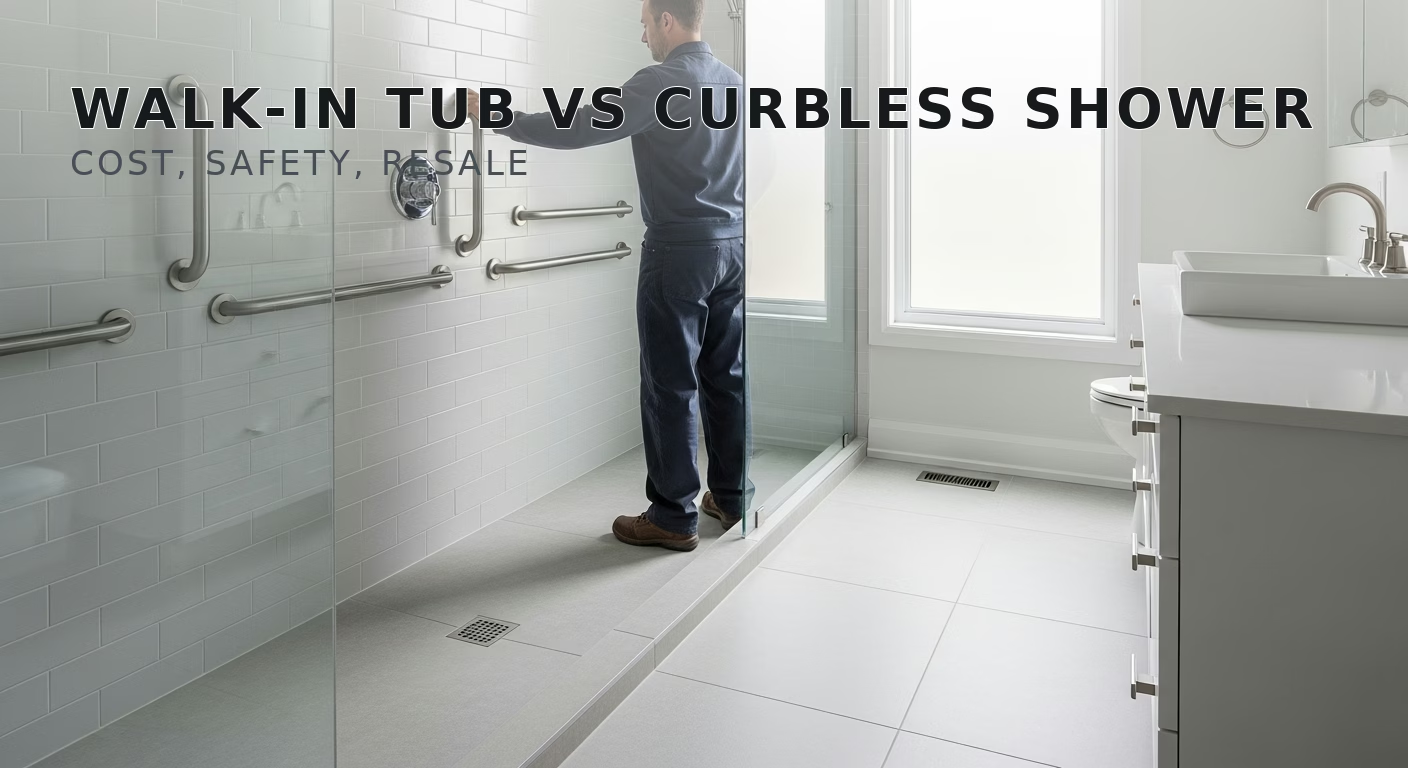
The good news: condo bathrooms typically have a concrete subfloor with a sleeve drain, which makes curbless conversion easier than in a pre-war detached home (no joist sistering required). The bad news: drain location is often fixed by the building's plumbing risers, limiting layout options.
Typical condo curbless shower:
- 36"x36" or 36"x42" footprint (often replacing a tub).
- Linear drain along one wall, drain location matched to existing drain stack.
- Schluter Kerdi waterproofing.
- 1"x1" mosaic floor tile for grip.
- Hand shower on slide bar, plus fixed showerhead.
- Bestbath or Kohler Belay folding seat anchored to studs.
- Grab bars on entry and long wall.
Cost: $8,500-$15,000 for the curbless shower portion.
Pocket Door for the Bathroom
Most condo bathroom doors swing into the bathroom, taking up 9-12 sqft of floor space. Replacing the swing door with a pocket door (32"-36" clear) recovers floor space for wheelchair turning. Cost: $1,800-$3,500 including wall opening, pocket frame (Cavity Sliders or Johnson Hardware), and trim.
Comfort-Height Toilet, Wall-Mount Vanity
- Comfort-height toilet: 17"-19" seat AFF. Replace standard 14"-15" condo toilet.
- Wall-mount vanity with 28"-30" knee space below. Saves floor space and allows wheelchair roll-up.
- Insulated supply and drain lines under the vanity.
- Lever or touchless faucet.
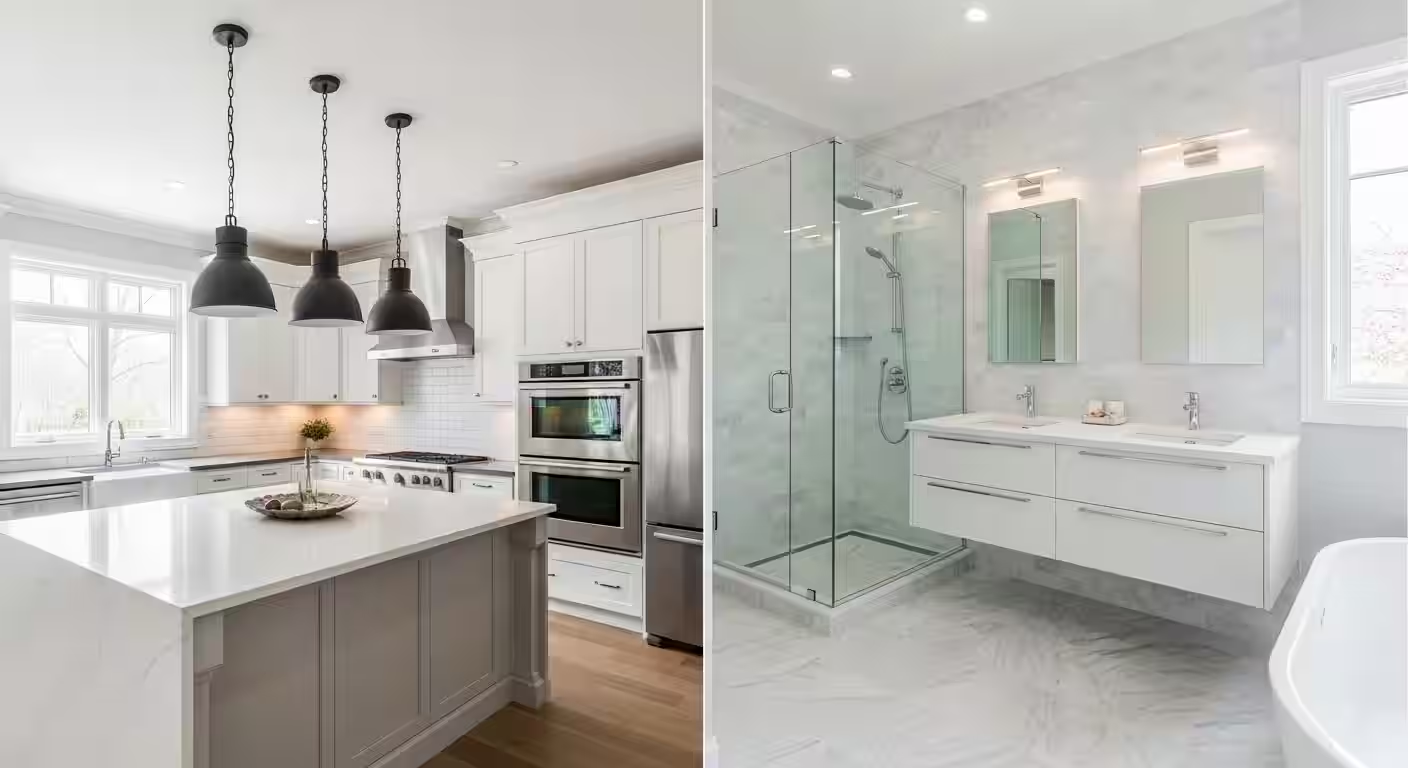
Kitchen Retrofit in a Condo
Most Toronto condo kitchens are galley or one-wall layouts. Accessibility retrofit options within the existing footprint:
- Replace knobs with D-pulls. $200-$500 for a typical galley kitchen.
- Pull-out shelves in lower cabinets. $80-$150 per shelf, 6-10 shelves typical = $500-$1,500.
- Lever or touchless faucet. $220-$580.
- Under-cabinet LED strip lighting. $400-$900.
- Drawer microwave (replacing OTR microwave). $1,500-$2,800 with carpentry.
- Comfort-height toe-kick risers (raise base cabinets 4" to reduce bend). $600-$1,400.
A targeted kitchen retrofit in a condo runs $2,500-$6,500 and captures most of the daily-use benefit without a full reno.
Door and Hardware Upgrades
- Lever handles on all interior doors. $80-$220 per door.
- Smart lock at front door (Schlage Encode, Yale Assure). $280-$520.
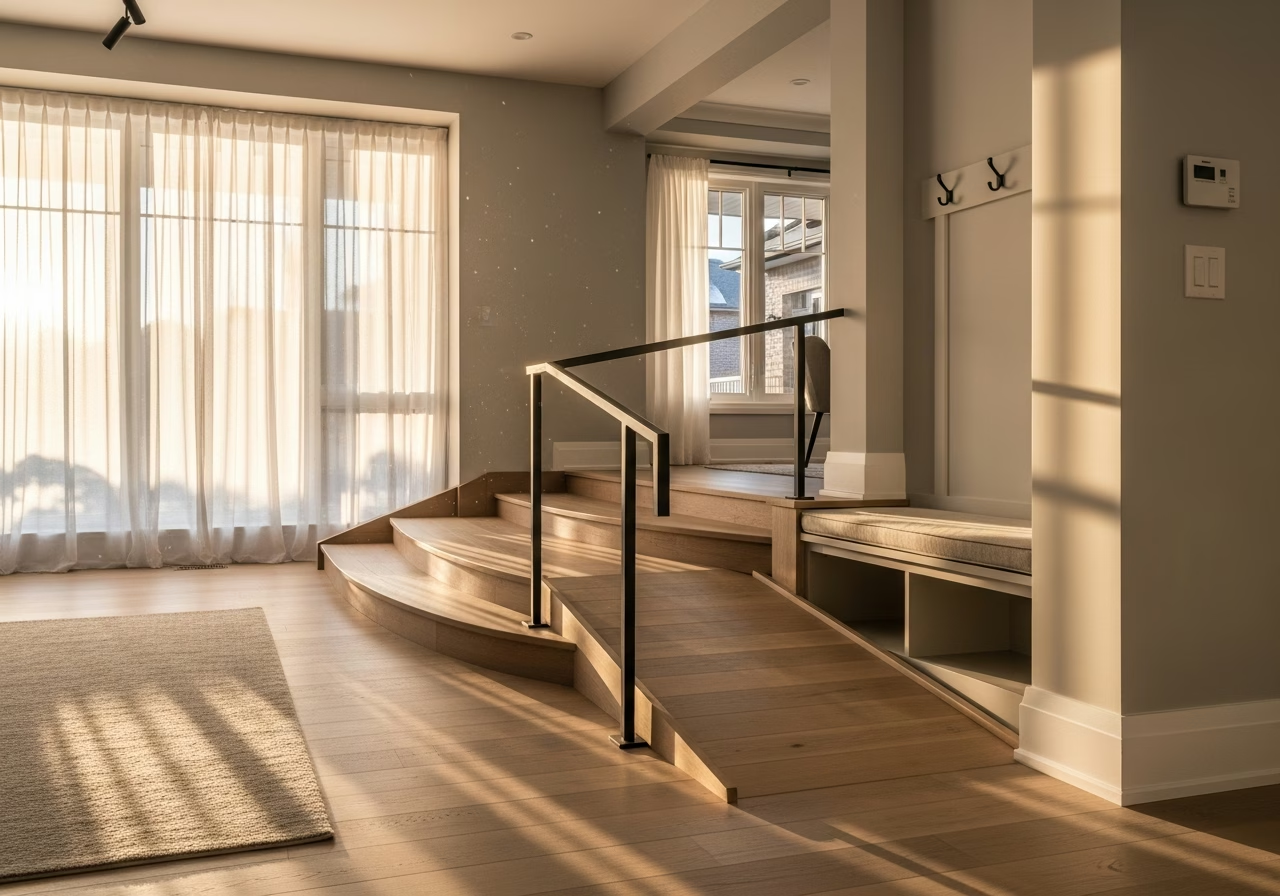
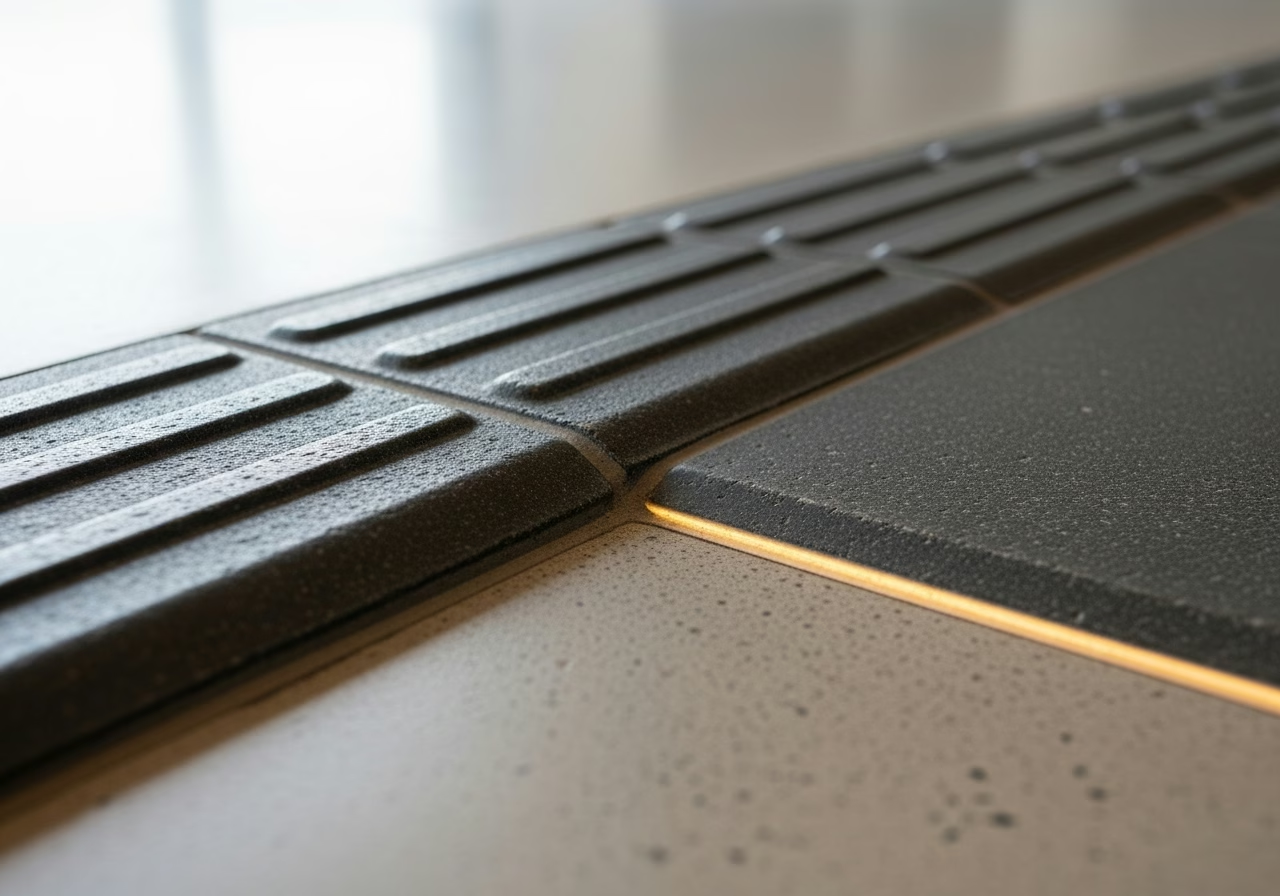
- Threshold ramps at any sliding door to balcony. $80-$200 per door.
- Closet door swap (bypass to bifold or pocket). $400-$1,200 per closet.
Flooring
Polished tile (common in older condos) and high-gloss laminate are slippery. Replacement options:
- Luxury vinyl plank (LVP) with textured finish. $8-$14/sqft installed including acoustic underlayment.
- Porcelain tile R10/R11. $14-$22/sqft installed.
- Cork or Marmoleum. $12-$18/sqft installed (warmest, softest, best impact absorption).
Cost for an 800 sqft condo: $6,400-$17,600.
Layout-Specific Considerations
Bachelor / Studio Condos
- Combining bathroom and main-room accessibility within 400-500 sqft.
- Wall-mount sink instead of vanity to recover floor space.
- Murphy bed considerations for users with mobility limitations.
One-Bedroom Condos (550-750 sqft)
- Bathroom retrofit is the priority project.
- Doorway widening for bedroom door (typically 30" needs to become 32"-36").
- Kitchen hardware upgrades.
Two-Bedroom and Two-Bathroom Condos (800-1,200 sqft)
- One bathroom (usually the primary) becomes barrier-free.
- Second bathroom retains standard layout for guests.
- Wider hallway typically not feasible (structural).
Common Condo Mistakes
- Starting work without board approval — risk of stop-work order.
- Forgetting acoustic underlayment when changing flooring.
- Using a contractor without condo experience (insurance, freight elevator, hours).
- Specifying plumbing changes that conflict with building risers.
- Skipping the OT assessment.
Coordinating with the Condo Board
Standard process:
- 1. Pull declaration and bylaws.
- 2. Develop scope and drawings.
- 3. Submit renovation application to property management.
- 4. Provide contractor insurance, WSIB, schedule.
- 5. Pay any required deposits (typically $500-$1,500 for freight elevator).
- 6. Schedule freight elevator and parking.
- 7. Conduct work within approved hours.
- 8. Final inspection by property manager.
This process adds 2-4 weeks before construction can start. Plan accordingly.
Get Started
RenoHouse delivers aging-in-place condo renovations across Toronto with condo board coordination, OT assessment integration, and tight-footprint design. Learn more about our accessibility and aging-in-place service.
Related Reading
- Aging-in-Place Renovation Toronto: Complete 2026 Guide
- Barrier-Free Bathroom Renovation Toronto
- Slip-Resistant Flooring Seniors Toronto
Sources & References
Authoritative sources cited in this guide:
- OBC 3.8 (Barrier-Free Design) — Accessibility code
- Ontario Renovates Program — Senior/accessibility renovation grant
- March of Dimes Home & Vehicle Modification — Accessibility funding
- CMHC Residential Rehabilitation — Federal accessibility program
Continue Reading