RenoHouse

# Built-In Pet Feeding Station Toronto: 2026 Design Guide
Quick answer. A built-in pet feeding station replaces the random bowls on the kitchen floor with an integrated, pull-out, custom-fit feature. In Toronto kitchens with tight footprints — pre-war semis, condos, and post-war bungalows — reclaiming the floor from feeding is one of those small-budget renovations that disproportionately improves daily life.A built-in pet feeding station replaces the random bowls on the kitchen floor with an integrated, pull-out, custom-fit feature. In Toronto kitchens with tight footprints — pre-war semis, condos, and post-war bungalows — reclaiming the floor from feeding is one of those small-budget renovations that disproportionately improves daily life. The 2026 cost in Toronto runs $700 (DIY drawer add) to $3,400 (custom toe-kick with airtight food bin and water line).
For the broader pet renovation context, see our pillar Pet-Friendly Renovation Toronto: Complete 2026 Guide. For mudroom integrations, see Dog Wash Station in Mudroom Toronto.
The Short Answer
A 2026 Toronto built-in feeding station includes:
- 1. Pull-out drawer at toe-kick or base-cabinet level.
- 2. Two recessed stainless steel bowls (food + water).
- 3. Adjacent storage for a 30–50 lb food bin.
- 4. Optional water line for auto-fill water (rare due to Toronto cold-room concerns).
- 5. Optional weighing or electronic feeder integration.
Cost summary:
| Tier | Description | Cost installed |
|---|---|---|
| Budget | Insert kit in existing cabinet, plastic bowls | $700–$1,000 |
| Mid | New drawer + stainless bowls + food bin storage | $1,400–$2,000 |
| Premium | Custom toe-kick + airtight bin + water line + weight pad | $2,400–$3,400 |
Where to Locate the Feeding Station
The five locations Toronto homes use most:
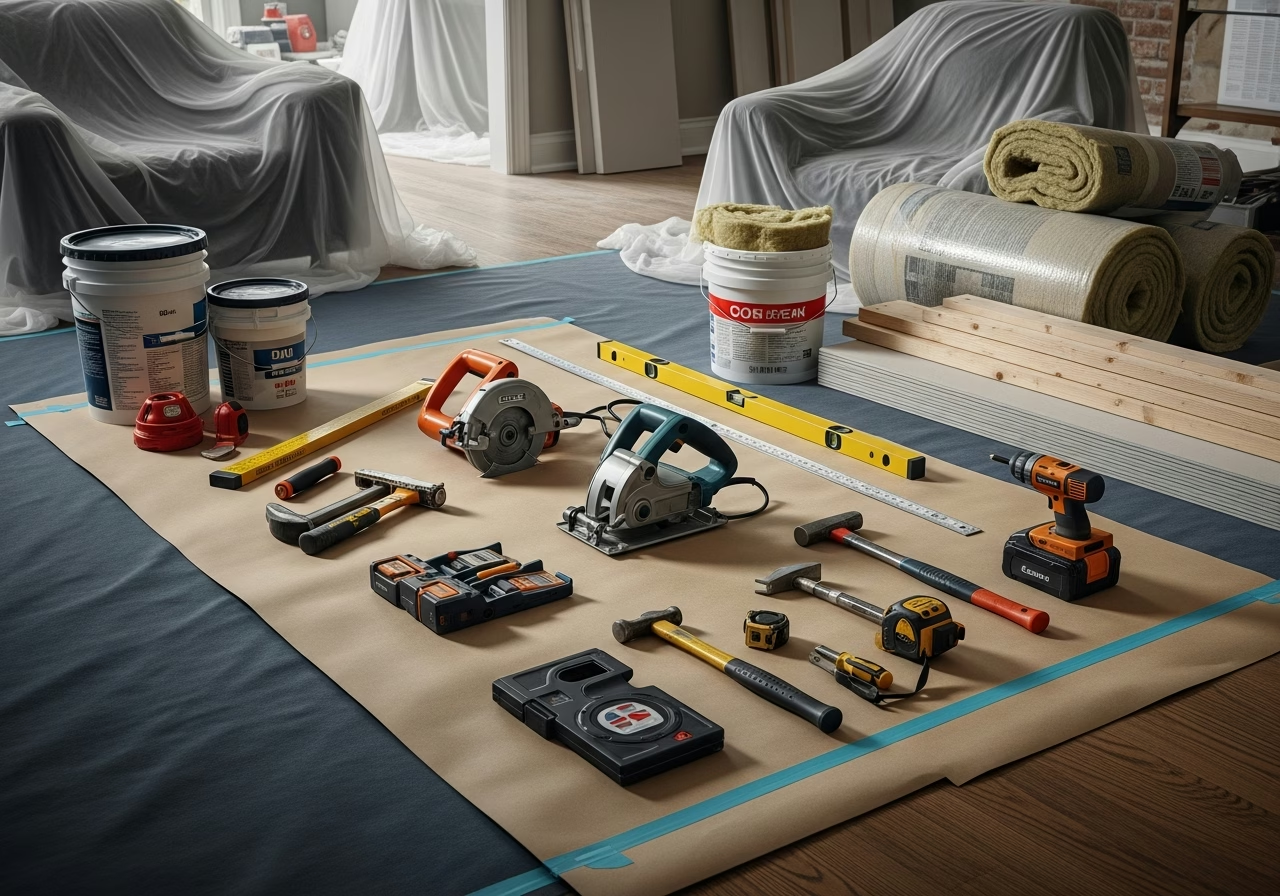
- 1. Toe-kick under base cabinet — the cleanest look. Drawer slides out at floor level; bowls are recessed flush to the floor. Used most in custom kitchens.
- 2. End-of-cabinet pull-out — at the end of an island or peninsula, perpendicular pull-out drawer.
- 3. Mudroom or laundry room base cabinet — best for messy eaters; isolates food zone from kitchen.
- 4. Pantry pull-out — large dogs eat from a pull-out on a heavier-duty slide.
- 5. Built-in island side — drawer pulls from the dog's side of the island, keeping the kitchen working surface free.
Worst locations:
- High-traffic zone in front of dishwasher or oven — owner trips while cooking.
- Right at the kitchen entry — dogs guard the bowl and block entry.
- Sun-exposed windows — food spoils faster.
The Toe-Kick Drawer: The 2026 Toronto Standard
The cleanest, most resale-friendly design. The pull-out drawer is hidden in the toe-kick (the recessed strip at the bottom of base cabinetry, normally just a finished panel).
Design Specs
- Drawer width: 24" (single bowl) or 30–36" (two bowls).
- Drawer depth: 18–22" (matches base cabinet depth).
- Drawer height: 4–5" (toe-kick is typically 4" tall).
- Slide hardware: undermount soft-close, 100 lb load (Blum Tandem or equivalent).
- Bowl recesses: 7–9" diameter, 2–3" deep. Stainless steel inserts (Yeti Boomer, KOMTL, or Loving Pets removable bowls).
- Pull mechanism: push-to-open (no handle) or recessed handle.
- Cabinet front: finished panel matching adjacent kitchen cabinetry.
Installation
The toe-kick drawer requires:
Need professional home renovation?
Call RenoHouse at 289-212-2345 or get a free estimate today.
Get Free Estimate →- Cabinetmaker shop drawings tied into the kitchen layout.
- Floor clearance under the cabinet (some Toronto kitchens have radiant heat or HVAC in the toe-kick — check before specifying).
- Coordination with kitchen flooring transition.
Cost: $1,800–$2,800 for a single toe-kick drawer fully integrated into an existing kitchen.
Stainless Steel Bowl Specs
- Material: 304-grade stainless steel only. Aluminum corrodes from saliva. Plastic harbours bacteria.
- Diameter: 6–7" (small dog), 8–9" (medium), 10–11" (large).
- Depth: 2–3" for water; 1.5–2" for food (shallow bowls reduce whisker fatigue in cats).
- Removable: must lift out for dishwashing.
- Brands: Yeti Boomer (premium), KOMTL, Loving Pets, OurPets.
Cost: $30–$120 per bowl.
Food Storage Bin
The companion to the feeding station is sealed food storage. A 30–50 lb bag of kibble takes up significant cabinet space and needs to be airtight.
Options
- Standalone bin (Vittles Vault, IRIS USA airtight container): $40–$80, sits in any cabinet.
- Built-in pull-out bin: custom 12" or 18" base cabinet pull-out with sealed lid. $400–$900 added.
- Tilt-out bin: tilts forward like a kitchen recycling bin. $300–$600 added.
The built-in pull-out is the best for kitchens with multiple dogs and frequent refills.
Water Line for Auto-Fill
Auto-fill water bowls reduce the daily refill task. The plumbing is identical to an under-sink ice-maker line.
Pros
- No daily refill.
- Constant fresh water.
Cons (Toronto-Specific)
- Freeze risk: water lines in exterior walls (mudroom of older Toronto semis) can freeze in winter. Run lines through interior walls only.
- Trap primer requirement: the bowl drain (if connected) must be vented.
- Permit: may require plumbing permit in Toronto.
- Filter: requires inline filter, replaced every 6 months.
Cost to add a water line: $400–$900 if there's an under-sink supply nearby. $1,400–$2,400 if a new line must be run.
Most RenoHouse clients skip the water line and use the daily-refill bowl. The marginal benefit doesn't justify the freeze risk in older Toronto homes.
Smart Feeding Integration
For households with diet-controlled pets:
- Microchip-activated feeder (SureFeed, PetSafe Healthy Pet Simply Feed): $150–$400 standalone. Cabinetry integration requires custom cut-out.
- Scale-pad bowl: weighs food intake. Honest Kitchen or generic kitchen scales adapt. $80–$200.
- Camera over bowl: monitors eating. Most use a Nest or Wyze cam adjacent rather than integrated.
These add $200–$600 to a standard build.
Cabinetry Material
For a feeding station drawer:
- Plywood box with hardwood face: best. Tolerates moisture, finishes well.
- MDF face with conversion varnish: works, but avoid if dogs are messy drinkers — water pools and softens MDF over years.
- Melamine: budget option, edges chip over time.
The drawer interior should be lined with marine-grade vinyl or stainless steel if the bowls are removable (drips happen).
Three Real Toronto Builds
Build 1: Junction Bungalow — $1,200 mid-budget
- Single 24" pull-out drawer in existing under-sink base cabinet.
- Two stainless steel bowls.
- Adjacent cabinet repurposed for food bin.
- One Cocker Spaniel.
Build 2: Leslieville Semi — $2,400 mid-tier
- New 30" toe-kick drawer in the kitchen island.
- Two stainless bowls, push-to-open mechanism.
- Pull-out food bin in adjacent base cabinet.
- One Goldendoodle, one cat (separate cat zone in mudroom).
Build 3: Bayview Detached — $3,400 premium
- 36" toe-kick drawer + auto-fill water line (interior wall).
- Three stainless bowls (two dogs).
- Tilt-out food bin in pantry.
- Smart feeder integration with microchip.
- Two Labradoodles.
Common Mistakes
- 1. Wrong bowl height for dog size — large breeds benefit from elevated bowls (10"+ off floor) to reduce neck strain. Toe-kick drawers can be raised on a platform if needed.
- 2. Forgetting the food bin — a beautiful drawer with a 50 lb bag of kibble in a cardboard box beside it.
- 3. Water bowl in toe-kick under HVAC vent — air dries the water faster and chills the bowl.
- 4. Wood drawer interior without sealing — drinking dogs splash.
- 5. Bowls too small — leads to gulping and bloat in deep-chested breeds.
Maintenance
- Daily: rinse bowls, refill.
- Weekly: dishwasher cycle for bowls, wipe drawer interior.
- Monthly: deep-clean food bin (residual grease attracts mites).
- Yearly: re-seal cabinet edges if MDF construction.
Resale Considerations
A built-in feeding station is a niche feature. On resale:
- Toe-kick design: neutral — buyers without pets see it as a hidden drawer, easy to retrofit.
- Custom water line + smart feeder: subtractive for non-pet buyers (they don't want the plumbing).
- Pantry pull-out bin: neutral — converts to general storage easily.
The cleanest design is the toe-kick drawer with removable bowls. It can be repurposed for cleaning supplies or general storage by the next owner.
Related Reading
- Pet-Friendly Renovation Toronto: Complete 2026 Guide
- Pet-Friendly Renovation Cost Toronto
- Cat-Friendly Built-Ins and Shelves Toronto
- Dog Wash Station in Mudroom Toronto
Designing a built-in feeding station for your Toronto kitchen? Contact RenoHouse.
Sources & References
Authoritative sources cited in this guide:
- Ontario Building Code — OBC official text
- Toronto Building Permits — City permit portal
- Tarion New Home Warranty — Ontario new-build warranty regulator
- HCRA — Home Construction Regulatory Authority — Ontario builder/vendor licensing
Continue Reading