RenoHouse

# Built-Ins Installation Mistakes Toronto: 2026 Common Failures
Quick answer. Built-in projects fail at the install stage more often than at the design or fabrication stage. The shop can build a perfect cabinet, but if the installer rushes scribing, anchoring, or finish touch-up, the result looks like budget furniture rather than custom millwork.Built-in projects fail at the install stage more often than at the design or fabrication stage. The shop can build a perfect cabinet, but if the installer rushes scribing, anchoring, or finish touch-up, the result looks like budget furniture rather than custom millwork. This guide covers the most common installation mistakes seen in Toronto built-in projects and how to verify quality before signing off. For the broader category, see Built-Ins & Millwork Toronto: Complete 2026 Guide.
Mistake 1: No Scribing to Walls
Toronto homes (especially pre-war) have walls that are not flat or plumb. A pre-war Annex semi can have 3/8"–5/8" of bow across an 8-foot wall. A built-in fabricated to a flat 96" rectangle leaves a visible gap on one side or fails to fit at all.
The fix is scribing — fitting a filler panel to the actual wall contour with a compass and saw. A skilled installer scribes both end-fillers (left and right of the unit) and the ceiling filler if present. Look for tight joints with no visible gap.
How to verify: run your finger along the seam between the built-in and the wall. There should be no gap visible to the eye and no gap larger than a credit card.
Mistake 2: No Levelling for Sloped Floors
Toronto floor framing settles over time. Pre-war floors can slope 1/2"–1" across a single room. A built-in installed to follow the floor slope tilts visibly; a built-in installed level looks correct but has a wedge gap at one end.
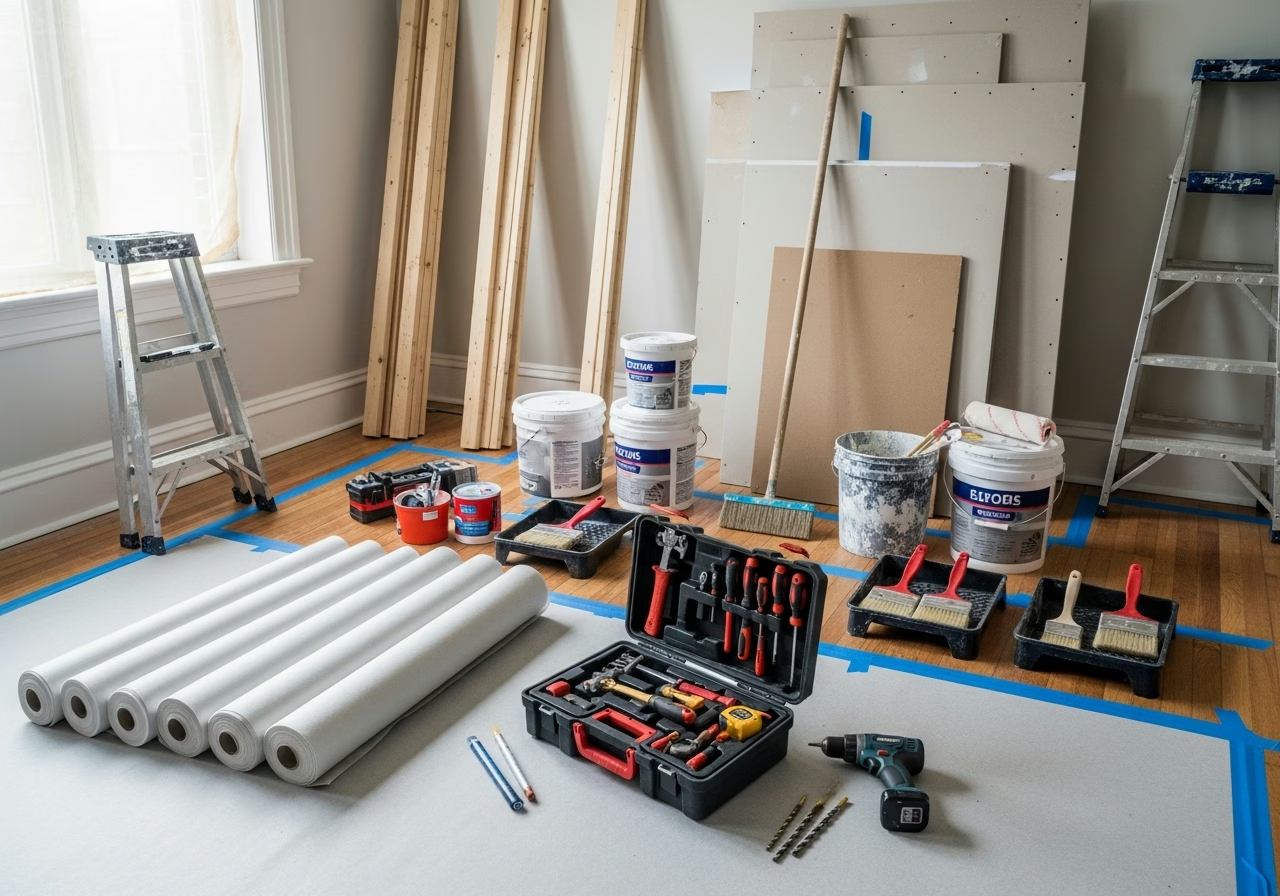
The fix is to install level with a wedge or filler kick board hiding the floor slope. The kick board can be tapered or stepped to absorb the slope without showing.
How to verify: use a 4-foot level on the top edge of the built-in. It should read level. The toe-kick base may have a visible taper; this is correct.
Mistake 3: Anchoring Only to Drywall
A floor-to-ceiling bookshelf loaded with hardcovers can carry 600–900 lbs. Anchoring only to drywall (with toggle bolts or plastic anchors) eventually pulls out, especially as the wood and drywall expand and contract seasonally.
The fix is to anchor each cabinet to wall studs (in stud-frame walls) or structural masonry (in concrete or brick). Use 3" or 3-1/2" structural screws into studs; use Tapcon or Hilti anchors into concrete. Two anchor points per cabinet box minimum.
How to verify: ask the installer to identify the anchor points and demonstrate they hit studs or masonry. A magnetic stud finder or pin-type stud finder confirms.
Mistake 4: Skipping Anti-Tip Anchors
Tall built-ins (over 60") in homes with children must have anti-tip anchors at the top to prevent the unit from pulling forward if a child climbs the shelves. This is a code requirement in some Ontario municipalities and a safety standard everywhere.
The fix is a metal L-bracket or anti-tip strap securing the top of each tall unit to the wall structure.
Need professional home renovation?
Call RenoHouse at 289-212-2345 or get a free estimate today.
Get Free Estimate →Mistake 5: Finish Touch-Up Not Done
Shop spray finish is durable in the shop but can be scratched or dinged during delivery and install. Many Toronto installs skip the on-site touch-up step or do it badly.
The fix is a return visit by the finisher (or a qualified painter) 1–2 weeks after install for touch-up. Touch-up paint or stain pens fill nail holes (filler-screw holes are filled and re-sprayed by the shop, but install nail holes are touched up on site).
How to verify: walk the unit in good daylight 2 weeks after install. Look for unfilled nail holes, scuffed edges, or finish runs. Flag any defects for return visit.
Mistake 6: Misaligned Doors
Doors that do not align (uneven gaps between adjacent doors, or doors not flush with the face frame) signal rushed install or poor hinge selection. Blum or Salice hinges are adjustable in three planes; a skilled installer takes 10–15 minutes per door to dial in the alignment.
How to verify: stand 6–8 feet back. Door gaps should appear visually even (typically 1/8" reveal). Doors should be flush with the face frame when closed.
Mistake 7: Drawer Glide Misalignment
Drawers that bind, sag, or stick are usually a Blum or Salice glide installation issue. Glides must be parallel and at the correct height; a 1/16" mis-position causes binding.
How to verify: open and close every drawer. They should glide smoothly with no binding, no sagging, and no rocking.
Mistake 8: Cable Pass-Throughs Missed
Built-ins for TV walls, home offices, and media stands need cable pass-throughs (grommets or wire holes). Forgetting to drill them at the shop means cutting on site, which is harder and looks worse.
How to verify: confirm grommet locations on shop drawings before fabrication. Walk the install with the homeowner and confirm power cords and HDMI cables route cleanly.
Mistake 9: Cabinet Backs Not Properly Fastened
The 1/4" back panel on a cabinet box adds significant racking resistance — when properly fastened. If only stapled in place (without glue), the back panel can pull away under load. The shop should glue and staple/nail the back.
This is hard to verify post-install but can be checked by removing one bottom shelf and looking at the back-to-side joint.
Mistake 10: Anti-Sag Devices Missing on Long Shelves
Shelves longer than 32" sag under book load over time. A shelf reinforcement (steel bar in the front edge, or 1x2 hardwood nosing) prevents this.
How to verify: load the shelves to expected use levels. Re-inspect after 30 days. Sag of more than 1/8" across a 36" span needs reinforcement.
Mistake 11: Outlet Not Relocated
Built-ins often cover existing wall outlets. The outlet must be relocated to remain accessible — moved to the back of a base cabinet, repositioned at desk height, or extended into the millwork. Skipping outlet relocation leaves dead outlets behind the unit and creates a code violation if the outlet count drops below the required spacing.
How to verify: confirm outlet count and location with an ESA-licensed electrician before install.
Mistake 12: HVAC Vents Blocked
Built-ins can cover floor or wall HVAC registers. The fix is to cut a vent in the bench or cabinet front, build over with a turning vane, or relocate the register. Skipping this reduces airflow to the room.
Pre-Install Checklist (For Homeowners)
Before the installer leaves the site, verify:
- [ ] Scribed joints with no visible gaps.
- [ ] Top of unit reads level.
- [ ] Anchors hit studs or masonry.
- [ ] Anti-tip brackets installed (tall units).
- [ ] All doors and drawers operate smoothly.
- [ ] Door gaps appear visually even.
- [ ] All cable pass-throughs and grommets installed.
- [ ] Outlets relocated and accessible.
- [ ] HVAC vents not blocked.
- [ ] No finish damage visible in good daylight.
Schedule a Return Visit
A return visit 30 days after install catches:
- Settling-related squareness drift.
- Drawer or door alignment changes.
- Finish touch-ups missed initially.
A reputable Toronto built-in shop will schedule this proactively.
Related Reading
Custom Built-Ins Cost Toronto Comparison, DIY vs Professional Built-Ins Toronto.Ready for a Quality Installation?
RenoHouse provides a 5-year installation warranty and a 30-day return visit on all built-in projects. Visit our Built-Ins & Millwork Service Page to start.
Sources & References
Authoritative sources cited in this guide:
- Ontario Building Code — OBC official text
- Toronto Building Permits — City permit portal
- Tarion New Home Warranty — Ontario new-build warranty regulator
- HCRA — Home Construction Regulatory Authority — Ontario builder/vendor licensing
Continue Reading