RenoHouse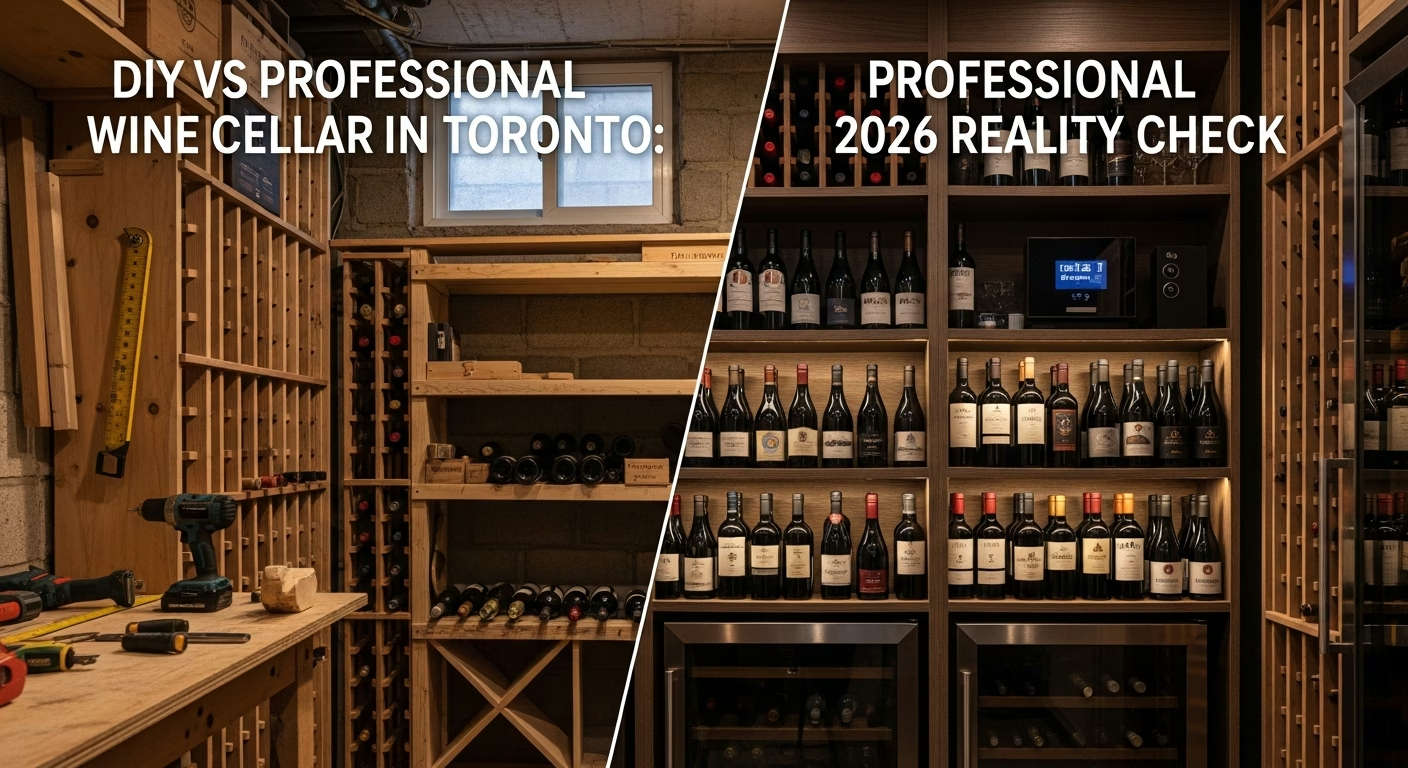

# DIY vs Professional Wine Cellar in Toronto: 2026 Reality Check
Quick answer. A handy Toronto homeowner with renovation experience can build a credible wine cellar. They can also build a cellar that fails within 5 years. The difference comes down to which parts they do themselves and which parts they hand to licensed professionals.A handy Toronto homeowner with renovation experience can build a credible wine cellar. They can also build a cellar that fails within 5 years. The difference comes down to which parts they do themselves and which parts they hand to licensed professionals. This guide walks through the realistic DIY scope, where the lines are, and the hybrid model that produces the best cost-to-quality result for most ambitious DIYers.
For the full installation overview, see wine cellar installation Toronto 2026. For the build sequence, see how to build wine cellar basement Toronto.
What DIY Can Reasonably Cover
A handy Toronto homeowner with prior basement-renovation experience can self-do:
- 1. Demo of existing finishes. Drywall, flooring, trim. Easy with a sledgehammer and a respirator.
- 2. Framing partition walls. 2x4 or 2x6 stud walls per code. Standard rough carpentry.
- 3. Drywall and paint. Mold-resistant board, primer, finish. Standard trade skill.
- 4. Floor prep and tile install. With an underlayment like Schluter Ditra and porcelain tile. Doable for an experienced DIYer.
- 5. Racking assembly and install. Most off-the-shelf racking (Wine Cellar Innovations, BarrelWorks, Vintage View) is designed for self-install.
- 6. Door hanging. Pre-hung wine cellar doors are straightforward.
- 7. Lighting (low-voltage LED). UV-free LED tape and pucks are low-voltage; safe to install.
- 8. Standalone humidifier and monitoring sensor placement. Plug-in.
What DIY Should Not Cover
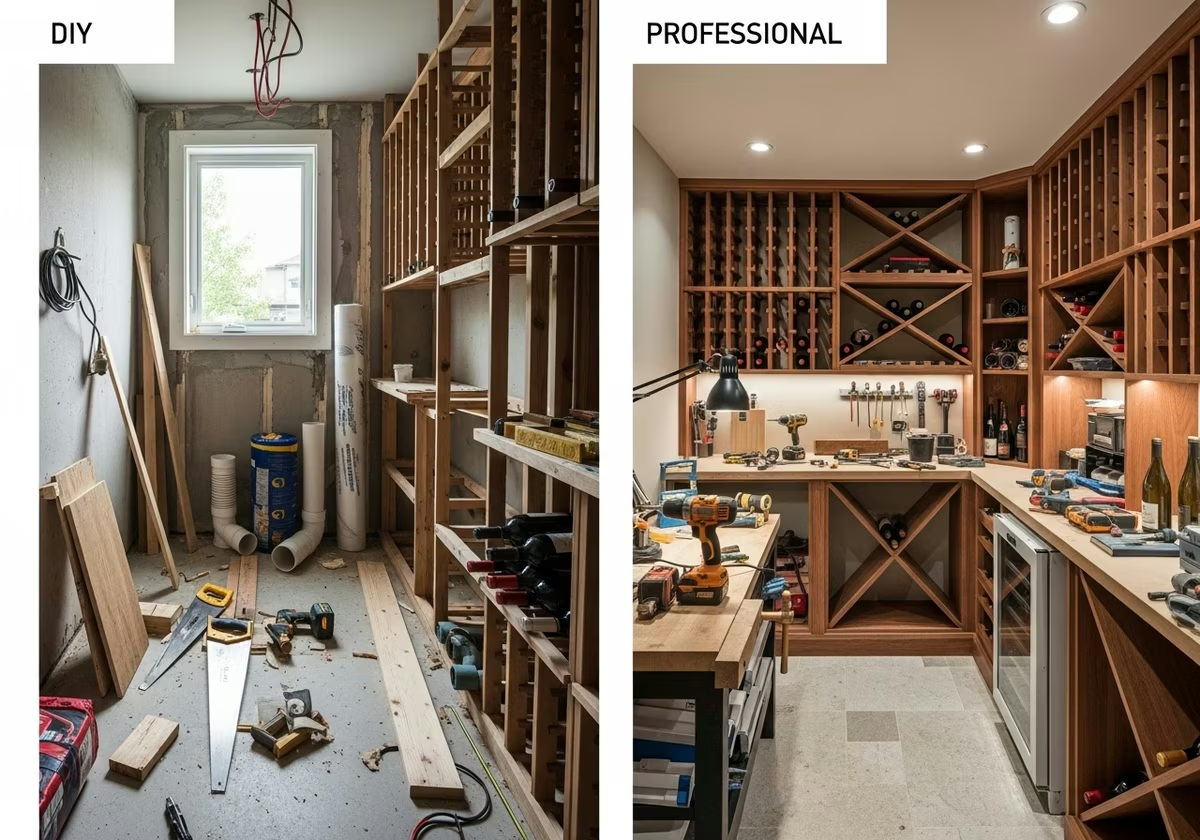
The parts that should always be done by licensed professionals:
- 1. Electrical for the cooling unit. Dedicated circuit, ESA filing. Must be done by a Licensed Electrical Contractor (LEC). DIY electrical without ESA voids insurance and creates real fire risk.
- 2. Refrigerant work on split-type cooling units. Refrigerant is regulated; transport and brazing require certification.
- 3. Closed-cell spray foam insulation. Two-part chemical foam requires PPE, proper application equipment, and certification. DIY foam application generates poor coverage and can be dangerous (off-gassing).
- 4. Vapor barrier detailing on critical walls. Possible to DIY if you've done it before, but the consequences of imperfect detailing are severe (see wine cellar installation mistakes to avoid). Most quality contractors do this themselves; few will warranty a homeowner-installed vapor barrier.
- 5. Plumbing for built-in humidification or condensate to home plumbing. Plumbing permit required.
- 6. Building permit-required structural work. Headers, load-bearing modifications. Permit and licensed contractor needed.
- 7. Final commissioning of the cooling unit. Refrigerant pressure check, capacitor inspection, set-point calibration.
The Hybrid Model
The most common 2026 Toronto pattern for ambitious DIYers:
Homeowner does:- Demo
- Framing
- Drywall and paint
- Flooring (tile)
- Racking install
- Door hanging
- Lighting (low-voltage)
- Monitoring system
- Insulation (closed-cell spray foam)
- Vapor barrier
- Electrical (dedicated circuit + ESA filing)
- Cooling unit selection, install, commissioning
- ESA inspection and sticker
- Final walkthrough and warranty
Cost split for a typical 6x8 walk-in cellar:
- Homeowner self-do scope: $4,000–$7,000 (materials).
- Pro scope: $12,000–$20,000.
- Total all-in: $16,000–$27,000 vs $25,000–$35,000 fully professional.
Savings: $9,000–$14,000 (28–40% of full-pro cost). Time investment: 80–150 hours of homeowner labor.
DIY Cost Reality
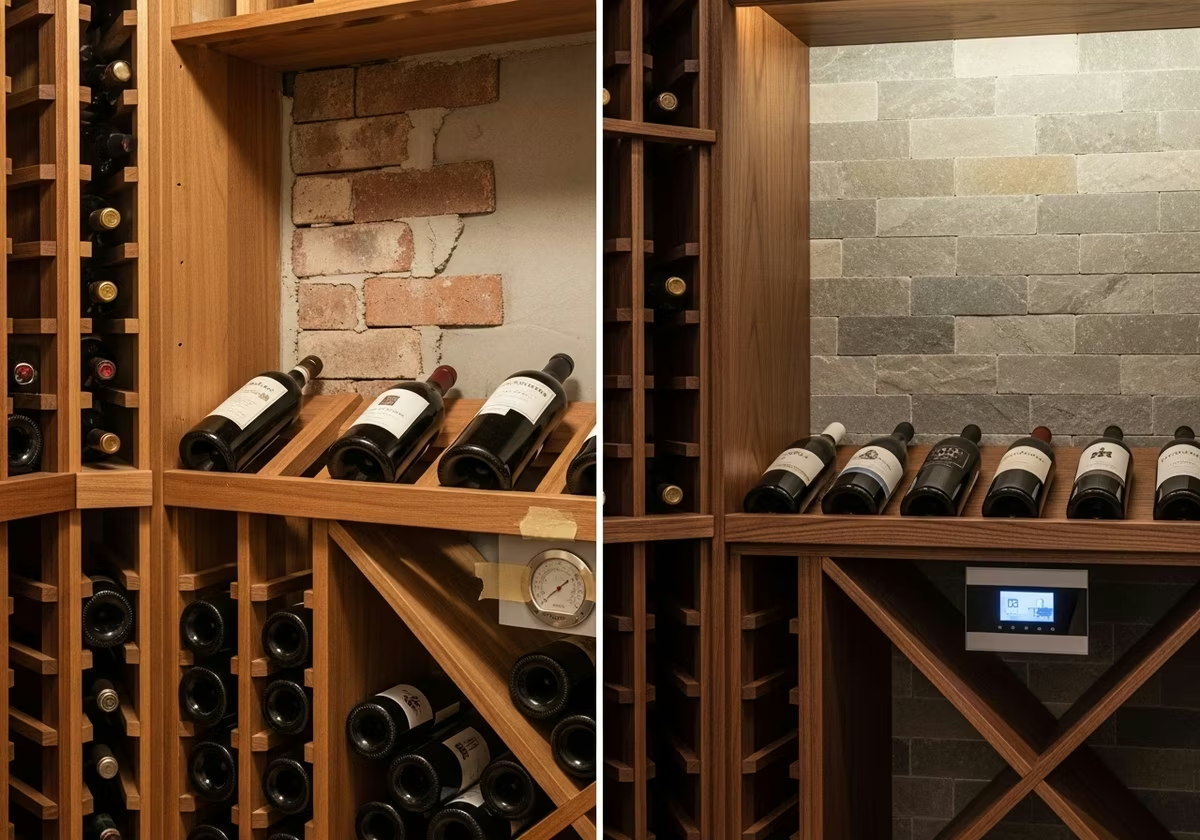
What the homeowner-self-do scope actually costs (not "free"):
| Item | DIY Cost (Materials Only) |
|---|---|
| Demo (dumpster rental, tools) | $400–$800 |
| Framing (lumber, fasteners) | $400–$900 |
| Drywall + paint | $400–$800 |
| Flooring (porcelain over Schluter, 48 sf) | $1,400–$2,400 |
| Door (pre-hung wine room door) | $1,500–$2,500 |
| Racking (off-the-shelf pine, 480 bottle) | $4,500–$7,500 |
| Lighting (LED tape, dimmer, switches) | $250–$500 |
| Monitoring (SensorPush) | $80–$120 |
| Tools (if not owned) | $300–$1,500 |
| Total DIY scope | $9,230–$17,020 |
Plus the pro scope ($12,000–$20,000) for total $21,000–$37,000.
Pure-DIY (homeowner does electrical and cooling install): saves another $4,000–$7,000 but introduces the risks above. Not recommended.
DIY Skills Self-Assessment
Honest self-assessment questions for the prospective DIY cellar builder:
- 1. Have I framed a partition wall before? If no, watch tutorials and start with a non-critical project first. Wine cellar framing must be square and plumb.
- 2. Have I drywalled a room before? If no, the cellar is a small enough room that learning is feasible, but expect imperfections.
- 3. Have I tiled a floor before with Schluter underlayment? If no, a dry-fit and a tutorial are mandatory.
- 4. Do I have access to a contractor-grade table saw, miter saw, drill driver, level, framing square? If no, rental is feasible but adds cost.
- 5. Can I lift 80+ lbs of pine racking module multiple times? Reality check on physical capacity.
- 6. Can I dedicate 80–150 hours over 6–10 weeks? Real time investment.
- 7. Am I willing to redo any part if it's not right? Rework is more painful than first-time.
If you answer "yes" to most, hybrid model is feasible. If you answer "no" to many, full-professional is the right path.
Need professional home renovation?
Call RenoHouse at 289-212-2345 or get a free estimate today.
Get Free Estimate →DIY Risks: What Goes Wrong
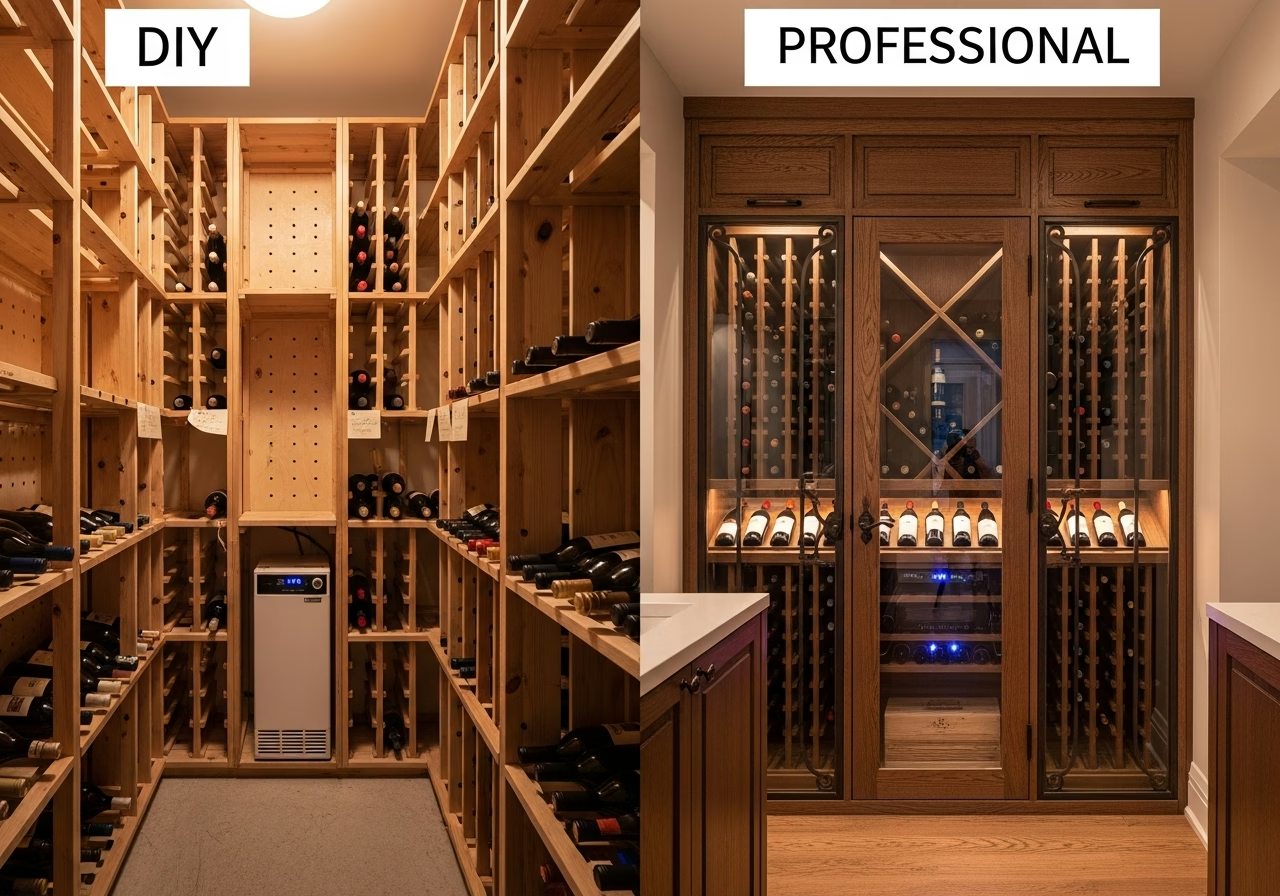
The most common DIY cellar problems we have remediated:
- 1. Framing not square. Drywall doesn't fit; door doesn't seal; racking is off-axis.
- 2. Drywall not painted with mold-resistant primer. Mold appears on drywall paper.
- 3. Tile floor without proper Schluter underlayment. Cracks within 12 months.
- 4. Racking not anchored properly. Loaded racking pulls anchors out of drywall; bottles fall.
- 5. Door not hung plumb. Won't seal; cellar leaks humidity.
- 6. Insufficient research on cooling unit clearance. Unit overheats; warranty void.
- 7. Electrical "DIY" via panel. Discovered at sale; ESA retro-filing required.
The DIY cellar that fails usually fails in framing, drywall, or door — not in the high-tech parts. Take time on the basics.
When to Switch from DIY to Pro
Mid-project pivot points:
- Discovered foundation moisture during demo. Stop. Address waterproofing before continuing.
- Discovered knob-and-tube or aluminum wiring near the panel. Stop. Licensed electrical work required.
- Framing came out unsquare and you can't fix it. Stop. Get a framer in to redo.
- Drywall installation proving harder than expected. It's OK to hand off drywall to a pro for $400–$800.
- Cooling unit specs unclear or scope creep. Hand off to pro before installing.
A graceful handoff at any of these points is dramatically cheaper than a failed cellar in year 3.
DIY Time vs Pro Time
Realistic timelines:
| Phase | DIY Time | Pro Time |
|---|---|---|
| Demo | 1 day | 0.5 day |
| Framing | 3 days | 1 day |
| Drywall + paint | 5 days | 2 days |
| Tile floor | 4 days | 1 day |
| Door | 1 day | 0.25 day |
| Racking | 3 days | 1 day |
| Lighting | 1 day | 0.25 day |
| DIY portion total | ~18 days (or 80–120 hours) | 6 days |
Pros are 3x faster because they have done it 50+ times. Time savings is the unstated benefit of full-pro.
Insurance Implications of DIY
Most Toronto homeowner insurance policies in 2026 do not invalidate coverage for DIY renovation per se, BUT:
- ESA-required work without permit voids insurance for any fire-related claim involving that circuit.
- Plumbing-required work without permit can void water-damage claims involving the plumbing.
- Major framing modifications without building permit can void structural claims.
If you DIY, do the licensed-trade work via licensed trades. The cost ($1,500–$3,500 for electrical + cooling install) is far less than an insurance claim denial.
Cellar-Specific DIY Considerations
A wine cellar has DIY challenges that a normal basement room does not:
- Vapor barrier orientation flip. Critical and counter-intuitive.
- Cooling unit penetration through wall. Specific size, sealing, condensate.
- Door must seal tight. Standard interior doors don't.
- Racking must be anchored to studs. 600+ lbs loaded.
- All lighting must be UV-free. No "I'll figure out lighting later."
These are all manageable but require specific knowledge. Read the full wine cellar installation Toronto 2026 guide before starting.
Recommendation Matrix
| Profile | Recommendation |
|---|---|
| Experienced DIYer, has built a basement reno before, has tools | Hybrid model |
| Some DIY experience but no large reno history | Full professional |
| Time-rich, money-tight, willing to learn | Hybrid with extra study |
| Time-poor, money-available | Full professional |
| Want best long-term performance, no compromises | Full professional |
| First wine cellar, will do another in another home | Hybrid (learn the trade) |
| Building luxury cellar with stone and glass | Full professional, period |
| Building modest closet conversion | Hybrid is fine |
Pure-DIY Total Cost vs Hybrid vs Pro
For a 6x8 walk-in cellar, 480-bottle capacity, in Toronto in 2026:
| Approach | Total Cost | Build Time | Quality Risk |
|---|---|---|---|
| Pure DIY (no pros) | $14,000–$22,000 | 8–14 weeks | High |
| Hybrid (pros for electrical, cooling, foam) | $20,000–$30,000 | 7–11 weeks | Low-medium |
| Full professional | $26,000–$36,000 | 6–9 weeks | Low |
The hybrid model is the value sweet spot: 25–30% cheaper than full-pro with most of the quality.
FAQ
Can I get the closed-cell foam done by a foam contractor and DIY everything else?Yes; this is a common pattern. Foam contractors will spray a small cellar for $1,500–$3,500.
Can I install the cooling unit if I have an electrician do the circuit?Self-contained units yes (it's a plug-in). Split-type units no (refrigerant work needs certification).
What's the minimum pro scope I can get away with?Electrical (dedicated circuit + ESA filing) + cooling unit install + commissioning + ESA inspection. About $4,500–$8,500. Everything else doable as DIY for an experienced renovator.
Will my contractor work alongside a DIY homeowner?Some will, some won't. Confirm at quote stage. RenoHouse offers hybrid contracts where we cover specific scopes (electrical, cooling, foam) and the homeowner does the rest.
How do I know if my DIY work passes for resale later?Pull permits where required. Document everything (photos, receipts, brand names). When you sell, present the build like a pro contractor would: brands, specs, permits.
---
Considering DIY, hybrid, or full-professional for your Toronto wine cellar? RenoHouse offers all three approaches. We will quote full-pro, hybrid (we do the licensed/critical trades, you do the rest), or just the licensed work. Book a free consultation on our wine cellar installation service page.
Sources & References
Authoritative sources cited in this guide:
- Ontario Building Code — OBC official text
- Toronto Building Permits — City permit portal
- Tarion New Home Warranty — Ontario new-build warranty regulator
- HCRA — Home Construction Regulatory Authority — Ontario builder/vendor licensing