RenoHouse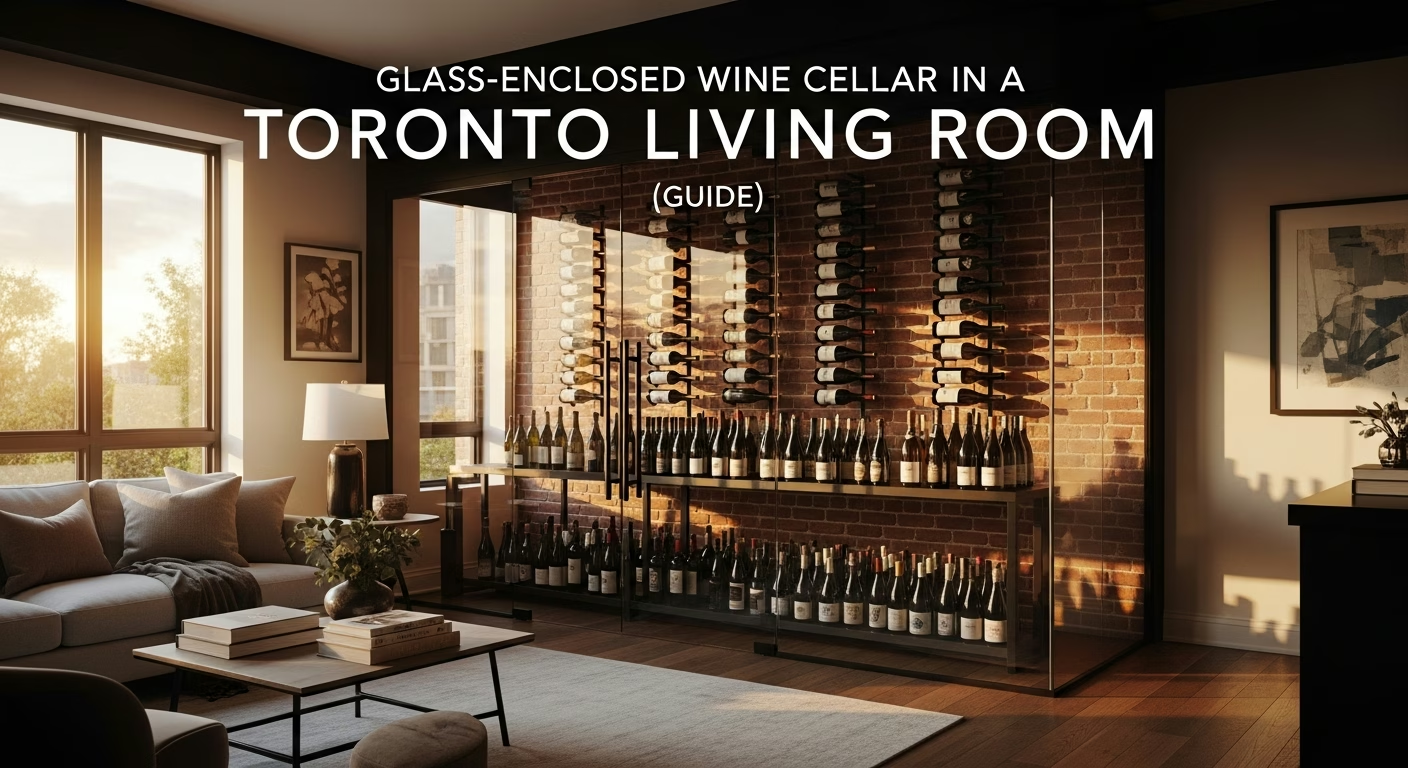

# Glass-Enclosed Wine Cellar in a Toronto Living Room (2026 Guide)
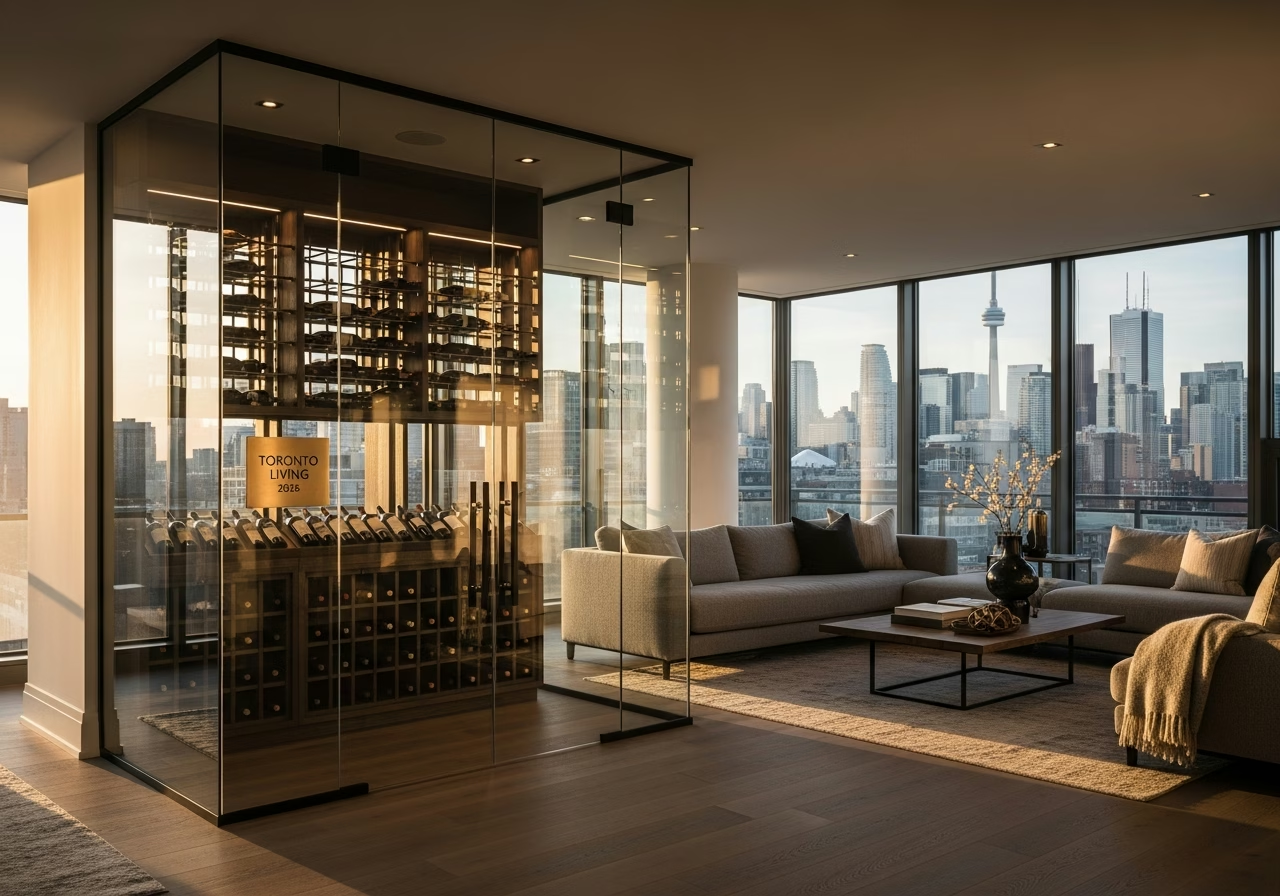
Quick answer. Toronto's contemporary luxury homes — Yorkville and King West condos, Forest Hill modernist infill, Mississauga lakefront builds, Oakville waterfront properties — increasingly feature glass-enclosed wine cellars as architectural showpieces in living rooms, dining rooms, or main-floor hallways.Toronto's contemporary luxury homes — Yorkville and King West condos, Forest Hill modernist infill, Mississauga lakefront builds, Oakville waterfront properties — increasingly feature glass-enclosed wine cellars as architectural showpieces in living rooms, dining rooms, or main-floor hallways. The format has been growing roughly 25% year-over-year in our project portfolio since 2023. This guide explains how glass-enclosed cellars actually work in Toronto's climate, the design and engineering decisions, and the realistic cost.
For the broader format choice, see walk-in vs glass-enclosed wine cellar Toronto. For the full installation overview, see wine cellar installation Toronto 2026.
What "Glass-Enclosed" Means
A climate-controlled wine cellar with one or more walls of floor-to-ceiling glass, visible from the surrounding living space. Typical configurations:
- Single-wall glass: One glass wall, three insulated walls. Easiest to climate-control. Most common.
- Two-wall glass (corner cellar): Glass on two adjoining walls, two insulated walls. Higher cooling load.
- Three-wall glass (peninsula cellar): Glass on three sides, only one insulated. Highest cooling load, most dramatic.
- Free-standing four-wall glass: All four walls glass. Rare; specialty engineering.
The glass is always thermally broken double-pane low-E with argon fill for thermal performance and condensation resistance. Single-pane glass cannot work in this application in Toronto's climate.
Where Toronto Homeowners Place Glass-Enclosed Cellars
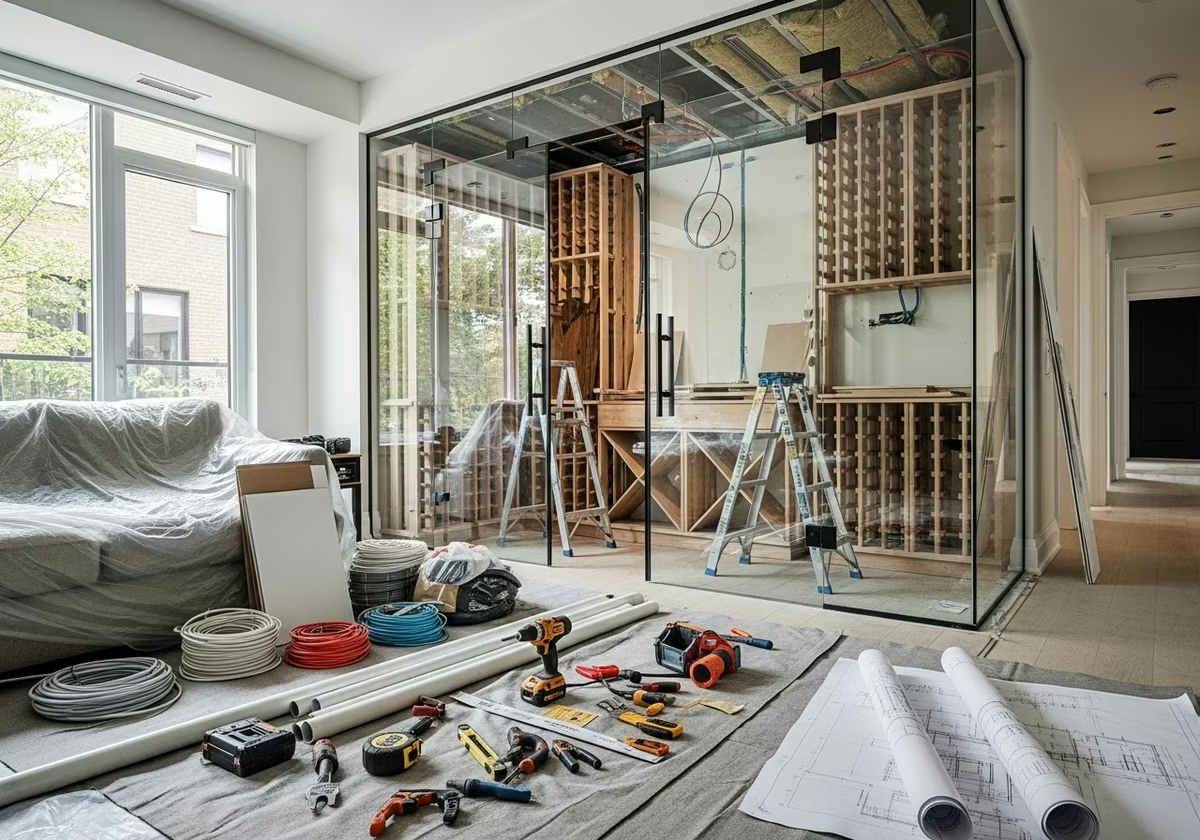
Top placements in 2025–2026 GTA installs:
- 1. Adjacent to dining room (35% of installs). Wine visible during dining; functional access during meals.
- 2. Living room feature wall (28%). Showcase placement; less direct functional use.
- 3. Main-floor hallway / circulation (15%). Architectural focal point; visible from multiple rooms.
- 4. Open-concept kitchen island corner (12%). Integrated with kitchen entertaining flow.
- 5. Library / study corner (6%). Quieter, more contemplative use.
- 6. Foyer / entry (4%). First-impression statement.
Cost Analysis
A 6x8 ft glass-enclosed cellar (400-bottle capacity) in Toronto in 2026:
| Line Item | Cost (CAD) |
|---|---|
| Demo + structural prep | $2,400 |
| Steel/wood framing for glass channel | $4,200 |
| Glass walls (double-pane low-E thermally broken, 2 walls) | $11,500 |
| Insulation + vapor barrier on opaque walls | $3,200 |
| Drywall on opaque walls | $1,400 |
| Glass-front door (thermally broken) | $4,800 |
| Cooling unit (Wine Guardian DS018 humidity-controlled) | $5,800 |
| Cooling install (refrigerant lines, condensate, electrical) | $2,400 |
| Racking (Vintage View metal label-forward) | $11,000 |
| Stone or porcelain flooring | $2,400 |
| Lighting (Lutron Caseta + UV-free LED) | $1,800 |
| Humidification (integrated) | included |
| Project management, permits | $3,200 |
| Subtotal | $54,100 |
| HST | $7,033 |
| Total | $61,133 |
Pricing scales with cellar size and number of glass walls. A 4x10 ft single-wall glass cellar in a condo runs $42,000–$55,000. A 8x12 ft three-wall peninsula in Forest Hill runs $85,000–$130,000.
The Engineering Challenge: Condensation
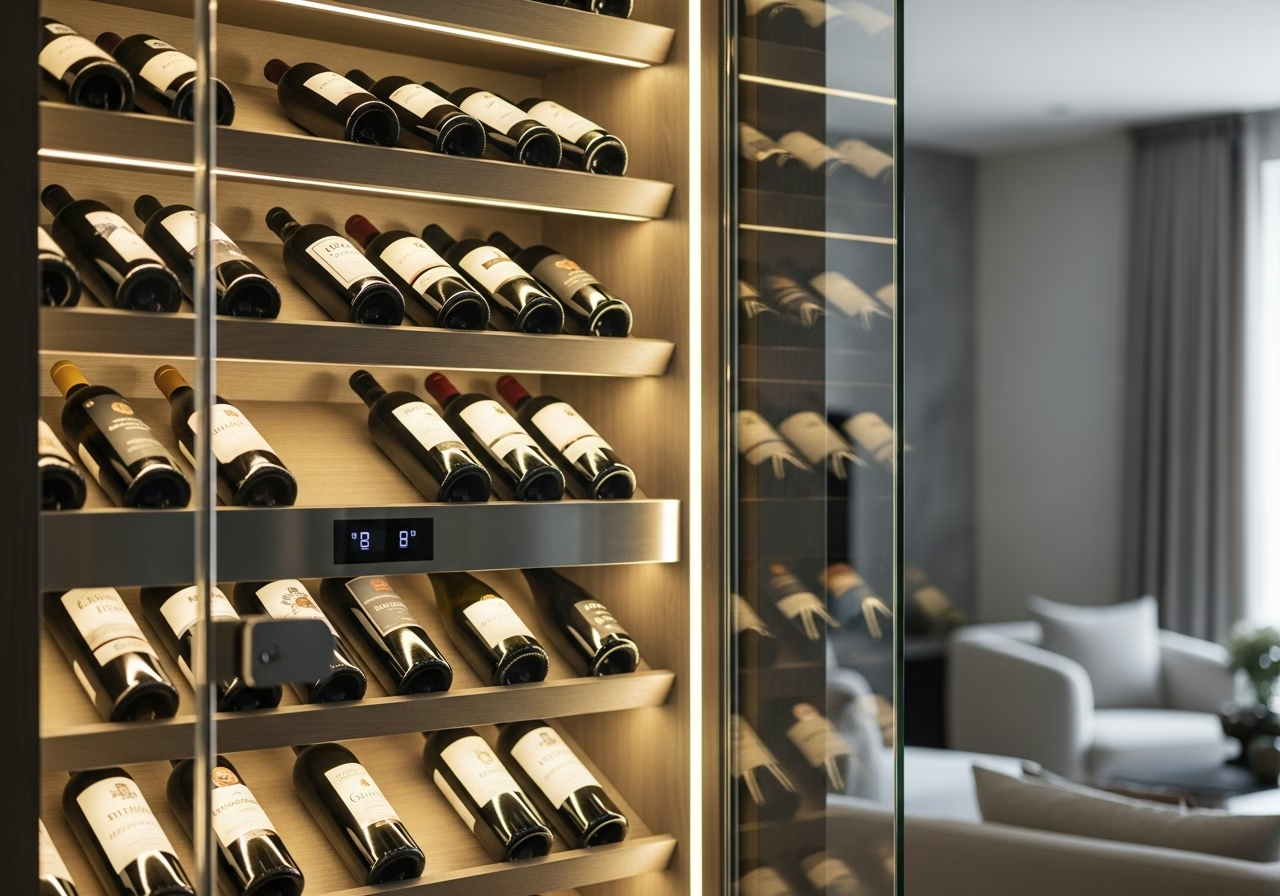
Glass walls in a Toronto wine cellar create one critical engineering issue: condensation on the warm-side surface of the glass during summer. The surrounding living space sits at 22 C and 50–60% RH. The cellar interior is at 12.5 C. The interior surface of the glass (warm side) sits somewhere in between, depending on glass thermal performance.
If the glass surface temperature drops below the surrounding room's dew point, condensation forms on the living-room side of the glass. This is unsightly and can damage adjacent flooring and trim.
Solutions
- 1. Thermal break in the frame. Aluminum without thermal break conducts cellar cold to the frame's interior surface, condensing moisture there. Thermally broken aluminum frames break the heat path. Mandatory.
- 2. Double-pane low-E argon-filled IGUs. Significantly raises the warm-side surface temperature. R-3 to R-5 typical. Mandatory.
- 3. Triple-pane in extreme climates / large glass walls. R-5 to R-7. Adds $4,000–$8,000 vs double-pane for a typical install.
- 4. Slightly elevated cellar set-point during summer humidity peaks. Raise from 12.5 C to 13.5 C in late July / early August reduces condensation risk during peak humidity weeks.
- 5. Manage room humidity. A whole-home dehumidifier in the surrounding zone keeps the room below the dew point. Most Toronto homes already have central AC dehumidifying; verify it is sized correctly.
- 6. Spec the cellar humidity at 55–60%, not 65–70%. Slightly drier interior reduces driving force across the glass.
A properly specified glass-enclosed cellar in Toronto has zero visible condensation year-round. A poorly specified one has condensation on humid August days. The difference is purely the spec.
The Climate Control Challenge: Heat Load
Glass walls have ~10–15x the heat transfer rate of insulated walls. A 6x8 cellar with one glass wall (32 sf of glass) has a cooling load roughly 35–50% higher than the same cellar with all insulated walls. Implications:
- Oversize the cooling unit by 30–40% vs the same cellar in a fully insulated configuration.
- Use a humidity-controlled premium cooling unit (Wine Guardian DS-series, CellarPro VSx with humidity option) — humidity stability matters more in glass-enclosed cellars.
- Prefer ducted split over self-contained; the additional cooling capacity comes more easily from a split.
For sizing detail, see wine cellar cooling systems comparison.
Glass Specification
Standard 2026 Toronto glass-enclosed cellar glass spec:
- Thermally broken aluminum frame (Schüco, Reynaers, or comparable architectural extrusion).
- Double-pane IGU, 1" total thickness.
- Inner pane: 1/4" tempered low-E coated (low-E coating on surface 3, facing the cellar interior).
- Argon gas fill.
Need professional home renovation?
Call RenoHouse at 289-212-2345 or get a free estimate today.
Get Free Estimate →- U-value: 1.4–1.7 W/m^2K (R-4 to R-5).
- Visible light transmission: 75–85%.
- Solar heat gain: Variable; usually less critical for cellars.
For premium installs, triple-pane with two low-E coatings achieves U-value 0.9–1.1 (R-6 to R-7) and is recommended for any cellar with more than one glass wall.
Door Specification
The door is often the weakest thermal link. Spec:
- Thermally broken aluminum frame.
- Double-pane low-E IGU, matching the wall glass.
- Magnetic perimeter seal with adjustable strike plate.
- Hydraulic closer to ensure consistent sealing.
- Threshold sweep with double-fin.
- Hinge sized for the door's actual weight (typically 110+ lbs for a fully glazed thermally broken door).
Glass-front cellar doors run $4,500–$8,500 for standard sizes. Custom etched, leaded, or sandblasted designs run $7,500–$15,000. Vault-style glass doors with custom finishes and multiple-point locking run $12,000–$25,000.
Lighting Strategy
Glass-enclosed cellars are showcases. Lighting must:
- Look great from the surrounding room.
- Not cause glare reflection off the glass.
- Be UV-free (always).
- Be tunable / dimmable / scene-controlled.
Layered lighting strategy:
- 1. Cove lighting above racking, indirect, soft glow. 200–500 lumens.
- 2. Rack-mounted strip lighting illuminating label-forward bottles. 400–800 lumens distributed.
- 3. Accent spots on feature bottles. 100–300 lumens per accent.
- 4. Floor wash (optional luxury) illuminating stone floor from below.
Lutron RadioRA3 or Caseta with scene programming is the typical Toronto spec. Multiple scenes:
- "Day display" (full brightness for showing the cellar).
- "Dinner ambient" (soft, warm, low intensity for dining).
- "Showcase" (accent on feature bottles only).
- "Off."
Budget: $2,500–$6,500 for lighting design and installation in a glass-enclosed cellar.
Racking for Glass Cellars
The default choice: Vintage View metal label-forward. Reasons:
- Bottles display label-out, optimized for visibility through the glass.
- Modern aesthetic matches contemporary design intent.
- Higher density per square foot (more bottles visible).
- Stocked in standard sizes — fast lead times.
Alternative: acrylic display for ultra-modern luxury. Higher cost, lower density.
Traditional wood racking can work in glass-enclosed cellars but loses some of the showcase appeal. Some hybrid designs use Vintage View on the visible side and traditional wood on the hidden walls.
Detail in wine cellar racking systems guide.
Floor Choice
Stone or porcelain are dominant for glass-enclosed cellars:
- Italian limestone or marble: Luxury feel, $75–$140/sf installed.
- Large-format porcelain (24x48): Modern, more affordable, $35–$65/sf.
- Honed concrete: Industrial / urban, $25–$55/sf.
Engineered hardwood is rare in glass-enclosed cellars because the visual continuity with stone-floored surrounding rooms is usually preferred. Cork is occasionally used but reads less premium.
Resale Impact
Glass-enclosed cellars produce the strongest listing-photo and listing-video impact of any cellar format. 2026 Toronto appraiser feedback:
- Direct cost recovery in luxury markets ($3M+): 70–95%.
- Time on market reduction: 18–28% faster vs comparable homes without cellar.
- Buyer-pool expansion: Listings with glass-enclosed cellars attract more luxury-tier buyers.
In contemporary luxury homes, glass-enclosed cellars are the highest-ROI cellar format. Detail in wine cellar ROI Toronto home value.
Common Mistakes
- 1. Single-pane glass. Always condenses; immediate failure mode.
- 2. Aluminum frame without thermal break. Cold transfers to frame; condensation on frame's interior surface.
- 3. Undersized cooling unit. Glass walls bleed cold; unit can't keep up.
- 4. Cellar humidity set too high. Drives condensation on glass.
- 5. Adjacent room humidity not managed. Whole-home dehumidification required.
- 6. Lighting designed for cellar interior only, not for view from outside. Looks dim from the living room.
- 7. Door without proper seal. 25% of cellar's cold-air loss escapes through a leaky door.
Build Timeline
Glass-enclosed cellars take longer than walk-in:
- Design + permits: 3–5 weeks.
- Glass fabrication: 4–8 weeks (custom IGUs, thermally broken frames have lead time).
- Construction: 6–10 weeks.
- Total: 13–22 weeks from contract to commissioning.
Plan ahead. Glass lead time is the long-pole on most projects.
FAQ
Can a condo support a glass-enclosed cellar?Yes; the under-stair pantry conversion to glass-enclosed cellar is one of the fastest-growing condo renovations in Yorkville and King West. Condo board approval needed for cooling-unit heat rejection plan.
Will the glass fog up?With proper specification (thermally broken frame, double-pane low-E, controlled cellar humidity), no. Fogging is a sign of mis-spec.
Can I see the wine clearly through low-E glass?Yes. Low-E coatings have a slight tint but visible light transmission is 75–85%. Bottles read clearly.
Should I use frosted glass for privacy on the bottom of the cellar?Common design choice. Frosted lower 12–24" hides the cooling unit, condensate line, and "back of house" elements while keeping the upper portion of the cellar visible.
Is a glass-enclosed cellar quiet enough for a living room?With ducted split cooling (compressor remote-mounted), yes — under 35 dB at 1 m, inaudible from the living room.
---
Designing a glass-enclosed wine cellar for your Toronto, Oakville, Mississauga, or Vaughan home? RenoHouse handles glass specification, structural framing, climate engineering, and integrated lighting. Book a free consultation on our wine cellar installation service page.
Sources & References
Authoritative sources cited in this guide:
- Ontario Building Code — OBC official text
- Toronto Building Permits — City permit portal
- Tarion New Home Warranty — Ontario new-build warranty regulator
- HCRA — Home Construction Regulatory Authority — Ontario builder/vendor licensing
Continue Reading
- Walk-In vs Glass-Enclosed Wine Cellar: Toronto 2026 Comparison
- Wine Cellar Installation Toronto: Complete 2026 Cost & Design Guide
- Wine Cellar Cost in Toronto: 2026 Budget vs Premium Comparison