RenoHouse

# Home Modifications After Stroke Toronto: 2026 Rapid Discharge Guide
Quick answer. A stroke changes daily life suddenly. The home that worked for 30 years often does not work the day a stroke survivor comes home from rehab. Toronto stroke rehabilitation programs (Toronto Rehab, Bridgepoint, St.A stroke changes daily life suddenly. The home that worked for 30 years often does not work the day a stroke survivor comes home from rehab. Toronto stroke rehabilitation programs (Toronto Rehab, Bridgepoint, St. John's Rehab, Sunnybrook) typically discharge patients on a 2-6 week timeline, which means home modifications must happen on a fast track. In 2026, a typical post-stroke Toronto home modification package runs $18,000-$45,000 and is delivered in 2-4 weeks when coordinated properly.
This guide covers the rapid-discharge process, the priority modifications, OT coordination, and the funding paths available. For the broader project context, see Aging-in-Place Renovation Toronto. For grants, see Accessibility Renovation Grants Toronto Ontario.
The Hospital-to-Home Timeline
A typical stroke recovery and discharge timeline:
- Week 0: Stroke event, acute hospitalization (1-2 weeks).
- Week 2-3: Inpatient rehab admission (Toronto Rehab, St. John's, Bridgepoint, Sunnybrook).
- Week 4-8: Inpatient rehab progress, OT and PT assessment.
- Week 6-8: Pre-discharge home assessment by hospital OT.
- Week 8-10: Discharge home, possibly with outpatient rehab continuing.
The window for home modifications is typically the 4-6 weeks between the pre-discharge OT assessment and the actual discharge date. This is faster than most renovation projects.
Priority Modifications by Mobility Profile
Strokes affect mobility differently. The hospital OT assesses the survivor and produces a recommendation. Common profiles:
Profile A: Hemiparesis (one-sided weakness), can walk with cane or walker
Priority modifications:
- Grab bars in bathroom (entry, shower, toilet) - $650-$1,800.
- Comfort-height toilet - $480-$1,100.
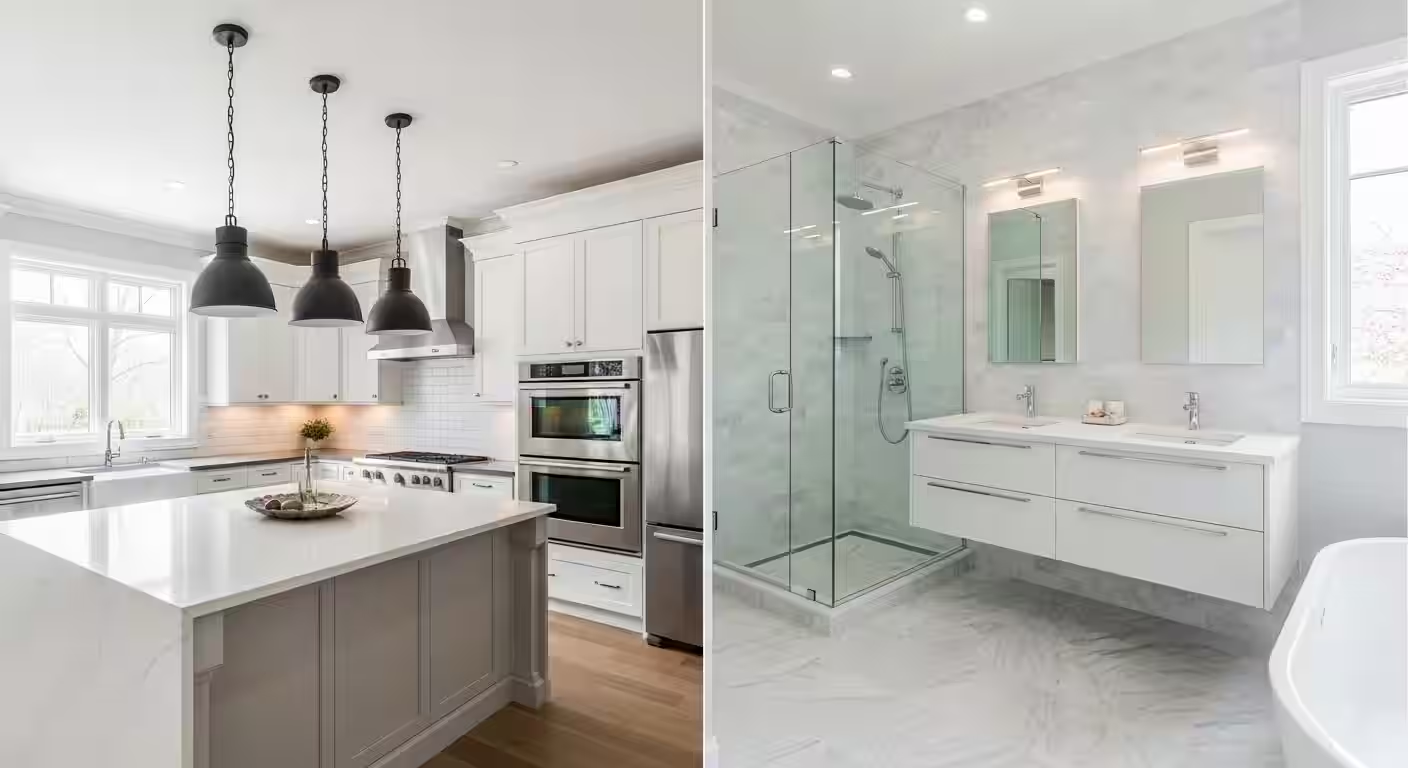
- Curbless or low-curb shower with seat - $9,500-$14,500.
- Slip-resistant flooring in bathroom - $1,200-$2,500.
- Lever-handle door hardware throughout - $400-$1,200.
- Stair handrail on both sides - $300-$1,200.
- Removed throw rugs and threshold transitions - $400-$1,200.
Total: $13,000-$23,500. Timeline: 2-3 weeks.
Profile B: Wheelchair user (full or partial)
Priority modifications:
Need professional home renovation?
Call RenoHouse at 289-212-2345 or get a free estimate today.
Get Free Estimate →- All of Profile A, plus:
- Doorway widening (bathroom, bedroom, main entry) - $2,500-$7,200 for 3 doors.
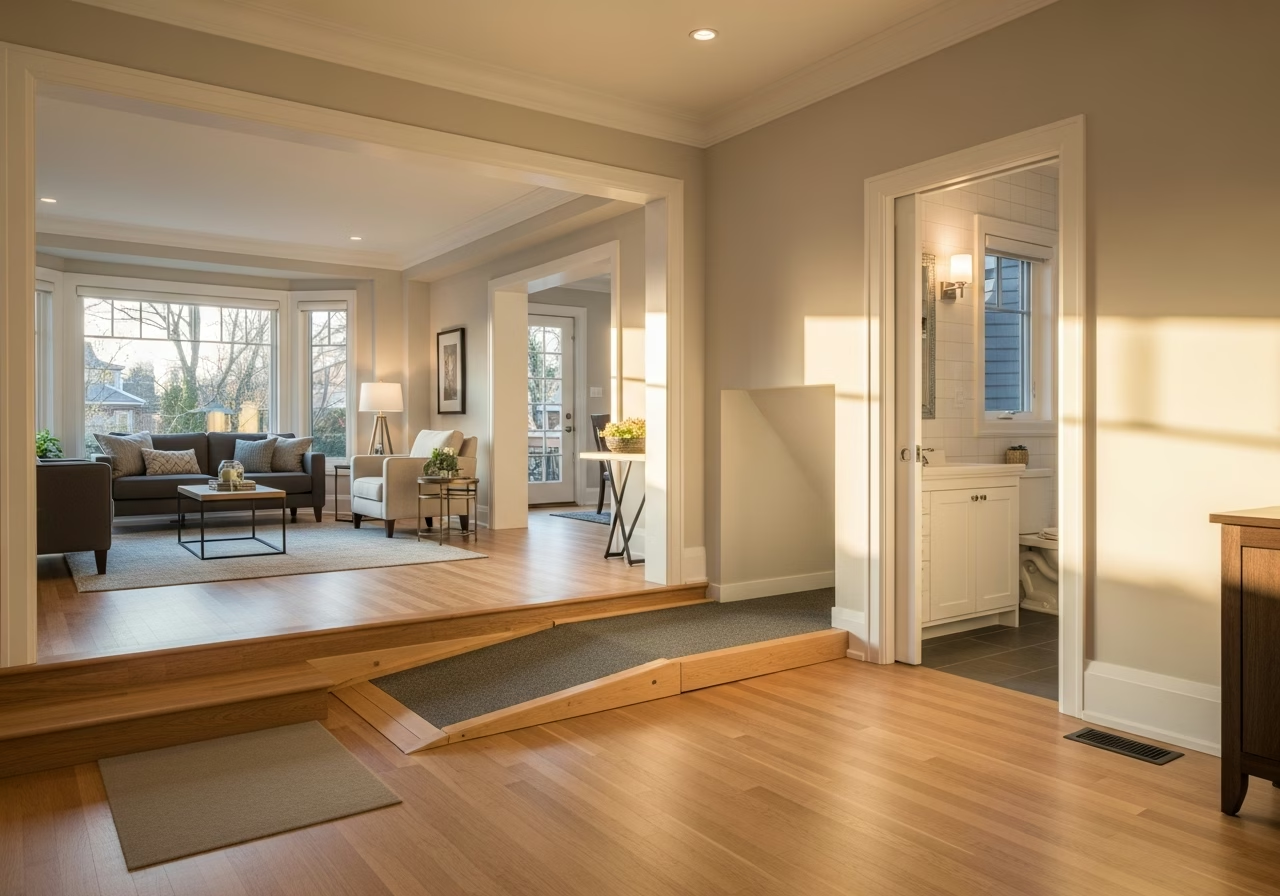
- Wheelchair ramp at entry (modular aluminum for speed) - $1,800-$3,500.
- Stair lift if multi-storey home, or main-floor bedroom conversion - $3,500-$15,000 (lift) or $12,000-$24,000 (bedroom conversion).
- Knee space at bathroom sink - $800-$1,800.
- Pull-out shelves in kitchen - $500-$1,500.
Total: $25,000-$55,000. Timeline: 3-5 weeks.
Profile C: Severe mobility limitation, full-time caregiver
Priority modifications:
- All of Profile B, plus:
- Hospital bed in main-floor bedroom (rented or purchased through ADP).
- Wider hallway if budget allows - $4,500-$12,000.
- Vertical platform lift instead of ramp if rise is high - $7,500-$15,000.
- Through-floor home elevator if 2+ storeys and budget allows - $35,000-$85,000.
- Smart-home leak detection, fall detection, voice-controlled lighting.
Total: $40,000-$100,000+. Timeline: 4-8 weeks.
Working with Hospital OTs
Toronto rehab hospitals have OTs who coordinate home modifications:
- Toronto Rehab Institute (UHN, multiple campuses): Lyndhurst, Bickle, Rumsey, University Centre.
- Bridgepoint Active Healthcare (Sinai Health): Don River campus.
- St. John's Rehab (Sunnybrook): Bayview Avenue.
- West Park Healthcare Centre: Buttonwood Avenue.
The hospital OT typically:
- 1. Assesses the survivor in hospital.
- 2. Conducts a home visit (or virtual via photos/video).
- 3. Produces a written recommendation with dimensions.
- 4. Refers to community OT for follow-up after discharge.
- 5. Coordinates with assistive device program (ADP) for equipment.
A renovation contractor must coordinate with the hospital OT to ensure dimensions match the OT's recommendation. RenoHouse maintains direct relationships with several Toronto rehab OTs for fast turnaround.
Funding Paths for Stroke Survivors
- March of Dimes Home & Vehicle Modification: Up to $15,000 lifetime. Stroke is a qualifying disability. Application takes 6-12 weeks — start at the time of stroke event, not at discharge.
- Ontario Renovates Program: Up to $25,000. Income-tested. Application 6-10 weeks.
- Veterans Affairs Canada: Veterans only. Faster turnaround through case manager.
- Assistive Devices Program (ADP): Covers equipment (wheelchairs, hospital beds, ramps in some cases) — not renovation work.
- Private insurance: Some long-term disability and accident insurance covers home modifications. Verify with the insurer.
- Self-funded: Most stroke survivors fund some portion privately, with grants offsetting.
The fastest path is often self-funded for the immediate-need modifications (bathroom, ramp), with grant applications running in parallel and reimbursing later. Verify with each program whether retroactive funding is permitted before starting work.
Equipment vs Renovation
Some post-stroke needs are met by equipment rather than renovation:
- Hospital bed (rented or ADP-funded): $200-$400/month rental, or $1,800-$4,500 purchase.
- Wheelchair (manual or power): ADP-funded for eligible users.
- Bath bench, shower chair: $80-$280, no install needed.
- Raised toilet seat: $40-$150, installs in minutes.
- Threshold ramps (portable): $80-$300, no install needed.
- Reachers, sock aids, button hooks: Adaptive daily living equipment, typically $20-$80 each.
Equipment is faster and cheaper than renovation, but does not match the dignity or longevity of integrated modifications. The right balance depends on the user's recovery trajectory.
Sequencing for a 3-Week Timeline
When discharge is in 3 weeks, the construction sequence is:
- Day 1-2: OT assessment, contractor walk-through, scope confirmed, materials ordered.
- Day 3-5: Bathroom demo, plumbing rough-in for curbless shower, doorway widening (if needed).
- Day 6-10: Subfloor work, waterproofing, tile installation in bathroom.
- Day 11-14: Grab bars, fixtures, comfort-height toilet, lighting, door hardware.
- Day 15-17: Ramp install (modular aluminum for speed), threshold transitions.
- Day 18-21: Final inspection by OT, walk-through with caregiver, training on equipment.
This is aggressive. It works only with: pre-ordered materials, dedicated trades on standby, simple scope, and an experienced contractor.
Multi-Person Family Coordination
Stroke survivors typically come home to a multi-person household. The renovation must serve:
- The survivor (primary user).
- The caregiver spouse (often a senior themselves).
- Adult children visiting or providing support.
- Healthcare workers (PSWs, OTs, PTs visiting the home).
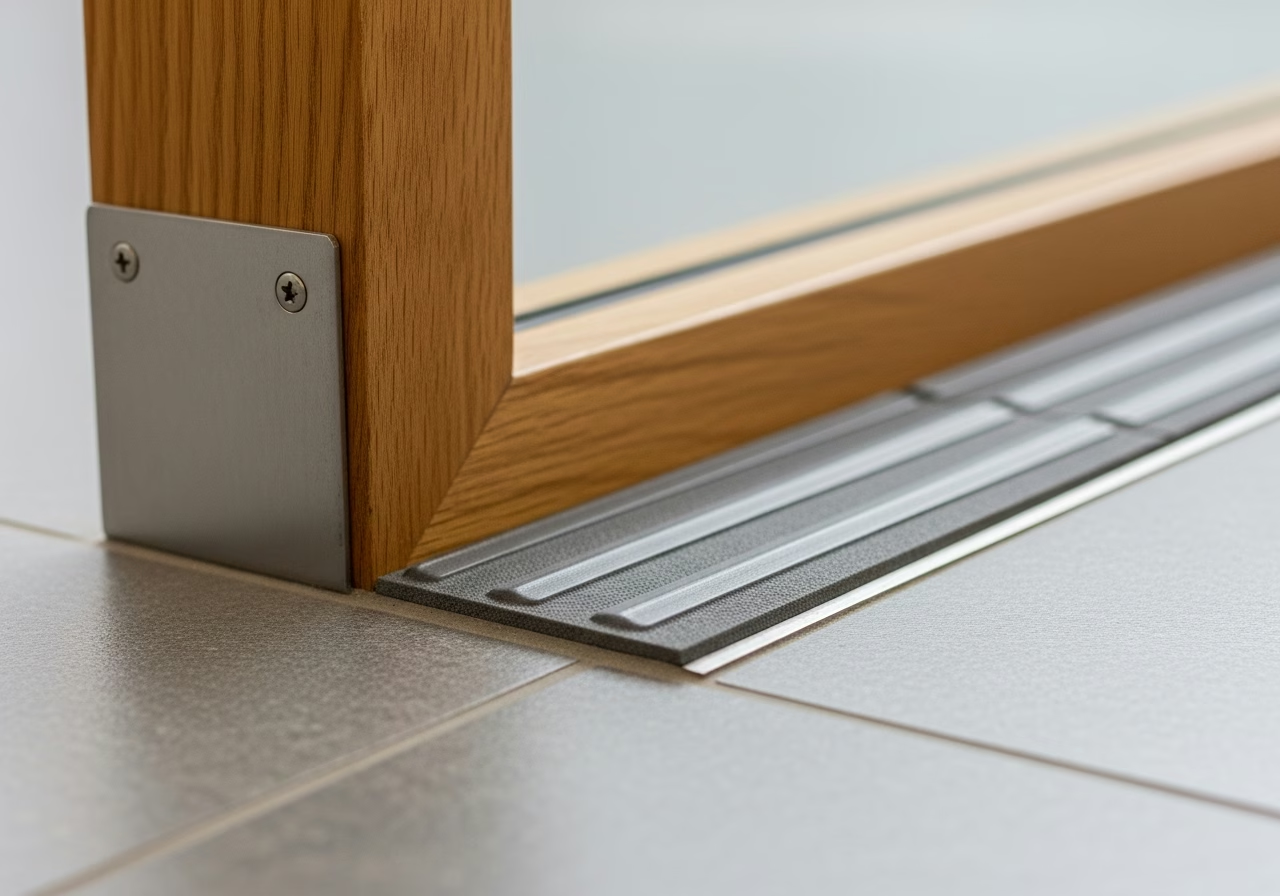
Design for multiple users: wider transfer space, caregiver access at bathroom and bed, accessible storage for medical supplies.
Common Mistakes
- Waiting until discharge week to start the renovation — too late.
- Skipping the OT assessment to save time — leads to dimensional errors.
- Choosing a contractor without rapid-discharge experience.
- Forgetting equipment vs renovation balance.
- Not coordinating with the hospital social worker for funding referrals.
Get Started
RenoHouse delivers post-stroke home modifications on rapid 2-4 week timelines, with hospital OT coordination, March of Dimes and Ontario Renovates support, and accessibility-experienced trades on standby. Learn more about our accessibility and aging-in-place service.
Related Reading
- Aging-in-Place Renovation Toronto: Complete 2026 Guide
- Barrier-Free Bathroom Renovation Toronto
- Wheelchair Ramp Installation Toronto
- Accessibility Renovation Grants Toronto Ontario
Sources & References
Authoritative sources cited in this guide:
- OBC 3.8 (Barrier-Free Design) — Accessibility code
- Ontario Renovates Program — Senior/accessibility renovation grant
- March of Dimes Home & Vehicle Modification — Accessibility funding
- CMHC Residential Rehabilitation — Federal accessibility program
Continue Reading