RenoHouse

# Wheelchair Ramp Installation Toronto: 2026 Costs & Options
Quick answer. Most Toronto homes have 3-7 steps at the front entry — a barrier for any user with a wheelchair, walker, or rollator. A wheelchair ramp restores independent entry and exit. In 2026, a Toronto residential ramp runs $1,800-$4,500 for a modular aluminum ramp (4-7 steps), $3,500-$8,500 for a built wood ramp, and **$8,500-$18,000 for a...Most Toronto homes have 3-7 steps at the front entry — a barrier for any user with a wheelchair, walker, or rollator. A wheelchair ramp restores independent entry and exit. In 2026, a Toronto residential ramp runs $1,800-$4,500 for a modular aluminum ramp (4-7 steps), $3,500-$8,500 for a built wood ramp, and $8,500-$18,000 for a concrete or stone-clad permanent ramp matched to the home's exterior. The right choice depends on duration of need, exterior aesthetic, slope availability, and permit context.
This guide covers all three ramp types, the OBC and Toronto bylaw requirements, and the practical install considerations. For the broader project, see Aging-in-Place Renovation Toronto.
Slope and Length: The 1:12 Standard
OBC 3.8 and ANSI A117.1 specify a maximum slope of 1:12 (one inch of rise per 12 inches of run) for accessible ramps. For a typical Toronto front porch with 28"-36" rise, that translates to a 28'-36' run minimum for the ramp itself, plus a 60" landing at top and a 60" landing at bottom.
This slope is unforgiving. A user in a manual wheelchair cannot self-propel up a ramp steeper than 1:12. A 1:8 ramp is climbable with assistance but unsafe for solo use. A 1:6 ramp is unsafe in any condition.
Where the run length cannot fit a 1:12 slope, two options exist:
- Switchback ramp with a turning landing (60"x60" minimum).
- Vertical platform lift (mechanical, $7,500-$15,000 installed). See discussion below.
For very small rises (1-3 steps), a 1:8 ramp is acceptable for short ramps under 30" total rise, with caregiver assistance. Threshold ramps for single steps (1"-6" rise) follow simpler rules.
Modular Aluminum Ramps ($1,800-$4,500)
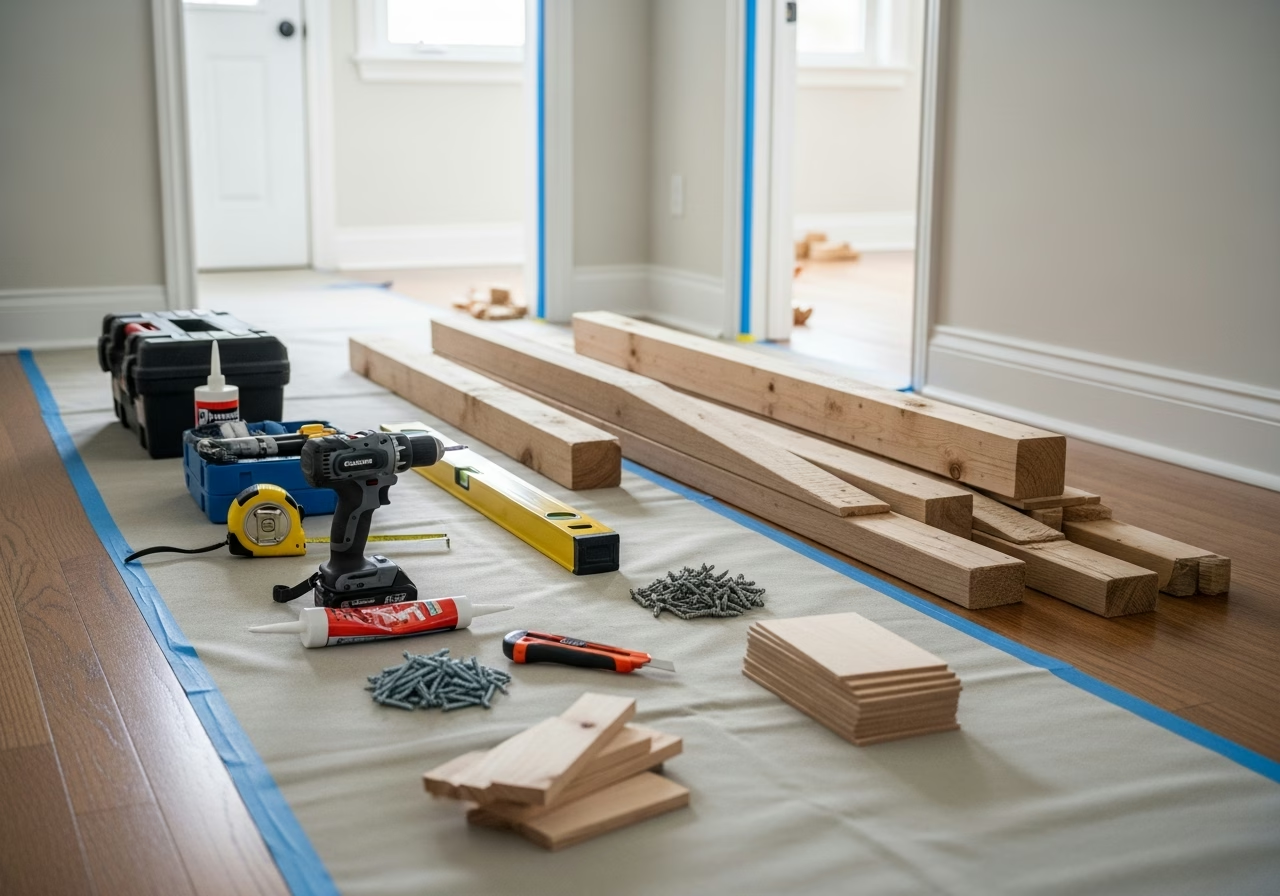
Modular ramps are pre-engineered aluminum components (rails, decking, landings) assembled on site without poured concrete. The dominant brands in Toronto are EZ-Access, National Ramp, Roll-A-Ramp, and Amramp.
Pros:
- Installable in 4-8 hours. No concrete, no permit in many cases.
- Reusable and resellable. When no longer needed, the ramp is disassembled and resold or donated.
- Slip-resistant decking. Punched aluminum or grit-coated decking, R10 equivalent.
- Code-compliant slopes. Modular sections allow 1:12 builds.
- Snow-friendly. Aluminum sheds snow; debris falls through punched decking.
Cons:
- Industrial aesthetic. Looks like an aluminum ramp. Some buyers find this stigmatizing.
- Bylaw setback issues. May extend into front yard setback, requiring minor variance in some Toronto neighbourhoods.
- Less suitable for very long runs. 30+ foot ramps look prominent.
Best for: short-term need (post-surgery), rentals, multigenerational homes where the parent may eventually move, properties where reversibility matters.
Need professional home renovation?
Call RenoHouse at 289-212-2345 or get a free estimate today.
Get Free Estimate →Built Wood Ramps ($3,500-$8,500)
A built wood ramp is constructed from pressure-treated lumber posts, joists, decking, and railings — same construction as a deck. Sealed and stained to match the home.
Pros:
- Better aesthetic. Reads as a deck or porch extension.
- Durable. 15-25 year service life with sealing.
- Customizable. Match railings, decking, and stain to existing porch.
- Slip-resistant. Deck boards with grooved surface or composite decking (Trex, TimberTech).
Cons:
- Build permit required in Toronto for ramps with rise above 24" or area above a threshold.
- Slower install. 3-7 days vs 1 day for modular.
- Not easily reversible. Removal is a $1,500-$3,000 demo.
- Higher cost. 50-80% more than modular for the same length.
Best for: long-term use (5+ years), permanent residence, homes where exterior aesthetic matters.
Concrete / Stone-Clad Ramps ($8,500-$18,000)
A concrete ramp is poured-in-place with footings, often clad in natural stone, brick, or porcelain pavers to match the home's existing exterior. Most often used at the side or rear entry of premium homes in Forest Hill, Lawrence Park, Rosedale, and Hoggs Hollow.
Pros:
- Permanent and architectural. Reads as part of the home, not an addition.
- Top-tier finish options. Stone, brick, porcelain pavers; integrated lighting; metal handrails matching the home.
- No maintenance. No staining, no rot.
Cons:
- Build permit and architectural drawings required.
- Full demolition needed for removal. Not reversible without significant cost.
- Long install. 2-4 weeks including footing cure time.
- Highest cost tier.
Best for: premium homes, long-term forever-home commitments, properties where exterior architecture is a priority.
Vertical Platform Lifts ($7,500-$15,000)
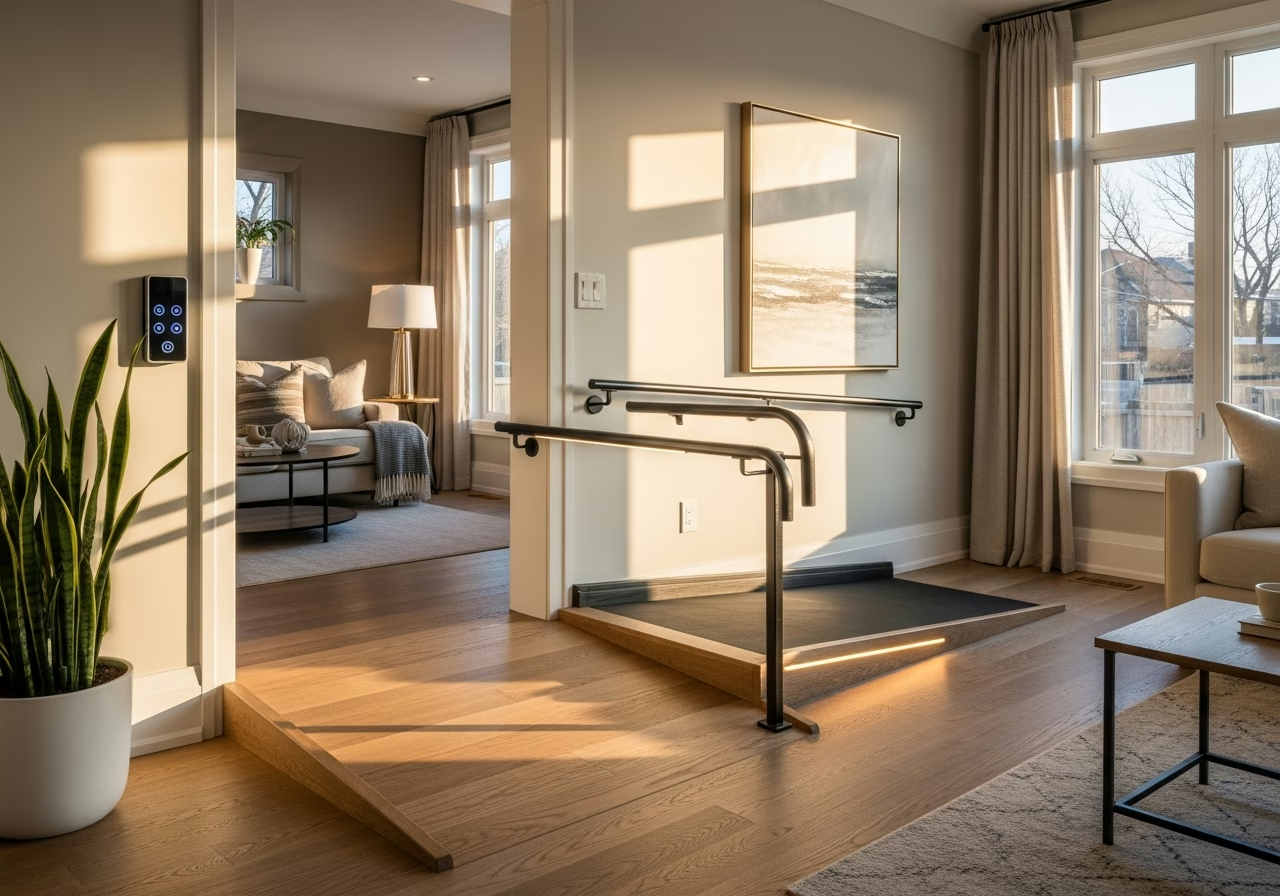
A vertical platform lift (also called a porch lift) is a small motorized platform that lifts a wheelchair user 36"-72" vertically. It uses a small footprint (4'x4' typical) and is appropriate where a 1:12 ramp run cannot fit.
Brands: Savaria V-1504 and Multilift, Bruno VPL-3100, Garaventa GVL.
Pros:
- Compact. No long ramp run needed.
- Permanent. Suitable for forever-home commitments.
- Code-compliant. OBC and ANSI A117.1 for 36"-72" rise.
Cons:
- Mechanical maintenance. Annual inspection, occasional motor or battery service.
- Higher upfront cost than aluminum ramp.
- Permit required. Toronto requires permit and inspection.
Best for: tight lots, premium installations, rises of 36"-72" where a 36'-72' ramp does not fit.
Toronto Bylaw and Permit Considerations
- Modular aluminum ramps: No permit in most cases if rise is below 24" and footprint stays within property line. Verify with the City of Toronto Building Division.
- Built wood ramps: Permit required if rise above 24" or if any structural change to the home (railings, attached posts).
- Concrete ramps: Permit and zoning compliance required. May need minor variance for setback.
- Vertical platform lifts: Electrical permit and lift inspection required.
Front-yard setback rules vary by Toronto zoning district. In R1 and R2 zones, a ramp may not project more than the existing porch projection. RenoHouse pulls a zoning review before designing the ramp footprint.
Switchback Ramps for Tight Lots
Where a straight 36'-foot ramp does not fit, a switchback layout uses a 60"x60" landing to turn 90 or 180 degrees. Total ramp footprint becomes more compact (16-20 feet diameter) but uses more material. Cost: 20-40% more than a straight ramp of equivalent rise.
Common Mistakes
- Building a ramp steeper than 1:12 for full-time wheelchair use.
- Forgetting the 60" landings at top and bottom.
- Using slippery deck boards (smooth surface) — fails in winter.
- Ignoring snow removal — ramps need salt-tolerant materials and clear access.
- Skipping the permit on a permanent ramp.
Get Started
RenoHouse designs and installs wheelchair ramps across Toronto, including modular, wood, and concrete options matched to the home's exterior and the user's mobility profile. Learn more about our accessibility and aging-in-place service.
Related Reading
- Aging-in-Place Renovation Toronto: Complete 2026 Guide
- Stair Lift Installation Toronto Cost
- Accessibility Renovation Cost Toronto
Sources & References
Authoritative sources cited in this guide:
- OBC 3.8 (Barrier-Free Design) — Accessibility code
- Ontario Renovates Program — Senior/accessibility renovation grant
- March of Dimes Home & Vehicle Modification — Accessibility funding
- CMHC Residential Rehabilitation — Federal accessibility program
Continue Reading