RenoHouse

# Wider Doorways Renovation Toronto: 2026 Guide to 32-36 Inch Clearances
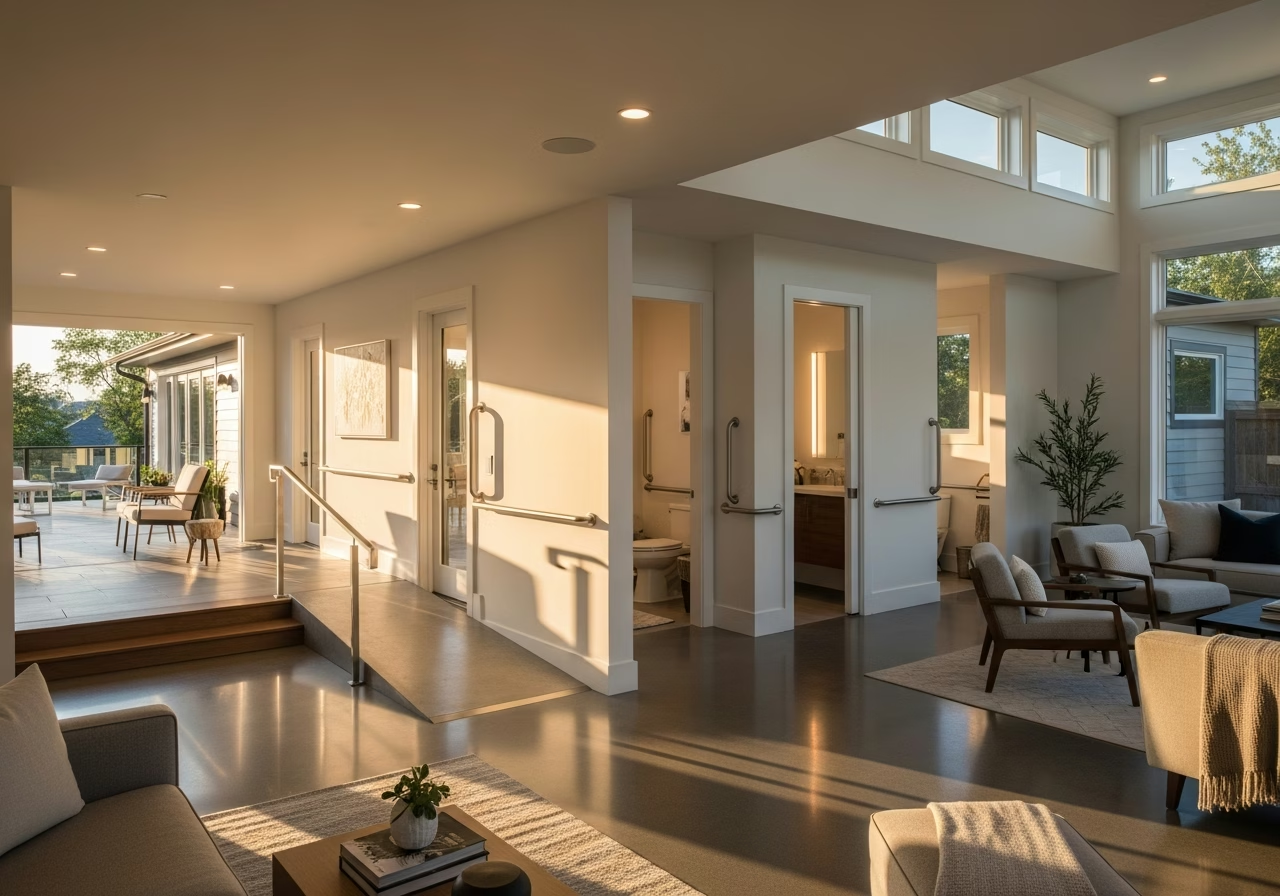
Quick answer. Standard interior doors in most Toronto homes are 28"-30" wide, which provides only 26"-28" of clear opening — too narrow for a wheelchair (typical 24"-26" wide overall, but needs 32" clearance for hand placement and elbow swing). For a Toronto aging-in-place renovation, doorway widening is one of the most-needed and most-overlooked changes.Standard interior doors in most Toronto homes are 28"-30" wide, which provides only 26"-28" of clear opening — too narrow for a wheelchair (typical 24"-26" wide overall, but needs 32" clearance for hand placement and elbow swing). For a Toronto aging-in-place renovation, doorway widening is one of the most-needed and most-overlooked changes. In 2026, doorway widening costs $850-$2,400 per door for a structural reframe, or $80-$160 per door for a quick offset-hinge fix that buys 1.5"-2" of clear width without reframing.
This guide covers the standards, the structural considerations, and realistic CAD pricing. For the broader project, see Aging-in-Place Renovation Toronto. For room-specific work, see Barrier-Free Bathroom Renovation Toronto.
The 32"-36" Standard
ANSI A117.1 specifies a 32" minimum clear opening for accessible doorways, with 34"-36" preferred. OBC 3.8 references the same range.
"Clear opening" means the actual passage width when the door is open at 90 degrees, measured from the face of the door (not the door's edge) to the opposite stop. For a standard interior door with butt hinges:
- 30" door slab → 28" clear opening (the door slab itself blocks 2").
- 32" door slab → 30" clear opening (insufficient for wheelchair).
- 34" door slab → 32" clear opening (minimum accessible).
- 36" door slab → 34" clear opening (preferred accessible).
A common error is specifying a "32-inch door" thinking it provides 32" clearance. It does not. The door slab itself blocks 1.5"-2" of the rough opening.
Three Solutions, Ranked by Cost
Solution 1: Offset Hinges ($80-$160 per door)
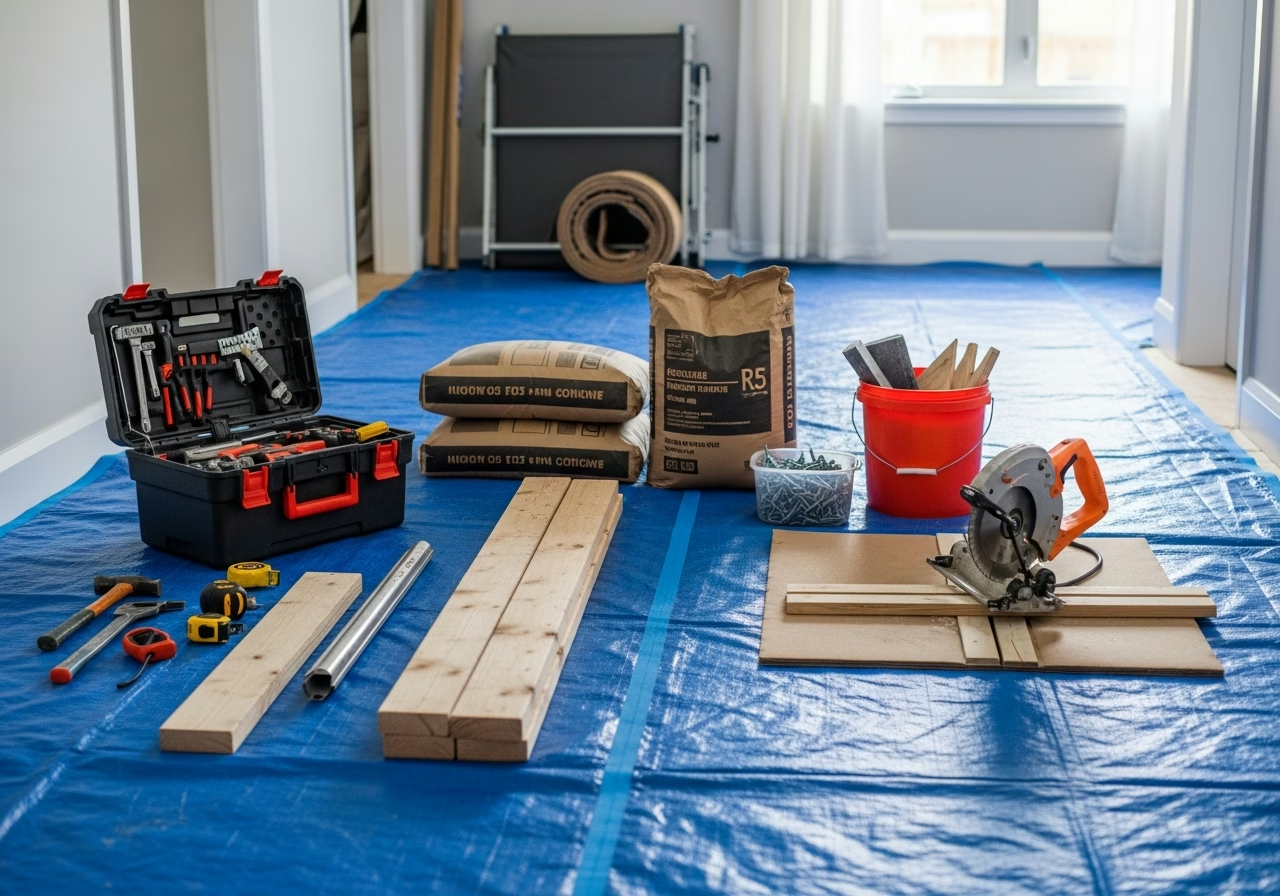
Offset hinges (also called swing-clear hinges) shift the door pivot point 1.5"-2" away from the jamb when the door is open. The result: a 30" door yields a 30" clear opening instead of 28". The fix is non-structural — replace the existing butt hinges with offset hinges, no reframing.
Pros:
- Cheapest fix. $40-$80 hardware, 30-60 min install.
- Reversible. Easy to swap back.
- No drywall or trim work.
Cons:
- Only 1.5"-2" gain. Not enough if the rough opening is too narrow.
- Door must clear adjacent wall when open. In tight hallways, the offset position may interfere.
Best for: marginal cases where the existing door is 30"-32" and the user needs 30"-32" clear. Not a fix for true 36" wheelchair access.
Need professional home renovation?
Call RenoHouse at 289-212-2345 or get a free estimate today.
Get Free Estimate →Solution 2: Reframe to Wider Door ($850-$2,400 per door)
Remove the existing door, jamb, and rough framing. Cut header, jack studs, and king studs to create a new 36" rough opening. Install a new 34" or 36" door slab and jamb. New trim and paint.
Pros:
- Full accessibility. 32"-34" clear opening.
- Permanent and code-compliant.
- Minor visual change — new door reads as original.
Cons:
- Structural work. May affect load path on bearing walls (header upgrade required).
- Drywall, trim, paint repair.
- Permit may be required if the wall is load-bearing.
Cost breakdown:
- Demo and disposal: $120-$280
- New header (if load-bearing): $180-$450
- New door slab and jamb: $280-$650
- Hardware (lever handle): $40-$120
- Trim and casing: $80-$180
- Drywall patch and paint: $150-$420
- Labour: $400-$900
- Total: $850-$2,400
Best for: most accessibility renovations. Standard solution for bathroom, bedroom, and main-traffic doors.
Solution 3: Pocket Door or Barn Door ($1,500-$3,500 per door)
For very tight hallways or when the swing of a hinged door would interfere with adjacent fixtures, a pocket door (slides into wall cavity) or barn door (slides on a wall-mounted track) is the solution.
Pros:
- No swing footprint. Critical in small bathrooms.
- Pocket door yields 32"-36" clear with no swing.
- Barn door is faster to install but visible track and partial seal.
Cons:
- Pocket door requires the wall to be opened up for the pocket frame (Johnson Hardware, Cavity Sliders).
- Barn doors do not seal acoustically — not ideal for bathrooms.
- Higher cost than reframing.
Best for: small bathrooms (especially condos), spaces where a swing door interferes with adjacent fixtures.
Hardware: Lever Handles and Smart Locks
Round knob hardware fails for users with arthritis or limited grip. ANSI A117.1 specifies operable hardware that requires no pinch grip:
- Lever handles. Schlage Latitude or Sacramento, Emtek Helios, Baldwin levers.
- Smart locks with keypad or thumbprint. Schlage Encode, Yale Assure. Eliminates the need to manage keys.
- Closing-force-limited hardware. Hydraulic door closers set to under 5 lb opening force.
Cost: $80-$220 per door for residential lever hardware; $200-$420 for smart locks.
Threshold Transitions
Door thresholds also matter. The standard 1/2"-3/4" wood threshold at exterior doors is a barrier for wheelchair users. The fix:
- Beveled threshold (1/2" max rise). Compliant.
- Flush threshold with weather seal. Best for accessibility.
- EZ-Access threshold ramp for retrofit on existing thresholds.
Interior thresholds (between hardwood and bathroom tile, between bedrooms and hallway) should be 1/4" max rise, beveled.
Door Hardware for Pocket Doors
Pocket doors traditionally use a finger-pull recessed handle, which requires pinch grip. For accessibility:
- Edge pull hardware (Hafele, Sugatsune) on the door edge.
- Lever-style pocket door pull (Emtek pocket lever) on both faces.
- Push-to-open soft-close hardware for hands-free operation.
Door Selection by Room
| Room | Recommended Width | Hardware | Notes |
|---|---|---|---|
| Front entry | 36" | Lever or smart lock | Threshold flush |
| Bathroom | 32"-36" | Lever, swing out | Lock with thumbturn |
| Bedroom | 32"-34" | Lever | Privacy lock |
| Closet | 30"-32" | Lever or pull | Bypass or pocket option |
| Office | 32" | Lever | |
| Laundry | 32" | Lever | Pocket option |
| Kitchen pantry | 32" | Lever | |
| Garage entry | 36" | Lever, threshold ramp |
Common Mistakes
- Specifying a "32-inch door" expecting 32" clearance (it provides 30").
- Forgetting offset hinges as a low-cost first fix.
- Using a knob instead of a lever.
- Installing a barn door on a bathroom (acoustic and privacy fail).
- Skipping the threshold update.
Get Started
RenoHouse coordinates doorway widening across Toronto with structural carpentry, hardware selection, and OT-aligned dimensions. Learn more about our accessibility and aging-in-place service.
Related Reading
- Aging-in-Place Renovation Toronto: Complete 2026 Guide
- Barrier-Free Bathroom Renovation Toronto
- Aging-in-Place Kitchen Design Toronto
Sources & References
Authoritative sources cited in this guide:
- OBC 3.8 (Barrier-Free Design) — Accessibility code
- Ontario Renovates Program — Senior/accessibility renovation grant
- March of Dimes Home & Vehicle Modification — Accessibility funding
- CMHC Residential Rehabilitation — Federal accessibility program
Continue Reading