RenoHouse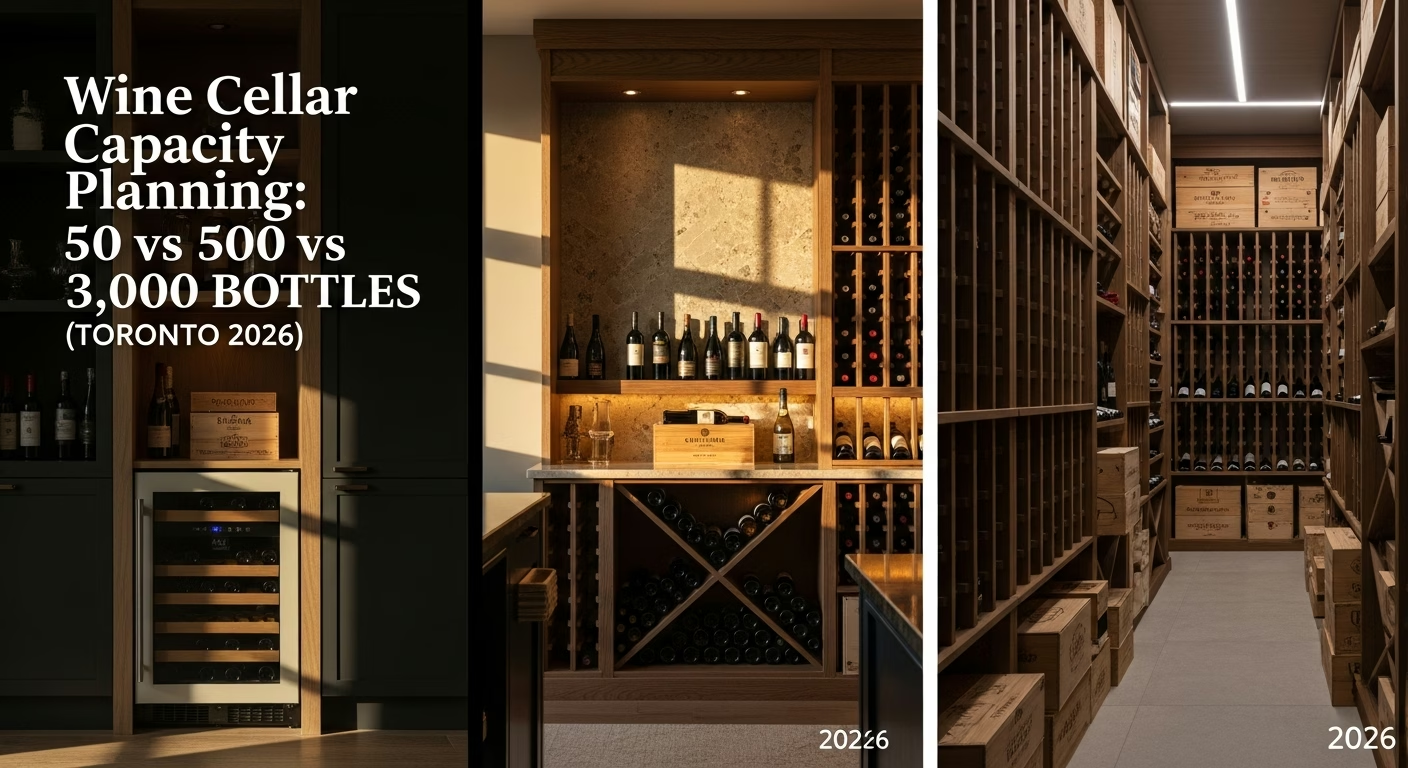

# Wine Cellar Capacity Planning: 50 vs 500 vs 3,000 Bottles (Toronto 2026)
Quick answer. The single most common regret we hear from Toronto wine cellar clients five years after their build: "I should have built it bigger." Capacity planning is where most cellar projects underdeliver on long-term satisfaction.The single most common regret we hear from Toronto wine cellar clients five years after their build: "I should have built it bigger." Capacity planning is where most cellar projects underdeliver on long-term satisfaction. This guide walks through realistic capacity tiers, how to match your build to current and projected collection size, and the design choices that change with capacity.
For the full installation overview, see wine cellar installation Toronto 2026. For the format choice driven by capacity, see walk-in vs glass-enclosed wine cellar Toronto.
The Capacity Tiers
| Tier | Bottles | Best Format | Typical Toronto Spend (CAD) |
|---|---|---|---|
| Casual | 50–150 | Cabinet | $4,500–$10,000 |
| Active | 200–500 | Closet conversion or feature wall | $20,000–$40,000 |
| Serious | 500–1,200 | Custom walk-in | $40,000–$80,000 |
| Investor | 1,500–3,000 | Luxury walk-in or two-zone build | $80,000–$190,000+ |
| Sommelier / commercial | 3,000+ | Multi-zone purpose-built | $200,000+ |
These tiers track real Toronto buyer behavior in 2025–2026. The boundary between active and serious is where most clients land — and where the build pays back the most.
Tier 1: Casual (50–150 Bottles)
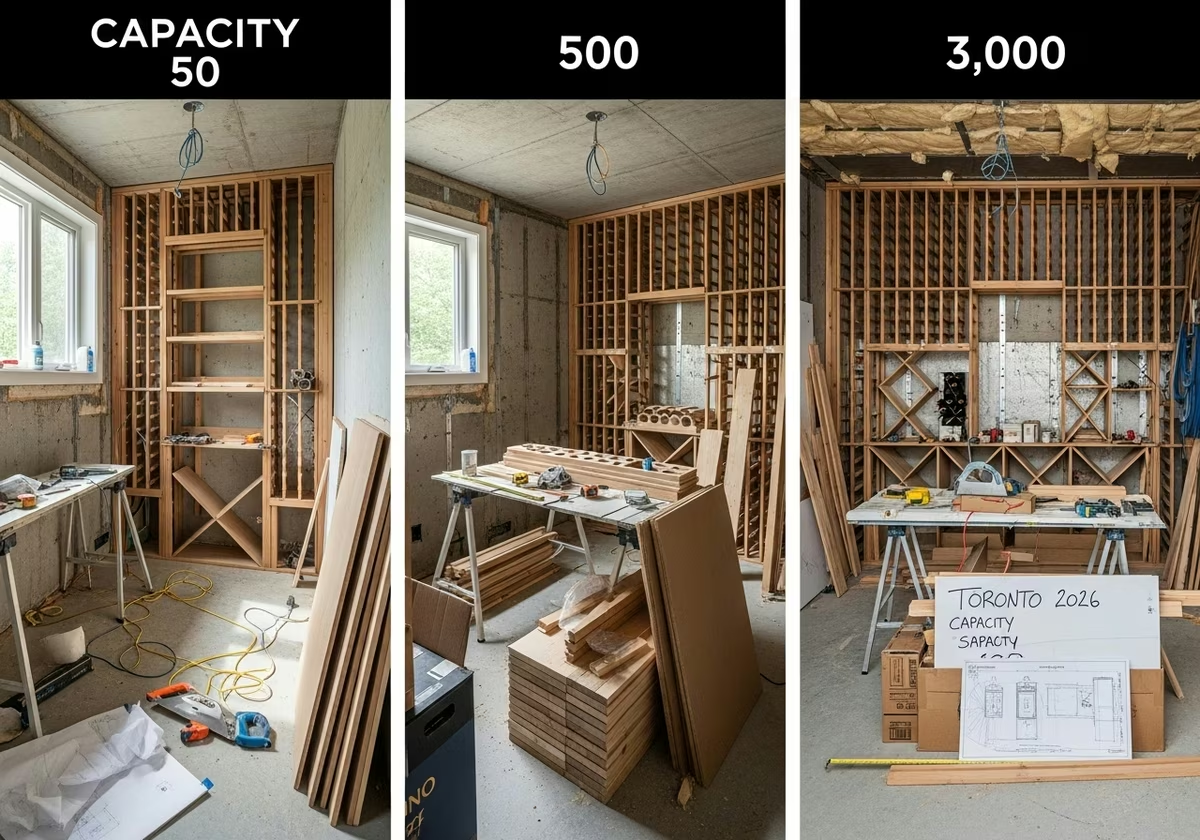
Tier 2: Active (200–500 Bottles)
Profile. Serious dinner-party host or active collector. Buys $30–$150/bottle, mix of drink-now and 5–10 year hold, attends Vintages releases at LCBO Yorkville monthly. Total collection value: $10,000–$60,000. Build choice. Walk-in closet conversion (most common 2026 GTA build). Or a glass-enclosed feature wall in a main-floor entertaining space. Footprint.- 6x8 ft (48 sf) walk-in: 400–600 bottles depending on racking.
- 8x10 ft (80 sf) walk-in: 700–1,100 bottles.
- 4x10 ft glass-enclosed feature wall: 250–400 bottles.
Tier 3: Serious (500–1,200 Bottles)
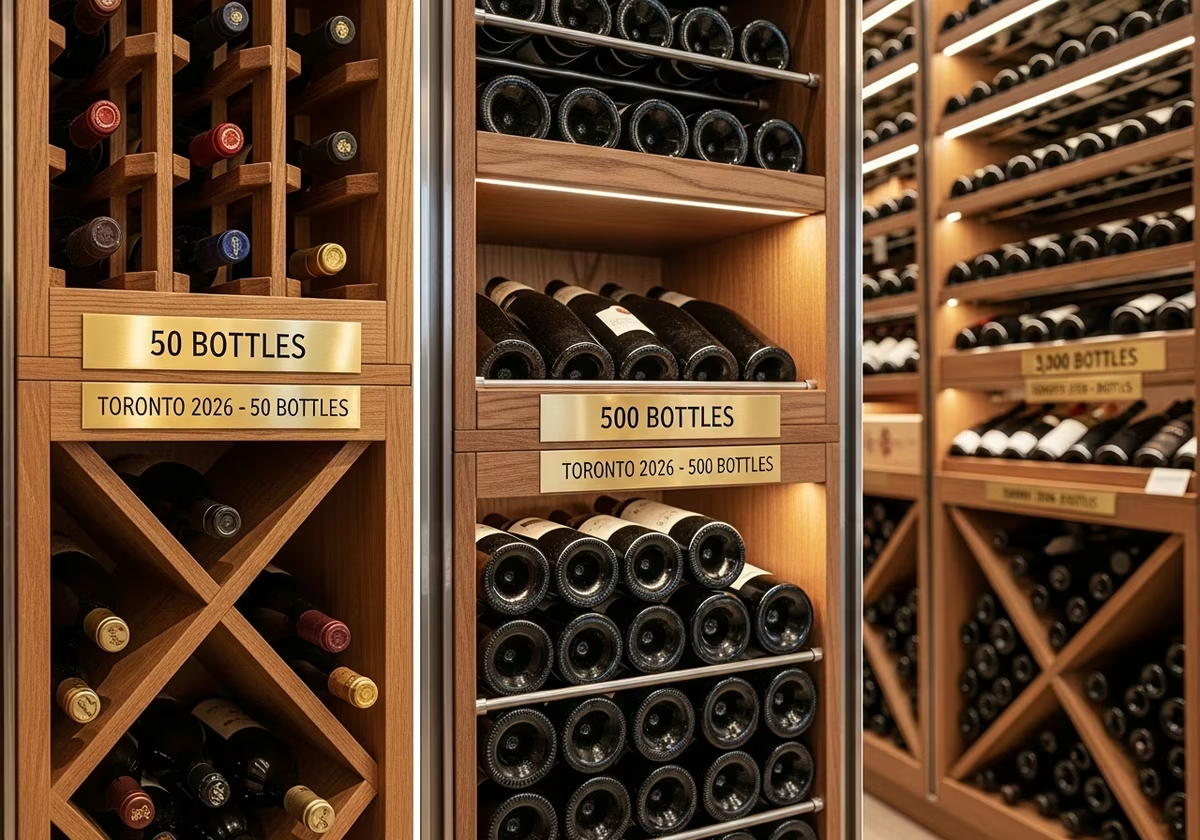
- 8x10 ft (80 sf): 700–1,100 bottles.
- 10x12 ft (120 sf): 1,000–1,600 bottles.
- 10x14 ft (140 sf): 1,200–1,900 bottles with feature racking and tasting nook.
Tier 4: Investor (1,500–3,000 Bottles)
Profile. Long-horizon investor with multiple cases of premier cru, garage and Napa allocations, en primeur purchases. Collection valued $200,000–$800,000+. Build choice. Luxury walk-in. Dedicated room 12x16 to 14x20 ft. Premium racking, stone cladding, vault door, integrated cooling, often a tasting room adjacent. Two-zone option. Some investor cellars use two temperature zones: one at 13 C / 65% RH for long-term storage, one at 16 C / 60% RH for ready-to-drink reds. Adds a second cooling unit and an interior partition. Cost: $8,000–$15,000 over a single-zone build. Footprint.- 12x16 ft (192 sf): 1,800–2,800 bottles.
- 14x20 ft (280 sf): 2,800–4,500 bottles depending on racking density.
Tier 5: Sommelier / Commercial (3,000+ Bottles)
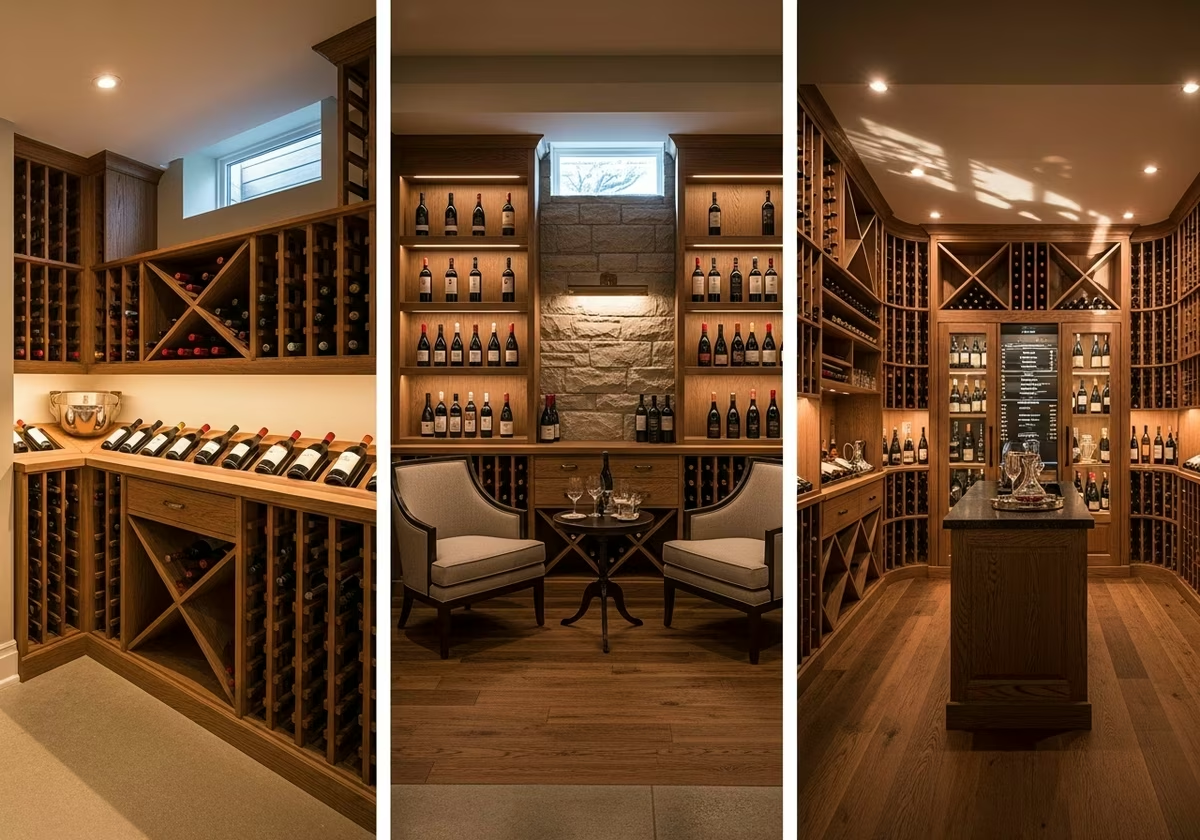
This tier is rare in residential Toronto but exists in Forest Hill, Bridle Path, and a few high-net-worth Mississauga lakefront properties. We have built three at this scale in 2024–2025.
Capacity Per Square Foot Reference
| Racking System | Bottles/sf of Wall (Floor to 84") |
|---|---|
| Pine traditional bin (12" deep) | 8.5–10 |
| Mahogany / sapele individual | 8–9.5 |
| Vintage View metal label-forward (3-deep) | 11–13 |
| Acrylic display | 5–7 |
| Custom millwork drawer hybrid | 6–8 |
| Diamond bin (case storage) | 12–16 |
A walk-in cellar with racking on three walls and an island typically achieves 70–85% of the maximum per-square-foot density (you lose space to aisles, the door, and the cooling unit).
Capacity Creep: The Real Numbers
Toronto collector behavior we have tracked across 80+ cellars:
Need professional home renovation?
Call RenoHouse at 289-212-2345 or get a free estimate today.
Get Free Estimate →- 5-year collection growth on first cellar: 180–240% of starting count.
- 10-year collection growth: 250–400% for active collectors.
- Cellar utilization at year 5: typically 110–130% of designed capacity (overflow stored elsewhere).
The cost of building 50% larger than needed today is typically only 25–35% more total cost, because the cooling and infrastructure are nearly the same. The cost of rebuilding later is 60–80% of a fresh build. Build big the first time.
When to Build Multiple Smaller Cellars Instead
A few clients with very large homes (12,000+ sf) build two cellars: a working cellar adjacent to the kitchen (200–400 bottles, ready-to-drink) and a long-term cellar in the basement (1,000+ bottles). Useful when:
- The two zones serve genuinely different purposes (drink-now vs hold).
- The home layout makes a single large cellar awkward.
- The collection value justifies the redundancy.
We have built 4 of these in 2024–2026. Total cost: 35–50% more than a single combined build, but the lifestyle benefit (working bottles always nearby, long-term storage rarely disturbed) is meaningful for serious collectors.
Capacity Decision Tree
- 1. Is your current collection 150 bottles or fewer, and growing slowly? Cabinet. Stop here.
- 2. Is your current collection 200–500 bottles, growing at 30–60 net per year? Walk-in closet conversion sized for 800–1,000 bottles.
- 3. Is your current collection 500+ bottles, with multi-decade hold strategy? Custom walk-in 1,000–1,800 bottle capacity.
- 4. Is your current collection 1,500+ bottles, including investment-grade wine? Luxury walk-in 2,500–4,000 bottle capacity, possibly two-zone, with insurance scheduled.
- 5. Are you a restaurant operator or sommelier-collector with 3,000+ bottles? Purpose-built multi-zone cellar with full monitoring.
Common Capacity Mistakes
- 1. Building to current size with no growth allowance. Maxes out within 4 years.
- 2. Optimizing for cost-per-bottle on day one. Capacity will exceed design in year 5; cost-per-bottle of "rebuild" is 4x higher than building bigger initially.
- 3. Forgetting case storage. Diamond bins or a dedicated case shelf for unboxed cases reduces clutter and allows 12-bottle cases to live in the cellar without breaking the case.
- 4. Leaving no room for magnums. Magnums take 1.5x the height of a standard 750 ml. Reserve at least one row of taller racking.
- 5. Rack the cooling-unit wall. Reduces airflow; cooling unit cycles harder. Leave 14–18" clear above and around the unit.
Capacity vs Build Cost Curve
| Capacity | Build Cost (CAD, Toronto 2026) | Cost Per Bottle |
|---|---|---|
| 150 (cabinet) | $9,000 | $60 |
| 400 | $26,000 | $65 |
| 700 | $42,000 | $60 |
| 1,200 | $68,000 | $57 |
| 2,000 | $115,000 | $58 |
| 3,500 | $210,000 | $60 |
Cost-per-bottle is remarkably flat across the 400–3,500 range because cooling, vapor barrier, and door costs are nearly fixed. The variable costs scale with the cellar's footprint and racking choice.
FAQ
Is it better to oversize the cooling unit if I plan to expand later?Modestly oversize (25–40%) yes. Massively oversize (2x or more) no — the unit short-cycles, dries out the cellar, and fails earlier.
Can I add capacity to an existing cellar?Modestly yes (additional racking, denser configurations). Substantially no without expanding the room — adding 50% capacity typically requires expanding the footprint and resizing cooling.
What's the maximum capacity for a residential cellar in Toronto?Practically, 5,000 bottles. Beyond that, building permits, insurance, and structural considerations get more complex and the build crosses into "small commercial."
Should I plan for magnums and large formats?Yes if you collect them. Reserve 5–10% of the cellar's racking height for tall bottles (magnum, jeroboam).
What about case storage?Reserve 15–25% of the floor footprint for diamond bins or case shelves. Active collectors burn through cases faster than they realize.
---
Planning capacity for your Toronto wine cellar? RenoHouse helps you size the right footprint for your current collection plus projected growth, choose the best format, and build at the appropriate scale. Book a free consultation on our wine cellar installation service page.
Sources & References
Authoritative sources cited in this guide:
- Ontario Building Code — OBC official text
- Toronto Building Permits — City permit portal
- Tarion New Home Warranty — Ontario new-build warranty regulator
- HCRA — Home Construction Regulatory Authority — Ontario builder/vendor licensing
Continue Reading
- Wine Cellar Installation Toronto: Complete 2026 Cost & Design Guide
- Wine Cellar Cost in Toronto: 2026 Budget vs Premium Comparison
- Walk-In vs Glass-Enclosed Wine Cellar: Toronto 2026 Comparison