RenoHouse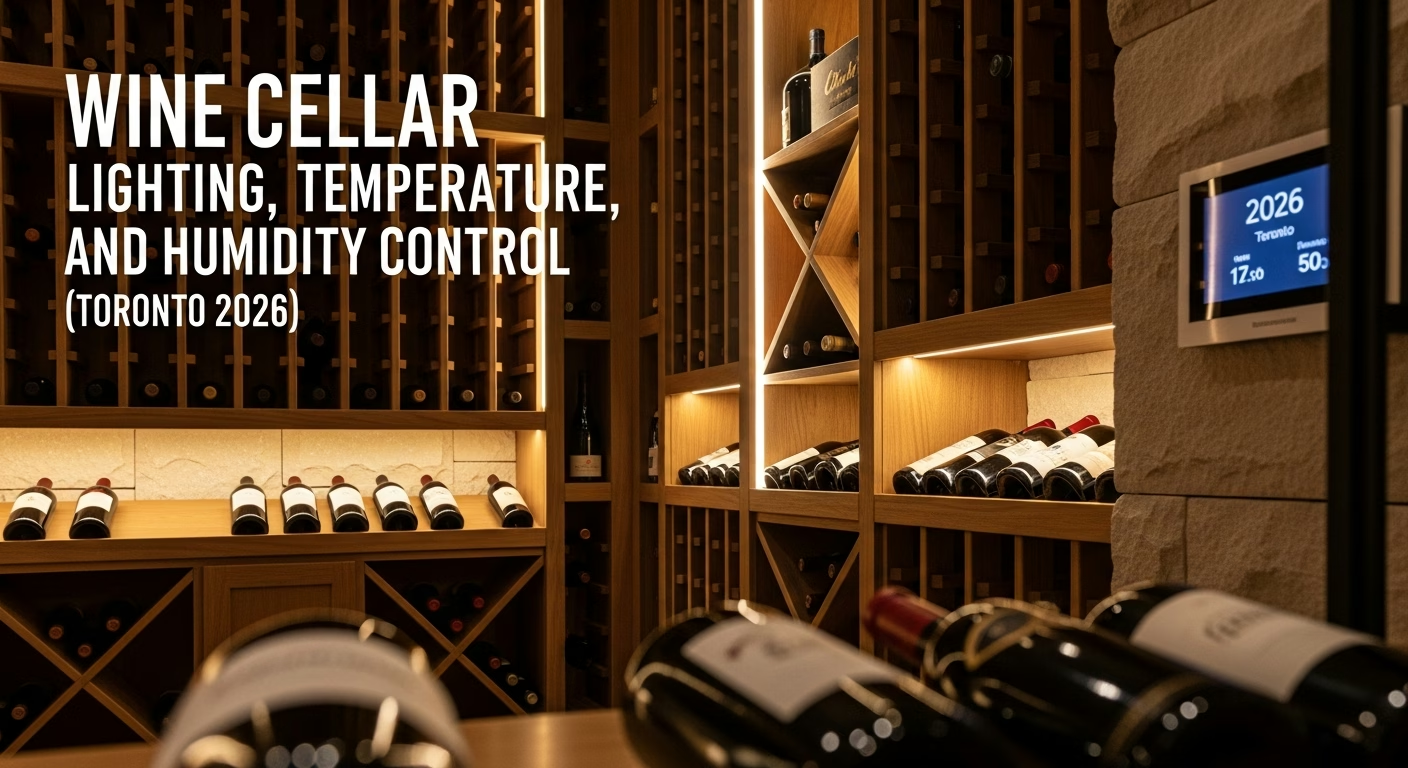

# Wine Cellar Lighting, Temperature, and Humidity Control (Toronto 2026)
Quick answer. A wine cellar is fundamentally an environmental-control problem. Hold 12.5 C and 60–70% RH year-round, exclude UV light, minimize vibration, and the wine ages perfectly. Miss any of those and the collection degrades.A wine cellar is fundamentally an environmental-control problem. Hold 12.5 C and 60–70% RH year-round, exclude UV light, minimize vibration, and the wine ages perfectly. Miss any of those and the collection degrades. This guide breaks down the three environmental pillars — lighting, temperature, humidity — and how Toronto's specific climate affects each.
For the full installation overview, see wine cellar installation Toronto 2026. For cooling system selection, see wine cellar cooling systems comparison.
Temperature: The Target
12.5 C / 55 F is the canonical wine cellar set-point. Range:- 10–14 C is acceptable for long-term storage.
- 12–13 C is ideal — the historical Burgundy and Bordeaux cellar temperature.
- 15–18 C is acceptable for short-term storage (under 1 year).
- Below 8 C slows aging excessively; not harmful but not ideal.
- Above 18 C accelerates aging measurably; above 22 C causes premature oxidation.
The single biggest temperature mistake is fluctuation, not absolute value. A cellar that swings between 11 C and 16 C ages wines worse than one that holds 15 C consistently. Stability beats absolute precision.
Toronto's Temperature Challenge
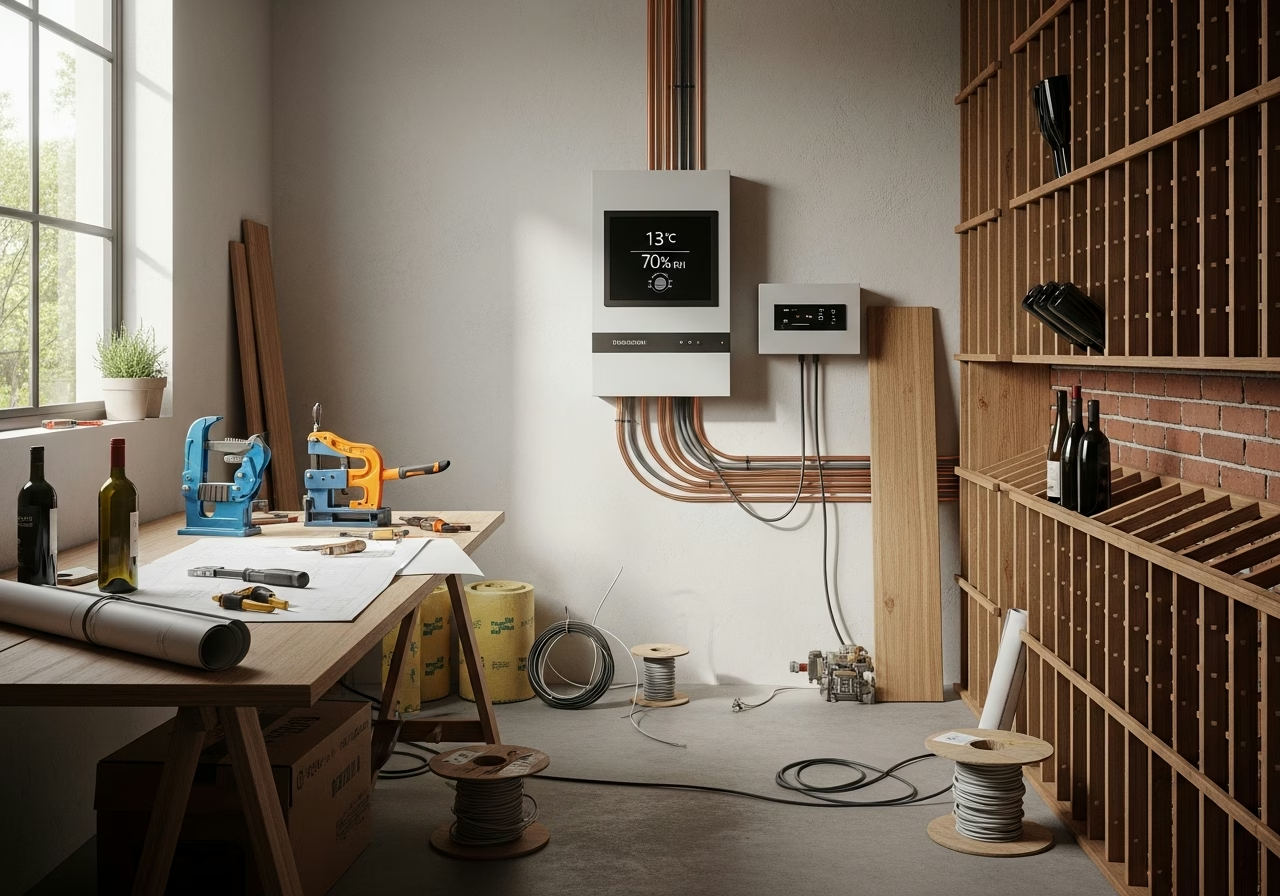
Toronto basement temperatures naturally vary across the year:
- Summer (July, hottest): 20–25 C unconditioned, drops to 18–22 C in a finished basement.
- Winter (January, coldest): 16–20 C in finished basement, 12–16 C unconditioned.
- Spring/fall: 17–21 C.
The cellar cooling unit does most of its work in summer (cooling 22 C ambient down to 12.5 C). In winter the cooling unit barely runs because basement air is already 16–20 C. This is convenient for Toronto cellar economics; hydro cost is concentrated in summer.
Humidity: The Target
60–70% RH is the wine cellar humidity range. Why:- Below 50% RH: Corks dry out, allowing oxygen ingress and accelerated oxidation.
- 50–60% RH: Acceptable but not ideal; some risk of cork dryness in long-term storage.
- 60–70% RH: Optimal. Corks stay supple; labels stay intact; no mold risk.
- 70–80% RH: Acceptable but increases risk of label damage and mold on wood racking.
- Above 80% RH: Mold risk on labels, racking, and cellar finishes.
Toronto's Humidity Challenge
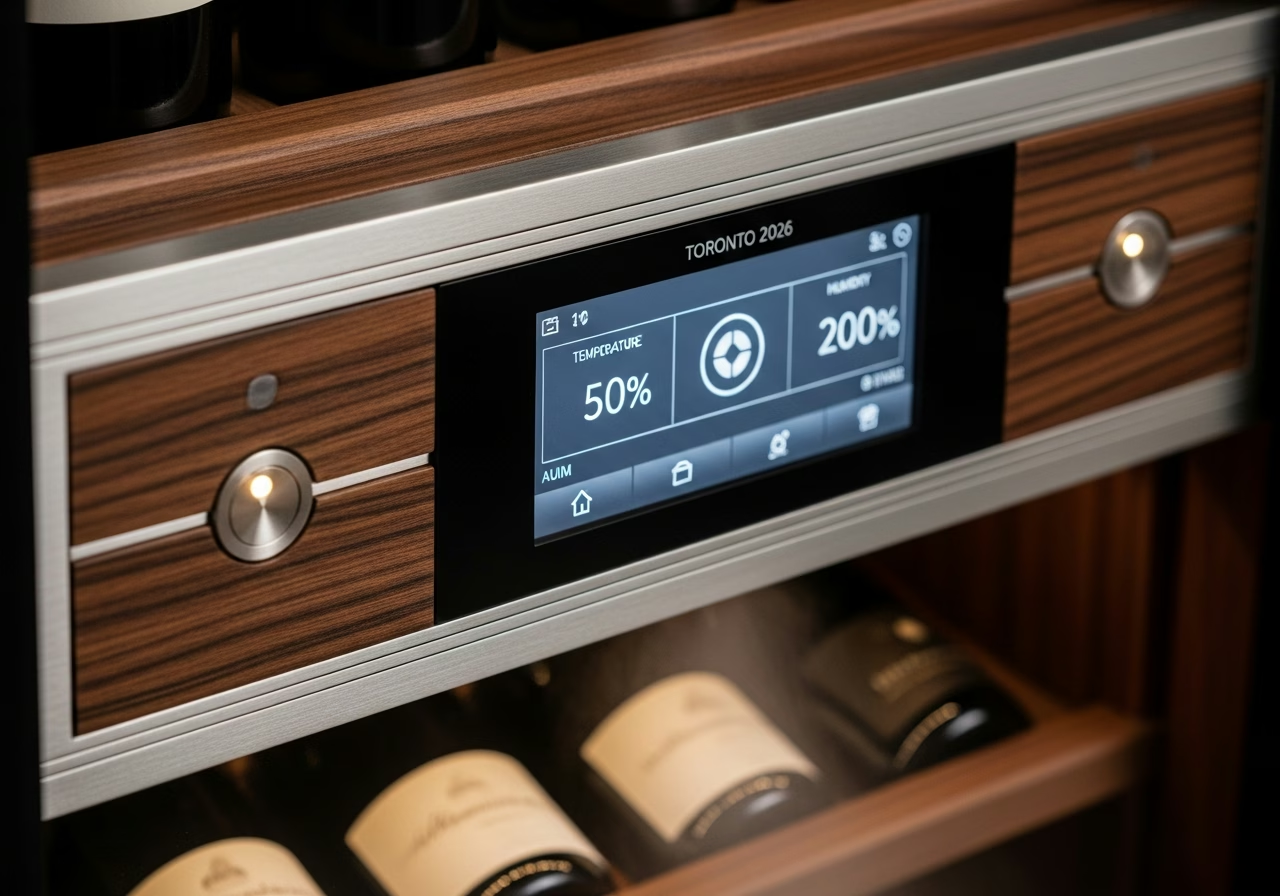
Toronto basement humidity also varies seasonally:
- Summer: 55–70% RH naturally — close to or within target range.
- Winter: 30–45% RH — well below target. Heated air holds less moisture.
The implication: in summer the cooling unit removes excess moisture (it dehumidifies as it cools). In winter, supplemental humidification is required to maintain target. Detail below.
Humidification Strategies
Built-in to Cooling Unit (Premium)
Wine Guardian DS-series, CellarPro VSx with humidity option, BarrelWorks BW-150, integrated humidifier injects steam or ultrasonic mist directly into the cellar's airstream. Thermostat-controlled.
- Pros: Tidy, integrated, automatic.
- Cons: Higher initial unit cost ($800–$2,500 premium over non-humidified version).
Standalone Ultrasonic Humidifier (Mid-Tier)
Aircare EP9, Honeywell HCM-350, $130–$250. Sits on cellar floor, humidistat-controlled.
- Pros: Cheap. Works.
- Cons: Visible. Weekly water refill. Mineral dust if using tap water (use distilled).
Steam Humidifier with Supply Line (Luxury)
Plumbed steam humidifier (Aprilaire 800, Honeywell HM750). Ties into the cooling system or runs as a standalone HVAC component.
- Pros: Continuous water supply, no manual refills.
- Cons: Expensive ($1,500–$3,500). Requires plumbing permit.
Wet Cellar Strategies (Vintage)
In some old European cellars, a tray of standing water on the floor maintains humidity passively. Not recommended in Toronto basements due to mold and cellar finish concerns.
Need professional home renovation?
Call RenoHouse at 289-212-2345 or get a free estimate today.
Get Free Estimate →Lighting: UV-Free Is Mandatory
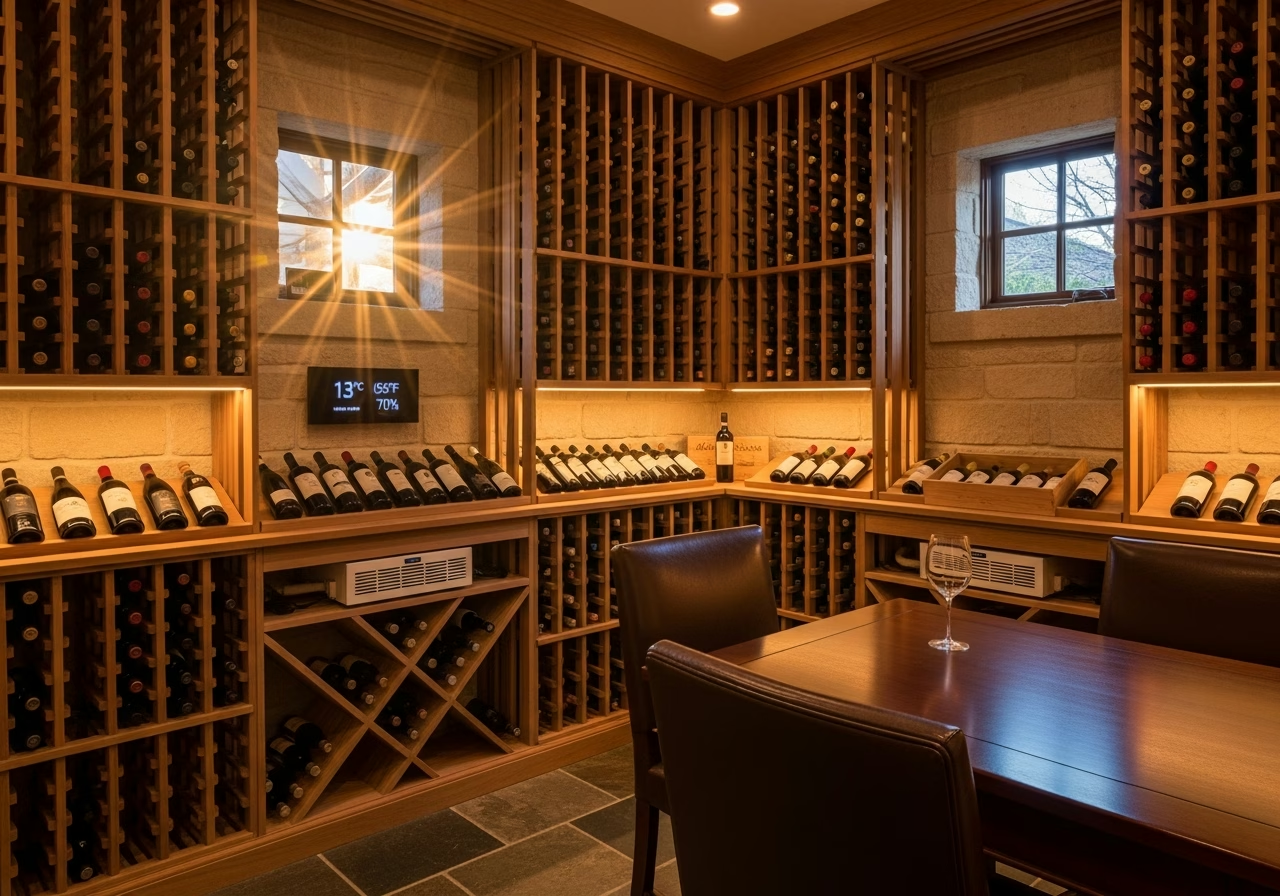
UV light damages wine. UV-A and UV-B both penetrate green and clear glass and degrade wine flavor compounds, particularly in white wines and rosé. Cellar lighting must:
- Be UV-free (LEDs are inherently UV-free; no fluorescent, no incandescent, no halogen).
- Be 2700K color temperature (warm white) for both wine appearance and human comfort.
- Be dimmable for mood and energy management.
- Run on motion sensors or timers if practical (don't leave lights on indefinitely).
- Generate minimal heat (LEDs are excellent on this dimension).
Lighting Design Layers
Three layers in a well-designed cellar:
- 1. Ambient. Cove lighting above racking, indirect, soft glow. 200–400 lumens for an 80 sf cellar.
- 2. Task. Reading lighting near the door for label inspection. 400–800 lumens local to the task area.
- 3. Accent. Highlighting feature wall, trophy bottles, tasting nook. 100–300 lumens per accent.
Total cellar lighting budget: 800–1,500 lumens for a 80 sf cellar. More than this and the cellar feels overlit.
LED Brands for Toronto Cellars
- Color Kinetics (premium): $400–$3,500 cellar scope. Best color rendering, fully programmable.
- WAC Lighting: Mid-tier, $250–$1,500.
- Sylvania UV-Free Series: Value-tier, $80–$400.
Smart Control
- Lutron Caseta: Default Toronto smart-lighting choice. Pico remote at the door, dimmer in the panel. $200–$600 for a cellar.
- Lutron RadioRA3: Premium, scene-controlled. $1,200–$3,500.
- Casambi: European wireless. $400–$1,200.
A dimmable Lutron Caseta with a Pico remote inside and outside the cellar door is the typical 2026 mid-tier spec.
Vibration: The Silent Wine-Killer
Vibration disturbs wine deposits, mixes sediment, and (over years) accelerates aging. Sources of vibration in a Toronto cellar:
- HVAC equipment in adjacent mechanical room.
- Furnace cycling.
- Washer/dryer in adjacent laundry room.
- Footsteps above the cellar.
- Passing trucks (if cellar adjacent to street-side wall).
Mitigation:
- Mount racking on isolation pads (rubber or neoprene under rack feet).
- Avoid sharing walls with HVAC mechanical rooms; if unavoidable, decouple via resilient channel + isolation clips.
- Avoid walls shared with laundry equipment.
- For cellars under high-traffic main floor zones, add a layer of acoustic underlayment under the cellar ceiling.
Monitoring
Every well-built cellar in 2026 includes monitoring. Minimum spec:
- Wireless temperature and humidity sensor with smartphone alerts. SensorPush, Govee, or higher-end Inkbird. $40–$120.
- Threshold alerts. Notify if temperature exceeds 18 C or humidity drops below 50%.
- Historical logging. 90+ days of data for trend analysis.
Premium spec adds:
- Power monitoring. Detect if the cooling unit has stopped drawing power.
- Leak detection. Notify of any water at the cellar floor.
- Door sensor. Detect if door has been left open.
Wine Guardian and CellarPro premium units have integrated monitoring with cloud apps. Aftermarket SensorPush or similar works for any cellar.
Insurance Implications
Most Toronto homeowner insurers will not provide a fine-art-and-collectibles rider on a wine collection without monitoring evidence. The standard requirement:
- Continuous temperature and humidity logging.
- Alert system that notifies homeowner of out-of-range conditions.
- Annual cooling-system service record.
Plan monitoring at design stage. Adding it later is straightforward but ESA-stickered alarm-system integration is far easier during the cellar build than retroactively.
Toronto Seasonal Maintenance Calendar
| Month | Task |
|---|---|
| March | Replace cooling unit filter. Calibrate thermometer/hygrometer. |
| June | Pre-summer cooling system service: refrigerant check, capacitor inspection. |
| August | Mid-summer ambient temperature check; verify rejection space is not heating up. |
| October | Add winter humidification (top-up tank, calibrate humidifier). |
| December | Mid-winter humidity verification. Inspect cellar door seal. |
Common Environmental Mistakes
- 1. Using a fluorescent bulb in the cellar. UV damages wine measurably within months.
- 2. No humidifier in winter. Cellar drops to 35% RH; corks dry out.
- 3. Cooling unit oversized 2x or more. Short-cycles, dries out cellar, fails early.
- 4. No monitoring. Cooling failure goes undetected until wines are damaged.
- 5. Lights on continuously. Wastes energy; sometimes UV from non-LED sources (decorative lights, exit signs).
- 6. Door left ajar. Cellar humidity drops 15–20% within 2 hours; cooling unit overworks.
- 7. Cellar shares wall with furnace room. Vibration and heat ingress.
When to Upgrade Environmental Controls
Common upgrades 5–10 years into cellar ownership:
- Add humidifier if winter cork dryness has become apparent.
- Replace cooling unit with humidity-controlled model if standalone humidifier is inadequate.
- Add monitoring with alerts if collection value has grown beyond original insurance scope.
- Upgrade lighting to UV-free LED if cellar was built with halogen or fluorescent.
- Add isolation pads if vibration concerns develop.
FAQ
What hygrometer should I buy?SensorPush HT.w (under $100). Two-year battery, wireless to phone, accurate within 2% RH.
Is 65% RH safe for wood racking?Yes; wine racking woods (mahogany, sapele, cedar) are dimensionally stable at 60–70% RH. Avoid oak (cups at this humidity).
My cellar runs 11 C, slightly cool. Is that a problem?Not for storage. Aging slows slightly (about 5–10% slower at 11 vs 12.5). Service the wine 30 minutes earlier if you want it at proper drinking temperature.
My cellar humidity is 75%. Is that too high?Acceptable but on the edge. Watch for label damage. Run a small dehumidifier or raise temperature by 1 C to bring RH down.
Should I monitor temperature and humidity 24/7?Yes. SensorPush or equivalent runs $5–$15/year and prevents thousands of dollars of wine damage.
---
Specifying environmental controls for your Toronto wine cellar? RenoHouse designs and installs cooling, humidification, lighting, and monitoring as an integrated system. Book a free consultation on our wine cellar installation service page.
Sources & References
Authoritative sources cited in this guide:
- Ontario Building Code — OBC official text
- Toronto Building Permits — City permit portal
- Tarion New Home Warranty — Ontario new-build warranty regulator
- HCRA — Home Construction Regulatory Authority — Ontario builder/vendor licensing
Continue Reading
- Wine Cellar Installation Toronto: Complete 2026 Cost & Design Guide
- How to Build a Wine Cellar in a Toronto Basement (2026 Step-by-Step)
- 12 Wine Cellar Installation Mistakes to Avoid (Toronto 2026)