RenoHouse

# Wine Cellar Racking Systems: 2026 Toronto Guide to Wood, Metal, Acrylic
Quick answer. Racking is the most visible part of a wine cellar and the second-largest line item after cooling. The choice of system drives bottle density, cost, aesthetic, and even how the cooling unit performs (some racking allows airflow, some blocks it).Racking is the most visible part of a wine cellar and the second-largest line item after cooling. The choice of system drives bottle density, cost, aesthetic, and even how the cooling unit performs (some racking allows airflow, some blocks it). This guide breaks down the four racking systems competing in Toronto in 2026 — traditional wood, label-forward metal, acrylic display, and custom millwork — with capacity numbers, costs, and design fit.
For the full installation overview, see wine cellar installation Toronto 2026. For brand recommendations, see best wine cellar brands 2026 Toronto.
The Four Racking Categories
1. Traditional Wood Individual-Bottle Racks
Each bottle in its own slot, typically pine, mahogany, sapele, or cedar. Stacked 8–10 bottles wide, 12–14 bottles tall.
- Density: 8.5–9.5 bottles per square foot of wall area (floor to 84").
- Cost: $35–$140 per bottle of capacity.
- Mahogany: $70–$110.
- Sapele: $90–$140.
- Aesthetic: Classic, traditional, European cellar feel.
- Best for: Walk-in cellars, traditional homes, long-term storage.
2. Vintage View Metal Label-Forward
Bottles displayed label-out on metal supports. 1-, 2-, or 3-deep configurations.
- Density: 11–13 bottles per square foot (with 3-deep configurations).
- Cost: $25–$50 per bottle of capacity.
- Aesthetic: Modern, industrial, museum-display.
- Best for: Glass-enclosed cellars, contemporary homes, feature walls, display-focused storage.
3. Acrylic Display Panels
Bottles cradled in clear acrylic supports. Minimalist, premium-feel.
- Density: 5–7 bottles per square foot (less efficient than wood).
- Cost: $80–$160 per bottle of capacity.
- Aesthetic: Ultra-modern, minimal, museum-grade.
- Best for: Luxury showcase cellars, condos, design-forward homes.
4. Custom Millwork (Drawer + Display Hybrid)
Custom-built racking combining drawer storage (concealed cases), open display, and feature elements like backlit glass walls.
- Density: 6–8 bottles per square foot (lower than traditional due to design intent).
- Cost: $150–$300 per bottle of capacity.
- Aesthetic: Bespoke, architectural, integrated with surrounding design.
- Best for: Luxury custom builds where racking is a design statement.
Capacity Comparison: 8x10 ft Cellar (80 sf)
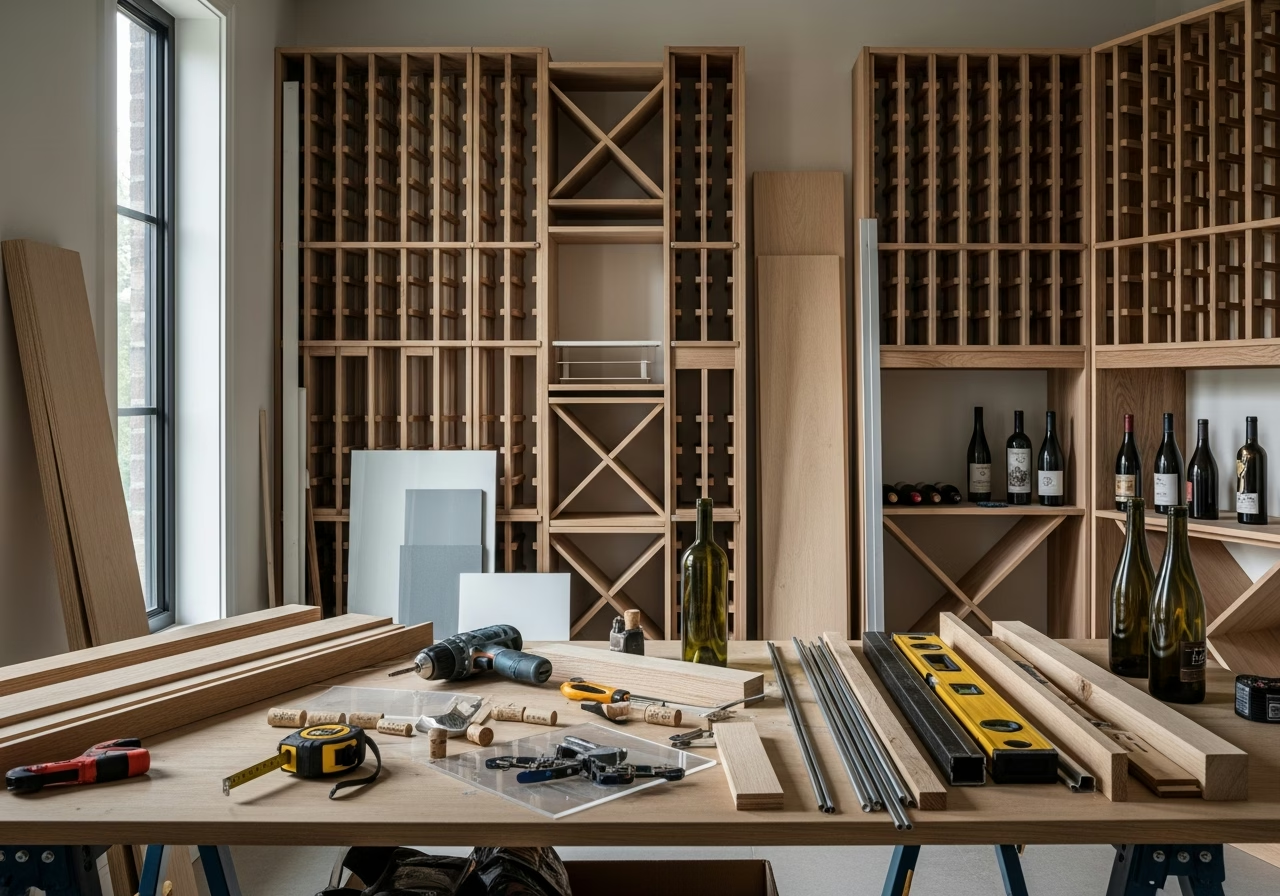
For a 6.5 ft tall racking wall on three walls of an 8x10 cellar (about 138 sf of wall area at racking height):
| System | Bottle Capacity |
|---|---|
| Pine traditional | 1,170–1,300 |
| Mahogany / sapele traditional | 1,100–1,200 |
| Vintage View 3-deep | 1,520–1,790 |
| Acrylic display | 690–960 |
| Custom millwork hybrid | 830–1,100 |
Vintage View wins capacity but loses on traditional aesthetic. Acrylic loses capacity but wins on visual impact in glass-enclosed cellars. Most Toronto cellars in 2026 mix two systems: traditional wood for working storage plus a Vintage View or acrylic feature wall for display bottles.
Cost Comparison: 800-Bottle Build
| System | Total Racking Cost (CAD) |
|---|---|
| Pine traditional | $32,000–$48,000 |
| Mahogany traditional | $56,000–$88,000 |
| Sapele traditional | $72,000–$112,000 |
| Vintage View metal | $20,000–$40,000 |
| Acrylic display | $64,000–$128,000 |
| Custom millwork hybrid | $120,000–$240,000 |
Vintage View is the value pick. Pine traditional is the most common mid-tier choice. Sapele and custom millwork are luxury-tier.
Wood Species Compared
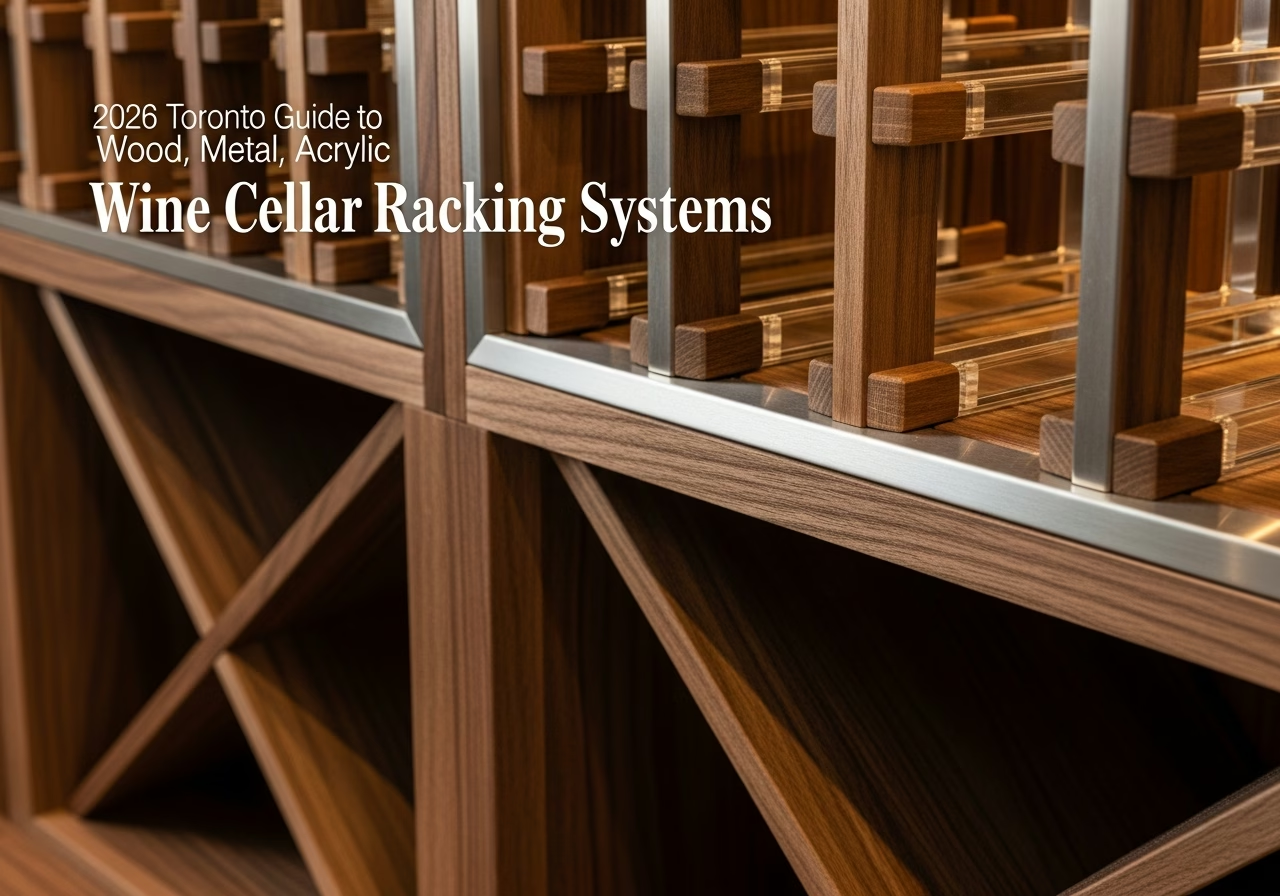
Pine
The default value choice. Stains well, holds up at 65% RH, easy to work with.
- Pros: Cheapest. Wide stock availability. Customizable stain colors.
- Cons: Softer wood; can dent. Stain may shift over decades.
- Lifespan in cellar: 25–40 years.
Mahogany
Mid-premium choice. Rich color, dimensionally stable in humid environments.
- Pros: Beautiful natural color. Stable at 65% RH. Premium feel without sapele cost.
- Cons: Some "mahogany" is actually meranti or sapele substitute. Confirm species.
- Lifespan: 50+ years.
Sapele
Premium African hardwood, often marketed as "African mahogany." Tight grain, deep color.
- Pros: Best dimensional stability. Premium aesthetic. Holds up indefinitely in cellar humidity.
- Cons: Most expensive. Limited stock; lead times.
- Lifespan: 75+ years.
Cedar
Aromatic option. Some collectors believe it imparts a positive cellar aroma; opinion varies.
- Pros: Aromatic, natural. Mid-cost.
- Cons: Aroma may interfere with delicate wines. Less dimensionally stable than mahogany.
- Lifespan: 30–50 years.
Avoid
- Soft cedar varieties (Western red cedar): too aromatic.
- Oak: dimensional movement at 65% RH.
- MDF or particleboard with veneer: swells and fails within 5–10 years in humid cellar.
Vintage View Metal Specifics
Vintage View is a North American brand that revolutionized cellar aesthetics with label-forward display. Two main systems:
Need professional home renovation?
Call RenoHouse at 289-212-2345 or get a free estimate today.
Get Free Estimate →- Wall Series: Wall-mounted, bottles project horizontally. 1-deep, 2-deep, or 3-deep.
- Floor-to-Ceiling: Floor-supported, double-sided possible.
In Toronto in 2026 we install Vintage View on roughly 35% of glass-enclosed cellars and 12% of walk-in cellars. The metal does not impart any taste or aroma to the bottles; structurally it is excellent. Three-deep configurations are the highest-density Vintage View setup but require careful planning so deep bottles can be reached.
Acrylic Specifics
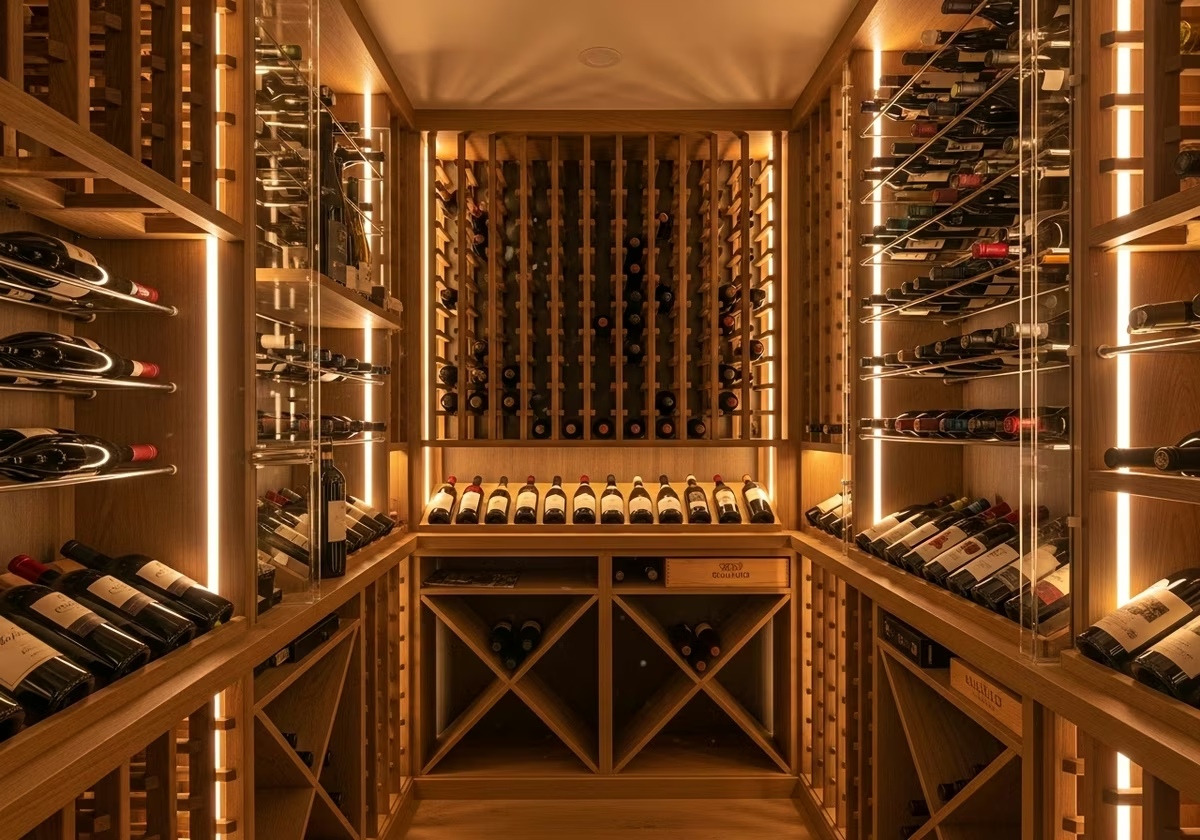
Three brands compete: Vinotemp Acrylic, Wine Cellar Innovations Acrylic Series, and a few specialty fabricators. The acrylic is typically 1/2" or 3/4" thick, cast (not extruded) for clarity, and laser-cut for precision.
- Pros: Showcase-grade visual. Very modern. Good for backlit installations.
- Cons: Scratches more easily than metal. Static electricity attracts dust. Low capacity per square foot.
- Best in: Backlit luxury feature walls, condo cellars.
Custom Millwork: When It Makes Sense
Custom millwork only justifies its price when:
- The cellar is part of a $80K+ build with high overall finish budget.
- The design intent is bespoke, architectural, or unusual (curved walls, asymmetric layouts, integrated tasting nook).
- The home has high-end millwork elsewhere and the cellar must match.
- The collection includes unusual formats (large-format Champagne, magnum-only sections) that off-the-shelf racking does not accommodate.
For a budget-aware build, off-the-shelf Wine Cellar Innovations racking with light customization (custom stain, custom dimensions) achieves 80% of the custom-millwork visual at 30% of the cost.
Racking Layout Strategy
Three-Wall + Center Island (most common)
Racking on the back wall and both side walls, with a center island for case storage and a tasting / pour surface. Door on the entry wall.
- Capacity: 80–90% of theoretical maximum.
- Aisle width: 32–36" between rack and island.
- Best for: 800–2,000 bottle cellars.
Two-Wall with Feature Wall
Racking on two opposite walls; feature wall (Vintage View or acrylic) on the third visible wall; door on the fourth.
- Capacity: 65–75% of theoretical maximum.
- Best for: Glass-enclosed cellars where one wall is glass.
Floor-to-Ceiling Three-Wall
Maximum density. No center island; storage on three walls floor to ceiling.
- Capacity: 100% of theoretical maximum.
- Best for: 400–800 bottle cellars where aisle space is at premium.
Galley
Two parallel walls of racking in a long, narrow cellar (often under-stair).
- Capacity: 90% of theoretical maximum.
- Best for: Under-stair cellars, narrow corridors.
Cooling and Racking Interaction
The cooling unit needs to throw cold air across the cellar. If you rack the wall opposite the cooling unit floor-to-ceiling with no gap, the air return path is blocked and the cooling unit cycles harder. Best practice:
- Leave 14–18" of clear space at the top of the racking on the opposite wall (cooling unit air return path).
- Leave a 2–3" gap between the back of the racking and the wall (allows air circulation behind bottles).
- Do not rack the wall directly under or above the cooling unit's air discharge.
Consult the cooling unit manufacturer's airflow diagram before finalizing rack layout. Wine Guardian and CellarPro publish detailed clearance guides.
Magnum and Large-Format Storage
Standard 750 ml bottles fit slots typically sized 3.5" diameter x 12" deep. Large-format bottles need wider, deeper slots:
- Magnum (1.5L): 4" diameter, 14" deep.
- Jeroboam (3L): 5" diameter, 16" deep.
- Imperial (6L): 6" diameter, 18" deep.
Reserve at least one row of taller / deeper racking for large formats. Most premium racking systems offer "magnum row" inserts. Capacity hit: each magnum slot replaces 2 standard slots; each jeroboam slot replaces 4.
Diamond Bins and Case Storage
For collectors who buy by the case and don't unpack, diamond bins (X-shaped wooden cradle) hold an unboxed dozen plus 2–4 spare slots. Useful for:
- Bordeaux futures and en primeur cases.
- Burgundy allocations.
- Champagne by the case.
Allocate 15–25% of the cellar's footprint to case storage. Capacity is roughly 12–16 bottles per square foot of bin (higher than individual rack density).
Lighting Integration
Racking and lighting are designed together, not separately. Two integration patterns:
- 1. Strip lighting along front rack supports. Illuminates label-out displays. Best with Vintage View and acrylic.
- 2. Cove lighting above racking. Indirect ambient illumination. Best with traditional wood.
Always UV-free. Always 2700K color temperature. Always dimmable. Detail in wine cellar lighting temperature humidity.
Toronto Suppliers
For Toronto wine cellar builds in 2026, primary racking suppliers:
- Wine Cellar Innovations (USA): Largest design library. Custom and standard. 6–10 week lead times.
- Vintage View (USA): In-stock metal label-forward. 1–2 week lead times.
- BarrelWorks (Canada, Hamilton): Mid-tier wood. 2–4 week lead times.
- Local custom millwork: Stoneacre, Treehouse, Carpentry by Joel. 6–12 week lead times for true custom.
Lead time is the single most-overlooked factor. Custom sapele racking ordered late can hold up the entire build by 4–8 weeks.
FAQ
Can I mix wood species in one cellar?Yes; many designs use a primary wood (mahogany or sapele) with a contrasting feature wood (cedar accents, ebony banding). Keep them dimensionally compatible.
Do I need to seal the wood?Premium racking comes pre-sealed with food-safe finish. Re-coat every 5–10 years.
Can wood racking go in a glass-enclosed cellar?Yes; many luxury glass-enclosed cellars combine wood (back and side walls) with metal label-forward (visible side).
Do I have to anchor the racking to studs?Yes. A loaded 6 ft section weighs 600+ lbs. Lag bolts into studs, not just drywall anchors.
Is acrylic safe for long-term wine storage?Yes; the bottle cradle does not interact with the wine. The bottles' corks and contents are isolated from any acrylic contact.
What about earthquake / vibration protection?Toronto is seismically quiet, but vibration from passing trucks or HVAC equipment can stir wines. Mount racking on isolation pads if vibration is a concern.
---
Specifying racking for your Toronto wine cellar? RenoHouse designs racking layouts that maximize capacity, integrate with cooling airflow, and match the home's aesthetic. We work with Wine Cellar Innovations, Vintage View, BarrelWorks, and Toronto custom millwork shops. Book a free consultation on our wine cellar installation service page.
Sources & References
Authoritative sources cited in this guide:
- Ontario Building Code — OBC official text
- Toronto Building Permits — City permit portal
- Tarion New Home Warranty — Ontario new-build warranty regulator
- HCRA — Home Construction Regulatory Authority — Ontario builder/vendor licensing
Continue Reading
- Best Wine Cellar Brands 2026: Toronto Buyer
- Wine Cellar Installation Toronto: Complete 2026 Cost & Design Guide
- Walk-In vs Glass-Enclosed Wine Cellar: Toronto 2026 Comparison