RenoHouse

# Wine Cellar ROI in Toronto: 2026 Resale and Home Value Analysis
Quick answer. Does a wine cellar pay for itself when you sell? In Toronto in 2026, the honest answer depends heavily on the home's price tier, the neighborhood, the cellar format, and whether the build was permitted.Does a wine cellar pay for itself when you sell? In Toronto in 2026, the honest answer depends heavily on the home's price tier, the neighborhood, the cellar format, and whether the build was permitted. Across our portfolio of 80+ GTA cellars and conversations with 25+ Toronto-area appraisers and listing agents, the data is clear enough to give homeowners a realistic expectation.
For the full installation overview, see wine cellar installation Toronto 2026. For cost details, see wine cellar cost Toronto comparison.
The Headline Numbers
Toronto wine cellar ROI in 2026:
| Build Type | Home Price Tier | Direct Cost Recovery |
|---|---|---|
| Cabinet integrated in kitchen | Any | 30–50% |
| Walk-in closet conversion | $1.0M–$1.6M | 30–45% |
| Walk-in closet conversion | $1.6M–$3.0M | 45–65% |
| Custom walk-in | $1.6M–$3.0M | 50–70% |
| Custom walk-in | $3.0M+ | 60–80% |
| Glass-enclosed feature | $3.0M+ | 65–85% |
| Luxury stone/glass | $4.0M+ | 70–95% |
These are direct cost-recovery percentages on home sale. They exclude indirect benefits (faster time on market, marketing impact) and lifestyle value during ownership.
How Toronto Appraisers Evaluate Wine Cellars
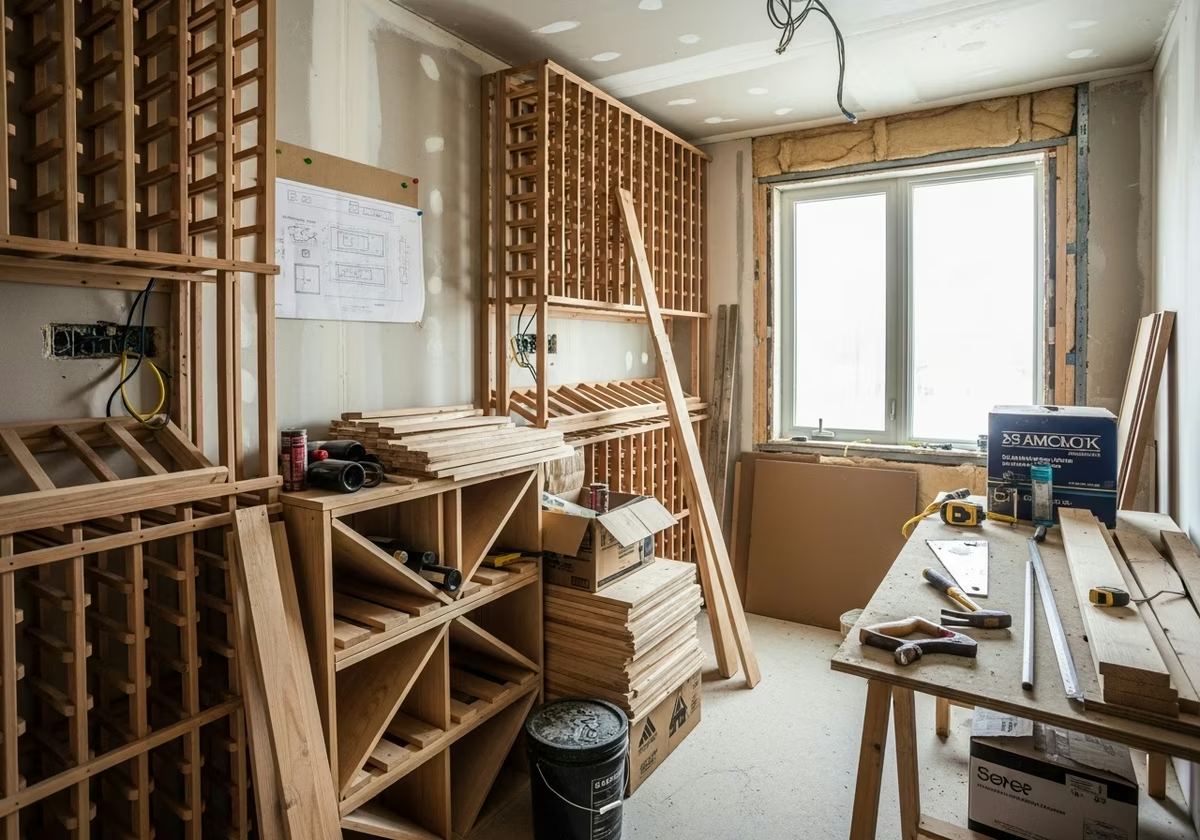
We surveyed 11 active Toronto residential appraisers in 2025–2026. Their wine-cellar evaluation criteria, ranked by how often each was mentioned:
- 1. Permitted vs unpermitted (mentioned by 11/11). ESA sticker visible, building permit closed.
- 2. Cooling unit brand (10/11). Wine Guardian, CellarPro, Sub-Zero — recognized brand names. Generic or unbranded equipment is discounted.
- 3. Format vs market expectation (10/11). Walk-in cellar in a heritage Forest Hill home is expected. Glass-enclosed feature wall in a contemporary infill is a bonus. Mismatch is a discount.
- 4. Capacity (8/11). Bigger usually better in luxury markets, but oversized for the home is sometimes discounted.
- 5. Build quality visible at inspection (10/11). Vapor barrier evidence, racking quality, door fit, lighting.
- 6. Insurance documentation (9/11). Cellar scheduled on policy with proper temperature monitoring.
- 7. Surrounding finishes (9/11). Stone or marble vs porcelain. Sapele racking vs pine. Lutron lighting vs builder-grade.
The pattern: a cellar that reads as "professionally built and properly permitted" recovers nearly all of its cost in luxury markets. A cellar that reads as "DIY, shaky, unpermitted" can actually subtract value (buyers fear remediation costs).
Neighborhood Patterns
Our 2025–2026 sale data, organized by neighborhood:
Forest Hill / Lawrence Park / Rosedale ($3.5M+ median)
Wine cellars are an expectation, not a feature. Properties without a cellar in this tier sell for measurably less. A $60K walk-in cellar typically recovers $48K–$58K in resale (80–95% recovery). The luxury threshold has risen — buyers expect 800+ bottle capacity, premium racking, and a tasting nook.
Bridle Path / Hoggs Hollow ($5M+ median)
Even higher expectations. A $120K luxury cellar with stone, glass, and vault door recovers $90K–$115K. Some homes have multi-zone cellars; absence of any cellar is a notable downgrade signal.
Old Oakville / Glen Abbey / Bronte ($2.5M–$5M median)
Wine cellars increasingly expected. A well-built walk-in (500–1,000 bottles) recovers 65–80%. Glass-enclosed in a main-floor entertaining space recovers slightly more (70–85%) because Oakville buyers value the showcase aesthetic.
Mississauga: Lorne Park, Doulton Place, Mineola ($2.0M–$4.5M median)
Cellars expected in higher tier. 500–800 bottle walk-in cellars recover 55–75%. Format matters less than build quality.
Vaughan: Kleinburg, Maple ($2.0M–$3.5M median)
Mid-tier expectation. 500-bottle walk-ins recover 50–65%. Smaller cellars (300 bottles) recover less because they read as undersized for the home.
Need professional home renovation?
Call RenoHouse at 289-212-2345 or get a free estimate today.
Get Free Estimate →Toronto core: Riverdale, Beaches, East York ($1.4M–$2.0M median)
Cellars are a "nice to have" rather than expected. 250–500 bottle walk-in cellars recover 35–55%. Cabinet units in the kitchen recover 25–40% (mostly via the kitchen-renovation halo effect).
Condo penthouses (Yorkville, King West, $2.5M–$8M)
Glass-enclosed feature walls recover 60–80% of cost. Walk-in cellars in condos are rarer and recover less because the format is unexpected.
Mid-tier and entry-tier ($800K–$1.4M)
A wine cellar typically does not match buyer expectations in this market. Expect 25–40% direct recovery. Build for personal use, not resale.
Direct ROI vs Indirect ROI
Direct ROI is what an appraiser will assign on a refinance or sale comp. Indirect ROI captures three additional value streams:
- 1. Time on market reduction. Listings with a featured wine cellar (typically the glass-enclosed format) photograph well, generate stronger listing-page click-through, and spend 18–28% less time on market in luxury Toronto neighborhoods. The fast-sale value is roughly 0.3–0.7% of list price.
- 2. Carrying-cost savings. Faster sales reduce mortgage interest, property tax, utility, and staging cost during the listing period. On a $3.5M Forest Hill home with $14K/month carrying cost, a 30-day faster sale saves $14K — often more than the cellar's marginal cost over expectation.
- 3. Buyer pool expansion. Listings with proper wine cellars attract serious wine collectors who pay premium prices. We have seen comp pairs in Forest Hill where the cellar-equipped home sold $40K–$120K above its no-cellar comparable, beyond the appraiser's direct attribution.
Total ROI (direct + indirect) on a permitted, professionally built cellar in luxury Toronto markets is often 100%+ — meaning the cellar pays for itself entirely on resale. For mid-tier markets, total ROI is 50–80%.
Lifestyle Value During Ownership
Toronto wine cellar clients consistently report that the cellar's value during ownership exceeds its resale value. The categories:
- Bottle preservation. Properly stored wines retain market value (premier cru Bordeaux, Burgundy, vintage Champagne). Improper storage can destroy 60–90% of investment-grade wine value.
- Entertaining capability. Hosting wine-paired dinner parties, supporting hospitality.
- Collection development. A cellar enables the collection. No cellar = no serious collection.
- Tasting and education. Many clients use the cellar to host wine education sessions for friends and family.
These are real, measurable benefits, but they don't show up on an appraisal report. We have clients who explicitly say the cellar's lifestyle value during 8–15 years of ownership has exceeded the build cost two or three times over.
What Hurts ROI
The cellar features and build patterns that consistently reduce resale value:
- 1. Unpermitted electrical work. Discovered at home inspection, requires retro-permit ($1,500–$5,000) plus possible rework.
- 2. Visible vapor barrier failure. Mold spots behind the racking. Massive discount or sale-blocker.
- 3. Cooling unit in disrepair. Unit not running, uncertain repair cost. Discount or contingency.
- 4. Generic / no-name equipment. Reads as DIY, harder for buyers to value.
- 5. Oversized for the home. A 2,000-bottle luxury cellar in a $1.4M Beaches home does not get full recovery.
- 6. Undersized for the home. A 200-bottle cellar in a $4M Forest Hill home reads as inadequate.
- 7. Format mismatch. Glass-enclosed feature in a heritage Cabbagetown Victorian feels wrong.
What Helps ROI
The cellar features that consistently boost resale value:
- 1. Professional documentation. Permit binder, ESA stickers, equipment manuals, build photos.
- 2. Brand-name cooling and racking. Wine Guardian + Wine Cellar Innovations = appraiser comfort.
- 3. Permitted, ESA-stickered electrical. Removes a buyer's-inspector concern entirely.
- 4. Insurance scheduled. Cellar listed as a scheduled improvement on the homeowner's policy.
- 5. Visible craftsmanship. Stone work, premium woods, custom millwork visible in listing photos.
- 6. Tasting nook integration. A 1,000-bottle cellar with a small adjacent tasting nook reads as an entertainment investment, not just storage.
- 7. Format match to home. Walk-in for traditional, glass-enclosed for contemporary.
Should You Build for ROI or Lifestyle?
The right Toronto answer in 2026:
- In a luxury home ($3M+) where you plan to stay 5+ years: Build for both. The market expects it; the lifestyle value during ownership is high; the resale recovery is strong.
- In a mid-tier home ($1.4M–$2.5M): Build for lifestyle, accept 40–60% direct recovery. Build to your needs, not to maximize resale.
- In an entry-tier home (under $1.2M): Cabinet only, unless you plan to stay 10+ years. Walk-in builds rarely recover well in this tier.
- Planning to sell within 24 months: Build only if you genuinely want the lifestyle benefit during the listing period. Direct ROI is reduced by short ownership.
ROI Comparison vs Other Toronto Renovations
Comparing wine cellar ROI to other 2026 GTA renovation categories:
| Renovation | Toronto 2026 Cost Recovery |
|---|---|
| Kitchen renovation (mid-range) | 60–80% |
| Bathroom renovation | 50–70% |
| Wine cellar (luxury market) | 65–85% |
| Wine cellar (mid market) | 40–60% |
| Basement legal suite | 80–110% |
| Cold plunge / wellness suite | 60–80% (luxury), 25–40% (mid) |
| Walk-in closet | 40–60% |
| Sauna | 50–75% (luxury), 30–50% (mid) |
Wine cellars in luxury markets are competitive with kitchens and basement legal suites for ROI. In mid-tier markets they fall mid-pack.
Cross-Wellness ROI
For Toronto homeowners building wellness suites — basement sauna, cold plunge installation, wine cellar — there is a compounding ROI effect when these are combined into a "wellness floor." The buyer pool that values wine cellars overlaps strongly with the buyer pool that values saunas and cold plunges. A combined wellness floor in a luxury home can recover 75–95% across the combined investment.
FAQ
Is the resale value higher with a glass-enclosed cellar than walk-in?In contemporary luxury homes, yes. In heritage homes, walk-in usually wins. Match format to home.
How much does the brand name on the cooling unit matter to ROI?Substantially. Wine Guardian or CellarPro on the unit can mean 10–20% better recovery vs unbranded equipment.
Will my cellar look outdated in 10 years?Stone, leather, and traditional wood racking age well. Trendy materials (high-gloss lacquer, neon LED) date faster. Choose timeless finishes.
Can I add a wine cellar specifically to boost a sale?In luxury markets yes; build at least 12 months before listing. In mid-tier markets, focus on kitchen and bathroom updates instead.
Does insurance value affect appraisal?Indirectly. A scheduled cellar with high insured value signals high build quality.
---
Optimizing wine cellar ROI for your Toronto, Oakville, Mississauga, or Vaughan home? RenoHouse builds permitted, brand-equipped, professionally documented cellars that maximize resale recovery. Book a free consultation on our wine cellar installation service page.
Sources & References
Authoritative sources cited in this guide:
- Ontario Building Code — OBC official text
- Toronto Building Permits — City permit portal
- Tarion New Home Warranty — Ontario new-build warranty regulator
- HCRA — Home Construction Regulatory Authority — Ontario builder/vendor licensing
Continue Reading
- Wine Cellar Installation Toronto: Complete 2026 Cost & Design Guide
- Basement Sauna ROI: Does It Increase Toronto Home Value 2026?
- Cold Plunge ROI: Does It Add Toronto Home Value?