RenoHouse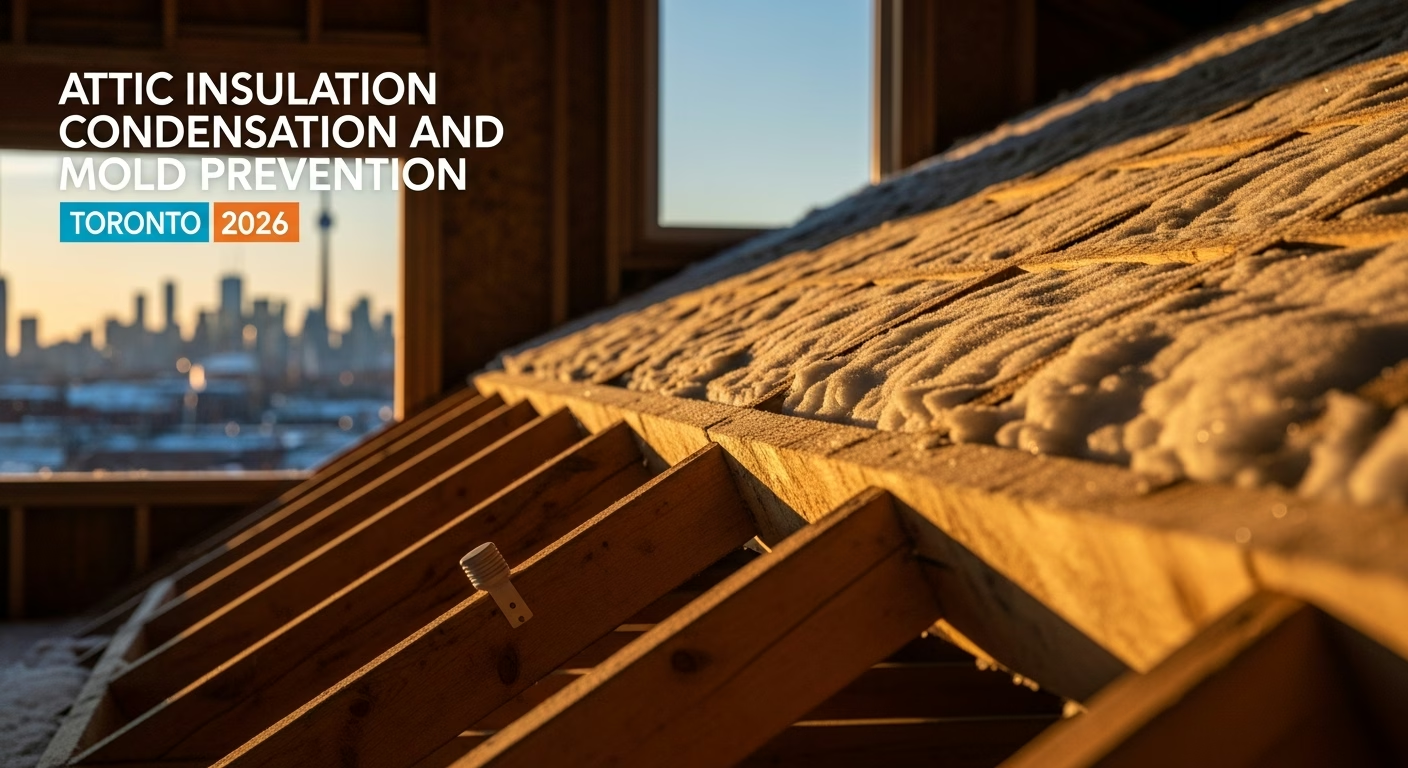

# Attic Insulation Condensation and Mold Prevention Toronto 2026
Quick answer. Toronto attics see two moisture stresses every year: winter condensation when warm interior air contacts the cold roof deck, and summer moisture absorption when humid outdoor air enters through soffit vents. Both can cause mold and roof deck rot if not managed properly.Toronto attics see two moisture stresses every year: winter condensation when warm interior air contacts the cold roof deck, and summer moisture absorption when humid outdoor air enters through soffit vents. Both can cause mold and roof deck rot if not managed properly. This guide explains the moisture physics, how attic insulation upgrades help (or hurt), how to fix existing moisture problems, and Toronto-specific risk factors for condensation and mold.
For pillar context, see Attic Insulation Toronto: Complete 2026 Upgrade Guide. For air sealing fundamentals, see Attic Air Sealing Before Insulation: Why It's Non-Negotiable in Toronto.
The Toronto Moisture Cycle
Annual moisture stress on a Toronto attic:
- November–March (winter): Indoor humidity drives moisture into attic where it can condense on cold roof deck. Stack effect amplifies movement.
- April–May (shoulder): Variable humidity, mild temperatures, low stress.
- June–August (summer): Outdoor humidity is often higher than indoor (with AC running). Some moisture enters through soffit vents.
- September–October (shoulder): Variable, low stress.
The dominant stress is winter. A Toronto home's attic spends ~150 days per year in conditions where condensation is likely without adequate moisture management.
Why Condensation Happens
Air can hold a maximum amount of water vapor depending on temperature. When air cools below its dewpoint, the excess water condenses into liquid.
Indoor air at 22°C/40% RH has a dewpoint of ~8°C. Any surface in contact with that air below 8°C will condense moisture.
In a Toronto attic in January:
- Roof deck temperature: -5 to -15°C
- Indoor air at the attic floor: heavily mixed with outdoor air, but pockets reach 5–15°C
- Wherever indoor air contacts the cold roof deck, condensation forms
Without adequate management, a typical 1,500 sqft Toronto home can deposit 50–150 kg of water on the attic roof deck over a winter. That's enough to cause mold and rot.
How Insulation Affects Condensation
Counterintuitively, more insulation can either help or hurt condensation, depending on what else is done:
More insulation HELPS when:- Comprehensive air sealing prevents air leakage into attic
- Soffit/ridge ventilation maintains attic temperature close to outdoor (cold and dry)
- Vapor barrier intact
- Air leakage continues — moisture still enters but the attic is now better insulated, so it stays cold longer and deposits more moisture
- Ventilation is blocked by insulation pushed into eaves
- Insulation traps moisture against the roof deck
The principle: insulation works WITH air sealing and ventilation, not as a replacement.
The Three Pillars of Attic Moisture Management
Pillar 1: Air Sealing
Stops 90%+ of moisture transport from interior to attic. Without air sealing, every other measure is partial.
Scope: top plates, plumbing stacks, electrical penetrations, bathroom fan housings, attic hatch, chimney chase, recessed lights.
Cost: $700–$1,400 for a typical 1,500 sqft Toronto home.
Pillar 2: Insulation
Reduces conductive heat loss, which keeps the attic close to outdoor temperature (cold and dry in winter). Also slows the indoor-to-attic temperature differential, reducing condensation potential.
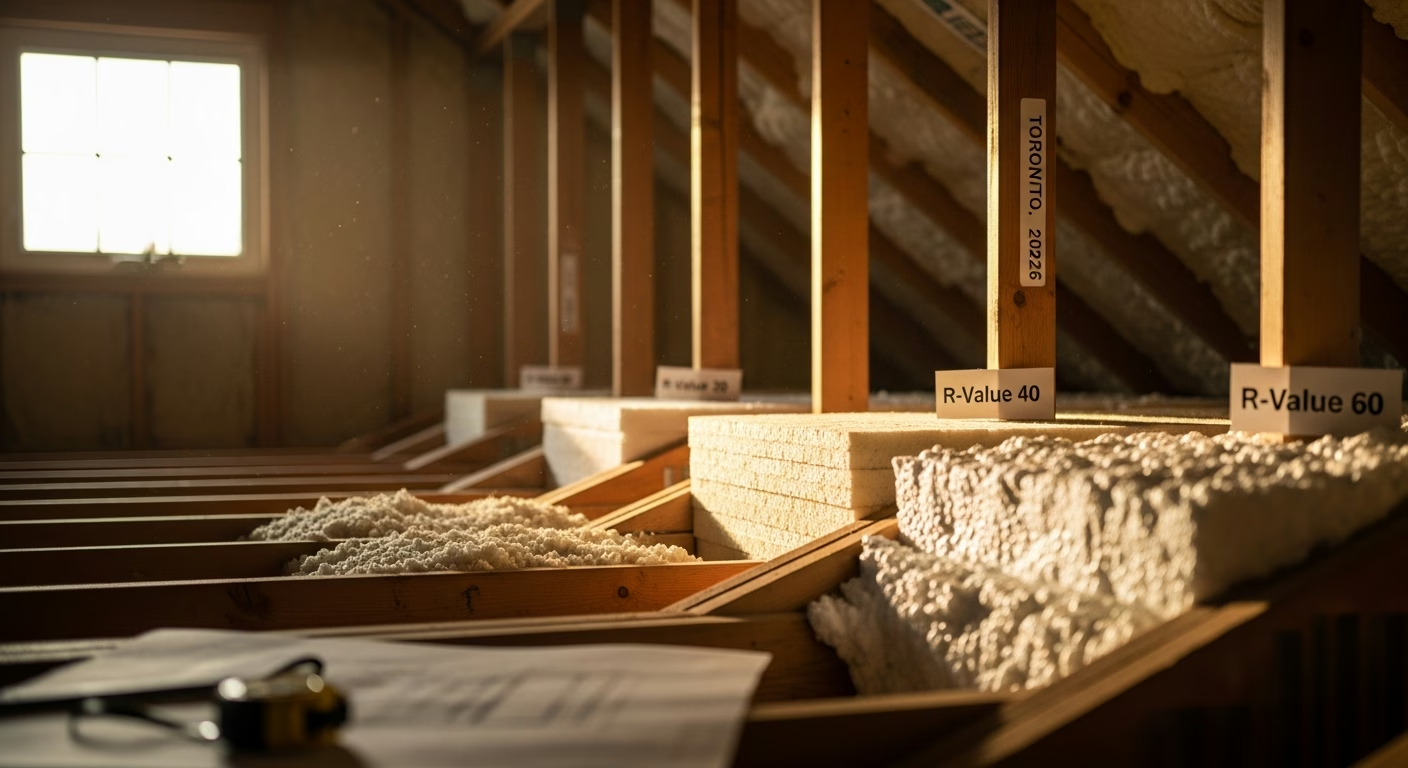
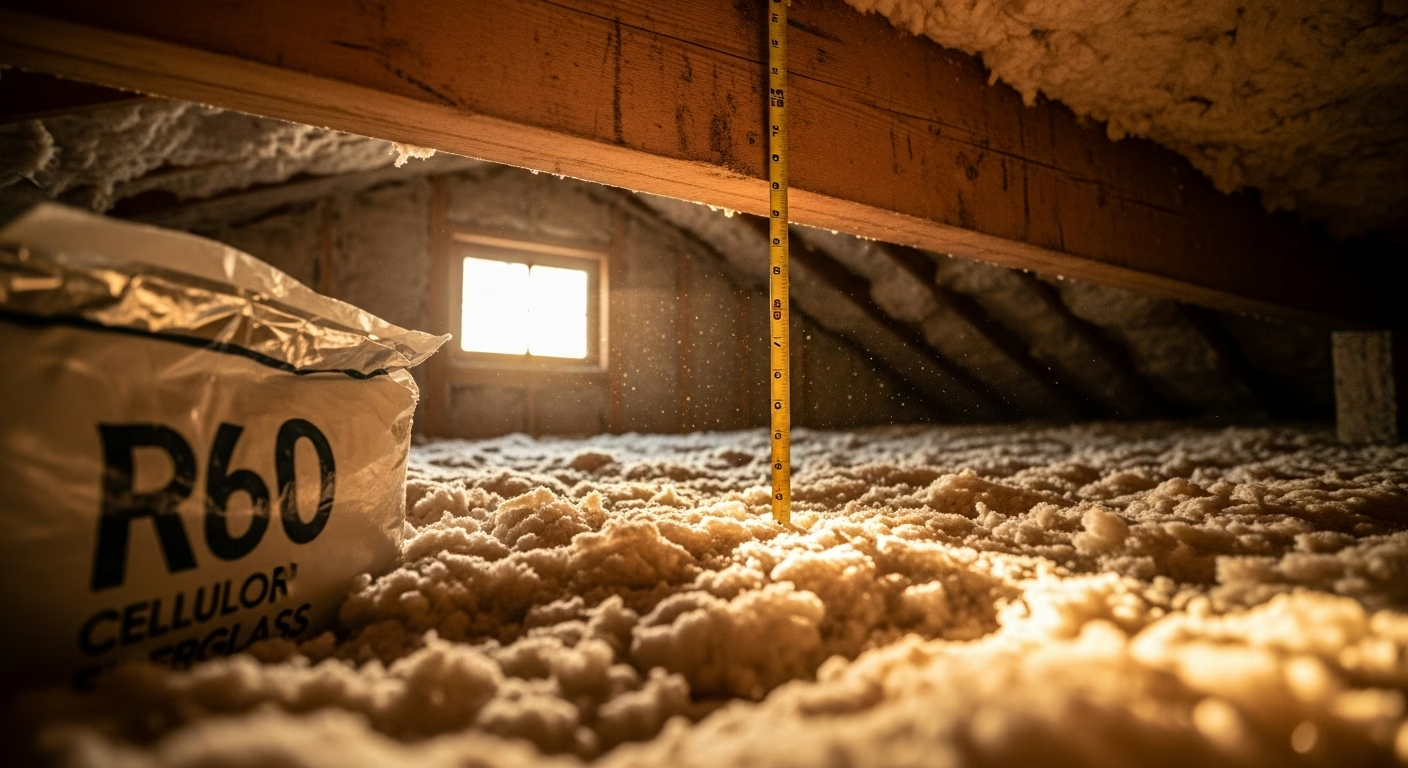
Scope: R60 blown cellulose, fiberglass, or hybrid spray foam.
Pillar 3: Ventilation
Removes the small amount of moisture that does enter the attic. Soffit-to-ridge airflow exchanges attic air with outdoor air ~3–5 times per hour at design conditions.
Scope: continuous soffit vents at eaves, ridge vent at peak, baffles to maintain airflow.
For full ventilation strategy, see Attic Ventilation Toronto: Soffit and Ridge Vent Strategy.
How Mold Forms in Toronto Attics
Mold needs three things: moisture, food (cellulose-based materials like wood, paper-faced drywall, dust), and temperature. Toronto attics provide all three:
Need professional exterior renovation?
Call RenoHouse at 289-212-2345 or get a free estimate today.
Get Free Estimate →- Moisture: From condensation when air sealing or ventilation fails.
- Food: Roof deck plywood (cellulose), framing lumber, paper-faced batt insulation.
- Temperature: Above freezing for ~9 months per year.
Mold typically appears as:
- Black/dark grey stains on roof deck plywood — most common, often Stachybotrys or Cladosporium
- White fuzzy growth on framing lumber — often Aspergillus or Penicillium
- Sticky black growth at gable ends — often older accumulated growth
Toronto attics most likely to develop mold:
- Pre-1990 with no air sealing, R20 insulation, and bathroom fans vented into attic
- 1.5-storey homes with knee walls and sloped ceilings (complex air leakage paths)
- Homes with chronic ice dam issues
- Homes with rooftop AC units that drain into the attic
Diagnosing Existing Mold
From the attic side, look for:
- Stains on the underside of roof deck plywood
- Stains around bathroom fan ducts (if vented into attic)
- Stains on framing lumber, especially at gable ends and around vents
- Soft or punky wood at any location
- Visible water damage on insulation (compressed, discolored)
Take photos. Compare to baseline mold photos online. If unsure, contact a Toronto mold inspection service ($300–$500) for professional assessment.
Pre-Insulation Mold Remediation
Before installing new insulation in an attic with mold:
Light Mold (<10 sqft surface area)
Often handled by the insulation contractor as part of the project:
- Brush or HEPA vacuum to remove visible growth
- Apply fungicidal cleaner (Concrobium, Mold Armor)
- Allow to dry completely
- Treat surfaces with mold-inhibitor (borate-based)
- Cost: $300–$600 added to insulation project
Moderate Mold (10–100 sqft)
Professional remediation recommended:
- Containment with plastic sheeting and negative air machines
- Removal of contaminated materials
- HEPA cleaning
- Treatment with antimicrobials
- Air clearance testing
- Cost: $1,500–$3,500
Heavy Mold (>100 sqft, structural compromise)
Major remediation:
- Roof deck replacement may be required
- Full attic clean-out
- Possible insurance claim (if covered)
- Cost: $5,000–$15,000+
After remediation, the underlying cause must be addressed (air sealing, ventilation, fan venting) before re-insulating, or mold returns within 1–3 years.
Prevention: What Works
For new construction or major retrofits:
- 1. Comprehensive air sealing. Document with photos and (if possible) blower door testing.
- 2. R60 insulation. Reduces winter heat flow that causes condensation differential.
- 3. Continuous soffit vents at eaves, ridge vent at peak.
- 4. Baffles at every eave rafter bay to maintain airflow.
- 5. Bathroom fans vented to exterior, never to attic.
- 6. Range hood vented to exterior (handles kitchen moisture).
- 7. Vapor barrier integrity in ceiling assembly.
- 8. Indoor humidity control. Keep winter indoor RH at 30–40%, not higher.
If all 8 are in place, condensation and mold risk is near-zero.
Toronto-Specific Risk Factors
Old Roof Deck
Pre-1980 Toronto homes often have plank or board sheathing instead of plywood. Plank decks have gaps between boards that can act as ventilation if other paths are blocked, but are also vulnerable to moisture absorption.
Knob-and-Tube Wiring
K&T wiring restricts what can be installed in the attic. If K&T is still in place, insulation must be carefully managed around it (or K&T removed first), which often leaves air leakage gaps.
Rooftop AC Drainage
Some Toronto homes have AC condensate drains that discharge into the attic or onto attic floor. This is a chronic moisture source that must be redirected before insulation.
Bathroom Fan History
Many Toronto homes have bathroom fans installed and re-installed over decades. Often the original fan was vented to attic, then later replaced with one vented outside, but the original duct outlet may still be open in the attic.
Chimney Chase
Brick chimneys passing through the attic create thermal bridges and air leak paths. Chimney chase sealing requires fire-rated materials.
Ridge Beam Issues
Some Toronto homes (especially modernist styles) have structural ridge beams that interrupt ridge ventilation. Alternative ventilation strategies needed.
Indoor Humidity: The Hidden Lever
Toronto homeowners often run humidifiers in winter to combat dry air. This works well for comfort but can drive condensation if attic management is poor.
Recommended winter indoor RH for Toronto:
- Outdoor temp -10°C: indoor RH max 30%
- Outdoor temp 0°C: indoor RH max 40%
- Outdoor temp +5°C: indoor RH max 45%
Higher humidity feels nicer but the attic pays the price. Whole-house humidifiers should be set with a humidistat that varies setpoint by outdoor temperature.
Heat Recovery Ventilation (HRV) and Attics
HRVs improve indoor air quality and reduce moisture stress on attics by:
- Removing moisture-laden bathroom and kitchen air directly to outside
- Providing fresh outdoor air without temperature shock
- Reducing the pressure differential that drives stack effect
Toronto homes with HRVs typically have lower attic moisture stress. If you're considering an HRV install, do it before or with the attic insulation upgrade for best combined performance.
Spray Foam and Moisture
Closed-cell spray foam at the attic floor (or roof deck) is the most aggressive moisture-management option. It:
- Acts as both air barrier and vapor barrier
- Eliminates the air leakage path entirely
- Tolerates moisture without losing R-value
For homes with chronic moisture issues, closed-cell spray foam is often the right choice even though it's expensive.
For material details, see Spray Foam vs Blown Cellulose vs Batt: Toronto Attic Comparison.
Common Toronto Misdiagnoses
"My roof is leaking." Sometimes ice dam meltwater backing up under shingles. Sometimes condensation dripping from roof deck. Sometimes both. Diagnosis requires looking at the attic during/after heavy precipitation and during cold snaps. "My fan is broken." Sometimes the bathroom fan is fine but ducted into attic instead of outside. Re-venting fixes the symptom. "My insulation is wet." Sometimes ice dam leak. Sometimes condensation. Sometimes plumbing leak above the ceiling. Three different causes, three different solutions. "My ventilation is fine." Some homeowners point to gable vents and assume ventilation is adequate. Gable vents alone don't provide soffit-to-ridge flow. Often need supplementation with soffit vents.Bottom Line on Moisture Prevention
For most Toronto attic insulation upgrades:
- 1. Inspect for existing moisture/mold before starting
- 2. Address any discovered mold (light: include in project; moderate/heavy: separate remediation)
- 3. Comprehensive air sealing
- 4. Verify or improve ventilation (baffles, soffit vents, ridge vents)
- 5. R60 insulation
- 6. Verify bathroom fans vent to exterior
- 7. Manage indoor humidity in winter
A correctly executed Toronto attic insulation upgrade reduces moisture risk to near-zero. A poorly executed one creates a moisture problem within 5 years.
---
Worried about condensation or mold in your Toronto attic? RenoHouse inspects for mold and moisture issues as part of every attic upgrade quote and includes light remediation in scope when needed. Visit our attic insulation upgrade service page or book an insulation thermal audit for thorough pre-project moisture assessment.
Sources & References
Authoritative sources cited in this guide:
- Canada Greener Homes Initiative — Federal retrofit programs
- ENERGY STAR Canada — Canadian ENERGY STAR specs
- Ontario Building Code SB-12 — OBC energy efficiency supplementary standard
- Toronto HELP — Home Energy Loan — Toronto Home Energy Loan Program
Continue Reading