RenoHouse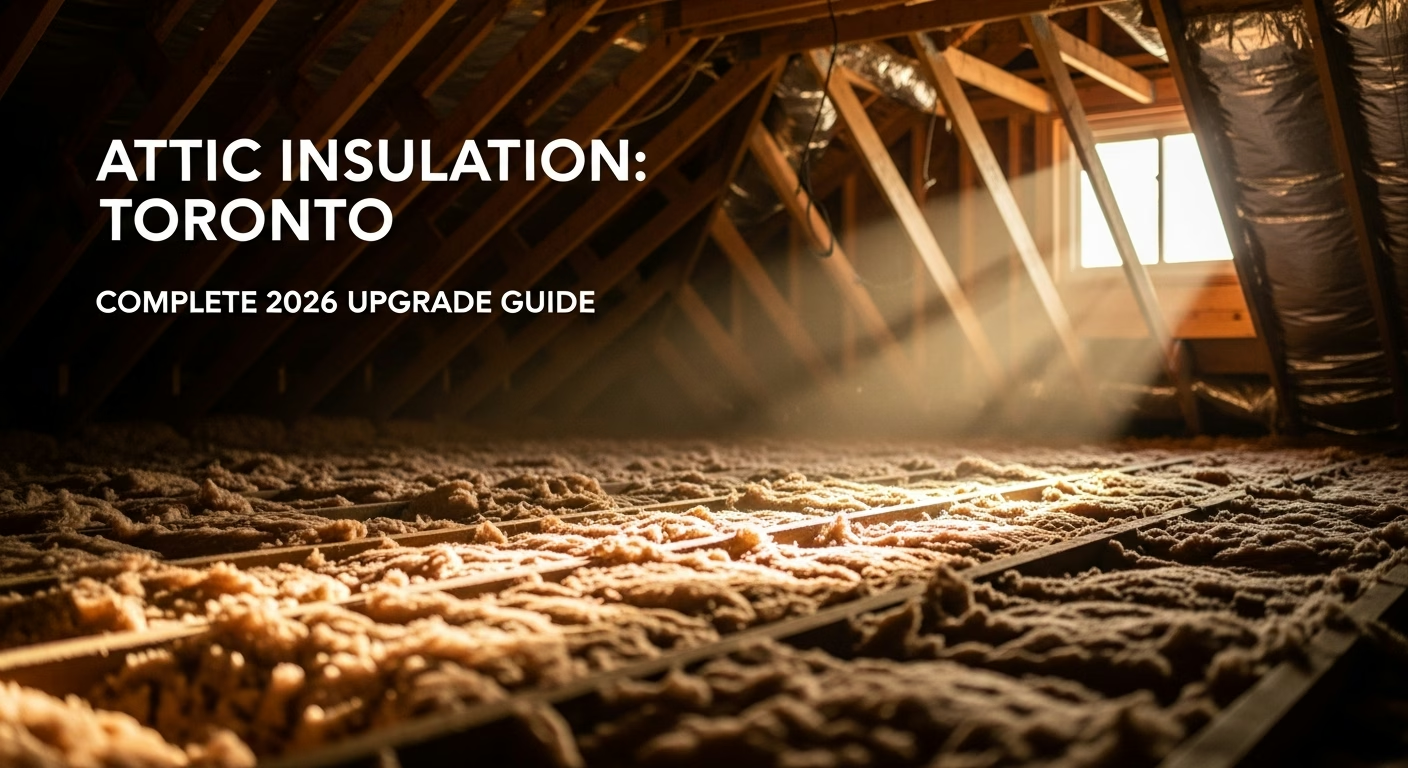

# Attic Insulation Toronto: Complete 2026 Upgrade Guide
Quick answer. If your Toronto home was built before 2012 and you've never touched the attic, there's roughly a 70% chance it's sitting at R20–R30 — about half of what the current Ontario Building Code requires. In a typical 1,500 sqft Leaside or East York bungalow, that gap costs $600–$1,200 per year in wasted heating and cooling, and it's the single l...If your Toronto home was built before 2012 and you've never touched the attic, there's roughly a 70% chance it's sitting at R20–R30 — about half of what the current Ontario Building Code requires. In a typical 1,500 sqft Leaside or East York bungalow, that gap costs $600–$1,200 per year in wasted heating and cooling, and it's the single largest cause of ice dams every January. In 2026, a proper attic insulation upgrade in the GTA runs anywhere from $3,500 for a 1,000 sqft top-up with blown cellulose to $8,500+ for a 2,000 sqft full-depth removal, air seal, and R60 spray foam install.
This is RenoHouse's pillar guide for 2026 attic insulation upgrades in Toronto. We'll cover real CAD pricing, the R60 OBC requirement, the difference between spray foam, blown cellulose, and batt insulation, federal Greener Homes rebates worth up to $5,000 (plus the $40,000 interest-free loan), the City of Toronto HELP program, ROI math, air sealing prerequisites, and how to spot a contractor cutting corners.
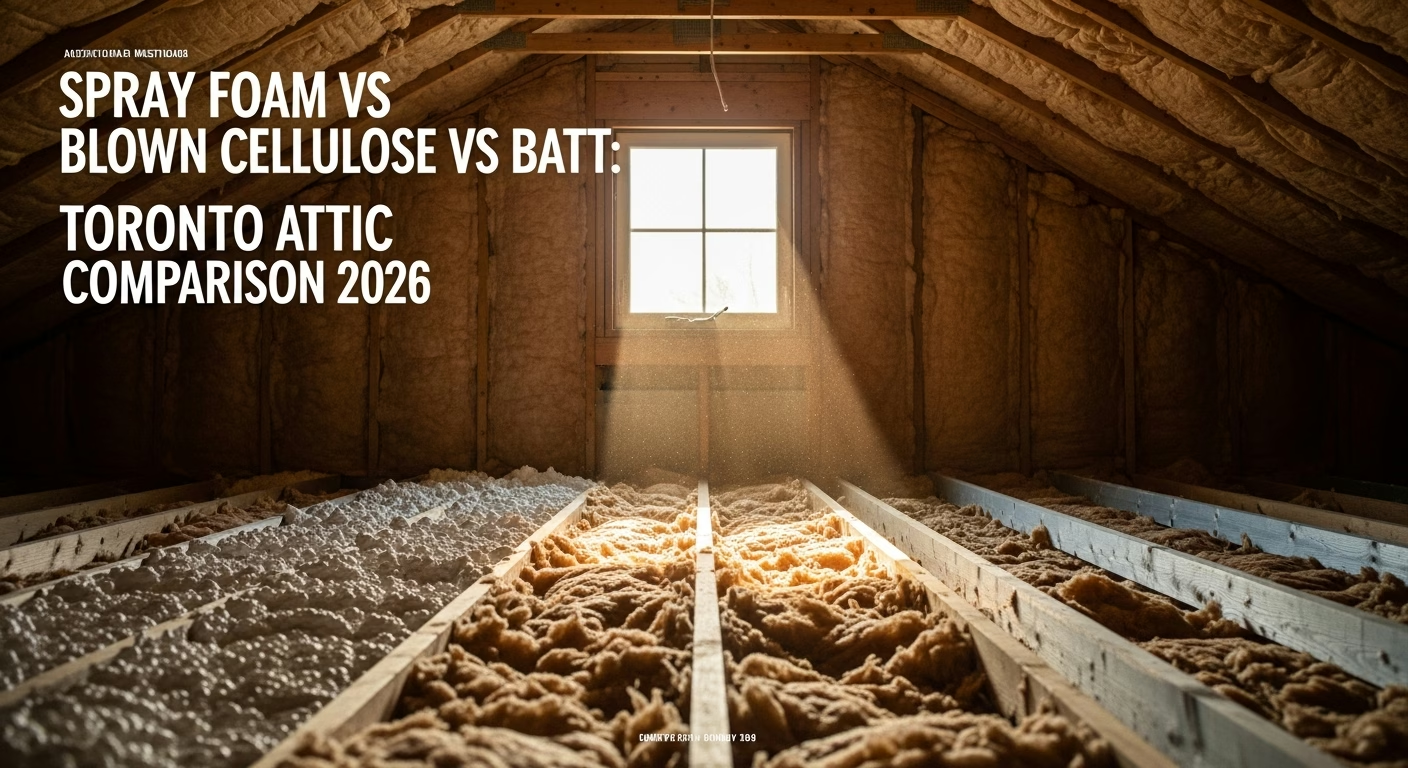
If you're cost-shopping, jump to Attic Insulation Cost Toronto: R-Value Tier-by-Tier Pricing. If you're choosing between materials, see Spray Foam vs Blown Cellulose vs Batt: Toronto Attic Comparison. For rebates specifically, jump to Attic Insulation Rebates Toronto: Greener Homes Grant Guide.
For the broader envelope picture — including air sealing, ventilation, and thermal bridging — also see our insulation thermal audit service for diagnostics-first scoping.
Why Toronto Attics Are Different
Three factors make Toronto attic insulation distinct from suburban or rural Ontario:
- 1. Old housing stock. Roughly 40% of detached homes in East York, Leaside, the Beaches, High Park, and Riverdale were built before 1960. Their attics typically have legacy R20 fiberglass batt or even R12 vermiculite (which sometimes contains asbestos and triggers a $2,500–$5,000 abatement step before any new insulation goes in).
- 2. Freeze-thaw climate. Toronto sees 60–80 freeze-thaw cycles per winter. Inadequate attic insulation combined with even minor air leakage means warm interior air hits the cold roof deck, melts the snow, and refreezes at the eaves — that's the textbook ice dam mechanism.
- 3. Code evolution. Ontario Building Code (OBC) requires R60 (RSI 10.6) for new-construction attics in Climate Zone 5 (which includes all of Toronto and the GTA). Pre-2012 homes were built to R32–R40. Pre-1990 homes were often built to R20 or worse. There is no requirement to retrofit to current code, but there's also no rebate or incentive that pays for staying at the old level.
What "Attic Insulation Upgrade" Actually Includes
A real Toronto attic insulation upgrade is more than just blowing more cellulose on top of what's there. A complete 2026 scope includes:
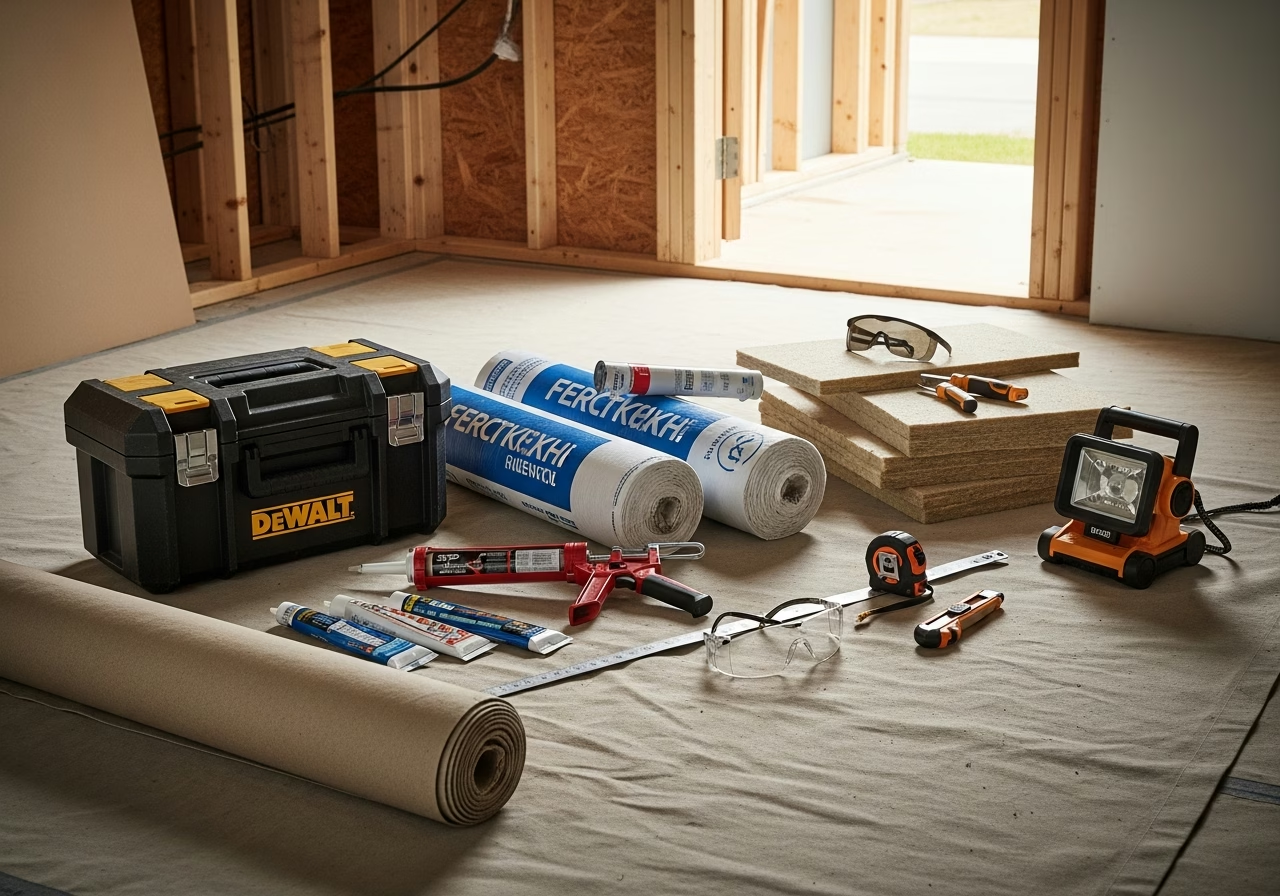
- Pre-work inspection. Verify there's no knob-and-tube wiring (illegal to bury under insulation), no vermiculite (potential asbestos), no active roof leaks, no rodent contamination, and no existing mold on the roof deck.
- Air sealing. Every penetration into the attic — top plates, plumbing stacks, bathroom fans, recessed pot lights, attic hatch — gets sealed with canned foam or fire-rated sealant. This is non-negotiable. Insulation without air sealing is like a wool sweater with the zipper open.
- Baffles and ventilation. Soffit-to-ridge airflow must be preserved. Plastic or rigid foam baffles get installed at every rafter bay where insulation might block soffit vents.
- Pot light covers. Non-IC-rated recessed lights need fire-rated covers before insulation goes over them. Most Toronto homes built 2000–2010 have non-IC pot lights.
- Vapor barrier review. Confirm the existing ceiling vapor barrier is intact. If it's missing or torn, air sealing becomes even more critical.
- Insulation install. Blown cellulose, blown fiberglass, or two-pound closed-cell spray foam to R60. Batts are rarely used as the primary attic insulation in upgrades because they don't fill irregular cavities.
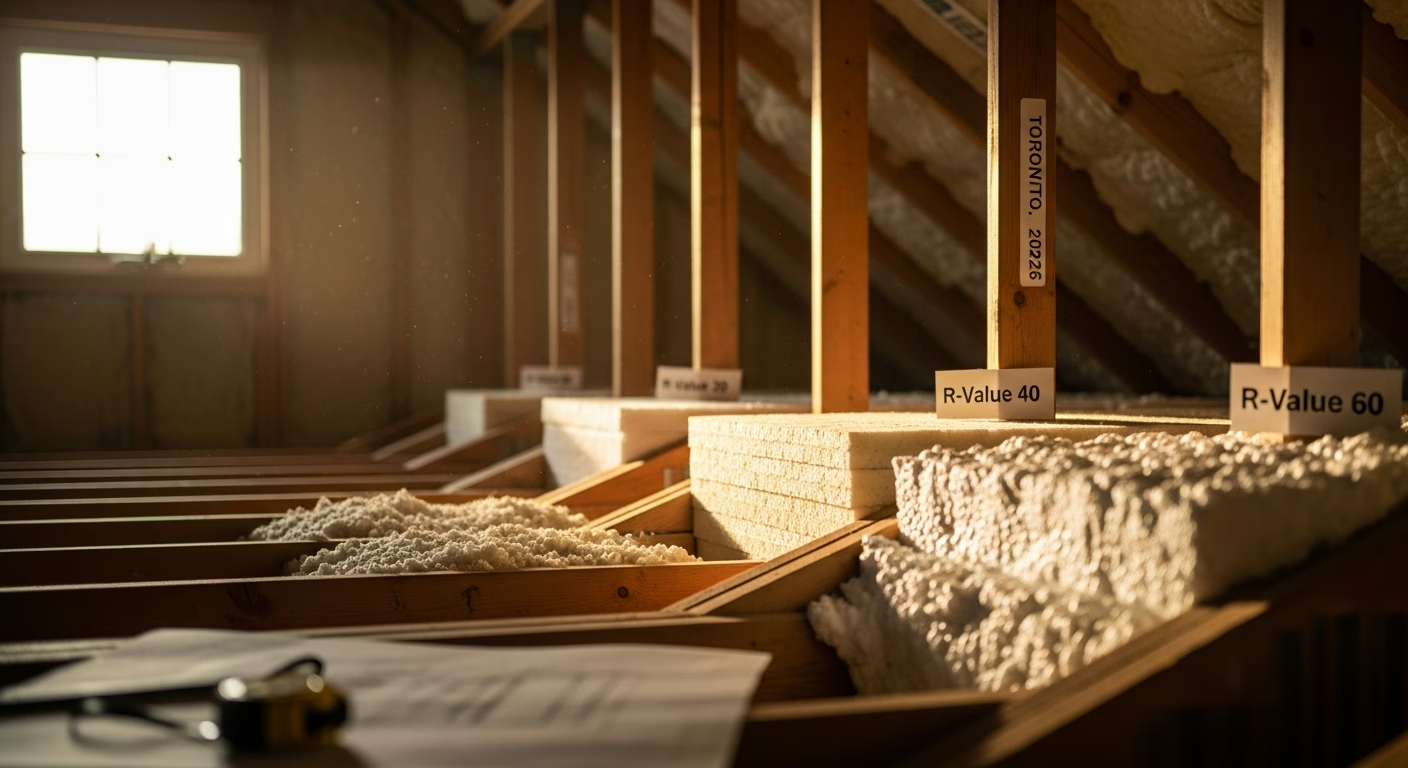
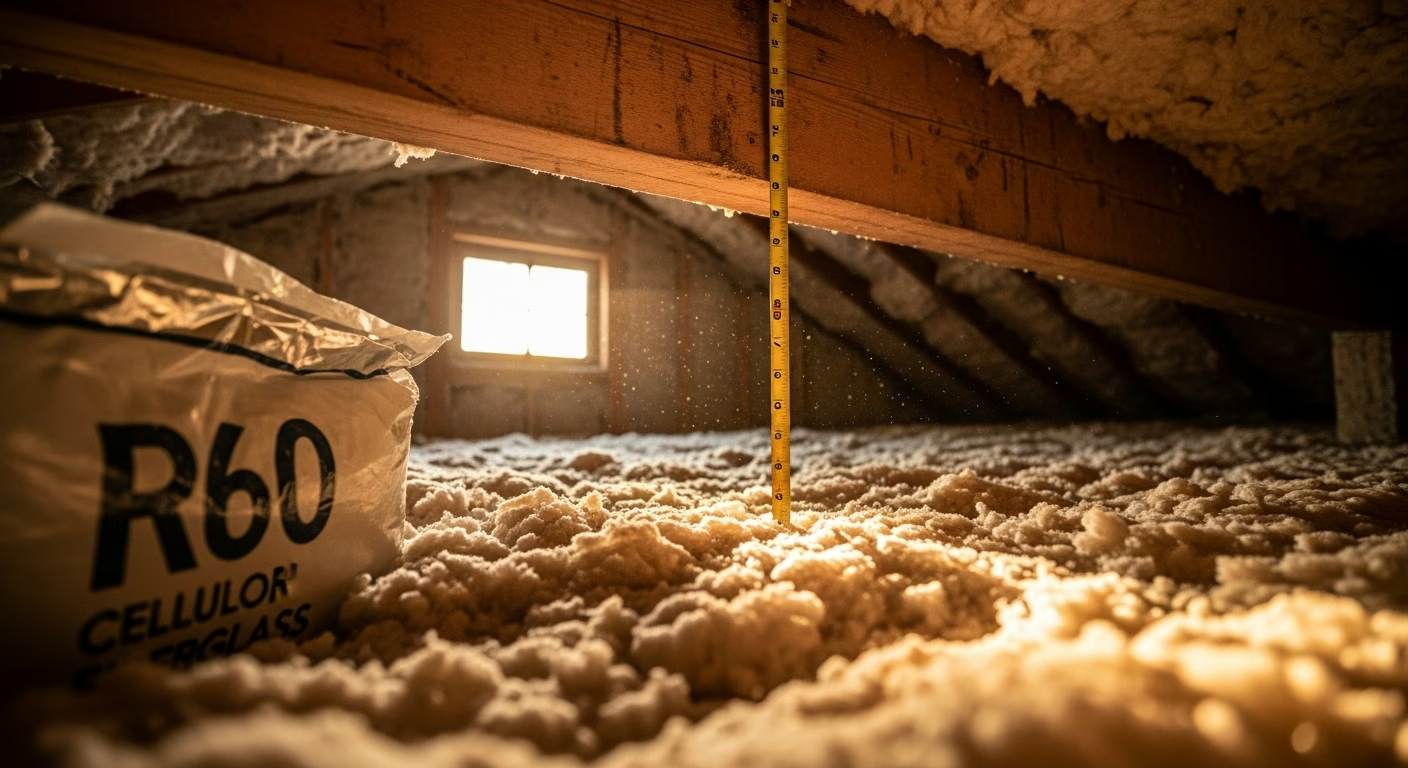
- Depth markers and ruler. Clear depth gauges installed so future inspections can verify settled R-value.
- Documentation. Photo report, R-value certificate, and (if applicable) NRCan-registered Energy Advisor pre/post blower door reports for rebate paperwork.
For step-by-step on the air sealing portion specifically, see Attic Air Sealing Before Insulation: Why It's Non-Negotiable in Toronto.
The Three Tiers of Toronto Attic Insulation Upgrades
Tier 1: Top-Up Only — $2,200–$4,000
This is the budget path: add 8"–12" of new blown cellulose or fiberglass on top of existing R20–R30 to hit R50–R55. No removal, minimal air sealing, no baffles upgrade.
What's included:
- 1,000–1,500 sqft of blown cellulose or fiberglass
- Basic attic hatch weatherstripping
- Light air sealing (top plates and obvious gaps)
- Depth markers
What's not included:
- Pre-existing knob-and-tube remediation
- Vermiculite removal
- Pot light cover installation (often $80–$120 per light)
- Comprehensive air sealing
- Bathroom fan re-vent (if vented into attic instead of outside)
When Tier 1 makes sense: existing insulation is dry, clean, R20–R30 fiberglass batt or cellulose, no knob-and-tube, no vermiculite, no rodent damage, and the homeowner is staying 3–5 years.
When Tier 1 fails: roughly 30% of pre-1960 Toronto homes have at least one disqualifying condition — and the contractor sometimes blows over it anyway. Ten years later the homeowner discovers the problem during a roof replacement and the entire insulation gets removed at the homeowner's expense.
Tier 2: Full Removal + R60 Blown — $4,500–$7,000
The mainstream upgrade for 2026 Toronto homes. Existing insulation gets vacuumed out, the attic gets fully air sealed, baffles and pot light covers go in, and new R60 blown cellulose or fiberglass goes down.
What's included:
- Full removal and disposal of existing insulation (typically 1,500–2,500 lbs of debris)
- Comprehensive air sealing of all penetrations
- Baffles at every rafter bay
- Pot light covers (IC-rated boxes for non-IC fixtures)
- Bathroom fan re-vent to exterior if needed
- R60 (16"–18" depth) blown cellulose or fiberglass
- Photo documentation
- Energy Advisor pre/post blower door (if pursuing rebates)
Brands typically used: GreenFiber Cocoon (cellulose), Owens Corning ProPink (loose-fill fiberglass), Knauf Jet Stream (loose-fill fiberglass), CertainTeed InsulSafe SP (loose-fill fiberglass).
This tier qualifies for the federal Greener Homes Loan (interest-free up to $40,000) when paired with an Energy Advisor evaluation and meets the Canada Greener Homes Grant criteria for $1,200–$1,800 in attic-specific rebates.
Tier 3: Spray Foam + Hybrid — $6,500–$9,500
The premium tier for problem attics: cathedral ceilings, complex framing, severe air leakage, or homes pursuing maximum energy performance. Two-pound closed-cell spray foam at the roof deck or top plate, often combined with blown cellulose top-up.
What's included:
- Full removal and disposal
- Comprehensive air sealing
- 2"–3" closed-cell spray foam at roof deck (creating a "hot roof") OR at attic floor with cellulose top-up
- R60 total system
- Baffles where applicable (not needed for hot-roof designs)
- Pot light covers
- Bathroom fan re-vent
- Energy Advisor reports
Brands typically used: Demilec Heatlok HFO (low-GWP closed-cell spray foam), Icynene ProSeal HFO, Huntsman Building Solutions.
When Tier 3 makes sense: cathedral ceilings, complex roof geometry, attic conversion to living space planned in next 5 years, or severe energy bills despite previous upgrades.
For full pricing breakdowns at every tier, see Attic Insulation Cost Toronto: R-Value Tier-by-Tier Pricing.
Need professional exterior renovation?
Call RenoHouse at 289-212-2345 or get a free estimate today.
Get Free Estimate →R60 and the Ontario Building Code
OBC SB-12 requires R60 (RSI 10.6) for ceilings below ventilated attics in Climate Zone 5. This applies to new construction and substantial renovations. Existing homes are not required to retrofit, but:
- If you replace your roof and the inspector flags missing insulation, you may be required to bring it to current code.
- If you finish an attic into living space, the assembly must meet current code.
- If you sell the home and the buyer requests an energy audit, R20–R30 attics will show up as a deficiency.
R60 in practice means:
- 16"–18" of blown cellulose
- 18"–20" of loose-fill fiberglass
- 9"–10" of closed-cell spray foam (rare — usually used in hybrid)
- 17"–19" of mineral wool (rarely used in attics)
For the rebate-side of R60 specifically, see R60 Attic Insulation Toronto: Rebates and OBC Requirements.
Greener Homes, HELP, and Other Rebates
As of 2026, the relevant programs for Toronto attic insulation are:
- 1. Canada Greener Homes Loan. Up to $40,000 interest-free, 10-year term, requires pre/post NRCan Energy Advisor evaluations. Attic insulation is one of the eligible measures. Most Toronto attic upgrades use $4,000–$8,000 of the loan capacity.
- 2. Canada Greener Homes Grant. Was paused mid-2024 for new applicants in most provinces but Ontario residents who registered before the deadline may still complete claims. Attic-specific grant: up to $1,800. New programs are expected — check NRCan for current status.
- 3. City of Toronto Home Energy Loan Program (HELP). Up to $125,000 at low fixed rates, repaid through property tax bill. Eligible for insulation, windows, HVAC, solar. Most homeowners use HELP only when stacking multiple upgrades; for attic-only, the Greener Homes Loan is simpler.
- 4. Enbridge Home Renovation Savings (HRS) [HRS retired Dec 31 2025]. Up to $10,000 in rebates for combinations of upgrades. Attic insulation is eligible when paired with one other measure (typically furnace, windows, or basement insulation).
- 5. Toronto Hydro / Save on Energy. Periodic incentives for insulation paired with smart thermostats — usually $50–$200 token amounts.
For step-by-step rebate application, see Attic Insulation Greener Homes Grant Toronto: Application Walkthrough.
ROI: When Does Attic Insulation Pay Back?
The return depends on three variables: starting R-value, heating fuel, and home size.
Scenario A: 1,500 sqft Leaside bungalow, R20 existing, gas furnace. Annual heat/cool cost: $2,800. After R60 upgrade: $2,150. Annual savings: $650. Upgrade cost (Tier 2): $5,500. Simple payback: 8.5 years. With Greener Homes rebate ($1,800): 5.7 years. Scenario B: 2,000 sqft High Park two-storey, R30 existing, gas furnace. Annual heat/cool cost: $3,200. After R60 upgrade: $2,750. Annual savings: $450. Upgrade cost (Tier 2): $6,500. Simple payback: 14 years. With rebate: 10 years. Scenario C: 1,200 sqft East York semi, R12 vermiculite existing, electric baseboard. Annual heat/cool cost: $4,500. Vermiculite abatement + Tier 2 upgrade: $9,000. After upgrade: $2,800. Annual savings: $1,700. Simple payback: 5.3 years. With rebate: 4.2 years.The pattern: smaller homes with worse existing insulation and electric heat get the fastest payback. Larger newer homes with R30+ existing get the slowest.
For full ROI math including resale uplift, see Attic Insulation ROI Toronto: Energy Savings and Resale.
How to Spot a Contractor Cutting Corners
Common Toronto attic insulation scams:
- 1. "Just blowing over the old stuff." Without removal and air sealing, the new insulation traps moisture in the old material. Within 5 years you have mold on the roof deck.
- 2. No baffles installed. Insulation blocks the soffit vents, ventilation fails, condensation builds up, roof deck rots within 7–10 years.
- 3. Pot lights buried. Non-IC-rated pot lights buried under insulation are a fire hazard and a code violation.
- 4. Bathroom fan vented into attic. The contractor saw the fan ducted into the attic (illegal — must vent outside) and just buried the duct outlet under insulation. Moisture problem guaranteed.
- 5. Knob-and-tube buried. Knob-and-tube wiring buried under insulation is an Electrical Safety Authority violation and an insurance disqualifier.
- 6. Asbestos vermiculite blown over. Vermiculite from pre-1990 homes often contains asbestos. Blowing cellulose over it disturbs it and creates an indoor air quality issue.
- 7. Depth not verified. Quoted R60, delivered R45. Without depth markers and a post-install inspection, you'll never know.
For a complete list of mistakes, see Attic Insulation Mistakes Toronto Homeowners Make.
DIY vs Professional
Attic insulation is one of the few major envelope upgrades where DIY is technically possible — Home Depot rents blower machines free with insulation purchase. But for Toronto homes specifically, three factors push toward professional:
- Air sealing requires experience to identify all penetrations.
- Older homes (East York, Leaside, Beaches) often have one or more disqualifying conditions (knob-and-tube, vermiculite, mold) that DIYers don't catch.
- Greener Homes rebates require Energy Advisor pre/post — which require contractor invoices.
DIY makes sense only for: post-1990 homes with R30+ existing, no disqualifying conditions, no rebate pursuit, and a homeowner comfortable working in 110°F attics.
For a full comparison, see DIY vs Professional Attic Insulation: Toronto Reality Check.
Material Choice: The 60-Second Version
- Blown cellulose (GreenFiber Cocoon, applegate): Cheapest, best air-blocking when dense-packed, made from recycled paper. Settles 10–15% over 5 years.
- Loose-fill fiberglass (Owens Corning ProPink, Knauf Jet Stream, CertainTeed InsulSafe): Slightly more expensive than cellulose, doesn't settle as much, performs slightly worse at very cold temperatures.
- Closed-cell spray foam (Demilec, Icynene, Huntsman): Most expensive, best air seal in single product, R6.5 per inch (vs R3.5 for cellulose). Used for problem attics, hybrid systems, hot-roof designs.
- Mineral wool batt (Roxul/Rockwool): Rare in attic floors, used for select fire-rated applications and rim joists. Excellent fire performance.
For a deep dive, see Spray Foam vs Blown Cellulose vs Batt: Toronto Attic Comparison.
Vapor Barrier and Moisture
Toronto's cold winters and hot humid summers create a bidirectional vapor drive. The ceiling vapor barrier (typically 6-mil poly under the drywall) prevents warm interior moisture from reaching the cold attic in winter. If it's missing, torn, or perforated, you get condensation on the roof deck.
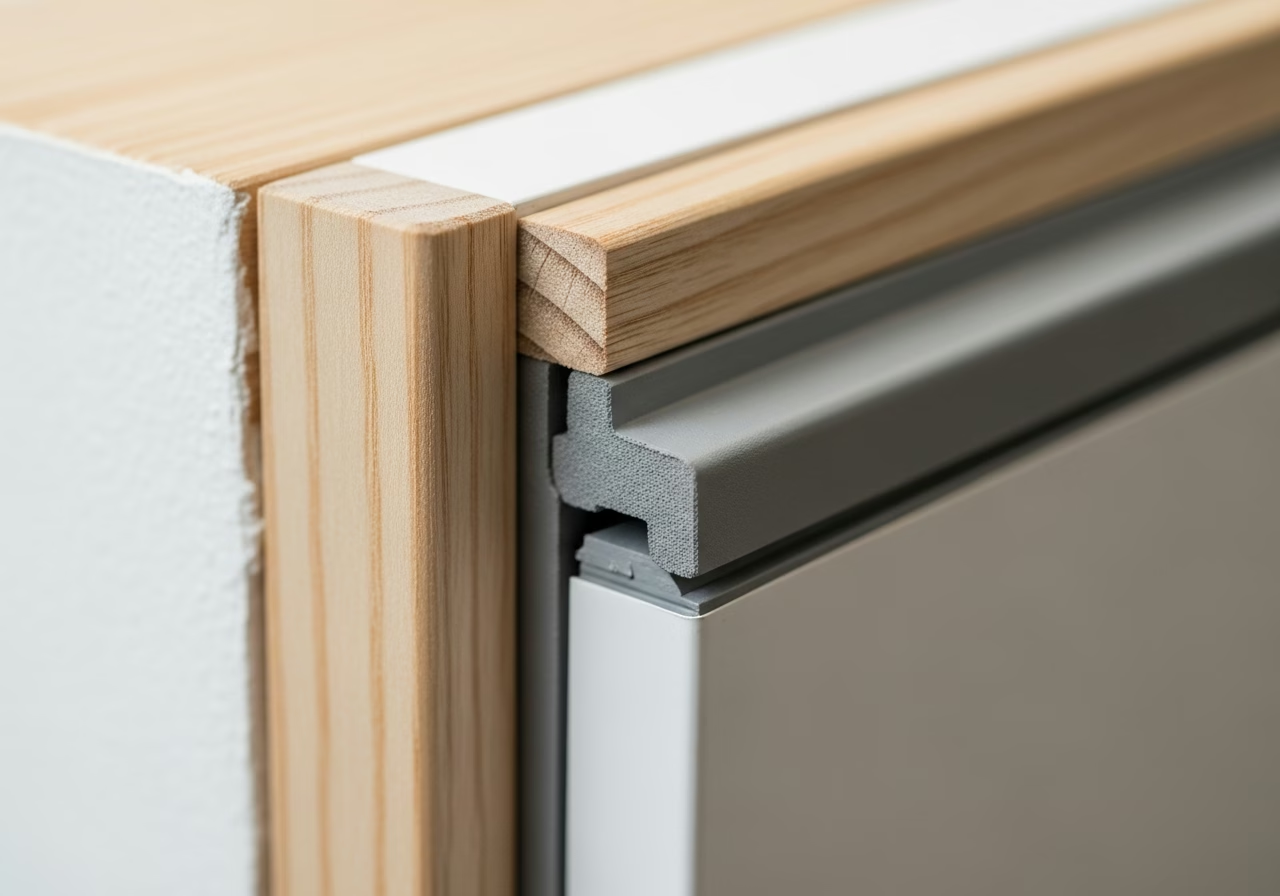
For the full vapor barrier discussion, see Vapor Barrier and Attic Insulation Toronto: What You Need to Know.
Ventilation: The Other Half of the Equation
Attic insulation without proper ventilation is a moisture trap. Toronto attics need:
- Soffit intake vents at the eaves (continuous, unblocked)
- Ridge vent or roof vents at the high point
- Net free vent area of at least 1 sqft per 300 sqft of attic floor (with vapor barrier) or 1:150 (without)
For details, see Attic Ventilation Toronto: Soffit and Ridge Vent Strategy.
Ice Dams: The Insurance-Claim Driver
If you've had ice dams two winters in a row, your attic insulation and air sealing are failing. The mechanism: warm air leaks from the heated interior into the attic, warms the underside of the roof deck, melts snow on the roof, water flows down to the cold eave (which is over an unheated soffit), refreezes, dam forms, water backs up under shingles, leaks into the home.
The fix is never "ice cables on the eaves." The fix is air sealing + R60 insulation + proper ventilation. RenoHouse has fixed dozens of ice-dam-prone homes in High Park, Roncesvalles, and the Beaches — in every case the underlying issue was air leakage and inadequate insulation, not the eaves themselves.
Timeline and Disruption
A typical Tier 2 (full removal + R60 blown) attic upgrade in Toronto takes 1–2 days for a 1,500 sqft attic:
- Day 1, morning: Setup, vacuum truck arrival, removal of existing insulation (4–6 hours)
- Day 1, afternoon: Air sealing, baffle install, pot light covers (3–4 hours)
- Day 2, morning: Blow new insulation, depth markers, photo report (3–4 hours)
Disruption is moderate: vacuum hoses run from the attic to the truck through the home (typically through a window or balcony if accessible from outside), some dust escapes despite plastic sheeting, and the home will smell of cellulose for 2–3 days.
Tier 3 (spray foam) takes 2–3 days due to spray foam cure times and the need to vent the home after spraying (typically 24-hour ventilation period).
Choosing a Contractor
Checklist for Toronto attic insulation contractors:
- [ ] WSIB clearance certificate
- [ ] $2M minimum liability insurance
- [ ] Registered with NRCan as a Greener Homes service provider (if pursuing rebates)
- [ ] References from completed jobs in your neighborhood
- [ ] Written scope including air sealing, baffles, pot light covers
- [ ] Photo documentation included
- [ ] R-value certificate provided post-install
- [ ] Manufacturer warranty pass-through (Owens Corning, GreenFiber, Demilec all offer multi-decade warranties when installed by certified contractors)
Red flags:
- Quotes without an attic inspection
- "Cash deal" pricing (no WSIB, no warranty)
- Refusal to address knob-and-tube or vermiculite if present
- Quote that doesn't include disposal fees
What Goes Wrong After
Even good attic insulation jobs can degrade. Common five-year issues:
- Settling. Cellulose settles 10–15%. R60 at install becomes R50–R52 after 5 years. Plan for a top-up if you're aiming to hold R60 long-term.
- Rodent damage. Mice and squirrels create paths through loose-fill insulation. R-value drops in those zones.
- Storage. Homeowners install plywood platforms over the insulation for storage and compress it. Compressed cellulose loses R-value linearly.
- Hatch leakage. Attic hatches lose weatherstripping seal over time. Re-weatherstrip every 3–5 years.
For prevention, see Attic Insulation Condensation and Mold Prevention and Pot Light Baffles and Attic Insulation: Why They Matter.
Signs Your Attic Needs an Upgrade
Quick checklist:
- Ice dams in any winter in last 5 years
- Heating bills above $250/month in January for under 2,000 sqft
- Visible joists when you peek into attic (insulation below joist tops = R30 or less)
- Vermiculite (gold/grey pebbly material) — likely pre-1990
- Knob-and-tube wiring — pre-1950
- Bedrooms above unheated garage (separate insulation issue)
- Home built before 2012 and never had attic upgrade
For a full diagnostic checklist, see Signs You Need an Attic Insulation Upgrade.
Bottom Line for 2026 Toronto
If your home was built before 2012 and you've never touched the attic:
- 1. Get an energy audit ($400–$600 or free with some Greener Homes packages).
- 2. If R-value is below R40, upgrade to R60.
- 3. Air seal first, insulate second.
- 4. Use rebates: Greener Homes Loan ($40K interest-free) is the lowest-friction option in 2026.
- 5. Hire a contractor who documents air sealing, not just blowing.
A proper $5,500 Tier 2 upgrade in a 1,500 sqft Toronto home will save $400–$700 per year, reduce ice dam risk to near-zero, and add $3,000–$6,000 to resale value. Payback of 5–8 years with rebates, and 8–12 years without.
---
Ready to upgrade your Toronto attic to R60? RenoHouse handles full-scope attic insulation across the GTA, including removal, air sealing, baffles, pot light covers, and Energy Advisor coordination for Greener Homes rebates. Book a free attic inspection on our attic insulation upgrade service page, or start with an insulation thermal audit to scope the job precisely.
Sources & References
Authoritative sources cited in this guide:
- Canada Greener Homes Initiative — Federal retrofit programs
- ENERGY STAR Canada — Canadian ENERGY STAR specs
- Ontario Building Code SB-12 — OBC energy efficiency supplementary standard
- Toronto HELP — Home Energy Loan — Toronto Home Energy Loan Program
Continue Reading