RenoHouse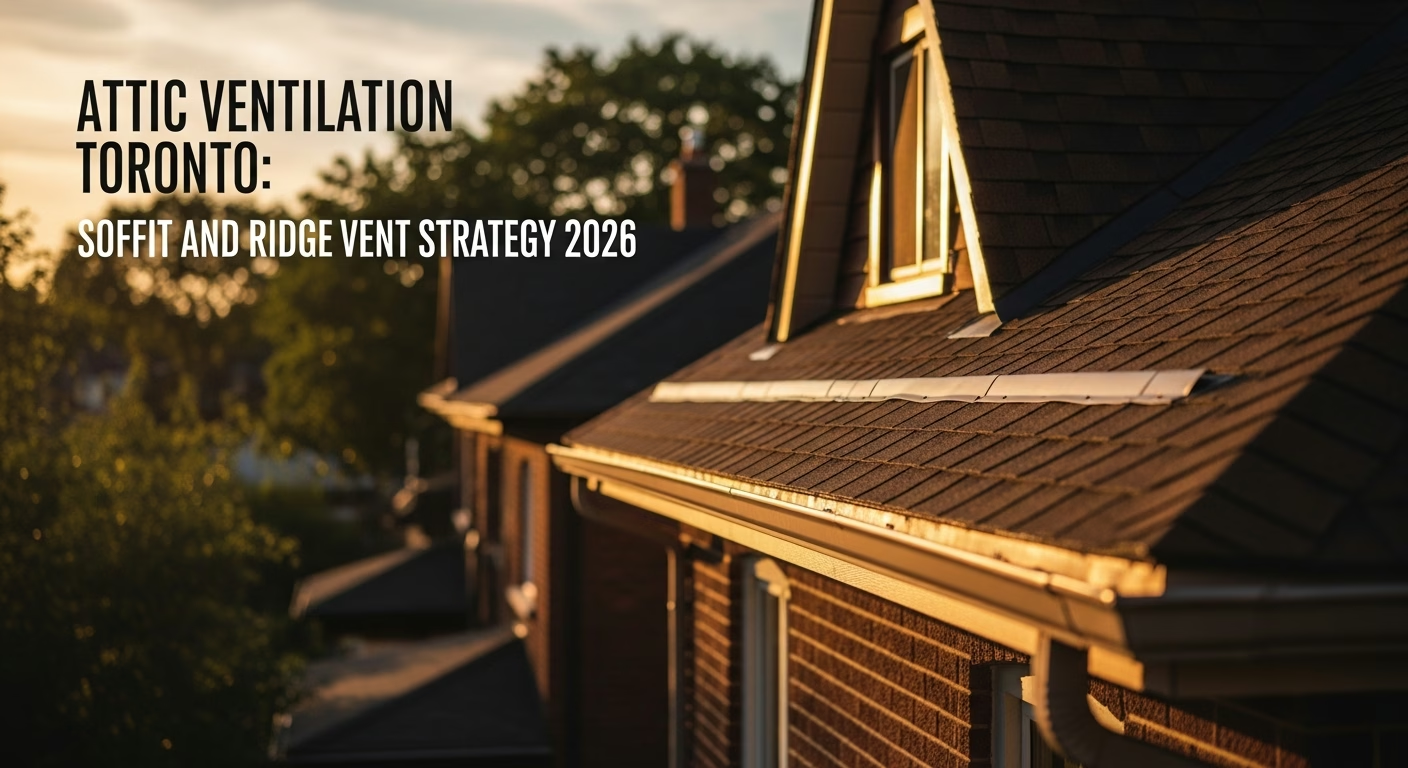

# Attic Ventilation Toronto: Soffit and Ridge Vent Strategy 2026
Quick answer. Attic ventilation in Toronto isn't optional. It's the third leg of moisture management (alongside air sealing and insulation) and a code requirement under OBC. But ventilation is also the most commonly bungled element of attic upgrades — bad contractors block soffit vents with insulation, install ridge vents that don't work without soffit...Attic ventilation in Toronto isn't optional. It's the third leg of moisture management (alongside air sealing and insulation) and a code requirement under OBC. But ventilation is also the most commonly bungled element of attic upgrades — bad contractors block soffit vents with insulation, install ridge vents that don't work without soffit intake, or assume gable vents alone are sufficient. This guide explains Toronto-specific attic ventilation strategy for 2026 upgrades.
For pillar context, see Attic Insulation Toronto: Complete 2026 Upgrade Guide. For the moisture context, see Attic Insulation Condensation and Mold Prevention.
Why Toronto Attics Need Ventilation
Three reasons:
- 1. Remove moisture. Even with comprehensive air sealing, some indoor moisture enters the attic through residual air leakage and diffusion. Ventilation exchanges attic air with outdoor air, removing accumulated moisture.
- 2. Cool the roof in summer. Toronto summer attics reach 50–70°C without ventilation. This bakes shingles from below (reducing lifespan) and forces AC to work harder. Ventilated attics stay 10–20°C cooler.
- 3. Prevent ice dams. Cold attic = cold roof deck = no melt-and-refreeze cycle at eaves. Ventilation keeps attic close to outdoor temperature.
The Soffit-to-Ridge Principle
The standard attic ventilation strategy in Toronto:
- Cool air enters at low points (soffit vents at eaves)
- Warm air exits at high points (ridge vent at peak)
- Natural convection drives airflow without fans
- 3–5 air changes per hour (ACH) is the typical performance target
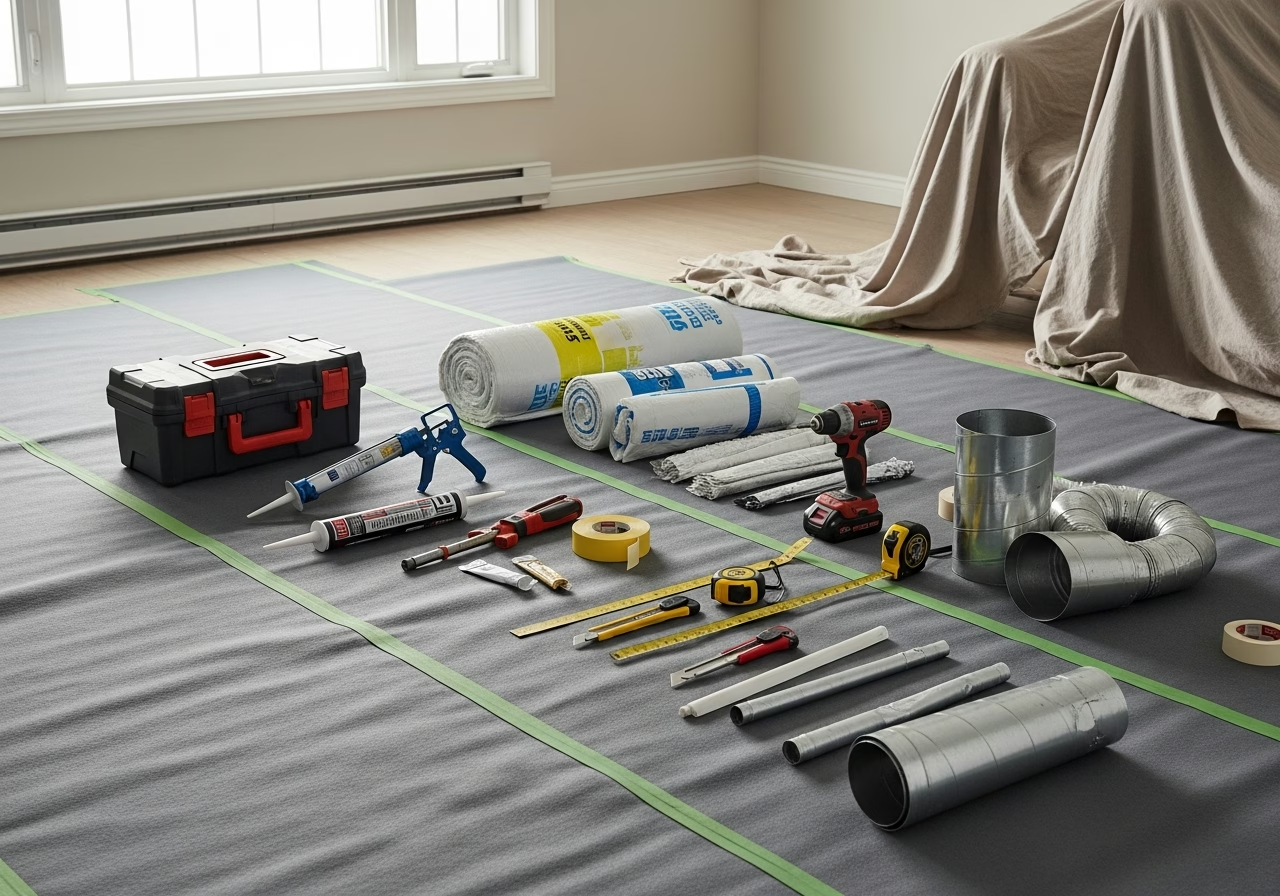
Without both intake AND exhaust, ventilation fails:
- Soffit vents only (no ridge): cold air enters but has nowhere to exit; minimal flow
- Ridge vent only (no soffit): warm air exits but no replacement air; pulls air from inside the home
- Gable vents only: provides cross-ventilation but can't reach the eaves where moisture accumulates most
Code Requirements (OBC 9.19.1)
Ontario Building Code requires:
- With vapor barrier: 1 sqft of net free vent area (NFA) per 300 sqft of attic floor
- Without vapor barrier: 1 sqft NFA per 150 sqft of attic floor
- Minimum 50% of vent area at lower portion (soffit) and 50% at upper portion (ridge or high gable)
For a typical 1,500 sqft Toronto attic with vapor barrier:
- Required NFA: 5 sqft total
- Soffit NFA: 2.5 sqft minimum
- Ridge NFA: 2.5 sqft minimum
Net Free Area (NFA) vs Gross Area
Vents are rated by NFA, which is the actual unobstructed opening. A 12"x12" louvered vent has 144 sq in gross area but only ~70 sq in NFA (about 50% of gross) due to louvers and screens.
Manufacturer specs always list NFA. When sizing ventilation, use NFA, not gross area.
Toronto Soffit Vent Options
Continuous Strip Vents
The most common modern soffit vent in Toronto. A continuous aluminum or vinyl strip running along the entire eave length.
- NFA: ~9 sq in per linear foot
- For a 50' soffit run: ~3.1 sqft NFA per side
- Total for 100' total perimeter: ~6.2 sqft NFA — meets code for most Toronto homes
Individual Soffit Vents
Older style. Round or rectangular vents installed at intervals along the eave.
- Each 4" round vent: ~6 sq in NFA
- Each 6"x14" rectangular vent: ~50 sq in NFA
- For a 50' soffit run, typically 3–5 individual vents
Older Toronto homes often have inadequate individual vent count. Adding more vents or replacing with continuous strip is a common retrofit.
Vinyl Soffit Panels (Perforated)
Some modern Toronto homes use perforated vinyl soffit panels that provide continuous ventilation across the entire soffit underside.
- NFA varies by panel: typically ~10 sq in per linear foot for fully perforated
- Often most attractive aesthetically but performance varies by panel choice
Toronto Ridge Vent Options
Standard Ridge Vent
Continuous vent installed along the entire ridge of the roof, hidden under cap shingles.
- Brands: Owens Corning ShingleVent II, GAF Cobra, CertainTeed Ridge Vent
- NFA: ~14–18 sq in per linear foot
- For a 30' ridge: ~3.6 sqft NFA — typically meets code for 1,500–2,000 sqft attics
Static Roof Vents
Individual vents installed periodically along the roof slope.
- Often used to supplement ridge vent or in roof geometries without a long ridge
- NFA: ~50–100 sq in per vent
- Less effective than continuous ridge but functional
Gable Vents
Vents at the gable ends of the roof (the triangular end walls).
- Provides cross-ventilation but can't reach mid-attic
- NFA: ~50–150 sq in per vent depending on size
- Used as supplementation, not primary ventilation
Power Vents (Discouraged)
Electric fans on the roof that exhaust air. Common in older Toronto installs but increasingly avoided because:
- They can pull conditioned air from inside the home (depressurization)
- They're loud
- They use electricity
- Modern continuous ridge vents perform better passively
If you have a power vent, consider replacing with continuous ridge vent during attic upgrade.
Common Toronto Ventilation Failures
1. Insulation Blocking Soffit Vents
The #1 ventilation failure in Toronto. Blown insulation is pushed into the eave area and blocks the soffit vent intake.
How it happens: contractor doesn't install baffles, or baffles are inadequate.
Need professional exterior renovation?
Call RenoHouse at 289-212-2345 or get a free estimate today.
Get Free Estimate →How to fix: install plastic or rigid foam baffles at every eave rafter bay before blowing insulation.
For baffle details, see Pot Light Baffles and Attic Insulation: Why They Matter.
2. No Soffit Vents Installed
Some older Toronto homes (pre-1970) have minimal or no soffit vents. The original construction relied on plank decking gaps and gable vents for ventilation.
How to fix: retrofit continuous soffit vents. Cost: $300–$800 per side ($600–$1,600 for typical home) plus aluminum work.
3. Missing Ridge Vent
Some Toronto homes have soffit vents but no ridge vent. Without high-point exhaust, ventilation is minimal.
How to fix: install ridge vent during next roof replacement. Cost: $500–$1,200 added to roof scope. Standalone ridge vent install: $1,500–$3,000.
4. Power Vent Failure
Older power vents fail mechanically (motor seizure) or are simply ineffective in low-wind conditions. Many Toronto homes still rely on power vents that aren't running.
How to fix: replace with passive ridge vent.
5. Mismatched Intake/Exhaust
Code requires 50/50 split between soffit and ridge. Some homes have generous ridge vent but minimal soffit, leading to depressurization (ridge vent pulls from inside home through any leaks).
How to fix: balance the system by adding soffit vents.
6. Bathroom Fan Vented Through Soffit
Sometimes contractors vent bathroom fans through soffits, which dumps moist air right into the soffit vent intake — moist air immediately recirculates back into the attic.
How to fix: vent bathroom fans through dedicated wall or roof penetrations, not soffits.
Ventilation in Specific Toronto Home Types
Bungalow (Single Story)
Standard soffit-to-ridge usually works well. Long ridge run, full perimeter soffit.
Typical setup: continuous strip soffit + continuous ridge vent. Easy to spec.
1.5-Storey (Storey-and-a-Half)
Common in East York, Riverdale, parts of the Beaches. Knee walls create complex airflow paths. Ventilation often needs:
- Soffit vents at lower eave
- Sometimes additional vents at the knee wall transition
- Gable vents at the dormers
- Ridge vent if straight ridge exists; otherwise gable vents
These homes are the trickiest to ventilate properly.
Two-Storey
Modern detached and semis. Standard soffit-to-ridge works well. Long ridge run usually available.
Bungalow with Hip Roof
Hip roofs (no straight ridge) need different exhaust strategy:
- Hip ridge vents (specialized product)
- Static roof vents at the high points
- Sometimes gable-end venting where applicable
Cathedral Ceiling Homes
Some Toronto homes have cathedral ceilings with no attic. Ventilation strategy:
- Either a "vented assembly" (rafter bay vented from soffit to ridge with baffles)
- Or "unvented assembly" using closed-cell spray foam at the underside of roof deck (no ventilation needed; foam handles moisture)
Ventilation Calculations: A Toronto Example
For a 1,500 sqft Toronto bungalow attic with vapor barrier:
- Required total NFA: 5 sqft (1:300 ratio)
- Required soffit NFA: 2.5 sqft minimum
- Required ridge NFA: 2.5 sqft minimum
If the home has 100' of total perimeter soffit:
- Continuous strip soffit at 9 sq in/ft = 900 sq in = 6.25 sqft NFA — exceeds requirement
- Continuous ridge vent at 16 sq in/ft on 35' ridge = 560 sq in = 3.9 sqft NFA — exceeds requirement
- Total: well-ventilated
If instead the home has only 4 individual soffit vents (each 50 sq in NFA):
- Soffit NFA: 200 sq in = 1.4 sqft NFA — below code minimum
- Action: retrofit additional vents to reach 2.5+ sqft NFA
Retrofit Costs
| Ventilation Upgrade | Cost (Toronto, 2026) |
|---|---|
| Add baffles at all eave bays (during attic upgrade) | $400–$800 |
| Replace individual soffit vents with continuous strip | $1,200–$2,500 |
| Add ridge vent during roof replacement | $500–$1,200 |
| Add ridge vent standalone (cut, install, re-shingle) | $1,500–$3,000 |
| Replace power vent with continuous ridge | $1,500–$3,500 |
| Add gable vents (where appropriate) | $400–$900 |
| Vent bathroom fan to dedicated exterior penetration | $250–$500 per fan |
Ventilation and the Insulation Upgrade
Best practice: address ventilation as part of the attic insulation upgrade, not separately:
- Install baffles at every eave bay during the upgrade
- Add ridge vent at next roof replacement (or now if roof is recent)
- Verify soffit vents are clear and continuous
- Bathroom fans vented to exterior, never to attic
For homes with existing ventilation that's adequate: just ensure baffles are installed and don't block.
For homes with inadequate ventilation: address before or with the insulation upgrade.
Hot-Roof Alternative: No Attic Ventilation
For some Toronto homes, especially with cathedral ceilings or planned attic conversions, the alternative to ventilation is the "hot-roof" or unvented assembly:
- Closed-cell spray foam at the underside of roof deck
- No soffit or ridge vents
- Conditioned attic that's part of the home's heating/cooling system
Hot-roof works in Toronto when properly designed. It's the right choice for:
- Cathedral ceilings
- Attic conversions
- Homes with complex ventilation that's difficult to retrofit
Hot-roof costs significantly more ($7,000–$14,000 for a typical 1,500 sqft Toronto roof) but eliminates ventilation as a maintenance concern.
Bottom Line on Toronto Ventilation
For most Toronto attic insulation upgrades:
- 1. Inspect existing soffit and ridge vents
- 2. Calculate NFA against the 1:300 ratio
- 3. Install baffles at every eave rafter bay
- 4. Replace power vents with passive ridge vents during the upgrade
- 5. Address any inadequate intake or exhaust before insulating
- 6. Verify bathroom fans vent to exterior, not attic or soffit
Proper ventilation extends roof life by 5–10 years, prevents ice dams, manages moisture, and pairs perfectly with R60 insulation. Don't skip it.
---
Need to evaluate or upgrade your Toronto attic ventilation as part of an insulation project? RenoHouse calculates NFA, identifies failures, and integrates ventilation upgrades with attic insulation. Visit our attic insulation upgrade service page or book an insulation thermal audit for a complete attic envelope assessment.
Sources & References
Authoritative sources cited in this guide:
- Canada Greener Homes Initiative — Federal retrofit programs
- ENERGY STAR Canada — Canadian ENERGY STAR specs
- Ontario Building Code SB-12 — OBC energy efficiency supplementary standard
- Toronto HELP — Home Energy Loan — Toronto Home Energy Loan Program
Continue Reading