RenoHouse

# Backwater Valve Installation Mistakes in Toronto Homes
Quick answer. Toronto Building inspects every backwater valve installation, but the inspection focuses on code compliance — not necessarily on long-term performance. After 50+ Toronto installs in 2025–2026, RenoHouse has catalogued the seven most common mistakes that pass inspection but cause flood failures or service problems within the first 5 years.Toronto Building inspects every backwater valve installation, but the inspection focuses on code compliance — not necessarily on long-term performance. After 50+ Toronto installs in 2025–2026, RenoHouse has catalogued the seven most common mistakes that pass inspection but cause flood failures or service problems within the first 5 years.
This post lists each mistake, why it matters, and what to verify before paying the final invoice. For full install context, see the pillar Backwater Valve & Sump Pump Toronto: Complete 2026 Subsidy Guide. For valve-type comparison, see Mainline vs Floor-Drain Backwater Valve.
Mistake 1: Valve Installed on the Wrong Side of the Cleanout
The cleanout is the access point for sewer rodding and camera inspection. Code requires the backwater valve to be downstream of the cleanout so the cleanout can be used for service without disturbing the valve.
A surprising number of Toronto installs put the valve upstream of the cleanout — usually because the plumber found it easier to access that location. The result: any future sewer issue requires removing the valve cover plate AND working around the valve body. Cost of future service calls roughly doubles.
How to verify: Ask the plumber to show you the cleanout cap. It should be on the city side of the valve (between valve and street). If it is on the house side, the install is wrong.Mistake 2: No Service Access Cover
A backwater valve must be accessible for annual cleaning and gasket replacement. The slab is cut, valve installed, then a removable cover plate (typically 12-inch diameter cast iron or stainless steel) is set into the slab over the valve.
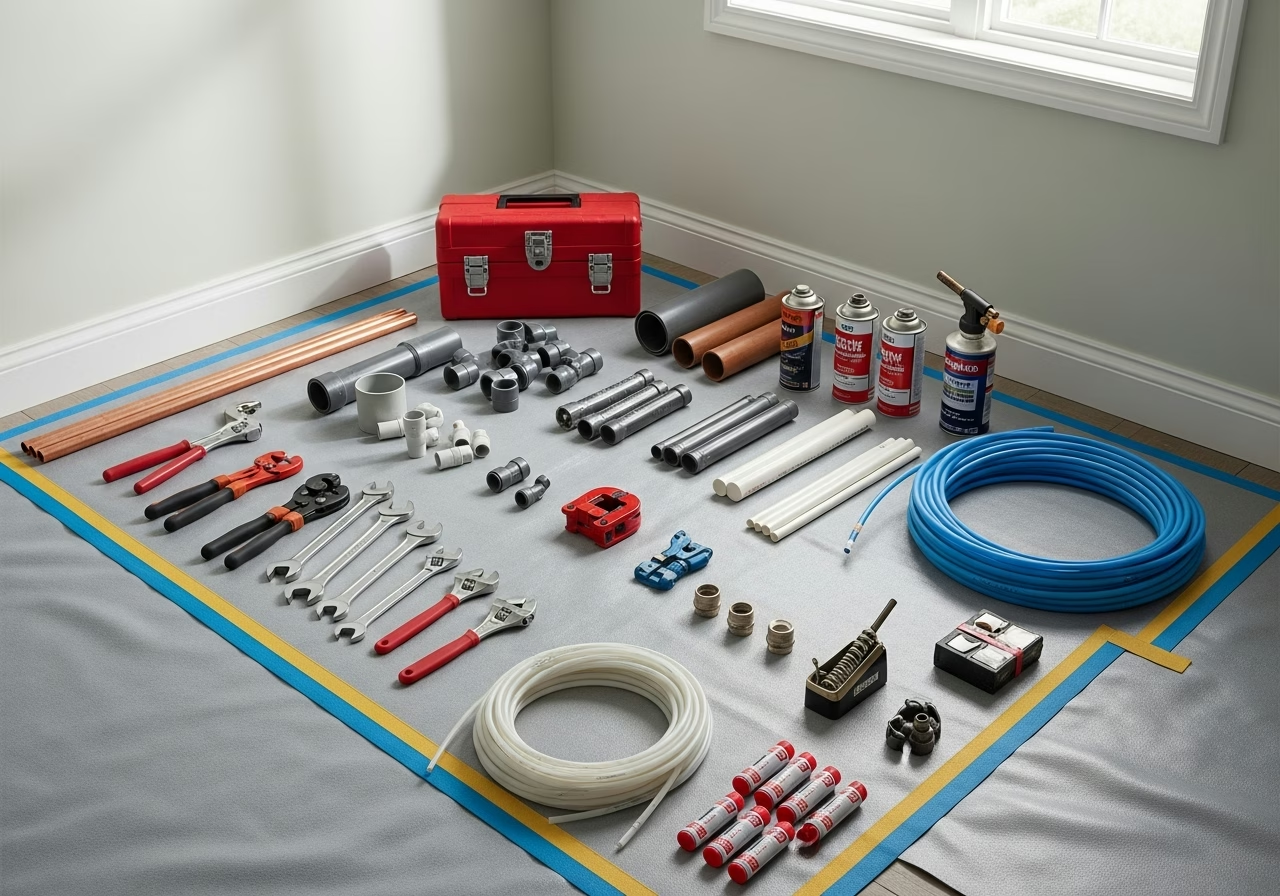
The mistake: pouring the slab back without the cover plate, or using a flush concrete patch that conceals the valve location. The first time the valve flap fouls (usually 18–24 months in), the homeowner has no idea where the valve is. Re-locating and re-cutting the slab costs $400–$700 in labour.
How to verify: The cover plate should be visible on the basement floor with a clear bezel. Photograph the location and dimensions for future reference.Mistake 3: Sump Pit Not Sealed
Toronto Building Code 2024 requires sump pits to be sealed (gasketed lid with airtight seal) to prevent radon entry from soil and humidity escape into the basement.
The mistake: pits installed with a loose plywood cover, a non-gasketed plastic disk, or no cover at all. Inspector may pass the install on the first visit if the pump is operational, but the long-term consequences are radon accumulation, basement humidity, and odour from the discharge interface.
Need professional plumbing?
Call RenoHouse at 289-212-2345 or get a free estimate today.
Get Free Estimate →Mistake 4: Discharge Pipe Re-Frozen in Winter
Sump pump discharge runs from the pit, through the rim joist, and out onto the lawn or to the storm sewer. The discharge MUST be below frost line (4 feet in Toronto) for the buried portion.
The mistake: discharge pipe runs along the foundation surface for 6+ feet before going underground, OR the underground portion is shallower than 3 feet. In a Toronto winter (sustained -15°C for a week is common), the surface portion freezes solid. When the next rainstorm activates the pump, the pump runs against a frozen blockage — burns out the motor, and the basement floods.
How to verify: Ask where the discharge daylights. It should be at least 6 feet from the foundation, and the buried portion should be 4+ feet deep. If the visible exit is within 2 feet of the foundation or above grade, the install is winter-vulnerable.Mistake 5: Weeping Tile Disconnection Without Re-Routing to Sump
The new $6,650 subsidy includes $3,650 for disconnecting the foundation drain from the sanitary sewer. But disconnection alone is not enough — the disconnected weeping tile must be re-routed to the sump pit OR to a separate exterior drain.
The mistake: plumber disconnects the weeping tile, caps the dead end, and leaves the foundation drain with nowhere to go. Water now pools at the footing and can cause foundation damage within 2–3 years. Toronto Building inspectors do not always catch this because the slab is usually backfilled before final inspection.
How to verify: Ask the plumber to show you (in photos taken during install, before backfill) the new pipe run from weeping tile to sump pit. There should be a continuous, sloped path.Mistake 6: No Check Valve on Sump Pump Discharge
Without a check valve on the discharge line, water in the discharge pipe falls back into the pit each time the pump shuts off. The pump short-cycles (turns on, pumps for 5 seconds, shuts off, repeats), motor wears out within 18–24 months instead of 8–10 years.
The mistake: plumber installs the pump without a check valve to save $25 in parts. Most Toronto installations DO include a check valve, but discount or DIY installs often skip it.
How to verify: Look at the discharge pipe within 12 inches of the pit cover. There should be a vertical inline check valve (visible cylinder with arrow). If the discharge is just smooth pipe, no check valve is installed.Mistake 7: Discharge Connected to Sanitary Sewer
This violates Toronto Bylaw 681 and disqualifies the entire installation from subsidy. Yet it is the single most common mistake in pre-2020 Toronto sump pump installs and still occurs occasionally on new work.
The mistake: discharge pipe routed to the sanitary stack instead of daylighting outside or running to the storm sewer. Reasons it happens: easier access to interior plumbing, no exterior excavation needed, perceived as "cleaner" install.
How to verify: Trace the discharge pipe from the pit. It should exit the foundation wall, NOT connect to any interior soil stack or vent pipe. If it disappears into the basement plumbing, the install is illegal under current Toronto bylaws.Bonus Mistake: Backwater Valve Without Bypass for Vent Lines
Toronto Building Code requires that backwater valve installations preserve fixture-trap venting. Some valve installs unintentionally close off a vent path during the slab work, leading to siphoning of fixture traps (sewer gas in the basement) months later.
Inspection Sign-off Is Not the Same as Quality
Toronto Building's plumbing inspection focuses on code compliance: valve type, orientation, accessibility, permit match. It does NOT necessarily catch:
- Cleanout positioning
- Discharge depth and freeze-vulnerability
- Pit seal quality
- Check valve presence on discharge
- Weeping-tile re-route routing
The homeowner is the last line of defence. The questions above are reasonable to ask any Toronto plumber and indicate whether the install is being done to a long-term performance standard or just to pass inspection.
What to Demand from Your Toronto Plumber
A complete handoff from a quality plumber includes:
- 1. Permit number and inspection sign-off (required for subsidy).
- 2. Pre-backfill photos of the valve, sump pit, weeping-tile re-route, and discharge run.
- 3. Owner's manual for the valve and pump (model numbers, gasket part numbers, replacement schedule).
- 4. Annual maintenance instructions.
- 5. Warranty documentation (typically 2 years labour, manufacturer warranty on parts).
If any of the above is missing, request it before paying the final invoice. The photos in particular are required for the subsidy application — see Backwater Valve Rebate Application Toronto 2026: Step-by-Step.
Related Reading
Backwater Valve & Sump Pump Toronto: Complete 2026 Subsidy Guide, Mainline vs Floor-Drain Backwater Valve, Flood Prevention Toronto: Homeowner Checklist for 2026.Ready for a Quality Install?
RenoHouse provides documented backwater valve installs with pre-backfill photos, full subsidy paperwork, and 2-year labour warranty. Visit our Backwater Valve & Sump Pump Bundle Service Page.
Sources & References
Authoritative sources cited in this guide:
- Toronto Sewer Use Bylaw 681 — Toronto plumbing/sewer regulations
- Ontario Building Code 7 (Plumbing) — OBC plumbing standards
- Health Canada — Drinking Water — Health Canada drinking water guidelines
- CSA B149.1 Natural Gas Code — Canadian gas installation code
Continue Reading