RenoHouse

# Backwater Valve vs Check Valve: Critical Difference Toronto Homeowners Need to Know
Quick answer. A surprising number of Toronto homeowners — and even some plumbers — use "backwater valve" and "check valve" interchangeably. They are NOT the same. Both prevent reverse flow, but they live in completely different places, handle completely different failure modes, and cost very different amounts.A surprising number of Toronto homeowners — and even some plumbers — use "backwater valve" and "check valve" interchangeably. They are NOT the same. Both prevent reverse flow, but they live in completely different places, handle completely different failure modes, and cost very different amounts. Mixing them up can result in a paid invoice for "backflow protection" that does nothing to prevent basement flooding from sewer surcharge.
This post explains the technical difference, the application difference, and why the City of Toronto's $6,650 subsidy specifically rewards the right valve in the right place. For broader context, see the pillar Backwater Valve & Sump Pump Toronto: Complete 2026 Subsidy Guide.
The Core Difference
| Feature | Backwater Valve | Check Valve |
|---|---|---|
| Application | Sanitary sewer lateral, sewer surcharge protection | Pump discharge, water-supply, hydronic systems |
| Pipe size | 4-inch typical | 1.25-inch to 2-inch typical |
| Flow rate | High volume (full sewer) | Lower volume (pump discharge) |
| Failure mode protected | City sewer surcharge | Pump backflow when off, supply pressure loss |
| Installation location | Slab cut, inline with main sewer | Inline on discharge pipe or supply |
| Permit required | Yes (Toronto plumbing permit) | No (component install) |
| Subsidy eligible | Yes ($1,250 each) | No (but required for pump install) |
| Typical cost | $1,800–$3,200 (with install) | $25–$80 (component) |
| Service life | 25–30 years | 5–10 years |
Where Each Goes in a Typical Toronto Flood-Protection System
Picture a standard backwater-valve + sump-pump bundle install in a Toronto basement:
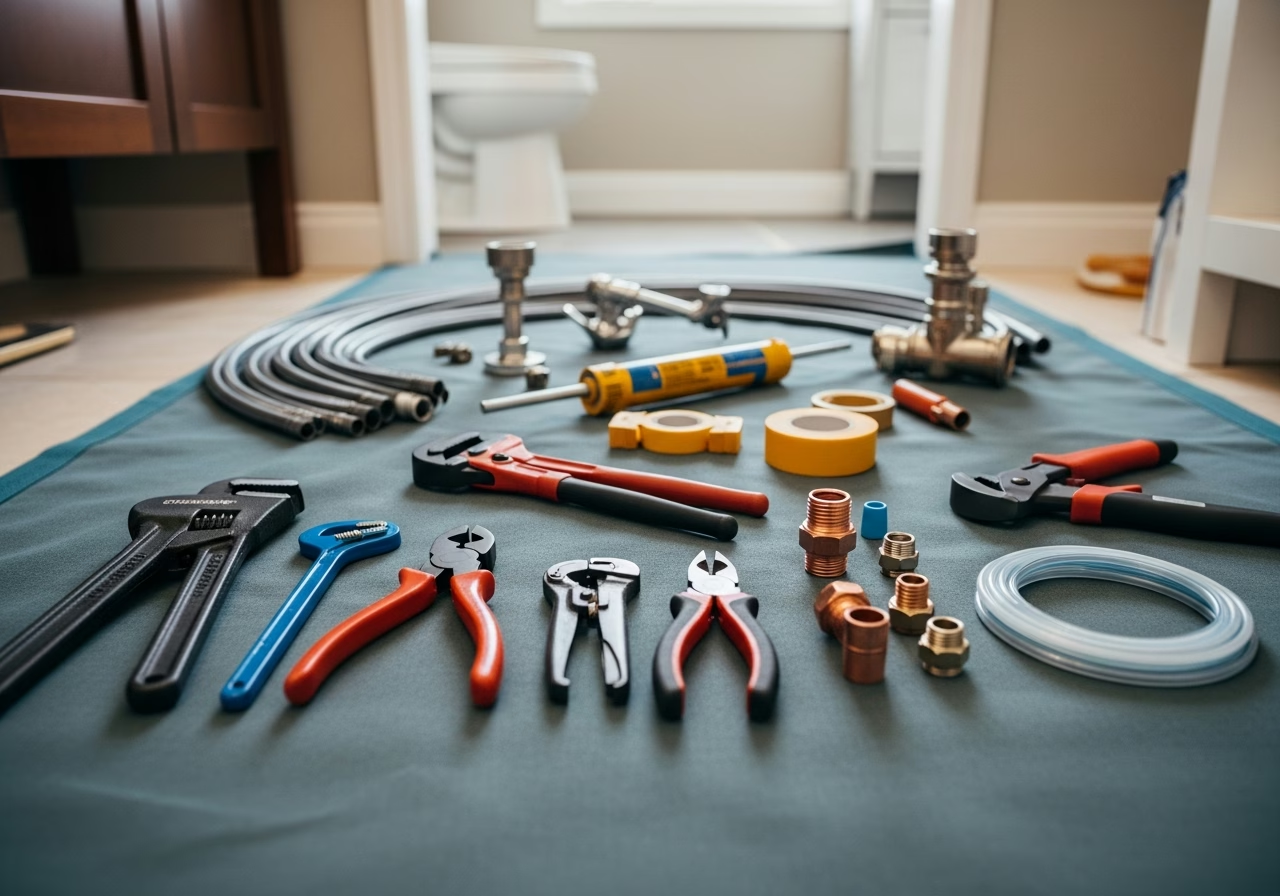
Backwater Valve Location
- Where: On the home's main sanitary sewer lateral, typically 2–4 feet inside the foundation wall on the side facing the street
- Pipe: 4-inch ABS or clay sewer lateral
- Action: Closes against reverse flow from city sewer during surcharge
- Visible from basement: Removable cover plate in slab
Check Valve Locations (multiple)
- Sump pump discharge: 12 inches above pit cover, prevents discharge water from falling back when pump shuts off
- Battery backup pump discharge: Separate check valve so backup pump does not back-feed into primary
- In some homes: water-heater drain line, heat-pump condensate, kitchen island vent
A complete flood-protection install will have one backwater valve (or two for dual-connection homes) AND 2–3 check valves in different places. They are not substitutes; they work together.
Why a Check Valve Cannot Replace a Backwater Valve
A check valve is sized for pump discharge — typically 1.25 to 2 inches. The home's main sanitary sewer lateral is 4 inches, with much higher flow rates and physical loads. A check valve installed on a 4-inch sewer line would:
- Be inadequate to seal against sewer surcharge pressure
- Fail mechanically within months due to debris loading
- Not satisfy Toronto Building's plumbing inspection
- Not qualify for the City's subsidy program
If a contractor offers to install "a check valve on your sewer line" instead of a backwater valve, this is either a misunderstanding or a scam. Verify by asking what the model number is and whether the install includes a Toronto plumbing permit.
Need professional plumbing?
Call RenoHouse at 289-212-2345 or get a free estimate today.
Get Free Estimate →Why a Backwater Valve Is Wrong on a Pump Discharge
A backwater valve is sized for full sewer flow (4-inch). Installing one on a 1.5-inch sump pump discharge line would:
- Restrict pump flow severely
- Cause pump short-cycling
- Burn out the pump motor in 12–18 months
- Cost roughly 30x what a proper check valve would
The two valves serve different fluid mechanics regimes and are not interchangeable in either direction.
Mechanical Differences
Backwater Valve (e.g., Mainline Backflow Fullport)
- Cast iron or PVC body
- Hinged flap (gravity-closed) with float
- Cleanout port integrated
- 4-inch flange or compression connection
- Mass: 12–18 lb
- Service life: 25–30 years
- Maintenance: annual visual inspection, gasket replacement every 5–7 years
Check Valve (e.g., spring-loaded inline)
- Brass or PVC body
- Spring-loaded disk or swing flap
- 1.25 to 2-inch threaded or solvent-weld connections
- Mass: 0.3–1.2 lb
- Service life: 5–10 years
- Maintenance: replace at end of life (no field service)
Subsidy Implications
The 2026 City of Toronto Basement Flooding Subsidy explicitly funds backwater valve installations at $1,250 per device, up to two devices per property. Check valves are not separately eligible but are considered part of a sump-pump install (covered under the $1,750 sump pump cap).
For the rebate application:
- Backwater valve: Itemize separately on invoice with model number, get installed-and-inspected before claiming.
- Check valves: List as part of pump install line item; do not claim separately.
For the application paperwork, see Backwater Valve Rebate Application Toronto 2026: Step-by-Step.
Common Confusion Points
"I have a check valve on my floor drain"
A "check valve" sometimes refers to the simple flap insert that drops into a basement floor drain. This is technically a backflow prevention device but is NOT a code-compliant backwater valve and offers minimal protection. It is not subsidy-eligible.
"My pump has a built-in check valve"
Some sump pumps include an integrated check valve in the pump body. This is helpful but does not replace the inline check valve on the discharge line. Most installations still benefit from a separate inline check valve for serviceability.
"I have backflow protection at my water meter"
Toronto Water meters often include a backflow preventer on the water supply side. This protects the city water supply from contamination flowing the wrong way. It has nothing to do with sewer protection or basement flooding.
"I had a check valve installed for $200 — am I protected?"
Almost certainly not, if the protection you wanted was against sewer surcharge. A real backwater valve install in Toronto in 2026 is $1,800–$3,200. A $200 install is a check valve or a non-code drop-in device. Verify by asking for the model number, permit number, and Toronto Building inspection sign-off.
When You Need Each
You need a Backwater Valve if:
- Your home is in a combined-sewer neighbourhood (Old East York, Riverdale, Cabbagetown, Leslieville, North Etobicoke)
- You have any basement plumbing (floor drain, laundry, toilet, shower)
- You are eligible for the $6,650 City of Toronto subsidy
- Your insurer is asking for sewer-backup protection documentation
You need Check Valves if:
- You are installing a sump pump (one on discharge line)
- You are installing battery-backup pump (one on backup discharge)
- You have a hydronic heating loop with multiple pumps
- You have a domestic water heater feed where backflow concerns apply
You need both:
- Standard Toronto flood-protection bundle install (backwater valve + sump pump = both types of valves in the system)
Related Reading
Backwater Valve & Sump Pump Toronto: Complete 2026 Subsidy Guide, Mainline vs Floor-Drain Backwater Valve, Battery Backup Sump Pump Toronto: Brand & Capacity Comparison.Ready for the Right Install?
RenoHouse provides licensed-plumber backwater valve installs with proper check valves on all pump discharges, full subsidy paperwork. Visit our Backwater Valve & Sump Pump Bundle Service Page.
Sources & References
Authoritative sources cited in this guide:
- Toronto Sewer Use Bylaw 681 — Toronto plumbing/sewer regulations
- Ontario Building Code 7 (Plumbing) — OBC plumbing standards
- Health Canada — Drinking Water — Health Canada drinking water guidelines
- CSA B149.1 Natural Gas Code — Canadian gas installation code
Continue Reading