RenoHouse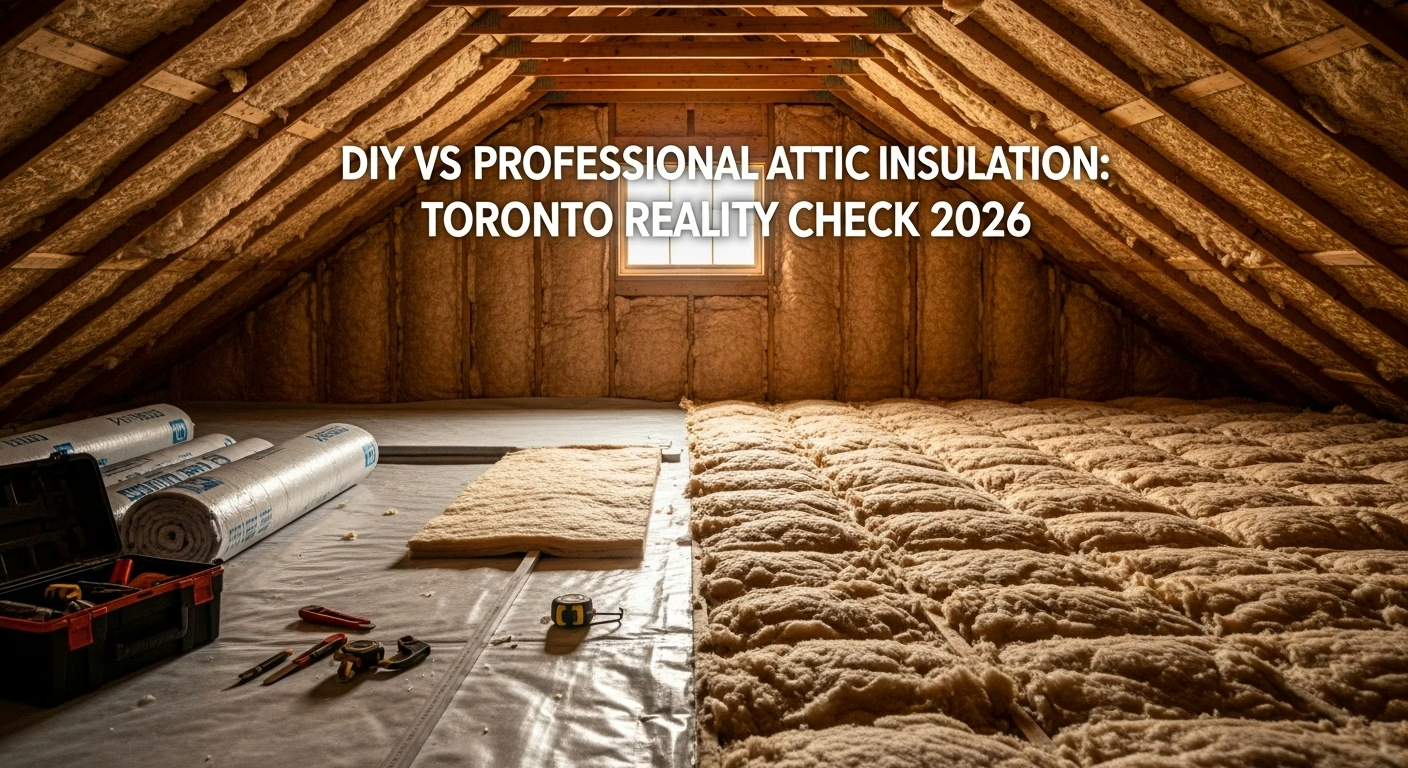

# DIY vs Professional Attic Insulation: Toronto Reality Check 2026
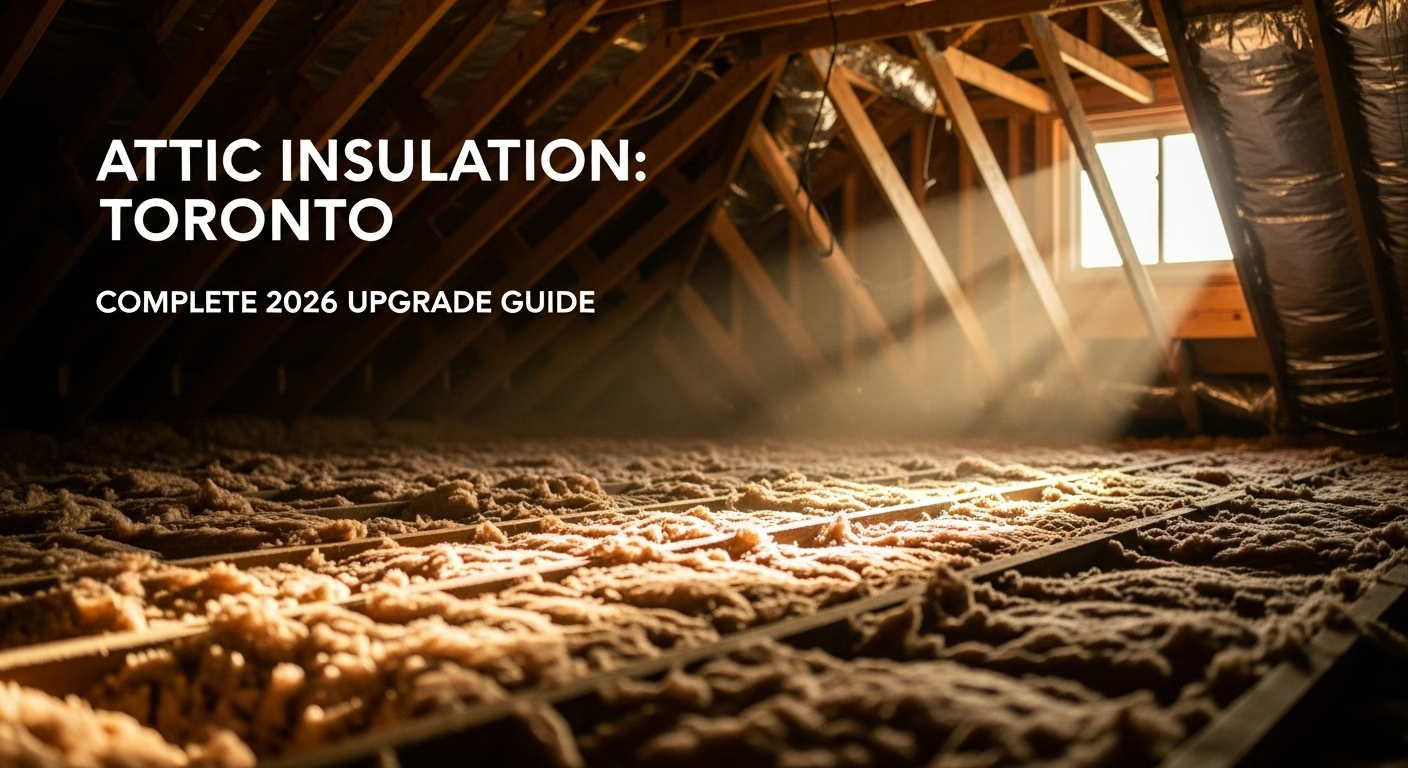
Quick answer. Attic insulation is one of the few major home envelope upgrades where DIY is actually feasible. Home Depot and Rona both offer free blower machine rental with insulation purchase, materials are widely available, and the work itself isn't deeply technical.Attic insulation is one of the few major home envelope upgrades where DIY is actually feasible. Home Depot and Rona both offer free blower machine rental with insulation purchase, materials are widely available, and the work itself isn't deeply technical. But DIY also has hidden costs, scope limits, and rebate consequences that most Toronto homeowners don't appreciate until after they're committed. This guide is an honest 2026 reality check on DIY vs professional attic insulation in Toronto.
For pillar context, see Attic Insulation Toronto: Complete 2026 Upgrade Guide. For cost details, see Attic Insulation Cost Toronto: R-Value Tier-by-Tier Pricing.
The Three Honest Outcomes
In our experience working with Toronto homeowners who've done DIY attic work or completed projects we then assessed:
- 1. DIY works well for ~30% of cases — typically post-2000 homes, no contamination, motivated homeowners who follow guidance carefully.
- 2. DIY delivers acceptable but suboptimal results for ~50% of cases — typically R45 instead of R60, partial air sealing, missed pot light covers.
- 3. DIY creates problems for ~20% of cases — typically buried K&T, missed vermiculite, vented bathroom fans into attic, or full air sealing failure leading to moisture damage.
The decision isn't "DIY = bad" or "DIY = good." It's about whether your specific home and skill set match a successful DIY scenario.
DIY Material Cost (1,500 sqft Toronto attic, R60 install)
| Item | DIY Cost | Notes |
|---|---|---|
| Blown cellulose (45 bags GreenFiber Cocoon) | $700–$900 | $15–$20 per bag at Home Depot |
| Loose-fill fiberglass alternative | $850–$1,100 | Slightly more |
| Blower machine rental | Free–$120 | Free with bag purchase >20 bags at most Toronto stores |
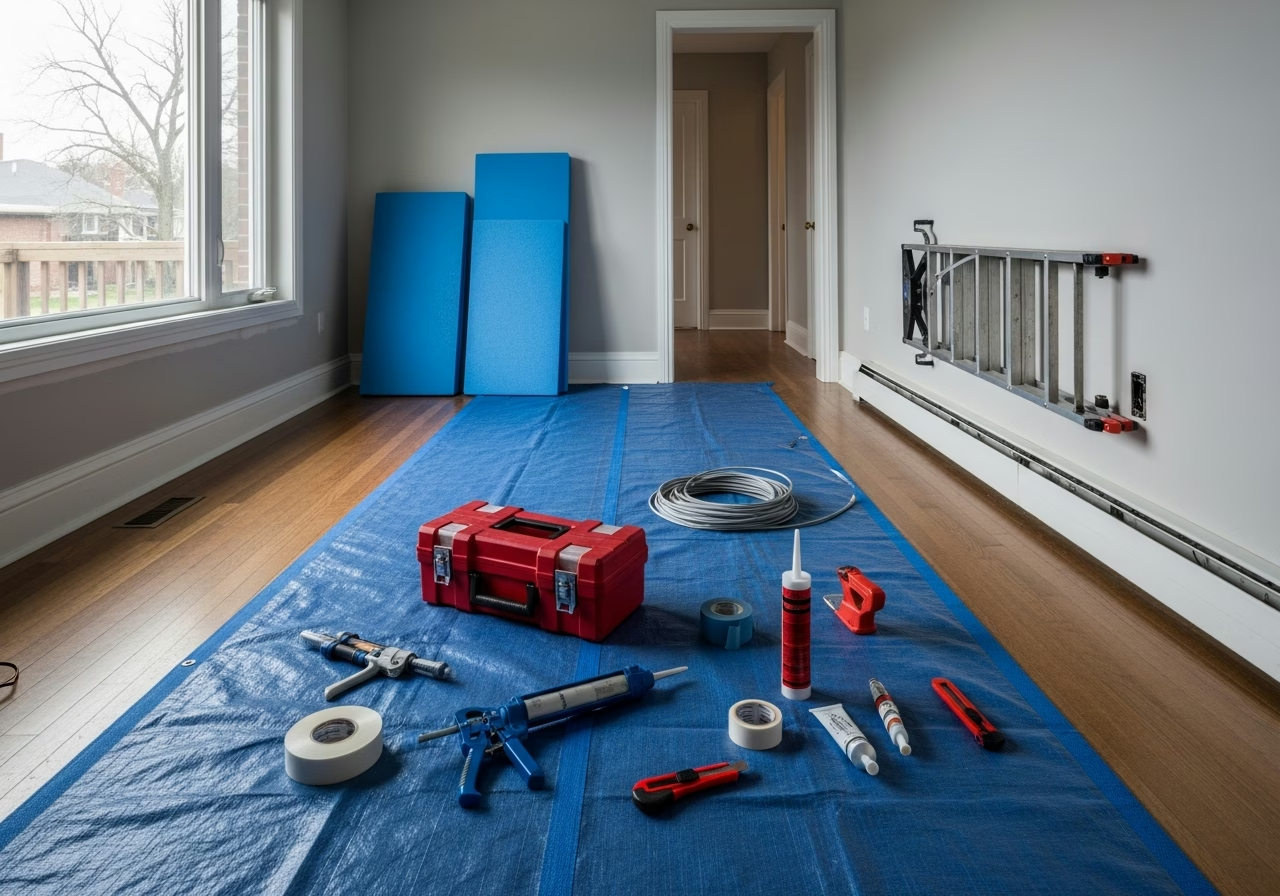
| Air sealing materials (canned foam, caulk, IC covers, weatherstripping) | $300–$500 | 12 IC covers ($30 each) + 8 cans foam + caulk + weatherstrip |
| Plastic baffles (32 at $4 each) | $130 | At Home Depot or Lowes |
| Disposal of existing insulation (if removing) | $200–$500 | Toronto solid waste fees + transport |
| PPE (Tyvek suit, N95, gloves, goggles) | $80–$150 | One-time purchase |
| Step ladder, headlamp, plastic sheeting | $150–$300 | Often already owned |
| DIY Total Materials | $1,560–$2,580 |
For comparison, professional Tier 2 install in Toronto: $4,500–$7,000.
DIY cost savings: roughly $3,000 on a Tier 2 scope.
DIY Time Investment
For a 1,500 sqft Toronto attic Tier 2 (full removal + R60):
- Pre-work inspection (K&T, vermiculite, mold, fan venting): 2–3 hours
- Removal of existing insulation: 6–10 hours (depending on what's there)
- Air sealing (top plates, plumbing, pot lights, hatch): 6–10 hours
- Baffle installation: 3–5 hours
- IC pot light covers: 3–5 hours
- Bathroom fan re-venting (if needed): 2–4 hours per fan
- Blowing new insulation to R60: 4–8 hours (often two-person)
- Photo documentation and depth markers: 1–2 hours
- Disposal trips and cleanup: 2–4 hours
At a notional $50/hour for the homeowner's time: $1,500–$2,500 in time value.
DIY is genuinely cheaper than professional only if you value your time at less than ~$50–$70 per hour. For most professional Toronto homeowners, the time math is closer to break-even than the material cost suggests.
What DIY Cannot Do
Several scope items require professional help even for committed DIYers:
- 1. Vermiculite testing and abatement. Professional sampling and (if positive) licensed abatement is required. DIY vermiculite handling is unsafe and illegal.
- 2. Knob-and-tube remediation. Requires licensed electrician in Toronto. Not a DIY task.
- 3. Closed-cell spray foam. Requires commercial equipment and certification. Not available as DIY in any meaningful scale.
- 4. Mold remediation (>10 sqft). Requires professional remediation in Ontario.
- 5. Greener Homes rebate documentation. Requires NRCan-registered Energy Advisor pre/post AND contractor invoices. DIY work doesn't qualify for most rebates.
- 6. Insurance verification. Some insurance policies require certified contractor for envelope work to maintain coverage.
For homes with any of issues 1–4, DIY is partial at best. The pre-existing conditions need professional handling.
Rebate Implications
The most overlooked DIY cost: lost rebates.
For a Tier 2 Toronto attic upgrade:
Need professional exterior renovation?
Call RenoHouse at 289-212-2345 or get a free estimate today.
Get Free Estimate →- DIY material cost: $2,000
- Professional cost: $5,500
- Greener Homes Grant (when active): -$1,500 (only with contractor invoice)
- Ontario HRS: -$250 (only paired with contractor work)
- DIY net cost: $2,000
- Professional net cost (after rebates): $3,750
DIY savings vs professional: $1,750. Not the $3,500 raw difference.
Plus the DIY homeowner doesn't get the Greener Homes Loan ($40K interest-free) which most professional projects use to spread cost over 10 years.
For full rebate details, see Attic Insulation Greener Homes Grant Toronto.
Equipment Considerations
Blower machine rental. Home Depot and Rona offer free blower rental with insulation purchase >20 bags. The machines are functional but lower quality than commercial machines:- Slower throughput (4–6 bags/hour vs 12+ for pro machines)
- Less consistent density
- Often need cleaning between rentals (homeowners don't always do this)
For a 45-bag attic install: ~10 hours of blower time vs ~4 hours for a pro.
Vacuum (for removal). Home rental options are limited. Most DIYers use shop vacs, which are 10x slower than commercial vacuum trucks. Removing 1,500 lbs of old insulation with a shop vac takes 8–12 hours and requires multiple disposal trips.Some Toronto-area rental yards rent commercial insulation vacuums for $200–$400 per day. For DIY full removal, this is often worth the rental.
Health and Safety
Attic work in Toronto has specific risks:
- Heat stress. Attics reach 50–70°C (120–160°F) in summer. Work early morning only between June and September.
- Confined space. Limited maneuverability, often crawl-only.
- Joist falls. Stepping between joists can punch through ceiling drywall. Use plywood walking boards.
- Insulation irritation. Fiberglass causes skin/eye/lung irritation. Always wear PPE.
- Asbestos exposure. If vermiculite or older asbestos-containing materials are disturbed, exposure risk is significant. Always test before disturbing.
- Electrical hazards. Older wiring, especially K&T, can be live and exposed.
DIY injuries do happen. ER visits for falls, heat stroke, and lacerations from attic work are tracked by Toronto hospitals every summer.
When DIY Makes Sense
DIY attic insulation is a good fit when:
- 1. Home is post-2000. No K&T, no vermiculite, modern construction.
- 2. Existing insulation is dry and clean. No mold, no rodent contamination.
- 3. No bathroom fans vent into attic. No moisture handling required.
- 4. No pot lights or all are IC-AT. Less air sealing complexity.
- 5. You have an experienced DIY background. Comfortable with basic carpentry, electrical knowledge, ladder work.
- 6. You're not pursuing rebates. Or you accept losing rebates.
- 7. You have a reliable helper. Two people make this 5x easier than one.
- 8. You can dedicate two weekends. 30–50 hours of work is real.
If all 8 are true, DIY is a reasonable choice that saves $1,500–$2,500 net of rebates.
When DIY Doesn't Make Sense
Skip DIY if:
- 1. Home is pre-1990. High likelihood of vermiculite, K&T, or both.
- 2. You see ceramic insulators, single-conductor wiring, pebble insulation, or mold. Professional handling required.
- 3. You're pursuing Greener Homes Loan or Grant. DIY won't qualify.
- 4. Bathroom fan vents into attic. Re-venting is plumbing/electrical work.
- 5. Cathedral ceilings or complex framing. Spray foam is required and DIY-impossible.
- 6. You don't have 30+ hours over 2 weekends. DIY half-finished is worse than not started.
- 7. You're physically unable to work in extreme heat in confined spaces. Genuine consideration.
- 8. You're not comfortable with heights and electrical work. Stay out.
If any of these apply, hire professional.
Hybrid: DIY Some, Hire Some
A reasonable middle path for Toronto homeowners with mixed comfort:
- Hire pro for: vermiculite/K&T/mold remediation if needed, blowing new insulation, photo documentation
- DIY: Air sealing (with guidance), baffle install, pot light covers, attic hatch insulation
The DIY portion saves $1,500–$2,500 of labor on a Tier 2 project while pro handles the technical/specialty parts. Total project cost: $3,500–$4,500 vs $5,500 full professional.
This works because air sealing and baffles benefit hugely from homeowner attention to detail (the homeowner sees the home daily and can identify all the leak points), while bulk insulation install is a commodity service better done with commercial equipment.
DIY Common Mistakes to Avoid
Even successful DIYers fall into specific traps:
- 1. Stopping at R40. Running out of bags or energy and quitting at insulation depth that delivers R40 instead of R60. Plan for full bag count from the start.
- 2. Walking on insulation. Compresses and reduces R-value. Use plywood walking boards.
- 3. Skipping the messy parts. Air sealing in tight corners, baffles in the very last rafter bay, pot light covers in awkward spots. The temptation is to skip the hard 10%; the hard 10% is 50% of the performance.
- 4. Inadequate ventilation during work. Spending 8 hours in a 50°C attic without breaks is unsafe. Take breaks every 30 minutes.
- 5. No photo documentation. Even DIY benefits from documentation for future reference (and resale).
Bottom Line for Toronto DIY
For post-2000 Toronto homes with simple geometry, no contamination, motivated DIYer with experience: DIY saves $1,500–$2,500 net and is reasonable.
For pre-1990 Toronto homes (East York, Beaches, Leaside, High Park, etc.) with ANY potential contamination: hire professional. The savings aren't worth the risk.
For homes pursuing rebates: hire professional. Rebates more than cover the difference.
For homes with cathedral ceilings or complex framing: hire professional. DIY can't deliver the assembly.
If unsure, get one professional quote and one detailed DIY plan. Compare not just cost but time, risk, and rebate access. The "right" answer is often "hire professional, but ask for the DIY-friendly bits to be itemized so you can do those yourself if you want."
---
Trying to decide DIY vs professional for your Toronto attic upgrade? RenoHouse offers itemized scopes including which portions homeowners can DIY safely, plus rebate-aware professional bundles. Visit our attic insulation upgrade service page or book an insulation thermal audit for a tailored DIY-vs-pro recommendation.
Sources & References
Authoritative sources cited in this guide:
- Canada Greener Homes Initiative — Federal retrofit programs
- ENERGY STAR Canada — Canadian ENERGY STAR specs
- Ontario Building Code SB-12 — OBC energy efficiency supplementary standard
- Toronto HELP — Home Energy Loan — Toronto Home Energy Loan Program
Continue Reading