RenoHouse

# Mainline vs Floor-Drain Backwater Valve: Which Is Right for Your Toronto Home?
Quick answer. When a Toronto plumber recommends "a backwater valve," they may mean one of two physically different installations: a mainline valve on the home's main sanitary sewer lateral, or a floor-drain valve on a single drain branch (typically the basement floor drain).When a Toronto plumber recommends "a backwater valve," they may mean one of two physically different installations: a mainline valve on the home's main sanitary sewer lateral, or a floor-drain valve on a single drain branch (typically the basement floor drain). Both protect against sewer surcharge, but they cover different scopes, cost different amounts, and qualify for different rebate amounts under the new $6,650 City of Toronto Basement Flooding Subsidy.
This post explains the difference, when each is appropriate, and how to choose between them. For full subsidy structure see Toronto Basement Flooding Subsidy 2026: $6,650 Program Explained. For broader context see the pillar Backwater Valve & Sump Pump Toronto: Complete 2026 Subsidy Guide.
What a Mainline Backwater Valve Does
A mainline backwater valve installs on the main sanitary sewer lateral between your home and the city sewer. It protects EVERY plumbing fixture in the house from city-sewer surcharge:
- Basement floor drain
- Basement laundry standpipe
- Basement toilet (if any)
- Basement shower
- Kitchen sink (if it drains to the same lateral)
- All upstream fixtures during a surcharge event
This is the comprehensive solution. When the city sewer surcharges, the mainline valve closes and the entire house is isolated.
What a Floor-Drain Backwater Valve Does
A floor-drain backwater valve installs on a single drain branch — usually just the basement floor drain. It protects ONLY that one fixture. Other basement fixtures (laundry standpipe, basement toilet, shower) remain unprotected.
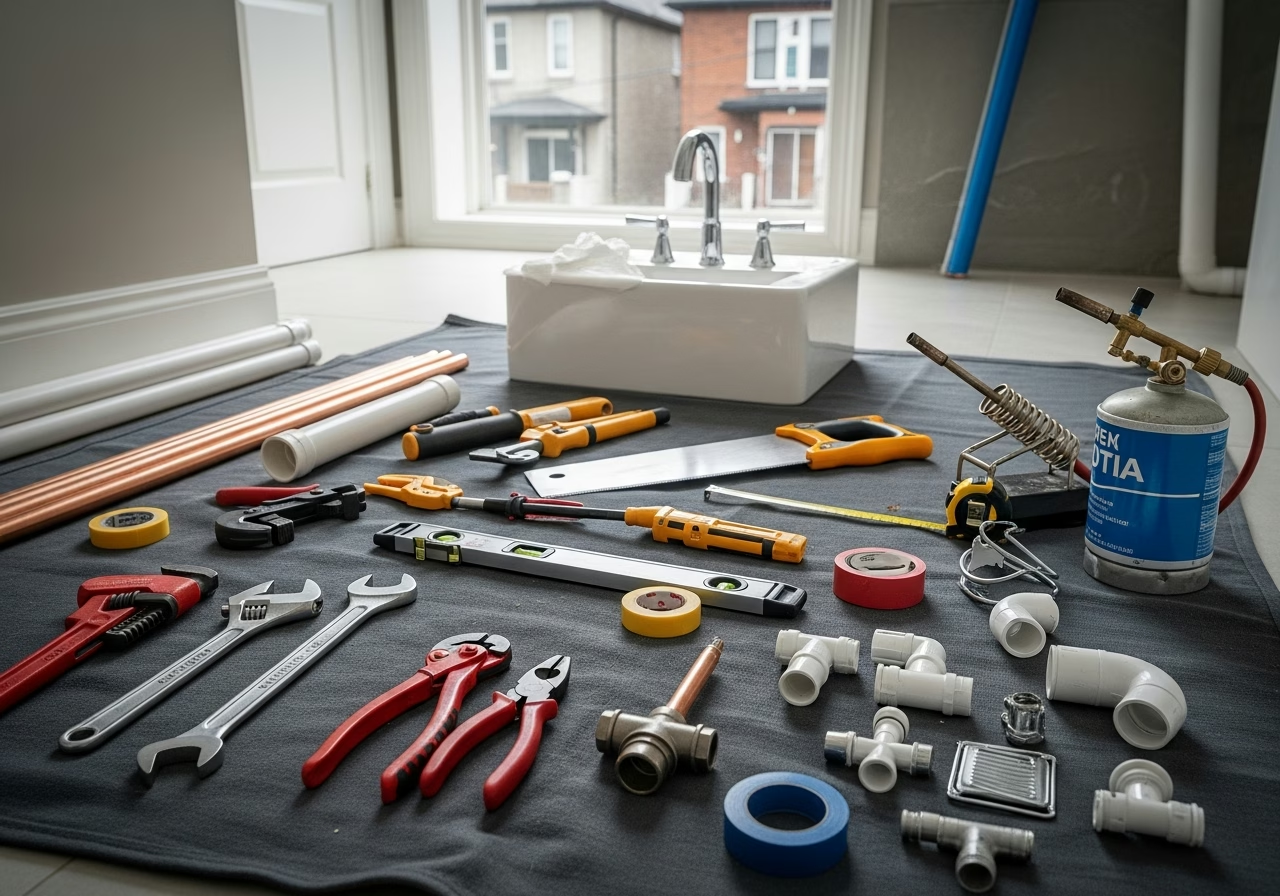
In practice, the floor drain is the lowest opening in most Toronto homes and is the most common surcharge entry point. Protecting just the floor drain catches a meaningful percentage of flood events but leaves laundry standpipes and basement toilets exposed.
Cost Comparison
| Type | Gross Install | Subsidy | Net |
|---|---|---|---|
| Mainline backwater valve | $1,800–$3,200 | $1,250 | $550–$1,950 |
| Floor-drain valve only | $450–$850 | $1,250 (capped at 80% of cost) | $90–$170 |
| Two valves (mainline + floor drain branch) | $2,300–$3,800 | $2,500 (max for 2 devices) | $0–$1,300 |
Note that the floor-drain valve install is much cheaper but the subsidy applies the same 80%-of-cost ceiling. A $600 floor-drain install yields $480 in rebate, not $1,250.
Need professional plumbing?
Call RenoHouse at 289-212-2345 or get a free estimate today.
Get Free Estimate →When a Mainline Valve Is the Right Choice
Most Toronto homes need a mainline valve. The specific situations:
- Basement laundry, toilet, or shower — floor-drain protection alone leaves these exposed.
- Combined-sewer neighbourhood (Old East York, Riverdale, Cabbagetown, Leslieville, North Etobicoke) — surcharge is severe and you want full-house isolation.
- Finished basement — flood damage is concentrated here; full protection justifies the cost.
- Insurance discount eligibility — most insurers (Intact, Aviva) require a mainline valve to trigger the sewer-backup premium reduction.
When a Floor-Drain Valve Is Appropriate
Floor-drain valves alone make sense in narrow circumstances:
- No basement plumbing other than the floor drain — no laundry, no basement bathroom.
- Lateral access is impossible — extremely rare; most homes have a basement cleanout that grants access.
- Stop-gap measure before a full reno — homeowner planning a basement renovation in 12–18 months will install the mainline valve as part of that project but wants partial protection now.
- Heritage home with prohibitive lateral access — some pre-1900 Toronto homes have laterals running under finished marble or original flooring; a floor-drain valve is the lower-impact compromise.
Two Valves Are Common in Newer Toronto Builds
Some 2010+ Toronto builds (and renovated semi-detached homes that added secondary basement plumbing) have two separate sanitary connections — one for the main house, one for a basement apartment, suite, or back-addition. The new 2026 subsidy explicitly allows TWO backwater valves at $1,250 each. If your home has dual sewer connections, both should be valved and both qualify.
To verify whether your home has one connection or two, request a Toronto Water service-record pull. The home's connection map is on file at the City and is free to request.
Mechanical Differences
Beyond the install location, the two valve types differ slightly in mechanism:
Mainline Valve (4-inch, normally-closed)
- Cast iron or PVC body
- Hinged flap with float (Mainline Backflow Fullport, Mifab MI-BWV)
- Removable cleanout cover
- Installed inline with main lateral
- Typical mass: 12–18 lb
Floor-Drain Valve (3-inch, in-grate)
- ABS body that drops into existing floor-drain throat
- Smaller flap, lighter spring
- Often installed without slab cutting (drops in from above)
- Typical mass: 1.5–3 lb
The simpler floor-drain valve is easier and cheaper to install but has a shorter service life (10–15 years vs 25–30 for a mainline valve) and is more susceptible to debris fouling.
Maintenance Differences
Floor-drain valves need cleaning every 6 months — they are exposed to direct floor-drain debris (hair, soap scum, lint). Mainline valves need annual inspection only.
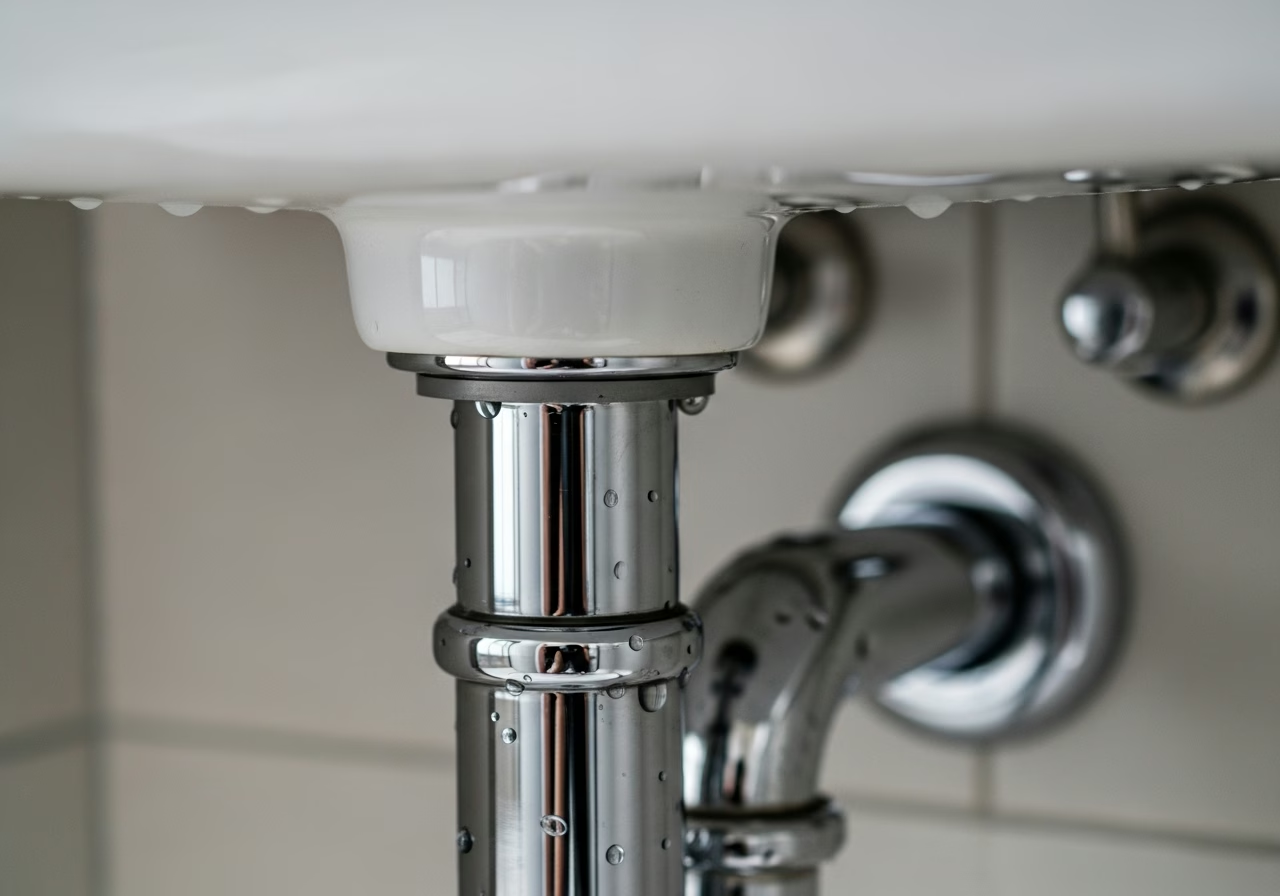
If you install a floor-drain valve and then forget to clean it, it can fail closed (blocking normal outflow) or fail open (no protection). The floor-drain valve is a higher-maintenance device.
Permit and Inspection Differences
Both types require a Toronto plumbing permit and inspection. The inspector verifies:
- Correct orientation (flow direction marked on body)
- Cleanout access maintained
- Cover plate properly installed
- For mainline: downstream of all interior fixtures
- For floor-drain: drop-in seal complete, no leaks at grate
Insurance Implications
Major Toronto insurers treat the two types differently:
- Mainline valve — full sewer-backup deductible reduction and 5–15% premium discount.
- Floor-drain valve — most insurers do NOT recognize this as adequate protection. Some offer a partial discount; many offer none.
If insurance discount is part of your ROI calculation, install a mainline valve. For details, see Sewer Backup Insurance Coverage Toronto: What You're Actually Protected Against.
Decision Summary
| Your Situation | Recommended |
|---|---|
| Standard Toronto home, basement laundry/toilet | Mainline valve |
| Combined-sewer neighbourhood | Mainline valve |
| Insurance discount priority | Mainline valve |
| No basement plumbing beyond floor drain | Floor-drain valve OR mainline (subsidy makes mainline net-cheap) |
| Two sewer connections (duplex, secondary suite) | Two mainline valves |
| Lateral access impossible | Floor-drain as stopgap |
For 90% of Toronto homes, the answer is mainline valve. The new subsidy makes the cost gap to floor-drain-only minor — and the protection upgrade is substantial.
Related Reading
Backwater Valve & Sump Pump Toronto: Complete 2026 Subsidy Guide, Backwater Valve vs Check Valve: Critical Difference Toronto Homeowners Need to Know, Backwater Valve Installation Mistakes in Toronto Homes.Ready to Decide?
RenoHouse runs a free 30-minute on-site assessment to recommend mainline vs floor-drain (or both). Visit our Backwater Valve & Sump Pump Bundle Service Page.
Sources & References
Authoritative sources cited in this guide:
- Toronto Sewer Use Bylaw 681 — Toronto plumbing/sewer regulations
- Ontario Building Code 7 (Plumbing) — OBC plumbing standards
- Health Canada — Drinking Water — Health Canada drinking water guidelines
- CSA B149.1 Natural Gas Code — Canadian gas installation code
Continue Reading