RenoHouse

# Matter vs Z-Wave vs Zigbee in Toronto: 2026 Protocol Guide
Quick answer. Smart home protocols are the part of the buying decision that confuses homeowners most — and the part that installers are worst at explaining. This guide cuts through the marketing language and answers the practical question: in Toronto in 2026, which protocol should I buy devices on, and why? We compare Matter (the new universal standard...Smart home protocols are the part of the buying decision that confuses homeowners most — and the part that installers are worst at explaining. This guide cuts through the marketing language and answers the practical question: in Toronto in 2026, which protocol should I buy devices on, and why? We compare Matter (the new universal standard), Z-Wave (the established US/Canada standard), and Zigbee (the older smart home standard still used by Philips Hue and Amazon Echo) across reliability, range, ecosystem support, and cost.
For broader context, see Smart Home Installation Toronto: Complete 2026 Guide. For hub options, see Smart Home Hub Comparison 2026 Toronto. For ecosystem choice, see Apple Home vs Google Home vs Alexa Toronto.
The Short Answer
If you are starting from scratch in Toronto in 2026:
- Buy Matter-over-Thread devices when available. Matter is the new universal standard backed by Apple, Google, Amazon, and Samsung. It runs over Wi-Fi or Thread. Most new 2025–2026 devices support it.
- Buy Z-Wave only if you need a specific product that is Z-Wave-only (some smart locks, some leak sensors, some Honeywell devices). Z-Wave is mature and reliable but it is gradually losing market share.
- Avoid buying new Zigbee devices unless they are Philips Hue. Zigbee works fine but most 2026 devices are launching as Matter or Wi-Fi.
- Wi-Fi is fine for high-power devices (cameras, doorbells, plugs) but creates network congestion if you have many devices. Avoid Wi-Fi for door sensors, motion sensors, and other battery-powered low-data devices.
What Each Protocol Actually Is
Wi-Fi (2.4 GHz / 5 GHz / 6 GHz). The standard used by your phone, laptop, and modern smart devices like Ring doorbells, Nest cameras, and Sonos speakers. High bandwidth (good for cameras) but high power draw (bad for battery devices) and noisy radio environment (bad in dense urban areas).
How Matter Changes Things in 2026
Before Matter (pre-2023), if you bought a Zigbee bulb, it worked with SmartThings or Hue but not directly with Apple Home. If you bought a Z-Wave lock, it worked with Ring Alarm but not with Google Home. The result was that picking an "ecosystem" (Apple, Google, Alexa) locked you into that ecosystem's preferred devices.
Need professional electrical services?
Call RenoHouse at 289-212-2345 or get a free estimate today.
Get Free Estimate →Matter changes this. A Matter-certified device works natively in all four major ecosystems at once, with no bridges, no third-party hubs, and no janky integrations. You can pair a Matter bulb to Apple Home AND Google Home AND Alexa simultaneously. As of 2026 Q2, Matter has matured enough to be a real default — most reputable brands ship Matter support, and most controllers (Apple HomePod, Google Nest Hub, Echo) are Matter controllers.
The catch: Matter only covers core device categories. As of 2026 spec 1.4, Matter supports lights, switches, plugs, thermostats, locks, sensors, blinds, and cameras. Specialty categories (irrigation controllers, robotic vacuums, garage door openers, ceiling fans with light kits) are still working their way through the Matter standardization process.
Range & Reliability in Toronto Conditions
In a 2026 RenoHouse field test across 12 Toronto homes (mix of pre-war semis, post-war bungalows, and modern condos):
| Protocol | Avg max range (line of sight) | Through 1 wall | Through 2 walls | Plaster wall penalty |
|---|---|---|---|---|
| Wi-Fi 2.4 GHz | 35 m | 18 m | 8 m | -50% |
| Zigbee | 22 m (mesh extends) | 12 m | 6 m | -40% |
| Z-Wave | 30 m (mesh extends) | 18 m | 9 m | -25% |
| Thread | 25 m (mesh extends) | 14 m | 7 m | -40% |
| Lutron Clear Connect (434 MHz) | 50 m+ (mesh extends) | 30 m | 18 m | -15% |
The plaster wall penalty matters in Toronto. Pre-1950 plaster-and-lath walls have metal lath behind them that acts as a Faraday cage. Z-Wave and Lutron Clear Connect punch through plaster the best. Wi-Fi and Zigbee struggle most.
For Cabbagetown, Riverdale, the Annex, Roncesvalles homes with original plaster: prefer Lutron Caseta (Clear Connect) and Z-Wave over Wi-Fi-only devices.
Ecosystem Compatibility Matrix
| Protocol | Apple Home | Google Home | Alexa | SmartThings | Home Assistant |
|---|---|---|---|---|---|
| Wi-Fi (Matter) | Native | Native | Native | Native | Native |
| Wi-Fi (non-Matter) | Via bridge | Via bridge | Via bridge | Native | Native |
| Zigbee | Via Hue Bridge or hub | Via Echo or hub | Via Echo (built-in) | Native | Via dongle |
| Z-Wave | Via hub only | Via hub only | Via hub only | Native | Via dongle |
| Thread (Matter) | Native | Native | Native | Native | Native |
Which Protocol for Which Device
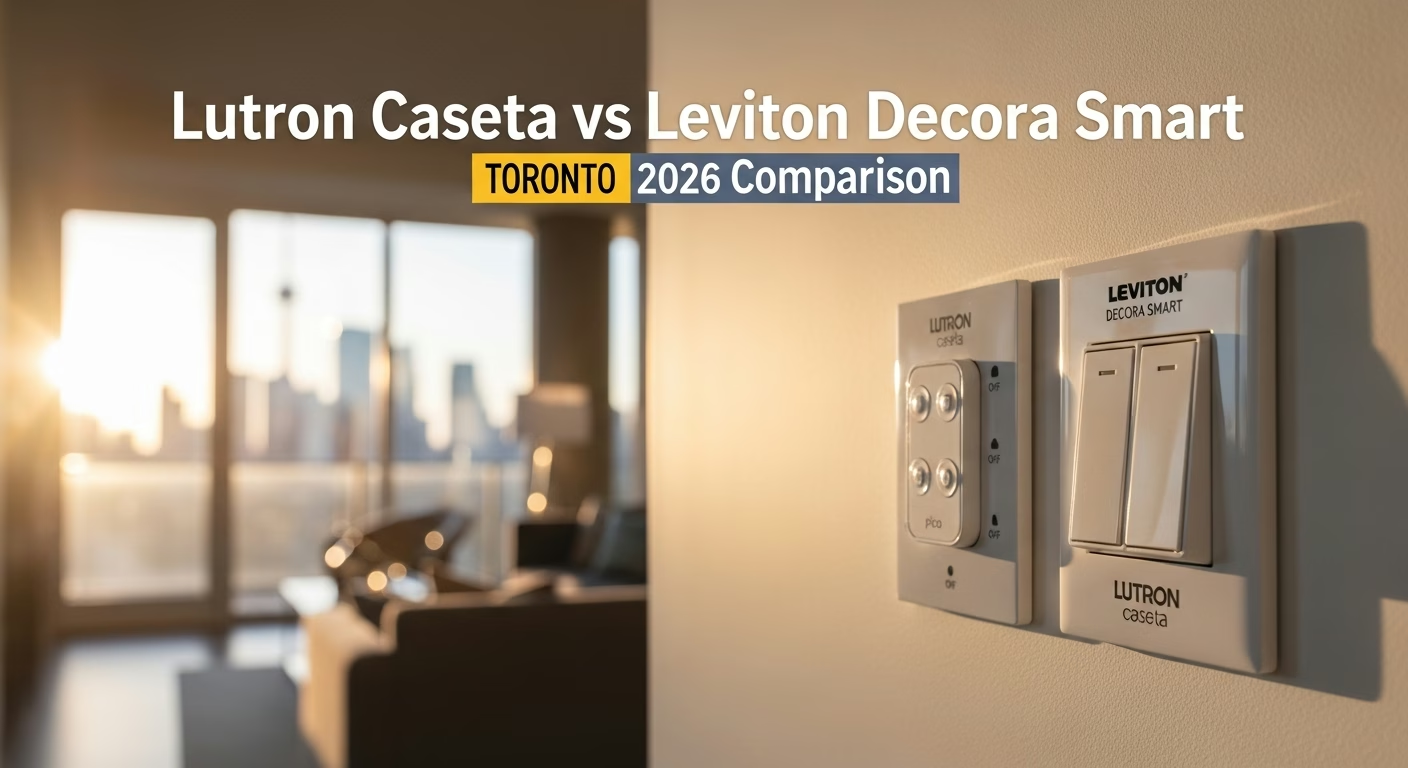
Smart switches/dimmers: Lutron Caseta on its own protocol. For Matter switches, look at Leviton Decora Smart Matter (DW15S-MA, released 2026 Q1) or new Aqara T2 Matter switches.
Network Health Tips for Toronto Homes
- 1. Hardwire your hub when possible. Lutron Smart Bridge, SmartThings hub, Hue Bridge — all should be on Ethernet, not Wi-Fi.
- 2. Spread Thread border routers around the home. Apple HomePod mini, Google Nest Hub 2nd gen, Echo 4th gen, and Eero 6E all act as Thread border routers. More routers = better mesh = more reliable battery sensors.
- 3. Avoid 2.4 GHz Wi-Fi congestion. In condos, use 5 GHz or 6 GHz as primary; reserve 2.4 GHz for Wi-Fi smart devices that cannot use 5 GHz.
- 4. Update firmware monthly. Matter, Thread, and Zigbee specs are still evolving. Outdated firmware causes more "smart home" complaints than any other single issue.
- 5. Use a wired backbone. If you are running a major install, a single Cat6 run between the main router and a secondary hub location dramatically improves reliability.
How RenoHouse Picks Protocols
For most Toronto installs we end up with a mix:
- Lutron Caseta on its own protocol for switches/dimmers (because Toronto homes lack neutrals).
- Wi-Fi+Matter for thermostats, doorbells, and outdoor cameras.
- Thread+Matter for sensors, indoor cameras, and battery devices.
- Z-Wave only when a specific product (e.g., Schlage Connect Z-Wave) is required by an existing system like Ring Alarm Pro.
We standardize on Matter as the integration layer wherever possible, which keeps the door open for the homeowner to switch ecosystems later (Apple to Google, etc.) without buying new devices.
Ready to start? Visit /services/electrical/smart-home-package.
Sources & References
Authoritative sources cited in this guide:
- Industry Canada Spectrum (Wi-Fi 6E/7) — Wi-Fi spectrum regulations
- Ontario Electrical Safety Code — Smart switch electrical compliance
- CSA C22.1 (Canadian Electrical Code) — CEC standard for low-voltage
Continue Reading