RenoHouse

# Signs You Need an Attic Insulation Upgrade in Toronto 2026
Quick answer. Toronto attic insulation issues rarely announce themselves with a single dramatic event. They show up as a creeping pattern of higher bills, hotter upstairs bedrooms, ice dams in cold winters, and condensation stains.Toronto attic insulation issues rarely announce themselves with a single dramatic event. They show up as a creeping pattern of higher bills, hotter upstairs bedrooms, ice dams in cold winters, and condensation stains. By the time most homeowners realize the attic needs work, the home has been hemorrhaging energy for 5–10 years and is often a few winters from a serious moisture problem. This guide covers the eight clearest signs your Toronto home needs an attic insulation upgrade in 2026 — including diagnostic steps you can do yourself in 30 minutes.
For the broader pillar context, see Attic Insulation Toronto: Complete 2026 Upgrade Guide. For the cost angle, see Attic Insulation Cost Toronto: R-Value Tier-by-Tier Pricing.
Sign 1: Ice Dams in the Last Two Winters
Ice dams form when warm air leaks from the heated interior into the attic, melts snow on the roof, and the meltwater refreezes at the cold eave. The mechanism is air leakage + insufficient insulation + inadequate ventilation, all in one symptom.
If you've had ice dams in two of the last five Toronto winters, your attic insulation and air sealing are inadequate. If you've had ice dams that backed water under shingles into the home, you've already had insurance-claim-level damage and the problem will recur until the underlying cause is addressed.
The fix is never "ice cables on the eaves." The fix is air sealing + R60 insulation + verified soffit/ridge ventilation.
For mechanism details, see Attic Insulation Condensation and Mold Prevention.
Sign 2: January Heating Bills Above $250 for Under 2,000 SqFt
For a 1,500 sqft Toronto home in January 2026 with adequate insulation, expect a gas heating bill around $150–$220. Above $250 is a signal of envelope problems — usually attic, sometimes basement or windows.
To benchmark: take your January 2026 gas bill, subtract the fixed monthly charge (~$25–$30), and that's your January heating cost. Compare to:
- Well-insulated 1,500 sqft Toronto home: $150–$220
- Average insulated 1,500 sqft Toronto home: $230–$290
- Poorly insulated 1,500 sqft Toronto home: $300–$450
If you're in the third category and the home is pre-2012, attic upgrade is almost certainly worth pursuing.
For ROI math, see Attic Insulation ROI Toronto: Energy Savings and Resale.
Sign 3: Hot Upstairs Bedrooms in Summer
Toronto summers reach 30°C+ for 20–40 days per year in 2026. With proper attic insulation, upstairs bedrooms should stay within 2°C of the AC setpoint. Without it, the second floor often runs 5–8°C hotter than the main floor, and AC short-cycles trying to cool against attic heat radiating through an inadequate ceiling.
Check: on a 28°C+ day, measure the temperature in the hottest upstairs bedroom and compare to the main-floor thermostat. If the difference exceeds 4°C, attic insulation is likely inadequate.
A common Toronto homeowner experience: AC running constantly, thermostat at 22°C on main floor, primary bedroom at 27°C all night. After R60 upgrade: same conditions deliver primary bedroom at 23°C. Energy bills drop. Sleep quality up.
Sign 4: Visible Joists When You Look in the Attic
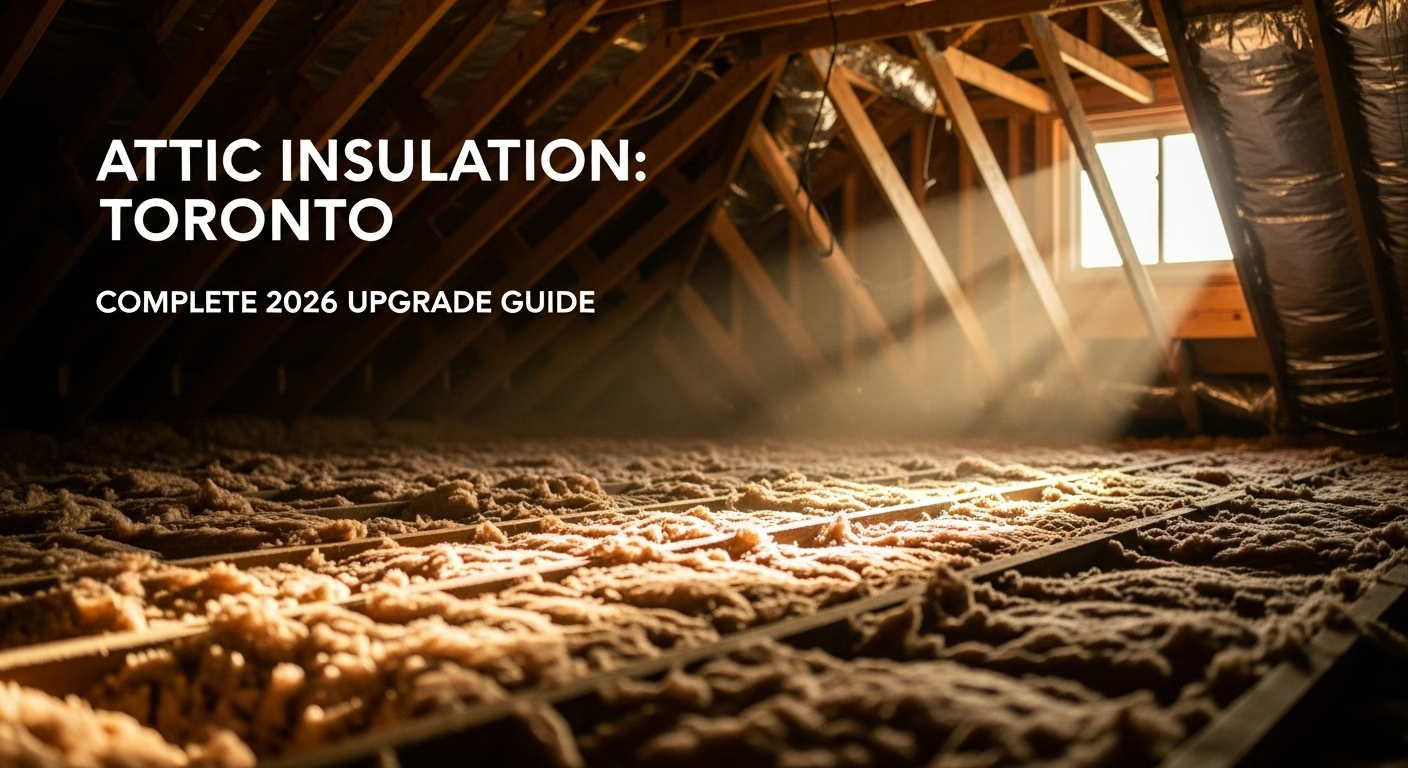
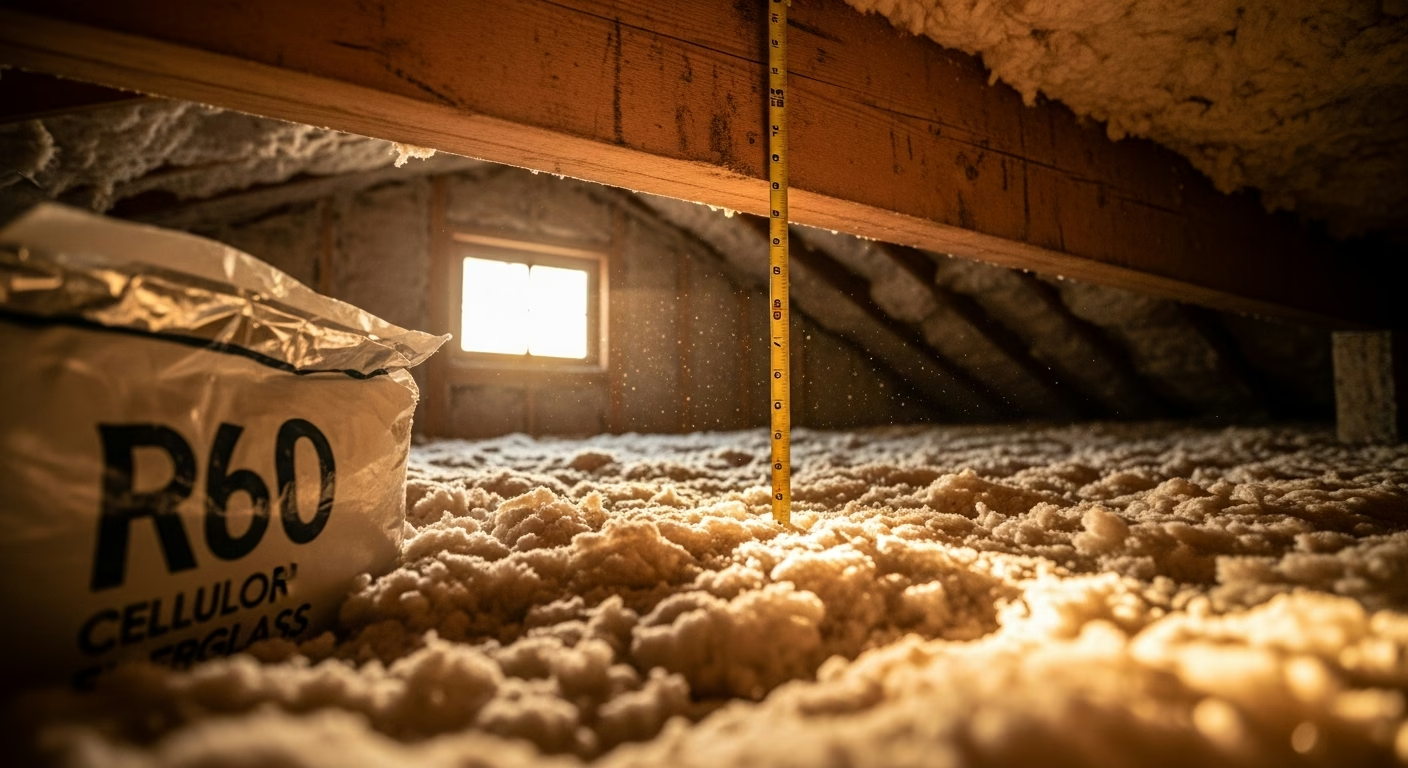
Open the attic hatch and look. If you can see the tops of the ceiling joists (typically 2x6 or 2x8 lumber), your insulation is below the joist tops — that's R20 or less for fiberglass batt.
For OBC R60 compliance, insulation should be 16"–18" deep — well above any joist tops in a typical Toronto home. Visible joists is the simplest visual diagnosis of inadequate insulation.
Need professional exterior renovation?
Call RenoHouse at 289-212-2345 or get a free estimate today.
Get Free Estimate →If insulation is at joist top exactly: ~R20–R30. If insulation is 4–8 inches above joist top: ~R30–R40. If insulation is 12+ inches above joist top: likely R50–R60.
Sign 5: Vermiculite (Gold/Grey Pebbly Insulation)
Pre-1990 Toronto homes sometimes have vermiculite insulation — a mineral product that looks like small gold or grey pebbles in flake form. About 70% of vermiculite from the Libby, Montana mine (the largest pre-1990 source) contains asbestos.
If you see vermiculite:
- 1. Don't disturb it. Don't walk on it. Don't pull insulation through it.
- 2. Test it. Asbestos testing in Toronto runs $150–$300 for two samples.
- 3. If positive, professional abatement is required: $2,500–$5,000.
- 4. After abatement, regular insulation upgrade can proceed.
Vermiculite is most common in Toronto in pre-1960 East York, Leaside, the Beaches, Riverdale, High Park, and parts of North York. Modern fiberglass and cellulose looks completely different (white/grey fluff or shreds, not pebbles).
Sign 6: Knob-and-Tube Wiring Visible in Attic
Knob-and-tube (K&T) wiring is the original electrical system from 1900–1950 era homes. It uses ceramic insulators (knobs) and tubes through framing, with a single conductor for hot and another for neutral.K&T wiring is illegal to bury under modern thermal insulation. The Electrical Safety Authority requires K&T to be either removed or assessed and rewired before insulation is installed over it. Insurance companies often refuse coverage for homes with K&T (or charge premium rates).
If you see ceramic insulators or single-strand cloth-wrapped wiring in your attic, you have K&T and you need an electrician before insulation can proceed. Cost: $1,500–$5,000 depending on circuits affected.
Toronto homes with K&T: pre-1950 detached in East York, Leaside, Beaches, High Park, Cabbagetown, Annex.
Sign 7: Mold Stains on Roof Deck Plywood
In the attic, look up at the underside of the roof deck plywood. Black, dark grey, or white fuzzy stains indicate mold from condensation. The pattern is typically:
- Worst near gable ends (where ventilation is weakest)
- Worst around bathroom fan vent points (especially if fan vents into attic)
- Stains on the cold side of insulation (top of the plywood, viewed from below)
Mold on roof deck means warm moist interior air is reaching the cold deck, condensing, and supporting fungal growth. The cause: air leakage + inadequate ventilation. The fix: comprehensive air sealing, baffles, possibly mold remediation (if heavy), then R60 insulation.
If mold is light and limited to a few square feet, a quality contractor can clean and treat during the upgrade ($300–$600). If mold is heavy or covers >25 sqft, professional mold remediation is needed first ($1,500–$4,000) before insulation work.
Sign 8: Bathroom Fan Ducted Into Attic (Not Outside)
Toronto building code requires bathroom exhaust fans to vent to the exterior of the home — through a soffit vent, gable vent, or roof vent. Many older Toronto homes (and some newer ones with sloppy contractors) have the fan vented into the attic.
Symptoms: water staining on the ceiling around the fan, or visible flexible duct ending mid-attic without exiting the home.
Each shower puts ~1–2 liters of water vapor into the attic if the fan vents there. Over a winter, that's 200–400 liters of moisture deposited on the roof deck. Result: condensation, mold, and (eventually) roof deck rot.
Fix: re-vent fan to exterior. Cost: $250–$400 per fan. Should be done at the same time as attic insulation upgrade, before new insulation goes in.
Diagnostic Steps You Can Do Today (30 Minutes)
Without any tools beyond a flashlight and a phone camera:
- 1. Open the attic hatch. Note: if you've never accessed the attic, find a knowledgeable helper. Going up alone risks falls and ceiling damage.
- 2. Photograph the existing insulation. Take 8–12 photos covering different attic areas.
- 3. Check insulation depth. Use a ruler or tape measure if safe to do so. Compare to joist top.
- 4. Look for vermiculite. Pebble-like material requires testing before any work.
- 5. Look for knob-and-tube. Ceramic insulators or single-conductor cloth wiring requires electrician.
- 6. Look up at roof deck. Stains indicate moisture issues.
- 7. Find bathroom fan ducts. Trace where they go. Do they exit the home?
- 8. Photograph the attic hatch interior. Is it weatherstripped? Does it have an insulated cover?
Send the photos to a reputable contractor (or RenoHouse) for a remote initial assessment.
When to Hire an Energy Advisor
For a definitive diagnosis, hire a NRCan-registered Energy Advisor for an EnerGuide evaluation. Cost: $400–$700. The Advisor will:
- Conduct a blower door test (measures air leakage)
- Inspect all insulation (attic, basement, walls)
- Measure existing R-value
- Check ventilation
- Provide written recommendations
The Energy Advisor evaluation is required for Greener Homes rebates. Most Toronto homeowners doing significant attic work do this evaluation regardless of rebate intent — it's the most accurate diagnosis available.
Hidden Signs That Don't Look Like Insulation Issues
Some sign patterns get misdiagnosed as other problems:
- Drywall ceiling cracks at edges. Often blamed on settling. Sometimes caused by insulation compression and ceiling drywall flexing under temperature stress.
- Furnace short-cycling. Often blamed on furnace size or thermostat. Sometimes caused by envelope leakage requiring constant reheat.
- Persistent dry indoor air in winter. Often blamed on humidifier failure. Sometimes caused by stack effect pulling humid air out through the attic faster than humidifier can replace.
- Squirrel or rodent noises in attic. Pests are attracted to warm air leaks. Severe rodent activity often indicates major air sealing failures.
- Roof shingle premature wear. Often blamed on shingle quality. Sometimes caused by attic overheating from inadequate ventilation, baking shingles from below.
When NOT to Upgrade (Yet)
Some signs that look like insulation issues are actually other problems:
- Roof leaking. Fix the roof first. Insulating over a leaky roof traps moisture and accelerates damage.
- Active rodent infestation. Eliminate pests, seal entries, then insulate.
- Unresolved mold. Remediate first, insulate second.
- Pending major renovation. If you're planning to convert attic to living space within 2 years, wait and do the insulation as part of that project (different scope, different R-value strategy).
Toronto Neighborhood Patterns
Common attic insulation issues by Toronto area:
- East York pre-1960 bungalows: Vermiculite, K&T, R12–R20. Tier 2 with abatement: $9,000–$13,000.
- Leaside detached, 1940s–1960s: R20–R30 fiberglass batt, intact framing, often no major contamination. Tier 2: $5,000–$6,500.
- Beaches detached and semis: Mix of pre-1950 (vermiculite/K&T) and post-1980 (R30 batt). Variable scope.
- High Park two-storeys, 1920s–1950s: Often R20 batt, K&T common, ice dam history. Tier 2: $5,500–$7,500.
- North York post-2000 detached: Often R30–R40 already, less likely to need upgrade. Tier 1: $2,500–$3,500.
- Riverdale/Cabbagetown 1900s row: Complex framing, K&T, vermiculite possible, knee walls. Tier 3 hybrid: $9,000–$12,000.
Bottom Line: Should You Upgrade?
If you have any two of these signs, scheduling an attic inspection or Energy Advisor evaluation is justified. If you have any of signs 5, 6, or 7 (vermiculite, K&T, mold), action is required regardless of rebate timing.
For homes built before 2012 with no known recent attic work, assume R20–R30 existing and budget for Tier 2 upgrade ($5,000–$7,000 with rebates). The math works for almost all Toronto homes.
---
Concerned your Toronto home shows multiple signs of inadequate attic insulation? RenoHouse offers free photo-based assessments and on-site inspections. Visit our attic insulation upgrade service page or book a comprehensive insulation thermal audit for definitive diagnostics.
Sources & References
Authoritative sources cited in this guide:
- Canada Greener Homes Initiative — Federal retrofit programs
- ENERGY STAR Canada — Canadian ENERGY STAR specs
- Ontario Building Code SB-12 — OBC energy efficiency supplementary standard
- Toronto HELP — Home Energy Loan — Toronto Home Energy Loan Program
Continue Reading