RenoHouse

# Signs You Need a Backwater Valve in Your Toronto Home
Quick answer. Most Toronto homes in older neighbourhoods need a backwater valve, but not every home is at the same risk level. This post walks through the specific signs and warning indicators that elevate your risk, and offers a 10-minute self-assessment that any homeowner can complete to gauge whether the new $6,650 subsidy-funded install should be a...Most Toronto homes in older neighbourhoods need a backwater valve, but not every home is at the same risk level. This post walks through the specific signs and warning indicators that elevate your risk, and offers a 10-minute self-assessment that any homeowner can complete to gauge whether the new $6,650 subsidy-funded install should be a 2026 priority.
For pricing context, see Backwater Valve Cost Toronto: Installation Pricing 2026. For full bundle context, see the pillar Backwater Valve & Sump Pump Toronto: Complete 2026 Subsidy Guide.
Warning Sign 1: You Are in a Combined-Sewer Neighbourhood
The single biggest indicator. Toronto has roughly 90,000 properties on combined sewers, concentrated in:
- Old East York (Pape, Donlands, O'Connor)
- Riverdale (Broadview, Logan, Withrow)
- Cabbagetown (Parliament, Carlton, Wellesley)
- Leslieville (Queen East, Jones)
- The Annex (parts of)
- Forest Hill (parts of)
- North Etobicoke (Albion, Rexdale)
Combined sewers carry both sanitary waste and stormwater in a single pipe. During heavy rain, the pipe surcharges and the contents back up into homes. If you are in any of these areas, a backwater valve is functionally mandatory.
To verify your property's sewer type, request the sewer service map from Toronto Water — free and typically returned in 5–10 business days. For background, see Combined Sewer Overflow in Toronto Explained.
Warning Sign 2: You Have Basement Plumbing
Any of the following dramatically raises your flood-damage exposure:
- Basement floor drain (essentially universal in Toronto homes)
- Laundry standpipe
- Basement bathroom (toilet, sink, shower)
- Basement kitchen / kitchenette (legal or illegal secondary suite)
- Basement bar with sink
- Basement utility sink
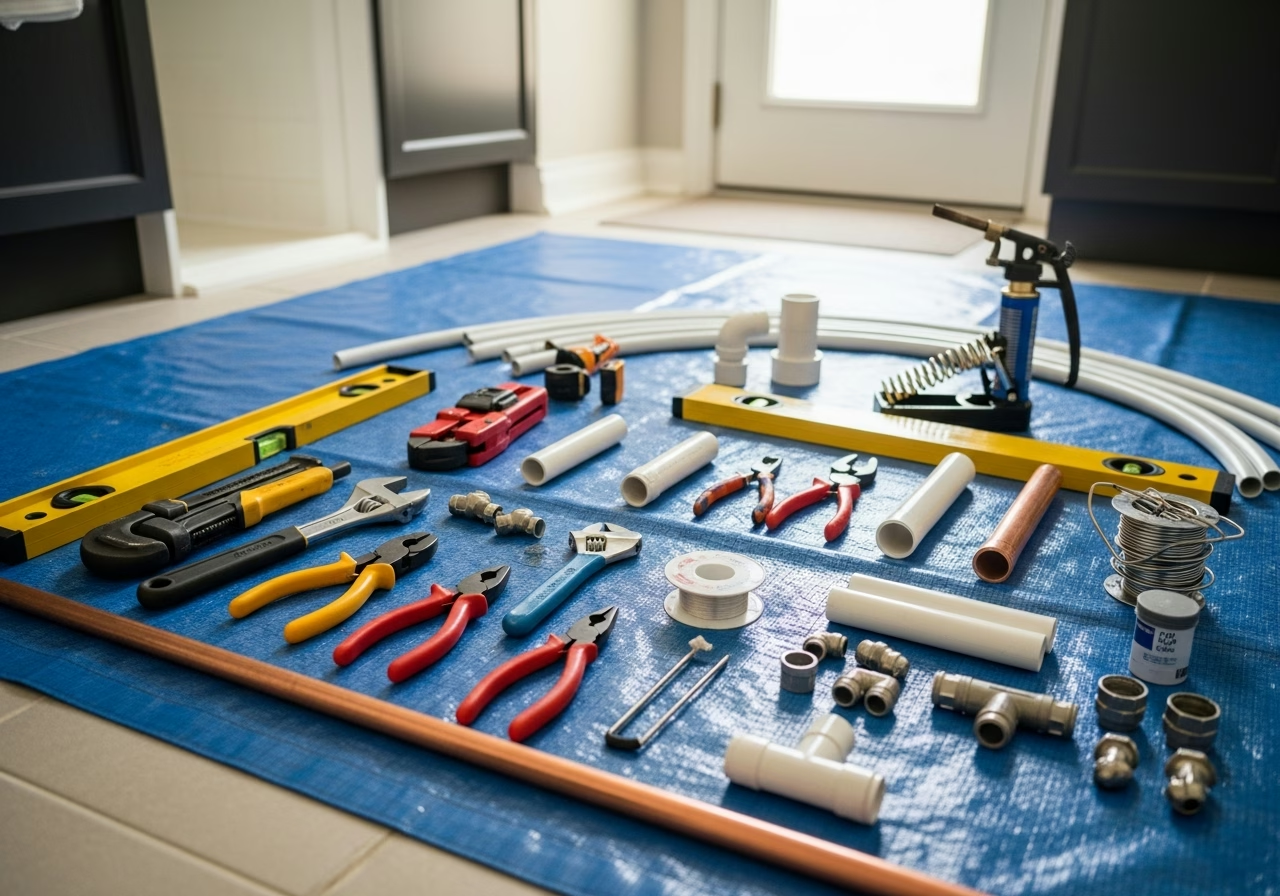
The lowest fixture in your house is the entry point for sewer surcharge. If that fixture is in a finished area, the damage is more expensive. If it is near contents (laundry near storage, kitchen near pantry), the damage compounds.
A backwater valve isolates ALL basement plumbing simultaneously.
Warning Sign 3: Past Flooding (Even Mild)
Any of these previous events indicate elevated risk:
- Sewer water came up through the floor drain (even briefly)
- Toilet bubbled or drained backward during a storm
- Laundry standpipe overflowed
- Sewage smell in basement during heavy rain
- Visible water staining on basement floor near drain
- Insurance claim filed for sewer backup
If any of these have happened, the next event is when (not if). Insurance carriers often respond by raising deductibles or excluding sewer-backup coverage entirely after the second claim.
Need professional plumbing?
Call RenoHouse at 289-212-2345 or get a free estimate today.
Get Free Estimate →Warning Sign 4: Slow Drains Anywhere in the House
Slow drains can indicate a partially blocked sewer lateral. A partial blockage worsens during heavy rain (debris swept forward) and can trigger backflow even without city-wide surcharge. Signs to watch:
- Bathtub drains slowly even after using a snake
- Multiple fixtures gurgle when one is run
- Toilet flushes slowly or low
- Basement floor drain smells when other fixtures are used
If you have these signs, get a sewer camera inspection ($150–$250) before installing the backwater valve. A camera scan will reveal whether the lateral needs repair or just the valve.
Warning Sign 5: Pre-1975 Toronto Home with No Subsidy History
Most Toronto homes built before 1975 had their foundation drain (weeping tile) connected directly to the sanitary sewer lateral. This contributes to combined-sewer overflow during storms. The 2026 subsidy explicitly funds disconnecting this connection — and homes that have not yet done this are at elevated risk for both sewer surcharge AND foundation seepage.
If your home is from this era and has not had any documented plumbing upgrade in the past 10 years, you almost certainly fall into this category.
Warning Sign 6: Insurance Premium Increase or Coverage Restriction
Did your insurance:
- Raise your sewer-backup deductible significantly in the last 3 years?
- Add an exclusion for sewer backup?
- Decline to renew until you install mitigation?
- Increase premium by 20%+ for sewer-backup coverage?
These are commercial signals from your insurer that they consider your home high-risk. Installing a backwater valve typically reverses or reduces these adjustments. For details, see Sewer Backup Insurance Coverage Toronto: What You're Actually Protected Against.
Warning Sign 7: Neighbours Have Flooded
Toronto storm patterns affect blocks at a time. If 2–3 neighbours on your block had basement flooding in 2013, 2018, 2024, or 2025, your home's risk is comparable. Check with neighbours informally; share information.
Warning Sign 8: You Have a Finished Basement Worth Protecting
The decision economics shift dramatically based on what is at stake. A typical Toronto finished basement (drywall, flooring, electrical, sometimes a kitchen or bathroom) represents $40,000–$120,000 in finishes. A flood event typically requires complete demolition of finishes within 18 inches of the floor — $15,000–$50,000 in damage.
If your basement is unfinished concrete with concrete-block walls, flood damage is closer to $3,000–$8,000 per event (mostly cleanup, contents, mechanicals). A finished basement raises the stakes significantly.
Warning Sign 9: Sump Pump But No Backwater Valve (or Vice Versa)
Half-protected homes are vulnerable to half the flood modes. If you have a sump pump but no backwater valve, you are unprotected against sewer surcharge. If you have a backwater valve but no sump pump, you are unprotected against groundwater intrusion.
The new $6,650 subsidy explicitly rewards completing the system. If you already have one half, the marginal cost of completing the bundle is dramatically reduced. See Sump Pump vs Backwater Valve: Do You Need Both in Toronto.
Warning Sign 10: You're Selling Within 5 Years
Toronto buyers are increasingly informed about flood risk. Homes in flood-history neighbourhoods that document working flood protection sell faster and at higher prices than comparable homes with no documented mitigation. This is especially true for homes with past disclosed flooding — installing the bundle restores marketability.
The 10-Minute Self-Assessment
Take this checklist with you to the basement:
Section A: Location- [ ] My home is in Old East York, Riverdale, Cabbagetown, Leslieville, North Etobicoke, the Annex, or Forest Hill (combined sewer)
- [ ] My home is within 200 metres of a ravine, river, or shoreline (high water table)
- [ ] My home was built before 1975
- [ ] I have a basement floor drain
- [ ] I have a laundry standpipe in the basement
- [ ] I have basement bathroom plumbing (toilet, sink, shower)
- [ ] My home has any history of slow drains
- [ ] My home has flooded in the past 12 years
- [ ] My neighbours have flooded
- [ ] My insurance has raised my sewer-backup deductible or excluded coverage
- [ ] I do NOT see a removable cover plate on the basement slab
- [ ] I do NOT see a sump pit and pump
- [ ] I do NOT see a battery backup unit
- 0–2 checks: Risk is moderate. The bundle is still a good investment but not urgent.
- 3–5 checks: Risk is elevated. Plan to install the bundle in 2026.
- 6+ checks: Risk is high. Install the bundle now. Subsidy + insurance discount + avoided damage all argue for immediate action.
What Happens If You Wait
The cost of waiting:
- Each storm event during the wait period is unprotected (the next major event is statistically due within 2–4 years)
- Insurance terms are tightening, not loosening
- Plumber availability is shrinking as demand for the new subsidy ramps
- Permit queue lengthens through summer
The cost of acting now:
- $1,150–$4,850 net of subsidy
- 1–3 days of basement disruption
- 8–12 weeks rebate-to-cheque turnaround
- Permanent reduction in insurance premium
Related Reading
Backwater Valve & Sump Pump Toronto: Complete 2026 Subsidy Guide, Backwater Valve Cost Toronto: Installation Pricing 2026, [Toronto Basement Flooding Subsidy 2026: $6,650 Program Explained](/blog/toronto-basement-flooding-subsidy-2026-6650-program).Ready for an Assessment?
RenoHouse provides free 30-minute basement assessments to score your home's flood risk and recommend the right scope. Visit our Backwater Valve & Sump Pump Bundle Service Page.
Sources & References
Authoritative sources cited in this guide:
- Toronto Sewer Use Bylaw 681 — Toronto plumbing/sewer regulations
- Ontario Building Code 7 (Plumbing) — OBC plumbing standards
- Health Canada — Drinking Water — Health Canada drinking water guidelines
- CSA B149.1 Natural Gas Code — Canadian gas installation code
Continue Reading