RenoHouse

# Asbestos Renovation Checklist Toronto: 2026 Pre-Construction Guide
Quick answer. Renovating a pre-1990 Toronto home means adding an asbestos compliance layer to the project plan. Done well, this layer adds 4 to 8 weeks to the front of the schedule and a known dollar figure to the budget. Done poorly, it derails the project mid-construction with stop-work orders, mid-project surprises, and emergency abatement at premium rates.Renovating a pre-1990 Toronto home means adding an asbestos compliance layer to the project plan. Done well, this layer adds 4 to 8 weeks to the front of the schedule and a known dollar figure to the budget. Done poorly, it derails the project mid-construction with stop-work orders, mid-project surprises, and emergency abatement at premium rates.
This checklist walks through the full sequence from initial scope discussion to first construction trade on site. For broader context, see Asbestos Abatement Toronto 2026: Complete Guide.
Stage 1: Initial Scope Definition (Week 0–2)
Before any consultant or contractor is engaged:
- [ ] Confirm home build year (Toronto property assessment record or original deed).
- [ ] Identify all rooms and surfaces in scope.
- [ ] Note any visible suspect materials (popcorn ceiling, 9"x9" floor tile, vermiculite in attic, pipe insulation, plaster).
- [ ] Photograph each suspect material.
- [ ] Sketch a rough floor plan with renovation scope marked.
- [ ] Estimate timeline targets (start date, completion date).
- [ ] Set a budget envelope including a 15–25 percent abatement contingency.
This stage is the homeowner's responsibility. If working with RenoHouse, we conduct this discussion at the first site visit.
Stage 2: DSS Booking (Week 2–4)
- [ ] Choose targeted bulk sampling vs full DSS based on scope.
- [ ] Solicit quotes from at least two consulting firms (Pinchin, EHS Partnerships, Talon, or independent CIH).
- [ ] Book consultant site visit (typically 1–3 weeks out).
- [ ] Prepare home for sampling (clear access to suspect materials).
- [ ] Confirm lab analysis includes TEM for any drywall mud sample.
- [ ] Confirm report deliverables: sample plan, photos, results table, recommendations.
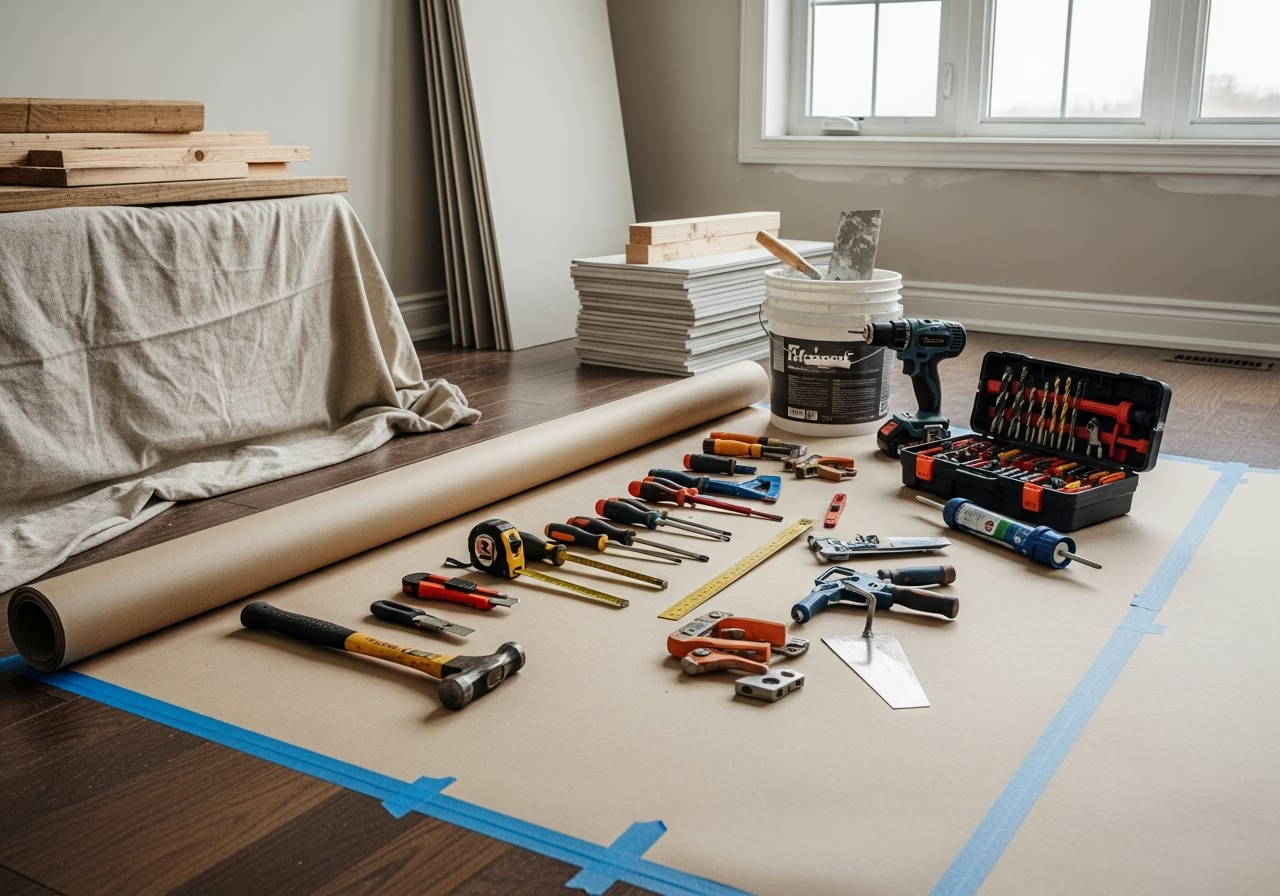
Cost: $400 to $1,800 for residential DSS.
Stage 3: Sampling and Lab Analysis (Week 3–5)
- [ ] Consultant on-site visit (1 to 4 hours).
- [ ] Sample collection at marked points.
- [ ] Material patches at sample locations.
- [ ] Lab analysis (24 to 72 hours for PLM; 3 to 5 days for TEM).
- [ ] Receive draft results.
- [ ] Receive final report (3 to 7 days after lab).
Stage 4: Translating the Report (Week 5–6)
Once the DSS arrives:
Need professional home renovation?
Call RenoHouse at 289-212-2345 or get a free estimate today.
Get Free Estimate →- [ ] Read the executive summary.
- [ ] List positive materials with locations.
- [ ] List negative materials (these become disclosure-positive on resale).
- [ ] Confirm Type classifications per material.
- [ ] Estimate abatement budget using market ranges (see Asbestos Abatement Cost Toronto Comparison).
- [ ] Decide whether to adjust renovation scope to avoid abatement (e.g., keep walls instead of demolishing).
- [ ] Update construction drawings.
Stage 5: Abatement Quoting (Week 6–8)
- [ ] Solicit quotes from at least two licensed Toronto abatement contractors.
- [ ] Provide DSS report to each contractor.
- [ ] Confirm each quote covers: scope, Type classification, containment, HEPA equipment, worker certifications, notification, air clearance, disposal manifest, WSIB clearance, General Liability declaration, Pollution Liability declaration.
- [ ] Compare line-by-line.
- [ ] Award contract.
- [ ] Pay deposit (typically 30 percent).
Stage 6: Pre-Abatement Preparation (Week 8–10)
Before abatement contractor arrives on site:
- [ ] Schedule confirmed.
- [ ] Ministry of Labour notification submitted (Type 3 only, contractor responsibility).
- [ ] WSIB Form 2156 submitted (Type 3 only, contractor responsibility).
- [ ] Toronto building permit applied for if construction trades will follow.
- [ ] Personal possessions removed from work area.
- [ ] Furniture covered or moved.
- [ ] HVAC system shutdown plan confirmed (system off during Type 3 work).
- [ ] Pets relocated.
- [ ] Occupants relocated for the duration of Type 3 work (most homeowners stay elsewhere for 3 to 7 days during whole-home gut Type 3).
- [ ] Utility access confirmed (electrical, water for wetting).
- [ ] Driveway access confirmed for HEPA vacuum truck (Type 3 vermiculite especially).
Stage 7: Abatement Execution
- [ ] Containment setup (Day 1 for single-room; Day 1–3 for whole-home).
- [ ] Bulk removal (1 to 5 days depending on scope).
- [ ] HEPA cleaning (final day).
- [ ] Visual inspection by supervisor.
- [ ] Air clearance scheduled (Type 3 mandatory).
Stage 8: Air Clearance (Day 1 after abatement complete)
- [ ] Third-party industrial hygienist collects ambient air samples.
- [ ] Containment remains in place during sampling.
- [ ] Lab analysis (24 hours).
- [ ] Pass result confirms re-occupancy (less than 0.01 fibres per cubic centimetre).
- [ ] Containment dismantled.
- [ ] Final HEPA wipe.
- [ ] Containment materials disposed as ACM waste.
If the clearance fails, the contractor re-cleans and re-samples at their cost. Reputable firms include re-clearance in the original quote.
Stage 9: Disposal Documentation (Day 1–3 after abatement complete)
- [ ] Disposal manifest received.
- [ ] Waste tracked from work site to Class II landfill.
- [ ] Manifest filed (keep for 5 years minimum).
Stage 10: Construction Begins
After clearance pass:
- [ ] Renovation contractor mobilizes.
- [ ] Building permit final inspection schedule confirmed.
- [ ] Construction trades enter (framers, electricians, plumbers, drywallers).
- [ ] Construction proceeds on a known-clean substrate.
Total Timeline
For a typical pre-1990 Toronto home renovation:
- Single-room scope (e.g., bathroom with popcorn ceiling): 4 to 6 weeks from initial scope discussion to construction start.
- Multi-room scope (e.g., main floor reno with multiple ACMs): 6 to 10 weeks.
- Whole-home gut: 10 to 14 weeks before framing begins.
The compliance overhead averages 6 to 8 weeks at the front of the project. This is real and unavoidable; planning around it is the only way to avoid delays.
Budget Contingency
Plan for the following contingency lines:
- DSS overrun (additional samples discovered mid-survey): 10 percent of DSS budget.
- Mid-project material discovery (e.g., asbestos-containing material exposed during demo): $5,000 to $20,000 reserve.
- Air clearance retest: $400 to $900 reserve.
- Schedule slip (often the biggest cost): plan a 1-week buffer between abatement clearance and construction trade start.
What Triggers Stop-Work
Toronto and Ministry of Labour can issue stop-work orders if:
- Abatement work proceeds without notification (Type 3).
- Workers without proper certification are observed on site.
- Containment fails inspection (no decontamination chamber, no negative pressure, no HEPA filtration).
- Asbestos waste is not properly bagged or transported.
- Air clearance is skipped.
- Renovation work begins before clearance.
A stop-work order typically delays the project by 2 to 4 weeks while remediation and re-inspection happen.
Coordinator vs DIY Sequencing
Self-managing this checklist is possible but time-intensive. The full sequence requires roughly 30 to 50 hours of homeowner time over 8 to 10 weeks: consultant calls, contractor quote review, scheduling, decision-making, document filing, and on-site oversight.
A coordinator (RenoHouse, in our model) handles all of the above as part of the renovation project. For homeowners who want a single point of contact and a single timeline, this is the standard professional model in Toronto.
Related Reading
DSS Designated Substance Survey Toronto, Air Monitoring & Clearance Asbestos Toronto, Asbestos Renovation Mistakes Toronto.Want This Checklist Run For You?
RenoHouse coordinates the full pre-construction asbestos sequence on every pre-1990 Toronto renovation we manage. Visit our Asbestos Abatement Service Page to start.
Sources & References
Authoritative sources cited in this guide:
- Ontario Building Code — OBC official text
- Toronto Building Permits — City permit portal
- Tarion New Home Warranty — Ontario new-build warranty regulator
- HCRA — Home Construction Regulatory Authority — Ontario builder/vendor licensing
Continue Reading