RenoHouse

# Basement Underpinning Toronto: Complete 2026 Guide
Quick answer. Basement underpinning is the single highest-value structural renovation a Toronto homeowner can undertake on an existing foundation. In 2026, a typical underpinning project in the GTA ranges from $80,000 for a small detached or semi-detached perimeter underpin to **$150,000+ for a deep underpin combined with bench footing, full waterp...Basement underpinning is the single highest-value structural renovation a Toronto homeowner can undertake on an existing foundation. In 2026, a typical underpinning project in the GTA ranges from $80,000 for a small detached or semi-detached perimeter underpin to $150,000+ for a deep underpin combined with bench footing, full waterproofing, and finished basement work. Bench footing alternatives can deliver similar usable headroom for $30,000 to $60,000 when site conditions allow. The choice between the two methods is not cosmetic — it affects insurance, neighbour exposure, plumbing routing, party-wall considerations, and the long-term resale story of the property.
This is the RenoHouse pillar guide for basement underpinning in Toronto for 2026. We cover realistic CAD pricing tier-by-tier, the Ontario Building Code (OBC) Section 9.10 ceiling-height rules, Toronto-specific soil conditions across the city's distinct geology zones, the City of Toronto Building Permit pathway, structural engineering scope (PEng-stamped drawings are required by law), the roles of common Toronto engineering firms we coordinate with, and the cluster of decisions that surround the work — legal basement apartments, multiplex conversions, sauna and cold plunge installs, wine cellars, and the lifestyle features that all require legitimate basement headroom.
For the cost-only deep-dive, see Basement Underpinning Cost Toronto Comparison. For the method-comparison deep-dive, see Underpinning vs Bench Footing Toronto. If your underpinning is part of a multiplex conversion, see our Multiplex Conversion Toronto: 2026 Complete Guide. The wellness and storage projects that depend on the headroom you are about to create are covered in Basement Sauna Installation Toronto, Cold Plunge Installation Toronto, and Wine Cellar Installation Toronto.
Why Underpinning Exists in Toronto
Toronto's pre-1950s housing stock was built when basements were utility spaces — coal storage, laundry, mechanical rooms — not living areas. Typical original ceiling heights run 6 feet 2 inches to 6 feet 8 inches, well below the modern OBC minimum for a habitable basement. As the city densified and the cost of above-grade square footage climbed past $700 per square foot to build new, the basement became the most undervalued real estate in the property — but only if you can legally call it living space.
Underpinning solves the problem at the source. Instead of accepting the existing footing depth, a structural contractor extends the foundation deeper in controlled sections, pours new footings at the lower elevation, and the basement floor is then poured at the new lower grade. The house remains supported throughout. When the work is complete, the basement has the headroom required for a legal apartment, a finished family room, a home theatre, a sauna, a cold plunge tub, a wine cellar, or a multiplex conversion unit. Bench footing is the alternative path that creates a perimeter step inside the basement and a deeper centre slab — cheaper, less disruptive, but with different implications we cover below.
What Underpinning Actually Is
Underpinning is the controlled extension of an existing foundation deeper into the ground without removing structural support. The standard residential method in Toronto is traditional mass-concrete underpinning in pins, sometimes called the pit-and-pour or pin-and-pour method:
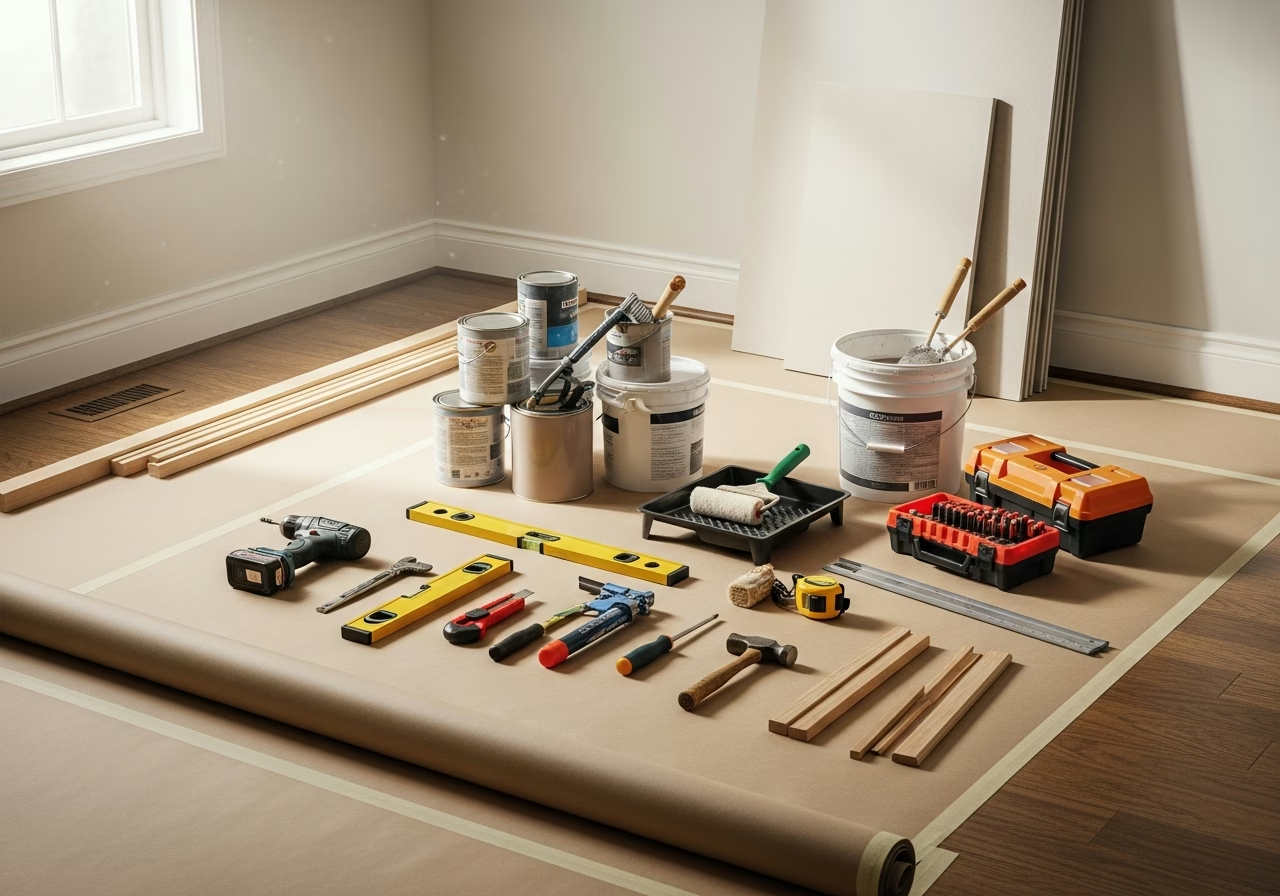
- 1. The basement floor slab is broken out and removed.
- 2. A structural engineer's drawing divides the perimeter foundation into numbered sections — typically 3 to 4 feet wide, never adjacent — called pins.
- 3. Workers excavate one pin at a time below the existing footing to the new design depth.
- 4. The excavation is shored as needed, formed, and filled with high-strength concrete that bonds to the underside of the existing footing.
- 5. After 48 to 72 hours of cure time, the next non-adjacent pin is excavated.
- 6. The sequence continues until the entire perimeter has been extended.
- 7. New weeping tile, dampproofing or waterproof membrane, and drainage stone are installed against the new exterior face.
- 8. The new lower slab is poured with a vapour barrier and rebar where the engineer specifies.
The work is structural, methodical, and unforgiving of shortcuts. Cutting more than one adjacent pin at a time, skipping engineer-required dowels, or pouring before adequate cure can cause settlement or, in extreme cases, partial collapse of the wall above. This is why every underpinning project in Toronto requires PEng-stamped structural drawings and why we always coordinate with a licensed structural engineering firm before any tools touch the slab.
Bench Footing — The Other Option
Bench footing is not underpinning. It is an interior excavation method that lowers the basement floor in the centre of the room while leaving the existing footing in place. A reinforced concrete bench is poured against the inside face of the existing foundation wall, and the floor steps down from the bench to the new lower slab.
Geometry: the bench is typically 4 to 6 feet wide measured from the foundation wall inward, sloped or stepped, and the centre of the basement is dropped by the desired amount — usually 18 to 30 inches. Headroom outcome: centre-of-room headroom matches a full underpin. Perimeter headroom is the original height. For a basement with 6'4" original height being lowered 24 inches, you end up with 8'4" in the centre and 6'4" within the bench zone — the bench effectively becomes a built-in seat or storage shelf around the perimeter. Cost outcome: $30,000 to $60,000 for a typical Toronto detached or semi-detached, versus $80,000 to $150,000 for full underpinning. Bench footing eliminates the structural pin sequence and the engineering complexity drops accordingly. When bench footing is the right choice: the homeowner accepts the bench geometry, the basement layout will hide the bench behind built-ins or banquettes, the budget gap matters, the soil report flags water table or party-wall concerns that make underpinning risky, or the basement use case (recreation, storage, occasional guest) does not need full perimeter headroom. When underpinning is required: the basement will be a legal apartment requiring inspector-approved ceiling height across the entire unit, a multiplex conversion requires usable perimeter, a wine cellar with full-height racking is planned, a sauna or cold plunge needs full-depth installation, or the resale narrative depends on conventional finished-basement geometry.We cover this trade-off in detail in Underpinning vs Bench Footing Toronto.
Combination Underpin Plus Bench
A growing number of Toronto projects use a hybrid: underpin the perimeter on one or two sides (typically the side where a legal apartment unit will be located, or the side facing the neighbour where bench geometry would create awkward party-wall steps) and bench-foot the remaining sides. This approach typically lands between $120,000 and $180,000 all-in, gives the legal headroom where it counts, and saves the cost of fully underpinning sides that will become utility or storage.
A common Toronto pattern: front-facing underpin (street side, where the legal apartment kitchen and living room will be), bench-foot the back and one side. Mechanical room ends up under the bench, which is fine.
OBC 9.10 — The Rules That Govern Headroom
Ontario Building Code Section 9.10 sets the minimum headroom for a habitable basement. The numbers a Toronto homeowner must hit:
- Minimum ceiling height in habitable rooms (basement): 1.95 metres (6 feet 5 inches) measured from finished floor to finished ceiling.
- Minimum head clearance under beams and ducts: 1.85 metres (6 feet 1 inch) at the lowest point under any required clearance path.
- For a legal secondary suite (basement apartment), the same minimums apply across all habitable spaces in the unit. Toronto Building inspectors will measure to confirm.
Two things follow from these numbers. First, you do not always need to dig as deep as people assume — many Toronto basements with 6'8" original height need only 18 to 22 inches of additional depth to hit code with finished floor and ceiling allowances. Second, ducts, beams, and waste lines that drop below the joist plane can ruin the project even after you dig deep enough — careful mechanical planning is part of the structural engineer's coordinator role.
We walk through the headroom math in Basement Lowering Toronto Ceiling Height.
Toronto Soil Geology — Why Costs Vary by Neighbourhood
Toronto sits on a complex geological foundation. From the homeowner's perspective, the soil under your house determines how aggressive the shoring needs to be, whether the engineer specifies wider pins, whether the water table is a complication, and whether unexpected fill or buried fuel tanks are likely. Three rough zones:
Heavy clay east of the Don Valley (Beaches, Riverdale, Leslieville, parts of East York and Cabbagetown). Glacial till and Halton Till predominate. Clay holds water, and underpinning in clay has to deal with hydrostatic pressure against the new exterior face. Weeping tile and proper drainage stone are non-negotiable. The clay itself is generally good for shoring — pins hold their shape — but excavation is heavy and slow. Sand, silt, and varved deposits in the west (High Park, Junction, parts of Etobicoke, Mimico, New Toronto). These soils are less cohesive, and pins can collapse during excavation if shoring is undersized. The engineer will often specify narrower pins (2.5 to 3 feet versus the 3 to 4 feet typical in clay) and more aggressive bracing. Sandy soil drains well, which simplifies the water management story but increases the structural shoring story. Bedrock close to surface near the North York escarpment, Forest Hill, parts of Lawrence Park and Hoggs Hollow. When you hit shale or limestone bedrock at the new design depth, pricing changes — concrete saws or rock breakers extend the schedule and add cost. The upside is that bedrock is the most stable founding stratum possible, and once the footing rests on it, settlement is essentially zero.A site-specific geotechnical report (soil report) is sometimes required by the engineer or the City. Reports run $1,800 to $3,500 depending on the number of boreholes. We cover the soil-by-neighbourhood story in Underpinning Soil Types Toronto Clay Sand.
The Permit Pathway — Toronto Building Permit Process
Underpinning and basement lowering are structural work and require a Building Permit (BP) from the City of Toronto. The pathway in 2026:
- 1. Pre-design site review. Existing drawings are reviewed if available; otherwise the engineer or a draftsperson produces an as-built. Toronto Building's online property records sometimes have original construction drawings for newer builds.
- 2. Structural engineer engagement. A licensed PEng (Professional Engineer registered with PEO — Professional Engineers Ontario) designs the underpinning sequence, specifies pin width, depth, concrete strength, rebar where applicable, and produces stamped drawings.
- 3. Permit application submission. The application includes the structural drawings, the architectural drawings showing the new floor layout, mechanical and plumbing rough-in drawings if relocations are involved, the property survey, and the homeowner authorization.
- 4. Plan review by Toronto Building. Standard timeline is 6 to 10 weeks for an interior structural permit in 2026, depending on the district office workload and the completeness of the submission.
- 5. Permit issuance. The homeowner pays the permit fee — typically $2,500 to $5,500 for residential underpinning — and the permit card is posted on site.
- 6. Construction. Work proceeds with required inspections at footing, pre-pour, post-pour, and final stages.
- 7. Final inspection and occupancy clearance. Inspector signs off, and the basement can be finished and occupied.
If the underpinning is part of a multiplex conversion or secondary suite legalization that DOES involve setback or unit-count changes, a separate Zoning approval or CoA minor variance may apply. See Underpinning for Legal Basement Apartment Toronto.
We cover the full permit timeline in Underpinning Permit Process Toronto Timeline.
Need professional home renovation?
Call RenoHouse at 289-212-2345 or get a free estimate today.
Get Free Estimate →The Structural Engineer — PEng Required
There is no path to legal underpinning in Toronto without a PEng-stamped structural drawing. The Ontario Building Code requires a Professional Engineer to design, seal, and take responsibility for any structural foundation work of this scope. We coordinate with several Toronto-area engineering firms depending on project type, location, and scheduling:- BGE Engineering — strong residential foundation experience, fast turnarounds on detached and semi work in the 416 area.
- Glogowski Architectural — full architectural plus structural, often used when the project bundles underpinning with second-storey addition or extensive interior reconfiguration.
- Cunningham Engineering — heritage and older masonry foundation expertise, good fit for Cabbagetown, Riverdale, the Annex.
- Verner Polak Engineering — multi-unit and multiplex conversion experience, frequently retained when the underpinning is part of a Bill 23 multiplex project.
We expand on the engineer scope and selection in Underpinning Structural Engineer Toronto PEng.
What an Underpinning Project Includes — Realistic 2026 Scope
A complete underpinning project in Toronto for 2026 includes the following line items at the contract level:
- Structural engineer design and stamped drawings.
- Geotechnical / soil report when required.
- Building Permit fees and submission coordination.
- Existing slab demolition and removal.
- Excavation and disposal of soil — typically 60 to 120 tandem-truck loads for a full perimeter underpin on a 25-foot-wide Toronto lot.
- Shoring and temporary support as engineer-specified.
- Pin-by-pin underpinning concrete work.
- New weeping tile (4-inch perforated PVC with sock filter).
- Drainage stone bed and sump connection.
- Exterior dampproofing or waterproof membrane on new wall sections.
- Interior waterproofing where the engineer specifies (often a dimple membrane).
- Plumbing rough-in: relocated soil stack, new floor drain, kitchen and bathroom rough-ins for legal apartment if applicable.
- Electrical rough-in: new panel sub-feed, basement circuits, EMT or romex per code.
- HVAC rerouting where ductwork drops would violate headroom.
- New basement slab with vapour barrier and 6x6 wire mesh or fibre-reinforced concrete.
- Insulation and framing for finished walls.
- Drywall, flooring, trim, paint — finished basement scope (often quoted separately).
- Final inspection coordination.
Our typical Toronto underpinning project runs 3.5 to 5 months on site from permit-in-hand to final inspection, with another 4 to 8 weeks for finished-basement carpentry and trades.
Cost Tiers for 2026
The following are realistic 2026 Toronto numbers for the structural and rough-in scope (excluding finished basement scope):
Tier 1 — Bench Footing Only: $30,000 to $60,000
Centre slab lowered 18 to 24 inches, perimeter bench, new weeping tile and slab, basic plumbing rough-in, waterproofing where the bench meets the existing wall. Permit and engineer fees included.
Best for: detached or semi-detached homes in good soil, recreational basement use, budget-constrained projects, homes where the bench geometry is acceptable.
Tier 2 — Partial Underpin Plus Bench: $70,000 to $120,000
One or two sides fully underpinned (typically front and one side), other sides bench-footed. Full mechanical rough-in for legal apartment kitchen and bathroom. Engineer-specified shoring throughout.
Best for: legal basement apartment projects, multiplex conversions, homes where full underpinning is overkill but bench-only is insufficient.
Tier 3 — Full Perimeter Underpin: $80,000 to $150,000
Complete perimeter foundation extension to new design depth. Full mechanical rough-in. Premium waterproofing assembly. Suitable for sauna, cold plunge, wine cellar, or full legal apartment scope.
Best for: legal apartments where bench geometry is unacceptable, wellness installations, wine cellars, multiplex conversions with multiple basement units, premium resale positioning.
Tier 4 — Underpin Plus Combination Plus Multiplex Scope: $150,000 to $240,000+
Full perimeter underpin combined with structural openings for new windows, egress, separate exterior basement entrance, full multi-unit mechanical scope, and structural alterations to the main floor for unit separation.
Best for: full multiplex conversions, four-plex or six-plex projects under Bill 23 framework.
We break the cost tiers down with line-item examples in Basement Underpinning Cost Toronto Comparison.
The Asbestos Question
Toronto homes built before 1986 frequently contain asbestos in basement materials — pipe-wrap insulation on the boiler and supply lines, vermiculite (Zonolite) loose-fill in wall cavities or attic that has fallen, plaster and drywall mud, vinyl floor tile and the underlying mastic, and the boiler itself. Underpinning involves demolition of the slab and often the lower 12 to 24 inches of interior wall finishes — meaning materials get disturbed.
If vermiculite is encountered when the slab is broken out — uncommon but it does happen, especially when fill from older renovations was used — work stops, the vermiculite is sampled, and abatement is coordinated before the crew returns.
Insurance and Neighbour Considerations
Underpinning on a semi-detached or row house has implications for the neighbour's foundation. The party wall sits on a shared footing, and lowering one side of that footing requires engineering attention to the neighbour's side. In most Toronto cases:
- The engineer's drawings address the neighbour's footing through stepped underpin (we do not lower below the neighbour's footing in a single move) or by underpinning past the party wall.
- A party wall agreement is rarely formal in Ontario residential work but written notification to the neighbour is good practice and protects against later disputes.
- The homeowner's home insurance should be notified before work begins. Most policies require written disclosure for foundation work. The contractor's general liability and excess liability are the primary coverage during construction.
- We carry general liability appropriate to the scope and require all engineering firms and abatement subs to provide certificates of insurance before work begins.
Common Mistakes Toronto Homeowners Make
The most expensive mistakes in basement underpinning are not technical — they are scoping and sequencing errors that get baked in early. We expand on these in Basement Underpinning Mistakes Toronto, but the headlines:
- Skipping the soil report to save $2,500, then discovering high water table at the new design depth and needing emergency drainage redesign.
- Underpinning to an arbitrary depth like "as deep as possible" rather than designing to the actual headroom needed once finished floor and ceiling assemblies are accounted for.
- Not planning the mechanical rough-in at the structural stage, then having to chase ducts and waste lines through fresh concrete after the fact.
- Forgetting egress windows for a legal apartment, then needing to break new exterior walls after the underpin is complete.
- Underestimating finished basement scope — the structural underpin is half the budget. Drywall, flooring, kitchen, bathroom, finishings can match or exceed the underpinning cost.
- Choosing the lowest contractor bid without verifying engineering coordination, abatement experience, and insurance limits.
How Underpinning Connects to the Rest of the Project
Underpinning is rarely the end goal. It is the enabling work for the basement use case the homeowner actually wants. Common Toronto pairings:
- Legal basement apartment — see Underpinning for Legal Basement Apartment Toronto.
- Multiplex conversion under Bill 23 — see Underpinning During Multiplex Conversion Toronto and our Multiplex Conversion Toronto: 2026 Complete Guide.
- Basement sauna — full-height ceiling and mechanical clearances. See Basement Sauna Installation Toronto.
- Cold plunge installation — depth and drainage. See Cold Plunge Installation Toronto.
- Wine cellar — full-height racking, climate envelope. See Wine Cellar Installation Toronto.
Each of these projects has its own headroom and clearance requirements that drive how deep the underpinning needs to go.
ROI — What Underpinning Adds to a Toronto Home
A finished, legal basement adds real square footage to the appraised footprint. In 2026 Toronto:
- Below-grade finished space appraises at roughly 40 to 60 percent of above-grade per-square-foot value for owner-occupied use.
- A legal basement apartment with separate entrance, kitchen, bathroom, and Toronto licensed second suite registration adds $1,800 to $2,800 per month in rental income and increases appraised value by $180,000 to $320,000 depending on neighbourhood.
- A wine cellar or wellness basement (sauna plus cold plunge plus shower) is harder to monetize at resale but signals premium positioning in Forest Hill, Lawrence Park, Rosedale, Hoggs Hollow.
We cover the resale and rental ROI math in Underpinning ROI Toronto Finished Basement Value.
How RenoHouse Coordinates the Project
We act as the general contractor on Toronto basement underpinning projects. Our scope:
- 1. Initial site review and feasibility check.
- 2. Engineer recommendation and engagement coordination (Glogowski, Cunningham, BGE, Verner Polak depending on project fit).
- 3. Soil report coordination when required.
- 4. Building Permit submission and follow-through.
- 5. Asbestos DSS coordination and abatement scheduling if needed.
- 6. Demolition, excavation, and underpinning crew management.
- 7. Mechanical rough-in coordination — plumbing, electrical, HVAC.
- 8. New slab and waterproofing assembly.
- 9. Inspections coordination.
- 10. Finished basement carpentry, drywall, flooring, kitchen, bathroom, and trim.
- 11. Final occupancy clearance and apartment registration support if applicable.
The engineer is the structural authority. We are the day-to-day project owner who keeps trades, schedule, permits, and budget on track.
Next Steps
If you are evaluating basement underpinning for your Toronto home, the honest sequence we recommend:
- 1. Decide what the basement will be — recreation, legal apartment, multiplex unit, wellness suite, wine cellar, or combination.
- 2. Measure existing ceiling height at the lowest point. Subtract the OBC minimum (1.95 m) plus 4 inches of finished floor assembly plus 2 to 4 inches of finished ceiling assembly. The result is the depth you need to add.
- 3. Discuss the project with a contractor who has done at least 10 underpinning projects in Toronto in the last 24 months.
- 4. Get the engineer engaged early — the design phase is where the project is won or lost.
- 5. Build the budget honestly with a 15 to 20 percent contingency.
- 6. Submit the permit application and start the soil report in parallel.
When you are ready, Contact RenoHouse for a site review and project budget. We coordinate the engineering, abatement, structural, and finishing trades end to end so the project is delivered as designed and on the timeline you sign for.
Related Guides in This Series
Continue reading our complete coverage of this niche:
- Bench Footing Cost Toronto: Detached vs Semi-Detached 2026
- Underpinning Load Bearing Walls Toronto: Sequence & Engineering
- Underpinning vs Excavation New Foundation Toronto
Sources & References
Authoritative sources cited in this guide:
- Ontario Building Code — OBC official text
- Toronto Building Permits — City permit portal
- Tarion New Home Warranty — Ontario new-build warranty regulator
- HCRA — Home Construction Regulatory Authority — Ontario builder/vendor licensing
Continue Reading
- Basement Underpinning Cost Toronto: 2026 Comparison
- Underpinning vs Bench Footing Toronto: Method Comparison 2026
- Basement Lowering Toronto: Ceiling Height & OBC 9.10 Rules
Frequently Asked Questions
How much does basement underpinning cost in Toronto?
In Toronto, basement underpinning ranges from $80,000 for a small perimeter underpin to $150,000 or more for deeper work with waterproofing. Costs vary by excavation depth, soil conditions, structural complexity, and whether you're combining it with bench footing or concrete work. Request quotes from licensed structural engineers and contractors who understand Toronto's clay soil and OBC requirements.
What does basement underpinning actually involve?
Underpinning involves systematically lowering your foundation by digging beneath existing footings and installing new concrete supports. This raises ceiling height in your basement while strengthening the structure. A structural engineer designs the excavation sequence, and licensed contractors work in sections to prevent settlement. Waterproofing is applied during the excavation work to prevent water damage during and after the project.
Do I need a permit for underpinning in Ontario?
Yes. In Ontario, basement underpinning requires a building permit from your municipality. The OBC (Ontario Building Code) sets depth and structural requirements. You'll need engineering drawings stamped by a Professional Engineer (PE), and an ESA sign-off if electrical work is involved. Permit processing in Toronto takes 2-4 weeks after application. Contractor must be licensed and carry liability insurance.
How long does a basement underpinning project take?
Basement underpinning projects take 4–8 weeks on-site, depending on foundation size, soil conditions, and permit processing. Small semidetached homes in Toronto finish faster than larger multi-unit properties. Additional time is needed for waterproofing, concrete curing, and any structural repairs. Budget extra time if unforeseen conditions (utilities, old fill) are discovered during excavation.