RenoHouse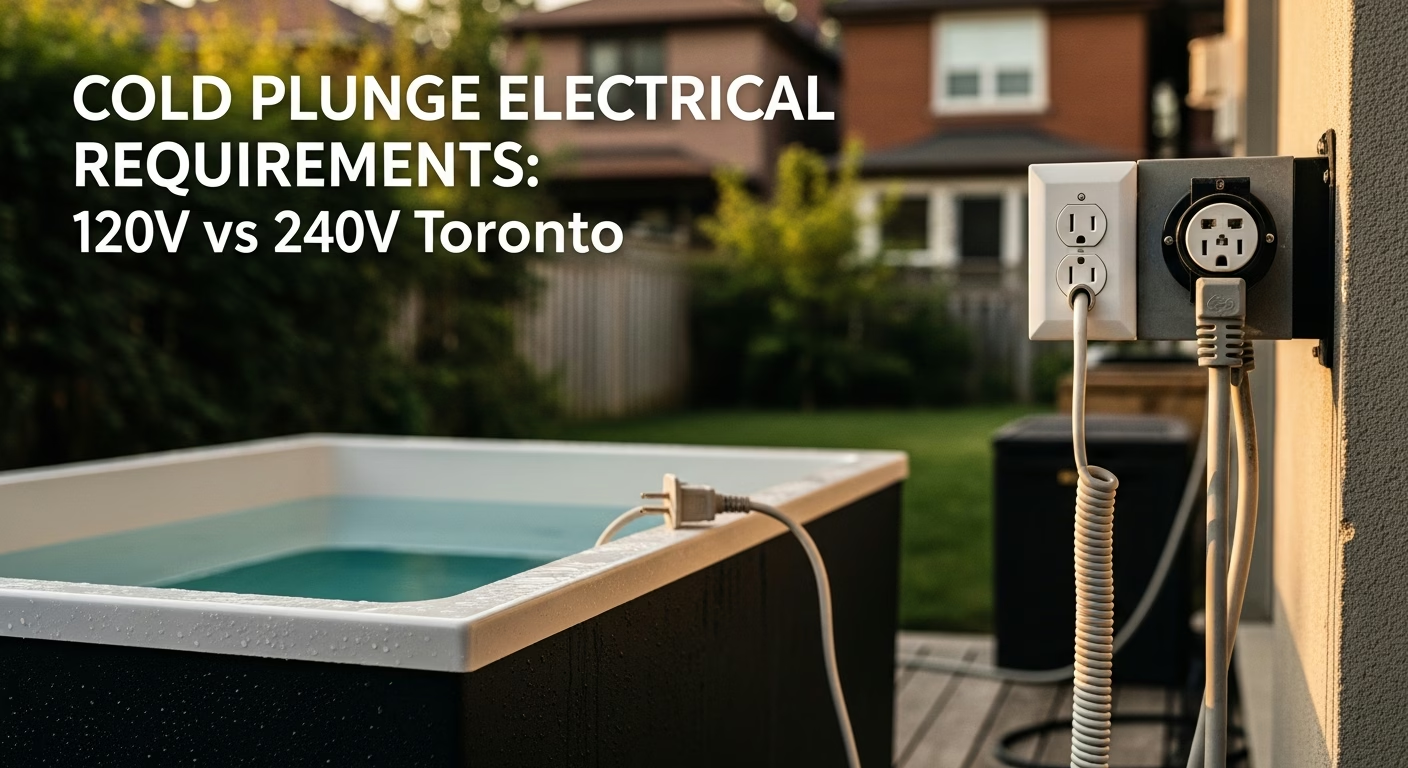

# Cold Plunge Electrical Requirements: 120V vs 240V Setup Toronto
Quick answer. Most Toronto cold plunge installation problems we see are electrical. The chiller is the only continuously-running heavy-load appliance in the build, and getting its circuit right is the difference between a 5-year and a 15-year unit life.Most Toronto cold plunge installation problems we see are electrical. The chiller is the only continuously-running heavy-load appliance in the build, and getting its circuit right is the difference between a 5-year and a 15-year unit life. This guide covers every electrical decision you'll face on a residential install in the GTA: voltage choice, circuit sizing, panel capacity, ESA permitting, GFCI protection, and real labor costs.
For the broader install picture, see our pillar Cold Plunge Installation Toronto: Complete 2026 Guide.
120V vs 240V: The Decision
Almost every prefab residential cold plunge offers one or both of these connections. The decision affects chiller capacity, recovery time, and install cost.
120V (15A or 20A)
- Standard household receptacle, no special wiring.
- Plug-and-play: many entry-level units (Plunge.com Standard, Ice Barrel, BlueCube Pro) are 120V.
- Chiller capacity typically 1/3 HP to 1/2 HP.
- Recovery time after a session: 90 minutes to 4 hours, depending on ambient.
- Ambient air over 28 C will overload some 120V chillers.
- Best for: occasional users (1–3 sessions/week), single user, indoor basement at stable temperature.
240V (30A or 50A)
- Dedicated 240V circuit, typically 30A or 50A.
- Required for premium units (Plunge.com Pro, Renu Therapy, Cold Stoic Pro, Morozko).
- Chiller capacity typically 3/4 HP to 1.5 HP.
- Recovery time after a session: 30–90 minutes.
- Holds setpoint reliably even with 32+ C ambient.
- Best for: daily users, couples, contrast-therapy households, outdoor units.
If you're running contrast therapy 3+ times/week or anyone in the household uses the plunge alongside a sauna, go 240V. The recovery time is the difference between "always ready" and "wait, it's not cold yet."
Toronto-Specific Code & Permitting
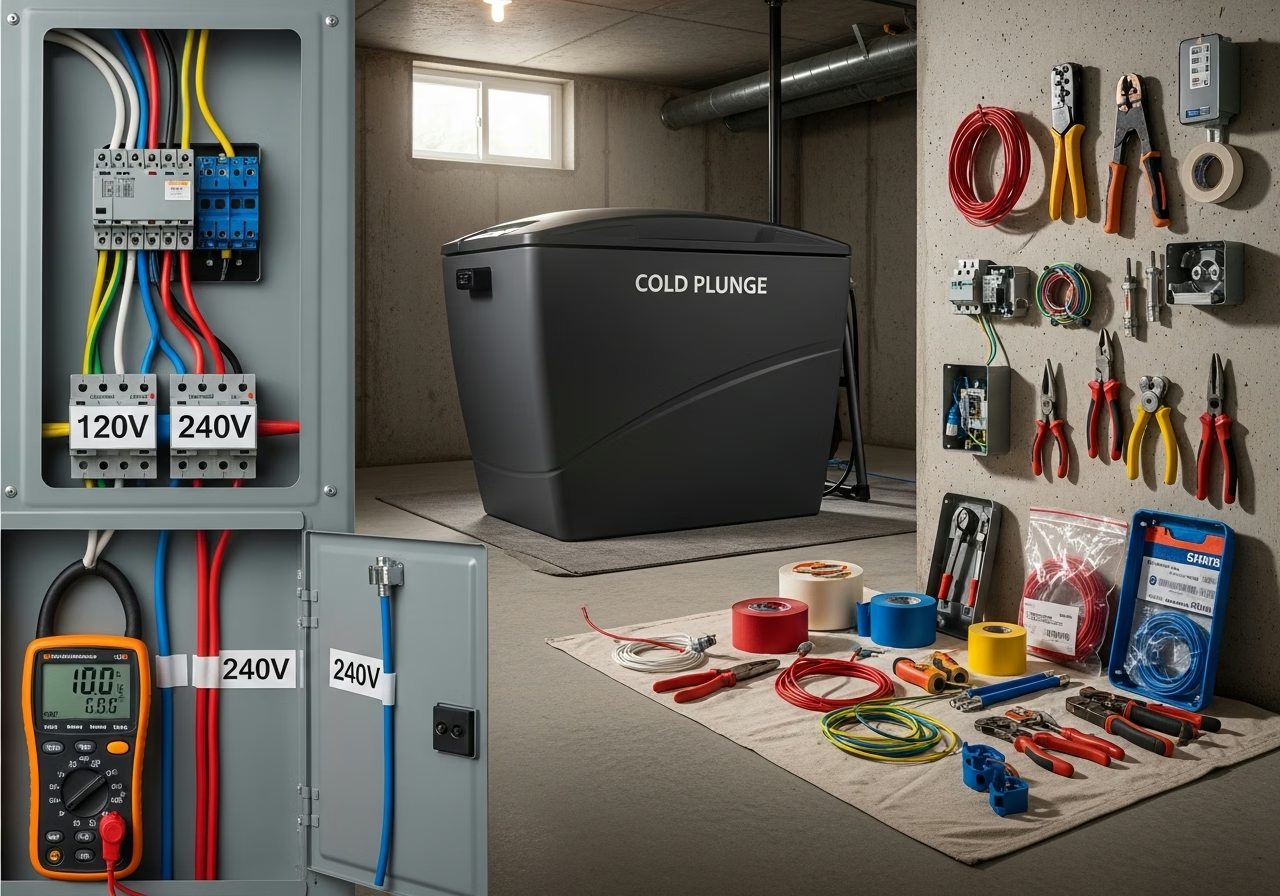
ESA permit is mandatory
Any new 240V circuit, any panel modification, any new dedicated 120V circuit for hard-wired or fixed equipment requires an Electrical Safety Authority (ESA) permit. The permit typically costs $88–$280 depending on the scope. The licensed electrical contractor (LEC) doing the work files the permit and arranges inspection.
A receptacle for a plug-in 120V plunge in an existing rated circuit doesn't require a new permit, but a *dedicated* 120V circuit for a plunge does.
GFCI protection — non-negotiable
Per the Ontario Electrical Safety Code (28th edition):
- All receptacles within 1.5 m of a tub, basin, or wet zone must be GFCI-protected.
- The chiller circuit must be GFCI-protected (either at the panel via a GFCI breaker or via a GFCI receptacle/disconnect at the load).
- An emergency disconnect must be visible from the plunge, within 6 m.
Most Toronto installs we do put a GFCI breaker in the panel and a fused disconnect within line-of-sight of the plunge. Cleaner inspection, easier servicing.
Bonding
Outdoor or basement plunges require equipotential bonding per CEC 26-700 series — the metal frame, plumbing, and any reinforcing steel within 1.5 m must be bonded to a common ground. This is the same code logic as a swimming pool but on a smaller scale. Indoor prefab units typically have integrated bonding lugs; outdoor builds need a #6 AWG bonding conductor.
Panel capacity
A new 240V/30A circuit pulls up to 7.2 kW continuous when the chiller is at full load. In a typical Toronto 100A panel with electric stove, dryer, central A/C, and existing loads, this often pushes calculated load over 80% capacity — at which point ESA will require:
- A panel upgrade to 200A, or
- Documented load calculation showing room, or
- Load management (less common for cold plunge specifically)
We see panel upgrades on roughly 40% of cold plunge installs in older Toronto homes (pre-1985 typically). Budget $4,500–$7,500 for a 100A→200A upgrade with new mast if needed. Detail in our internal Toronto panel guide and the parallel article on EV chargers.
Real Toronto Install Costs (2026)
Pricing from current GTA jobs:
120V plug-in install
If a suitable dedicated 20A 120V GFCI receptacle exists within 2 m of the plunge location:
Need professional home renovation?
Call RenoHouse at 289-212-2345 or get a free estimate today.
Get Free Estimate →- $0 electrical work needed (use existing receptacle)
- Otherwise: $450–$900 for a new dedicated 20A circuit (basement run, GFCI receptacle, ESA permit/inspection)
240V/30A install
Typical scenarios:
- $900–$1,600 if panel has capacity, run is under 8 m of accessible joist space, no drywall repair needed
- $1,400–$2,200 for typical basement run with some drywall repair, GFCI breaker, fused disconnect, ESA permit
- $2,000–$3,200 for outdoor run with conduit, weatherproof disconnect, longer wire pull, bonding
240V/50A install (premium chillers, larger units)
- $1,200–$2,500 indoor with capacity
- $2,500–$4,000 outdoor, with conduit, disconnect, bonding
Add-on: panel upgrade
If the panel can't support the new circuit:
- $4,500–$7,500 100A→200A panel upgrade with new breakers, ESA permit, Toronto Hydro coordination
- $6,500–$11,000 100A→200A with new service mast (older homes with original 1960s service)
Add-on: subpanel
Sometimes a basement subpanel is the cleaner solution if the main panel is in a far corner of the house:
- $1,500–$3,000 60A or 100A basement subpanel install
Wire Size, Breaker, and Run Distance
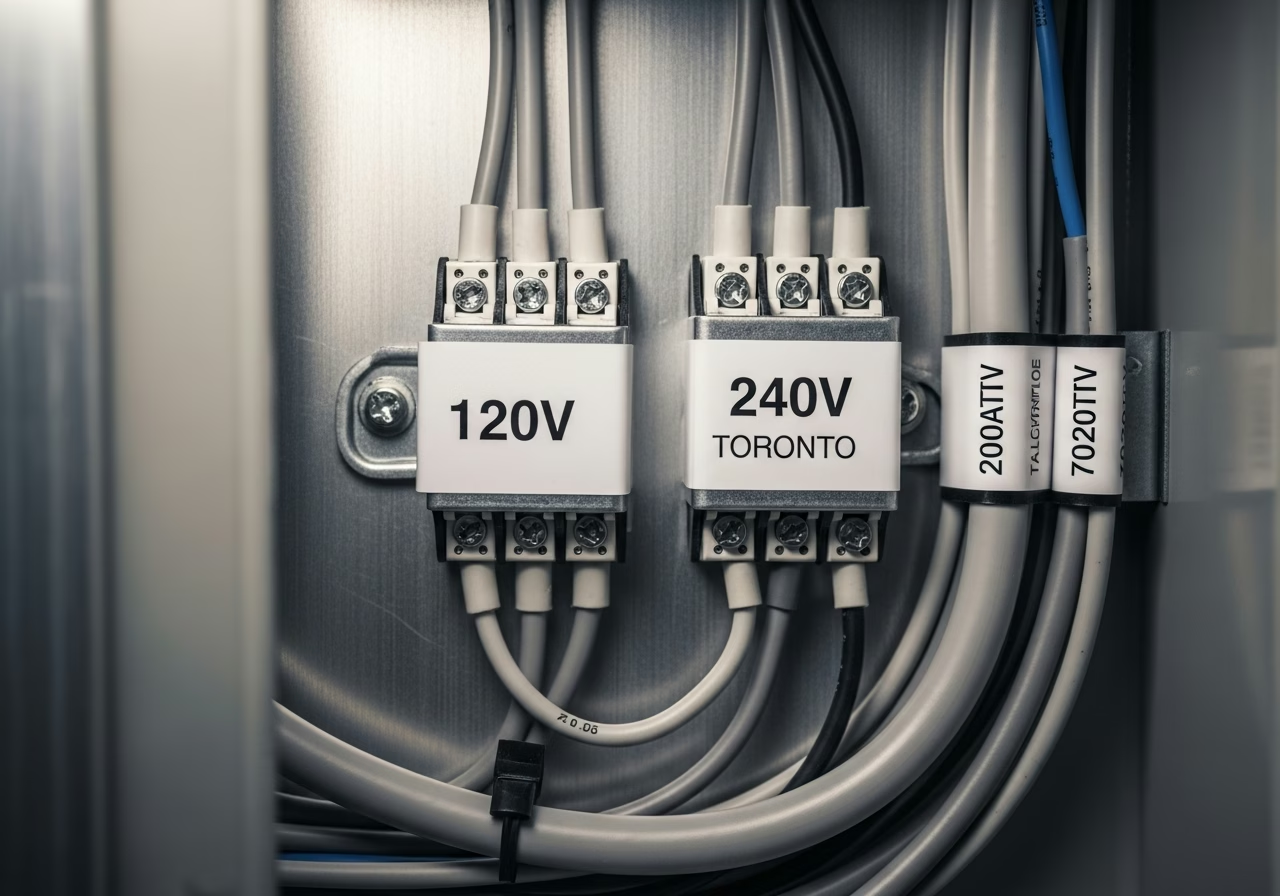
Standard residential cold plunge electrical specs:
| Application | Voltage | Circuit | Wire (Cu) | Max Run |
|---|---|---|---|---|
| Plug-in chiller | 120V | 20A | #12 AWG | 30 m |
| Mid chiller | 240V | 30A | #10 AWG | 30 m |
| Premium chiller | 240V | 50A | #6 AWG | 30 m |
| Hot/cold contrast suite (sauna + plunge) | 240V | (separate circuits per device) | per device | per device |
For runs over 30 m, upsize one wire gauge to mitigate voltage drop. Toronto basement runs are usually 8–18 m, so this is rarely a factor.
ESA Permit Process (LEC Files It)
Your licensed electrical contractor handles all of this — but you should understand the steps so the timeline is clear:
- 1. Quote / scope — LEC reviews the plunge spec, panel capacity, and proposed circuit run.
- 2. ESA permit filed online before work begins (24–48 hours typical).
- 3. Rough-in inspection if drywall is open. Skipped if all work is surface-mount or panel-only.
- 4. Final inspection after work complete — ESA inspector tests GFCI, verifies bonding, checks panel labels, confirms breaker sizing.
- 5. Certificate of inspection — keep this with home records. Insurance and resale want to see it.
Total ESA timeline: 1–3 weeks from quote to final certificate. Most of the wait is between inspector booking and onsite visit.
Skipping ESA is a common DIY temptation that causes serious problems: voids manufacturer warranty, voids home insurance for any plunge-related claim, flags during home inspection at resale. We've redone three plunge electrical installs in the last year that were unpermitted and failed ESA on retroactive inspection.
Common Electrical Mistakes
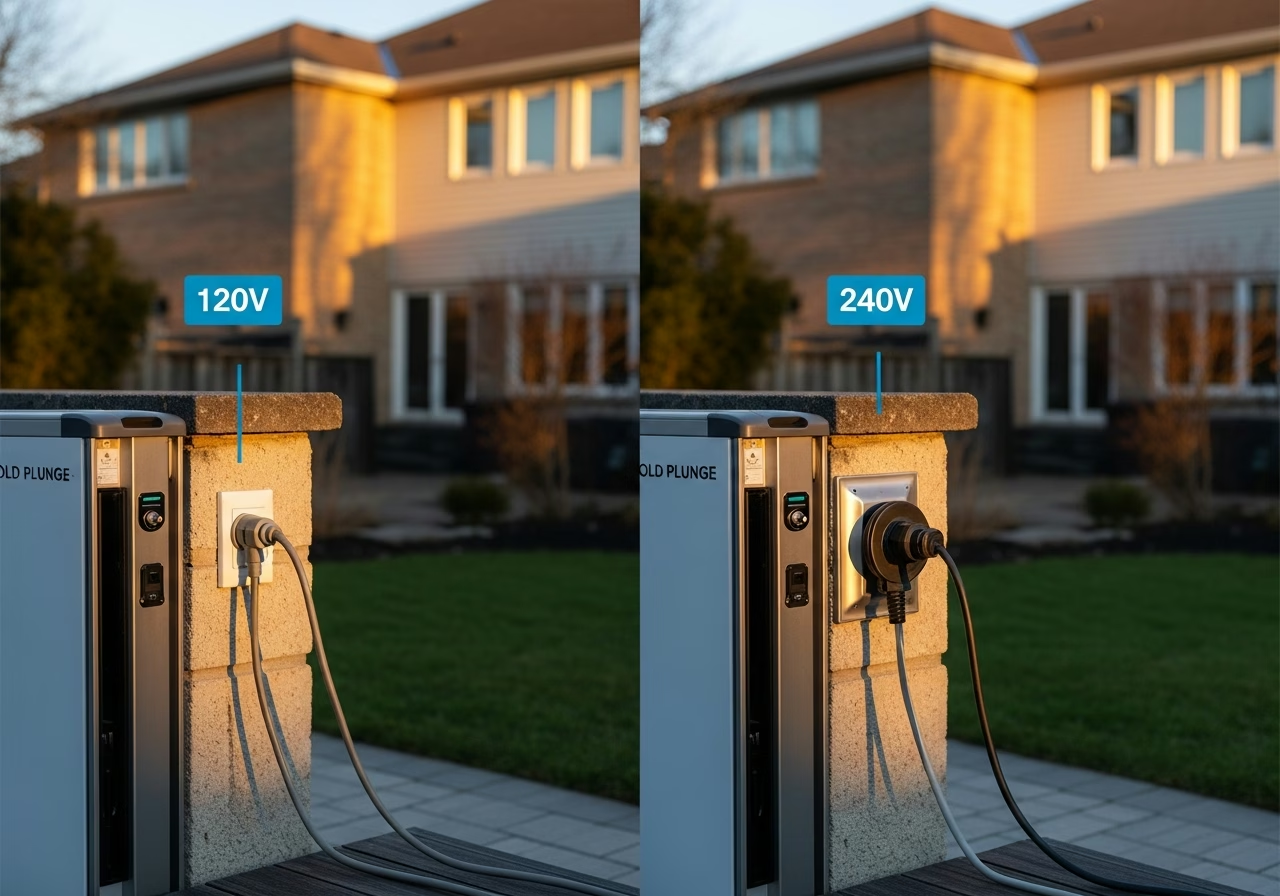
What we see most often on Toronto installs gone wrong:
- 1. Sharing a circuit with another load. The chiller is continuous duty — it must be on a dedicated circuit. Sharing with a sauna heater is the most common mistake; both are continuous and combined draw trips breakers.
- 2. No GFCI protection. Inspector failure, code violation, real safety issue.
- 3. Wrong breaker size. A 240V/30A chiller does not run on a 240V/20A breaker — the inrush current at compressor start trips it. Always size per manufacturer spec.
- 4. Voltage drop on long runs. A #12 AWG wire on a 240V/30A circuit at 25 m is borderline. Use #10 minimum for any 30A run.
- 5. No bonding on outdoor units. Code violation; failure point in any wet-zone shock incident.
- 6. Skipping the ESA permit. Insurance and inspection issues at resale.
- 7. Mounting the disconnect inside the wet zone. Disconnect must be visible from but outside the plunge zone.
We cover the broader install mistakes including non-electrical ones in Cold Plunge Installation Mistakes to Avoid.
When You Need a Bigger Plunge Setup
If you're building a contrast suite (sauna + plunge), the electrical scope grows:
- Sauna heater: typically 240V/30A or 240V/40A, dedicated circuit
- Cold plunge chiller: typically 240V/30A, dedicated circuit
- Lighting + ventilation: 120V/15A
- Audio: 120V/15A
Combined load is 14–18 kW intermittent, 5–8 kW continuous. Check the broader sauna-side picture in our Sauna + Cold Plunge: Designing a Wellness Suite in Toronto guide.
Choosing an Electrician
Three things to confirm with any LEC quoting your plunge:
- 1. They've installed at least one cold plunge or hot tub before. The bonding details and inrush sizing are spa-specific.
- 2. They file the ESA permit — not "the homeowner can file it later."
- 3. They give you the manufacturer's electrical spec sheet attached to the quote.
If they balk on any of those, get another quote.
FAQ
Can I run my cold plunge on a regular basement outlet?Only if the unit is plug-in 120V/15A or 20A and the receptacle is dedicated, GFCI-protected, and not shared with other significant loads. Most prefab plug-and-play units are designed for this.
Do I need an ESA permit if my electrician is licensed?Yes. Licensure of the contractor and ESA permit are two separate things. Both are required.
Is the chiller energy cost meaningful?For a 1/2 HP chiller running 24/7 in a Toronto basement: roughly $40–$60/month. For a 3/4–1 HP chiller: $50–$80/month. Detailed breakdown in Cold Plunge Maintenance Schedule: Water Care, Filtration, Cleaning.
Can I install a generator transfer switch for the plunge?Possible but uncommon. Plunges can ride a 24-hour outage on the cold mass alone. Generator backup is rarely worth it unless you live somewhere with frequent multi-day outages.
Will Toronto Hydro need to upgrade my service?Only if your service mast is original 1960s aluminum or your meter base is below 100A. If you have a 100A or 200A modern service, no Hydro coordination needed.
---
Need a clean ESA-permitted electrical install for your cold plunge — in coordination with the rest of the build? RenoHouse handles full design-build wellness suites with licensed electrical contractors on the team. Book a free consultation on our cold plunge installation service page.
Sources & References
Authoritative sources cited in this guide:
- Ontario Building Code — OBC official text
- Toronto Building Permits — City permit portal
- Tarion Warranty — Ontario warranty regulator
- CSA Group Standards — Canadian standards
Continue Reading
- Cold Plunge Installation Toronto: 2026 Cost & Setup Guide
- How to Install Cold Plunge in Basement: 7-Step Toronto Guide
- Home Gym Electrical Requirements: 240V for Treadmill, Tonal, Peloton