RenoHouse

# Garden Suite Foundation Options Toronto: Slab vs Crawlspace vs Basement
Quick answer. Toronto frost depth is 1.2 metres (47 inches), set by Ontario Building Code based on regional climate data. Every garden suite foundation must extend below this depth to avoid frost heave damage. The three options most builders quote in 2026 are slab-on-grade with thickened-edge frost wall ($40K-$55K), crawlspace ($45K-$70K), and full bas...Toronto frost depth is 1.2 metres (47 inches), set by Ontario Building Code based on regional climate data. Every garden suite foundation must extend below this depth to avoid frost heave damage. The three options most builders quote in 2026 are slab-on-grade with thickened-edge frost wall ($40K-$55K), crawlspace ($45K-$70K), and full basement ($60K-$100K). The right choice depends on lot grading, mechanical needs, soil conditions, and whether the homeowner values the extra GFA a basement provides.
This guide walks the engineering and cost trade-offs of each option, the soil-bearing tests that should run before design, and the drainage strategies that prevent water issues over the life of the suite. For pillar context, see Garden Suite Toronto 2026 Complete Guide. For full project cost stack, see Garden Suite Cost Toronto: Full 2026 Breakdown.
Why Frost Depth Matters
When water in soil freezes, it expands by ~9%. A foundation footing that sits above the frost depth experiences upward pressure (frost heave) that can crack concrete, lift the structure, and create cumulative damage over multiple winters. The Ontario Building Code requires foundations to extend below the frost line in all habitable structures.
Toronto's frost depth of 1.2 m is conservative. In practice, frost typically penetrates 0.7-1.0 m in undisturbed mature soils with snow cover; the 1.2 m specification adds a safety factor for years with low snow cover or saturated soil.
Three engineering responses to frost depth:
- 1. Slab-on-grade with frost wall. Thickened slab edge or perimeter wall extends 1.2 m below grade.
- 2. Crawlspace. Foundation walls extend 1.2 m below grade; floor structure sits ~0.6-1.5 m above grade.
- 3. Full basement. Foundation walls extend 2.4-2.8 m below grade for full habitable basement.
Option 1: Slab-on-Grade with Frost Wall
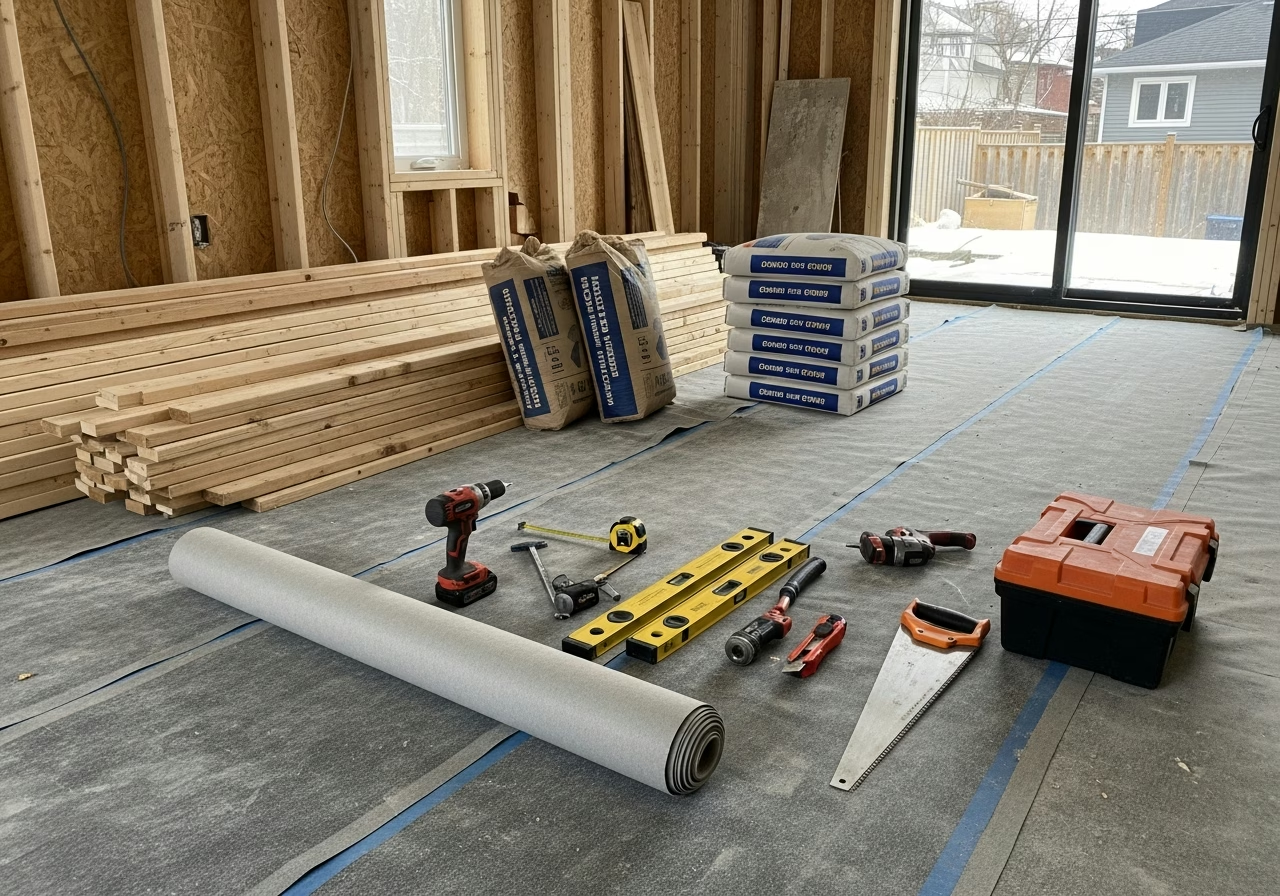
The most common foundation for Toronto garden suites in 2026. Insulated concrete slab poured directly on compacted gravel base, with a thickened-edge frost wall extending 1.2 m below grade around the perimeter.
Specifications
- Slab thickness: 4-6 inches.
- Reinforcement: Welded wire mesh or fibre-reinforced concrete.
- Insulation: 2-3 inches of rigid foam under slab plus 2 inches at slab edge.
- Frost wall depth: 1.2 m below grade minimum.
- Frost wall thickness: 6-8 inches.
- Vapour barrier: 6 mil polyethylene under slab.
- Drainage: Perimeter weeping tile to storm sewer or to landscape.
Cost
$40K to $55K typical. Drivers: excavation depth (typically 1.5 m to allow for footing form work below frost line), slab thickness, insulation grade, and finish (polished concrete, sealed concrete, or covered with finish flooring).
Pros
- Lowest cost of the three options.
- Fastest to build (5-7 days from excavation to backfill).
- No basement to flood, mold, or maintain.
- Simplifies mechanical layout (everything stays above slab).
- Compatible with most lot grading.
Cons
- No basement storage.
- Mechanical equipment must fit in mechanical closet at floor level.
- Plumbing reroutes after pour are expensive.
- Acoustic transmission to occupants is direct from any sub-slab disturbance.
- Slab-edge thermal bridging risk if not detailed correctly.
Best For
- Standard 1BR or 2BR garden suites without basement need.
- Lots with normal grading (not significantly above or below grade).
- Builds where speed and cost dominate.
- Owners who don't want basement maintenance.
Option 2: Crawlspace Foundation
Concrete foundation walls extending 1.2 m below grade, with floor structure raised 0.6-1.5 m above grade. The crawlspace itself is unconditioned but enclosed.
Specifications
- Foundation wall depth: 1.2 m below grade.
- Floor structure: Wood-frame floor on foundation walls, with insulation in joist bays.
- Crawlspace height: 1.0-1.5 m, accessible for inspections.
- Vapour barrier on floor: 6 mil polyethylene.
- Mechanical access: Hatches in floor or external grade-level door.
- Ventilation: Either ventilated (passive air exchange) or conditioned (sealed and tied to interior HVAC).
Cost
$45K to $70K typical. Drivers: foundation wall height, vapour control approach, accessibility (hatches, door), and whether the crawlspace is ventilated or conditioned.
Pros
- Easier mechanical access for plumbing reroutes, electrical changes, and HVAC service.
- Some additional storage potential in crawlspace.
- Floor structure can decouple acoustically from earth.
- Useful where lot grading requires the suite to sit above grade.
Cons
- Higher cost than slab.
- Risk of moisture issues in ventilated crawlspaces (Toronto climate is humid summer; ventilation can introduce moist air to cool surfaces).
- Conditioned crawlspaces require careful detailing.
- Crawlspace itself is not GFA-eligible.
Best For
- Lots with significant grade change where the suite sits above grade.
- Owners who value mechanical access for future upgrades.
- Builds with complex plumbing routing.
Option 3: Full Basement
Concrete foundation walls extending 2.4-2.8 m below grade, with full habitable basement floor.
Specifications
- Excavation depth: 2.7-3.0 m.
- Foundation wall thickness: 8-10 inches.
- Wall reinforcement: Engineered steel reinforcement.
- Slab thickness: 4 inches.
- Insulation: Exterior or interior insulation to R-20 minimum.
- Drainage: Perimeter weeping tile to storm sewer; sump pump if elevation insufficient.
- Waterproofing: Membrane on exterior of foundation wall.
- Vapour control: Continuous vapour barrier interior side.
Cost
$60K to $100K typical. Drivers: excavation volume, soil disposal, waterproofing, sump pump, drainage tie-in to municipal sewer, and whether the basement is finished or unfinished.
GFA Implications (post-849-2025)
Under By-law 849-2025, basements count toward total GFA only if they contain habitable space. A "habitable" basement has:
- Ceiling height meeting OBC minimum (typically 7 ft over 50% of floor area).
- Egress windows in any sleeping rooms.
- Heating and ventilation matching upper-floor standards.
A full habitable basement adds ~600-800 sqft of GFA on a typical 700-800 sqft ground floor. Combined with the cantilevered second storey allowance, the total GFA can approach or exceed the 120 m² (1,290 sqft) cap.
If the basement is mechanical-and-storage only (not habitable), it does NOT count toward GFA but the homeowner gets the storage value.
Pros
- Adds storage and mechanical room.
- Adds GFA if habitable.
- Can house a tenant suite (additional rentable bedroom or recreation space) within the existing 120 m² cap by reducing upper-floor GFA.
- Excellent acoustic separation from grade-level activity.
Cons
- Highest cost.
- Longest build time (10-14 days for foundation versus 5-7 for slab).
- Risk of water intrusion over time.
- Excavation requires significant disturbance to lot landscaping and tree protection zones.
- Soil disposal can be expensive ($5K-$15K alone).
Best For
- Owners who specifically need the GFA expansion or want a multi-level rental.
- Multigenerational use cases where extra space is part of the program.
- Lots without significant tree protection constraints.
- Builds where the additional $25K-$45K versus slab is justified by usable space.
Soil Bearing Tests
Before any foundation design is finalized, soil bearing capacity should be tested. Toronto soils vary considerably:
Need professional renovation?
Call RenoHouse at 289-212-2345 or get a free estimate today.
Get Free Estimate →- Dense glacial till (most of central and west Toronto): bearing capacity 200-300 kPa. No special design needed.
- Lacustrine clay (parts of Leslieville, east Toronto): bearing capacity 100-150 kPa. May require larger footings or a raft foundation.
- Fill (older parts of the city, areas near former ravines or industrial use): bearing capacity unpredictable. Geotechnical investigation required.
- Sand and gravel (ravine areas, near Don River): excellent bearing but drainage considerations.
A geotechnical investigation costs $2K-$5K and includes:
- 2-3 boreholes to ~3 m depth.
- Soil samples and lab testing for bearing capacity, moisture content, and grain size.
- Recommendations for foundation type, depth, and any soil improvement needed.
For most established Toronto neighbourhoods on glacial till, a geotechnical investigation is precautionary rather than essential. For lots in former ravines, fill areas, or industrial zones, it's essential.
Drainage Strategy
Water management is the difference between a foundation that lasts 50+ years and one that fails in 5-10. Three drainage layers:
1. Surface Drainage
Slope the lot away from the building at 5% minimum for the first 2 m, transitioning to 2% beyond. Direct downspouts to splash pads or rain barrels at least 1.8 m from foundation. Avoid concentrating runoff against the foundation.
2. Subsurface Drainage (Weeping Tile)
Perforated drain pipe at the base of the foundation, sloped to a discharge point:
- Storm sewer connection (where main house has one).
- Soakaway pit (gravel-filled, where storm sewer not accessible).
- Sump pump (where neither gravity nor soakaway works).
Weeping tile is mandatory under OBC. Cost: $1.5K-$4K depending on length and discharge tie-in.
3. Foundation Wall Waterproofing
Exterior waterproofing membrane (rubber-modified bitumen, peel-and-stick, or sprayed-on). Insulation acts as drainage layer in some systems. Critical for full basements; less critical for slab and crawlspace.
Cost: $1.5K-$5K for full basement; $500-$1,500 for slab perimeter.
Sump Pump Considerations
Required when foundation drainage cannot reach storm sewer or soakaway by gravity. Common in:
- Full basements with grade lower than nearest storm sewer.
- Lots with high water table.
- Properties where municipal sewer connection requires lift.
Sump pump system:
- Submersible pump (1/3 HP typical): $300-$600.
- Battery backup pump: $300-$800.
- Sump pit: $200-$400.
- Discharge piping: $500-$1,000.
- Total: $1.5K-$3K installed.
For full basements, sump pump backup is highly recommended even where gravity discharge is possible. A power outage during a heavy rain event without backup pump = wet basement.
Cost Comparison Summary
| Foundation Type | Cost Range | Build Time | GFA Impact | Best For |
|---|---|---|---|---|
| Slab-on-grade | $40K-$55K | 5-7 days | None | Standard rental, owner-occupied 1BR/2BR |
| Crawlspace | $45K-$70K | 7-10 days | None | Sloped lots, complex mechanical |
| Full basement | $60K-$100K | 10-14 days | +600-800 sqft if habitable | Multi-level rentals, max GFA |
Decision Framework
Choose slab-on-grade if:
- Lot is roughly level or gently sloped.
- Standard 1BR or 2BR program.
- Cost discipline is the priority.
- No specific need for basement storage or mechanical access.
- Tenants don't require multi-level living.
Choose crawlspace if:
- Lot has significant grade change requiring the suite to sit above grade.
- Owner wants mechanical access for future upgrades.
- Plumbing routing is complex.
- Acoustic separation from grade activity is desired.
Choose full basement if:
- The 120 m² GFA cap is binding and homeowner wants to maximize through habitable basement.
- Multigenerational use case requires significant additional space.
- Soil and drainage conditions are favourable.
- Budget can absorb the $25K-$45K premium versus slab.
Soil and Tree Considerations
Tree Protection Zone (TPZ) compliance often constrains foundation type. Excavation for a full basement disturbs ~3 m of soil depth across the entire footprint, plus a working space around the perimeter. TPZ rules may prohibit excavation within the radius of a protected tree (10 × DBH or 1 m per 10 cm DBH).
Slab-on-grade foundations require less excavation and are more compatible with TPZ-constrained lots. Crawlspace and basement foundations may force the homeowner to redesign or relocate the suite away from protected trees.
For an arborist consult workflow, see Garden Suite Permits Toronto: Full Process and Timeline.
Foundation and Servicing Coordination
Foundation type affects servicing routing:
- Slab-on-grade: Plumbing rough-in is in slab; routes locked at pour. Electrical and HVAC routes through walls and ceiling cavities.
- Crawlspace: Plumbing and electrical accessible from crawlspace; can be modified post-construction.
- Full basement: All services routed through basement; most flexibility for future changes.
Slab-on-grade requires the most precise pre-pour planning. A misplaced toilet drain can require breaking and re-pouring concrete ($3K-$8K rework cost).
Insulation Approach
Toronto's climate (Climate Zone 6) requires meaningful foundation insulation:
- Slab-on-grade: Under-slab insulation 2-3 inches rigid foam (R-10 minimum); slab-edge insulation 2-3 inches rigid foam (R-7.5 minimum); critical for SB-12 compliance.
- Crawlspace: Floor joist bays insulated to R-31 if vented; wall insulation to R-20 if conditioned.
- Full basement: Foundation walls insulated to R-20 minimum (interior or exterior side).
Total insulation cost: $3K-$8K depending on type and grade.
Common Foundation Pitfalls
- 1. Frost depth not met. Some inexperienced contractors pour shallow footings to save excavation cost. Result: frost heave damage in 2-5 years. Always verify 1.2 m minimum.
- 2. Soil bearing not tested. Generic foundation design on undocumented soil. Result: cracking or settlement. Always test on lots with unknown history.
- 3. Drainage tied to neighbour property. Surface or subsurface drainage discharging onto adjacent lot. Result: nuisance complaint or lawsuit. Always discharge on own lot or to municipal sewer.
- 4. Vapour barrier omitted under slab. Result: moisture migration into slab and finish flooring. Standard 6 mil polyethylene is mandatory.
- 5. Sump pump not specified where needed. Result: wet basement on first heavy rain. Always evaluate water table and discharge elevation.
- 6. Tree protection ignored during excavation. Result: protected tree damaged; tree permit revocation; expensive remediation. Hoarding fence and arborist supervision required.
- 7. Insulation grade insufficient for SB-12. Result: permit not issued at insulation inspection. Always verify R-values match drawings.
Get a Foundation Recommendation
RenoHouse evaluates lot grading, soil conditions, tree protection constraints, and the homeowner's GFA goals before recommending a foundation type. We coordinate the geotechnical investigation where needed and integrate foundation design with the architectural and servicing strategy.
Get a free site assessment at /services/multi-unit-aru-conversions/garden-suite-construction.
Sources & References
Authoritative sources cited in this guide:
- Toronto Garden Suite Bylaw 89-2022 — Toronto garden suite regulations
- Bill 23 — More Homes Built Faster Act — Provincial ARU enabling legislation
- Toronto Committee of Adjustment — Variance process
Continue Reading