RenoHouse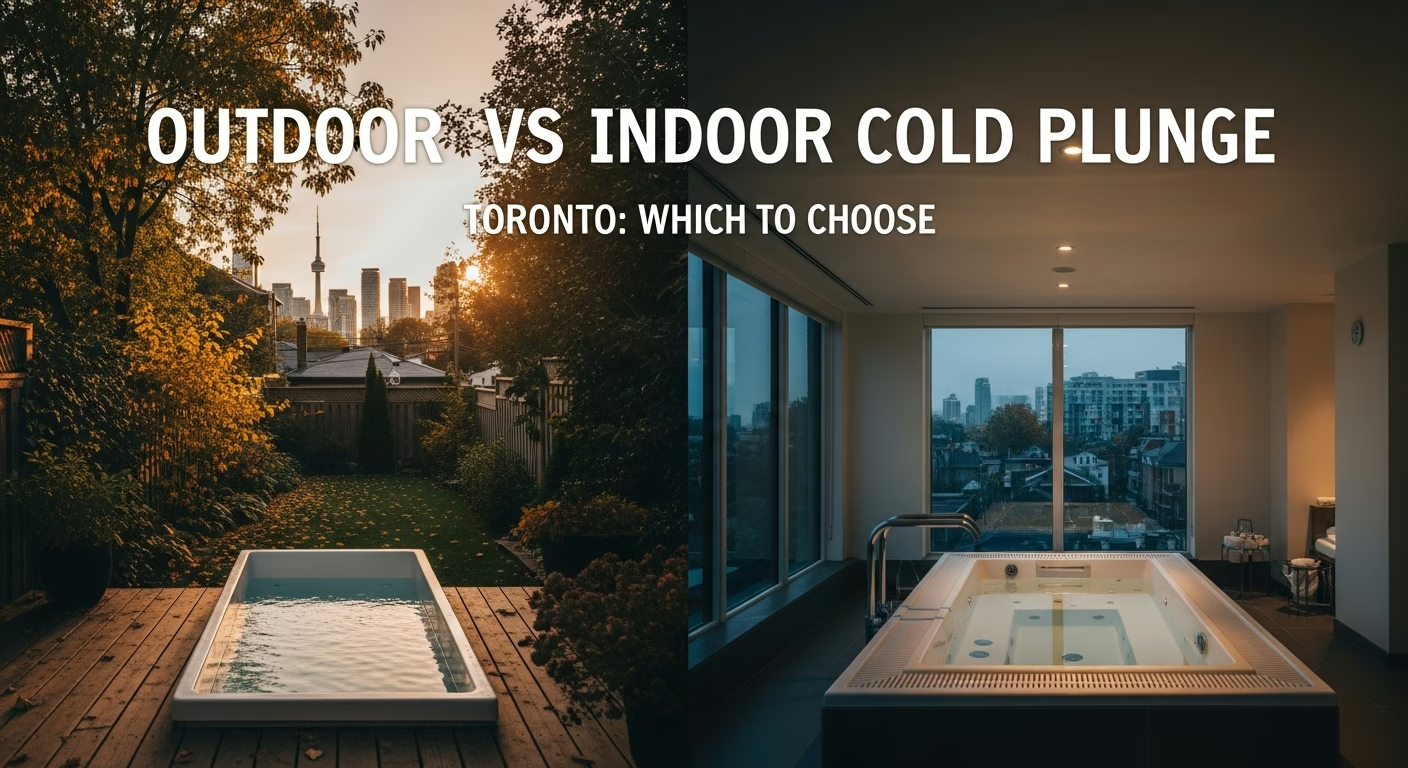

# Outdoor vs Indoor Cold Plunge Toronto: Which to Choose
Quick answer. The first design decision on every cold plunge install in Toronto is location. Indoor (basement, mudroom, or wellness suite) and outdoor (patio, deck, dedicated cabin) each have a real case in the GTA. The decision changes cost by $5,000–$15,000, dictates which units you can buy, and determines whether you'll use it 12 months a year or 6.The first design decision on every cold plunge install in Toronto is location. Indoor (basement, mudroom, or wellness suite) and outdoor (patio, deck, dedicated cabin) each have a real case in the GTA. The decision changes cost by $5,000–$15,000, dictates which units you can buy, and determines whether you'll use it 12 months a year or 6.
This guide compares the two head-to-head with Toronto-specific climate, code, and lifestyle factors. For broader build context see our pillar Cold Plunge Installation Toronto: Complete 2026 Guide.
Quick Decision Framework
If you don't want to read the whole article, here's the answer for most Toronto households:
- Pre-1990 home, finished basement available → indoor wins on cost and reliability.
- Newer home with poor basement access or daylight basement → indoor still wins, but design matters more.
- Cottage or lake property → outdoor wins for the lake-side vibe (despite cost).
- Heritage or smaller Toronto home with usable yard → outdoor in an insulated cabin can be the right answer.
- Year-round contrast therapy with sauna in basement → indoor (next to sauna). Always.
The contrast-suite case is decisive. If you have a basement sauna or are building one, the cold plunge belongs in the same room. We cover this in Sauna Cold Plunge Contrast Therapy: Protocol & Benefits.
Indoor Cold Plunge: The Toronto Default
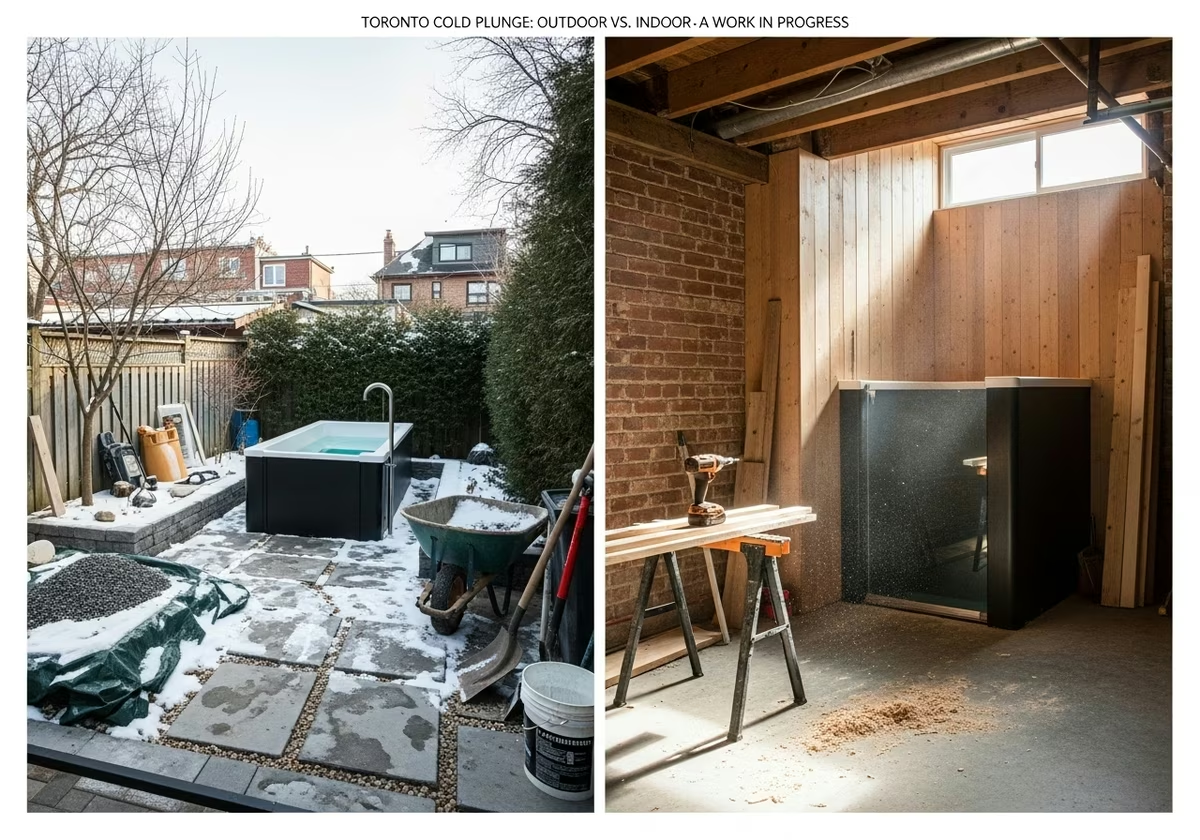
Most Toronto plunges we install go in finished basements. Reasons:
Climate-controlled = chiller efficiency
A basement at 18–22 C year-round is the chiller's ideal operating environment. Recovery times are predictable, energy use is lower, and the unit lasts longer. An outdoor chiller working at -15 C in February or +32 C in July does meaningfully more cycles per day.
Lower install cost (usually)
A typical indoor prefab install runs $7,500–$12,000 all-in (unit + electrical + minor plumbing). A typical outdoor install with insulated cabin runs $15,000–$30,000 — roughly double.
Year-round use without weatherproofing
Toronto winters with -20 C wind chill are hostile to outdoor wellness routines. Indoor users skip 0 sessions due to weather; outdoor users skip 15–30% of sessions in January and February even with cabin protection.
Pairs naturally with sauna
The sauna→plunge→rest protocol works at its best with both within 5 seconds of each other. That layout is impossible outdoors unless you build a full outdoor wellness cabin.
Cons of indoor
- Floor drain and waterproofing are often an after-the-fact retrofit. If the basement was finished without drainage, expect $2,000–$4,500 to add a drain.
- Humidity and ventilation must be designed in. Without proper exhaust, condensation forms on cold surfaces and mold follows.
- Footprint reduces basement living area by 30–60 sq ft.
- Less of a "wow" factor than an outdoor lake-side plunge.
Outdoor Cold Plunge: When It Makes Sense
Outdoor plunges in the GTA come in three configurations:
Open patio plunge
Plunge sits exposed on a deck or patio. Year-round use means the chiller runs in extreme weather and the user accesses it across freezing concrete. Honest answer: outside of cottage country, Toronto homeowners use these 8 months a year and abandon them December–March.
Insulated cabin plunge
A 6×8 ft to 8×10 ft mini-cabin built around the plunge. R-20+ insulation, baseboard heating, lighting, sometimes a small bench. The cabin solves the access problem and protects the chiller. This is the configuration that actually works year-round in Toronto.
Need professional home renovation?
Call RenoHouse at 289-212-2345 or get a free estimate today.
Get Free Estimate →Outdoor wellness cabin (sauna + plunge)
The full Finnish-cabin treatment: barrel sauna or panel-built outdoor sauna, cold plunge, rest area, all in one cedar structure. This is a $40,000–$90,000 install. Beautiful when done right; significant landscaping and permitting.
Cost reality of outdoor
| Configuration | Toronto Cost (CAD) |
|---|---|
| Open patio prefab plunge + outdoor electrical | $9,000–$16,000 |
| Insulated cabin around plunge | $15,000–$30,000 |
| Full outdoor wellness cabin (sauna + plunge) | $40,000–$90,000 |
Outdoor adds $3,000–$5,000 minimum just for weatherproof electrical, conduit, bonding, and proper drainage to grade.
Permitting
Outdoor cabins over 10 sq m (108 sq ft) require a Toronto building permit. Cabins under that limit may not need a permit but still need ESA electrical permit and possibly plumbing permit if connected to municipal water.
Setbacks: most Toronto residential zones require 0.6–1.2 m side yard setback. Larger cabins push the setback question to 6 m rear yard. Verify with your zoning bylaw before committing.
Cons of outdoor
- Weather days reduce adherence.
- Higher install cost.
- Chiller life is shorter at extreme ambient temps.
- Resale value is harder to capture in MLS — buyers see "outdoor hot tub" and price it as such.
- Snow shoveling and de-icing become a routine.
Year-Round Use: The Toronto Math
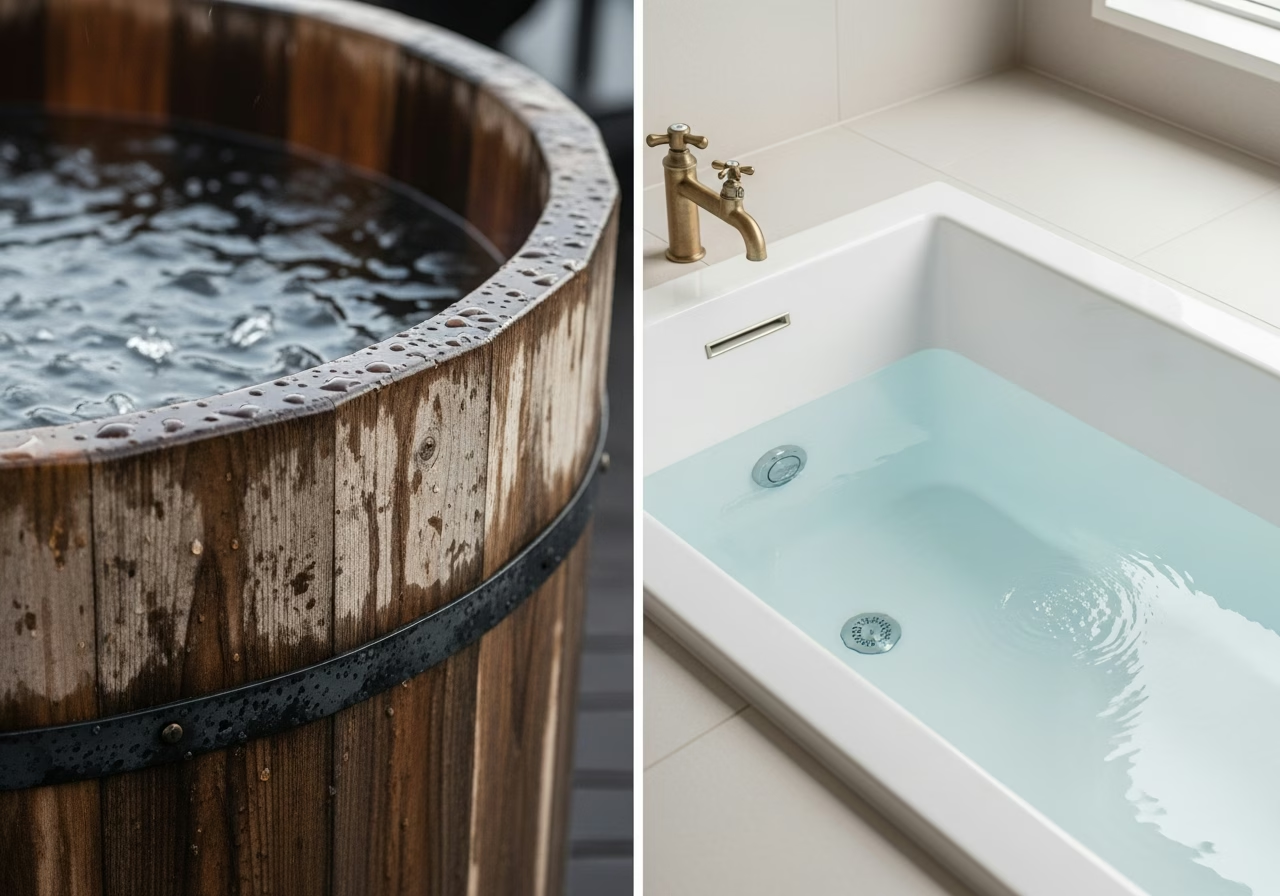
The decision often comes down to how often you'll actually use it. Real numbers from Toronto clients:
| Setup | Sessions in Year 1 | Sessions in Year 3 |
|---|---|---|
| Indoor next to sauna | 180–250 | 200–280 |
| Indoor standalone | 100–160 | 110–170 |
| Outdoor cabin | 120–180 | 90–150 |
| Outdoor open | 60–100 | 30–60 |
The dropoff for outdoor open is real. By year 3, most owners use it half as often. Indoor adherence holds or grows.
Toronto Climate Factors
Winter
- Outdoor chillers work harder December–February. Some 120V units fail to maintain setpoint below -15 C ambient.
- Ice formation on the cover, lid mechanism, and chiller air intake is a real maintenance task.
- Walking from a heated house to a -10 C patio in a robe is a non-trivial adherence barrier.
Summer
- Outdoor units fight to stay cool when ambient is 30+ C. Recovery time after a session can stretch to 4+ hours.
- UV degrades exposed plastic and cover materials. Plan to replace covers every 4–6 years vs 8–10 indoor.
- Chemicals (ozone, sanitizer) burn off faster in sunlight.
Shoulder seasons
- April and October are the outdoor sweet spot — fresh air, no extreme weather, low chiller load.
For maintenance impact across seasons, see Cold Plunge Maintenance Schedule: Water Care, Filtration, Cleaning.
Installation Considerations
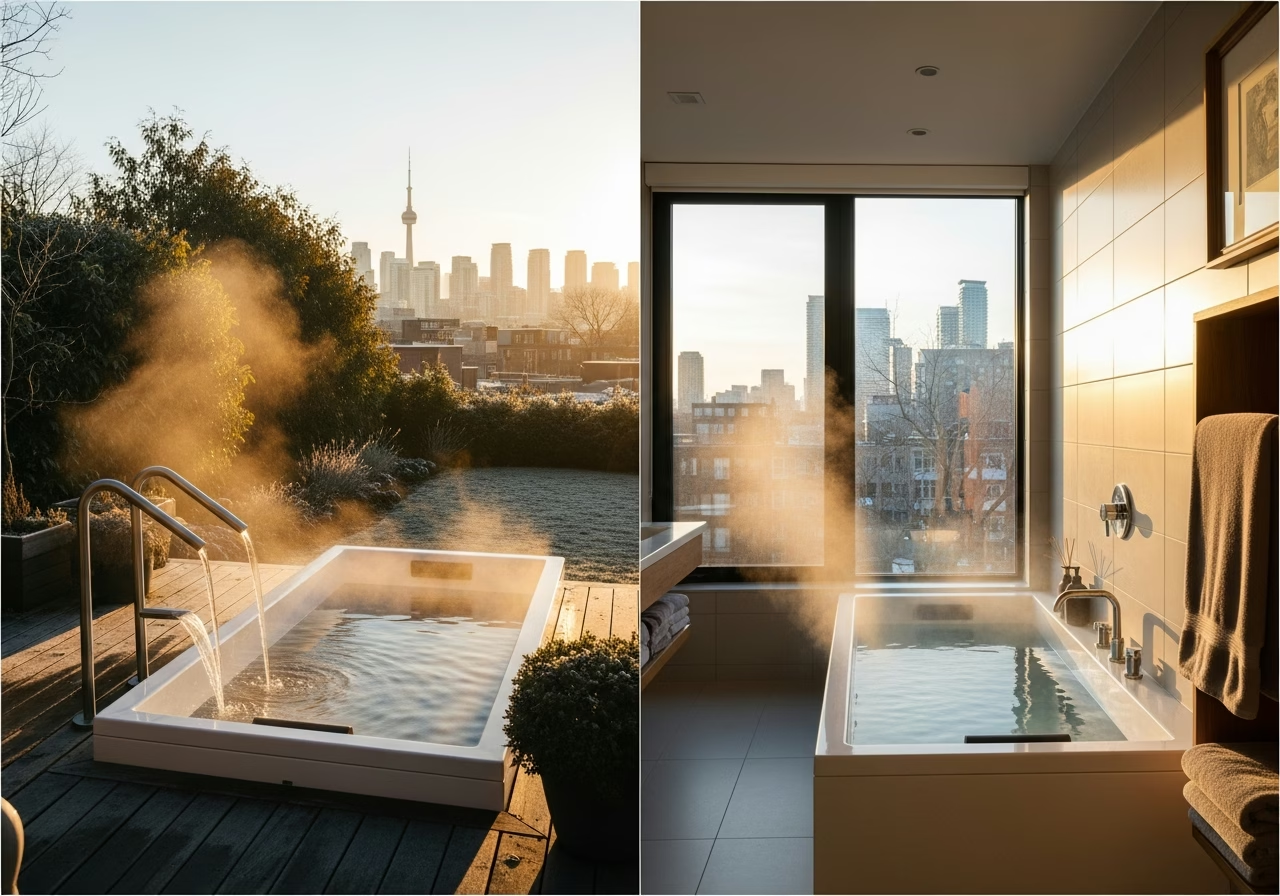
Indoor — what your basement needs
- Floor drain within 2 m of plunge — non-negotiable.
- Waterproofed flooring — large-format porcelain over Schluter membrane is Toronto standard.
- Dedicated 240V circuit or solid 120V dedicated — see Cold Plunge Electrical Requirements.
- Ventilation — minimum 60 CFM exhaust fan; ideally a dehumidifier at 45–55% RH.
- Ceiling height — 7'4" minimum for an open-top plunge with cover-lift; 8'+ preferred.
- Access path — can a 7×4 ft 800 lb crate get from the truck to the basement? This kills 1 in 4 prefab plunge plans.
Outdoor — what your yard needs
- Concrete pad or compacted gravel — minimum 6×8 ft pad rated for 1,500 lb per sq ft.
- Power run in conduit, weatherproof disconnect within sight.
- Drainage to grade that doesn't pool against the foundation.
- Snow management — minimum 4 ft path from house door, ideally heated mat or covered walkway.
- Setback compliance — verify before you order.
- Lighting — minimum two outdoor fixtures rated for wet locations.
Resale Value Comparison
For the financial side see Cold Plunge ROI: Does It Add Toronto Home Value?. Quick summary:
- Indoor wellness suite (sauna + plunge in basement) — best ROI, most legible to appraisers as a designed amenity.
- Indoor standalone plunge — modest positive impact, somewhat better than no plunge.
- Outdoor wellness cabin — positive but variable; appeals to a narrower buyer pool.
- Outdoor open plunge — often appraised as a removable feature, near-zero impact.
Hybrid Approach: Indoor for the Daily, Outdoor for the Weekend
A small but growing client segment — usually with cottages — does both. Indoor plunge for daily contrast use during the work week, outdoor plunge at the cottage for weekend deep-immersion sessions. Total cost is high ($25,000–$40,000+ for both) but adherence is the highest of any configuration we track.
Five Questions to Decide
If you're still on the fence, answer these:
- 1. Do you have a finished basement with at least 60 sq ft of available space? If yes, indoor is likely the right answer.
- 2. Are you also planning a sauna? If yes, plunge goes wherever the sauna goes (probably indoor).
- 3. Will you use it in January and February? Outdoor adherence drops; indoor doesn't.
- 4. Is "outdoor lake-side wellness vibe" worth $10,000+ premium and 30% lower year-round usage?
- 5. Are you within 1 m of the property line? Outdoor cabins may not be permittable.
Common Mistakes
We've redone several outdoor plunge installs that were headed for failure within 18 months. The patterns:
- Outdoor plunge with no covered access path. January walk in a robe across icy concrete = 0 winter sessions.
- Indoor plunge installed without floor drain. First overflow = $4,000 in finished-basement repairs.
- Outdoor cabin with no ventilation. Same humidity problem as indoor, worse in summer.
- Underspec'd chiller for outdoor use. A 1/2 HP chiller that recovers in 90 min indoors needs 4+ hours to recover outdoors at 30 C.
We cover the broader install mistakes in Cold Plunge Installation Mistakes to Avoid.
FAQ
Can I move an indoor plunge outdoors later?Most prefab units are not rated for permanent outdoor exposure without a cabin. The shell, electronics, and cover degrade fast in sun and freeze cycles. Plan the location upfront.
What about a plunge in a garage?Garages occupy a middle ground. Climate is more stable than fully outdoor, but most garages have no floor drain, no GFCI receptacles where you need them, and humidity from a plunge accelerates rust on tools and the vehicle. We've installed a few; most clients regretted it within a year.
Do outdoor plunges freeze?A running unit with chiller maintaining setpoint won't freeze — the heat exchanger circulates. A plunge with the chiller off in -10 C ambient will start freezing within 6–10 hours. Most modern chillers have a freeze sensor that prevents shutdown below 4 C water temp.
Is an outdoor plunge with a cover the same as indoor?For chiller load, no — the cover helps but ambient still drives the chiller's ambient performance curve. For user experience, the access barrier is the bigger factor.
Toronto noise bylaws — chiller noise?Most prefab chillers run 50–65 dB at 1 m. Toronto bylaw limits residential equipment to 50 dB at the property line during nighttime hours. Outdoor units near a property line may need acoustic shielding.
---
Trying to decide between indoor and outdoor for your Toronto cold plunge? RenoHouse can model both scopes with real costs for your specific property. Book a free consultation on our cold plunge installation service page.
Sources & References
Authoritative sources cited in this guide:
- Ontario Building Code — OBC official text
- Toronto Building Permits — City permit portal
- Tarion Warranty — Ontario warranty regulator
- CSA Group Standards — Canadian standards
Continue Reading
- Cold Plunge vs Ice Bath: Which Is Right for Toronto Homeowners
- Cold Plunge Installation Toronto: 2026 Cost & Setup Guide
- Cold Plunge Cost Toronto: $3K DIY vs $15K Premium Setup