RenoHouse

# Popcorn Ceiling Asbestos Removal Toronto: 2026 Guide
Quick answer. Popcorn ceiling — also called acoustic ceiling, stipple ceiling, or stucco ceiling — was a popular finish in Canadian homes from the early 1960s until 1985, when asbestos additives were phased out of residential applications.Popcorn ceiling — also called acoustic ceiling, stipple ceiling, or stucco ceiling — was a popular finish in Canadian homes from the early 1960s until 1985, when asbestos additives were phased out of residential applications. Toronto homes built or renovated between 1965 and 1985 commonly have popcorn ceilings, and a meaningful share of those test positive for asbestos.
This guide covers how to identify popcorn ceiling, why pre-1985 ceilings are presumed asbestos until tested, the difference between Type 1 and Type 3 removal, realistic 2026 Toronto removal costs, and the renovation-sequencing implications. For the full pre-renovation context, see Asbestos Abatement Toronto 2026: Complete Guide.
What Popcorn Ceiling Is
Popcorn ceiling is a spray-applied texture, typically 1/8" to 3/8" thick, applied directly to drywall or plaster. The visual texture comes from coarse aggregate (vermiculite, polystyrene, or perlite) suspended in a binder of paint and joint compound. It was popular for three reasons:
- Acoustic dampening — the rough surface scatters sound and reduces echo, useful in bedrooms and family rooms.
- Flaw concealment — the texture hides imperfect drywall taping, especially across plaster repairs.
- Cheap and fast — a sprayer applied an entire ceiling in 15 to 30 minutes.
Asbestos was added to early popcorn ceiling formulations as a fibrous binder. The Canadian phase-out for asbestos in residential acoustic ceiling materials is generally cited as 1985, but stock material continued to be installed for a year or two after the manufacturing date.
Identifying Popcorn Ceiling
Popcorn ceiling has a distinct rough, bumpy, textured appearance — like cottage cheese or chunky stucco. It is white or off-white when new, often yellowed in homes with older smokers or near kitchens. It crumbles when poked with a fingertip.
Do not confuse popcorn with knockdown texture (a smoother, flatter texture applied with a trowel that knocks down spray peaks) or stomp/fan texture (a swept pattern). Popcorn is a specific spray-aggregate texture from a specific era.
The Pre-1985 Rule
The conservative professional rule in Toronto:
- Pre-1985: assume asbestos until tested otherwise.
- 1985–1990: probably asbestos-free but test before disturbance.
- Post-1990: very low likelihood of asbestos but still testable if you want certainty.
A 5-gram sample sent to a Toronto lab for PLM analysis costs $35 to $75 and returns in 24 to 72 hours. Given the ratio between test cost and Type 3 abatement cost, testing first is always the right move.
Why Popcorn Ceiling Removal Is High-Risk
Popcorn ceiling is friable — the material crumbles easily and releases fibres when scraped. Unlike vinyl floor tile (where the asbestos is bound in the tile until you sand or grind it), popcorn ceiling releases fibres simply by being scraped with a putty knife, which is the standard removal method.
Need professional home renovation?
Call RenoHouse at 289-212-2345 or get a free estimate today.
Get Free Estimate →This is why positive popcorn ceiling almost always requires Type 3 abatement: the friable nature means high airborne fibre potential and full negative-air containment is mandatory.
2026 Toronto Popcorn Ceiling Removal Costs
Realistic ranges:
- Small single room, 12'x12' = 144 sqft: $1,800 to $3,500 (Type 3, with containment, scraping, and HEPA cleaning).
- Main floor of typical bungalow, 800 sqft: $5,500 to $9,500.
- Whole bungalow including bedrooms, 1,200 sqft: $7,500 to $14,000.
- Whole 2-storey detached, 2,000 sqft of ceiling: $12,000 to $22,000.
- Air clearance sampling per area: $400 to $900.
By comparison, a non-asbestos popcorn ceiling scraping with no containment is $3 to $6 per square foot — roughly $450 to $900 for the same 144 sqft room. The cost differential between asbestos and non-asbestos removal is the reason testing first matters.
How Type 3 Popcorn Ceiling Abatement Works
The standard process:
- 1. Notification — 24-hour Ministry of Labour notification, WSIB Form 2156.
- 2. Furniture removal or sealed containment — most homeowners empty the room. Larger items can stay if double-wrapped in 6-mil poly.
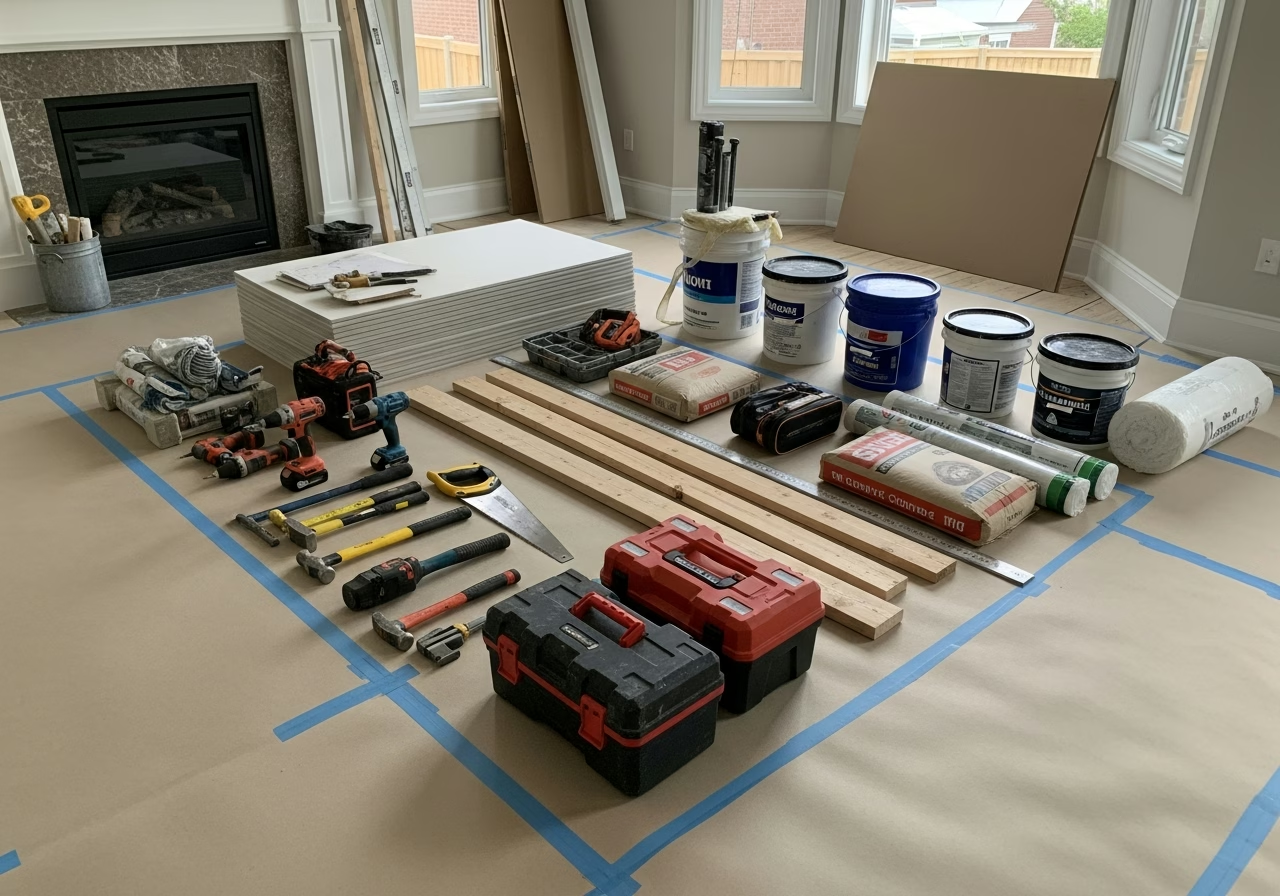
- 3. Floor and wall protection — 6-mil poly sheeting taped to walls and floor.
- 4. Negative-air containment — HEPA-filtered air machines create negative pressure inside the work area; a decontamination chamber is set up at the entry.
- 5. Wetting — the popcorn texture is sprayed with water to suppress fibre release. Most popcorn ceilings, once thoroughly wetted, scrape off easily with a putty knife.
- 6. Scraping — workers in full PPE (Tyvek suit, full-face respirator or PAPR) scrape the ceiling. Material falls to the poly-covered floor and is bagged.
- 7. HEPA cleaning — ceiling, walls, floor, and any remaining fixtures are HEPA-vacuumed and wet-wiped.
- 8. Air clearance — third-party air sampling. Results in 24 hours.
- 9. Containment removal — only after clearance results return clean.
Total on-site time for a single-room project is typically 2 days plus 1 day for clearance. A whole-bungalow scope is 4 to 6 days.
After Removal: Drywall Finishing
Type 3 abatement ends with the popcorn texture removed and the substrate (typically drywall or plaster) HEPA-cleaned. The drywall is usually rough — original tape and mud joints are exposed, and the surface needs:
- Skim coat with new joint compound (2 to 3 coats).
- Sanding and priming.
- Final paint finish.
This work is performed by a separate drywall and paint contractor — not by the abatement crew. The cost for skim-coat, prime, and paint a 144 sqft ceiling in Toronto is $400 to $900. Whole-home skim and paint runs $3 to $8 per square foot.
This is one of the reasons coordinated project management matters. The renovation contractor (RenoHouse, in our model) sequences the abatement, clearance, and finishing as a single timeline so the homeowner is not left with a stripped-but-unfinished ceiling.
DIY Risk
Some homeowners are tempted to scrape popcorn ceilings themselves before testing. This is the single most common asbestos-disturbance event we see in Toronto pre-1990 homes. The risks:
- If the ceiling is positive, you have just contaminated the room (and likely the rest of the home through HVAC and foot traffic).
- Cleanup of an uncontained scraping requires Type 3 abatement of the entire affected area — far more expensive than a planned removal.
- Fibres on personal possessions, clothing, and HVAC systems persist for months.
- Health risk to occupants, particularly children, is real.
If you have not yet scraped, test first. If you have already scraped a small area, stop, seal the room, and call a consultant for an emergency assessment.
Encapsulation as an Alternative
Some abatement firms offer encapsulation — applying a sealant coat over the popcorn ceiling that locks the fibres in place. Encapsulation costs less than removal ($2 to $4 per square foot) but:
- The popcorn texture remains visible.
- Future renovation will still trigger Type 3 abatement.
- Real estate disclosure obligations remain.
- Encapsulant lifespan is typically rated at 20 to 30 years.
Encapsulation is a reasonable choice when the popcorn ceiling is in a low-traffic area you do not plan to renovate (a basement office, a finished attic) and you simply want to seal the material. For main living spaces where you want a smooth modern ceiling, removal is the better long-term value.
What About Painted Popcorn Ceilings?
Many Toronto popcorn ceilings have been painted (often multiple times) over the years. Painted popcorn is harder to remove because the paint resists water absorption — the wetting step before scraping is less effective. Type 3 protocol is the same, but the work takes longer and the labour cost is 20 to 40 percent higher.
If your popcorn ceiling has been painted, expect quotes at the higher end of the range above.
Common Toronto Examples
We see popcorn ceilings most often in:
- 1960s–1980s North York and Scarborough bungalows — entire main floors and basements stippled.
- East York semis from the 1970s–1980s — bedroom ceilings stippled while living room may be smooth.
- The Beaches and High Park — third-floor finished attics stippled during 1970s–1980s additions.
- 1980s Markham/Richmond Hill detached homes — bedrooms stippled, main floor smooth (most likely asbestos-free if post-1985 build).
Related Reading
Type 1 vs Type 2 vs Type 3 Asbestos Toronto, [Asbestos Abatement Cost Toronto Comparison](/blog/asbestos-abatement-cost-toronto-comparison), Asbestos Renovation Checklist Toronto.Planning Popcorn Ceiling Removal in a Toronto Pre-1985 Home?
RenoHouse coordinates the test, the abatement, the clearance, and the smooth-ceiling refinishing as a single project. Visit our Asbestos Abatement Service Page to start.
Sources & References
Authoritative sources cited in this guide:
- Ontario Building Code — OBC official text
- Toronto Building Permits — City permit portal
- Tarion New Home Warranty — Ontario new-build warranty regulator
- HCRA — Home Construction Regulatory Authority — Ontario builder/vendor licensing
Continue Reading