RenoHouse

# Type 1 vs Type 2 vs Type 3 Asbestos: Toronto 2026 Guide
Quick answer. Ontario Regulation 278/05 classifies asbestos work into three categories — Type 1, Type 2, and Type 3 — based on the risk of fibre release. The classification determines worker training, containment, notification, and air clearance requirements.Ontario Regulation 278/05 classifies asbestos work into three categories — Type 1, Type 2, and Type 3 — based on the risk of fibre release. The classification determines worker training, containment, notification, and air clearance requirements. Understanding the three types is essential because the cost difference between Type 1 and Type 3 work on the same physical material can be ten times or more.
This guide explains the three types in plain language, with Toronto-specific examples and 2026 cost implications. For pre-renovation context, see Asbestos Abatement Toronto 2026: Complete Guide.
The Underlying Logic
Reg 278/05 is built around a simple risk model: airborne asbestos fibres are the hazard, and the regulation prescribes controls proportional to expected fibre release. Three things drive expected fibre release:- Friability — does the material crumble easily? Friable materials (popcorn ceiling, vermiculite, damaged pipe insulation) release fibres readily. Non-friable materials (vinyl floor tile, transite siding, intact mastic) release fibres only with aggressive disturbance.
- Quantity — small disturbances release less fibre than large ones.
- Method — wet methods release less fibre than dry methods.
The three types map to three risk profiles based on these factors.
Type 1: Lowest Risk
Definition. Minor disturbance of non-friable materials, or activities that release very low fibre concentrations.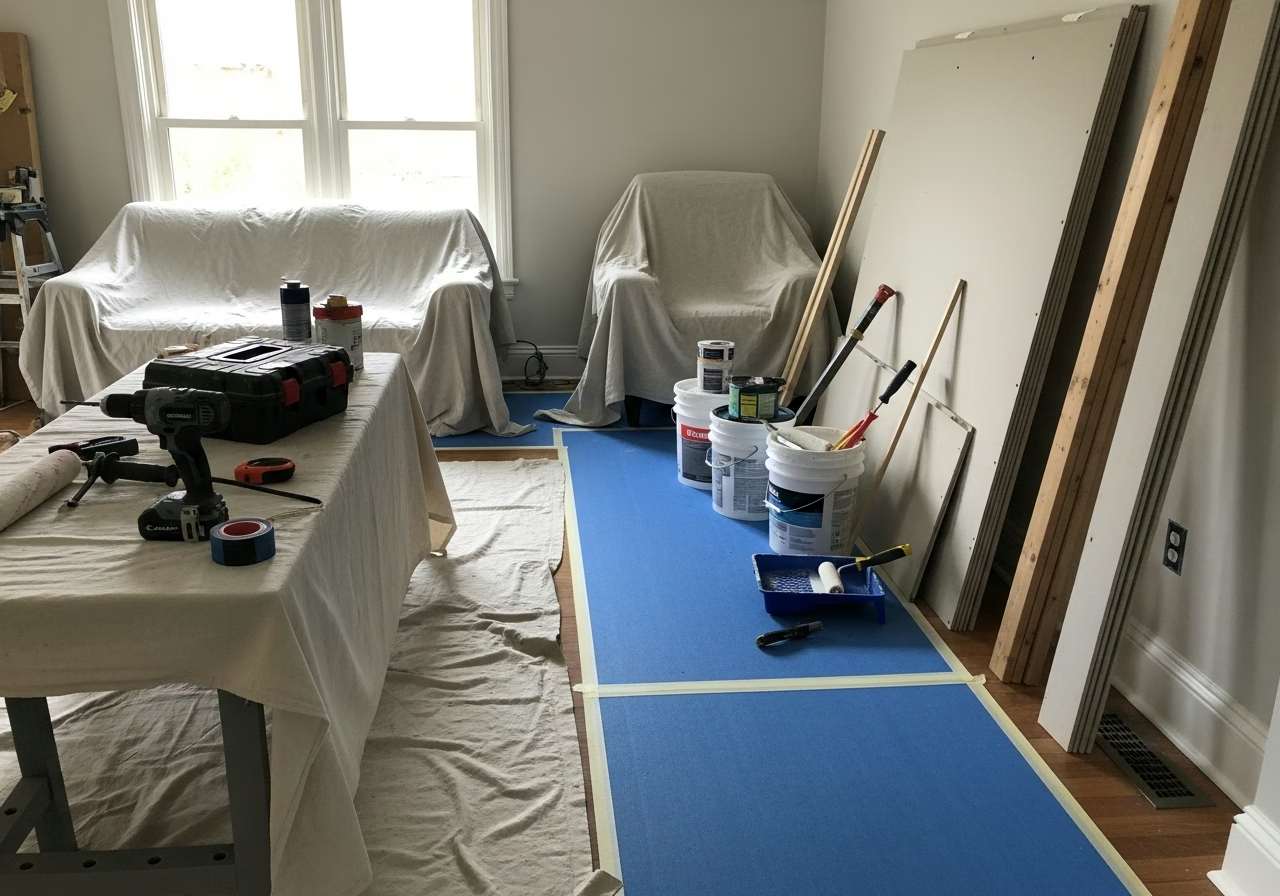
- Removing a single 9"x9" floor tile.
- Drilling one or two holes through a drywall-and-mud assembly.
- Removing a small piece of cement-board (less than 1 sqft).
- Removing a single ceiling tile in a drop ceiling (acoustic panels).
- Hanging a TV mount on a wall with mud-containing tape.
- Half-mask respirator with P100 filters.
- Disposable coveralls.
- Wet methods to suppress fibre release.
- Polyethylene drop sheet under work area.
- HEPA vacuum on hand for cleanup.
- Work area cleared of bystanders.
Type 2: Moderate Risk
Definition. Larger disturbances of non-friable materials, or moderate disturbance of friable materials in good condition. Examples in Toronto homes:- Removing whole rooms of 9"x9" vinyl floor tile and mastic.
- Removing intact pipe insulation from basement runs.
- Removing transite siding panels from a soffit or interior wall.
- Cutting access panels in plaster walls for plumbing or electrical.
- Selective drywall demolition in a single room (with intact mud).
- Type 2 training (Ontario-recognized course).
- Half-mask respirator with P100 filters.
- Disposable coveralls.
- Wet methods.
- Polyethylene sheeting on walls and floor in the work area.
- HEPA-filtered air filtration unit running during work.
- Decontamination protocols (suit removal, HEPA-vacuum suit before exit).
- Bystanders excluded from work area.
Type 3: Highest Risk
Definition. Spray-applied asbestos, large quantities of friable material, vermiculite removal, popcorn ceiling removal, damaged friable material, and any work likely to release substantial airborne fibre. Examples in Toronto homes:- Popcorn ceiling removal (any quantity in residential).
- Vermiculite attic insulation removal.
- Whole-home drywall mud disturbance during gut renovation.
- Damaged pipe insulation cleanup.
- Spray-applied insulation removal.
- Plaster textured finish removal where the texture is asbestos-containing.
- Type 3 training (Ontario-recognized course, more rigorous than Type 2).
- Full-face respirator with P100 filters or PAPR (Powered Air-Purifying Respirator).
- Tyvek or equivalent disposable coveralls with hood.
- Wet methods throughout.
- Full negative-air containment with 6-mil polyethylene sheeting on all surfaces.
- HEPA-filtered air machines creating measurable negative pressure (typically -5 Pa or greater).
- Decontamination chamber at the entry (3-stage: dirty room, shower, clean room).
- Daily smoke test of containment integrity.
- Air monitoring during work.
- Ministry of Labour notification (online portal or written notice).
- WSIB Form 2156 worker notification.
- Notice to building owner if rented or commercial.
How the Type Is Determined
The Type classification is set by the consultant in the DSS report based on:
- Material type (friable yes/no).
- Quantity to be disturbed (square feet, linear feet).
- Condition of the material.
- Method of disturbance (cutting, scraping, bulk removal).
The abatement contractor then quotes based on the Type. If the contractor disagrees with the consultant's classification (e.g., the contractor argues for Type 2 where the consultant said Type 3), the consultant has the final word for compliance purposes — though a homeowner can request a second consultant opinion.
Need professional home renovation?
Call RenoHouse at 289-212-2345 or get a free estimate today.
Get Free Estimate →Worker Certification in Ontario
Workers performing Type 1 work do not require formal asbestos certification but must be informed of the hazard.
Workers performing Type 2 work must complete an approved asbestos-awareness course (typically a half-day or full-day program).
Workers performing Type 3 work must complete an approved Type 3 abatement course (typically 2 days, with annual refresher) and undergo respiratory fit-testing for full-face or PAPR equipment. Documentation is required on site.
When you receive an abatement quote for Type 3 work, ask for the worker certification documentation. Reputable Toronto firms provide this without prompting.
Cost Multiplier: Same Material, Different Type
The same physical material can fall into different Types depending on how much is being disturbed and the method:
- Type 1 (single tile removal): $300–$600.
- Type 2 (whole room with mastic): $1,800–$4,500.
- Type 1 (single hole patched): $300–$500.
- Type 2 (one wall opened): $1,500–$4,000.
- Type 3 (whole-home gut): $9,000–$25,000+.
The Type classification is therefore a direct cost multiplier. Plan renovation scope with the Type implications in mind.
Common Misclassifications
Three errors we see in Toronto:
- Contractor labels Type 3 work as Type 2 to lower the quote and avoid notification. This is a Reg 278/05 violation. Ministry inspectors do random checks and the consequences are severe.
- Homeowner DIY assumes Type 1 for popcorn ceiling scraping. Popcorn ceiling is always Type 3 in Ontario.
- Floor tile classified as Type 1 when whole rooms are removed. Single-tile removal is Type 1; whole-room removal is Type 2 because of mastic and broken-tile risk.
Related Reading
Asbestos Abatement Cost Toronto Comparison, Air Monitoring & Clearance Asbestos Toronto, Asbestos Renovation Mistakes Toronto.Need Type Classification Reviewed Before Quoting?
RenoHouse coordinates DSS reports and reviews quotes against the consultant's Type classifications. Visit our Asbestos Abatement Service Page to start.
Sources & References
Authoritative sources cited in this guide:
- Ontario Building Code — OBC official text
- Toronto Building Permits — City permit portal
- Tarion New Home Warranty — Ontario new-build warranty regulator
- HCRA — Home Construction Regulatory Authority — Ontario builder/vendor licensing
Continue Reading